Your search Castellammare di Stabia gave 2069 results.

A marble fragment with an inscription in a tabula ansata from the Mithraeum at Walbrook in London, reading [Au]gggg(ustis) invicto..., a dedication to the Invincible probably addressing multiple emperors.
A white marble statue from the Mithraeum at Walbrook in London, depicting Bonus Eventus standing in a long hanging cloak, leaning on a ship's stem, holding a cornucopia against his shoulder and a patera above a burning altar from the back of which a…
An inscription from the vicus Vicciomitum in Milan (ancient Mediolanum), recording a votive dedication to the Invincible Mithras by L. Atilius Pupinius on a site granted by decree of the town council.
Preliminary readings of the painted Mithraic texts later revised after additional research and restoration.
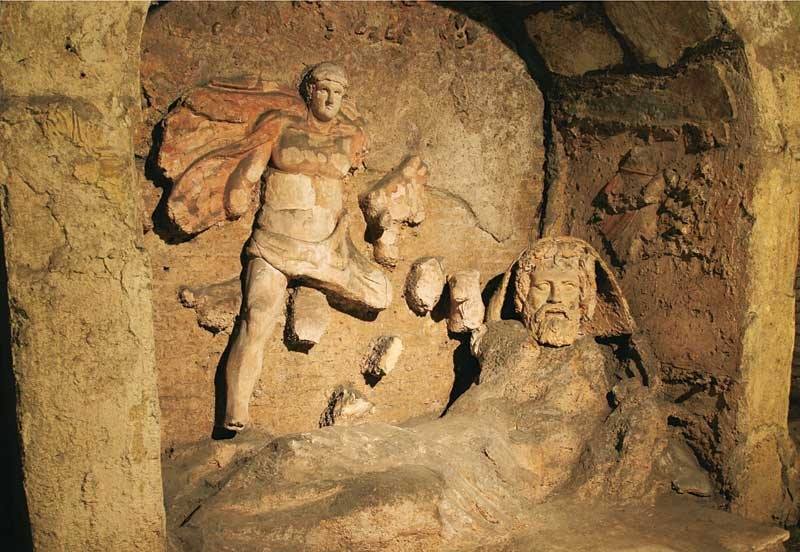
Even if only a few fragments remain, it is very likely that the main niche of the Mitreo di Santa Prisca contained the usual representation of Mithras killing the bull.
The fragmented tauroctony of the Mitreo di Santa Prisca rests on the naked figure of a bearded man, probably Ocean or Saturn.
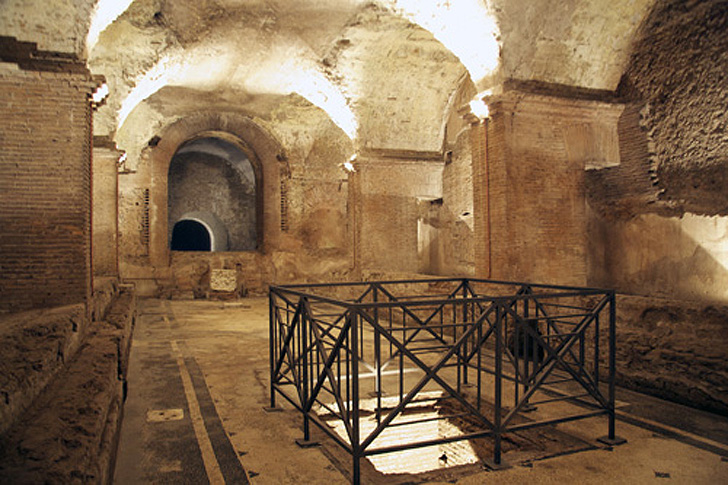
The Mitreo delle terme di Caracalla is one of the largest temples dedicated to Mithras ever found in Rome.
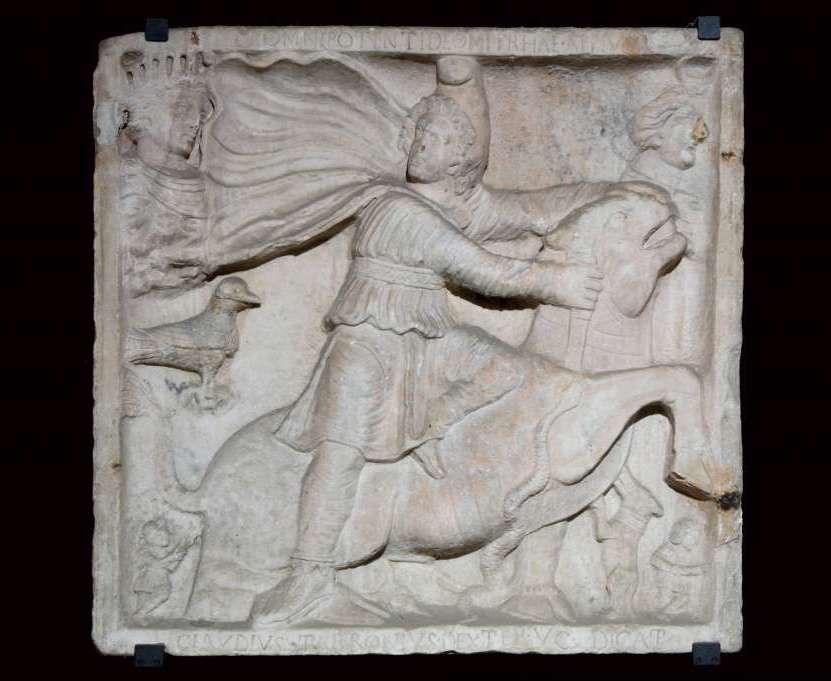
The marble relief of Mithras killing the bull in Naples bears an inscription that calls the solar god omnipotentis.
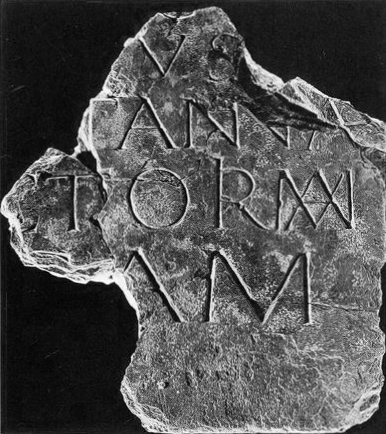
Archaeological material from the Mithraeum of Londinium discussed in Hill’s study of Roman London.
Marble tauroctony relief from the surroundings of Küstendil, ancient Pautalia in Moesia Superior, depicting the bull-slaying with torchbearers and Sol and Luna busts in the upper corners.
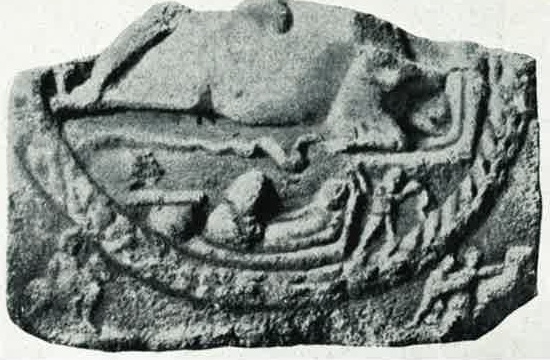
Lower part of a marble tauroctony relief from Küstendil, ancient Pautalia in Moesia Superior, preserving only the lower half of the bull-slaying scene with partially visible legs of the torchbearers.
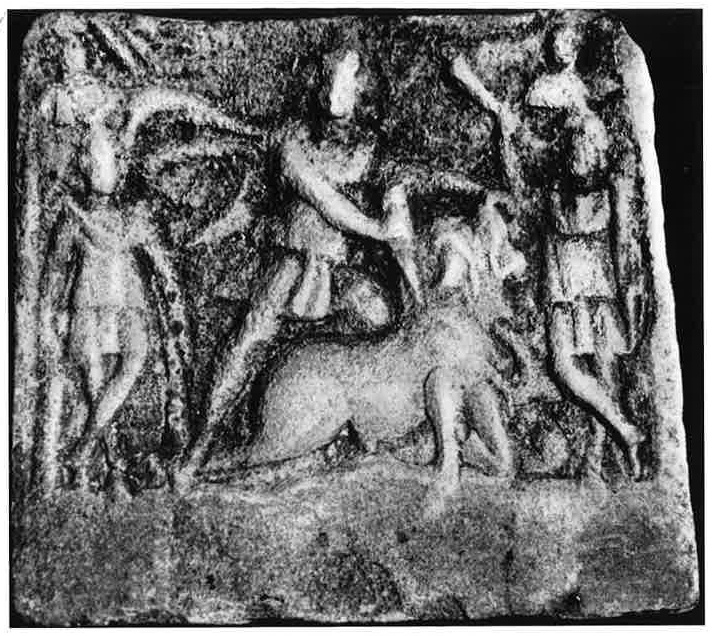
White marble tauroctony relief from Orșova, ancient Dierna in Dacia, depicting the standard bull-slaying with the torchbearers and subsidiary scenes.
Inscription dedicated to Sol Invictus for the wellbeing of Emperor Aurelianus and his dynasty, from Thagaste, dated 275 A.D.
Stone inscription dedicated to Sol Deus Augustus, found at Zraya (ancient Zarai).
Altar dedicated to Deo Soli, Honori et Virtuti pro salute, found at the foot of the West gate of the Roman town at Hr. Kaussât, near Ucubi.
Inscription dedicated to Sol Invictus at Lambaesis, of uncertain Mithraic attribution.
Inscription recording the construction of a templum Invicti from the ground by Aurelius Longinianus, centurion of the Third Augustan Legion, near the Roman camp at Lambaesis.
Altar inscription dedicated to Kautopates by Eutyces, a freedman serving the two emperors, found at Mascula (modern Khenchela).
Polychromatic marble statuette of a cross-legged figure in Eastern attire, probably a torchbearer, found near the theatre ruins at Timgad.
Inscription on a clepsydra dedicated to Sol Invictus Augustus by C. Amulius Pultarius, found on the site of the Mosque Sidi Biri Narze at Cirta.
