Your search Castellammare di Stabia gave 2069 results.

Upper portion of a limestone altar from Kule-Mahata, ancient Almus in Moesia Superior, dedicated to the invictus — possibly but not certainly Mithras — by Caius Plotius Maro for himself and his family.
Inscription from Civitas Montanensium, Moesia Superior, dedicated to Deo sancto invicto by Lucaius ex voto.
Limestone altar from Stojnik, Moesia Superior, found at a house at Guberevci, dedicated to Deo Mithrae Soli for the welfare of Emperor Severus Alexander.
Inscription from Drmno, Moesia Superior, dedicated to Deo invicto Mithrae by a naucleros — a ship-owner or navigator — who arranged the erection of the monument.
Fragment of a relief from Jassen, Moesia Superior, with three scenes: Mithras and kneeling Sol, the sacred repast, and Mithras ascending Sol's chariot; known from a personal communication.
Stone altar with akroteria from Dražinovići, Moesia Superior, found in 1934 near the brook Savina Voda, dedicated to Invicto deo Mithrae for the welfare of Emperor Severus Alexander.
Altar at Knjaževac (Ravna), Moesia Superior, preserved beneath a water-mill called Kulina, dedicated to Invicto deo for the welfare of Emperor Marcus Aurelius Antoninus Augustus.
Marble altar from near Osmakovo, Moesia Superior, now in the Niš museum, dedicated to Soli invicto by Valerius Iucundus.
Inscription from Lopata, Moesia Superior, recording that Apollonides, imperial slave and scrutator of the statio Lamud, restored a Mithraic temple that had collapsed through age at his own expense; dated to the consulship of Gentianus and Bassus, AD 211.
White marble altar from Lopata in the Kumanovo district, Moesia Superior, associated with possible Mithraic sanctuary remains at the find-spot.
Inscription from Celei, ancient Sucidava in Dacia, dedicated to the sanctum of Solis invicti Mithrae.
Inscription from Slăveni-Romanați, Dacia, dedicated to Soli invicto Mithrae: ara Solis — the altar of Sol.
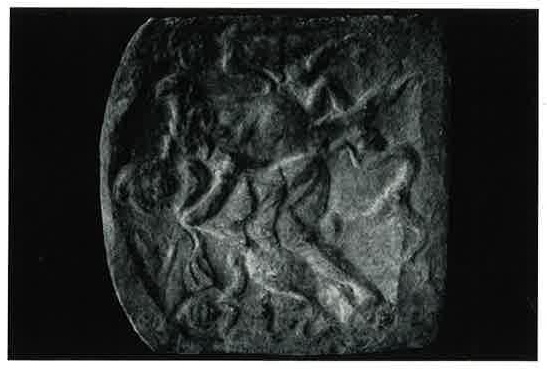
Reddish-white marble tauroctony relief from Slăveni-Romanați, Dacia, depicting the standard bull-slaying with the full iconographic programme.
Mithraic sanctuary found in 1837 on the right bank of the river Olt near Slăveni-Romanați, Dacia; the construction of the building is not detailed.
Fragment of a Mithras relief from Bumbești-Gorj, Dacia, bearing a partially preserved dedication to Deo Soli invicto Mithrae.
Limestone altar from Cioroiul Nou, Dacia, dedicated to Soli invicto Mithrae for the welfare of his family by Caius Antonius Iulianus.
Limestone altar fragment from Drubeta, Dacia, bearing a Mithraic dedication.
Bronze statuette from Drubeta, Dacia, depicting Mithras placing his left leg on the bull's head — the tauriphoros type — with the bull in a subordinate posture.
Unpublished tauroctony relief from Turnu Severin, Dacia, with multiple Mithraic scenes including Mithras with Sol, Mithras as archer, and Mithras as bull-slayer.
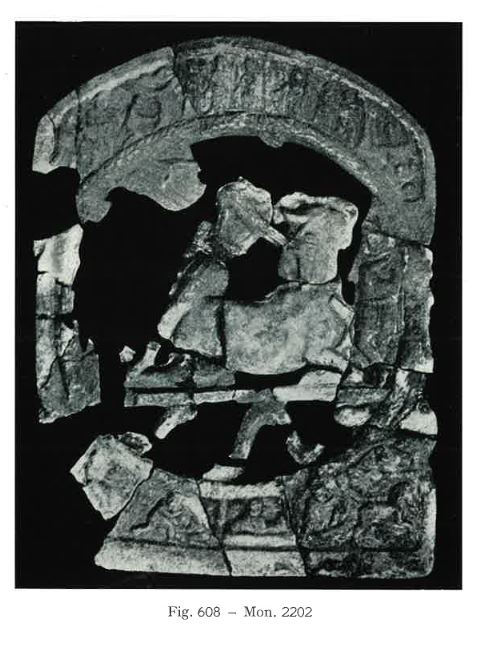
Inscription from near Mintia, ancient Micia in Dacia, dedicated to Deus Mithras by Rutus ex voto.
