Your search Concetta Luna gave 78 results.
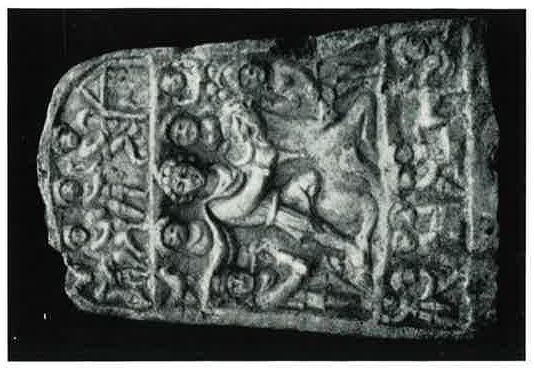
Yellow marble tauroctony relief from Romula, Dacia, found in 1912, depicting the standard bull-slaying with Sol and Luna in the upper corners.

Upper portion of a vaulted marble tauroctony from the Mithraeum at Sarmizegetusa, Dacia, with the bull-slaying and above Cautes a scene of Mithras's rock-birth; Sol and Luna busts appear in the upper corners.

Altar from Salona, Dalmatia, found in 1884, dedicated by Sextus Cornelius Antiochus to Soli deo, who donated both a star and a fructifera — interpreted as Sol and Luna — following a vision.
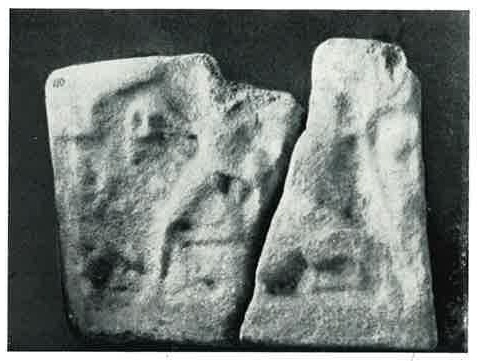
Weathered marble tauroctony relief in two fragments from Ruše, Noricum, depicting the bull-slaying with only the dog visible, flanked by two torchbearers both holding their torches upraised; no Sol or Luna.
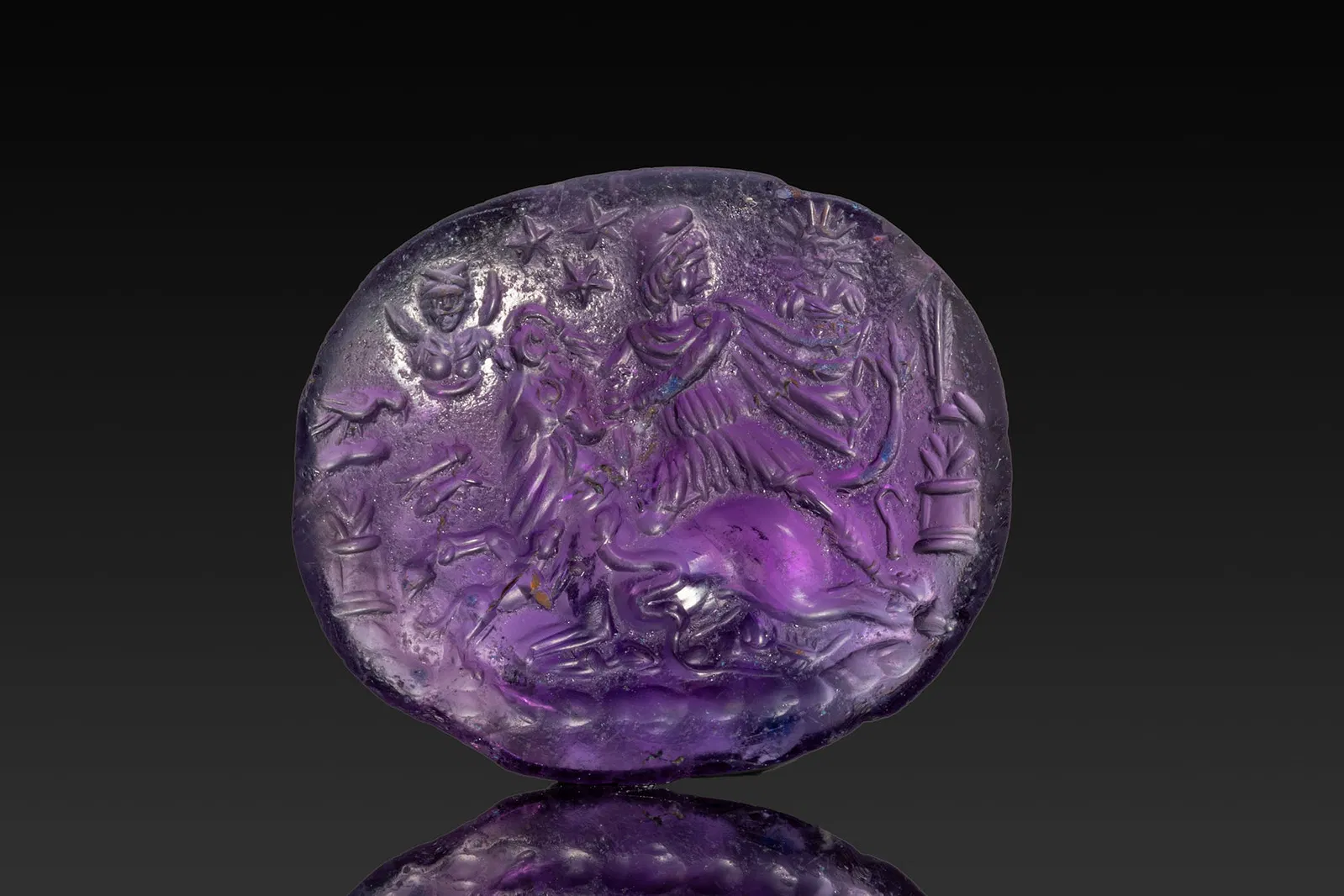
Amethyst intaglio engraved with Mithras slaying the bull, accompanied by Sol, Luna and other canonical Mithraic symbols.
Fragmentary tauroctony preserving Mithras, the torchbearers, Sol and Luna from the sanctuary at Aïtodor.
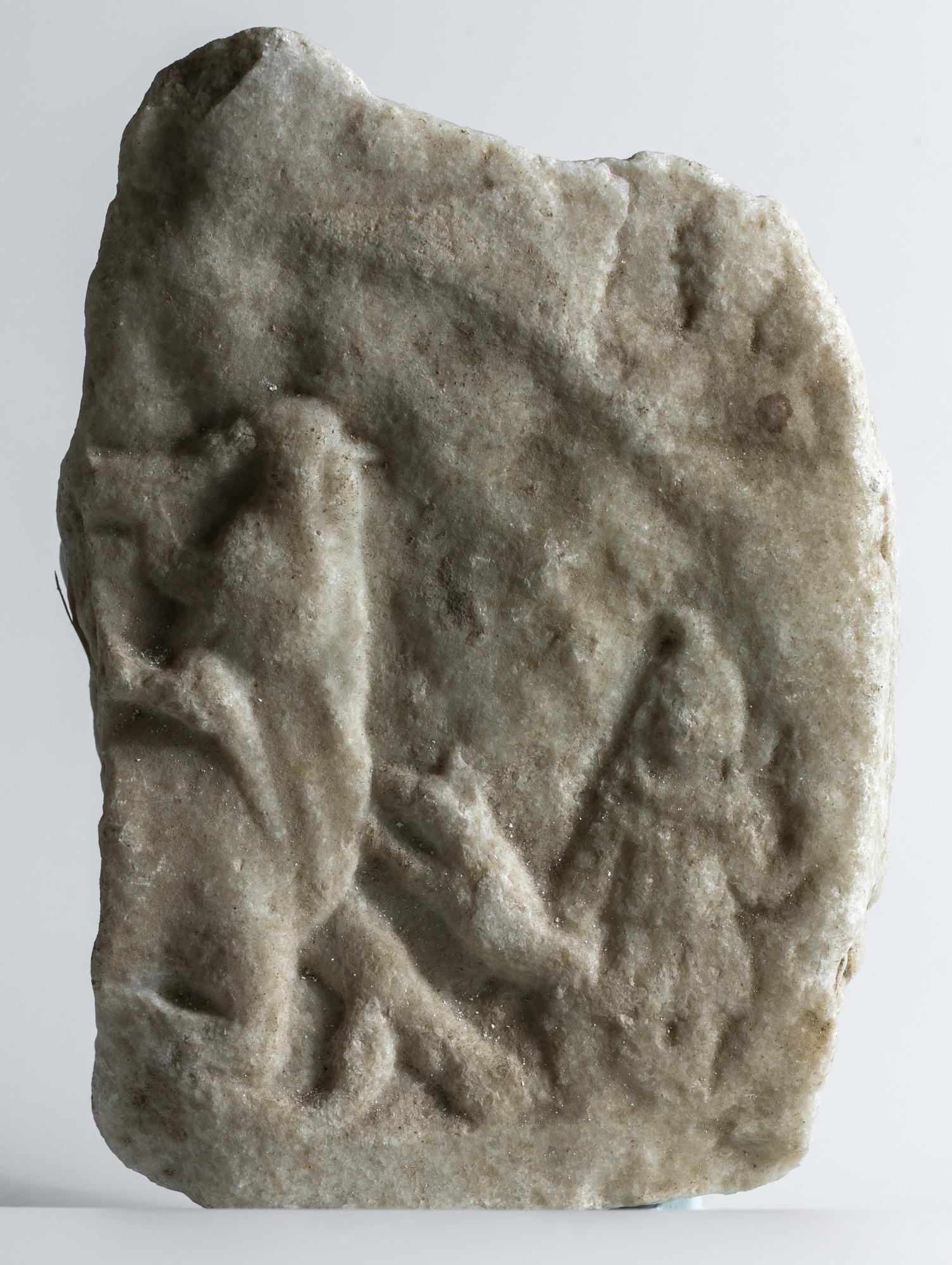
This weathered marble fragment from Viminacium preserves part of a tauroctony with Luna, Cautopates, the serpent, and the dog.
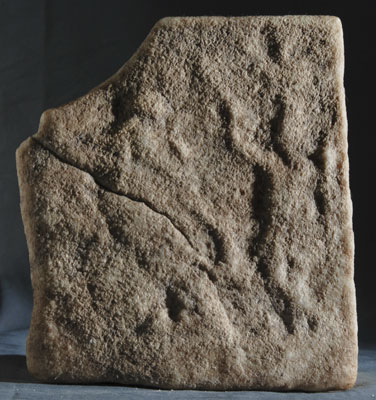
This small weathered marble fragment preserves part of a tauroctony with Cautes, Luna, the serpent, and a leaping dog.
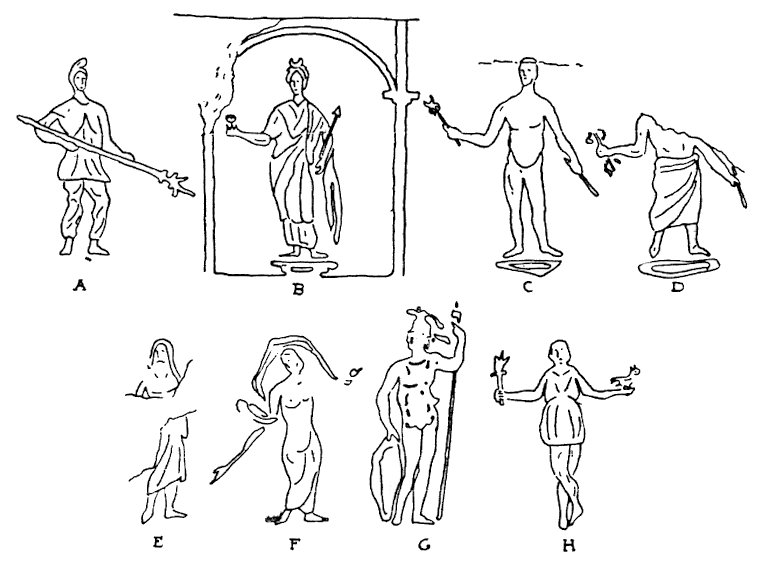
Diana-Luna, Mercurius, Jupiter, Saturn, Venus and Mars are depicted in the mosaics on the benches of this mithraeuma.
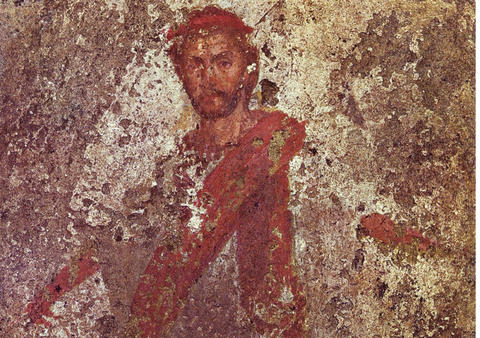
Figures in procession, each representing a different grade of Mithraic initiation, labeled with their respective titles.

Limestone altar from the Trier baths, carved on four sides with a lion and serpent, flanked by Sol and Luna, and likely linked to a Mithraic context involving Hekate.
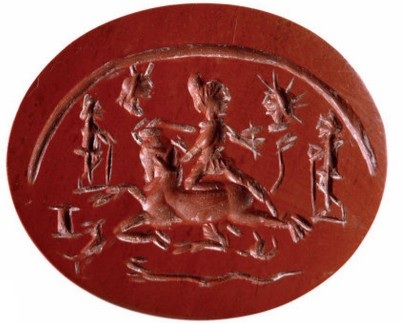
An oval carnelian gem from Carnuntum showing Mithras tauroktonos in a grotto. Sol and Luna appear above, with both torchbearers and a small altar before the bull.
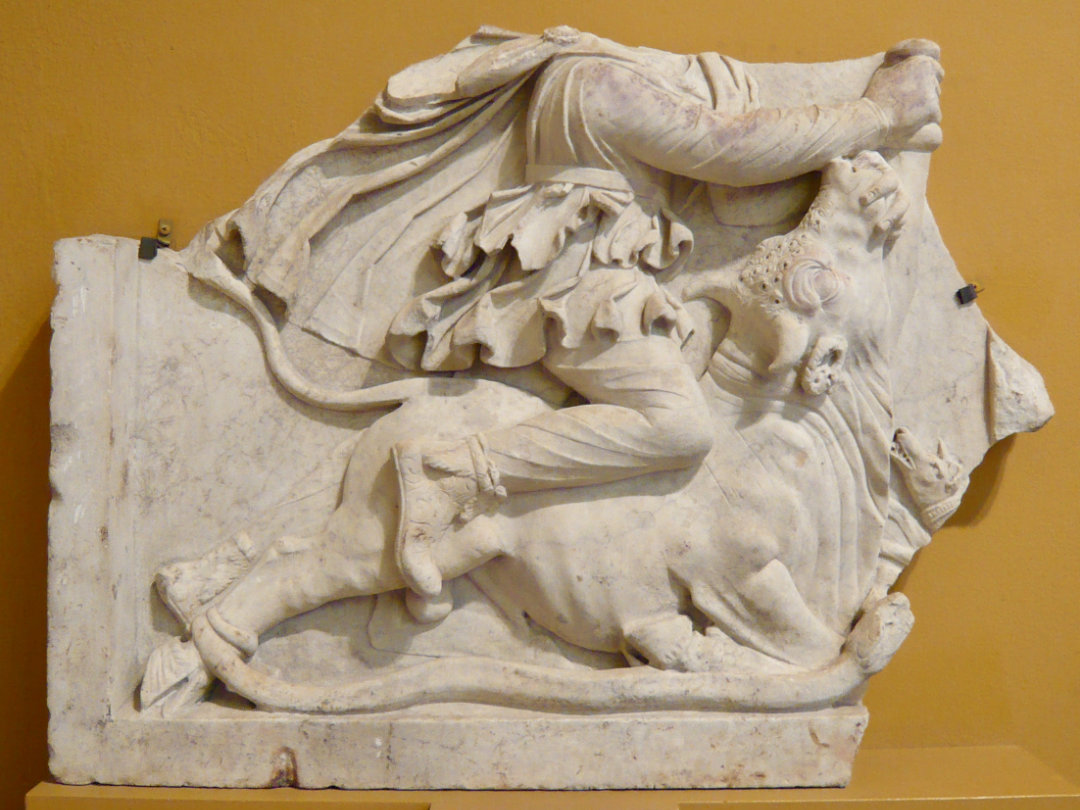
This fragmentary relief depicts Mithras killing the bull in the usual manner, remarkably dressed in oriental attire.
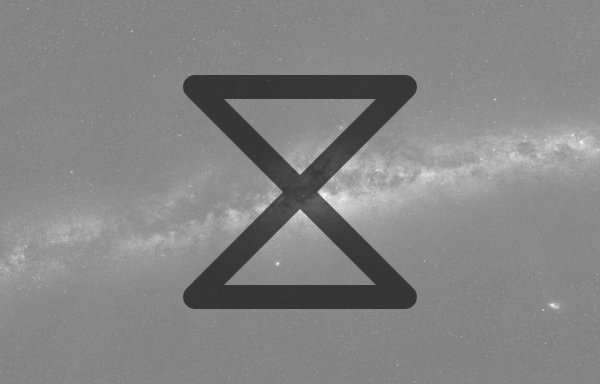
Radcliffe G. Edmonds III analyses the absence of the moon in the Mithras Liturgy. He argues that this absence reflects a deliberate cosmological framework in which lunar powers linked to genesis are excluded from the ritual of ascent.

Relief possibly depicting Mithras-Men holding a torch and a a bust of Luna on a crescent.
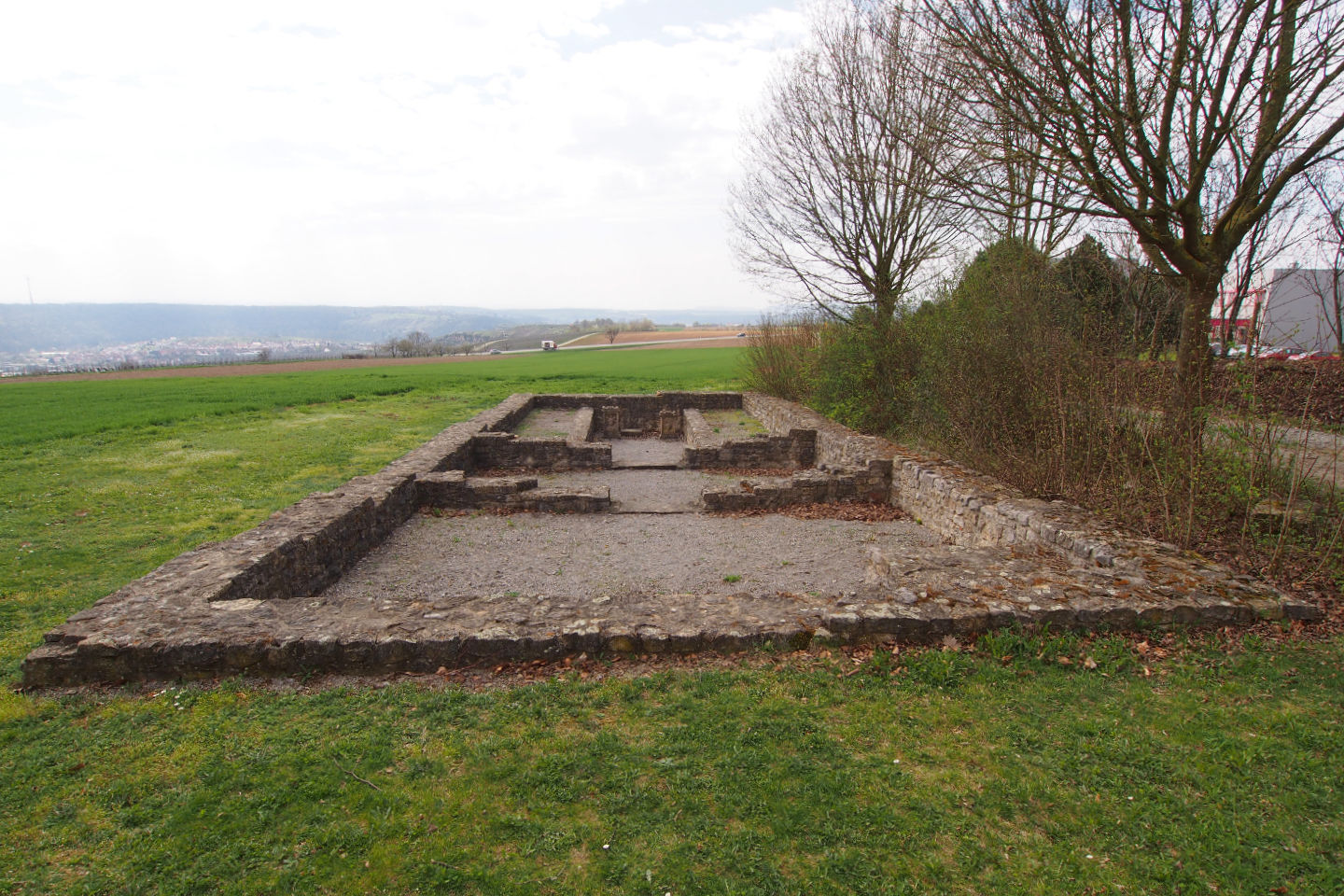
The two altars found in the Mithraeum of Mundelsheim one of Sol and the other of Luna, are exposed in situ.
sacred geometry of barberini mithraeum. The Platonic Chiasma fits 100% with luna, Sol, Cancer and capricorn...
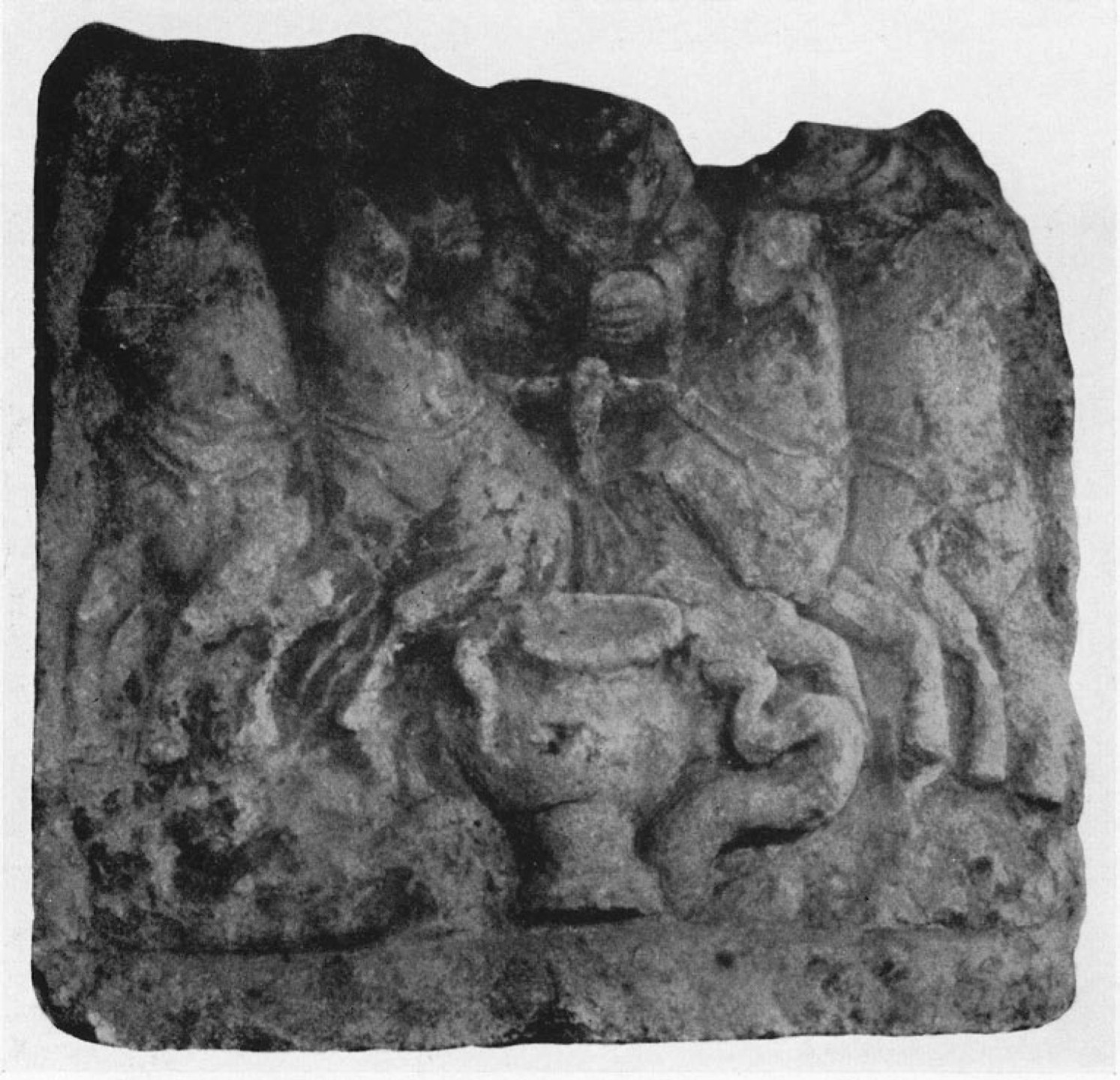
In the mithraic relief of Entrains, the god Sol is depicted riding his chariot together with Luna and a krater surrounded by a serpent.
