Your search for Dieburg gave 32 results.

Settlement of prehistoric origin that developed into the Roman Vicus Vetonianus, modern Dieburg, incorporated into the civitas Auderiensium in Germania Superior and attested as an active centre during the Roman period.
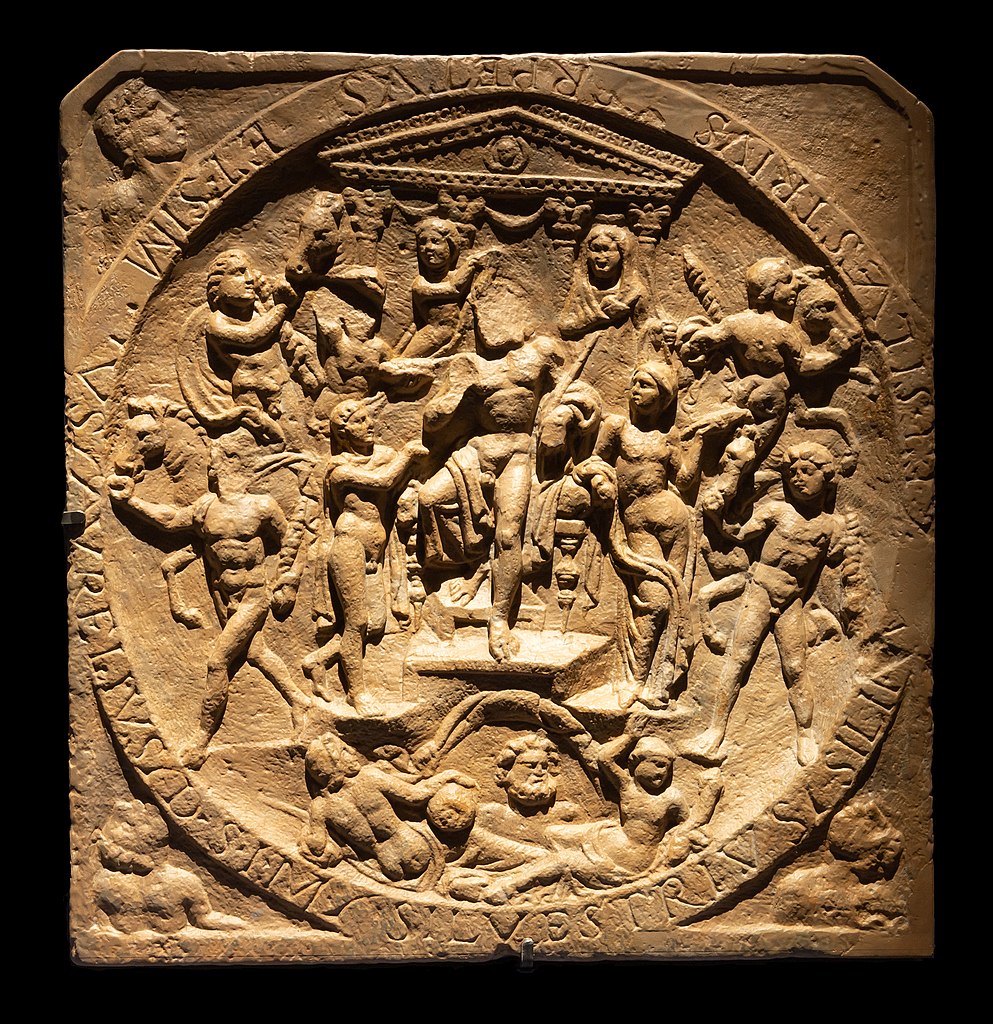
The relief of Dieburg shows Mithras riding a horse as main figure, surrounded by several scenes of the myth.
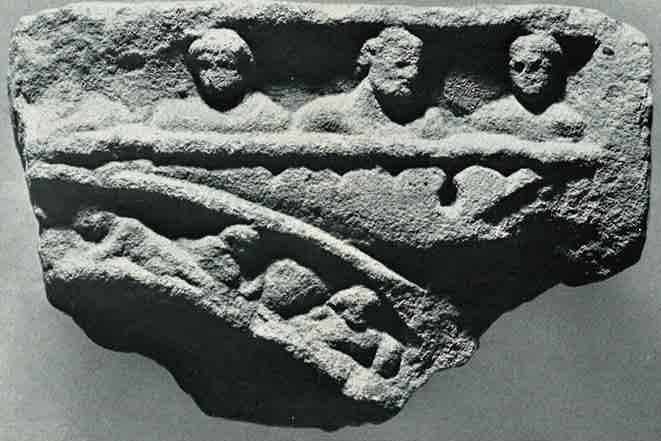
Fragment of a red sandstone relief found in the Frankfurterstrasse at Dieburg, depicting four divine busts in the upper corner of the composition

Assemblage of plates, jugs, dishes, cups, censers, two bronze coins, and animal bones from the Mithraeum at Dieburg
Various altar and base fragments, two sandstone balls, and two millstone fragments from the Mithraeum at Dieburg
Small yellow-red sandstone altar from the Mithraeum at Dieburg dedicated to Deo sancto Mercurio
Small fragmentary inscription from the Mithraeum at Dieburg preserving only the abbreviated dedication D(eo) i(nvicto) M(ithrae)
Red sandstone altar from the Mithraeum at Dieburg that had been reused, its original inscription obliterated and replaced with a dedication to Deo invicto Mithrae
Small red sandstone fragment from the Mithraeum at Dieburg preserving a head in a Phrygian cap
Two yellow sandstone fragments from the Mithraeum at Dieburg, comprising a base with a foot and another piece with part of a garment and a club
Bust of a diademed woman in red sandstone from the Mithraeum at Dieburg, probably representing Juno
Red sandstone fragment of a standing woman in a mantle from the Mithraeum at Dieburg, head and lower body lost, probably Minerva
Small yellow sandstone fragment from the Mithraeum at Dieburg showing the foremost part of an animal, probably a dog or ram, with head turned right
Red sandstone base of a Mercury statue from the Mithraeum at Dieburg, preserving only the tortoise attribute at the god's feet
Twenty-three fragments of a yellow sandstone statue of Mercury from the Mithraeum at Dieburg, dressed in a short mantle and holding a caduceus
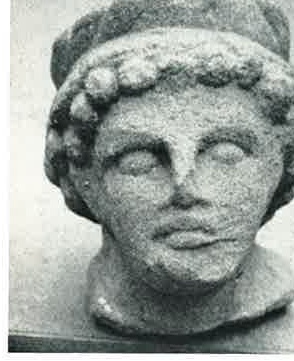
Head in red sandstone from the Mithraeum at Dieburg wearing an oblong pointed cap, possibly Mithras, a torchbearer, or Phrygia
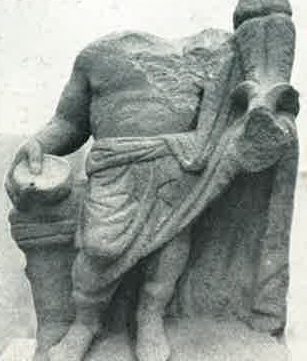
Yellow sandstone statue from the Mithraeum at Dieburg showing a genius with a double cornucopia, a mantle, and a leafy crown
Yellow sandstone relief from the Mithraeum at Dieburg depicting Hercules standing with the Nemean lion
Votive altar from the Mithraeum at Dieburg inscribed by Hermapiostor, dedicated ex iussu