Your search Edgar Wind gave 78 results.

Professor Wind's acclaimed work explores pagan mysticism and neoplatonic philosophy in Renaissance art, offering insightful analyses of masterpieces by Botticelli, Michelangelo, Raphael and Titian.

Three small bronze slabs bearing roughly modelled bearded heads of wind-gods, each with a wing on the head, with iron hooks on the reverse for fastening, found at the Mithraic sanctuary at Angleur near Liège in Belgica.
Fragment of a sandstone relief from Mithraeum I at Stockstadt depicting a beardless figure in a velum, identified as a wind or winter deity
Dark-red clay vase from the refuse pit of the Roman camp at Windisch, ancient Vindonissa, with three handles each encircled by a coiling serpent; a vessel type closely associated with Mithraic ritual.

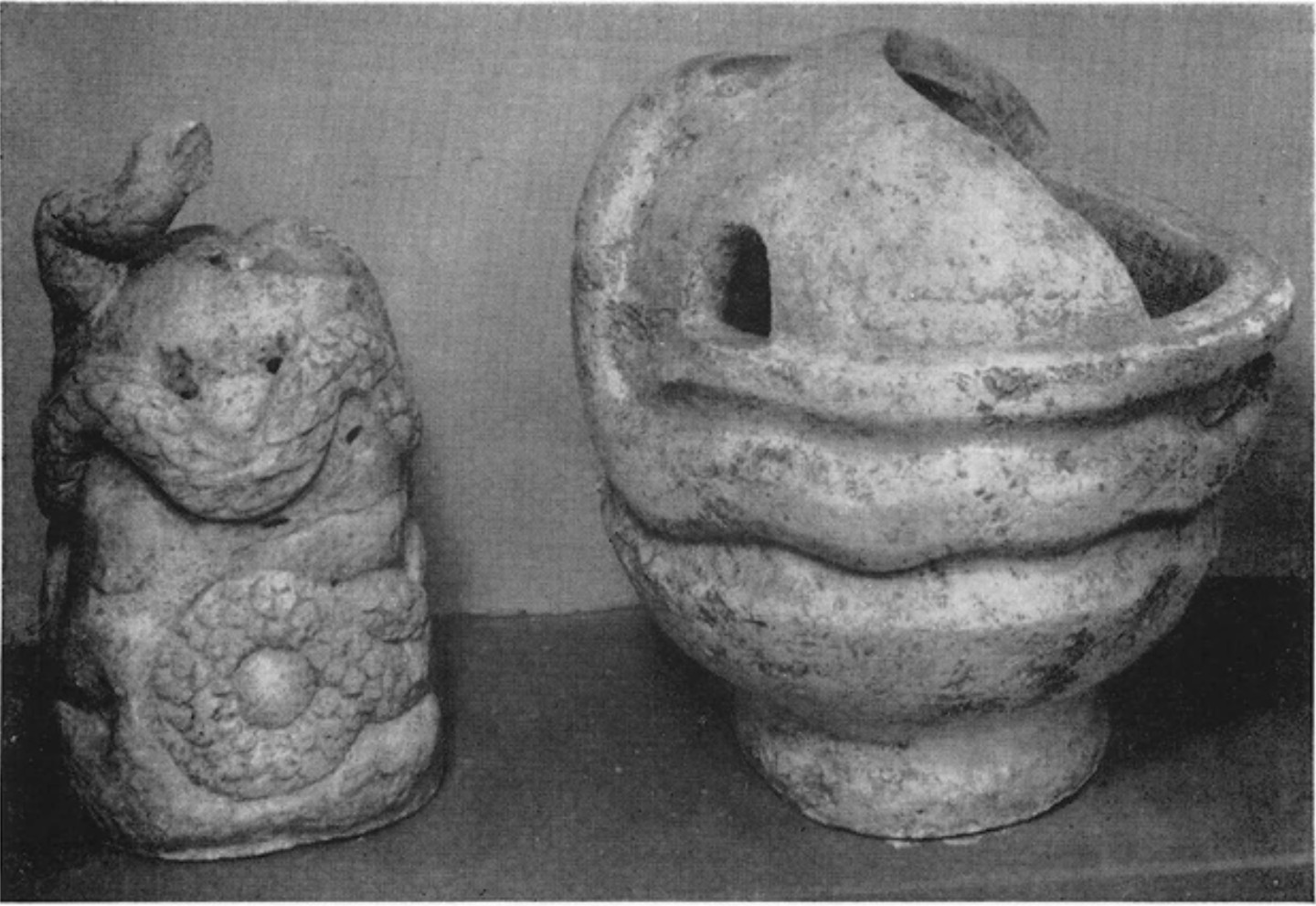
Both objects have a snake winding itself around them.

Vindonissa served as one of the principal legionary bases of the Upper Rhine frontier.
.jpg)
The statue of Arimanius/Ahriman was found in 1874 under the city wall of York during the construction of the railway station.
Windobona served as a major legionary and administrative centre on the middle Danube frontier.
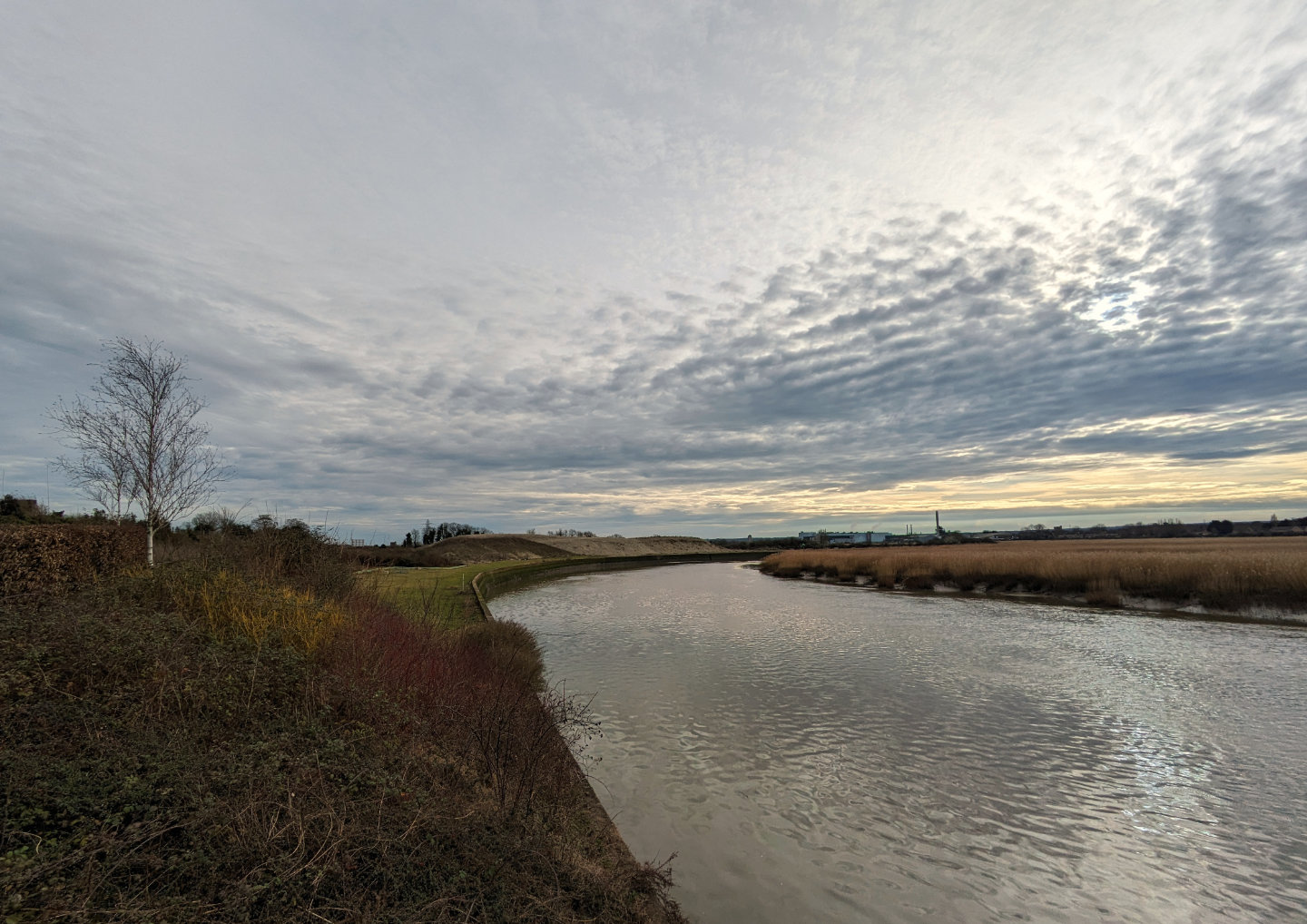
To date, there is no evidence that the so-called Mithraeum of Burham was ever used to worship the sun god.
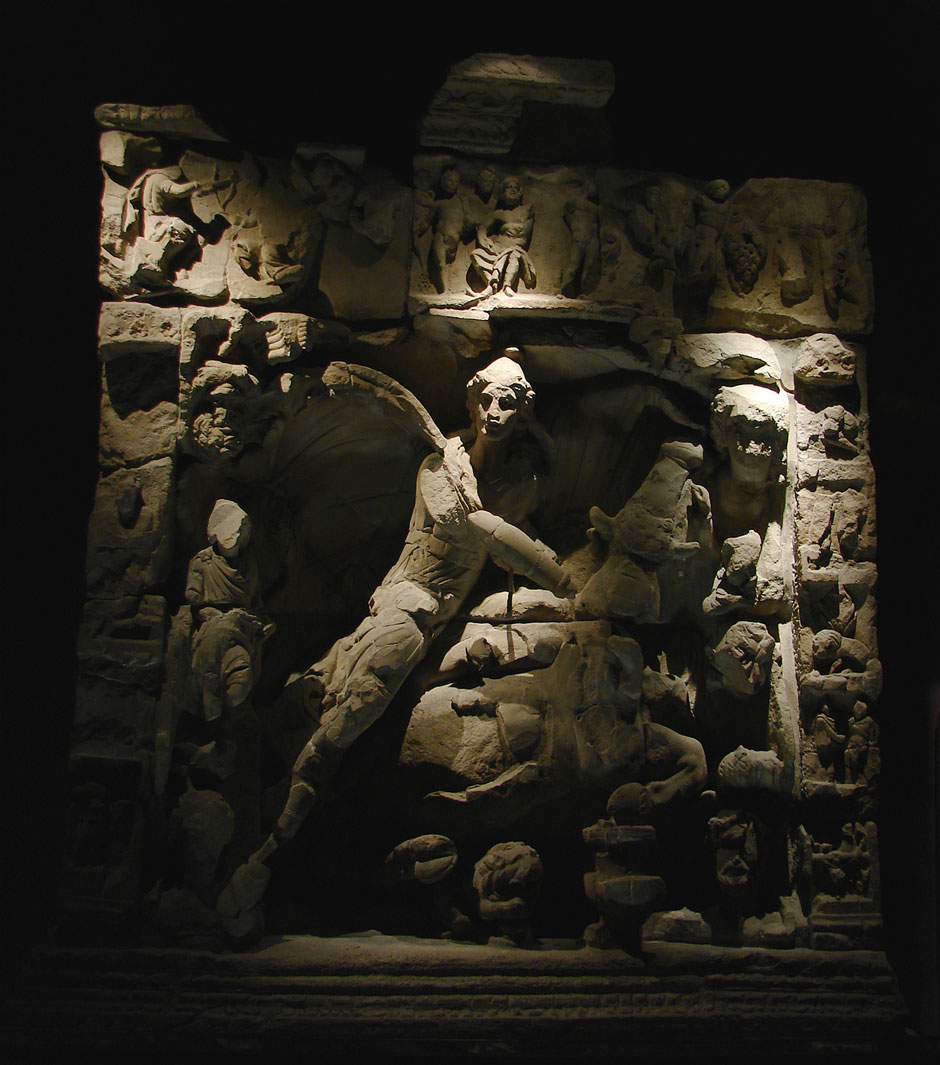
The Tauroctony of Saarbourg (Sarrebourg, ancient Pons Sarravi), France, contains most of Mithras deeds known in a single relief.
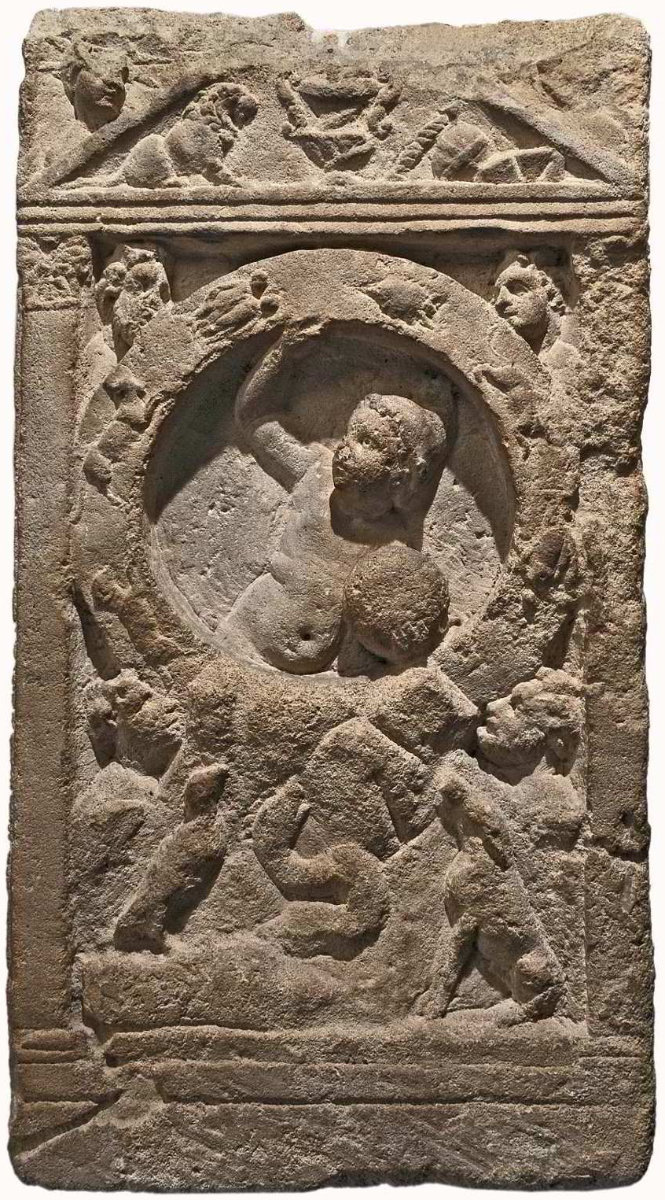
The relief depicts the birth of Mithras, holding a globe, surrounded by the zodiac.

This unusual mural depicting Mithras killing the bull was found near the Colosseum in 1668.
Fragment of a relief from Jassen, Moesia Superior, with three scenes: Mithras and kneeling Sol, the sacred repast, and Mithras ascending Sol's chariot; known from a personal communication.
Fragment of a Mithraic relief in a crown from Ratiaria, Moesia Superior, mentioned in a personal communication from Radnóti; no further details.
Marble tauroctony fragment from Ratiaria, Moesia Superior, preserving the lower part of Mithras's body with his right leg, the hindmost part of the bull, and the serpent below.
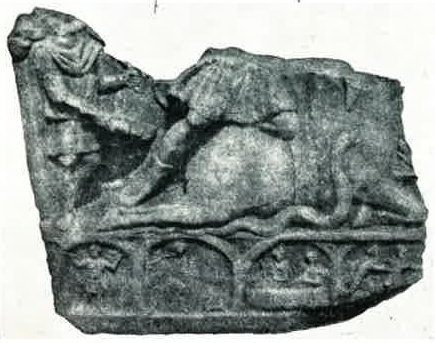
Fragment of a marble slab from Ratiaria, Moesia Superior, found in 1936, with the upper section depicting the tauroctony and the lower section bearing a votive inscription.
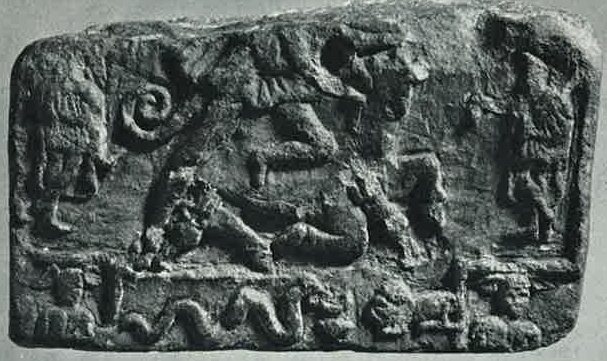
Small limestone tauroctony relief from Augst, ancient Augusta Rauricorum, depicting the bull-slaying with dog and scorpion, flanked by cross-legged torchbearers in Oriental dress; Cautes holds a pedum alongside the upraised torch.
