Your search Farid ud-Din Attar gave 893 results.
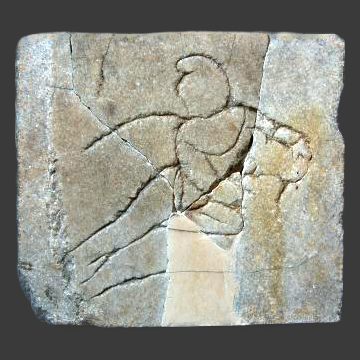
This unfinished Mithras tauroctonos without the usual surrounding animals was found in 1923 in Italica, near Seville, Spain.

A decorated inscription with egg-and-dart moulding found in the castle of La Fratta near Montefalco in Umbria, bearing a brief dedication to Sol Invictus.
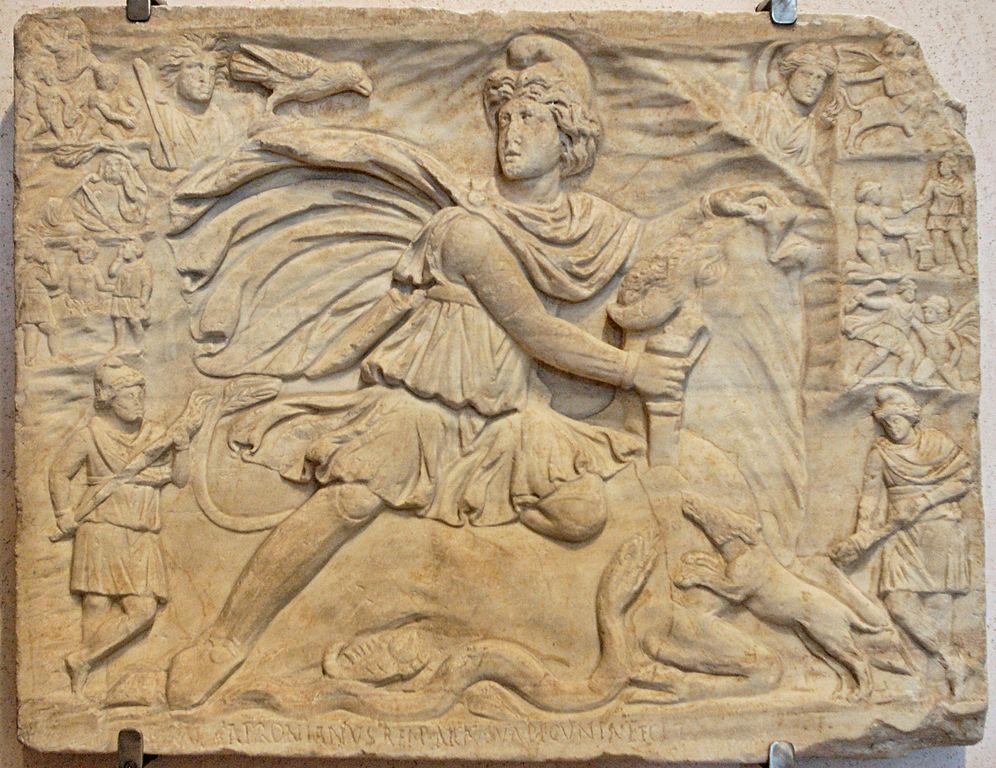
The relief of Mithras slaying the bull of Nersae includes several episodes from the exploits of the solar god.
A marble dedication tablet found in the Vigna Curtii Palloni outside the Porta Sant'Agnese near the Praetorian Camp in Rome, recording the construction of a sacrarium dedicated to Sol Invictus by Q. Pompeius Primigenius, pater and sacerdos, under Septimius Severus and Caracalla…
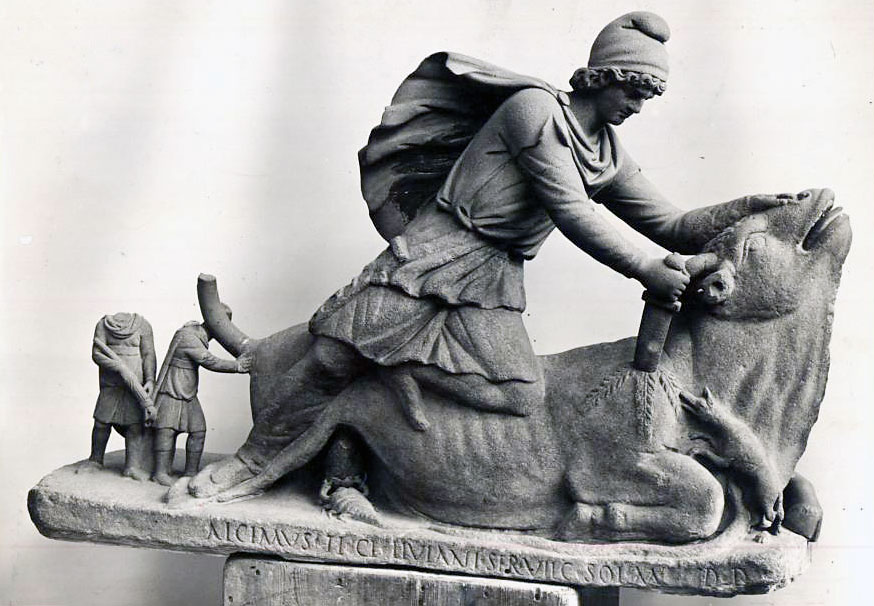

Roman building on the Aventine between the eastern side of S. Saba and Via Salvator, probably used as a Mithraeum at the end of the 4th century, with a long corridor bearing three semicircular niches and a large external basin.
This small cippus to Zeus, Helios and Serapis includes Mithras as one of the main gods, although some authors argue that it could be the name of the donor.
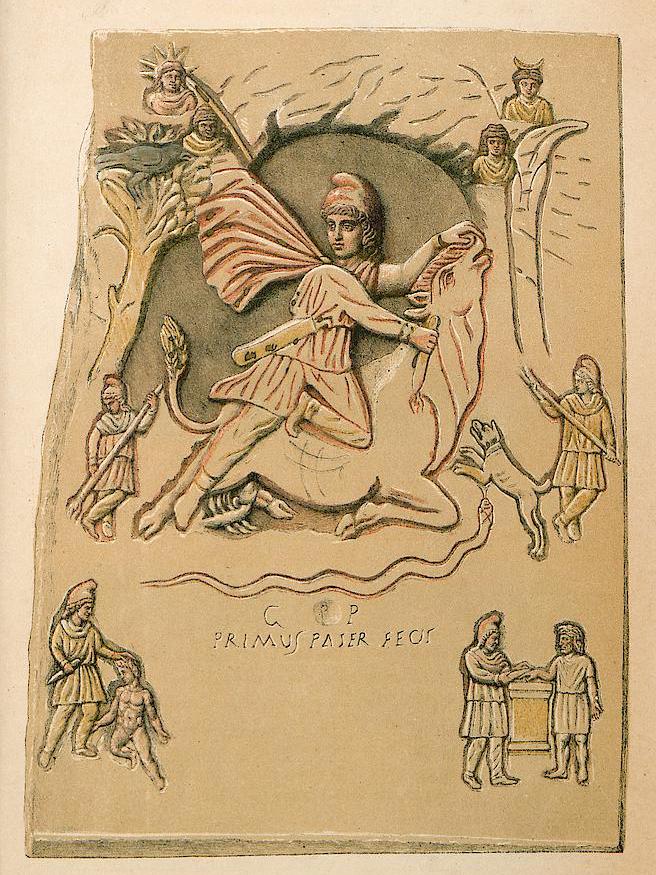
The relief of Mithras slaying the bull found on the Esquiline Hill includes two additional scenes with Mithras and two other figures.
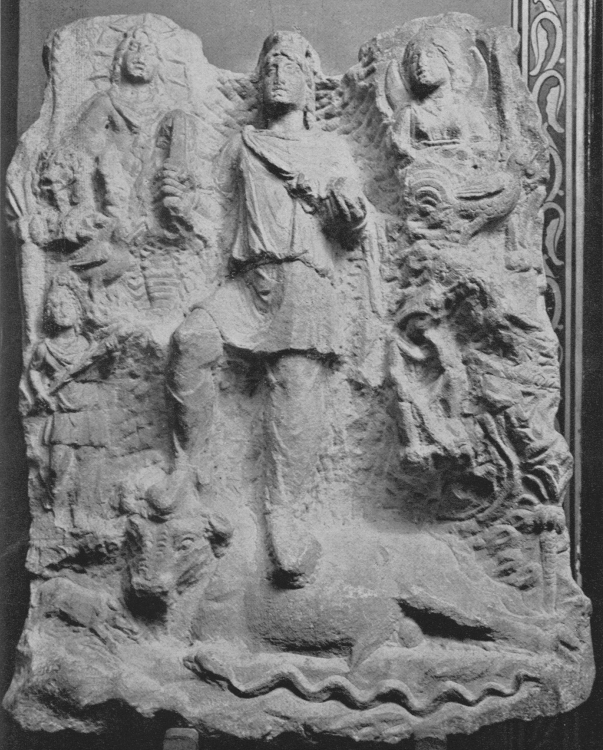
This unusual representation of Mithras standing on a bull was kept in the Casino di Villa Altieri sul Monte Esquilino until the 19th century.
Graffito on a wall of the Caseggiato del Sole adjacent to the Mitreo dei Serpenti at Ostia, reading "Dominus Sol hic avitat" (Lord Sun dwells here).
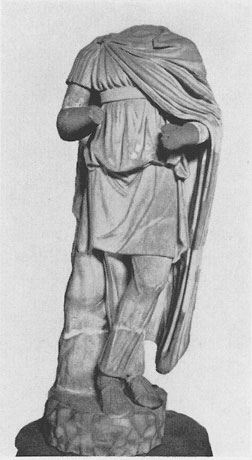
Penthelic marble statue of a standing torchbearer in Eastern attire, cross-legged, with head and torch arm broken off, probably 2nd century A.D., found at Antium (modern Anzio).
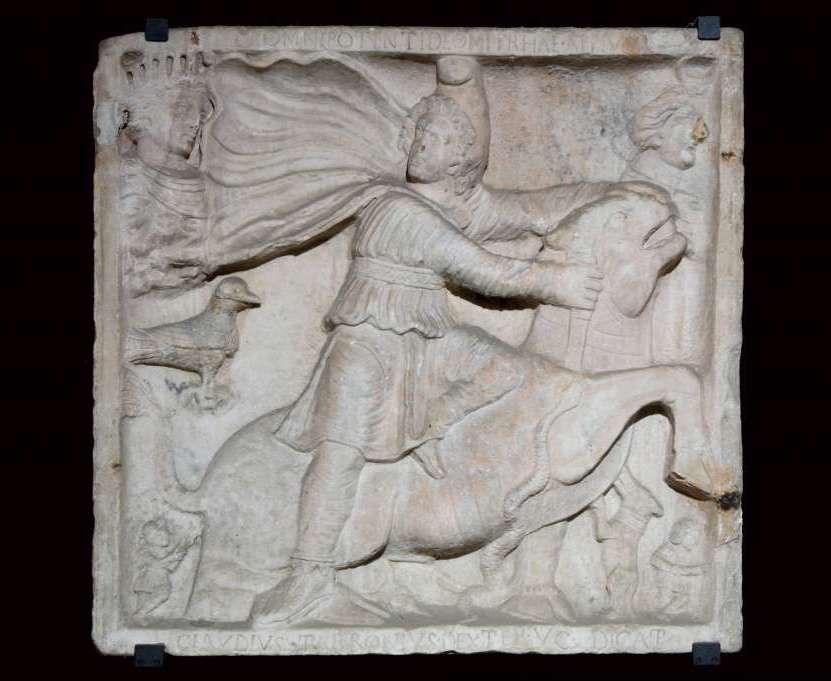
The marble relief of Mithras killing the bull in Naples bears an inscription that calls the solar god omnipotentis.

One of the rooms in a sustantive masonry building in Hollytrees Meadow was considered to be a Mithreum, a theory that has now been discarded.
Epigraphic monument from Tripolitania preserving a corrected reading discussed in later scholarship.
Limestone stele recording endowments for the feast of the Mithrakana by Antipater and his son Gaios, found at Amorium (modern Hisarköy), Phrygia.
Rough-hewn statuette found at Emir Ghasi in Lycaonia, once thought to represent a Mithraic soldier; according to Cumont, a modern forgery.
Rock inscription of Sagarios, strategus of Ariaramneia, recording a Mithraic ceremony near Farasha (ancient Ariaramneia), Cappadocia, likely 1st century A.D.
Small altar found in the foundations of a school building in the Piraeus, near Athens, dedicated to Helios Mithras.
Greek inscription from Athens, recording that Acrisius dedicated a gift to Mithras in honour of Chrysippos.
Third-century sepulchral inscription from near Philippi, Macedonia, studied for its Mithraic content in the upper lines of the text.
