Your search Farid ud-Din Attar gave 1805 results.

Plate from Intercisa, Pannonia Inferior, with traces of red painting and an ivy-leaf in the middle line; bearing an inscription recording a Mithraic dedication.
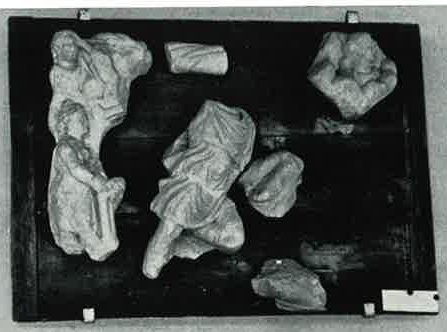
Marble tauroctony relief from Mithraeum III at Ptuj, ancient Poetovio, preserving Mithras killing the bull — head and most of the flying cloak lost — flanked by Cautopates holding the torch downward.
Marble relief fragment from Mithraeum II at Ptuj, ancient Poetovio, depicting a standing woman holding her right hand above an altar and a palm branch in her left; the lower body and base are lost.
Deposit of twenty-three coins from the Mithraeum at Schachadorf, Noricum, spanning from Claudius II to Valentinianus II and providing a terminus for the sanctuary's use.
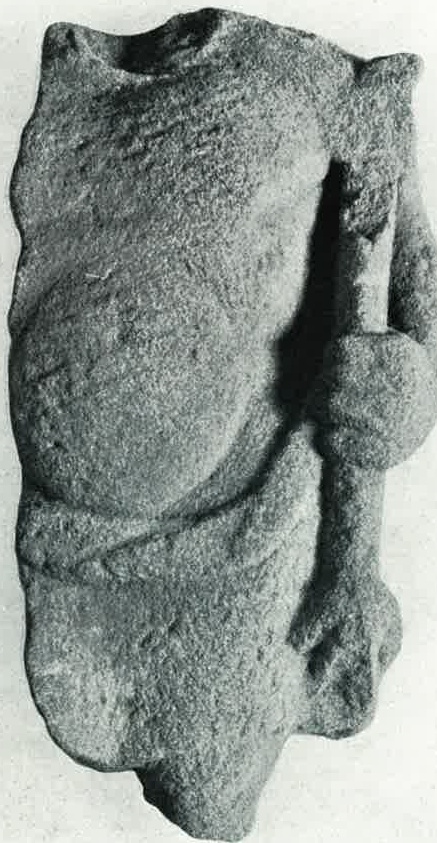
Group of sandstone relief fragments from Rückingen depicting multiple deities including a male head identified as Hercules
Sandstone relief fragment from Rückingen with an indistinct standing figure, probably a woman, in an arched niche
Three basalt fragments of a standing figure in jack-boots from Mithraeum III at Heddernheim, ancient Nida, with traces of red paint on the loin-cloth
Assemblage of cult refuse from shaft M at Mithraeum I, Heddernheim, ancient Nida, including pottery, bones, a boar's tooth, and a bronze ring with Mercury
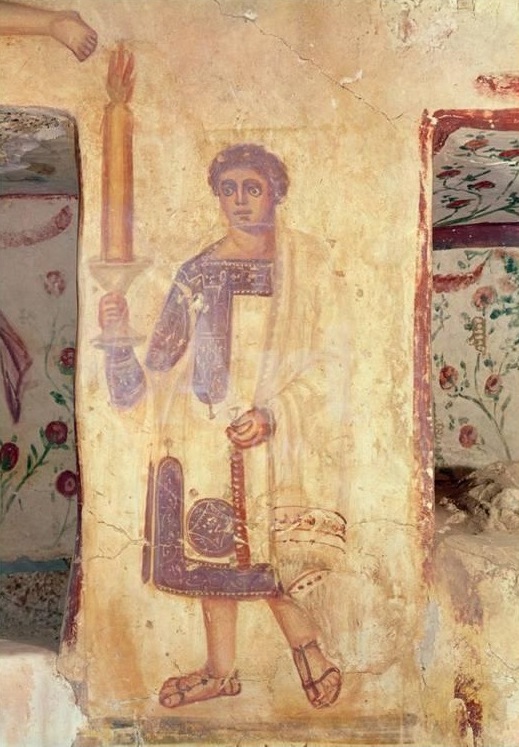
The Mithraic nature of the frescoes of Oea, according to the scholars Cumont and Vermaseren, is now questioned.
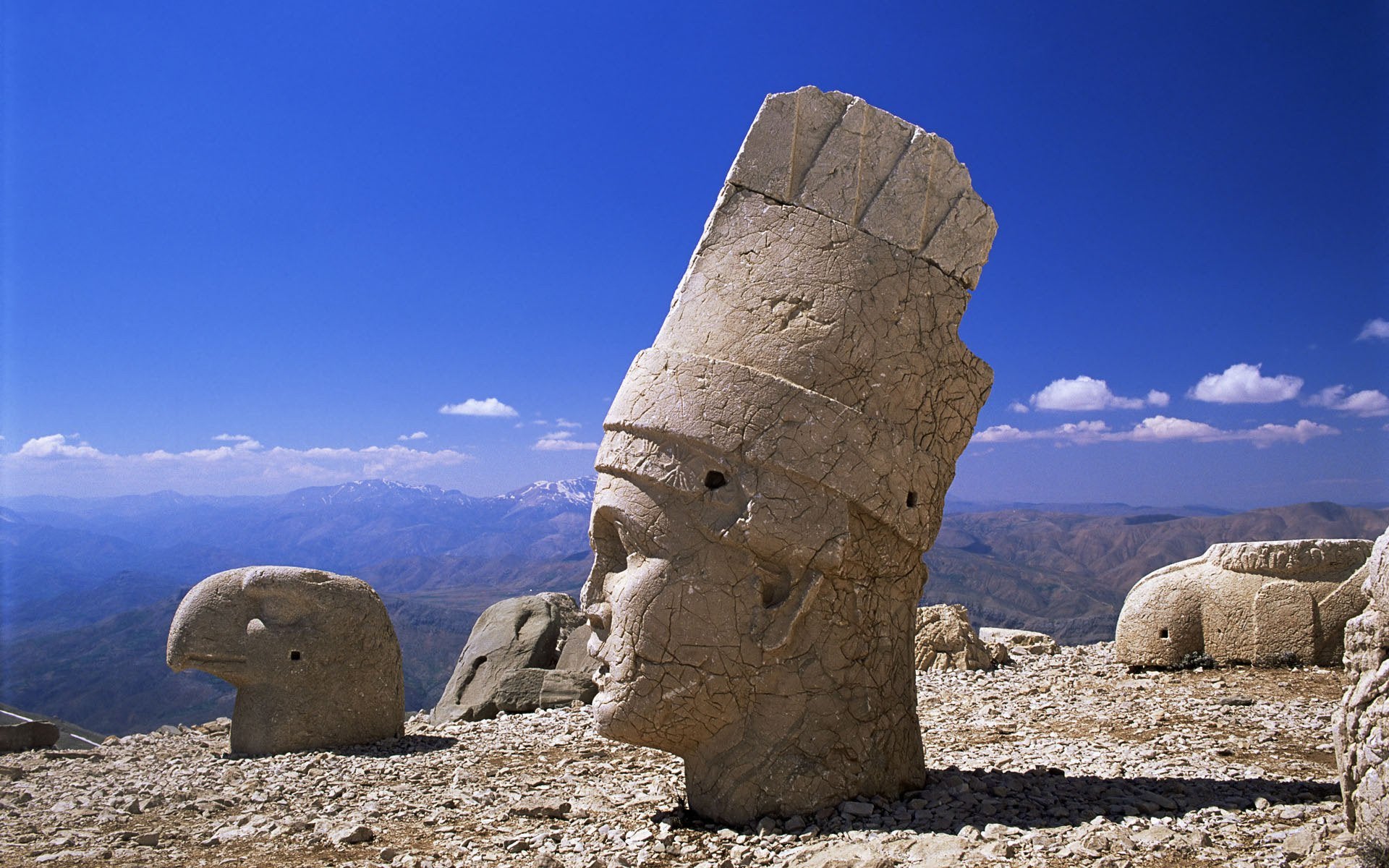
The colossal head has been identified as a solar god, Apollo-Mihr-Mithras-Helios-Hermes.

Budaörs is a town in Pest County, in the metropolitan area of Budapest, Hungary. Before the Romans, the Celtic tribe of Eraviscus occupied the area for about 100 years.

Neapolitan senator who dedicated a tauroctonic relief to Mithras tauroctonus to the Almighty God Mithras.
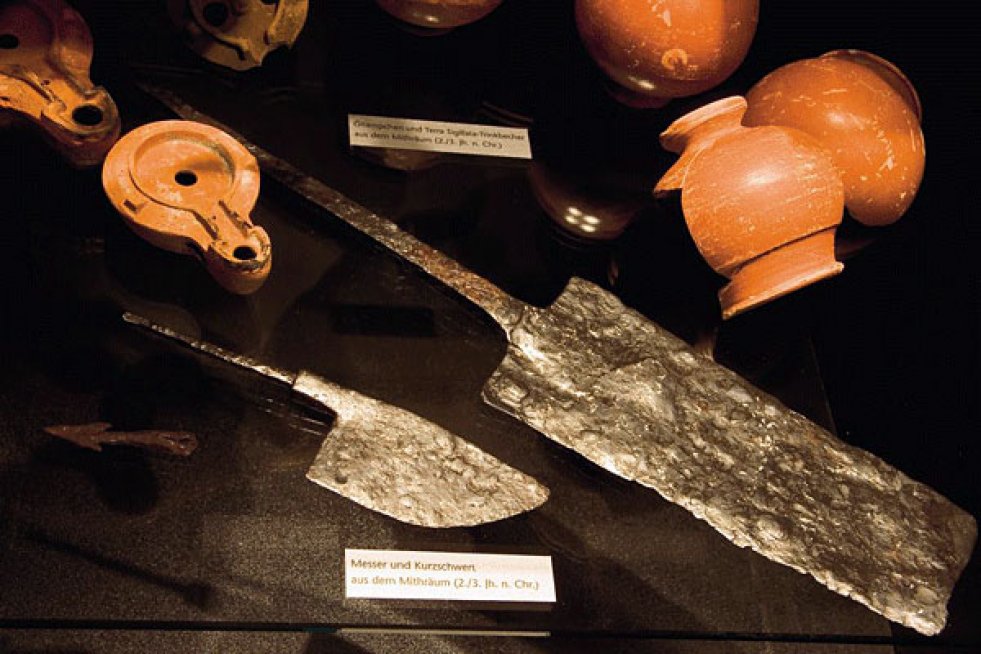
The Mithraeum of Kunzing was an underground building, oriented east-west. The entrance was probably on the east.
Corsica et Sardinia occupied an important insular position within the maritime networks of the western Mediterranean.
Corsica and Sardinia preserve a small island corpus within the western Mediterranean diffusion of Mithraism.
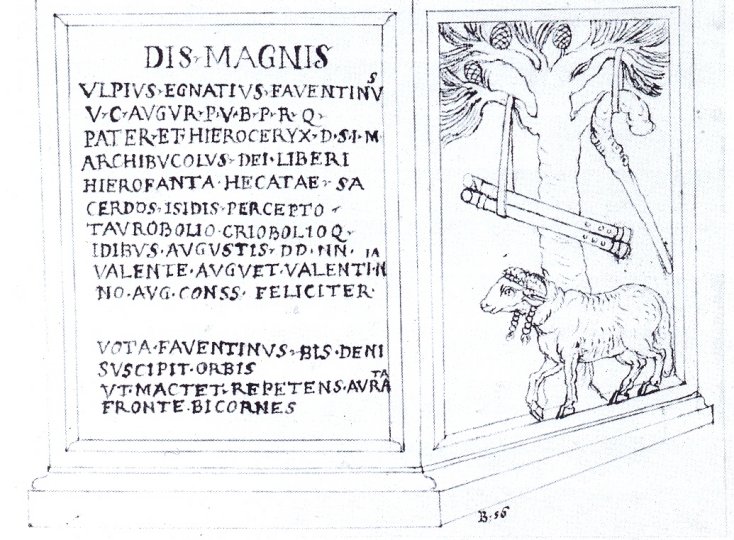
Both of them were discovered in 1609 in the foundations of the façade of the church of San Pietro, Rome.
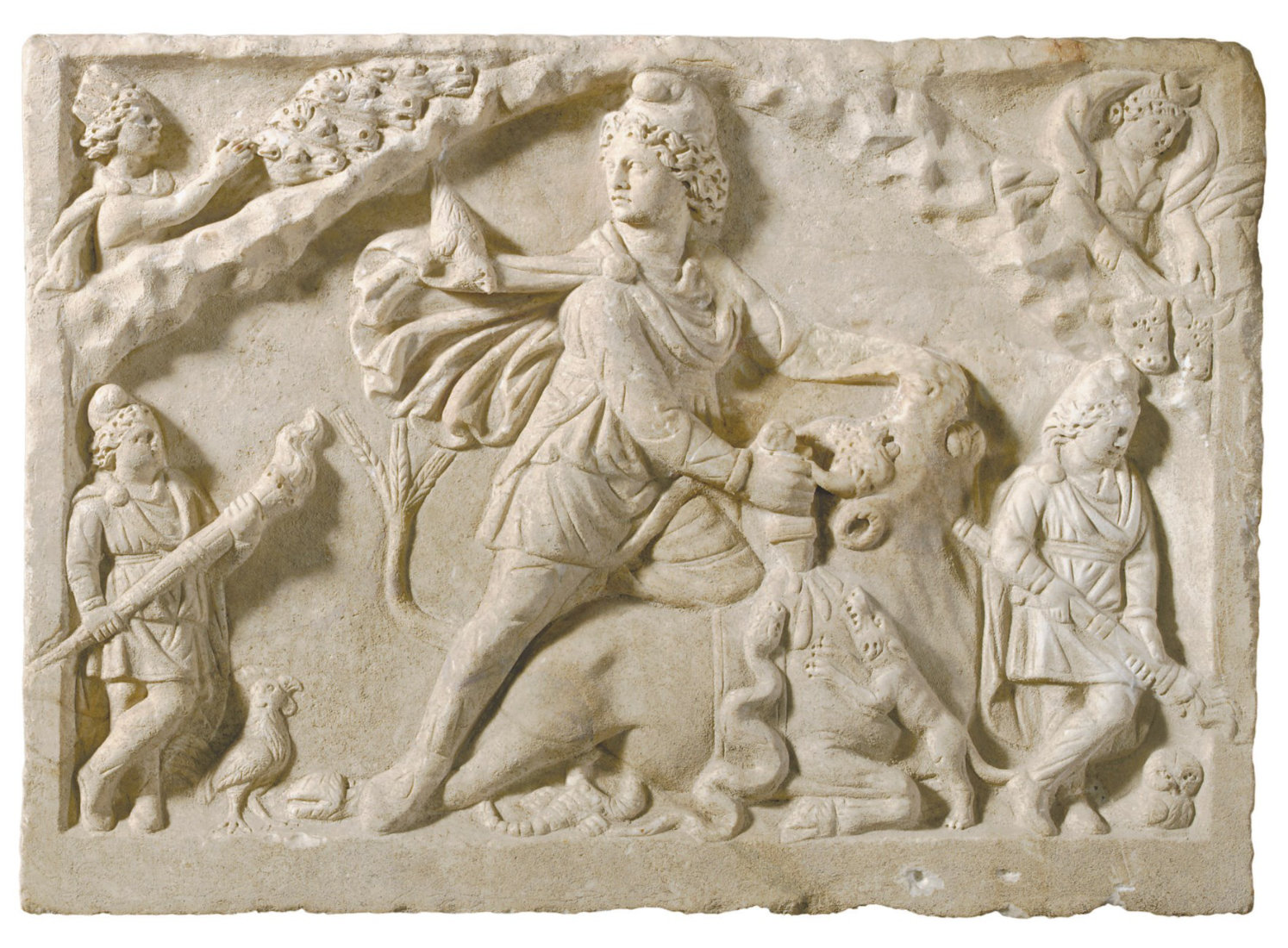
This relief of Mithras killing the bull includes an unusual owl at the feet of Cautopates and a cock next to Cautes.
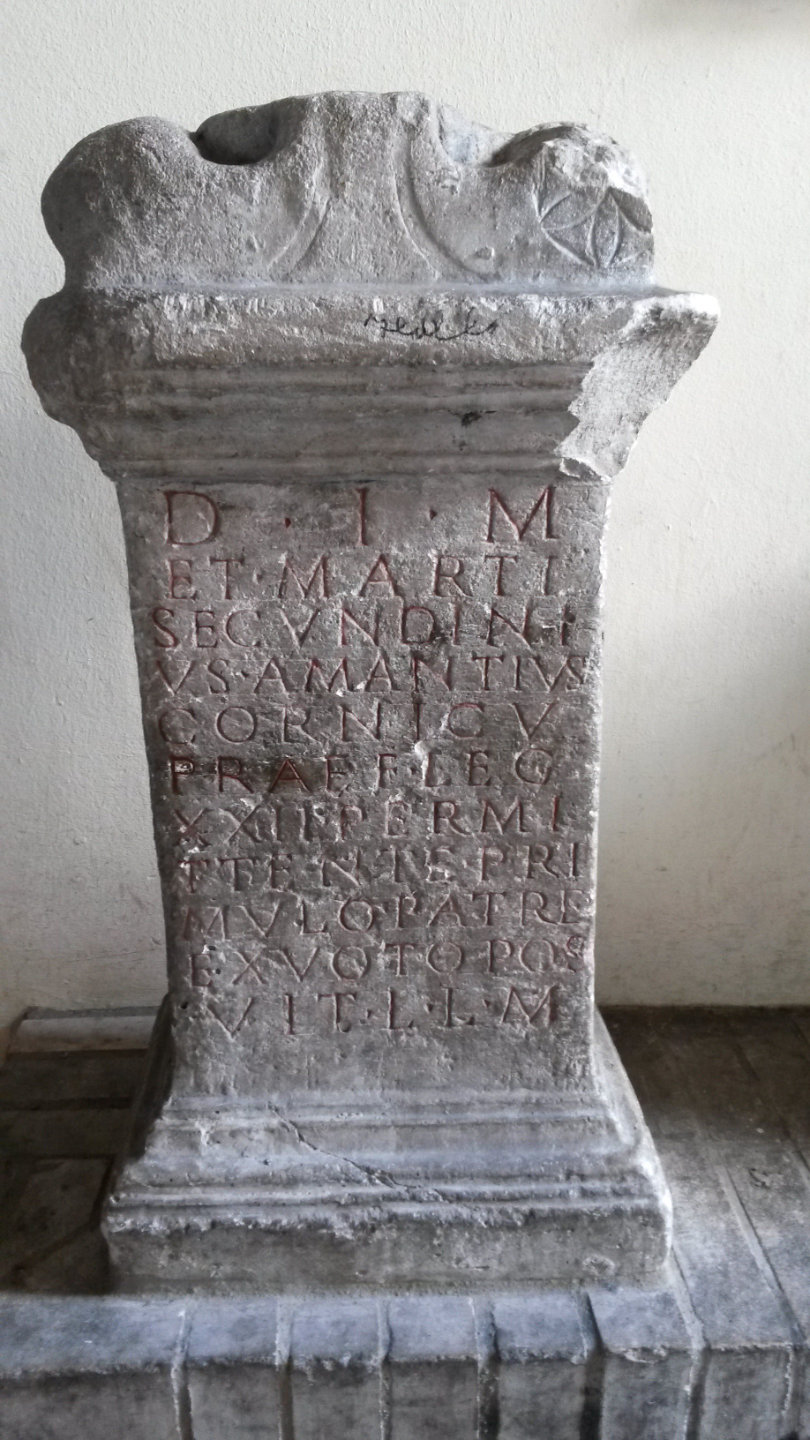
This altar has been unusually dedicated to both gods Mithras and Mars at Mogontiacum, present-day Mainz.

This marble altar was found ’in the street called di Branco’, behind the palace of the Cardinal of Bologna, in Rome.
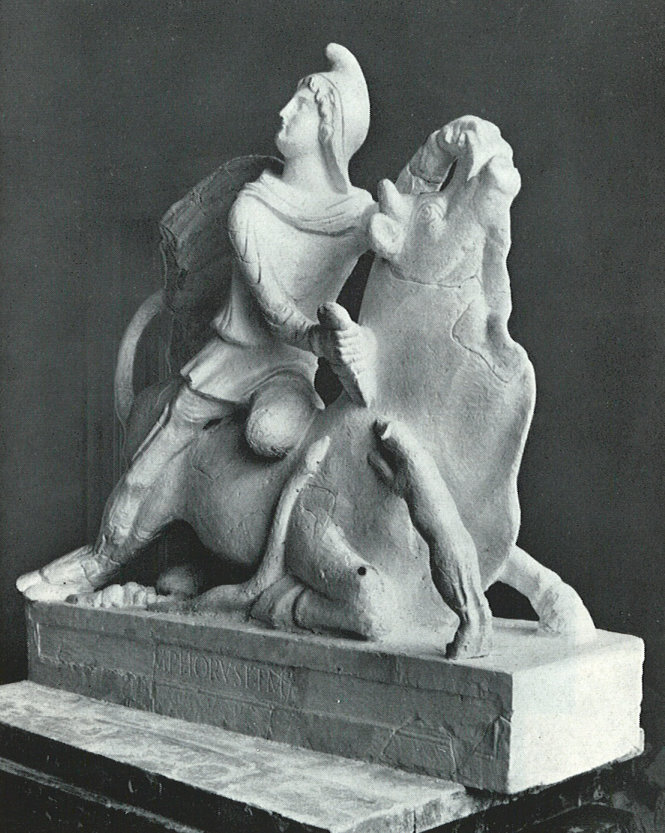
This sculpture of Mithras killing the sacred bull bears an inscription that mentions the donors.
