Your search From Rome, Mithreum of Castra Peregrinorum under Santo Stefano Rotondo. gave 548 results.

Mithraic material whose correct archaeological attribution belongs to Regio XII of ancient Rome.

A probable Mithraic sanctuary near Santa Maria in Domnica on the Caelian Hill, known from a group of dispersed reliefs formerly owned by Ottaviano Zeno.
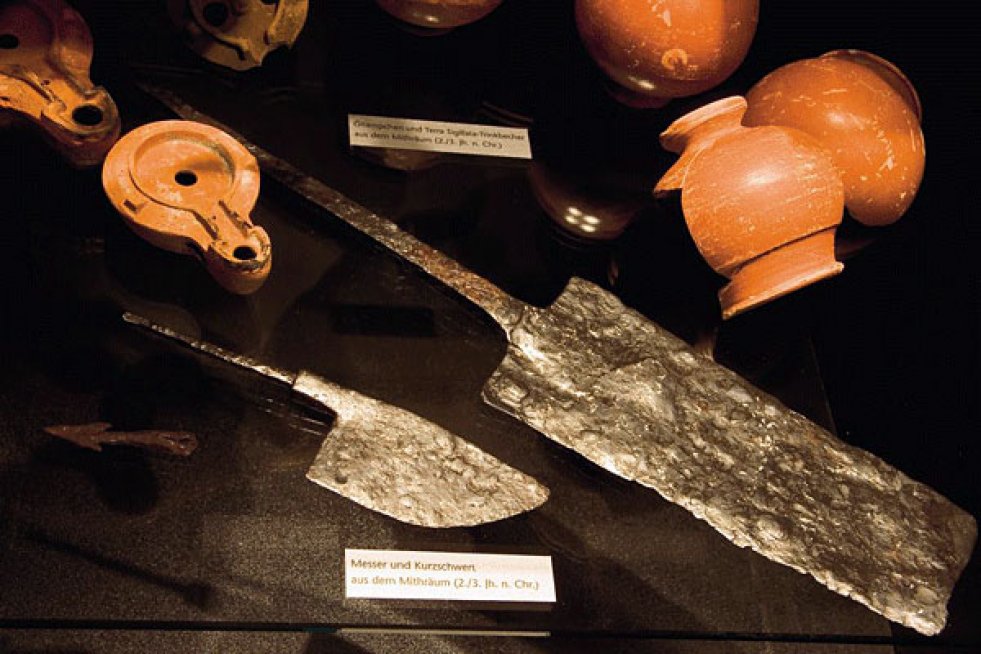
The Mithraeum of Kunzing was an underground building, oriented east-west. The entrance was probably on the east.

Etruria formed part of the cultural and religious heartland of central Italy closely connected to Rome and the Tyrrhenian world.
,_found_in_Rome,_2nd_century_AD,_British_Museum_(15545876047).jpg)
The sculpture of Mithras slaying the bull was transported from Rome to London by Charles Standish in 1815.
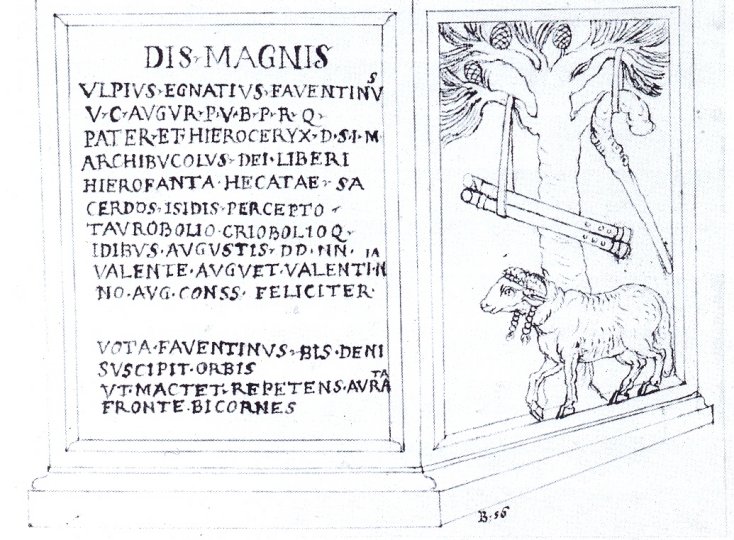
Both of them were discovered in 1609 in the foundations of the façade of the church of San Pietro, Rome.

Supervisor of the imperial couriers who offered an elaborate votive altar and ritual insignia to Mithras in Rome under Commodus.
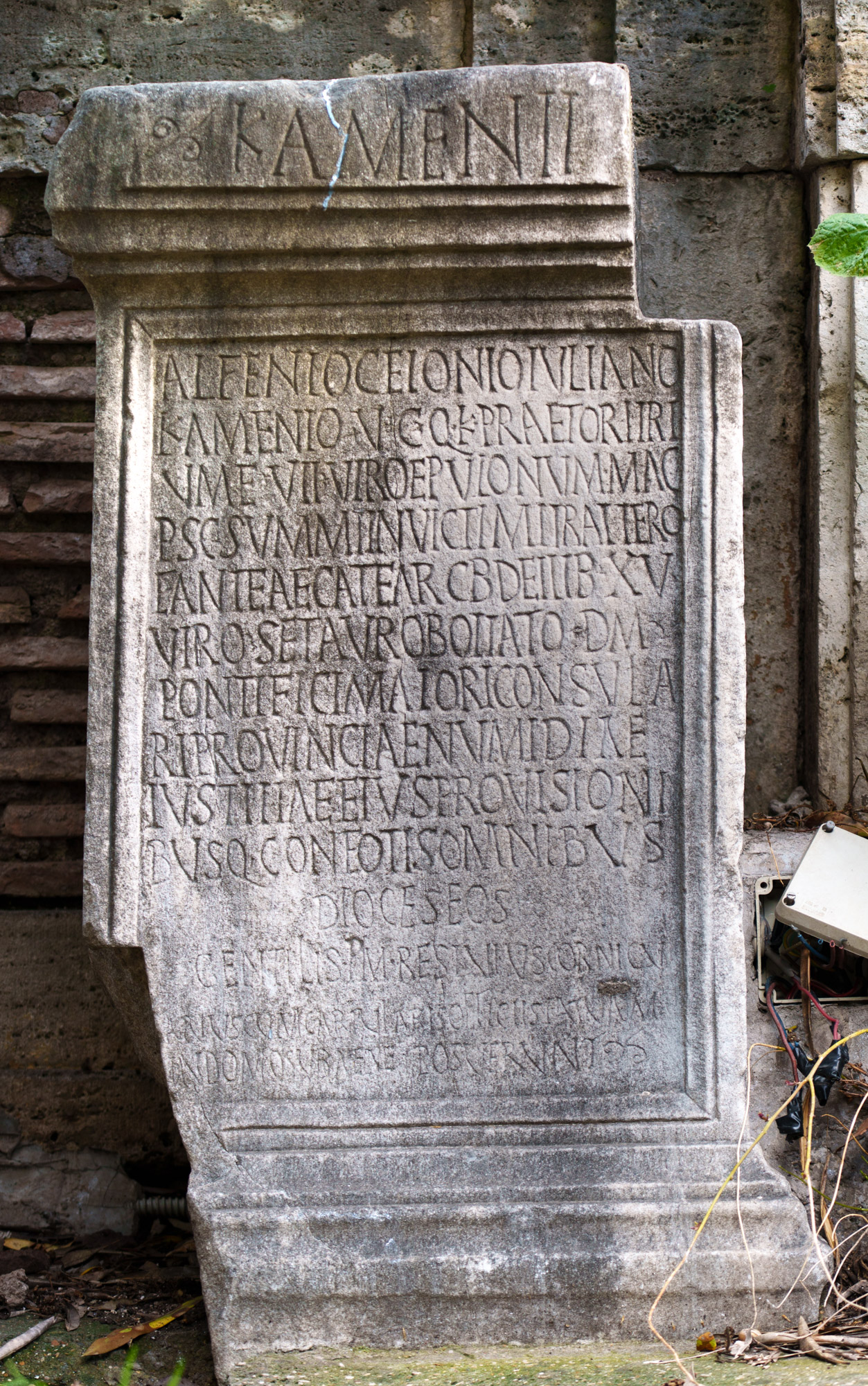
Honorific marble statue base dedicated to the senator and Mithraic pater Alfenius Ceionius Iulianus Kamenius by members of his provincial administration.
Marble altar dedicated at the Vatican Phrygianum in Rome by the Mithraic pater Alfenius Ceionius Iulianus Kamenius in 374 CE.
This stele found at the foot of the Aventine bears an inscription of Kastos father and son, and mentions several syndexioi who shared the same temple.
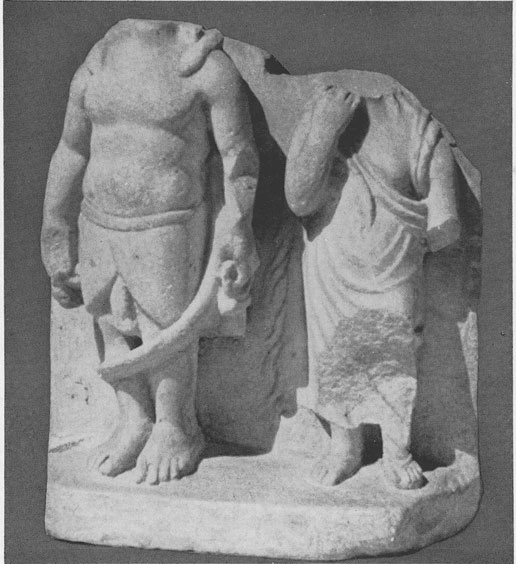
Marble relief, probably found in Rome during the construction of the Palazzo Primoli along the Via Zanardelli.
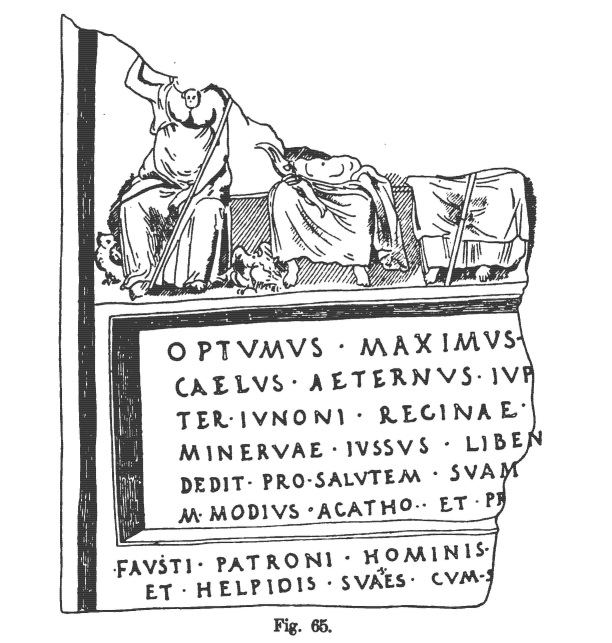
This marble relief bears an inscription by Marcus Modius Agatho, who dedicated several monuments to Mithras on the Caelian Hill in Rome.
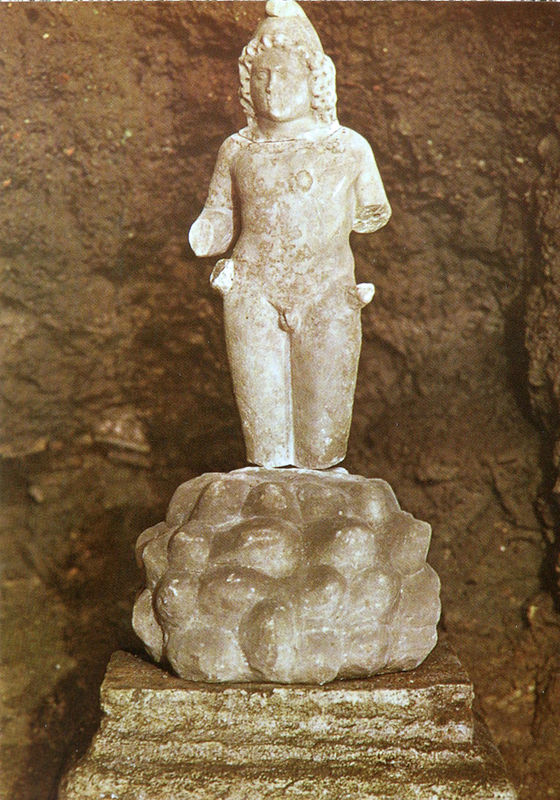
Mithras birth from the knees upwards emerging from a rock and wearing as usual a Phrygian cap.
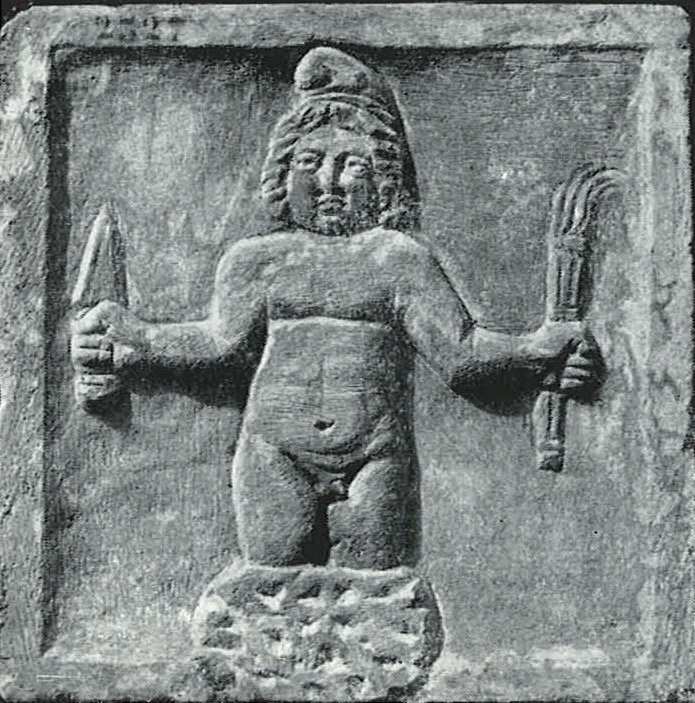
The relief of Mithras being born from the rock of the Esquiline shows the young god naked, as usual, with a torch and a dagger in his hands.
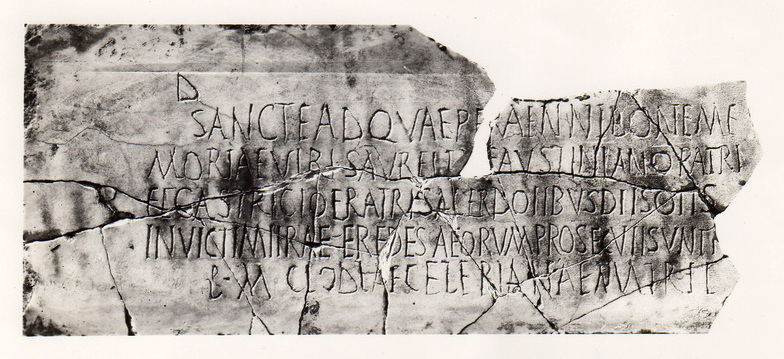
This inscription was commissioned by a family of priests of the invincible god Mithras.

Partial relief of a Giant with snake-feet found in the Mithraeum of Santa Prisca.
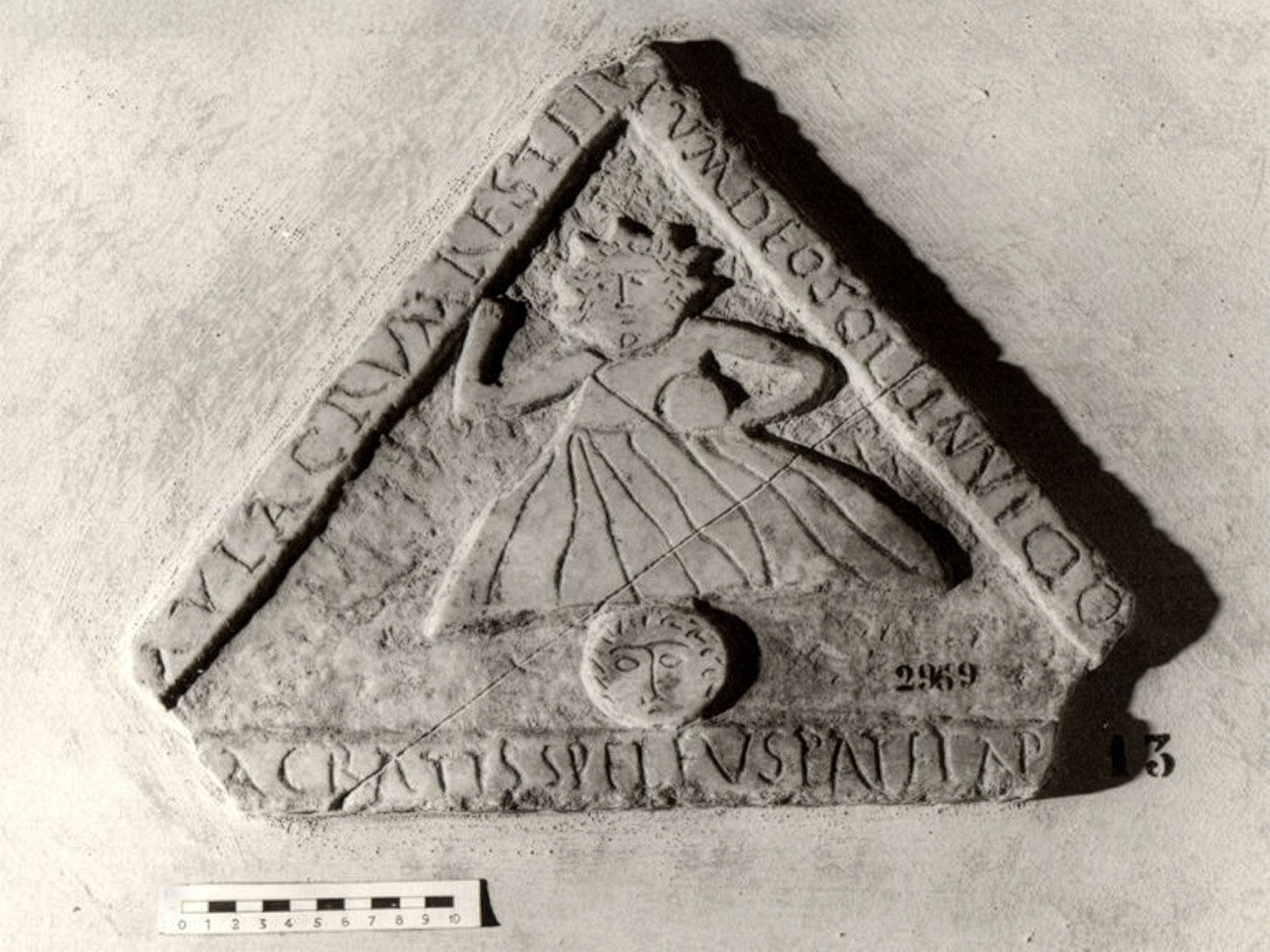
Small triangular slab bearing a Latin inscription referring to Sol Invictus and to a sacred cave, probably dating to the 4th century AD.
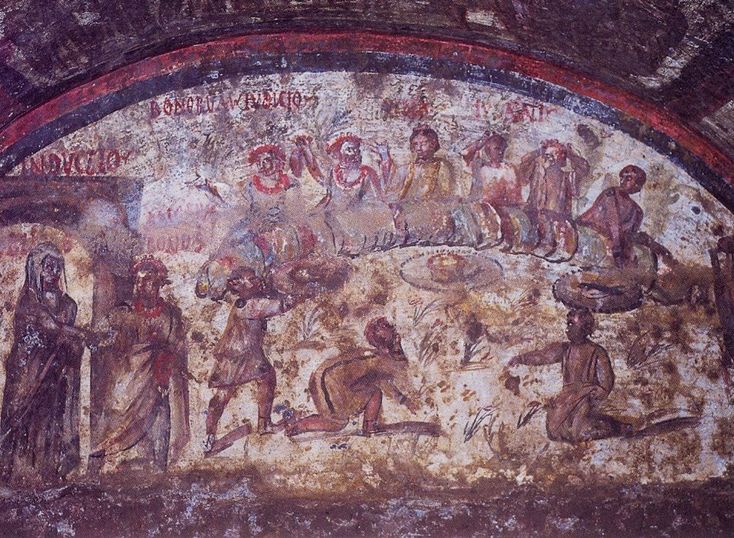
The epigrahy includes a mention of Marcus Aurelius, a priest of the god Sol Mithras, who bestowed joy and pleasure on his students.
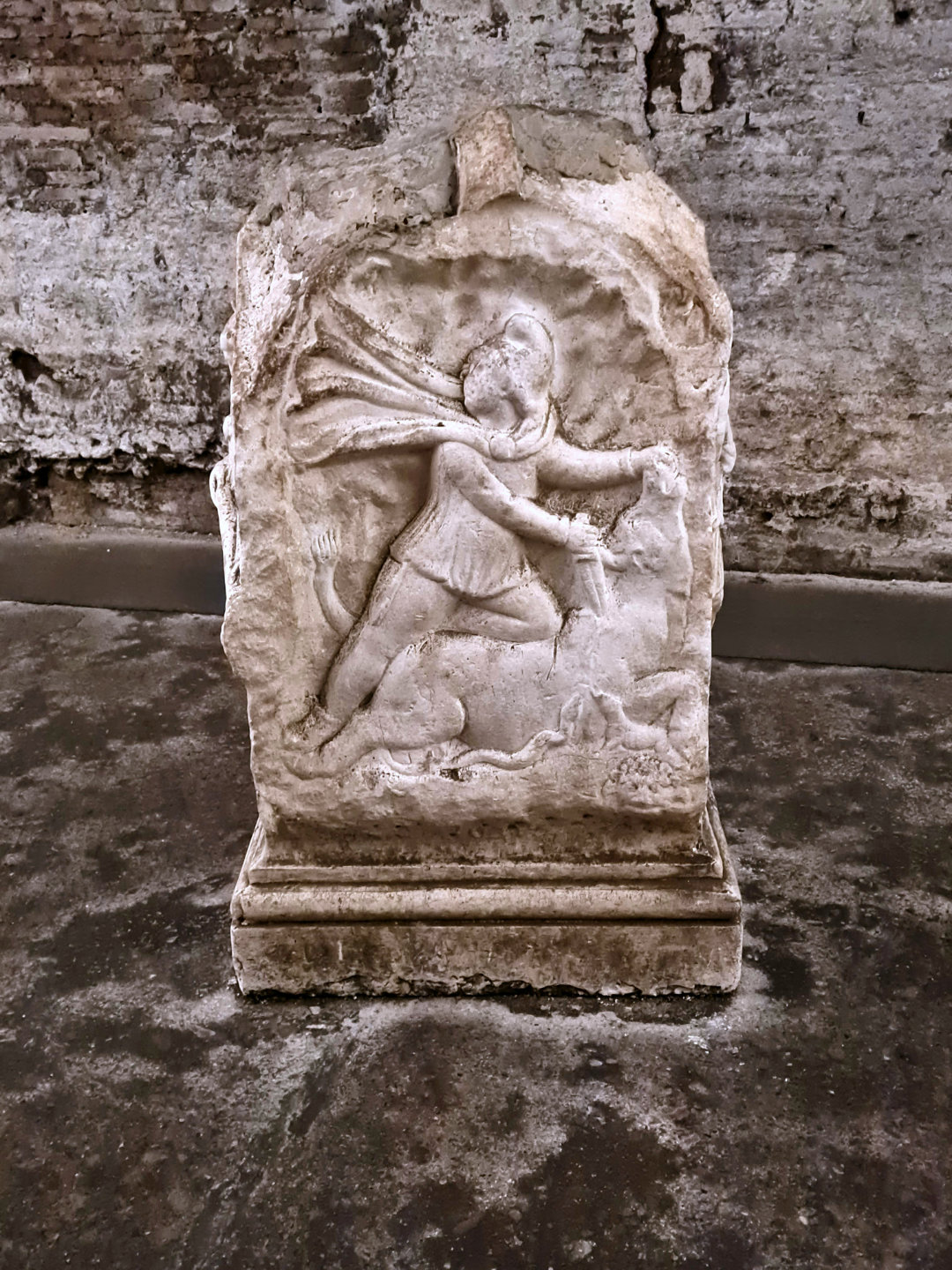
The altar of the Mithraeum of San Clemente bears the Tauroctony on the front, Cautes and Cautopates on the right and left sides and a serpent on the back.
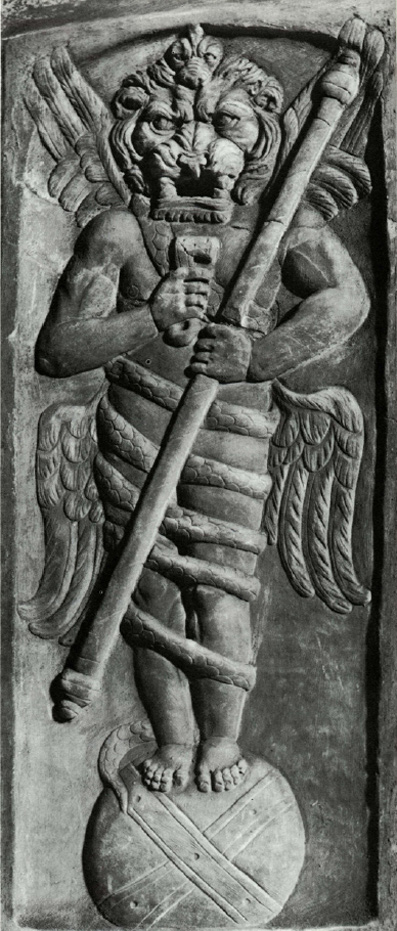
The lion-headed god is standing on a globe encicled by two crossed bands on which five pearls.
