Your search From Rome, Mithreum of Castra Peregrinorum under Santo Stefano Rotondo. gave 548 results.

Marble relief with the dressed busts of Sol with five rays, a long-bearded man, and Luna with crescent, found in the camp of the equites singulares near the Scala Santa, now in the Museo Nazionale delle Terme.
Sculptural fragments of two torchbearers from the Mithraeum of San Clemente, Rome.
Marble cippus of which only two sides are preserved, with a brief dedication to Cautes on the front face, from the Mithraeum of San Clemente, Rome.
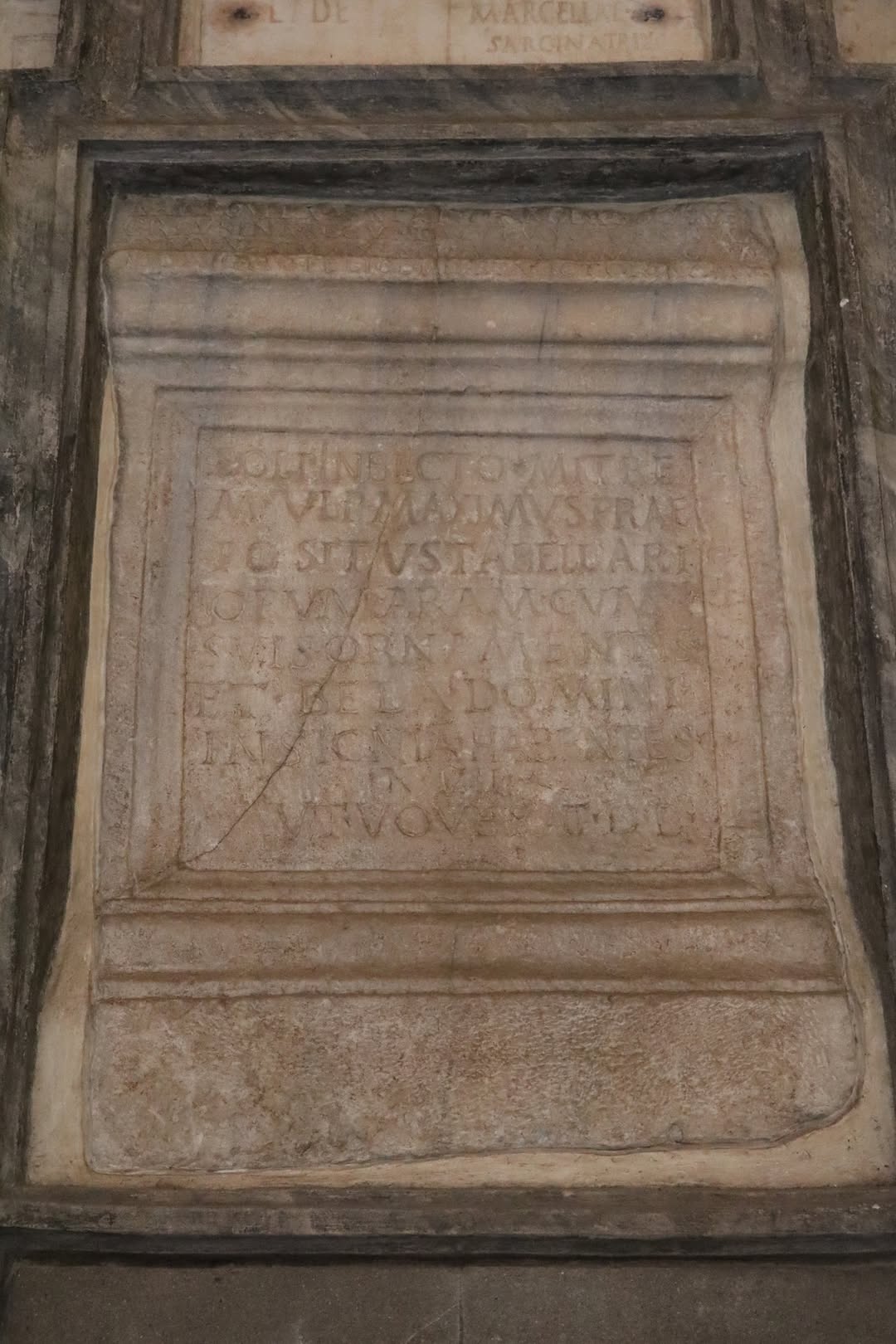
Marble altar dedicated to Sol Invictus Mithras, found in Rome (in aedibus Maffaeiorum), set up in 183 A.D. by M. Ulpius Maximus, praepositus tabellariorum, together with its ornaments and Mithraic insignia, in fulfilment of a vow.

This marble altar was found ’in the street called di Branco’, behind the palace of the Cardinal of Bologna, in Rome.

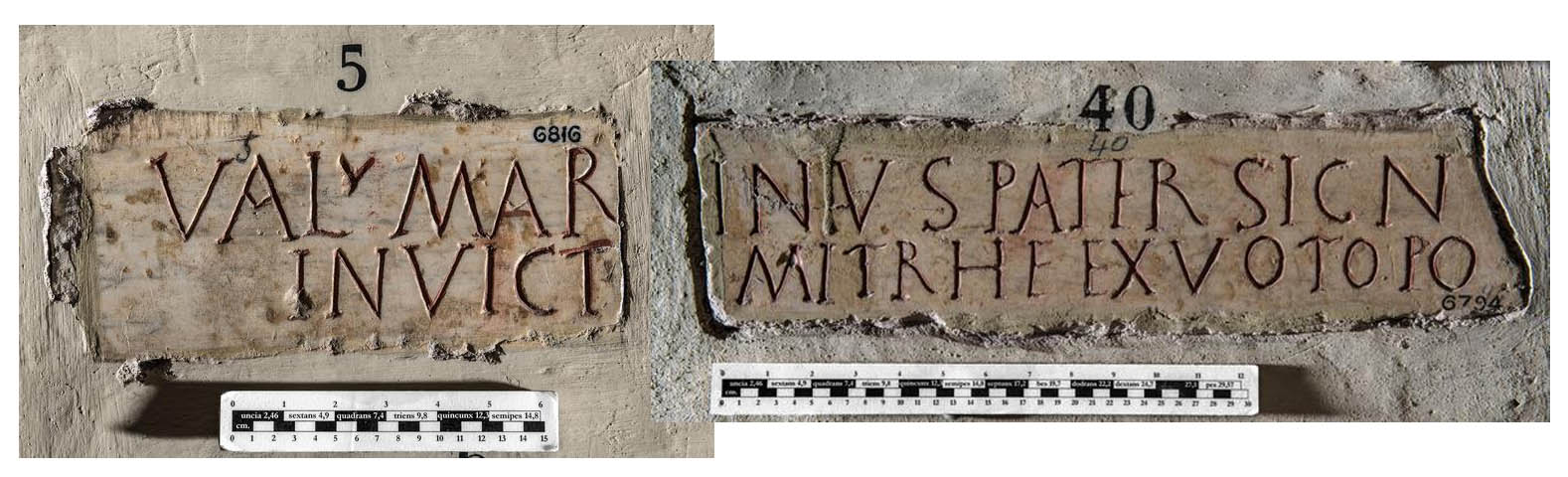
Marble inscription recording the dedication of a cult image to the unconquered Mithras by a certain pater Valerius Marinus from Rome.
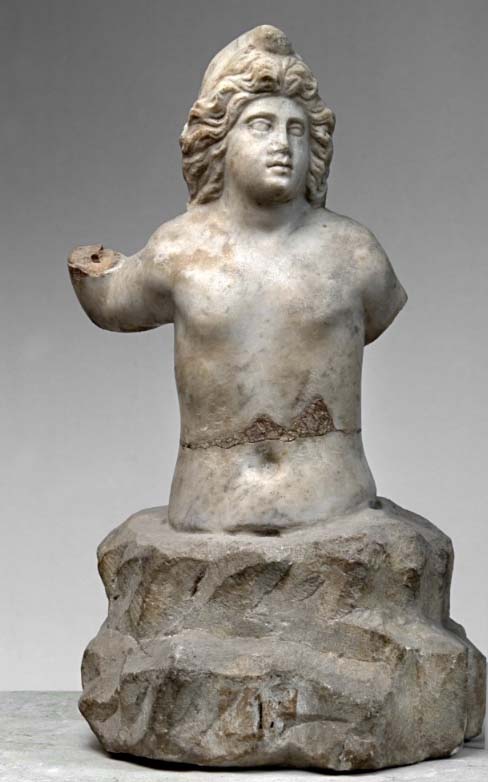
Mithras being born from the rock (petrogenia), acquired in Rome and formerly kept in Berlin.
This inscription was dedicated to God Cautes by a certain Flavius Antistianus, Pater Patrorum in Rome.
Upper fragment of a marble relief depicting Cautes, discovered in the Forum of Caesar in Rome.
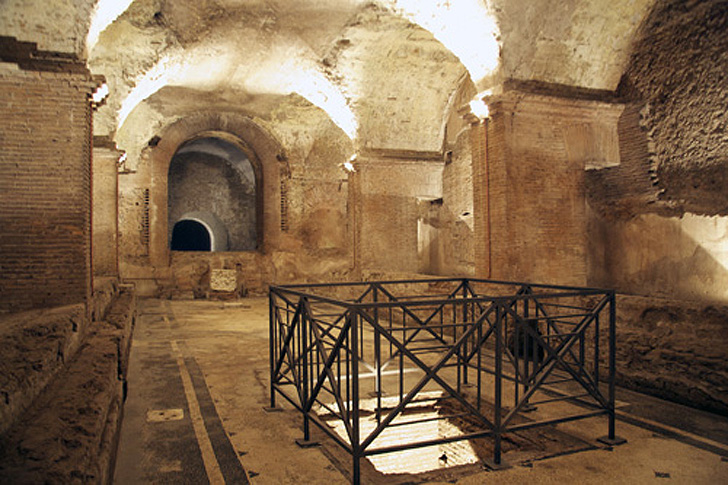
The Mitreo delle terme di Caracalla is one of the largest temples dedicated to Mithras ever found in Rome.
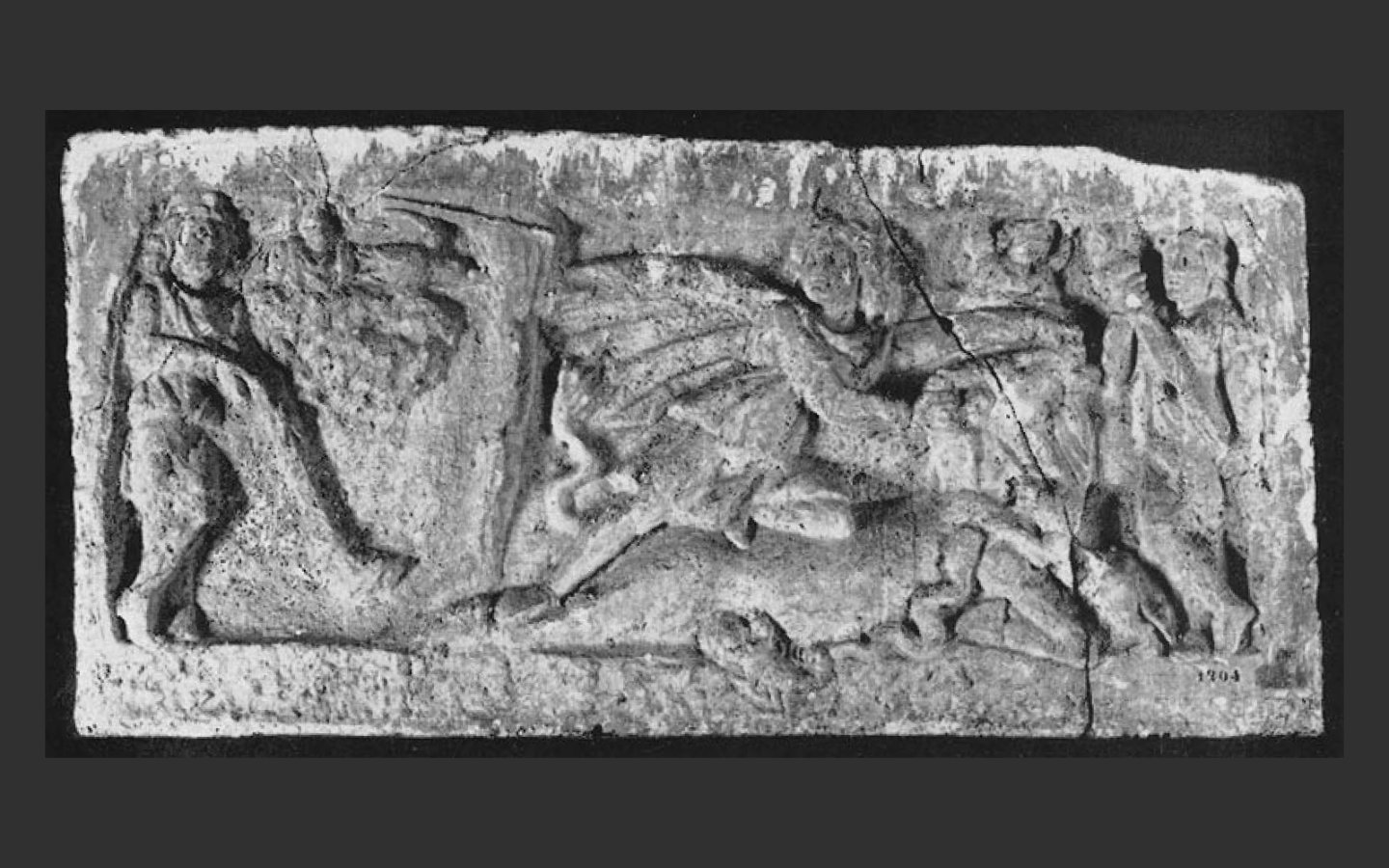
This relief of Mithras Tauroctonos from Rome bears the inscription of three brothers, two of them lions.
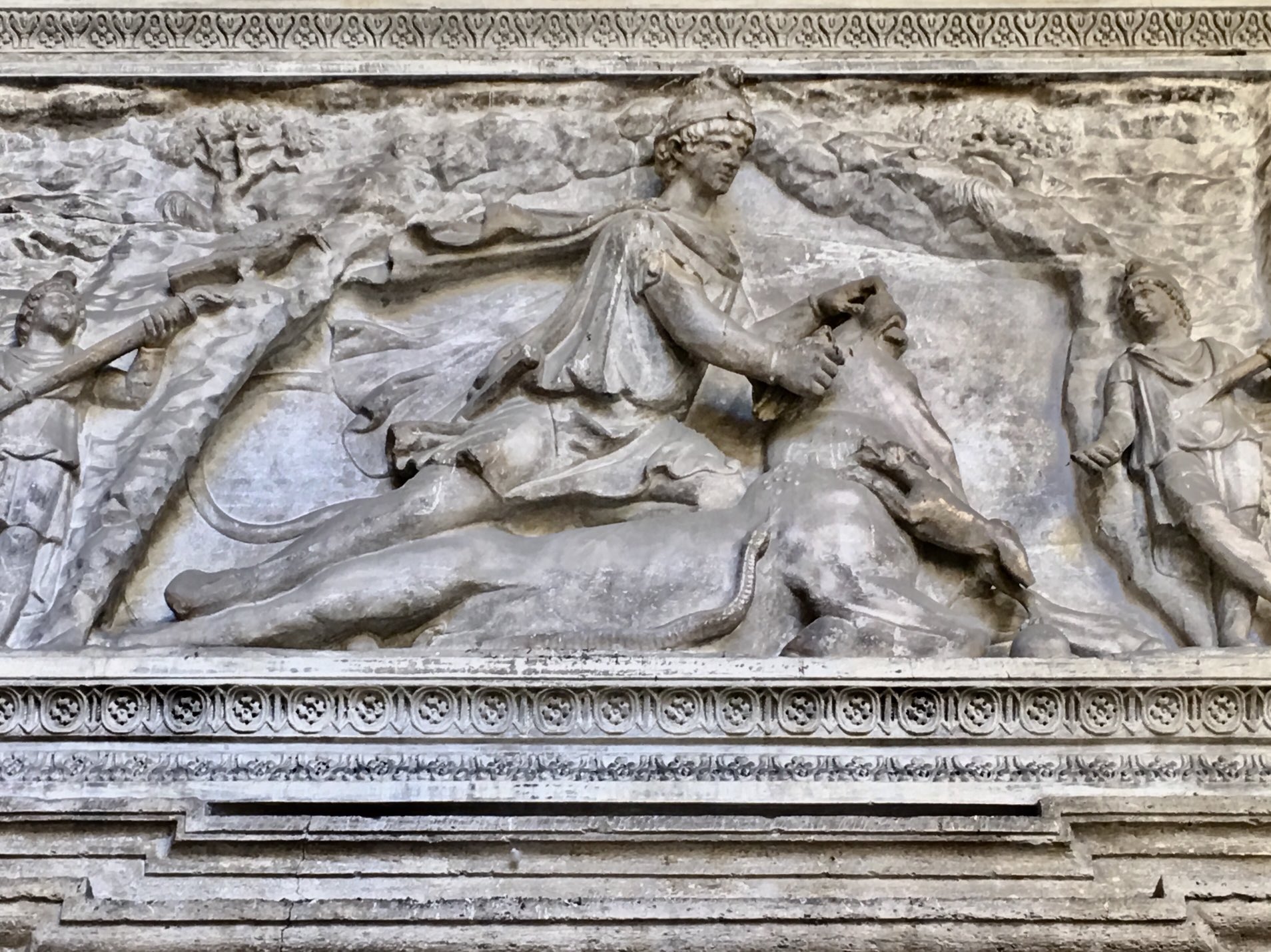
This relief of Mithras as a bullkiller, probably found in Rome, has been part of the Palazzo Mattei collection since at least the end of the 18th century.
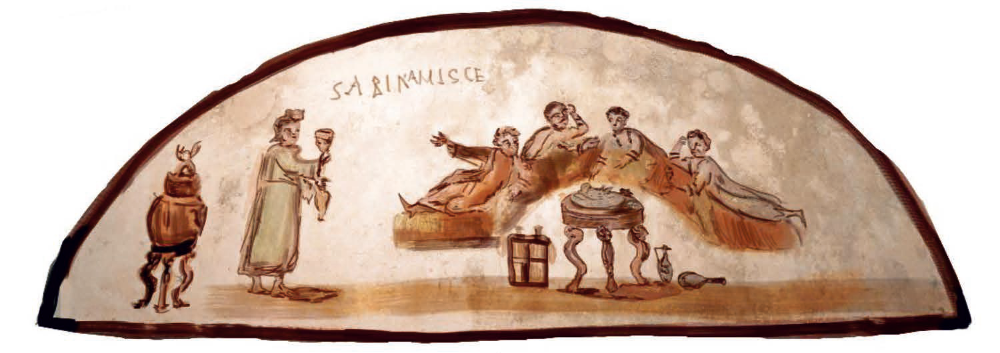
A dinner scene with Sabina from the Catacombe dei Santi Marcellino e Pietro, near Rome, may have been commissioned by a follower of Mithras.
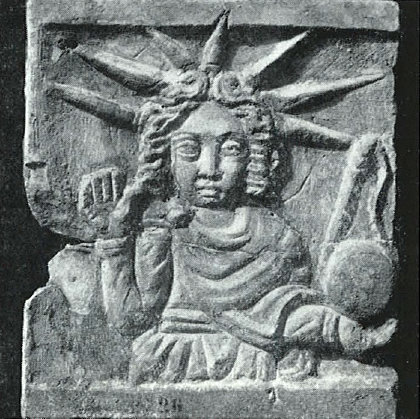
The relief of Sol was found during the construction of Piazza Dante in Rome in 1874.
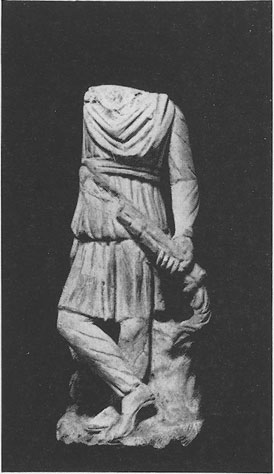
White marble statue of Cautopates with crossed legs, accompanied by an owl beside a tree trunk.
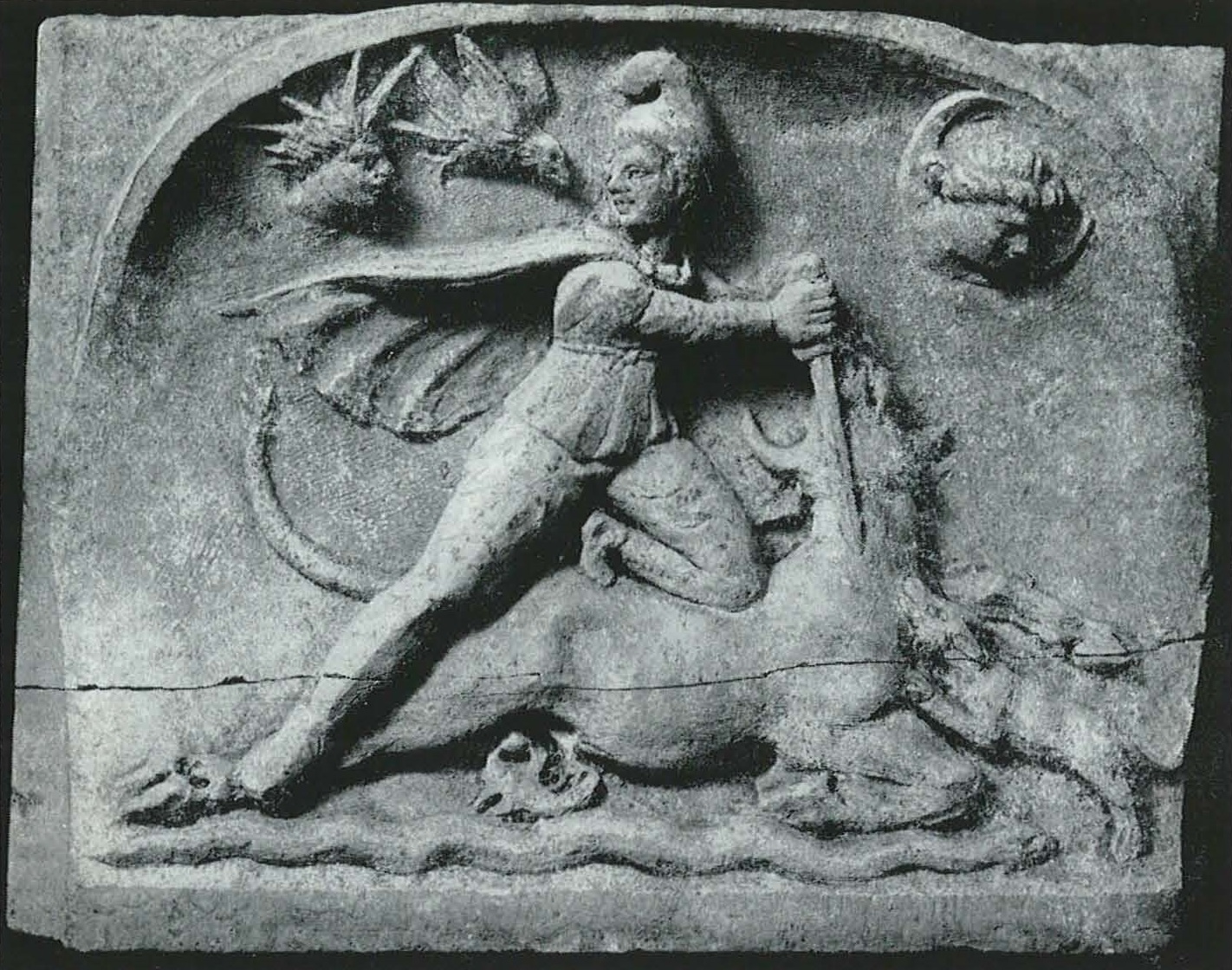
This simple relief of Mithras killing the bull without his companions Cautes and Cautopates was found in the so-called Mithraeum of the Esquilino, Rome.

White marble statue of Mithras killing the sacred bull preserved in the Museo Nacional Romano.

Fresco of Mithras found in an arched niche above the right bench of the Baths of Caracalla’s Mithraeum in Rome.