Your search Jan Theo Bakker gave 214 results.

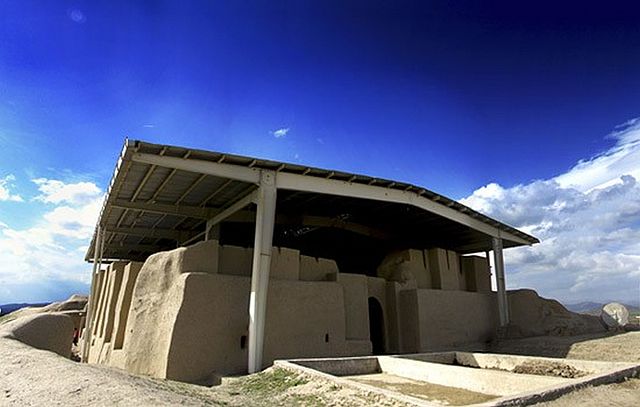
The Nushijan Mithraeum testifies to the worship of Mithra in the region since before the Zoroastrian reform.
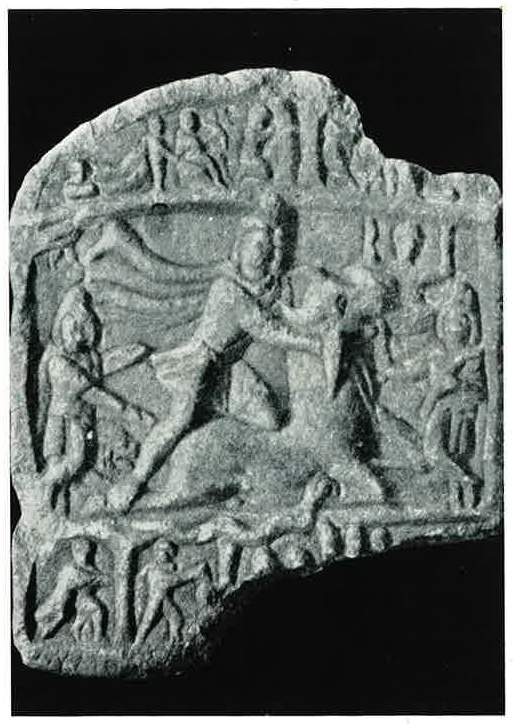
Marble tauroctony relief from Janjevo near Kosovo, Moesia Superior, whose right corners are broken off; the current whereabouts are unknown.
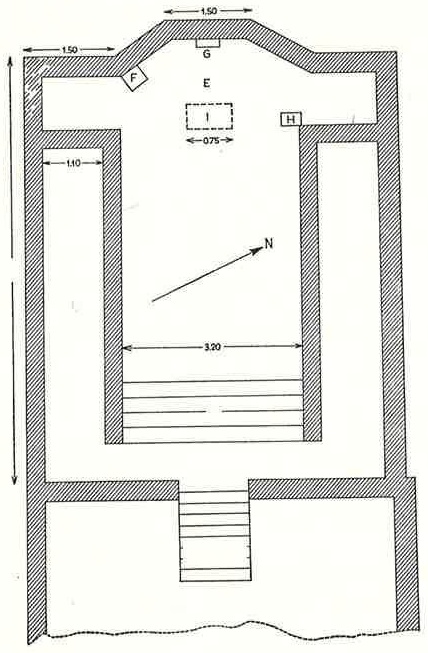
Mithraic sanctuary found at Biljanovac north-east of Kumanovo, Moesia Superior, with a pronaos and inner sanctuary, yielding marble reliefs, an altar, and associated cult objects.

Janjevo formed part of the mining and settlement landscape of the central Balkans.

Fragment of a small altar from Ljubljana, ancient Emona in Pannonia Superior, preserving a dedication to Invicto Mithrae by a dedicant whose name ends in -quartus; the Mithraic attribution is not entirely certain.
A philosophical study of Iranian civilization that explores its spiritual foundations, including the legacy of Mithraic and Zoroastrian traditions, in order to reflect on Iran’s historical continuity and civilizational meaning.
Inscription from Trojane, ancient Atrans in Pannonia Superior, recording that Quintilianus, beneficiarius consularis of Legio II Italica, restored a Mithraic temple that had collapsed through age, at his own expense.
Marble altar from Hrastnik near Trojane, ancient Atrans in Pannonia Superior, dedicated to Deo invicto Mithrae by Eutyches, contrascrip of the conductores portorii publici, slave of the Iulii, acting as vicarius of Benignus, vilicus of the statio Atrantiana…
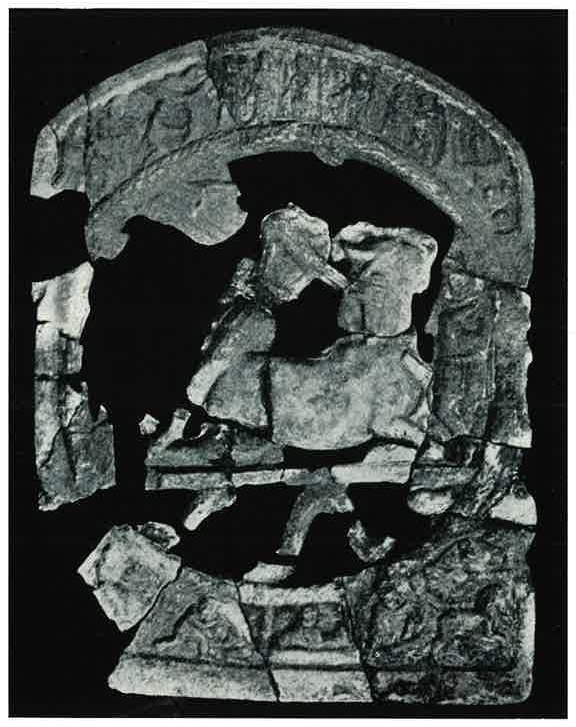
White marble tauroctony relief in several fragments from the Mithraeum at Biljanovac, Moesia Superior, depicting the standard bull-slaying with the full iconographic programme.
Marble altar from the Mithraeum at Biljanovac, Moesia Superior, with its shaft hollowed out at the sides; the inscription is fragmentary and the dedicatee — either Natura or Transitus — cannot be determined.
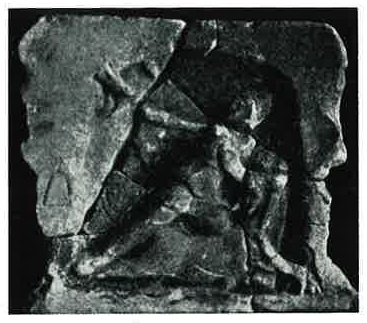
White marble tauroctony relief from the Mithraeum at Biljanovac, Moesia Superior, depicting the standard bull-slaying with torchbearers and Sol and Luna busts in the upper corners.
White limestone fragment from the Mithraeum at Biljanovac, Moesia Superior, preserving the upper part of Mithras as bull-slayer in a sleeveless tunic.
A fragmentary inscription found in the foundations of the Theodosian walls at Aquileia, recording a dedication to the Invincible Mithras by ...ntius Manilianus.
One of the rooms in a sustantive masonry building in Hollytrees Meadow was considered to be a Mithreum, a theory that has now been discarded.
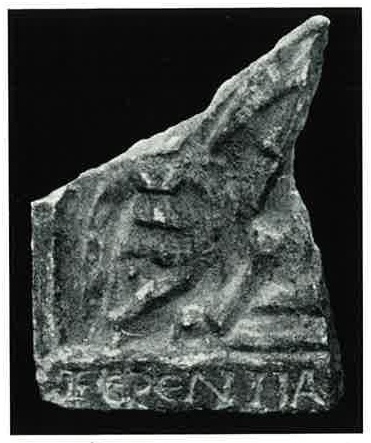
Fragmentary inscription from the Mithraeum at Sarmizegetusa, Dacia, recording that Aurelius Theofilus fulfilled a vow ex voto.
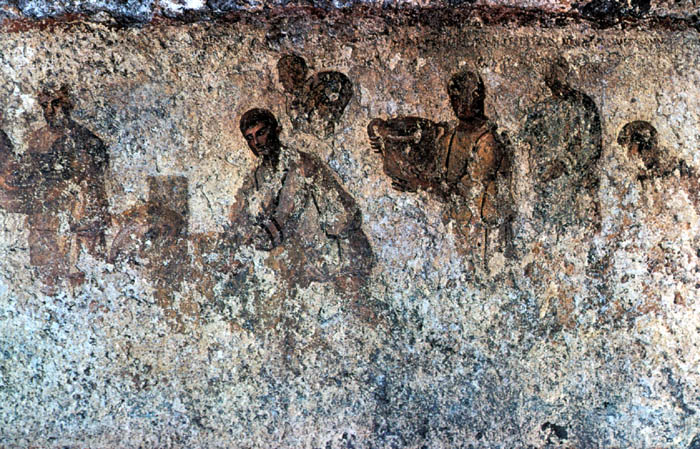
Procession of Leones carrying animals, bread, a krater, and other objects in preparation for a feast.
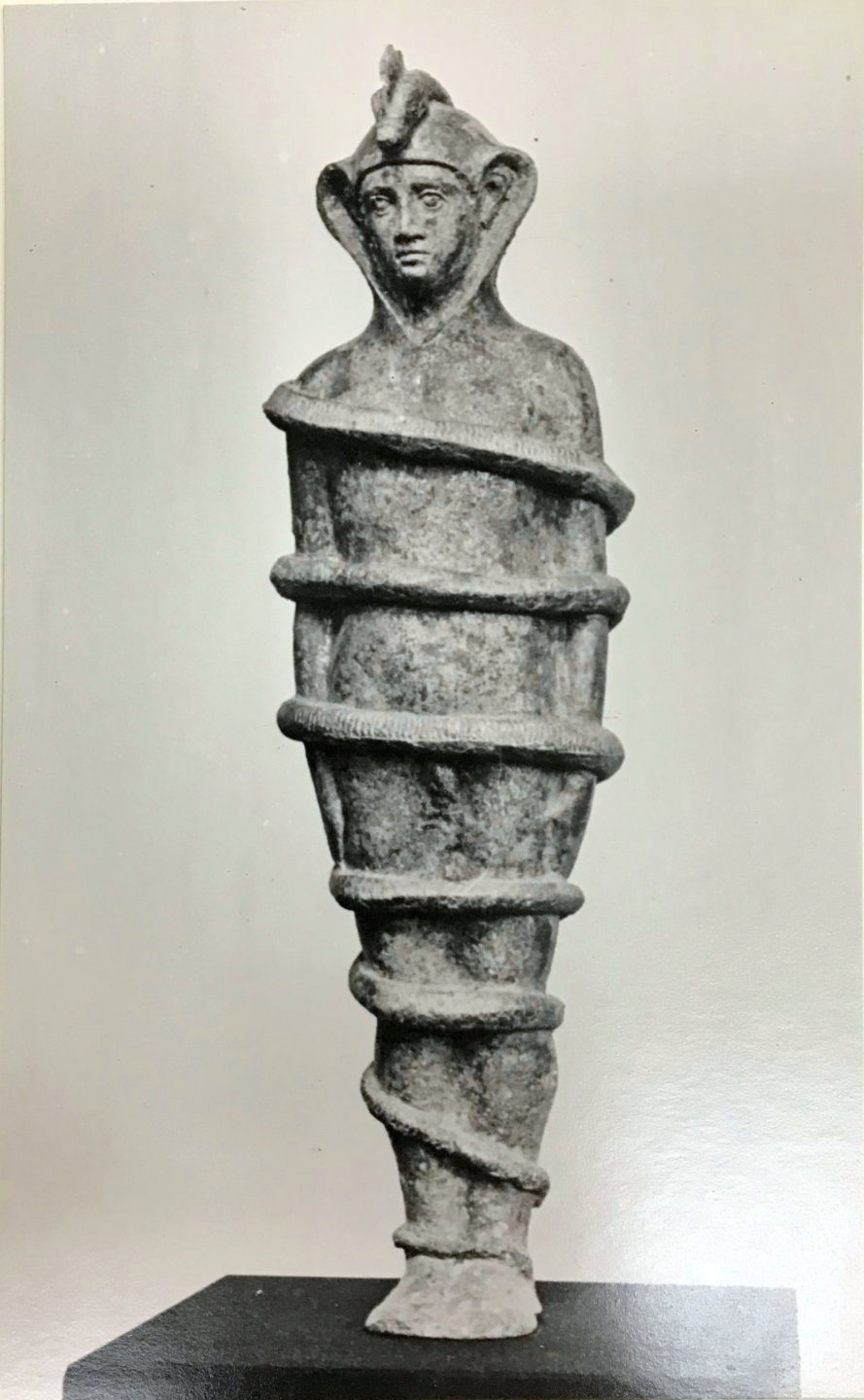
Roman relief from a sanctuary on the Janiculum Hill (Rome), showing a male figure bound by a serpent coiled seven times.


