Your search Jean-Baptiste Félix Lajard gave 136 results.

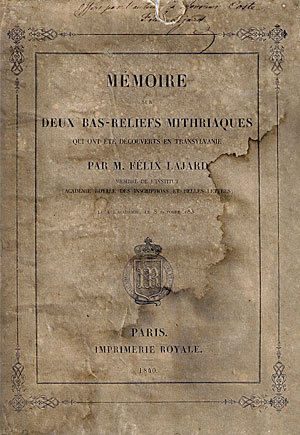
Memoir by Félix Lajard analysing a Mithraic bas-relief discovered in Vienne in 1830. Based on direct examination of the fragments and their context, the study corrects an earlier misidentification and documents a rare lion-headed figure within a probable mithraeum…

Marble altar found near the entrance of the Mitreo delle Sette Porte at Ostia, dedicated by Sex. Fusinius Felix.

Genet aborde les thèmes qui lui sont chers, dans les règles de l’art mais en laissant affleurer un lyrisme bien tenu.
Marble tablet with a dedication to Sol Invictus Mithras by Felix Messala together with the initiates Catellus and Dianus, decorated with a branch on each side.
Limestone altar found in Partoș, Dacia, dedicated to Deo Soli by Lucius Valerius Felix.
Inscription from Mithraeum I at Ptuj, ancient Poetovio, dedicated to Petrae genetrici ex viso by Felix, vicarius of Prudens, slave of Antonius Rufus, vilicus of the publicum portorium Illyricum — one of several Mithraic dedications by this household.
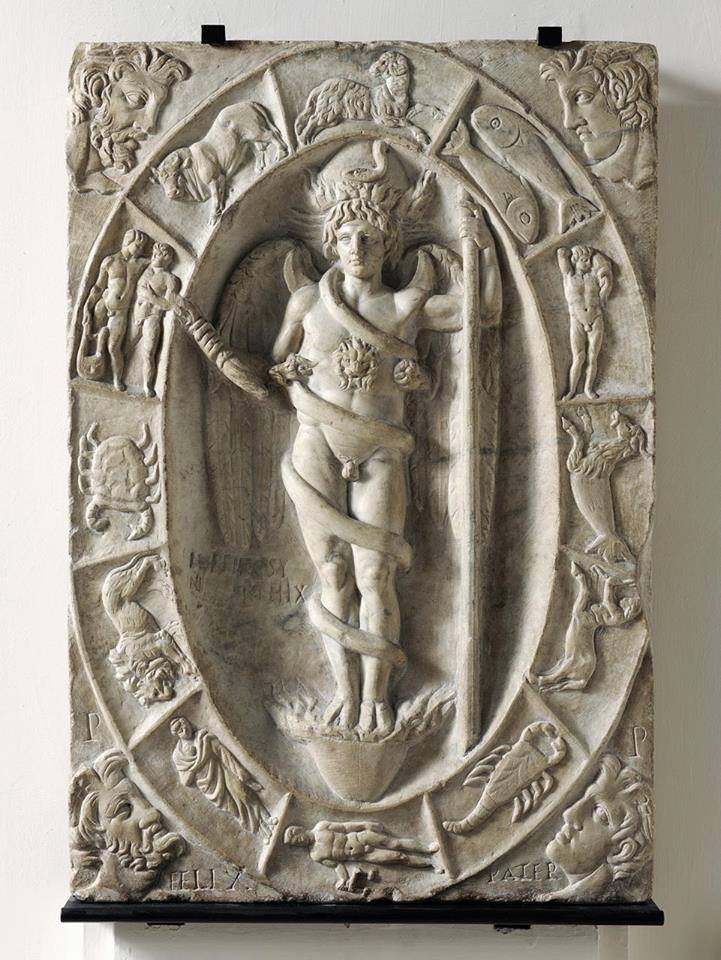
The Aion / Phanes relief, currently on display in the Gallerie Estensi, Moneda, is associated with two Eastern mysteric religions: Mithraism and Orphism.
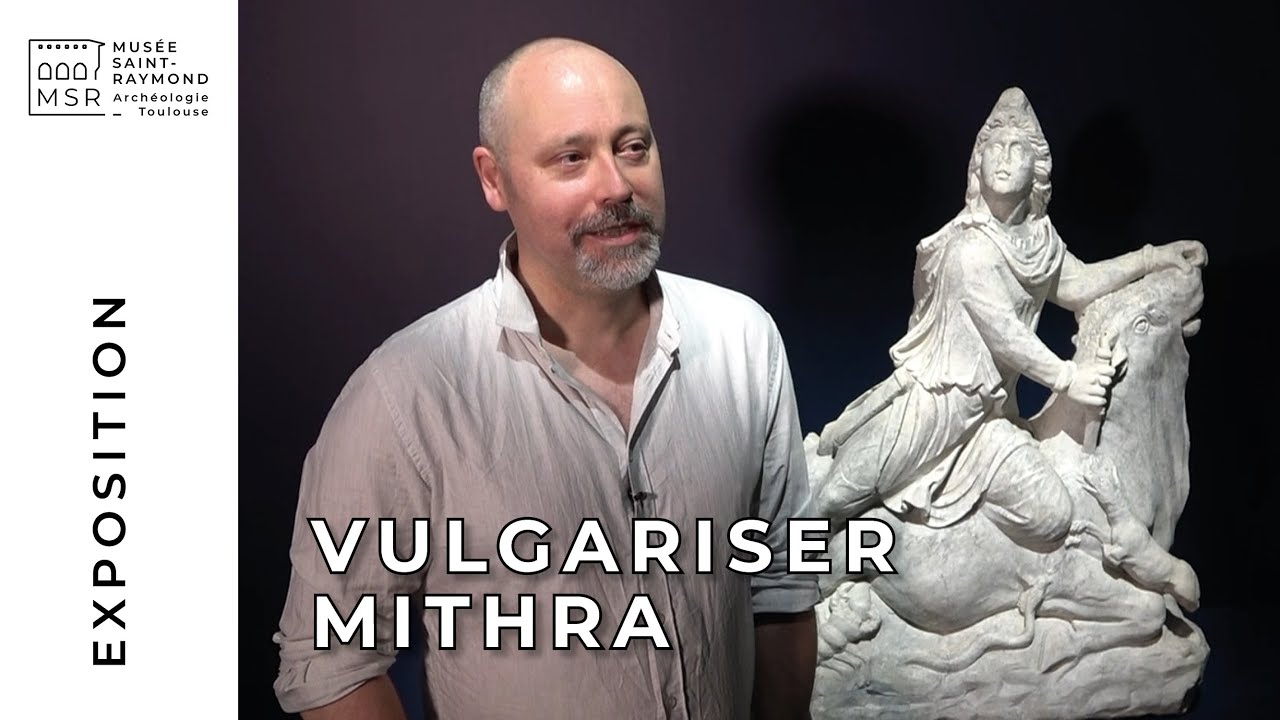
Jean-Christophe Piot a participé à la réalisation de l'exposition 'Le mystère Mithra' en réalisant des pastilles sonores sur certaines œuvres de l'exposition.
This marble slab found near the Casa de Diana in Ostia bears two inscription with several names of brothers of a same community

The image of the god Arimanius to which this monument refers has not yet been found.