Your search for London gave 52 results.

Londinium was the capital of Roman Britain for most of the period of Roman rule. It was originally a settlement founded around 47-50 AD in an uninhabited area.
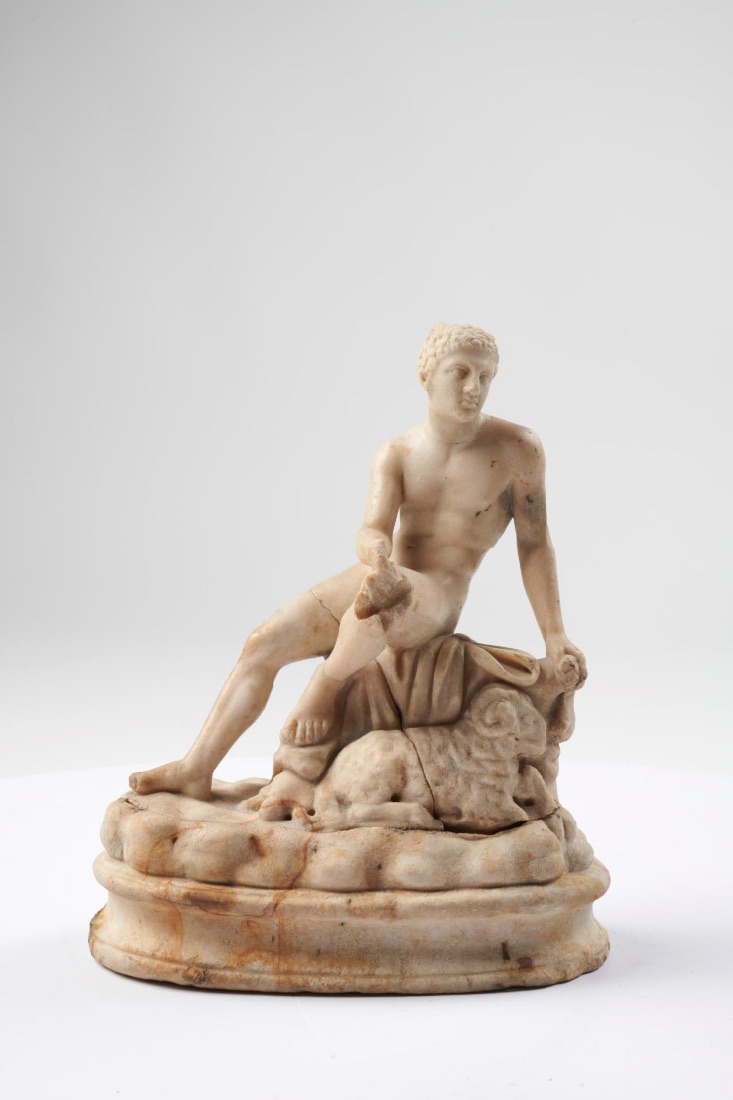
A small marble statuette of naked Mercury from the Mithraeum at Walbrook in London, sitting on a rock with the stumps of wings in his hair and a purse in his left hand, with a ram lying at his feet beside which is a tortoise.

A marble fragment with an inscription in a tabula ansata from the Mithraeum at Walbrook in London, reading [Au]gggg(ustis) invicto..., a dedication to the Invincible probably addressing multiple emperors.
A sandstone bowl and a large part of a stone laver or washing bowl from the Mithraeum at Walbrook in London, ritual vessels forming part of the sanctuary's furnishings.
A marble head of a woman from the Mithraeum at Walbrook in London, originally crowned with a diadem.
A fragment of a circular plaque from the Mithraeum at Walbrook in London, showing the Danubian horsemen and leaping dogs.
A marble torso of a male figure from the Mithraeum at Walbrook in London, flattened at the back, probably one of the attendant deities of Mithras, which would have stood about 2 ft. in complete height.
A relief fragment from the Mithraeum at Walbrook in London, preserving the lower part of a cross-legged figure of Cautopates pointing his torch downwards.
A fragment of a white marble statue from the Mithraeum at Walbrook in London, preserving the naked torso of a reclining figure with long hair and beard, with the end of a staff visible near his left shoulder, identified as Oceanus.
A white marble statue from the Mithraeum at Walbrook in London, depicting Bonus Eventus standing in a long hanging cloak, leaning on a ship's stem, holding a cornucopia against his shoulder and a patera above a burning altar from the back of which a serpent entwines itself round the god's arm…
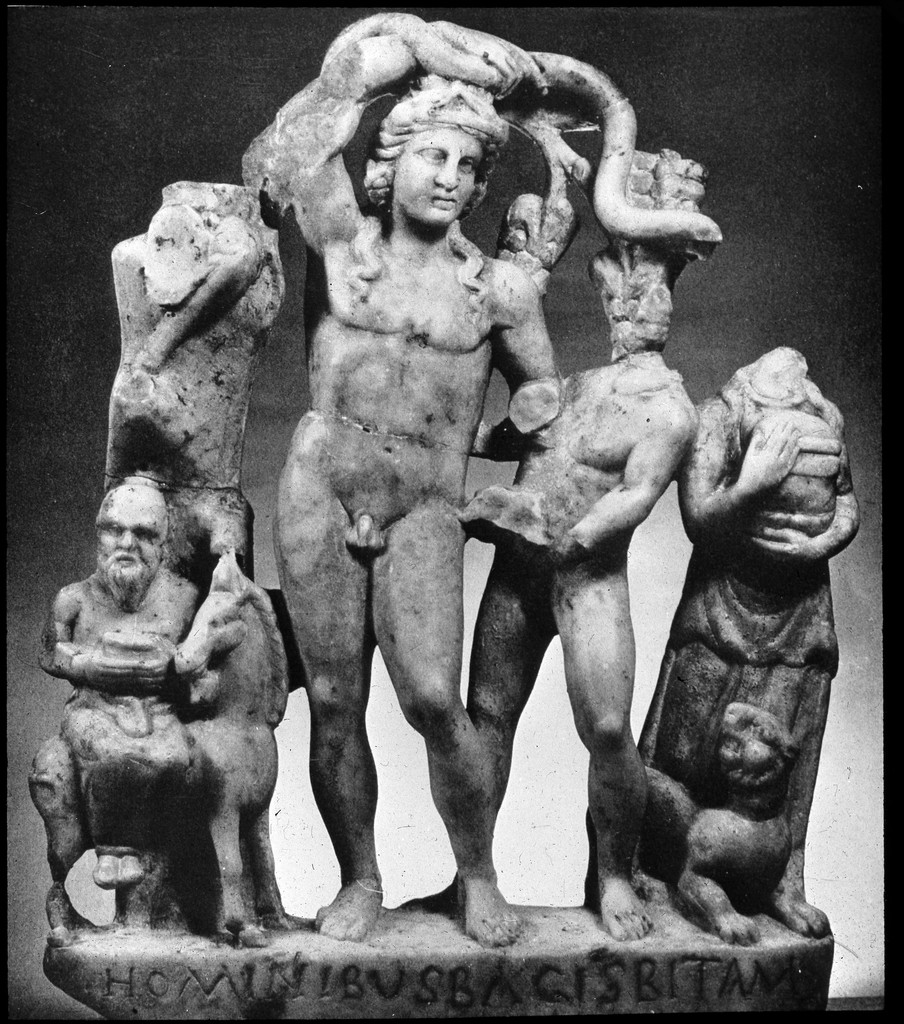
Marble group of Dionysus accompanied by a Silenus on a donkey, a satyr and a menead.
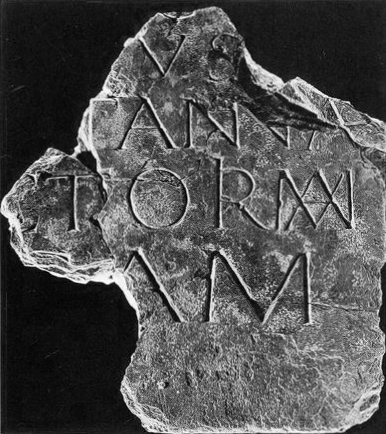
Archaeological material from the Mithraeum of Londinium discussed in Hill’s study of Roman London.
Oolitic stone statuette of the torchbearer Cautopates discovered in Drury Lane, Londinium.
Major Mithraic sanctuary in the City of London with east-west orientation, multiple building phases and rich sculptural finds.
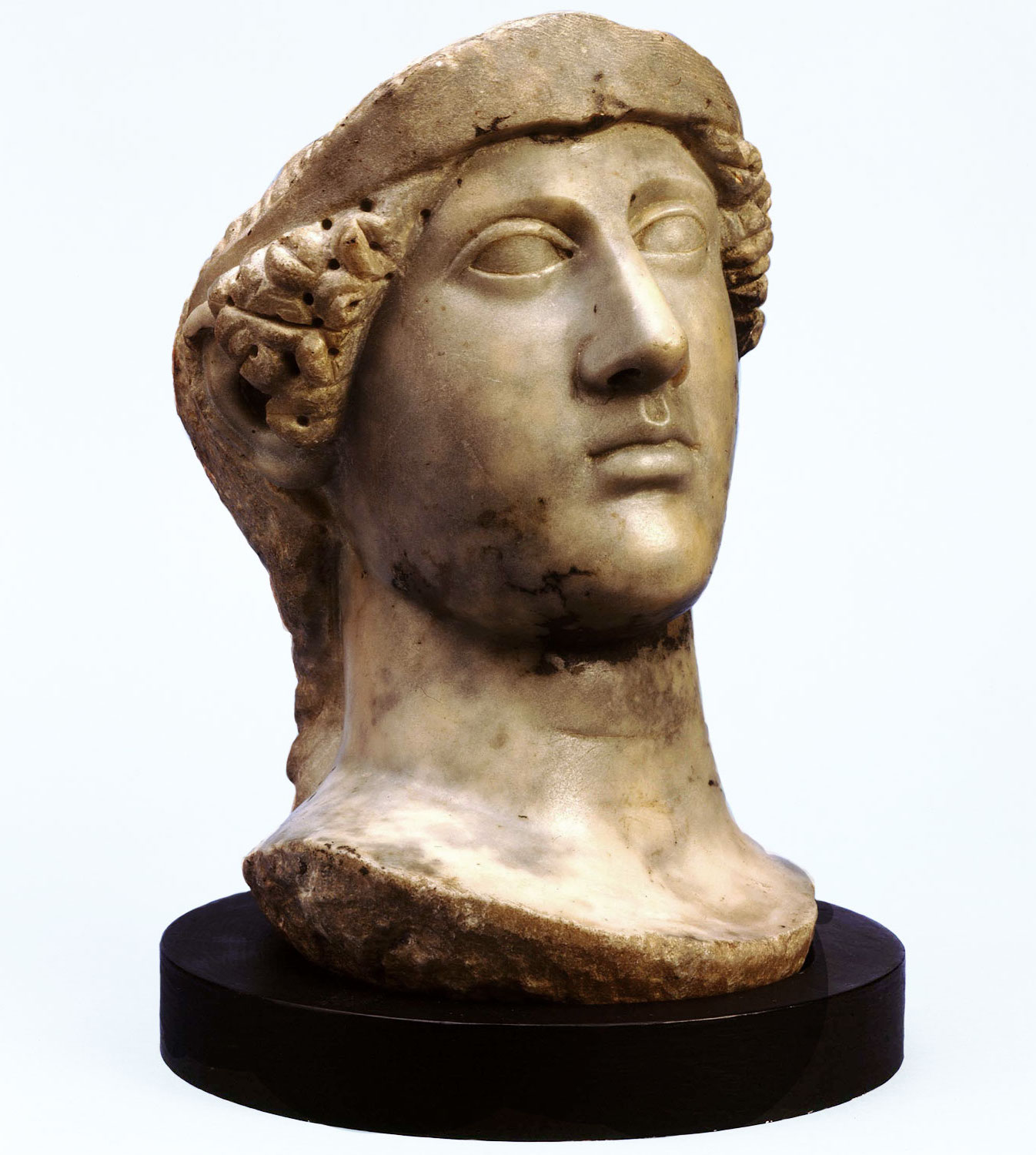
This head was found at the east end of temple of Mithras in London.

The Mithraeum of London, also known as the Walbrook Mithraeum, was contextualised and relocated to its original site in 2016.