Your search Mit Rahina gave 2642 results.

Subterranean sanctuary at ancient Atchana tentatively interpreted by Woolley as an early precursor to later Mithraic temples.

Two marble heads from Ostia, including a youthful figure wearing a Phrygian cap and another identified as Mithras-Helios.
Many of the inscriptions and sculptures of the site were kept in a museum which has been destroyed.
Small surviving fragment depicting Mithras as bull-slayer together with the torchbearer Cautes.
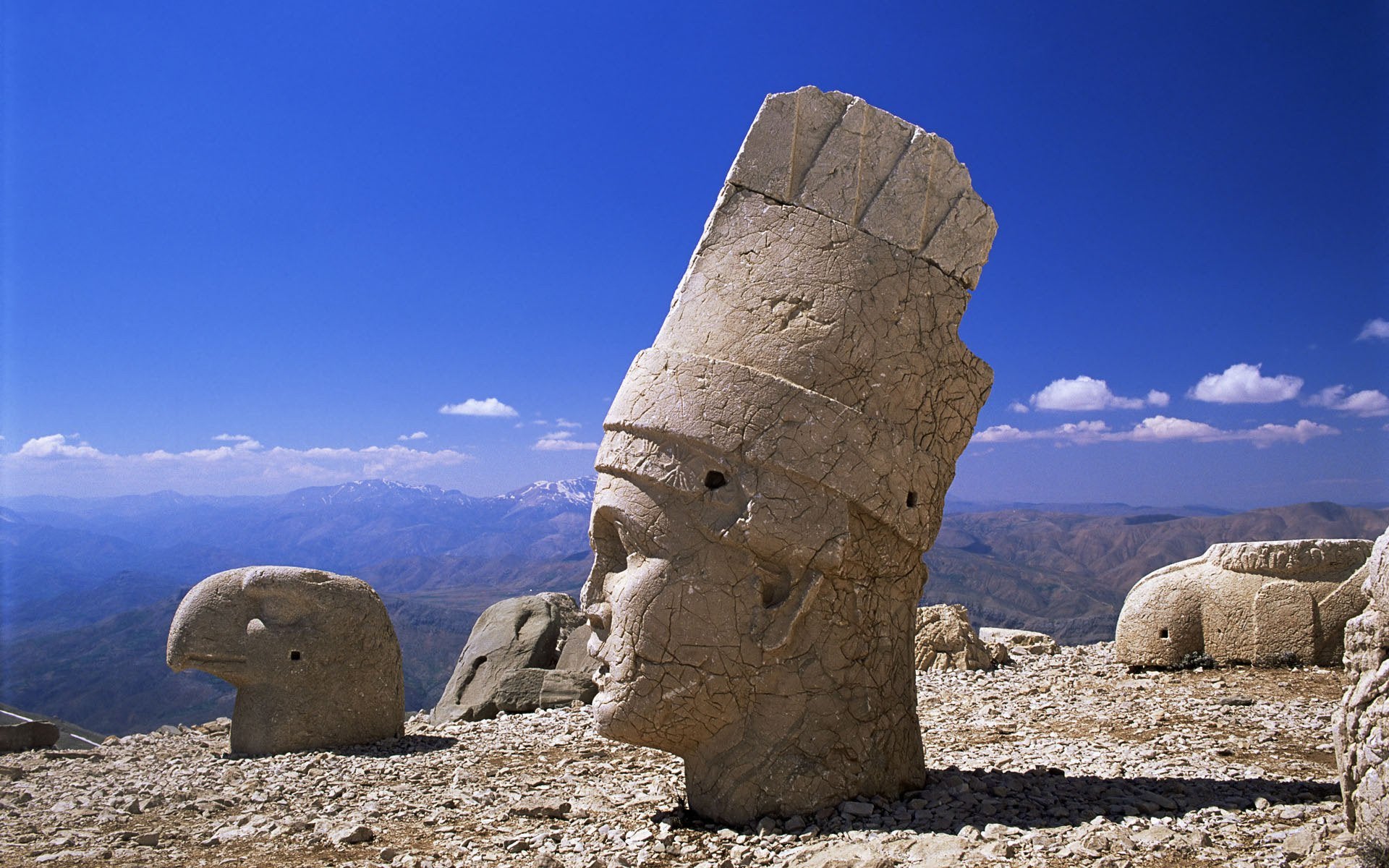
The colossal head has been identified as a solar god, Apollo-Mihr-Mithras-Helios-Hermes.
Large apsidal hall with podium discovered at Uruk-Warka, once interpreted as a possible Mithraic sanctuary.

This dedicatory inscription by Aurelius Seleucus, found in Cilicia, aligns with Plutarch’s account of Cilician pirates performing foreign sacrifices and secret rites of Mithras.
A probable Mithraic sanctuary near Santa Maria in Domnica on the Caelian Hill, known from a group of dispersed reliefs formerly owned by Ottaviano Zeno.
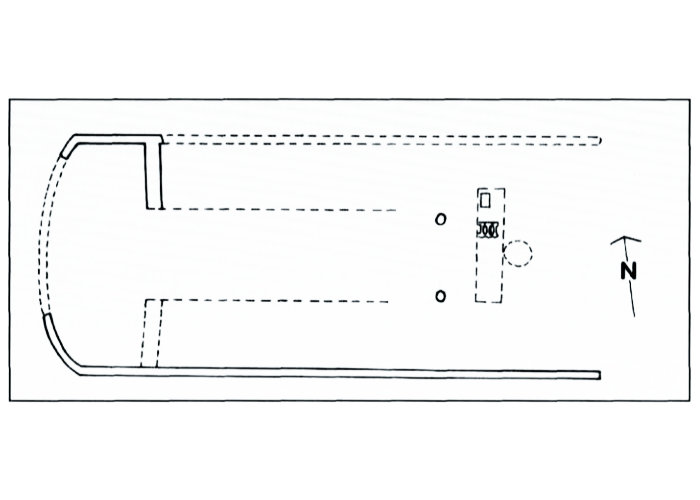
One of the largest known Mithraea in Pannonia, the sanctuary of Sárkeszi stood near the Roman road linking Herculia and Aquincum.

Chemtou or Chimtou was an ancient Roman-Berber town in northwestern Tunisia, located 20 km from the city of Jendouba near the Algerian frontier. It was known as Simitthu (or Simitthus in Roman period) in antiquity.
This small Greek dedication from the island of Aenaria invokes Helios Mithras under the epithet “unconquered”.
A probable Mithraic sanctuary at Poetovio, identified by Vermaseren as the so-called Mithraeum IV on the basis of four associated inscriptions.

These six marble fragments from the Second Mithraeum of Poetovio preserve parts of tauroctonies together with figures of Sol, Cautes, and Cautopates.
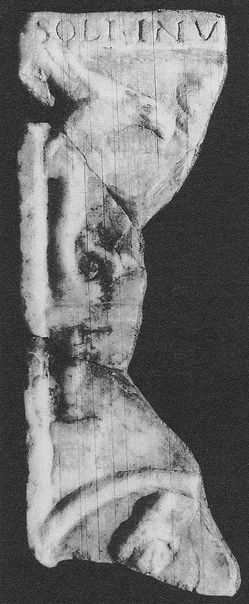
This marble fragment from Apulum preserves the head of Mithras beneath an arch together with a raven and the remains of Sol’s radiate crown.
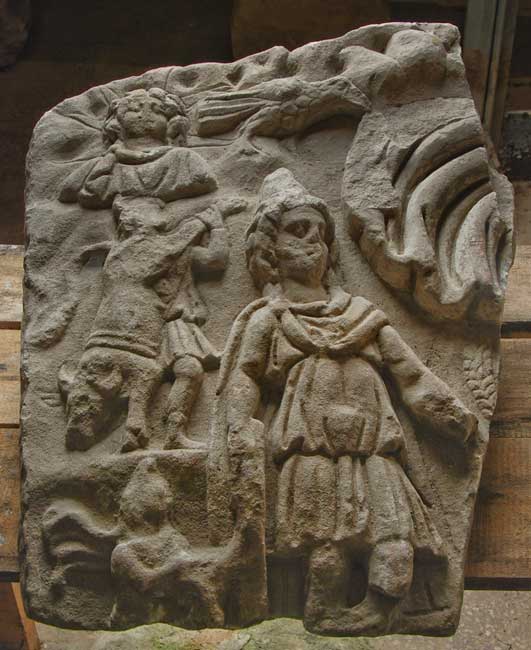
This marble fragment from Roman Dacia preserves part of a tauroctony with Sol, the raven, and Mithras dragging the bull.
This eulogy of Saint Eugene of Trapezos tells how, in the time of Diocletian, he and two other Christian fellows destroyed a statue of Mithras.
This fragment of pottery depicting Mithras may have come from Gallia.
This marble head of Mithras was found in the Luxemburgerstrasze in Cologne, Germany.
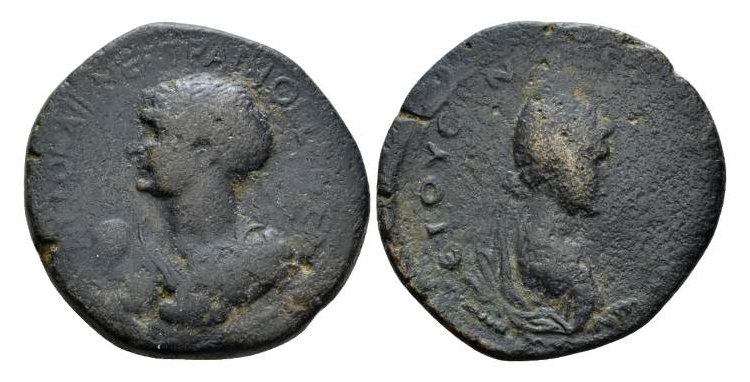
These bronze medallions associates the image of several Roman emperors with that of Mithras, usually as a rider, in the province Pontus.
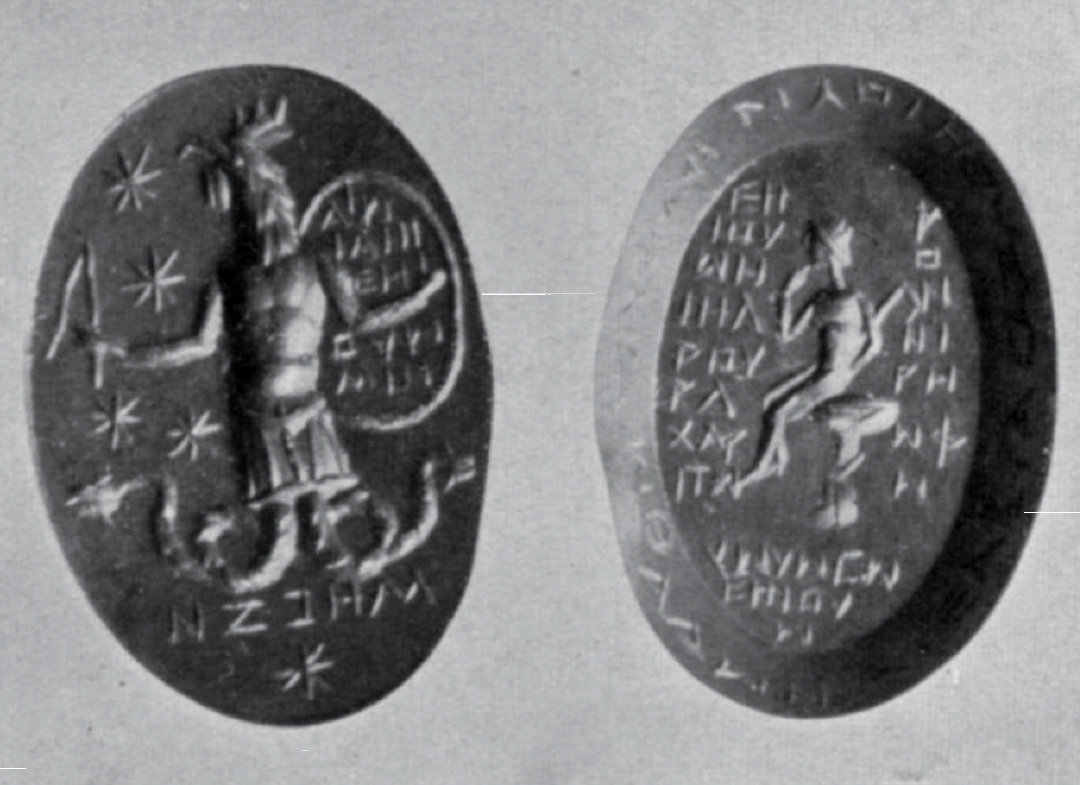
Gnostic amulet found in the ancient Agora of Athens, depicting Abraxas on one side and a Mithraic inscription on the other.
