Your search Philippe Roy gave 258 results.

Great royal inscription of Antiochus I of Commagene carved on the thrones at Nemrud Dağı, invoking Apollo-Mithras-Helios among the guardian deities of the kingdom, 69–34 B.C.
Four small painted cups buried in a row under the niche floor at Mithraeum II, Stockstadt, one still containing a piece of sulphur; with coins of Augustus, Hadrian, and Antoninus Pius
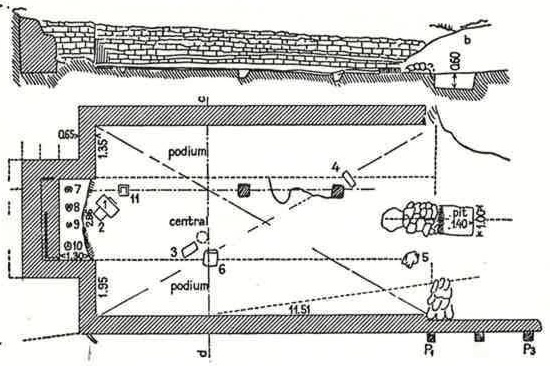
Second Mithraic sanctuary discovered at Stockstadt between 1909 and 1913, situated on a slope near the river Main, with finds at Aschaffenburg
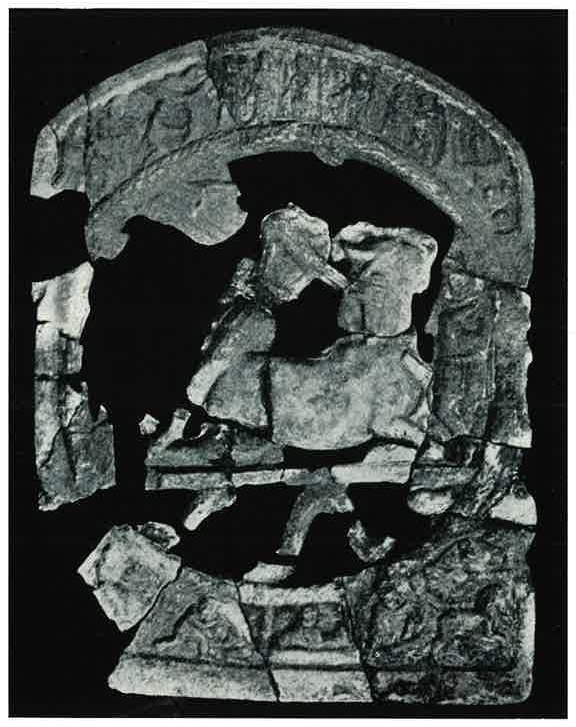
White marble tauroctony relief in several fragments from the Mithraeum at Biljanovac, Moesia Superior, depicting the standard bull-slaying with the full iconographic programme.
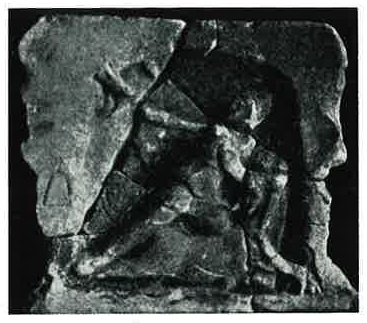
White marble tauroctony relief from the Mithraeum at Biljanovac, Moesia Superior, depicting the standard bull-slaying with torchbearers and Sol and Luna busts in the upper corners.
Mithraic statue from Vindobala discovered in 1844 and subsequently broken up.
Group of Mithraic and other cult remains possibly originating from several neighbouring sanctuaries destroyed or abandoned in Late Antiquity.

White marble tauroctony relief from Sofia, ancient Serdica in Thracia, found near the Church of St. Kral, depicting the standard bull-slaying with the full iconographic programme.
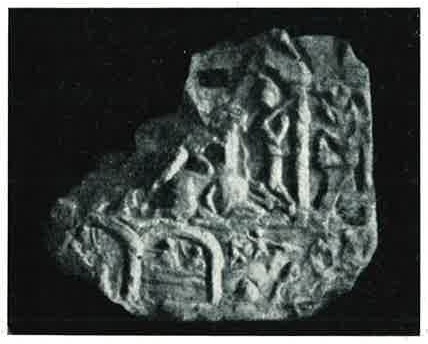
Marble tauroctony relief fragment from Steklen near Svichtov, ancient Novae in Moesia Inferior, preserving the right part of a bull-slaying scene with a serpent and the grotto border.
Inscription from Viminacium, Moesia Superior, recording that Caius Iulius Valerius, veteran of Legio VI Claudia, restored a Mithraic sanctuary destroyed by lightning at his own expense.
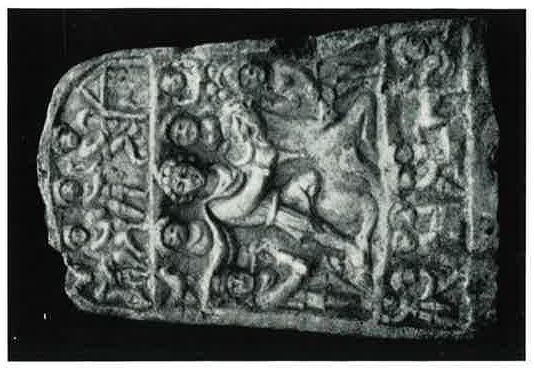
Yellow marble tauroctony relief from Romula, Dacia, found in 1912, depicting the standard bull-slaying with Sol and Luna in the upper corners.

Rectangular white marble tauroctony relief from the Mithraeum at Sarmizegetusa, Dacia, depicting Mithras killing the bull with dog, serpent, and scorpion.
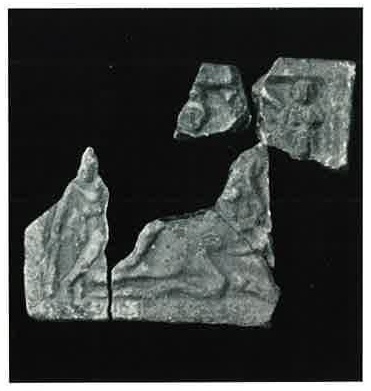
Five fragments of a whitish-yellow marble tauroctony from the Mithraeum at Sarmizegetusa, Dacia, with the central bull-slaying framed by a round border and the dagger of Mithras clearly visible.
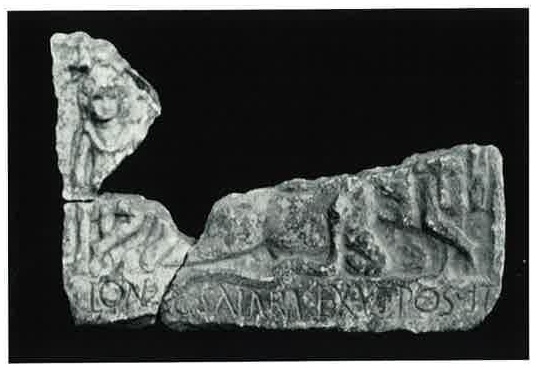
Three fragments of a rectangular bluish marble tauroctony from the Mithraeum at Sarmizegetusa, Dacia, preserving the lower and central portions of the bull-slaying with Cautopates.
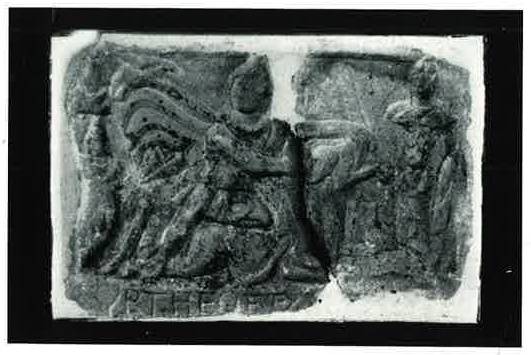
Yellowish marble tauroctony in two fragments from the Mithraeum at Sarmizegetusa, Dacia, executed in a primitive style with the bull represented obliquely.
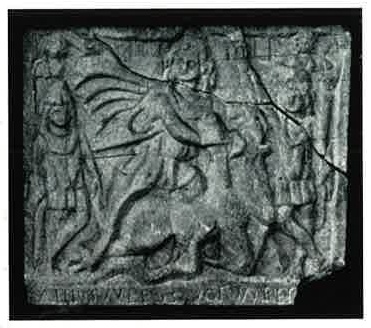
Bluish marble tauroctony relief from the Mithraeum at Sarmizegetusa, Dacia, depicting Mithras killing the bull with the dog, scorpion, and subsidiary scenes.
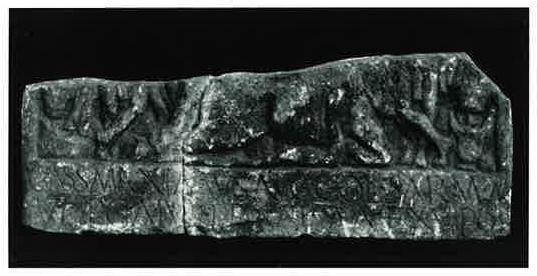
Two sandstone tauroctony relief fragments from the Mithraeum at Sarmizegetusa, Dacia, preserving the lower right portion of the bull-slaying scene.
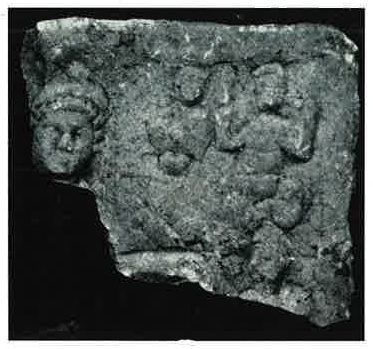
Two fragments of a bluish marble tauroctony from the Mithraeum at Sarmizegetusa, Dacia, preserving the torso of Mithras in the bull-killing posture.
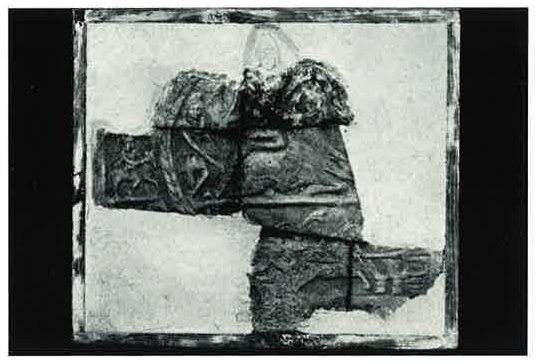
Seven fragments of a white marble tauroctony relief from the Mithraeum at Sarmizegetusa, Dacia, depicting the central bull-slaying with a rich programme of subsidiary Mithraic scenes.

Marble tauroctony relief from Vintu de Jos near Apulum, Dacia, depicting the standard bull-slaying scene.
