Your search San Gemini gave 1021 results.

Stone slab still in front of the church in Kumanovo, ancient Lopata in Moesia Superior, bearing a dedication to Deo sancto Mithrae.
Inscription from Celei, ancient Sucidava in Dacia, dedicated to the sanctum of Solis invicti Mithrae.
Small red sandstone fragment from the Mithraeum at Konjic, Dalmatia, preserving an oblong object — possibly an arm — within a border.
Lost stone altar from the thermal baths at Baden, ancient Aquae Helveticae, dedicated to Deo invicto by Tiberius Cassius Sanctus and Tiberius Sancteius Valens following a vision.
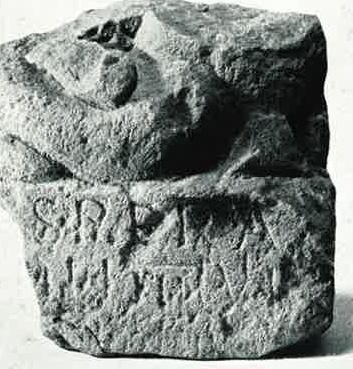
Fragment of a sandstone statue found during cellar excavations at Gross-Krotzenburg in 1848, possibly belonging to the Mithraeum
Two lost Mithraic monuments from Rome: one documented in a 1738 catalogue of the Palazzo Barberini as a tauroctony group with scorpion, snake and dog, and another mentioned by Pirro Ligorio as a Mithras panel in the Palazzo del Duca di Sanseverino.
Marble statuette representing a bearded person as the Good Shepherd, found in the Dominicum Clementis opposite the Mithraeum of San Clemente; it definitively represents S. Peter, not a Mithraic father of the mysteries.
Possible Mithras sanctuary at a grotto entrance in the Kavag-Dağ, Lycia; the identification remains purely hypothetical according to Cumont.
Two fragments of a large reddish sandstone basin from Mithraeum I at Stockstadt, its exterior decorated with the Zodiac including Gemini and Sagittarius
Sandstone shell from Mithraeum III at Carnuntum, Pannonia Superior, probably mounted on a base and serving as a cult water basin.
Triple-part sanctuary at Saalburg whose Mithraic interpretation remains uncertain despite serpent-vases and possible Aion fragments.
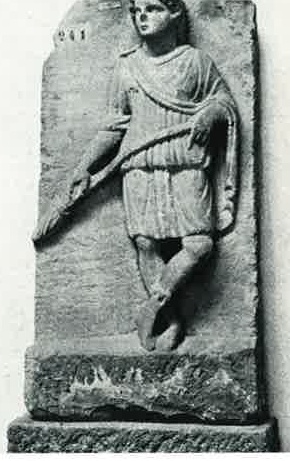
Relief in red sandstone originally standing on a base in Mithraeum I at Heddernheim, ancient Nida, featuring the bull-slaying scene.

This marble altar was found ’in the street called di Branco’, behind the palace of the Cardinal of Bologna, in Rome.
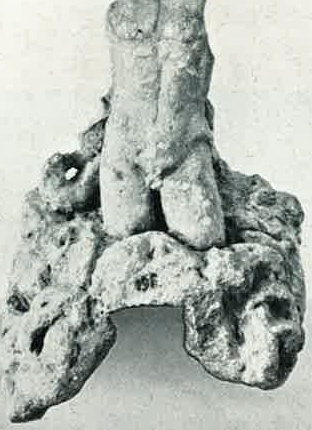
Sandstone petrogenesis from Petronell-Carnuntum (Lower Austria), depicting Mithras emerging from the rock, preserved from the knees upwards.
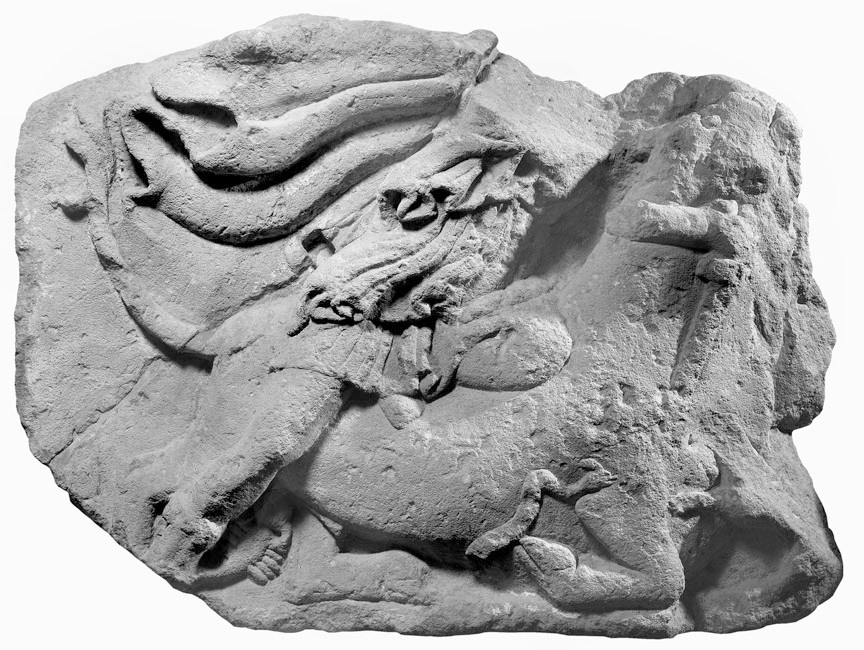
Sandstone relief of Mithras killing the bull, broken in two parts and partly restored, with dog, serpent and scorpion preserved; formerly in Vienna, now on loan to the Museum Carnuntinum.
A fragmentary red sandstone relief preserves the upper part of three-headed Hekate holding a long object in her left hand.
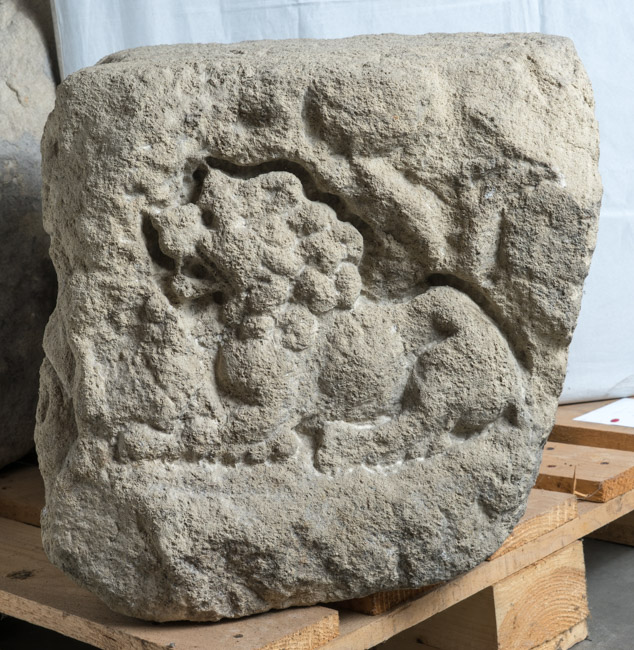
Sandstone base carved on two sides, with a head of Medusa framed by acanthus leaves and a reclining lion holding a head between its forelegs.
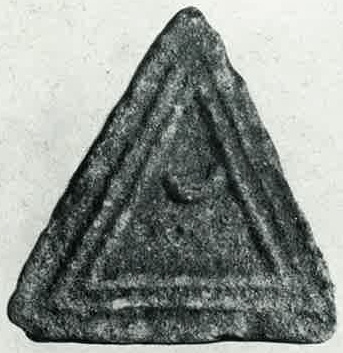
Triangular relief in yellow sandstone showing a crescent in relief.
Red sandstone altar from Stockstadt, featuring a square cavity in the front that contained a fragment of crystal and a small lamp.
Sandstone base from Vetera (Xanten), Germania Inferior, with a relief of Cautes in Oriental dress holding a long burning torch.
