Your search San Giovanni al Timavo gave 3645 results.

This altar, found in Tazoult تازولت, Algeria, was dedicated to the god Sol Mithras by a certain Florus.
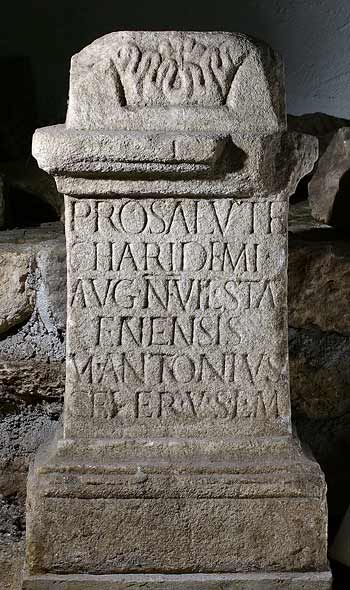
Marble votive altar with inscription to Mithras, featuring coiled, fan-like motifs above the text and associated with the statio Enensis.
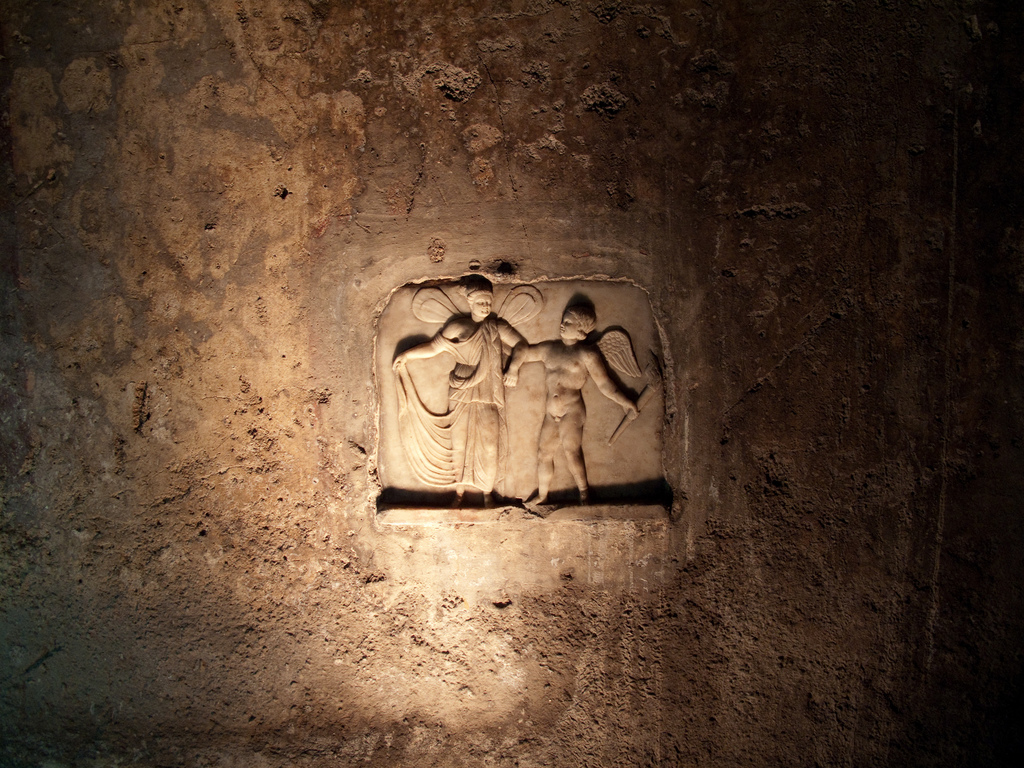
The Mithraeum of Santa Maria Capua Vetere includes a marble relief depicting a child Eros guiding Psyche through the dark.
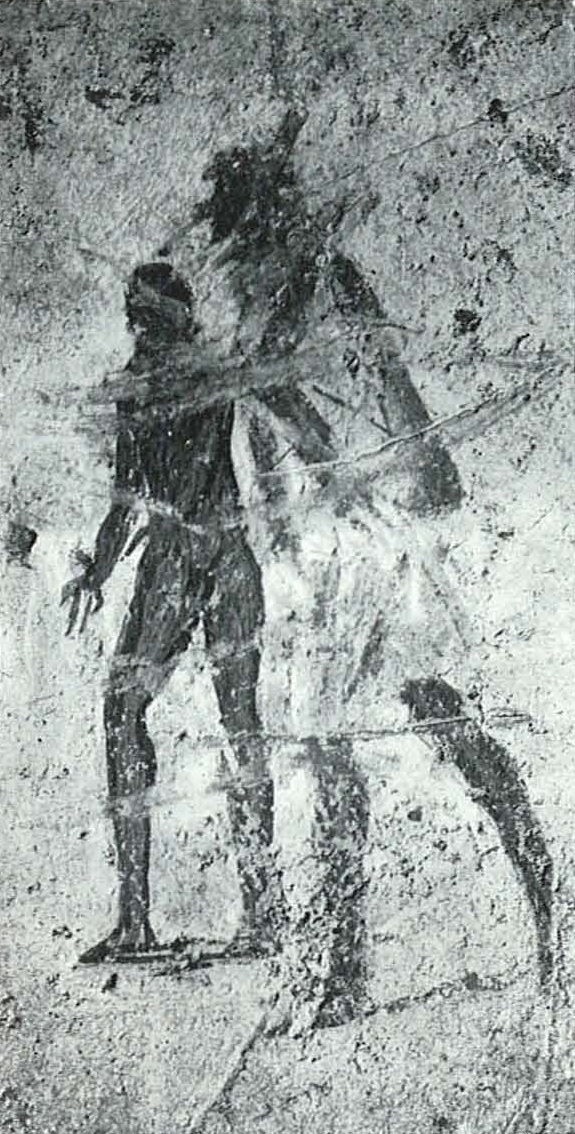
This is the first of several fresco scenes depicting the initiation of a new member in a mithraic community, in Capua Vetere.
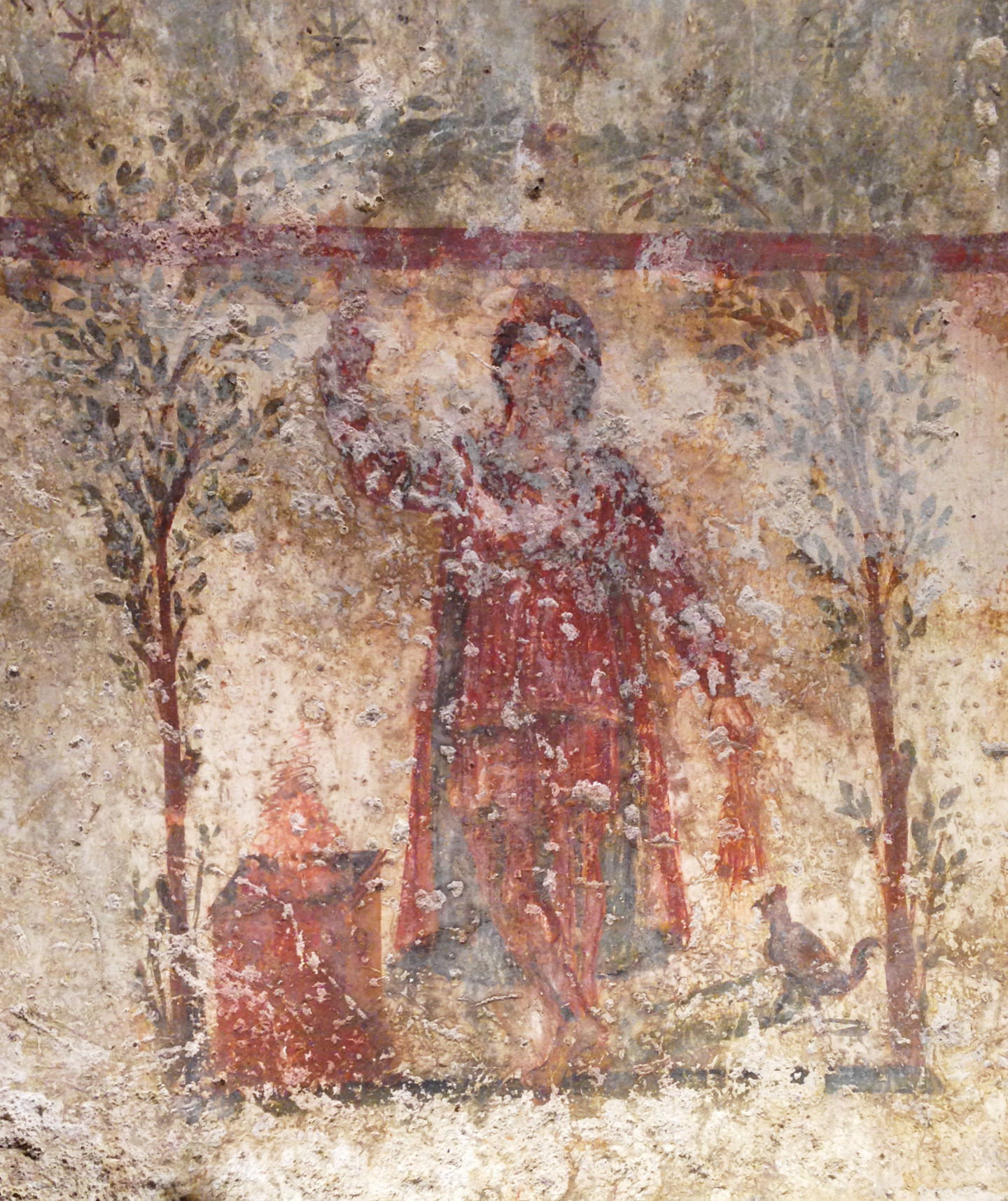
In the Mithraeum of S. Capua Veteres, Cautes stands between two laurel trees.
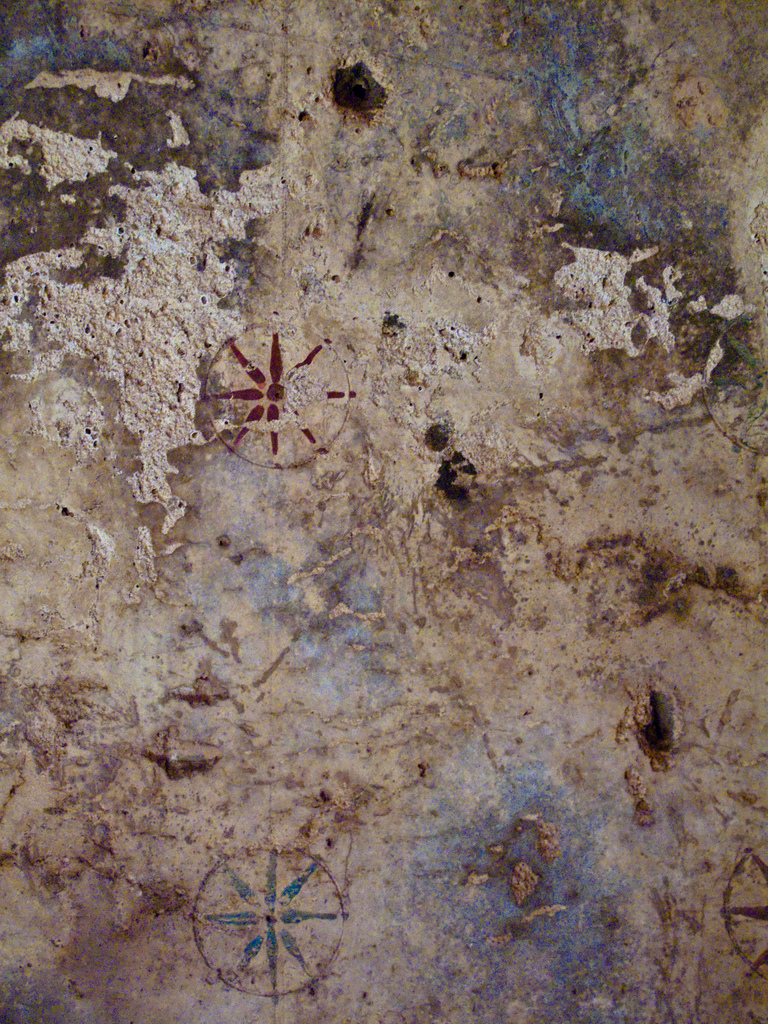
The vault of the Mithraeum in S. Capua Vetere is decorated with stars that have holes in their centers, which once held colorful glass decorations.
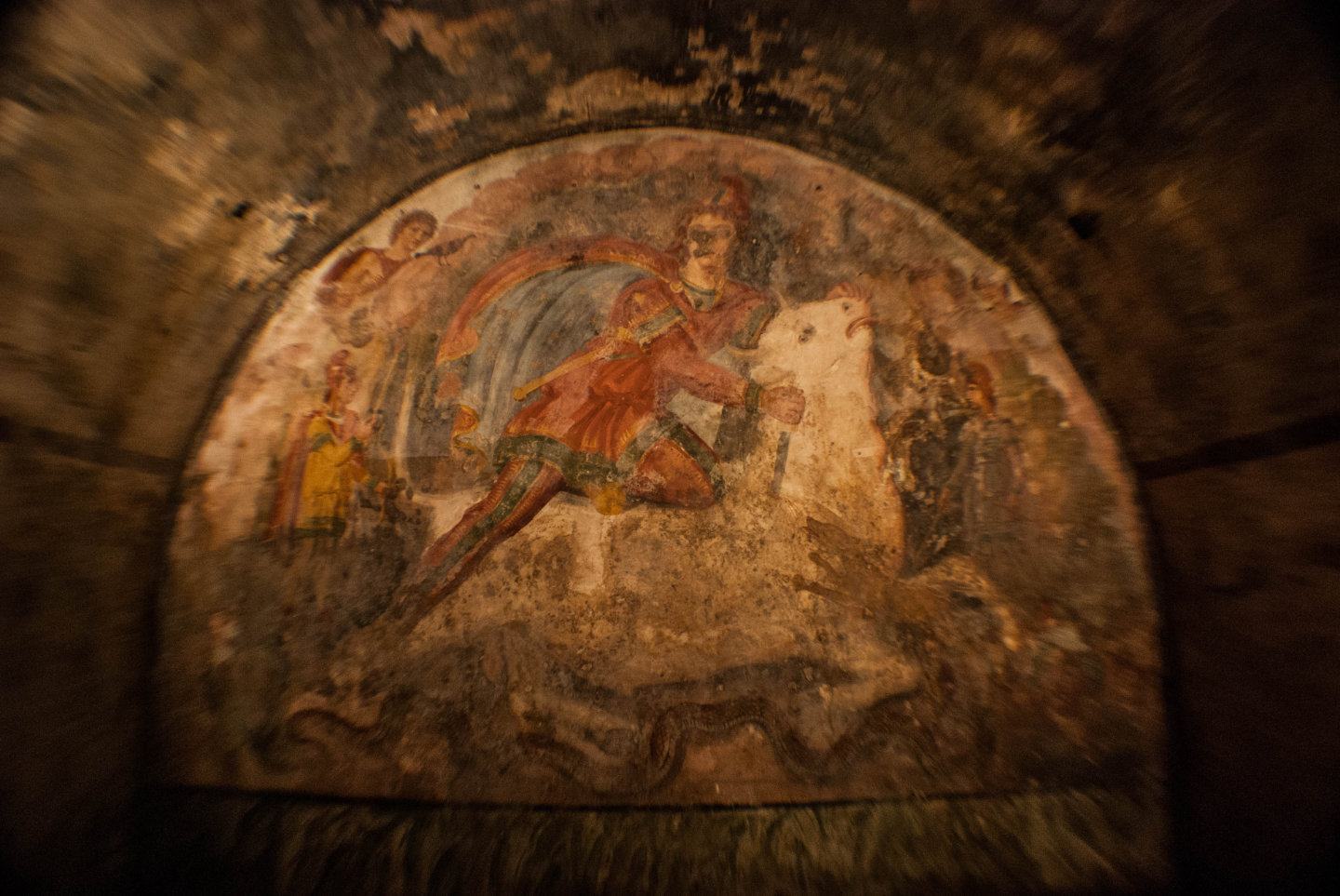
This article revisits the Mithraeum of S. Maria Capua Vetere, one of the most complete and artistically refined Mithraic sanctuaries in the Campanian region, situating it within its archaeological, iconographic, and ritual-historical contexts.

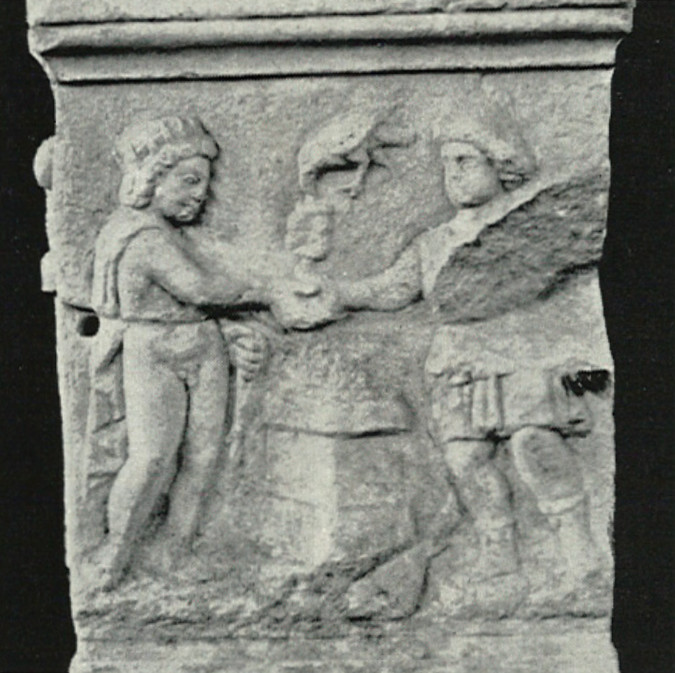
The altar of Ptuj depicts Mithras and Sol on the front and the water miracle on the right side.

Sandstone base from Vetera (Xanten), Germania Inferior, with a relief of Cautes in Oriental dress holding a long burning torch.
Fragmentary sandstone relief from Rückingen showing a male figure walking right and holding a kantharos. Traces on the chest may indicate a torques or shoulder-cape.

An inscription mentioning a speleum decorated by Publilius Ceionius suggests the location of a mithraeum in Cirta, the capital of Numidia.
Callimorphus dedicated this image of the sun god to the invincible sun ’Mythra’.

Found in Illmitz, Austria, in 1959, this altar was dedicated to the unconquered god Mithras by a certain Aelius Valerianus.
This is the second altar found in Ceanu Mic to date, dedicated to an Invictus being.

This altar, dedicated to Sol Invictus Mithras by a certain Eutyches for the health of the Emperor Caracalla, was found in Sisak, Croatia, in 1899.
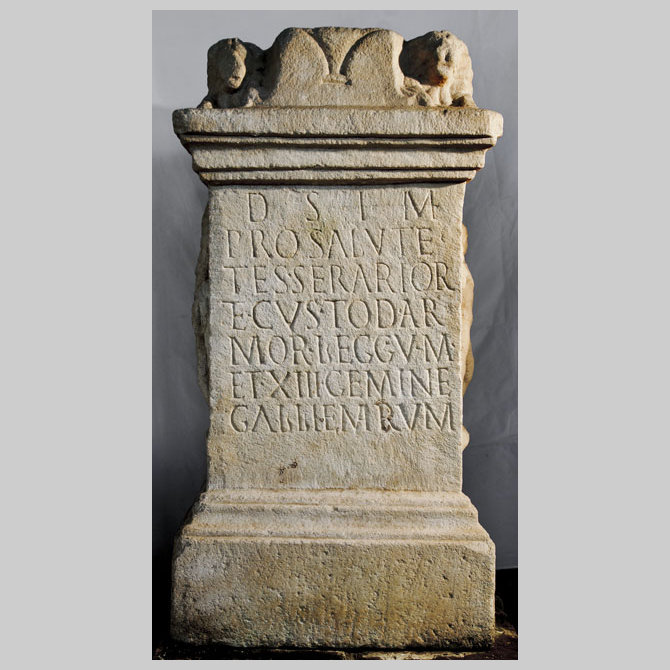
This altar, found in the 3rd mithraeum of Ptuj, bears an inscription and a relief of Sol and a person with a cornucopia.
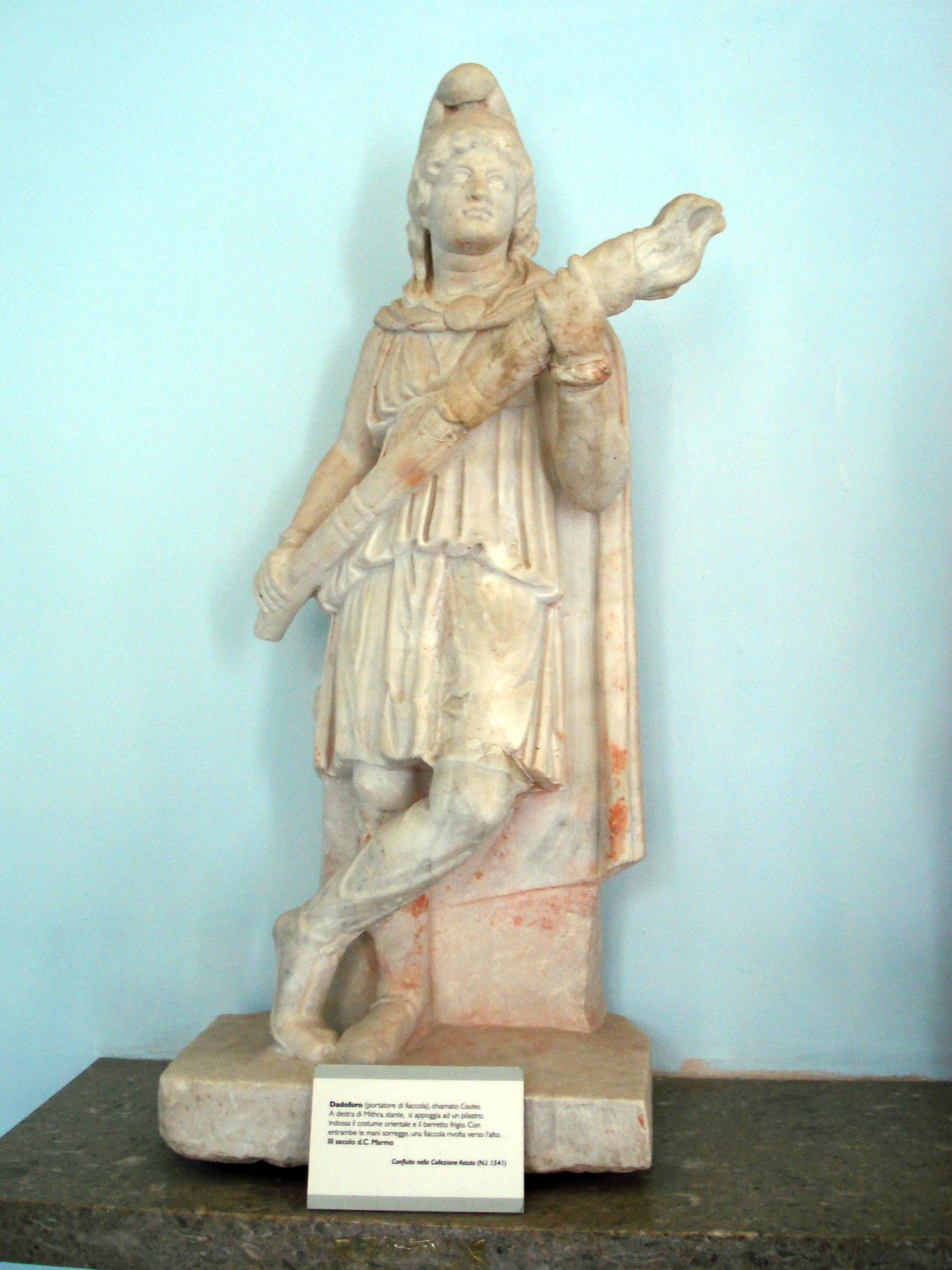
These two mithraic sculptures of Cautes and Cautopates belong to the same collection of Astuto de Noto, made up of mostly Sicilian monuments.
