Your search Soriano nel Cimino gave 119 results.

Hector erected an altar to Mithras in Emerita Augusta by means of a ‘divine vision’.


Altar from Petronell, ancient Carnuntum, Pannonia Superior, dedicated to Soli by Quintus Cottius Lalus.
Altar from Petronell, ancient Carnuntum, Pannonia Superior, dedicated to Soli divino ex visu by Lucius Aelius Leo — possibly the same individual who dedicated a further altar identifying himself as a miles of Legio XIIII Gemina.
Small altar from Petronell, ancient Carnuntum, Pannonia Superior, dedicated to Mithras (spelt Motre) by Caius Rip-, who made the altar as merited; the garbled spelling suggests a non-Latin speaker.
Altar from Petronell, ancient Carnuntum, Pannonia Superior, dedicated to Deo invicto Mithrae by Aurelius, whose name is only partially preserved.
Sandstone statue from Mithraeum I at Carnuntum, Pannonia Superior, depicting a lying lion with a bull's head before its forefeet; a large opening at the back of the head communicated with a channel below, suggesting use as a cult water outlet.
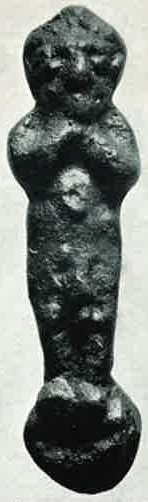
Bronze fibula from Petronell-Carnuntum, depicting a standing lion-headed Aion.
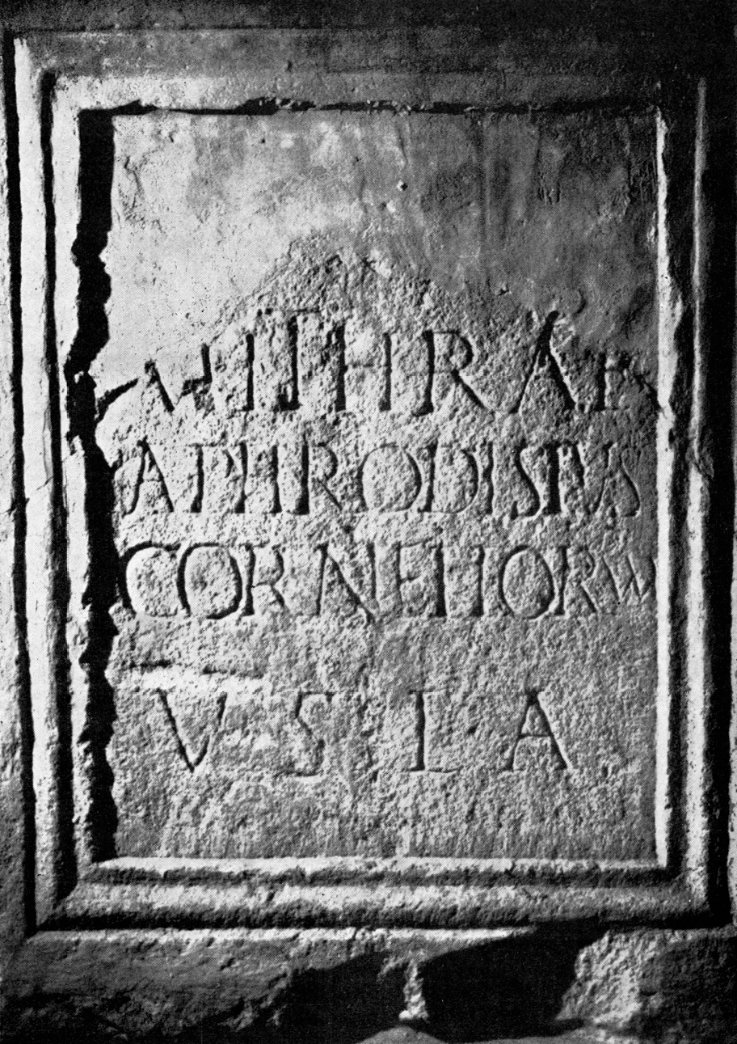
This inscription by a certain Aphrodisius was found under the old city hall of Algiers.
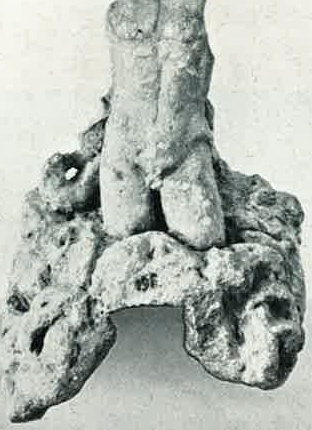
Sandstone petrogenesis from Petronell-Carnuntum (Lower Austria), depicting Mithras emerging from the rock, preserved from the knees upwards.

According to the scarcely detailed design of von Sacken, the lay-out of the temple must have been nearly semi-circular.
The second temple devoted to Mithras in Carnuntum is situated besides a Jupiter's temple.

Pater who consecrated the Mithraeum of Gimmeldingen during the final phase of Mithraic worship in the Rhineland.
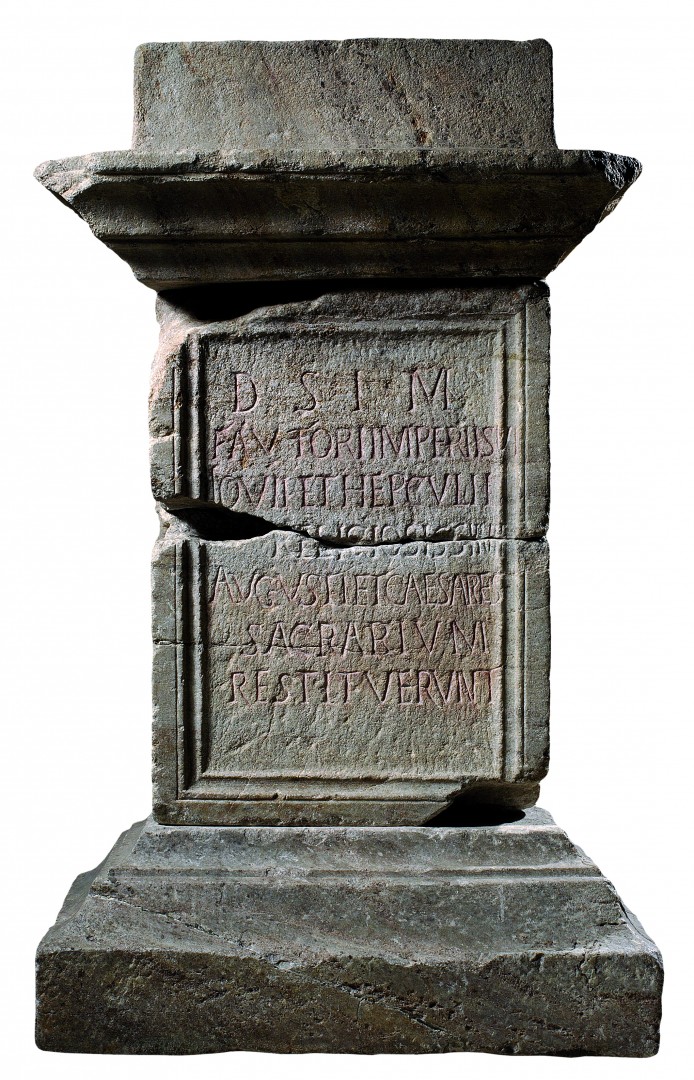
Altar with Cautes and Cautopates dedicated to Sol Invictus Mithras as protector of the Tetrarchy in 3rd-century Carnuntum.
A black marble cippus from Val Camonica with clear but inelegant lettering, dedicated to Cautopates by G. Munatius Tiro, a duovir iure dicundo, and his son G. Munatius Fronto.
Marble inscription found near the Church of S. Susanna on the Quirinal, with a dedication to Sol Invictus as a votive offering by Cornelius Maximus, centurion of the tenth praetorian cohort.
Carbonised plant remains (4,210 g) from the third room of the Mithraeum at Linz, ancient Lentia, comprising vine, prunes, hedge- and cornelberries, apple pips, walnuts, and millet; interpreted as a ritual food offering to the god.
Sandstone relief fragment with a cup above an inscription panel, probably from a Mithraic monument.
Two lost Mithraic monuments from Rome: one documented in a 1738 catalogue of the Palazzo Barberini as a tauroctony group with scorpion, snake and dog, and another mentioned by Pirro Ligorio as a Mithras panel in the Palazzo del Duca di Sanseverino.