Your search for Split gave 22 results.

Salona was an ancient city and the capital of the Roman province of Dalmatia. It was founded in the 3rd century BC and was mostly destroyed in the invasions of the Avars and Slavs in the 7th century AD.
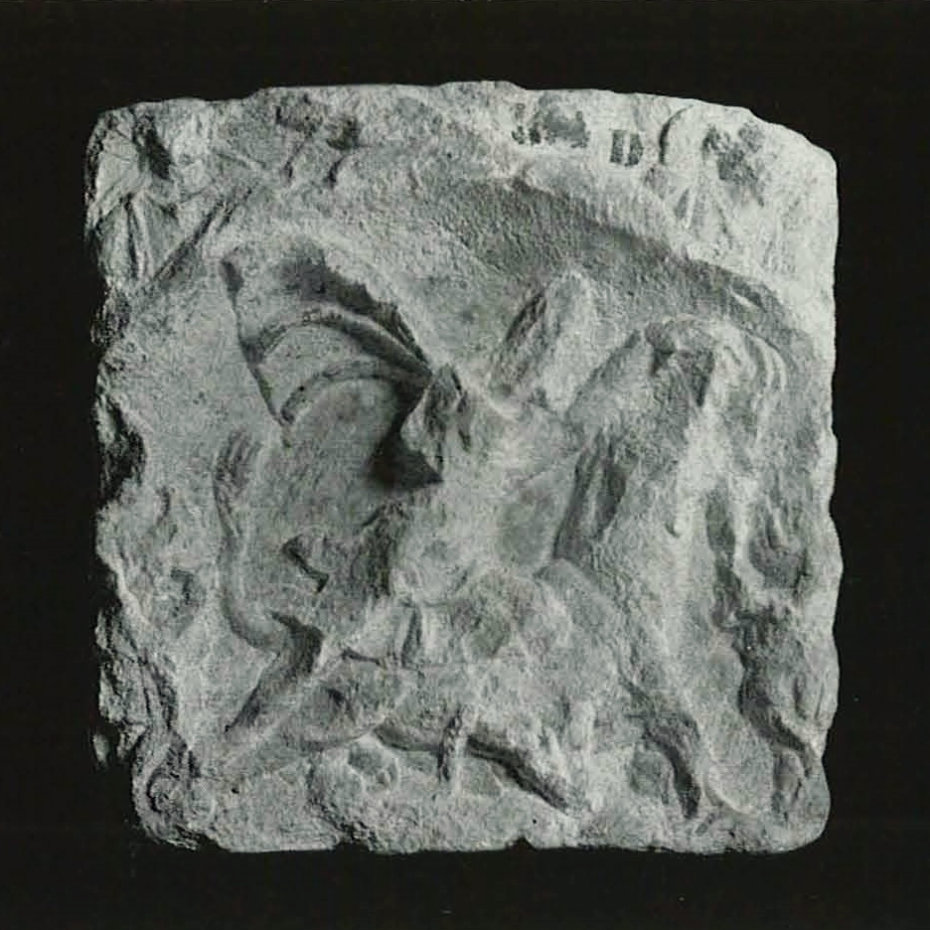
This damage relief of Mithras killing the bull was found walled into a house near Split, Croatia.
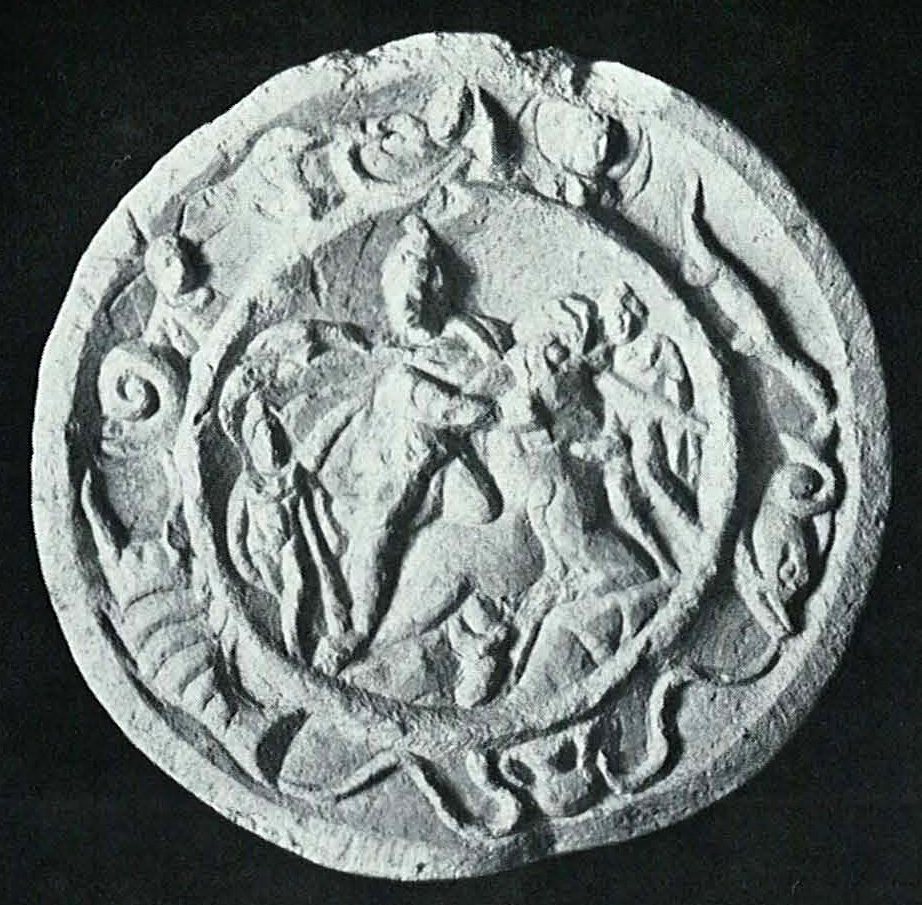
The round relief of Mithras killing the bull of Split is surrounded by a circle with Sun, Moon, Saturn and some unusual animals.
Vaison-la-Romaine is a town in the Vaucluse department in the Provence-Alpes-Côte d'Azur region in southeastern France. Vaison-la-Romaine is famous for its rich Roman ruins and mediaeval town and cathedral. The old town is split into two parts: the

Oval relief fragment from the outskirts of Split near ancient Salona, Dalmatia, preserving two zodiacal signs — probably from a border decoration of a Mithraic monument.
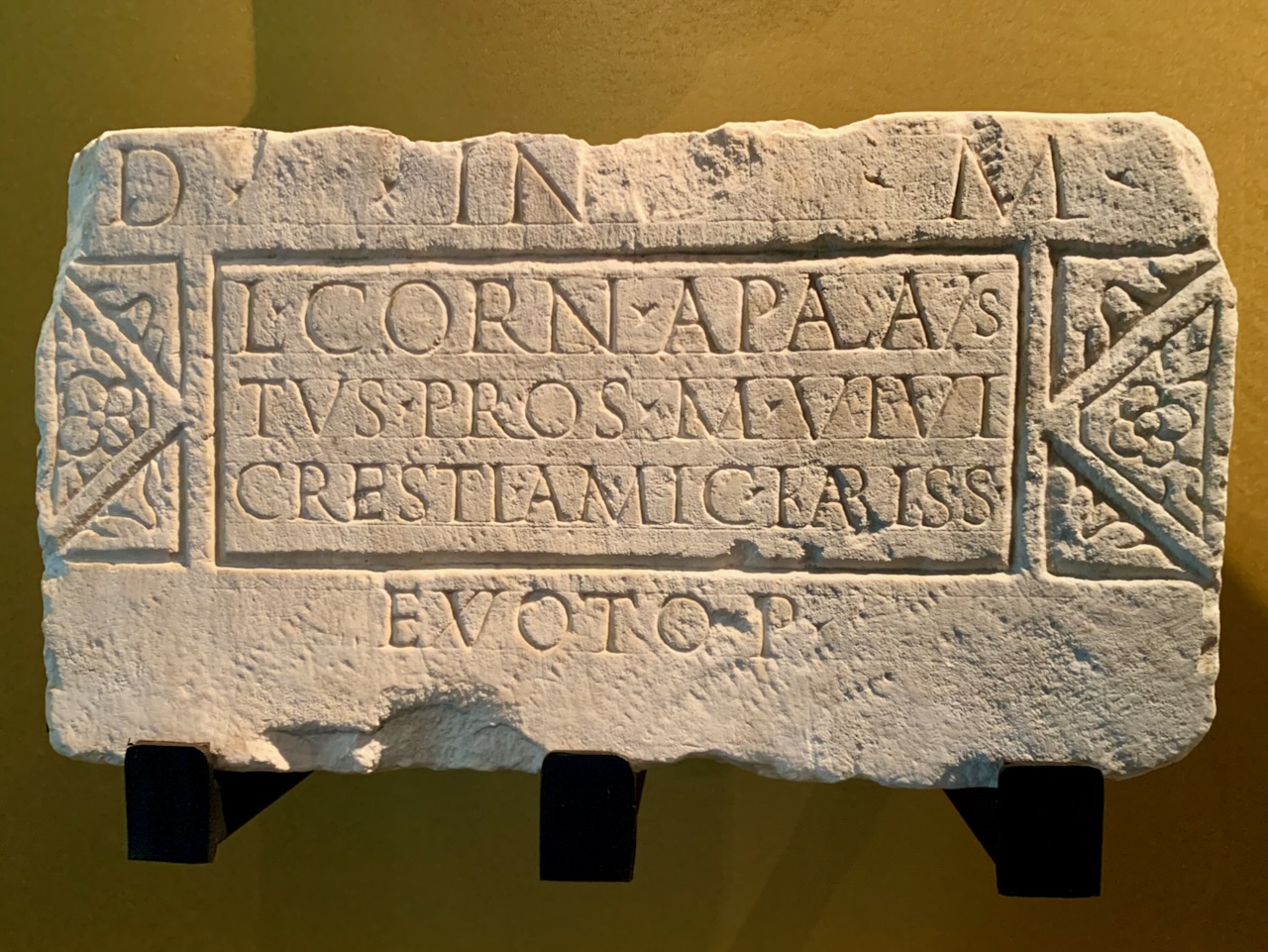
The altar that now stands in Split was dedicated to Invincible Mithras for the health of a dear friend.
Altar from Salona, Dalmatia, found in 1884, dedicated by Sextus Cornelius Antiochus to Soli deo, who donated both a star and a fructifera — interpreted as Sol and Luna — following a vision.
Altar from Salona, Dalmatia, with a bust of Sol in radiate crown in the lower portion, dedicated to Deo invicto for the welfare and safety of Pamphilus, imperial dispensator, by his arkarius Fortunatus.
Altar found at Salona, Dalmatia, in 1884, dedicated simply to Petrae genetrici — the rock that gives birth to the god.
Inscription from a house staircase at Salona, Dalmatia, dedicated to Deo Mithrae invicto and all the other immortal gods by a dedicant whose name ends in -elius.
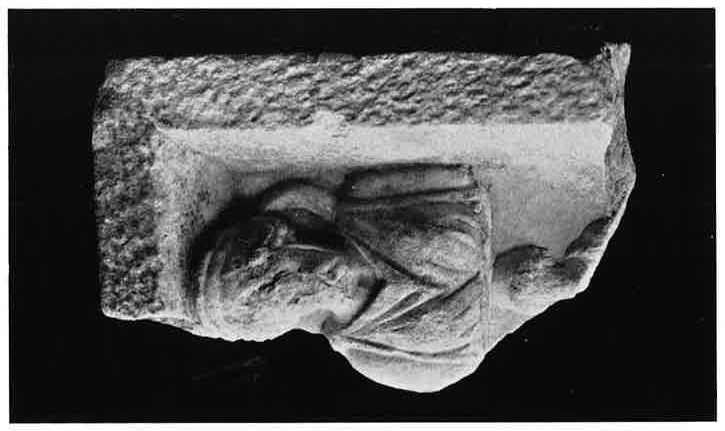
Right upper corner of a white marble bordered tauroctony relief from Salona or its surroundings, Dalmatia, with framing elements and part of the bull-slaying iconography.
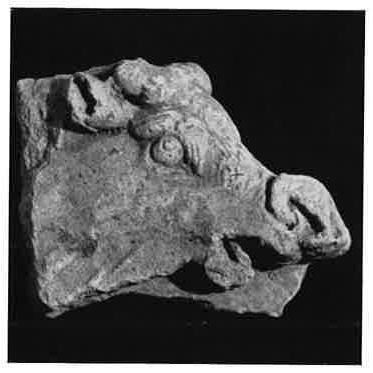
Limestone relief fragment from Salona or its surroundings, Dalmatia, preserving a very fine bull's head and the left hand of Mithras.
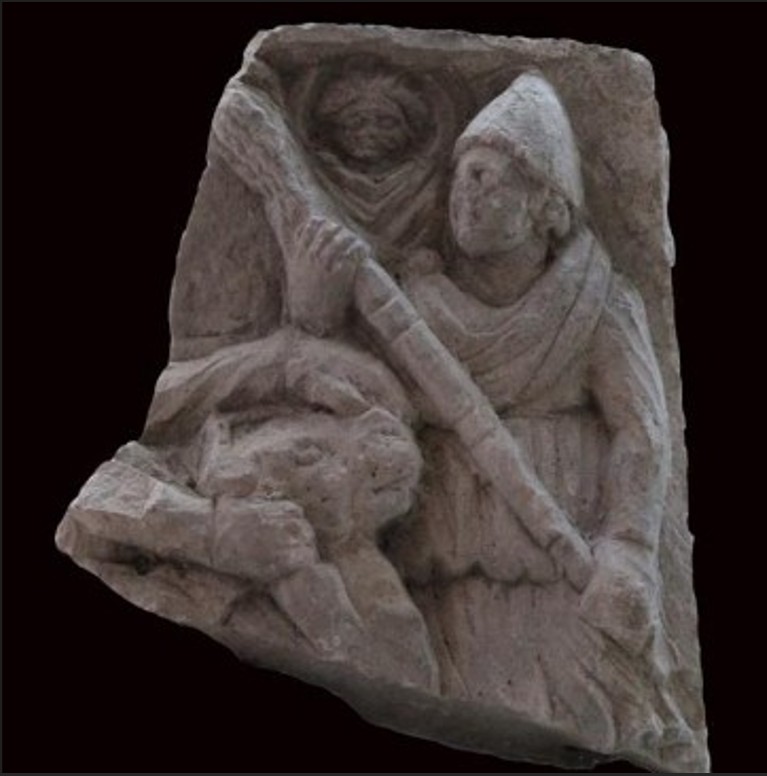
Right upper portion of a limestone relief from Salona or its surroundings, Dalmatia, depicting a standing figure — probably a torchbearer or divine attendant.
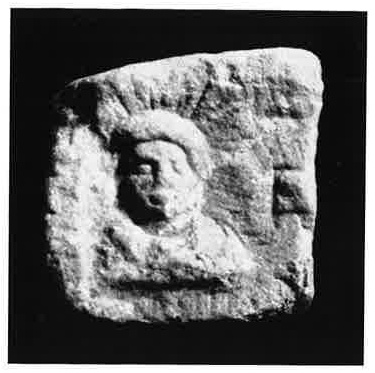
Left upper corner of a white marble relief from Salona, Dalmatia, found in 1895, preserving the bust of Sol in radiate crown.
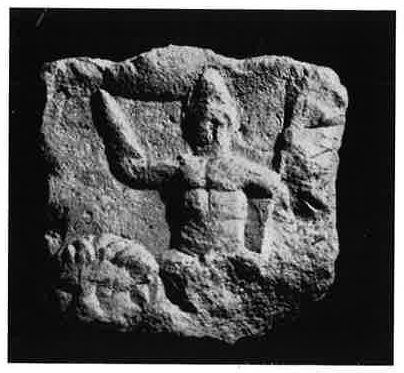
White limestone relief fragment from the walls of Salona, Dalmatia, found in 1906, depicting naked Mithras being born from the rock with a dagger in his right hand and a torch in his left.

Left lower corner of a limestone tauroctony relief from Salona, Dalmatia, preserving the crossed legs of a torchbearer and the grotto base.
Fragmentary inscription from Salona, Dalmatia, preserving only the phrase impendio suo — probably recording a building act.
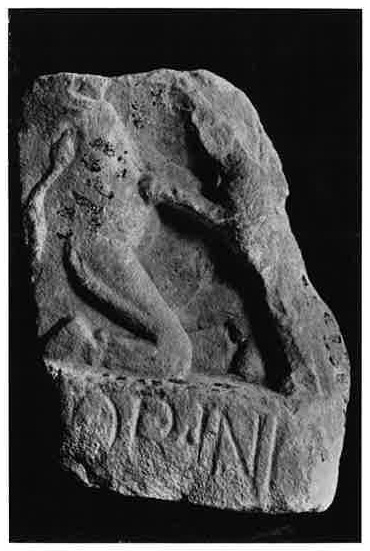
Limestone tauroctony relief fragment from Salona, Dalmatia, preserving the foremost part of the bull, the dog, the serpent, and part of Mithras's dagger hand.
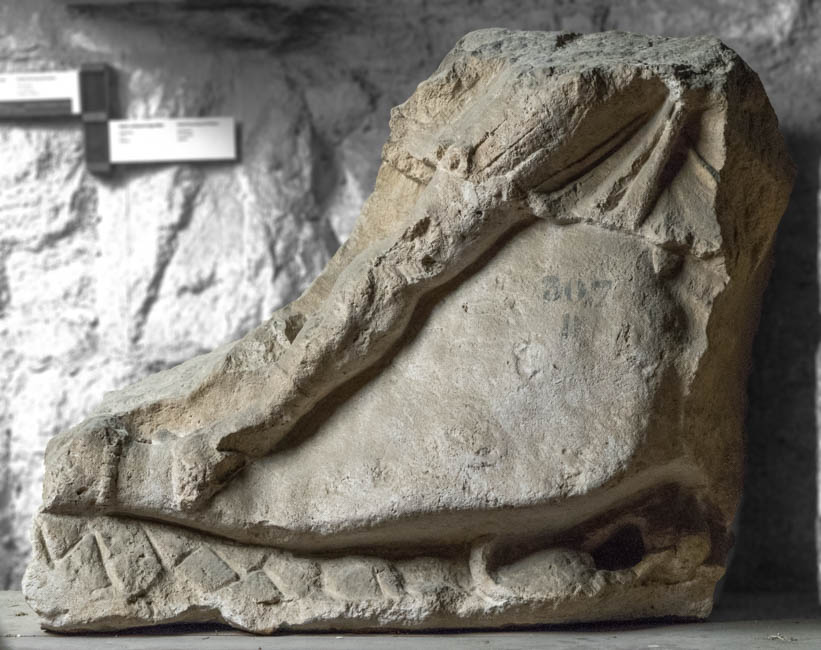
This large limestone fragment from Roman Salona preserves the hind part of the bull together with Mithras’ foot and traces of his red tunic.
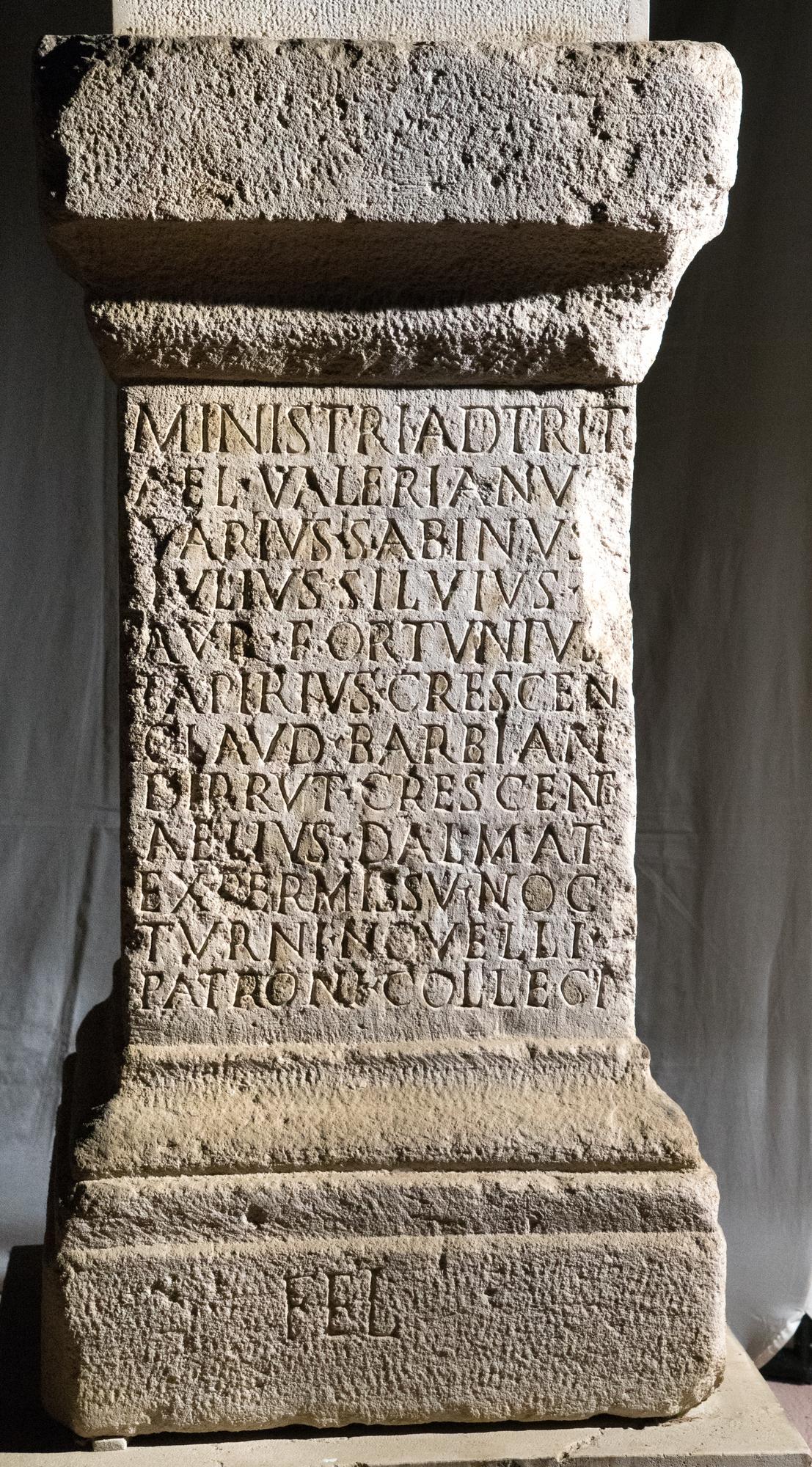
This inscribed limestone altar from Roman Salona preserves several lists of ministers associated with the Tritones collegium during the Tetrarchic period.
