Your search St Albans gave 3404 results.

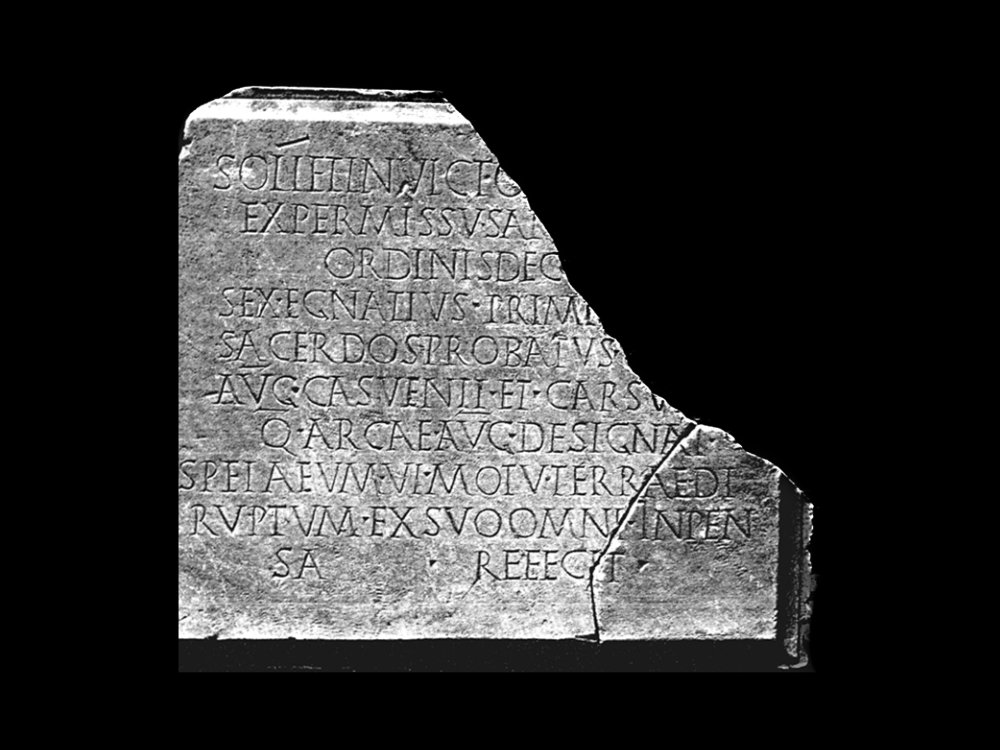
Marble plaque with inscription of a sacerdos probatus to Sol and the god Invictus Mithras.
An unusual feature of this very ancient relief is that Cautopates carries a cockerel upside down, while Cautes carries it right-side up.
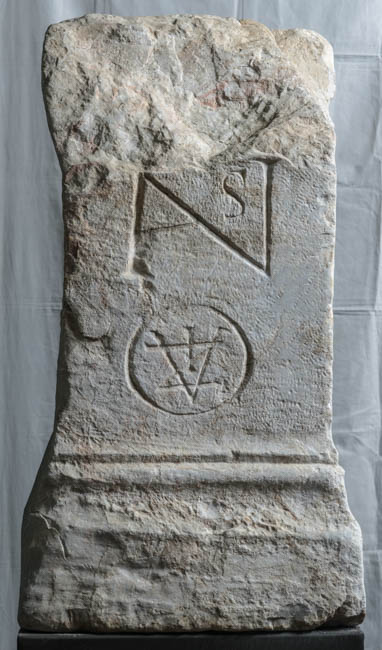
The limestone altar at Klechovtse in North Macedonia bears an inscription to the invincible Mithras.
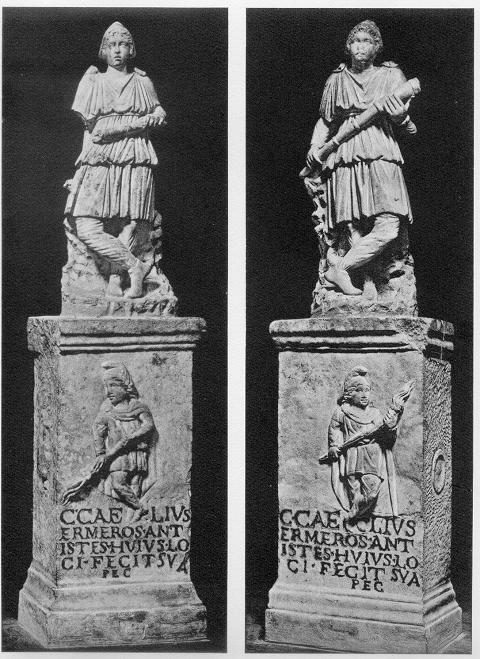
The sculptures of Cautes and Cautopates from the Mitreo del Palazzo Imperiale may have been reused from an older mithraeum in Ostia.
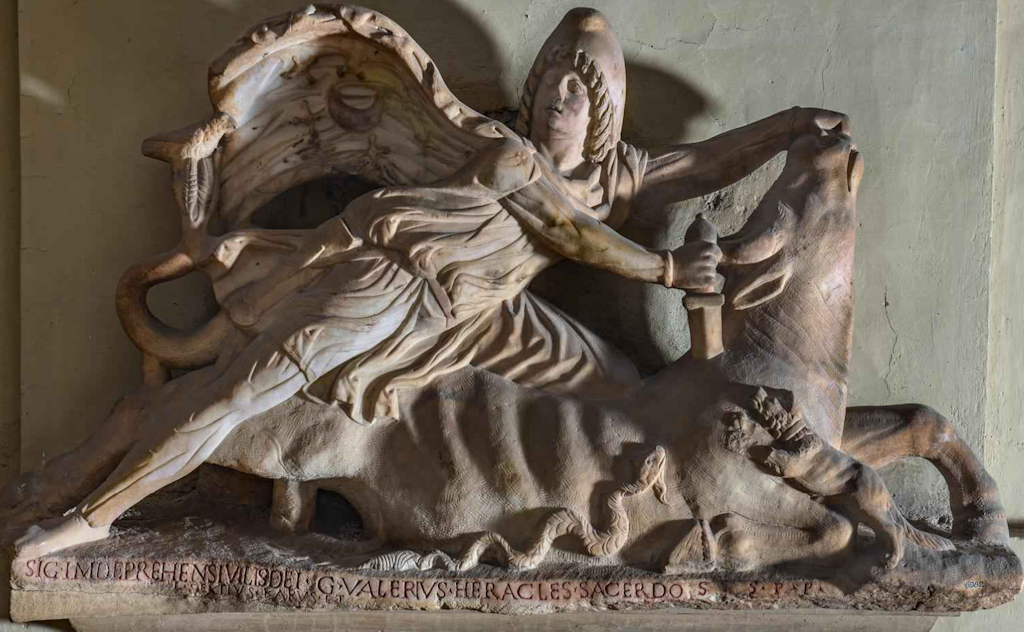
This sculpture of Mithras killing the bull was dedicated to the “incomprehensible god” by a certain priest called Gaius Valerius Heracles.
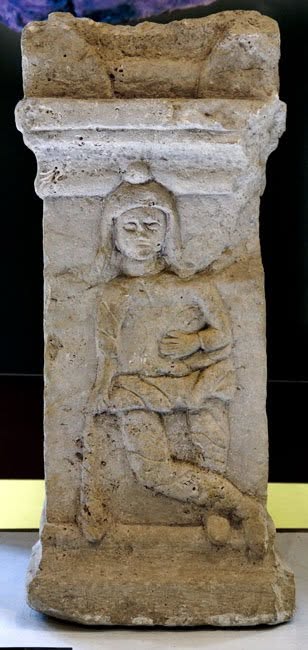
Votive altar depicting Cautopates from the Roman city of Durostorum, modern-day Silistra in Bulgaria.
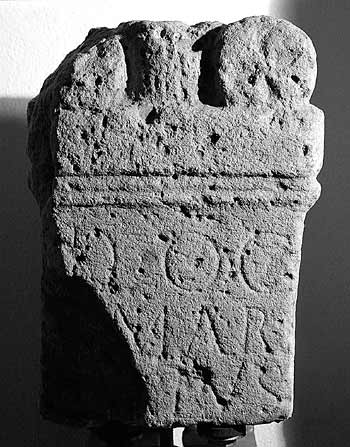
These two inscriptions by a certain Titus Martialius Candidus are dedicated to Cautes and Cautopates.

Sandstone altar from the Mithraeum of Vindobala bearing a dedication to Sol Invictus and Mithras by the prefect Aponius Rogatianus.
An ara thought to originate from the Mithraic sanctuary at Borcovicium (modern Housesteads), bearing a fragmentary inscription dedicated to Sol Invictus.
An altar found not far from the eastern entrance of the cult-room at Borcovicium (modern Housesteads), bearing a brief dedication to Deus Sol.
An altar found in 1822 at Borcovicium (modern Housesteads), recording a vow fulfilled by Valerianus, a soldier of the Sixth Victrix Legion, to Cocidius and the Genius of the garrison.
An altar found in 1898 in the east part of the sanctuary at Borcovicium (modern Housesteads), bearing a dedication to Mars and Victoria, possibly belonging to an adjacent shrine rather than the Mithraeum itself.
An altar with a praefericulum on the right side and a patera on the left, found at the Mithraeum at Borcovicium (modern Housesteads) in 1822, recording a vow fulfilled to Sol Invictus Mithras Saecularis by Litorius Pacatianus, beneficiarius consulis, for himself and his family…
An altar found in 1822 at the Mithraeum at Borcovicium (modern Housesteads), recording a vow fulfilled to Sol Invictus Mithras Saecularis by Publius Proculinus, centurion, for himself and his son Proculus, during the consulship of Gallus and Volusianus in 252 A.D…
Ceramic finds from both excavations of the Mithraeum at Borcovicium (modern Housesteads), comprising red and thin black-glazed pottery fragments together with a silver coin of Faustina Minor, indicating the sanctuary was in use before 253 A.D. and was most likely destroyed by fire…
A group of four altars from the Mithraeum at Borcovicium (modern Housesteads): two found in 1822 bearing inscriptions Nos. 863 and 864, and two more found in 1898, one dedicated to Mars and Victoria (No. 865) and one to Cocidius (No. 866), the last possibly belonging to an adjacent shrine…
The inscription on the altar No. 858 from the Mithraeum at Borcovicium (modern Housesteads), recording a vow willingly and with merit fulfilled by Herion to Sol.
An altar found in the north-east corner of the main room of the Mithraeum at Borcovicium (modern Housesteads) in 1822, bearing on its capital the bust of Sol in a crown of seven rays and the inscription No. 859.

