Your search Stein am Rhein gave 1059 results.

This altar was dedicated by a certain Marcus Aurelius Decimus to Sol Mithras and other gods in Diana, Numibia, present Argelia.
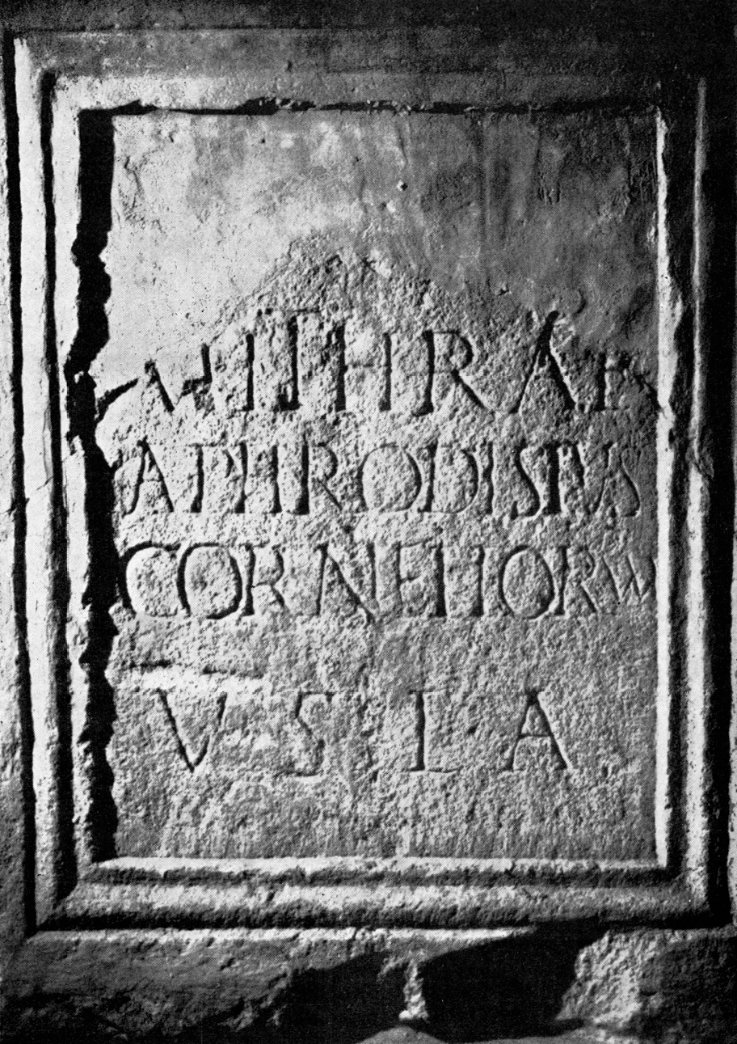
This inscription by a certain Aphrodisius was found under the old city hall of Algiers.

This altar for the completion of a temple to Sol Invictus by Flavius Lucilianus was found in Fossa, Italy.
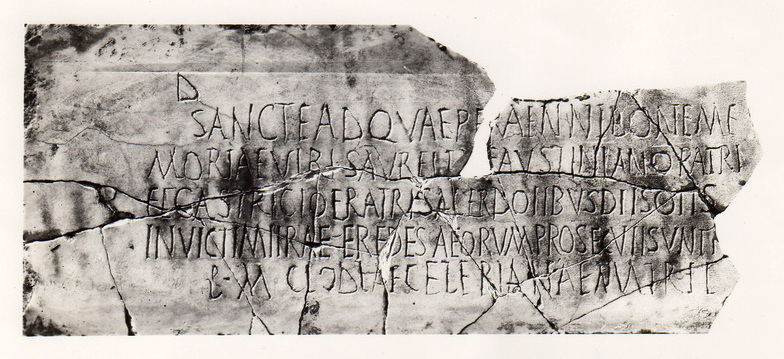
This inscription was commissioned by a family of priests of the invincible god Mithras.
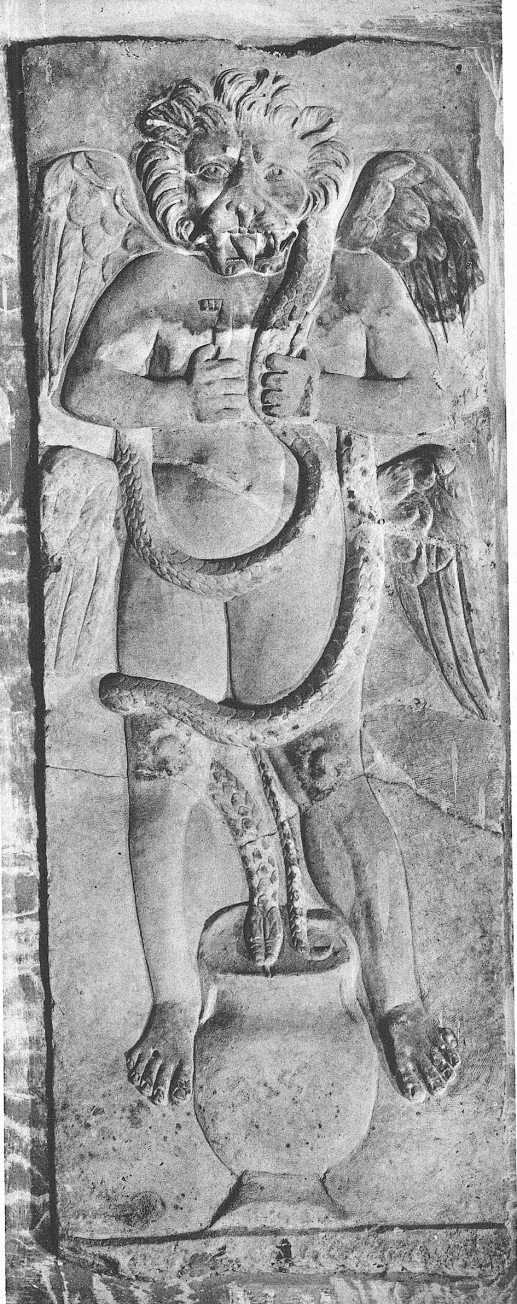
This white marble relief depicting a lion-headed figure from Ostia is now exposed at the Musei Vaticani.
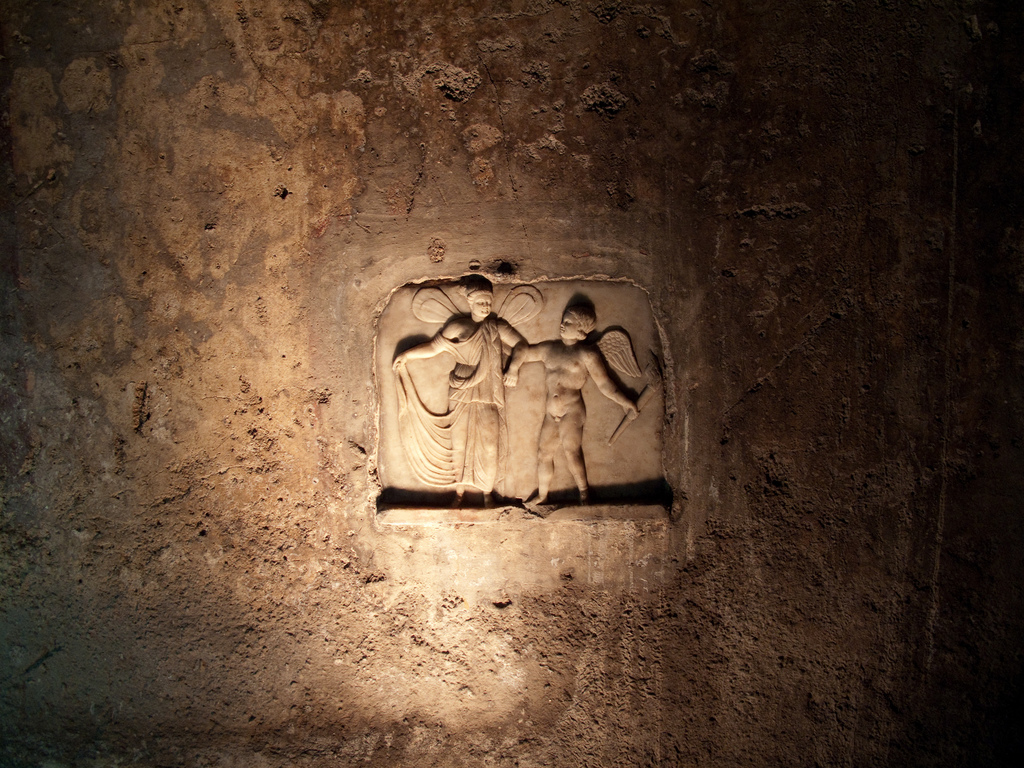
The Mithraeum of Santa Maria Capua Vetere includes a marble relief depicting a child Eros guiding Psyche through the dark.
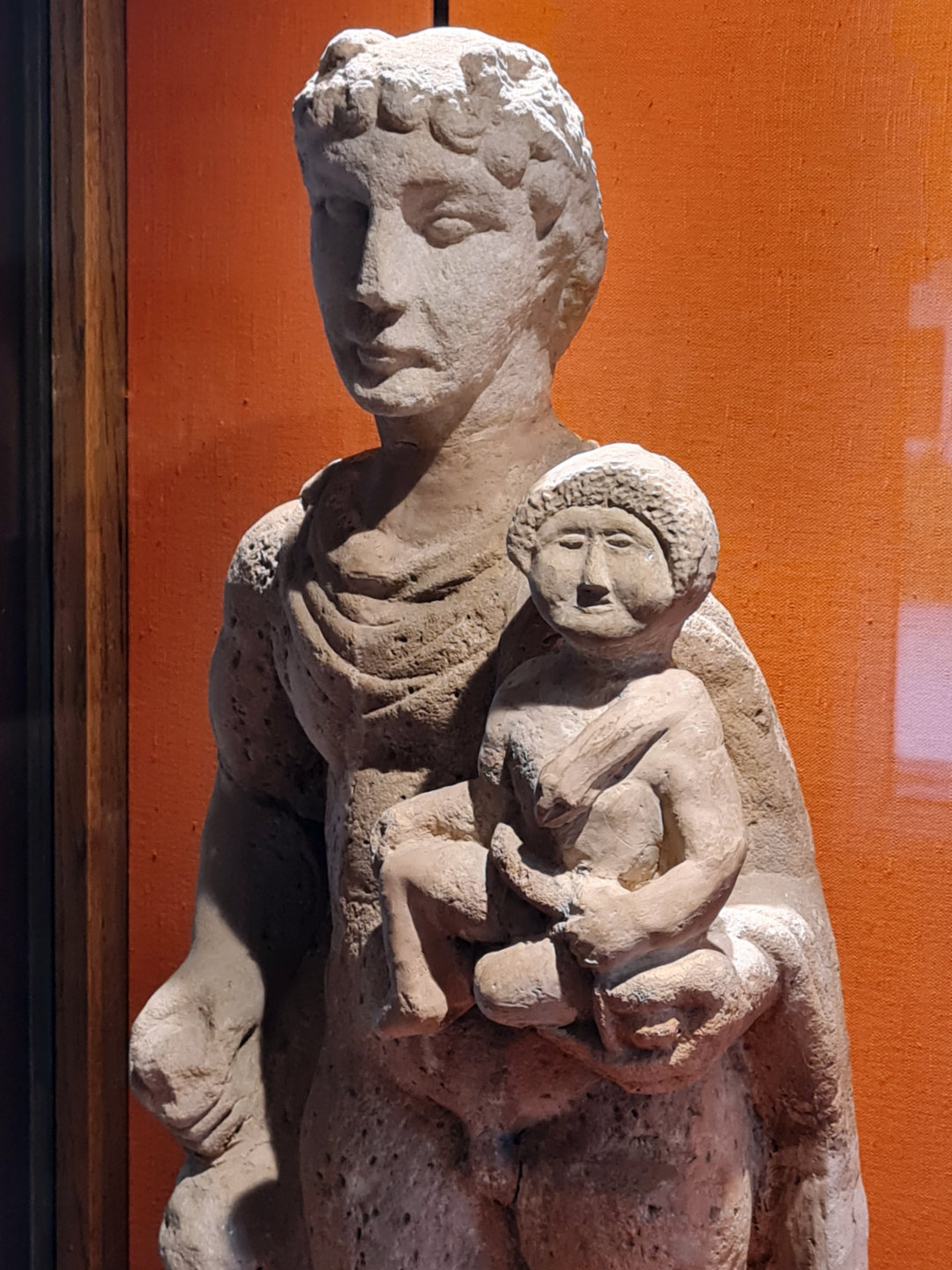
The Stockstadt Mercury carries a purse and a small child around which a snake is coiled.
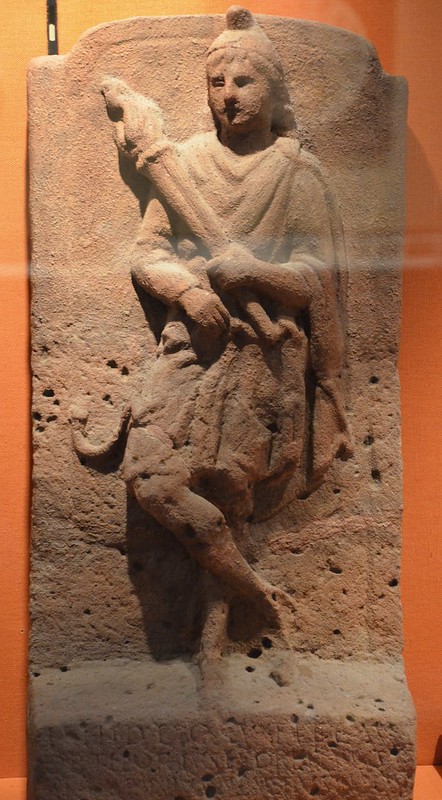
Reliefs of Cautes and Cautopates dedicated by Florius Florentius of Saalburg and Ancarinius Severus.
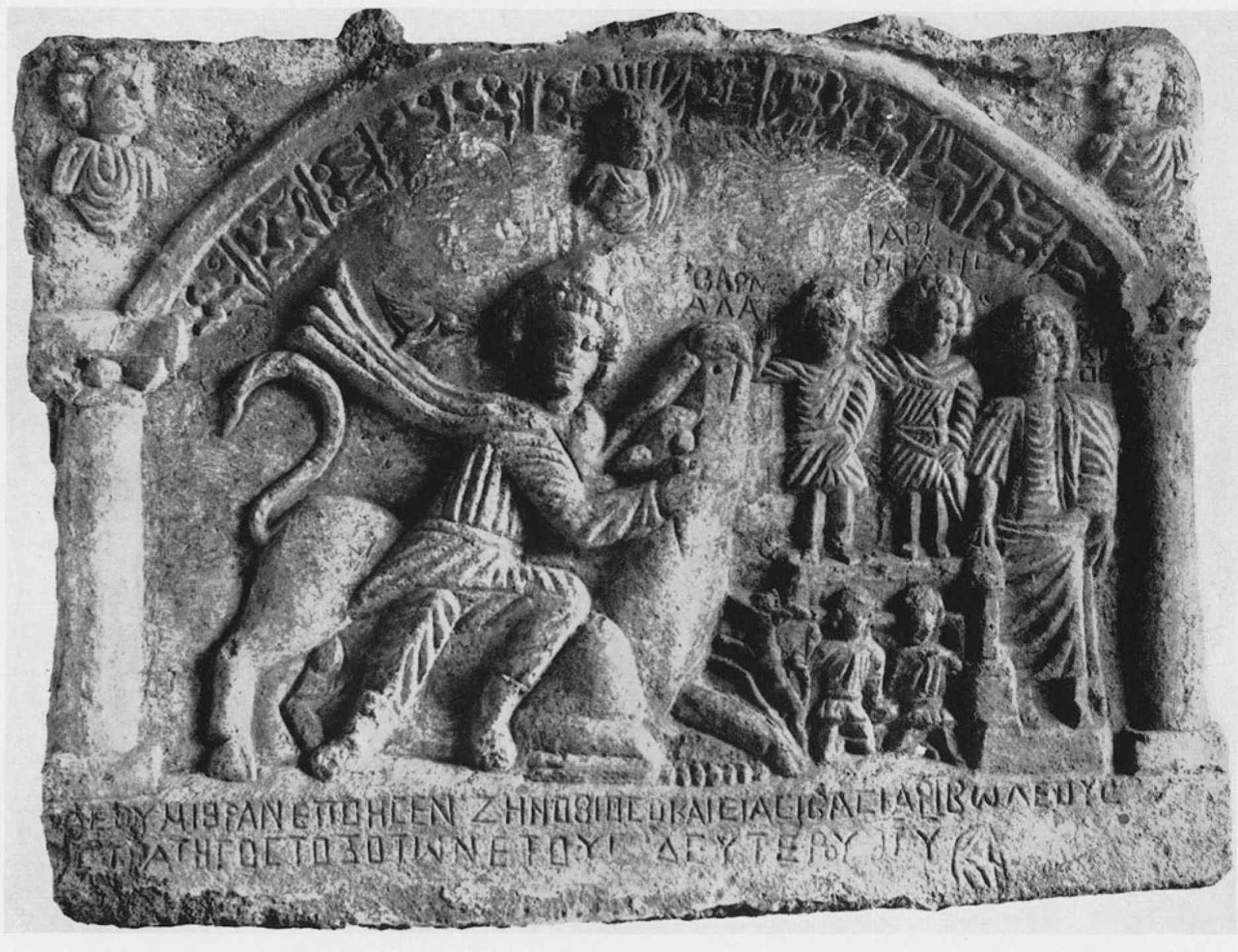
The main relief of Mithras killing the bull from the Mithraeum of Dura Europos includes three persons named Zenobius, Jariboles and Barnaadath.
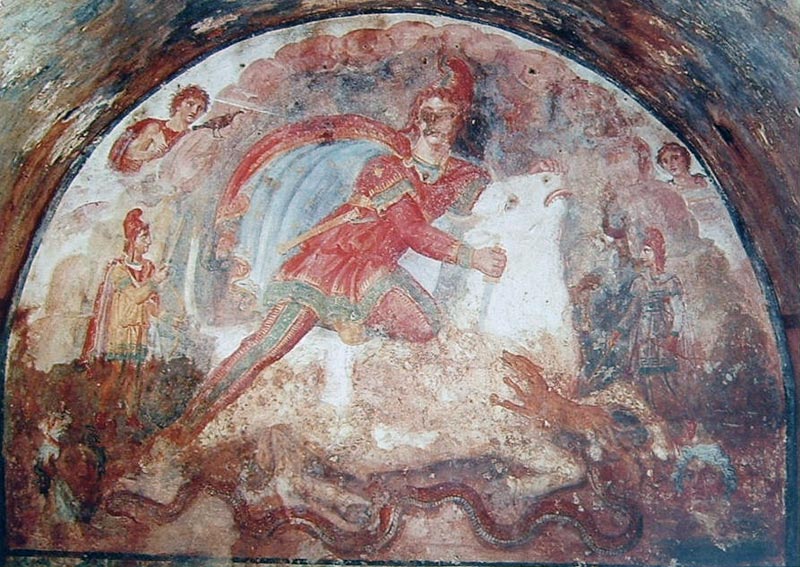
The main fresco of the Mithraeum of Santa Maria Capua Vetere portrays Mithras slaughtering a white bull.
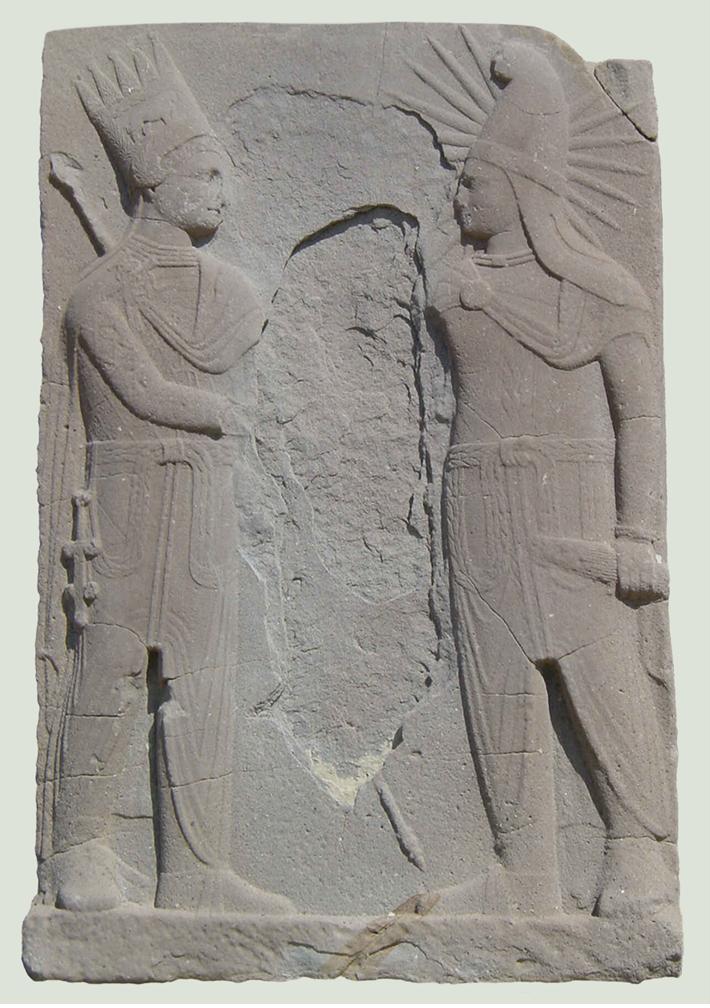
Antiochus I of Commagene shakes Mithras hands in this relief from the Nemrut Dagi temple.
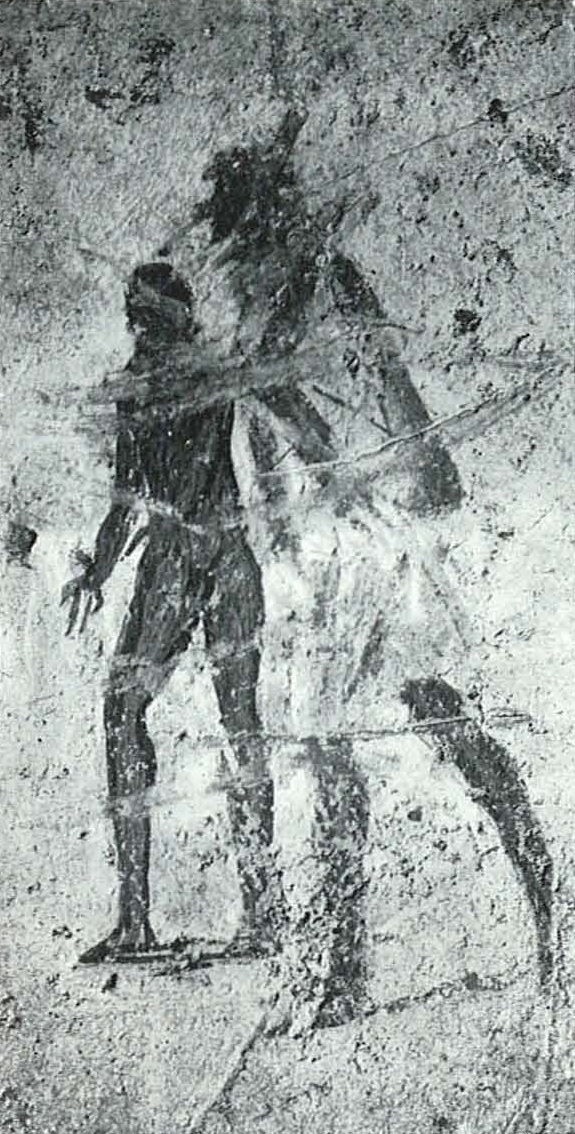
This is the first of several fresco scenes depicting the initiation of a new member in a mithraic community, in Capua Vetere.
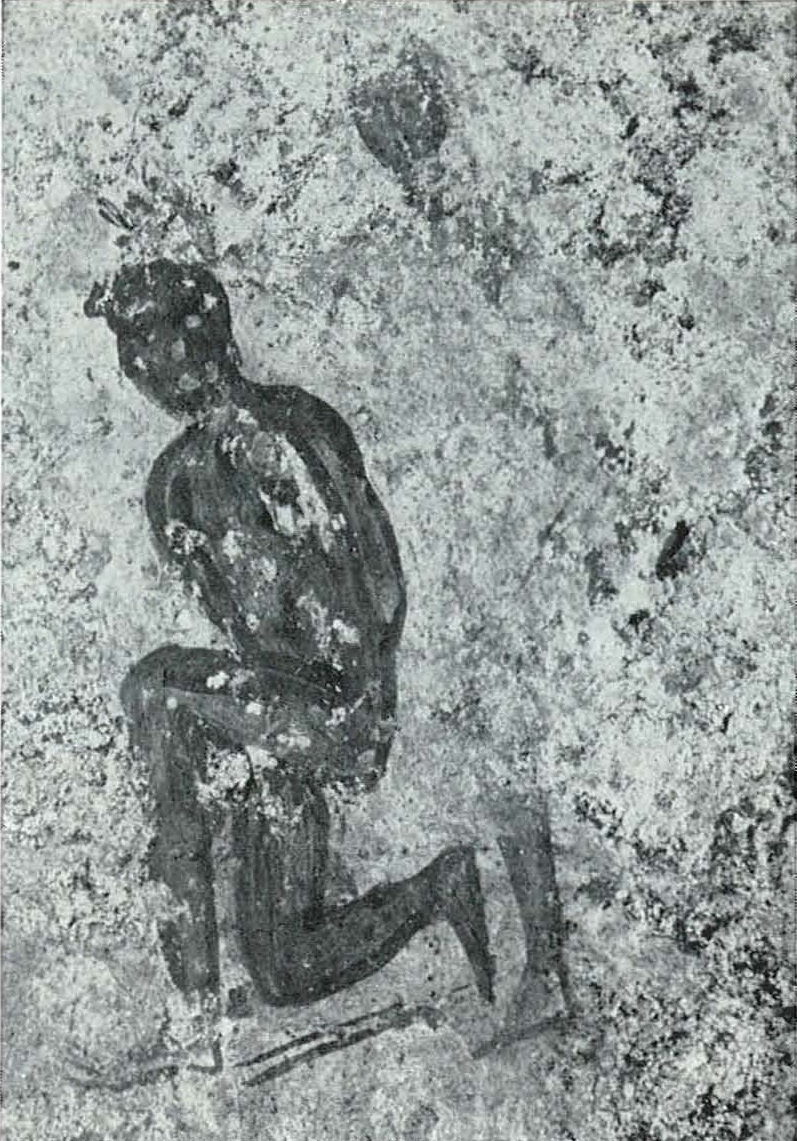
This scene from the frescoes of the Mitreo di Santa Maria Capua Vetere shows a kneeling, naked man surrounded by two other figures.
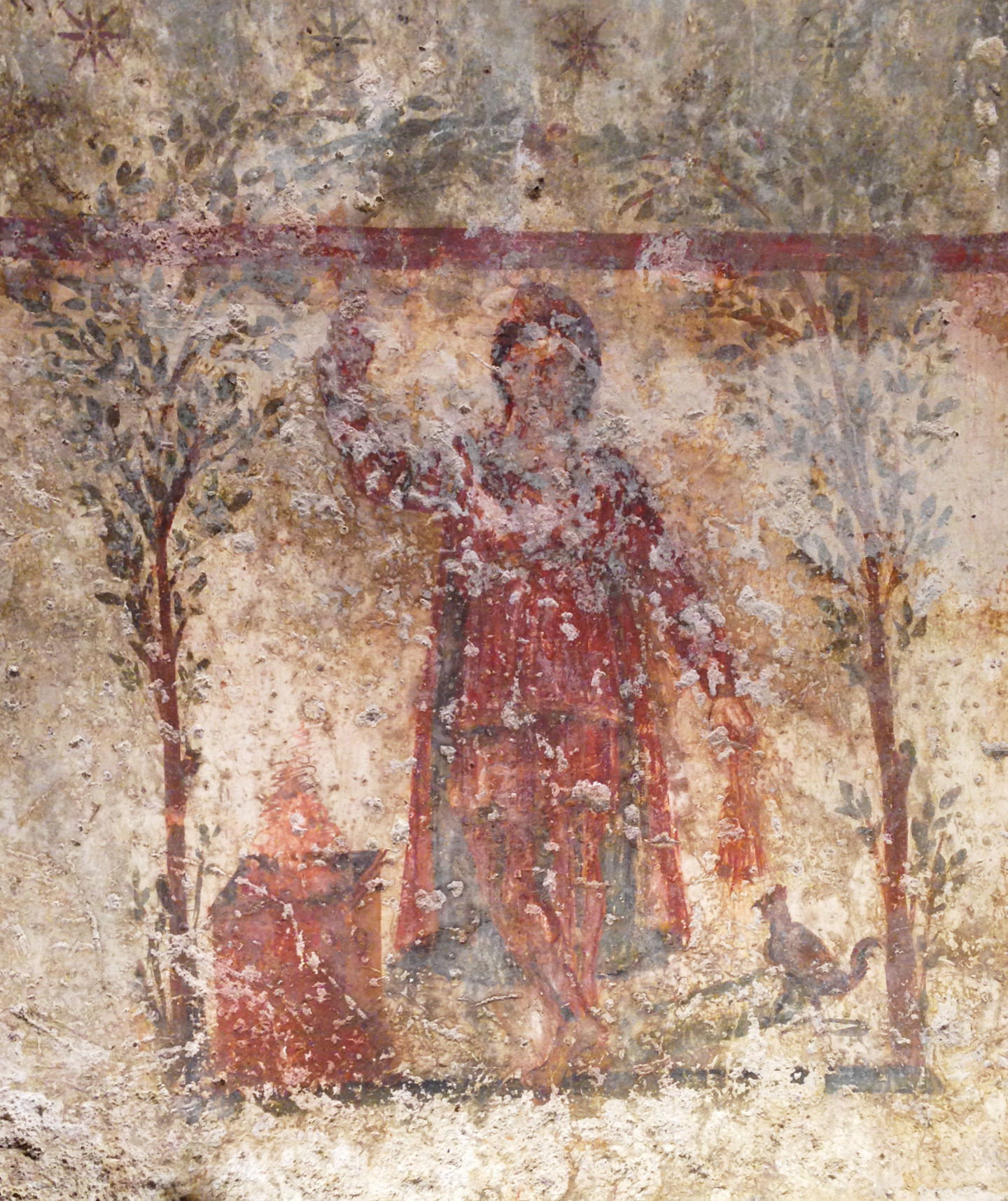
In the Mithraeum of S. Capua Veteres, Cautes stands between two laurel trees.
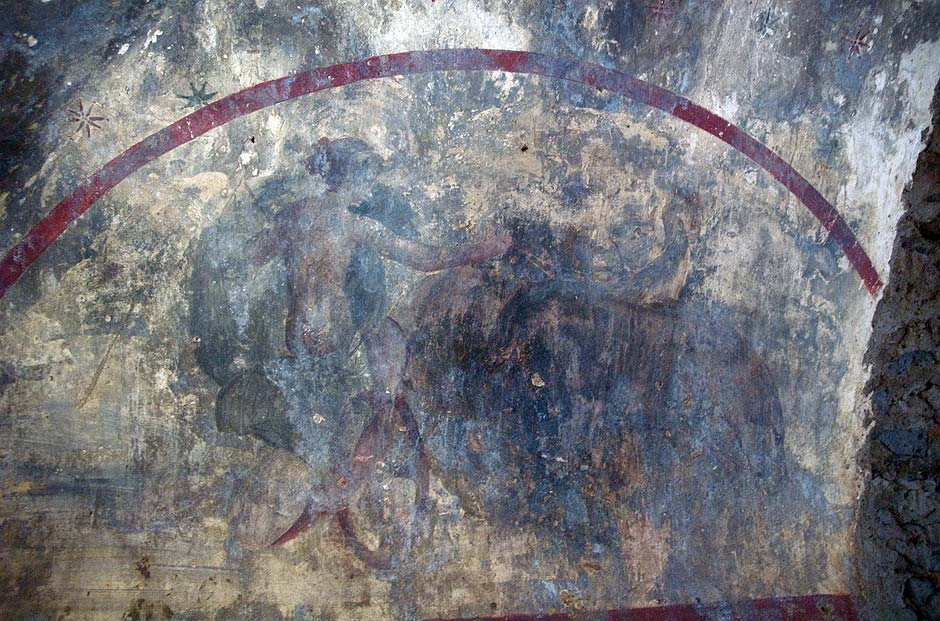
Luna riding a biga in the Mithraeum of Santa Capua Vetere.

Fresco depicting an initiation scene from the Mithraeum of Capua Vetere.
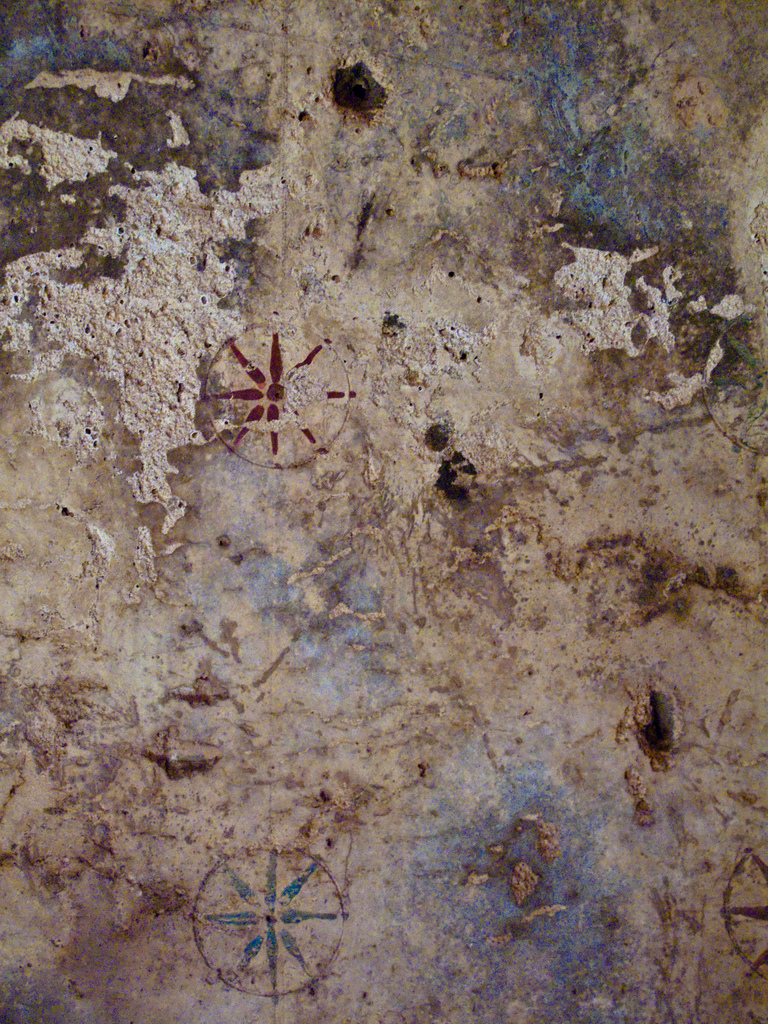
The vault of the Mithraeum in S. Capua Vetere is decorated with stars that have holes in their centers, which once held colorful glass decorations.
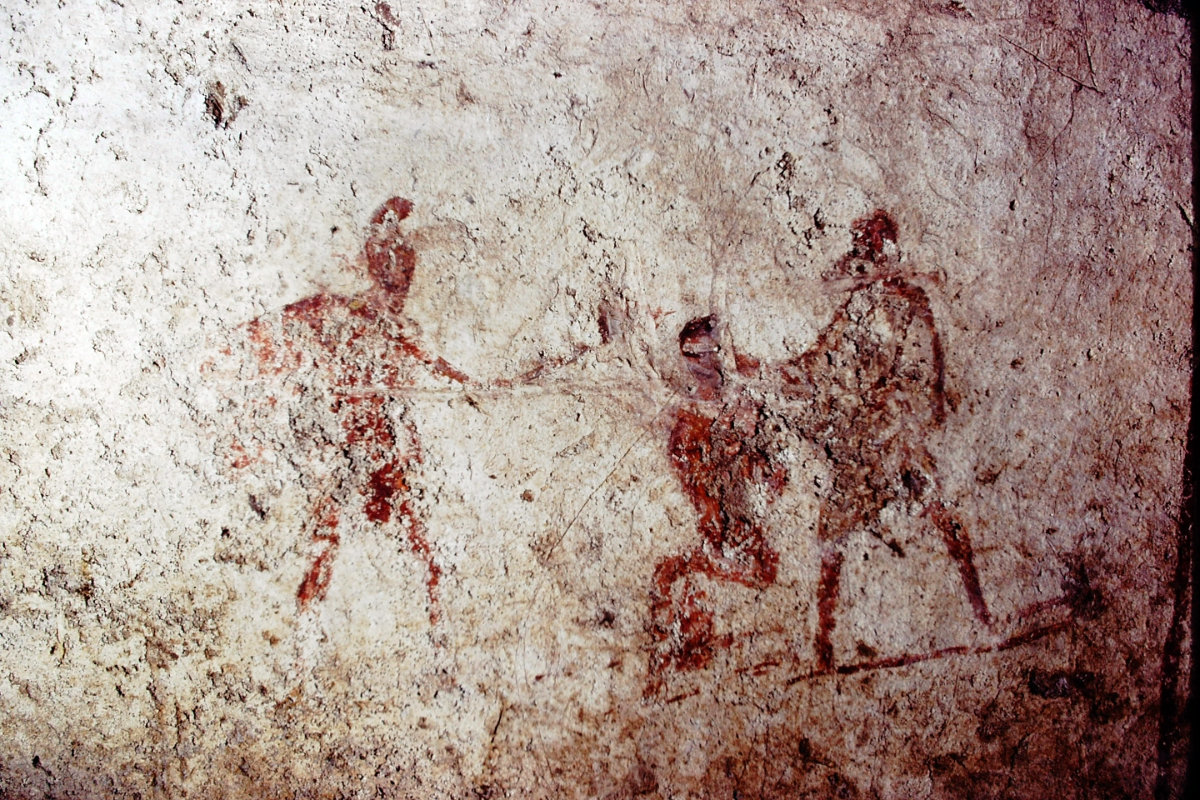
Fresco showing a scene of initiation into the mysteries of Mithras in the Mithraeum of Santa Maria Capua Vetere.
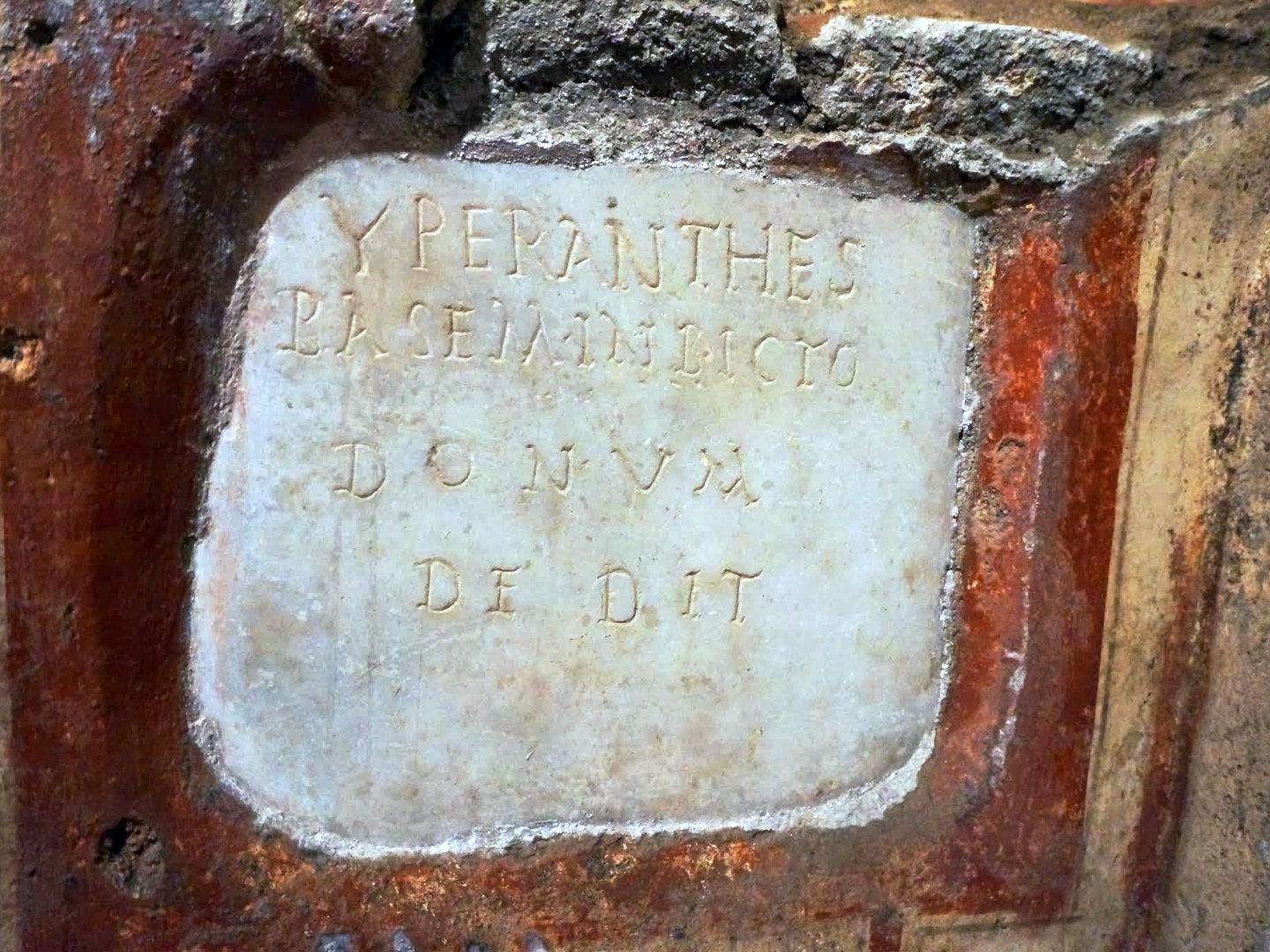
The inscription mentions the name of the donor, Yperanthes, of Persian origin.
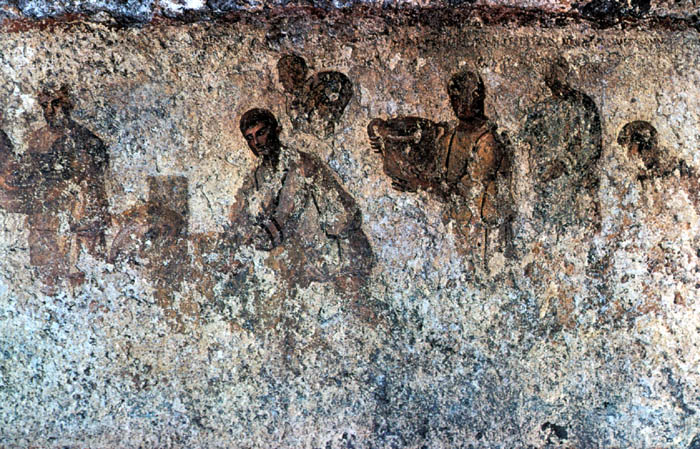
Procession of Leones carrying animals, bread, a krater, and other objects in preparation for a feast.
