Your search Stein am Rhein gave 2070 results.

Small altar found at Töltschach in 1817, Noricum, decorated with the traces of two ram heads flanking foot-prints; the relief is no longer visible and only the inscription survives.
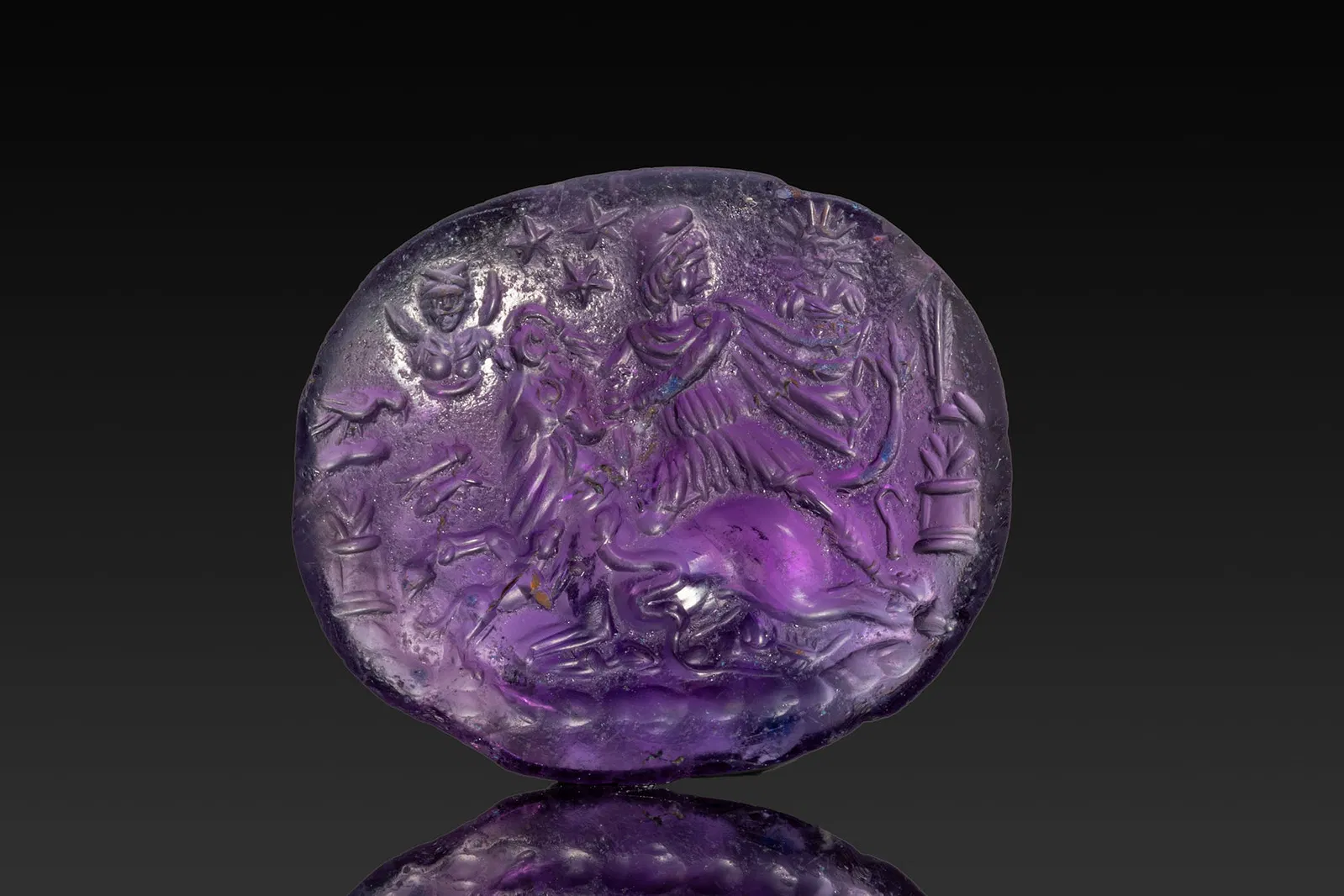
Amethyst intaglio engraved with Mithras slaying the bull, accompanied by Sol, Luna and other canonical Mithraic symbols.
Fragmentary Greek graffito from Dura-Europos recording the prices of everyday goods such as wine, meat, wood and lamp wicks.

Samsat, formerly Samosata is a small town in the Adıyaman Province of Turkey, situated on the upper Euphrates river.
Burham is a village and civil parish in the borough of Tonbridge and Malling in Kent, England.
The Celts are the first known to have settled in this place, which they called Binge, meaning rift. Roman troops stationed here in the first century AD rendered the local name as Bingium in Latin.
Samnium occupied a mountainous region of central Italy linked to Rome through military movement and regional urban networks.
Campania preserved a vibrant urban and maritime environment closely connected to the commercial life of Roman Italy.
Mesopotamia formed part of the eastern frontier zone where Roman military expansion encountered long-established Mesopotamian traditions.
Lycia et Pamphylia connected southern Anatolia to the maritime networks of the eastern Mediterranean world.
Mesopotamia preserves frontier evidence from the eastern limits of Roman Mithraic expansion.
Lycia and Pamphylia preserve Mithraic evidence linked to southern Anatolian maritime and urban networks.
'Hail to Kamerios the Pater' can be read on one of the walls of the mithraeum at Dura Europos.

This relief of Mithras slaying the bull, framed by acanthus leaves, was sold at auction in 2011 by Bonhams.
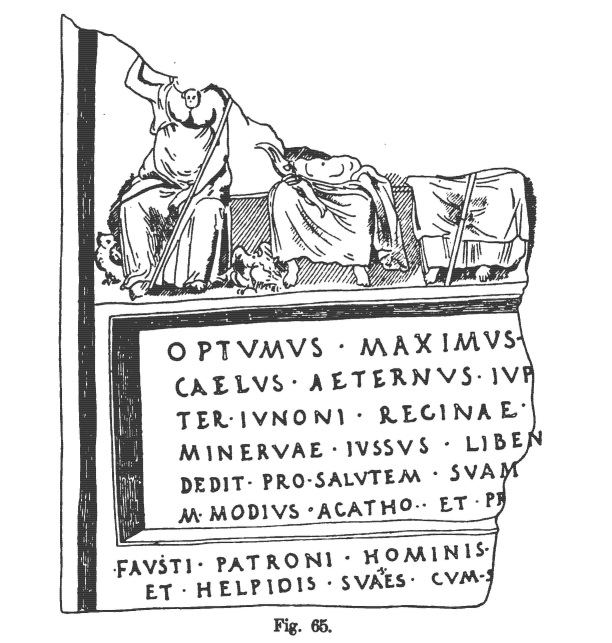
This marble relief bears an inscription by Marcus Modius Agatho, who dedicated several monuments to Mithras on the Caelian Hill in Rome.
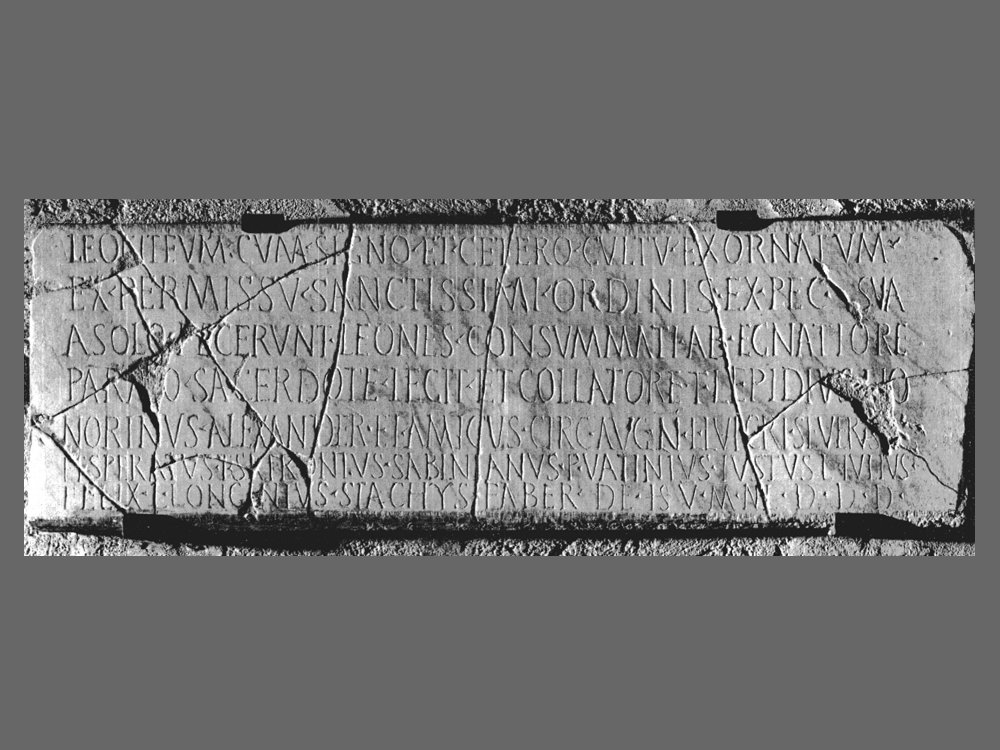
This plaque from Carsulae, in Umbria, refers to the creation of a leonteum erected by the lions at their own expense.
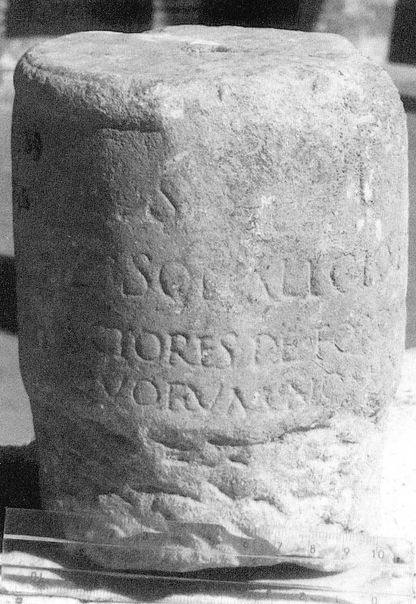
The inscription included the names of the brotherhood, which are now lost.
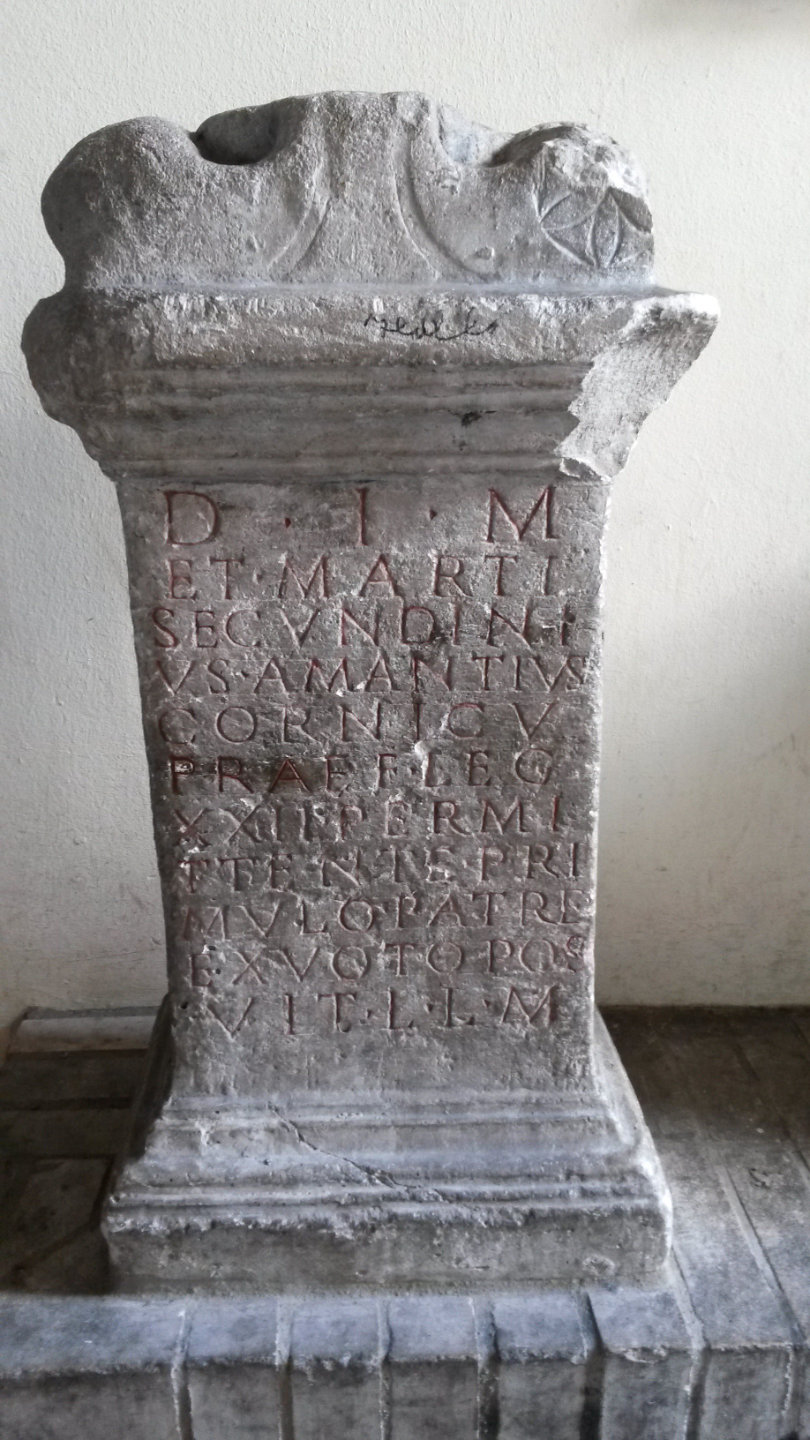
This altar has been unusually dedicated to both gods Mithras and Mars at Mogontiacum, present-day Mainz.

This lamp, depicting a man slicing his victim into pieces with a sword, was believed to be associated with the Cult of Mithras.
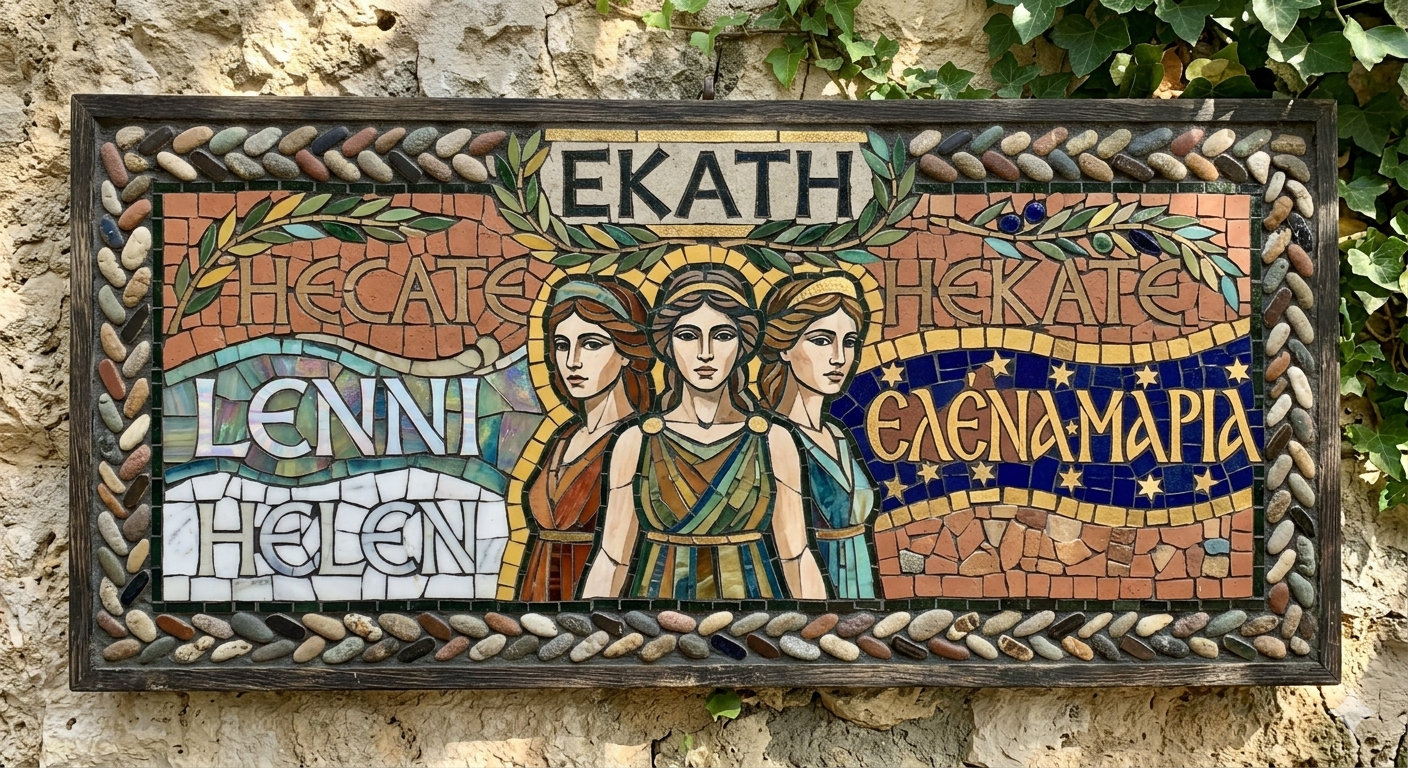
On what Hekate’s name may or may not tell us, and why the uncertainty matters.
