Your search Tal hal Hariri / Es-Sâlihiyeh / As Salhiyah gave 3725 results.
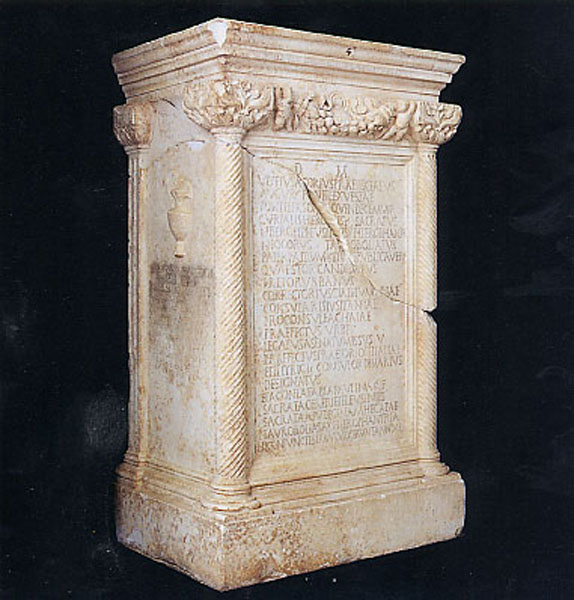
The marble altar mentions Vettius Agrorius Praetextatus as Pater Sacrorum and Patrum and his wife Aconia Fabia Paulina.

Epigraphic testimony catalogued in the Année Épigraphique and Lugli’s Fontes for ancient Rome.
Serpent-vases (Schlangengefässe) attested at Augst, ancient Augusta Rauricorum, a ceramic type commonly associated with Mithraic cult assemblages in the Rhine provinces.
A lost Mithraic relief formerly at the Villa Borghese in Rome, known only through a brief mention in early modern antiquarian literature and no longer traceable.
Second limestone base from the Forum Vetus at Leptis Magna bearing the inscription of Aristius Antiochus, with fragments of a torchbearer figure in Eastern attire.
Gold coin of the Scythian king Hooerkes, reverse showing Mithras (MIIPO) in tunic with lance and sword, north-west India, c. 87–129 A.D.
Gold coin of the Scythian king Hooerkes, reverse showing Mithras (MOPO) standing with wreath and staff, north-west India, c. 87–129 A.D.
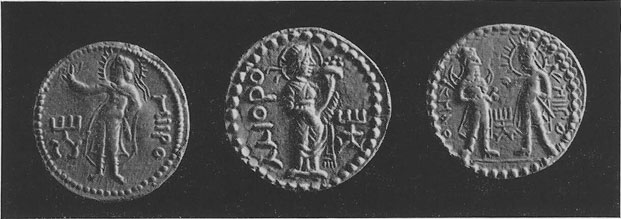
Gold coin of the Scythian king Hooerkes, reverse showing MIOPO (Mithras) as a goddess with cornucopia, north-west India, c. 87–129 A.D.
Reworked limestone altar dedicated by the governor of Numidia during the period of the Diocletianic persecutions.
Dedication for the safety of the provincial governor erected by an actarius and notarius within the Mithraic sanctuary of Lambaesis.
Limestone altar from Cluj, ancient Napoca in Dacia, dedicated to Soli invicto Mithrae for the welfare of the ordo Augustalis.
Reference to a Cautopates statuette with inscription from Rácálmas near Intercisa, Pannonia Inferior, preserved at Székesfehérvár; the publication cited was inaccessible to the author.
Lost base from the Mithraeum at Brigetio, Pannonia Superior, dedicated jointly to Cautopates and Invicto deo by Marcus Ulpius Castrensis, veteran of Legio I Adiutrix; a companion piece to the preceding Cautes dedication.
Lost base from the Mithraeum at Brigetio, Pannonia Superior, dedicated to Cautes by Marcus Ulpius Castrensis, veteran of Legio I Adiutrix; dated to the early third century.
Votive altar from Carnuntum, Pannonia Superior, dedicated to Deo invicto Mithrae sacrum by Ulpius Vitalis pancrestarius — a term denoting an athlete or performer, possibly in the context of Mithraic initiation rites.
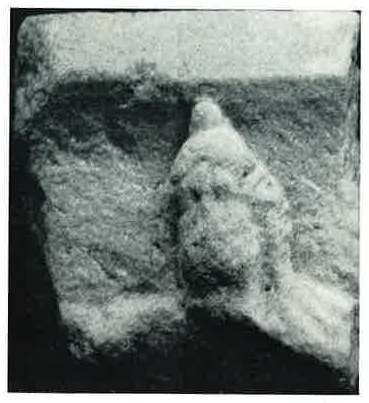
White marble relief fragment from Carnuntum, Pannonia Superior, preserving the upper part of a figure in Oriental dress with the beginning of an upraised right arm — probably Cautes.
White marble base from Ptuj, ancient Poetovio, bearing a weathered inscription and the remnants of a downward-pointing torch, identifying the statue as Cautopates.
White marble base from Mithraeum I at Ptuj, ancient Poetovio, with an inscription and the preserved legs, garment, and torch of a Cautopates statue.
White marble base from Mithraeum I at Ptuj, ancient Poetovio, with an inscription and the preserved foot and lower garment of a Cautes statue.
Group of basalt cult furniture from Mithraeum II at Heddernheim, ancient Nida, comprising an altar, a large base, and two smaller bases
