Your search Tal hal Hariri / Es-Sâlihiyeh / As Salhiyah gave 3725 results.
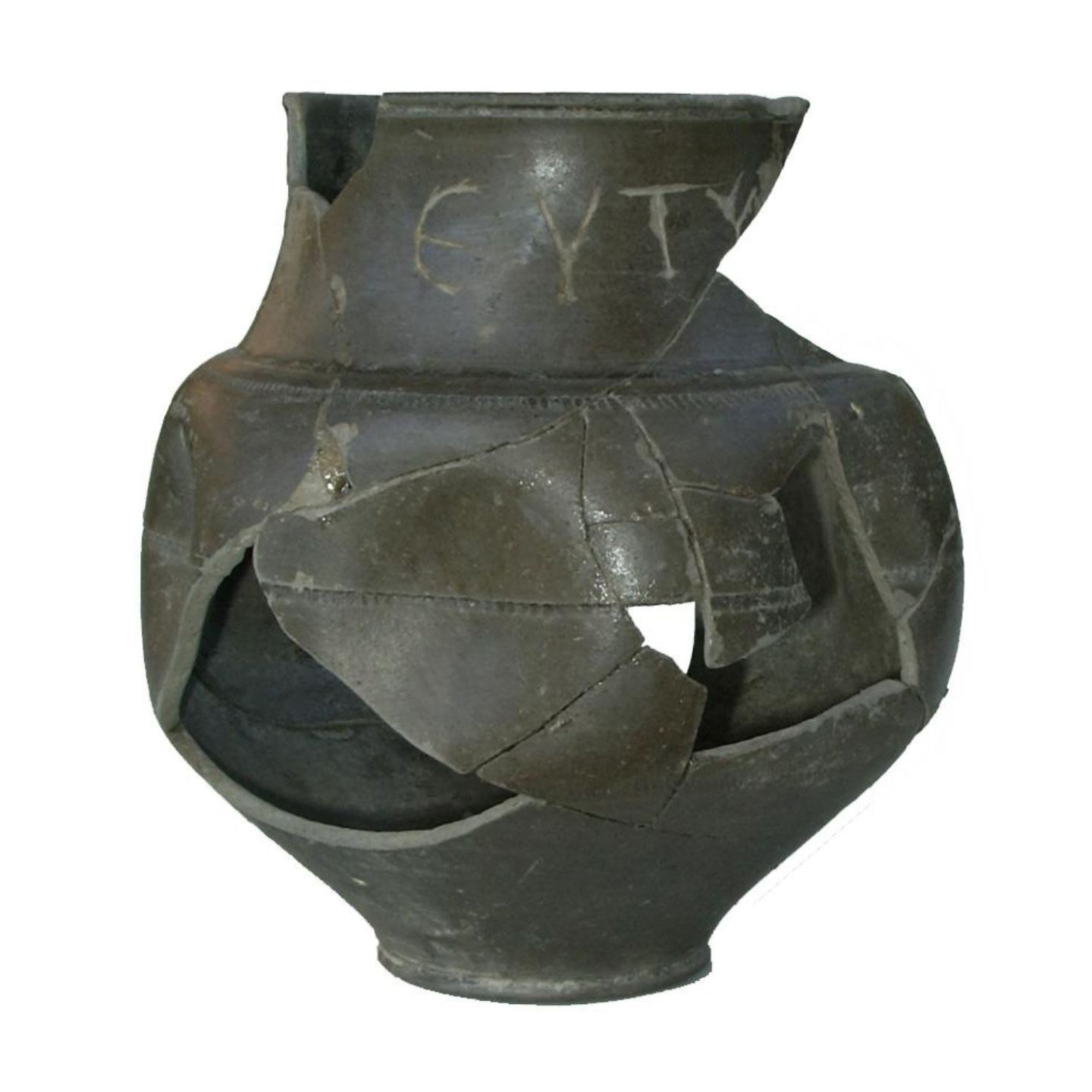
Ceramic cup inscribed with a Greek graffito and recovered from the Mithraeum of Martigny, providing evidence for the use of inscribed vessels within the sanctuary assemblage.
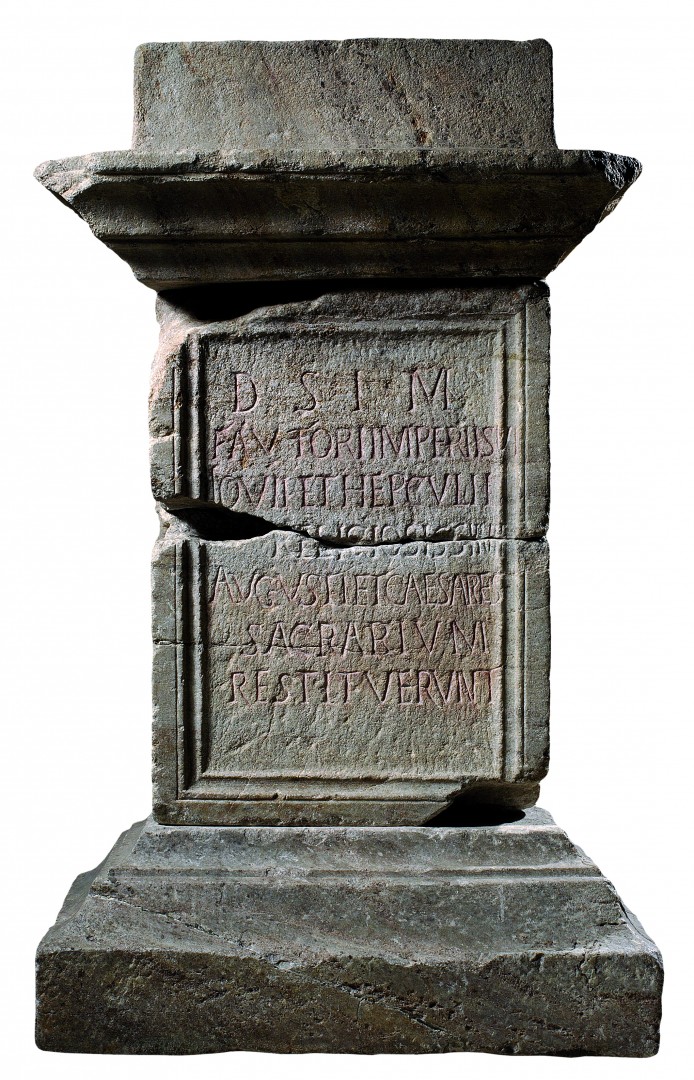
Altar with Cautes and Cautopates dedicated to Sol Invictus Mithras as protector of the Tetrarchy in 3rd-century Carnuntum.
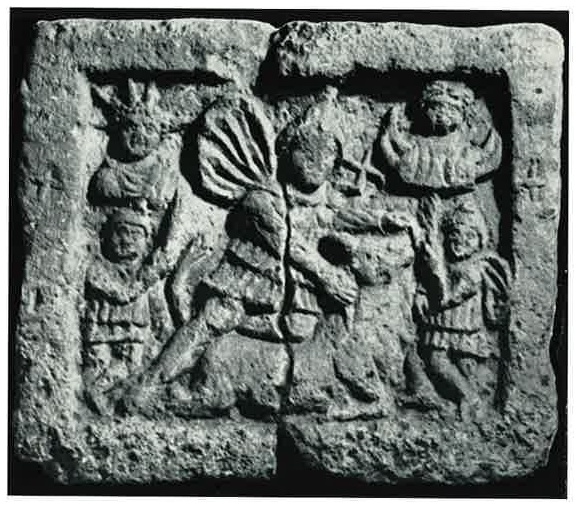
Tuff tauroctony relief in two fragments from Ghighen, ancient Oescus in Moesia Inferior, depicting the standard bull-slaying scene with the full iconographic programme.

Limestone slab dedicated to the invincible Sun by the governor Marcus Aurelius Decimus near the temple of Aesculapius.

Rock-crystal gem in the Cabinet des Médailles, Paris, depicting Mithras as bull-slayer with the standard iconographic programme.
Dedication from the Mithraeum of Rudchester recording the restoration of a temple dedicated to Sol Invictus.
A decorated altar from the Mithraeum at Vindobala (modern Rudchester), with the letters DEO crowned with vittae on the shaft, surrounded by palm-branches, a representation of Mithras' rock-birth on the capital, and on the front of the die a naked figure grasping a bull's horns…
A funerary inscription from Besançon (ancient Vesontio) in Belgica, bearing the title mater sacrorum, but correctly excluded from the Mithraic corpus, as women were barred from Mithras sanctuaries.
An inscription found in the old monastery of San Giulia in Brescia (ancient Brixia), in the arch supporting the crypt of Santa Maria in Solario, recording a dedication to Deus Sol by the res publica.
An altar found in 1898 in the east part of the sanctuary at Borcovicium (modern Housesteads), bearing a dedication to Mars and Victoria, possibly belonging to an adjacent shrine rather than the Mithraeum itself.
An altar with a praefericulum on the right side and a patera on the left, found at the Mithraeum at Borcovicium (modern Housesteads) in 1822, recording a vow fulfilled to Sol Invictus Mithras Saecularis by Litorius Pacatianus, beneficiarius consulis, for himself and his family…
An altar found in 1822 at the Mithraeum at Borcovicium (modern Housesteads), recording a vow fulfilled to Sol Invictus Mithras Saecularis by Publius Proculinus, centurion, for himself and his son Proculus, during the consulship of Gallus and Volusianus in 252 A.D…
Ceramic finds from both excavations of the Mithraeum at Borcovicium (modern Housesteads), comprising red and thin black-glazed pottery fragments together with a silver coin of Faustina Minor, indicating the sanctuary was in use before 253 A.D. and was most likely destroyed by fire…
A group of four altars from the Mithraeum at Borcovicium (modern Housesteads): two found in 1822 bearing inscriptions Nos. 863 and 864, and two more found in 1898, one dedicated to Mars and Victoria (No. 865) and one to Cocidius (No. 866), the last possibly belonging to an adjacent shrine…
A limestone statue from the Mithraeum at Borcovicium (modern Housesteads), depicting Cautes in Eastern attire and cross-legged, raising his torch.
A limestone statue from the Mithraeum at Borcovicium (modern Housesteads), depicting Cautopates in Eastern attire standing cross-legged on a base and pointing his torch downwards, with head lost.
A large limestone tauroctony relief in several fragments from the Mithraeum at Borcovicium (modern Housesteads), the vaulted main fragment showing Mithras slaying the bull with Cautes raising his torch beside the bull's foreleg, a crescent of Luna in the upper corner…
A small four-sided white marble relief of uncertain Mithraic attribution, found at Italica (modern Santiponce, near Seville), depicting a bull walking to the right on the front, a fig-tree on the back, five ears of wheat on the right side, and damaged vine tendrils with grapes on the left…
An inscription from Aquileia recording a vow fulfilled to Sol Invictus Mithras by C. Calidius Agathopus, a member of the college of the seviri Augustales of Aquileia.
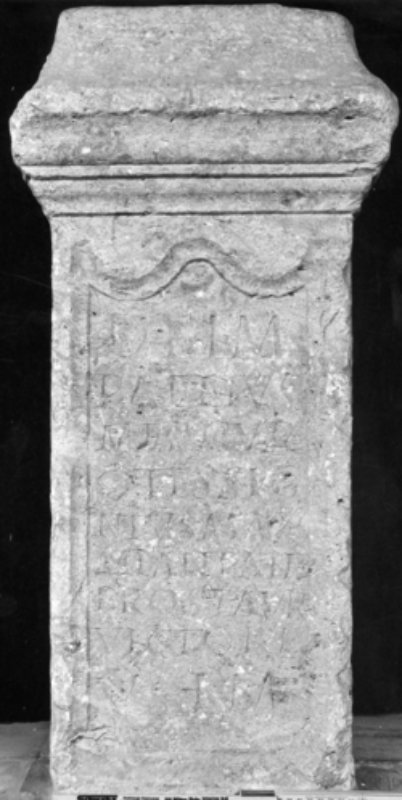
This altar to Mithras found in Aquilieia mentions several persons of a same community.
