Your search Tal hal Hariri / Es-Sâlihiyeh / As Salhiyah gave 3725 results.
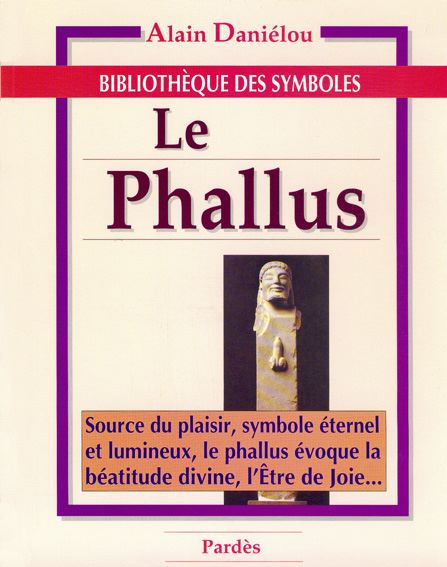
It is only when the penis stands up straight, that it emits semen, the source of life. It is then called the phallus and has been considered, since earliest prehistory the image of the creative principle, a symbol of the process by which the Supreme

Wasson has aroused considerable attention by advancing and documenting the thesis that Soma was a hallucinogenic mushroom – none other than the Amanita muscaria, the fly-agaric that until recent times was the center of shamanic rites among the Siberian and Uralic tribesmen…

Peter Kingsley interpreta el poema de Parménides a la luz de inscripciones del sur de Italia y lo sitúa en un trasfondo religioso ligado a los ritos de incubación y a los sacerdotes de Apolo.

Together with his son, with whom he shares his name, Kastos has dedicated several monuments in Rome to the glory of Zeus Helios Mithras.
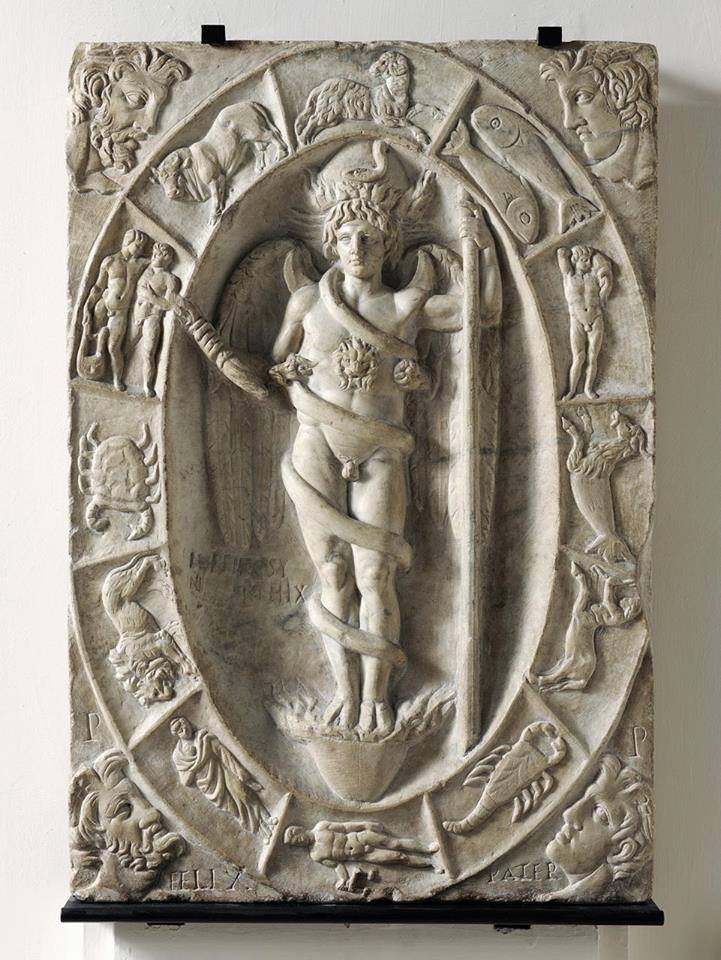
The Aion / Phanes relief, currently on display in the Gallerie Estensi, Moneda, is associated with two Eastern mysteric religions: Mithraism and Orphism.

The name of this domus comes from the fact that some authors once associated one of its mosaics with the cult of Mithras, a connection that has since been dismissed.
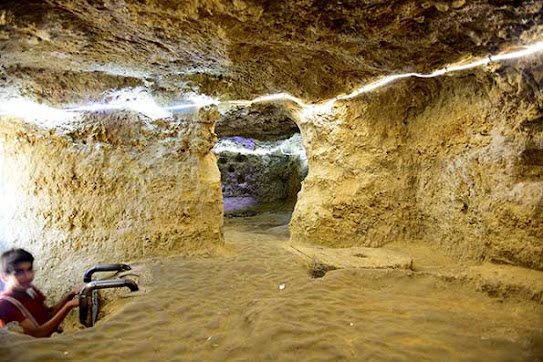
The Niasar Cave, غار نیاسر, was a temple probably devoted to Iranian Mithras that dates back to the early Partian era.

This gemstone depicting Mithras killing the bull, preserved in the Ploiești Museum, originated from Prahova County or south of the Danube area.
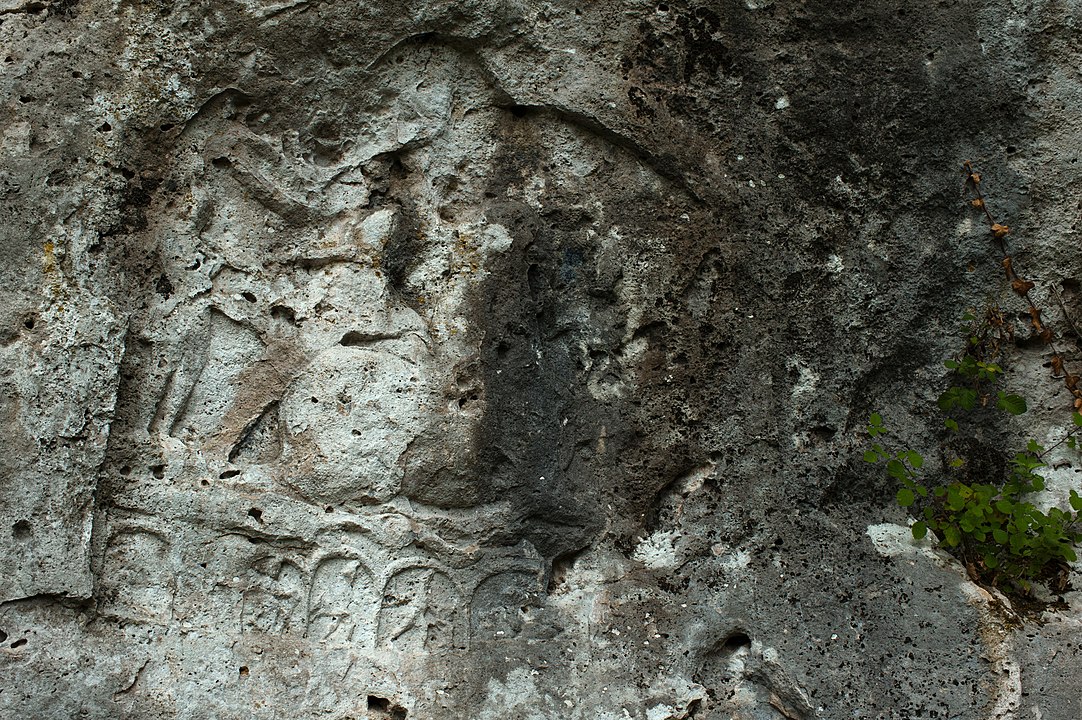
The Mithraeum of Thermes in Greece was discovered in 1915 by Bogdan Filov.

This cylindrical marble altar was dedicated by the same Pater Proficentius as the slab, both monuments found in the Mithraeum beneath the Basilica of San Lorenzo.

This altar, dedicated to Sol Invictus Mithras by a certain Eutyches for the health of the Emperor Caracalla, was found in Sisak, Croatia, in 1899.

researcher on Mithraism for over 20 years, author of the book "Mithras. Geschichte einer Gottheit"
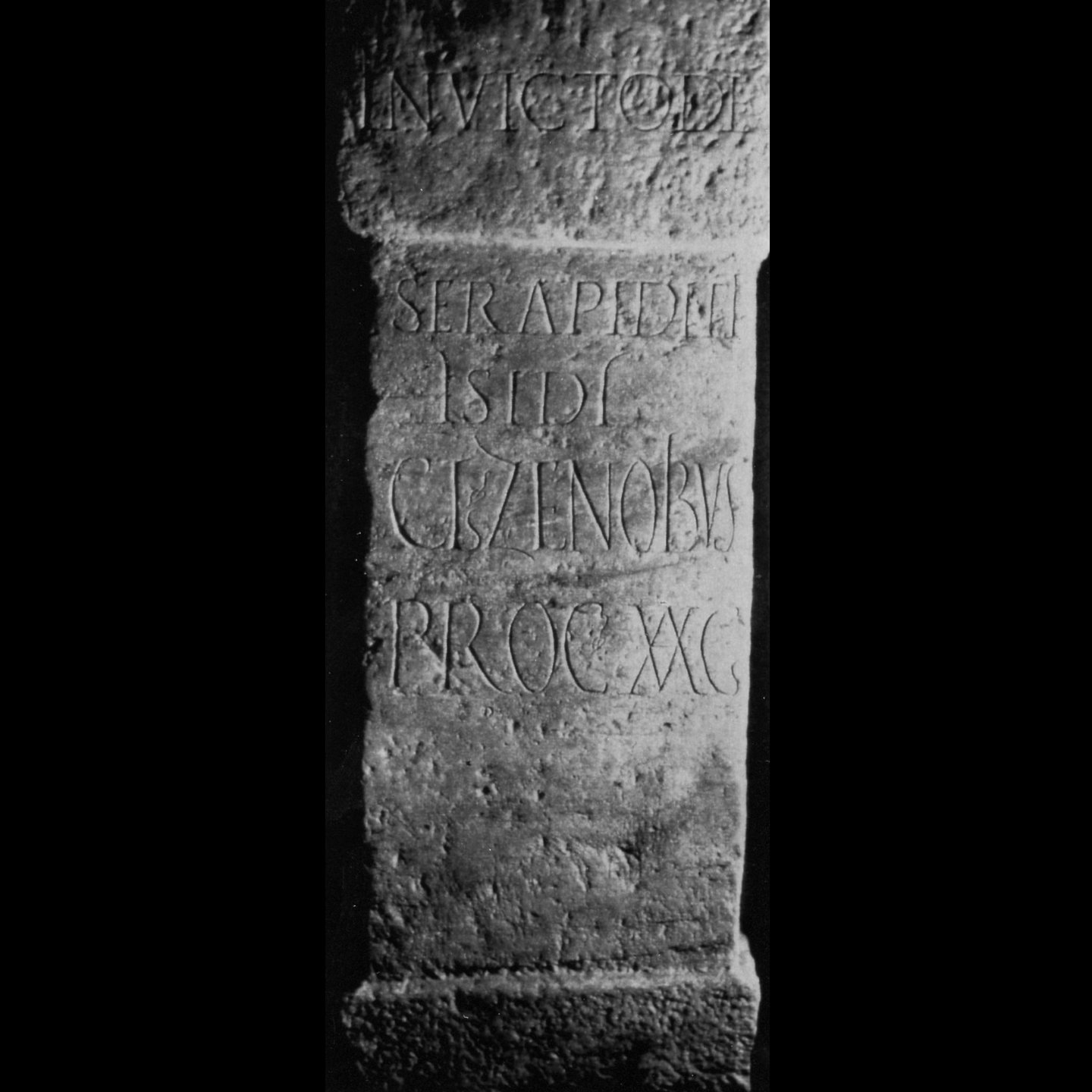
This slab dedicated to the invincible god, Serapis and Isis by Claudius Zenobius was found in 1967 in the walls of the city of Astorga, Spain.
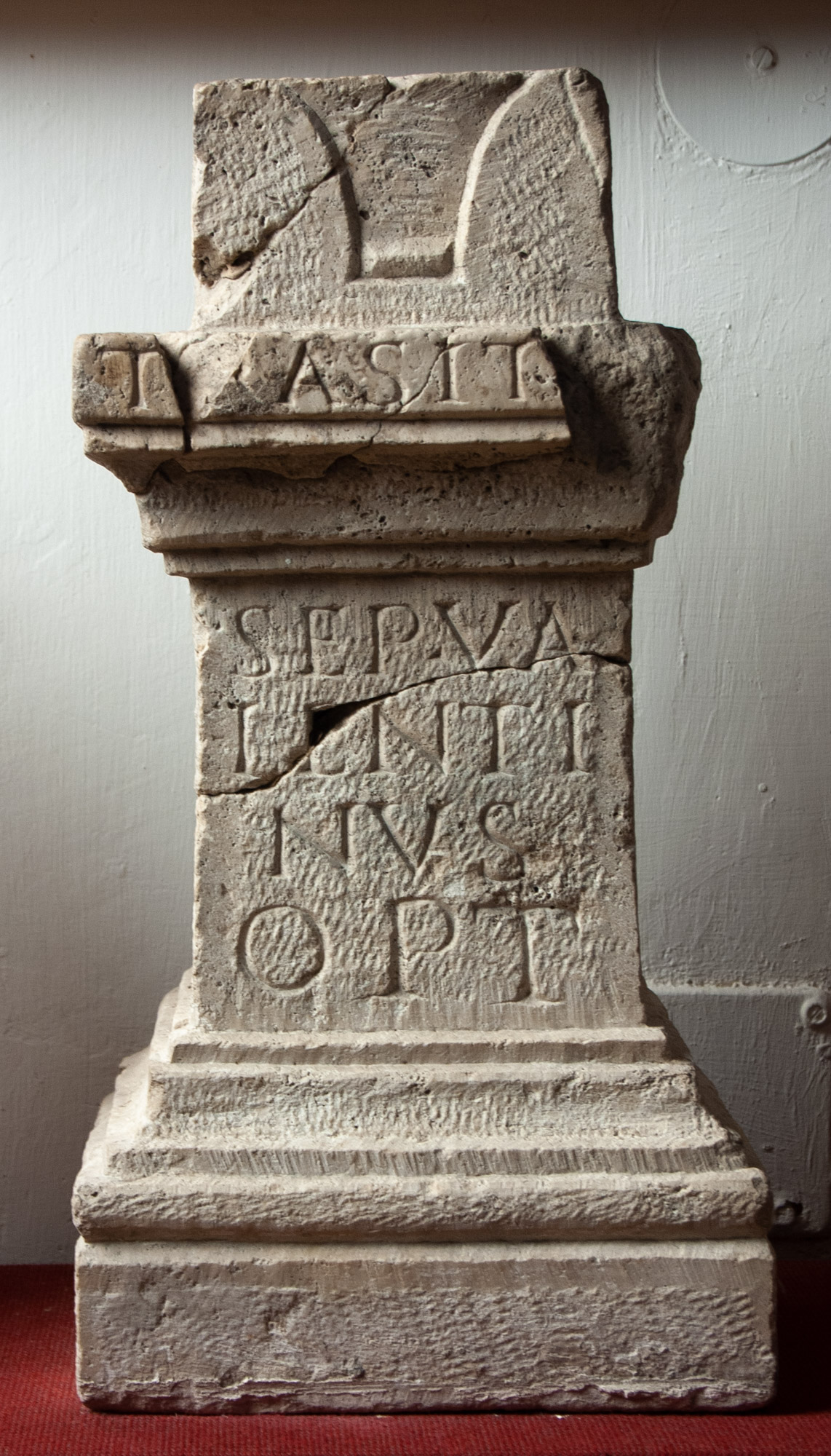
This is one of the altars erected by Septimius Valentinus, in this case, to the transitus of Mithras.
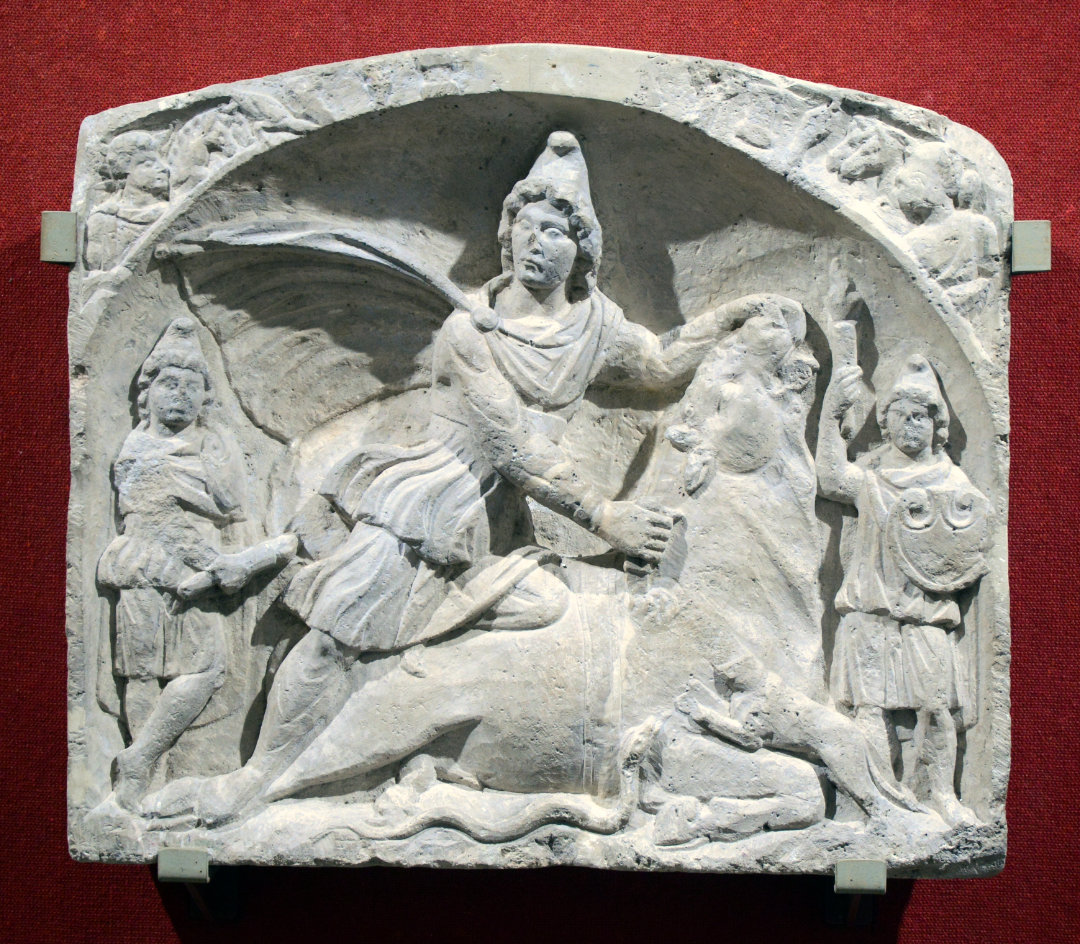
In this relief found in the Sárkeszi Mithraeum, Cautes and Cautopates hold an Amazon shield.
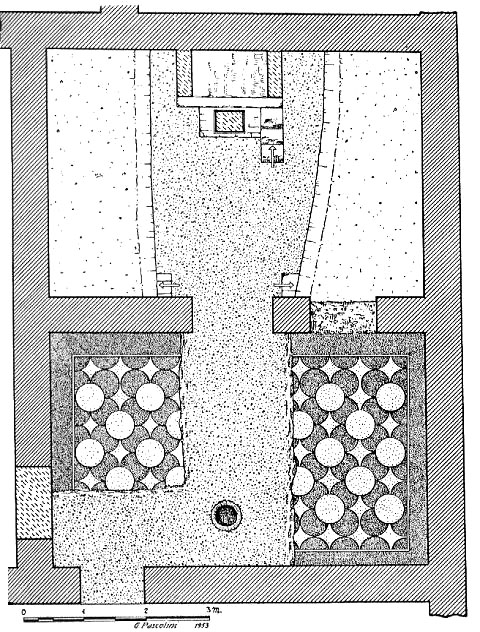
The Mithraeum of the House of Diana was installed in two Antonine halls, northeast corner of the House of Diana, in the late 2nd or early 3rd century.
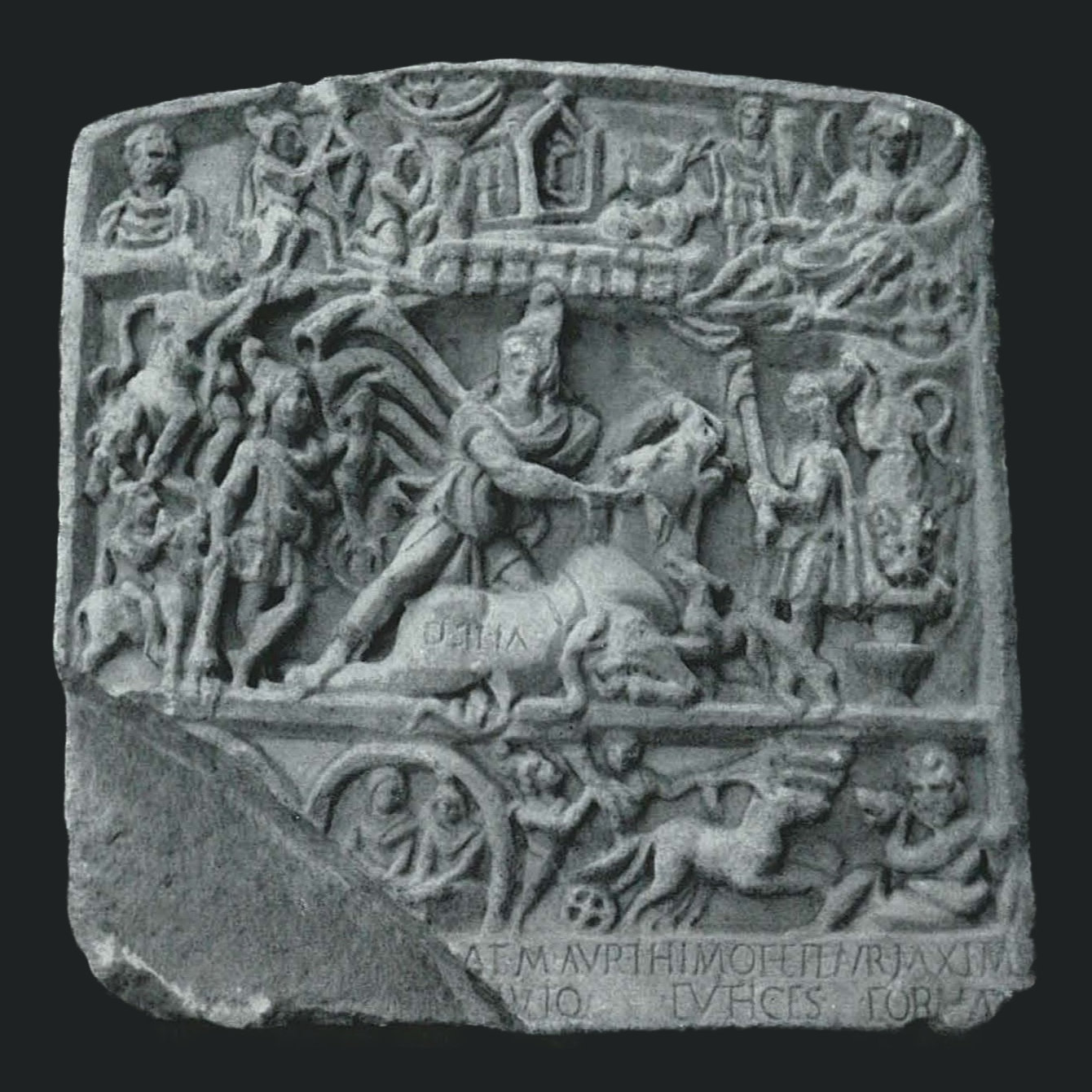
This marble relief of Mithras killing the bull was made by a freedman who dedicated it to his old masters.
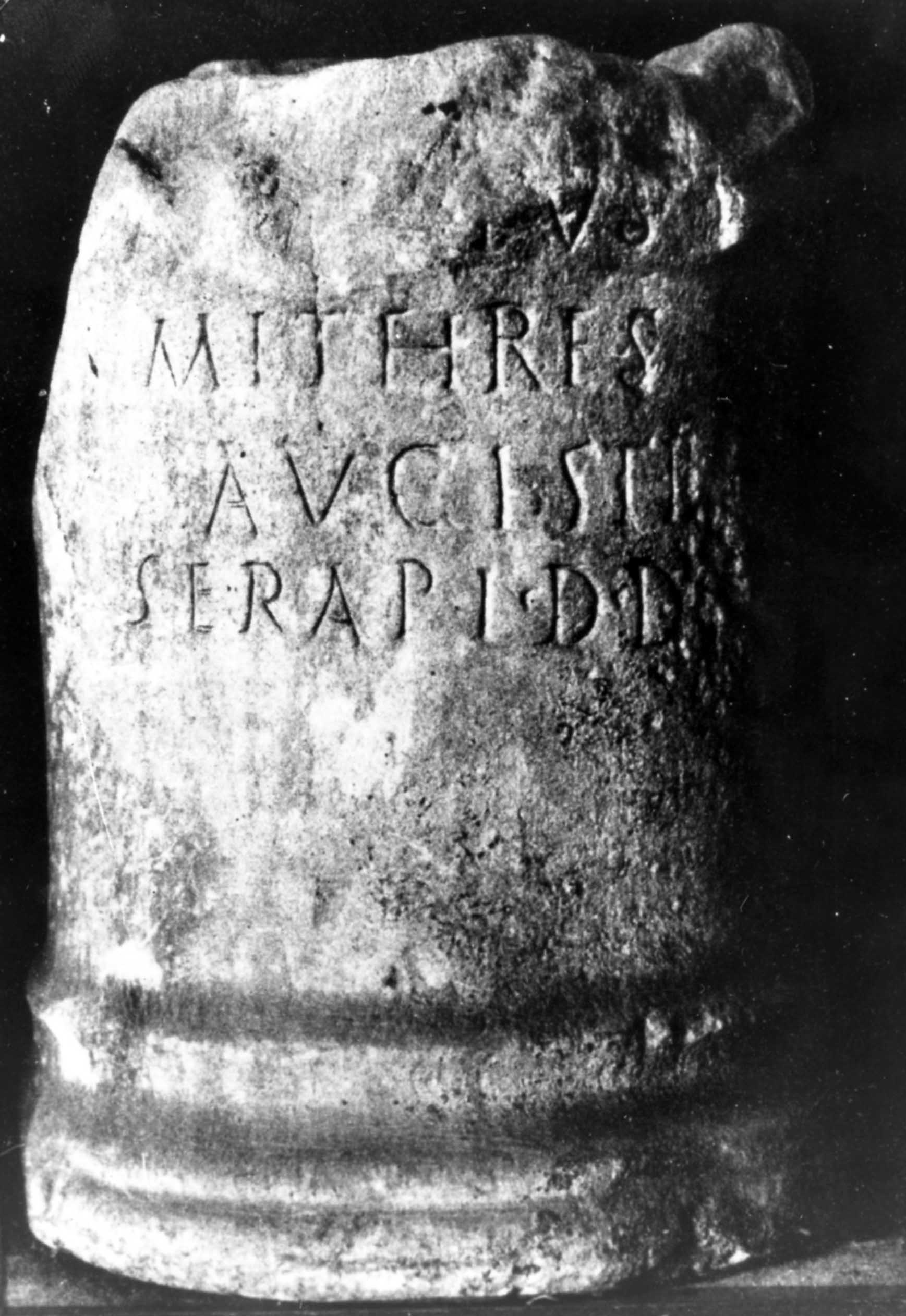
This monument, found in the Domus Flavia in Rome, bears an inscription by a certain Aurelius Mithres.
In this inscription, found in Angera in Lombardy, Mithras is referred to by the unicum 'adiutor'.
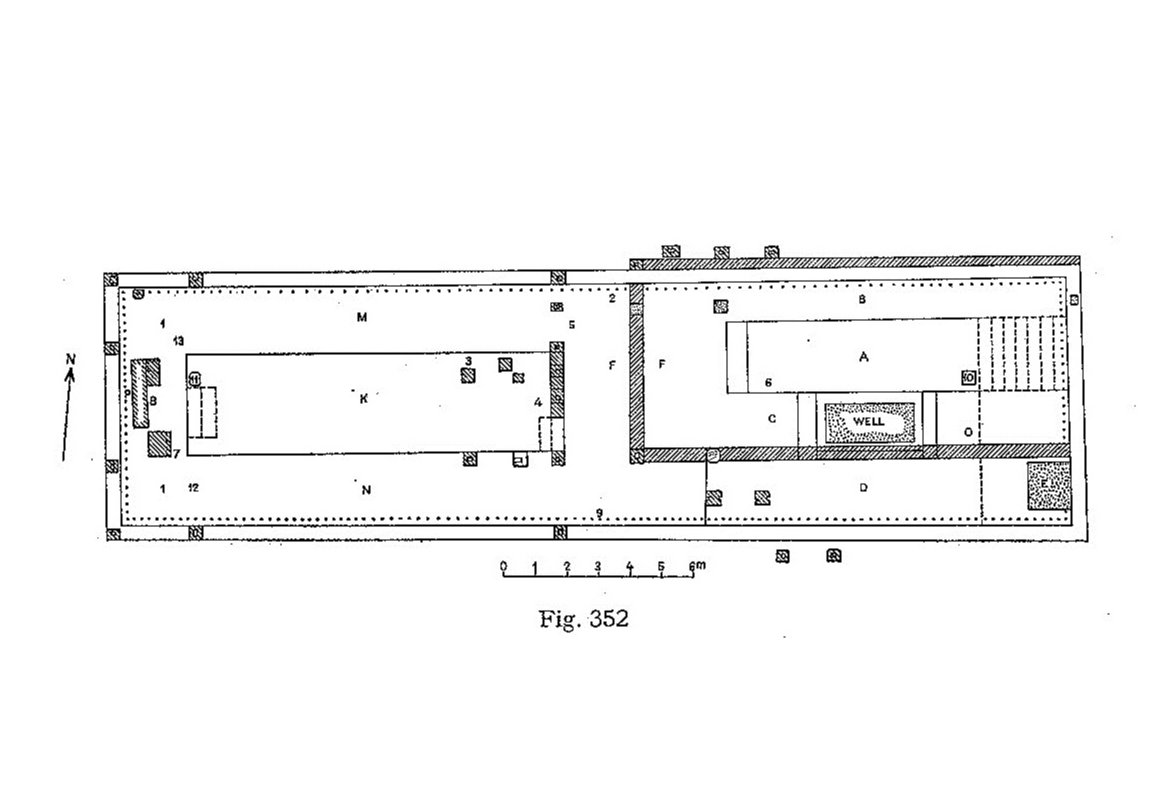
Lors de la construction de l’église Saint-Paul en 1911, un mithraeum a été mis au jour à Königshoffen, vicus gallo-romain situé aux abords du camp légionnaire de Strasbourg-Argentorate.
