Your search Tal hal Hariri / Es-Sâlihiyeh / As Salhiyah gave 3730 results.

Senior Mithraic priest of Ostia whose inscriptions preserve rare and unique epithets of Mithras, including Incorruptus Juvenis and Indeprehensibilis.


Magister of a Bracaran sodalicium associated with the cult of Mithras in Roman Lusitania.
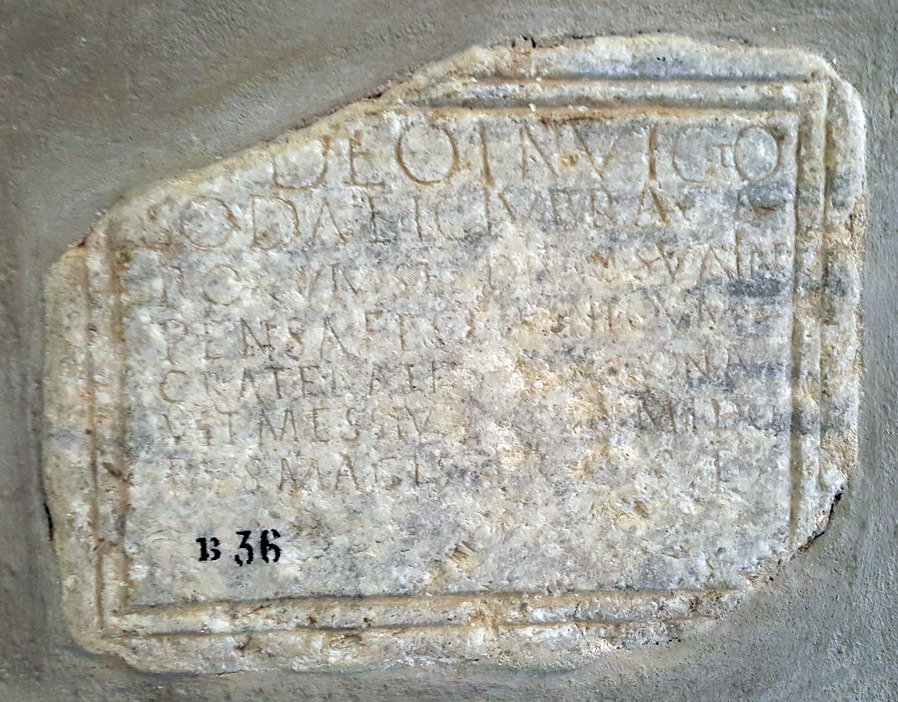
Marble inscription recording the construction of a Mithraic meeting place and the donation of a crater by Titus Flavius Artemidorus.
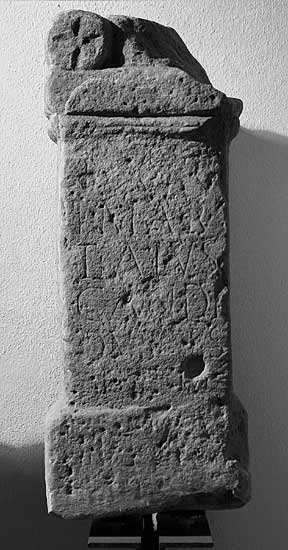
Bright red sandstone altar from Mithraeum II at Stockstadt dedicated to Deo Cauti by Titus Martialius Candidus, found near the north podium.
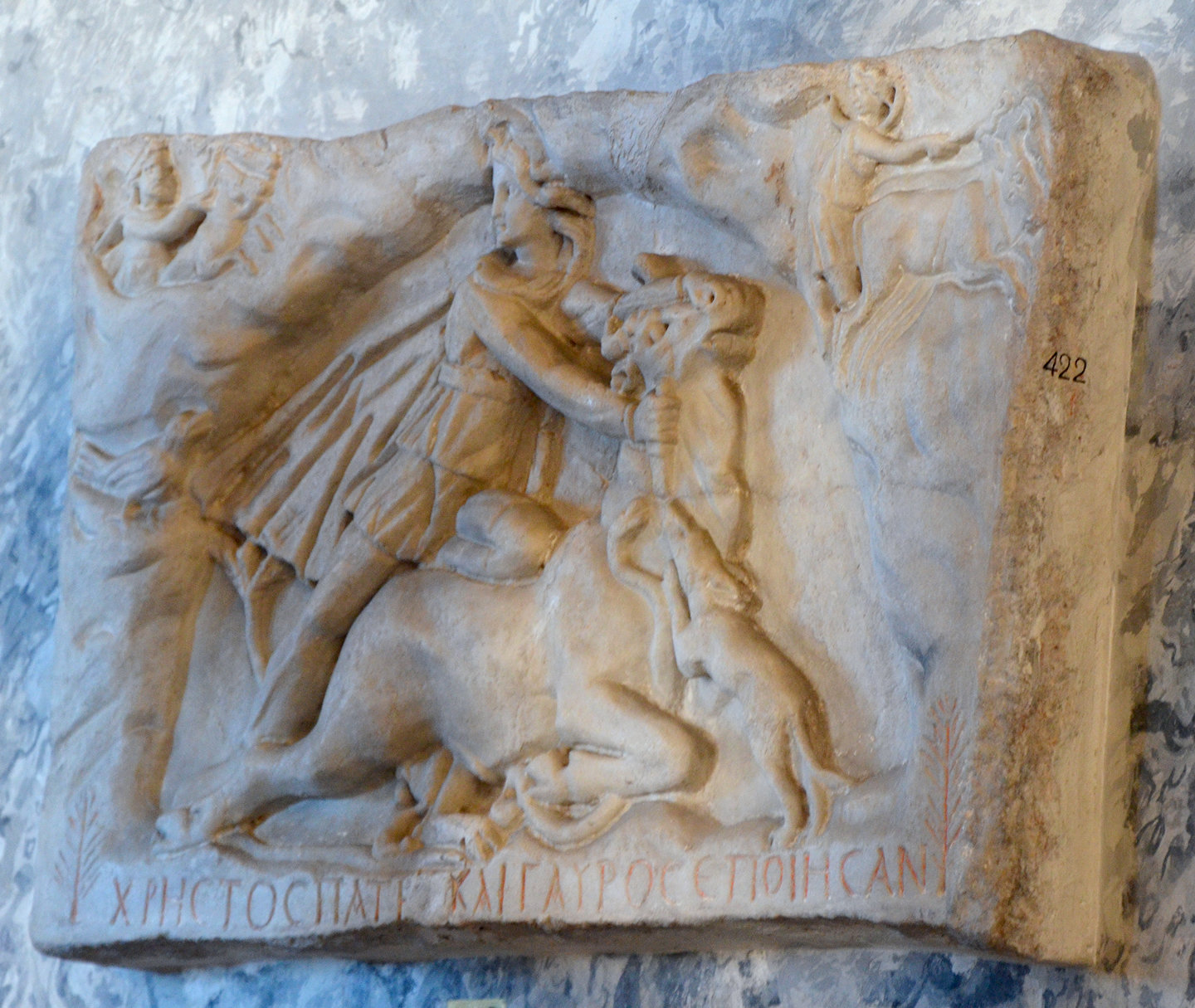
This relief of Mithras killing the bull, signed by a certain Χρῆστος, is on display in the Sala dei Animali of the Vatican Museum.

Fragment of a sandstone relief from Nida-Heddernheim depicting the torchbearer Cautopates.
Upper fragment of a marble relief depicting Cautes, discovered in the Forum of Caesar in Rome.
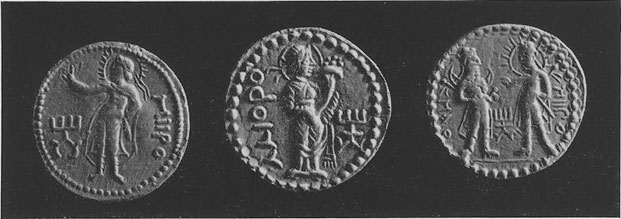
A gold coin depicting a bearded god with a crescent facing another god with a nimbus and a radiate crown, identified as Mithras by Vermaseren.

Bronze torchbearer statuette in a short tunic from the Cabinet des Médailles, holding an upraised torch.
Oval jasper gem in the Cairo Museum depicting Mithras slaying the bull with Sol, Luna, a leontocephalic figure and seven stars.
Gem formerly published as Mithraic by Cumont but subsequently identified as depicting the Egyptian deity Besa.
Gold ring amulet formerly in the Schlumberger Collection, published as Mithraic by Cumont and later identified as a healing charm against colic and diseases of the uterus.
A small limestone votive altar from Pola (modern Pula) bearing on its front face a damaged relief head of a youthful Sol with long curly hair, above which is carved the inscription Soli and below the dedicatory text by Atticus (No. 757).

The locality of Saint Pierre de Messeane is associated with archaeological discoveries from Roman Gaul.
Troesmis served as an important military and administrative centre on the lower Danube frontier.
