Your search Tal hal Hariri / Es-Sâlihiyeh / As Salhiyah gave 3730 results.

Fragmentary inscription from Wiesbaden, ancient Aquae Mattiacae, dedicated to Deo invicto by a miles pius, closely parallel to no. 1232
Fragment of a limestone altar from Wiesbaden, ancient Aquae Mattiacae, preserving the crossed legs of a torchbearer
Yellow sandstone votive altar from Wiesbaden, ancient Aquae Mattiacae, published by Ritterling and preserved in the Städtisches Museum
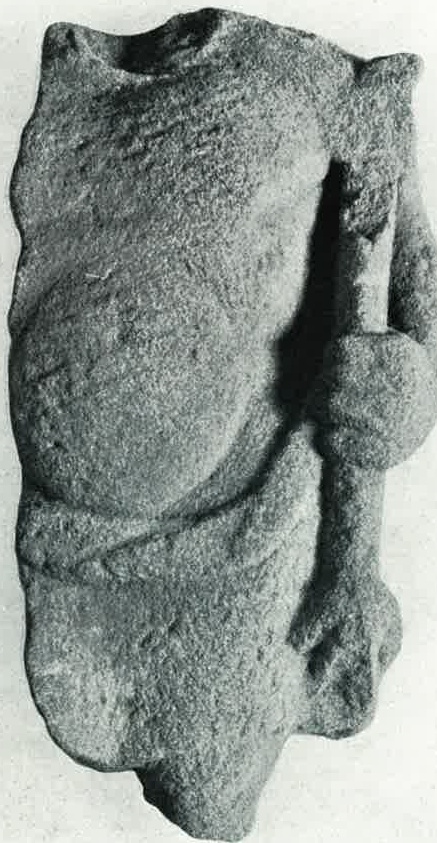
Group of sandstone relief fragments from Rückingen depicting multiple deities including a male head identified as Hercules
Animal bones, principally of birds, found in pit g at Mithraeum III, Heddernheim, ancient Nida, evidence of ritual feasting
Two basalt blocks walled into the podium of Mithraeum III at Heddernheim, ancient Nida, which supported decorative sandstone bases
Tall sandstone column base from Mithraeum I at Heddernheim, ancient Nida, with an inscription set between two columns, possibly naming Mithras
Small votive altar or base from Mithraeum I at Heddernheim, ancient Nida, with fragmentary inscription preserving the initials A.C.
Triple-part sanctuary at Saalburg whose Mithraic interpretation remains uncertain despite serpent-vases and possible Aion fragments.
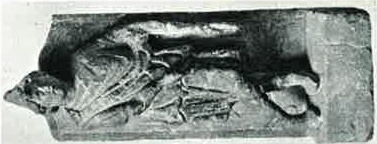
Limestone relief of the torchbearer Cautopates standing cross-legged in Oriental dress.
Limestone base with remains of a torchbearer and an inscription to Mithras by Lucius Pervincius Sequens.
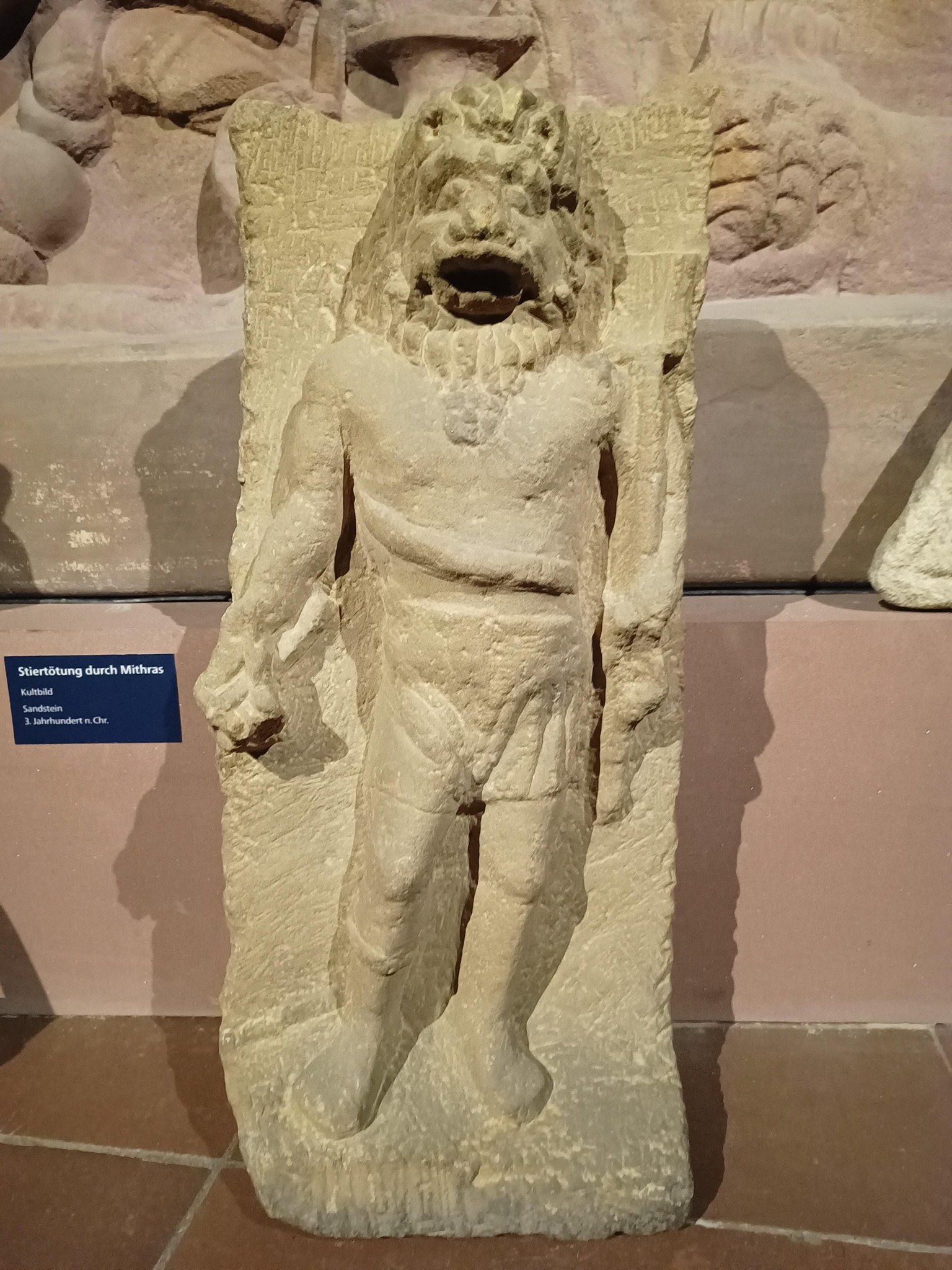
This lion-headed figure from Nida, present-day Frankfurt-Heddernheim, holds a key and a shovel in his hands.

Two marble heads from Ostia, including a youthful figure wearing a Phrygian cap and another identified as Mithras-Helios.

Roman military and religious settlement in Chersonesus Taurica occupied between the 1st and 4th centuries CE, associated with the castellum of Characis.
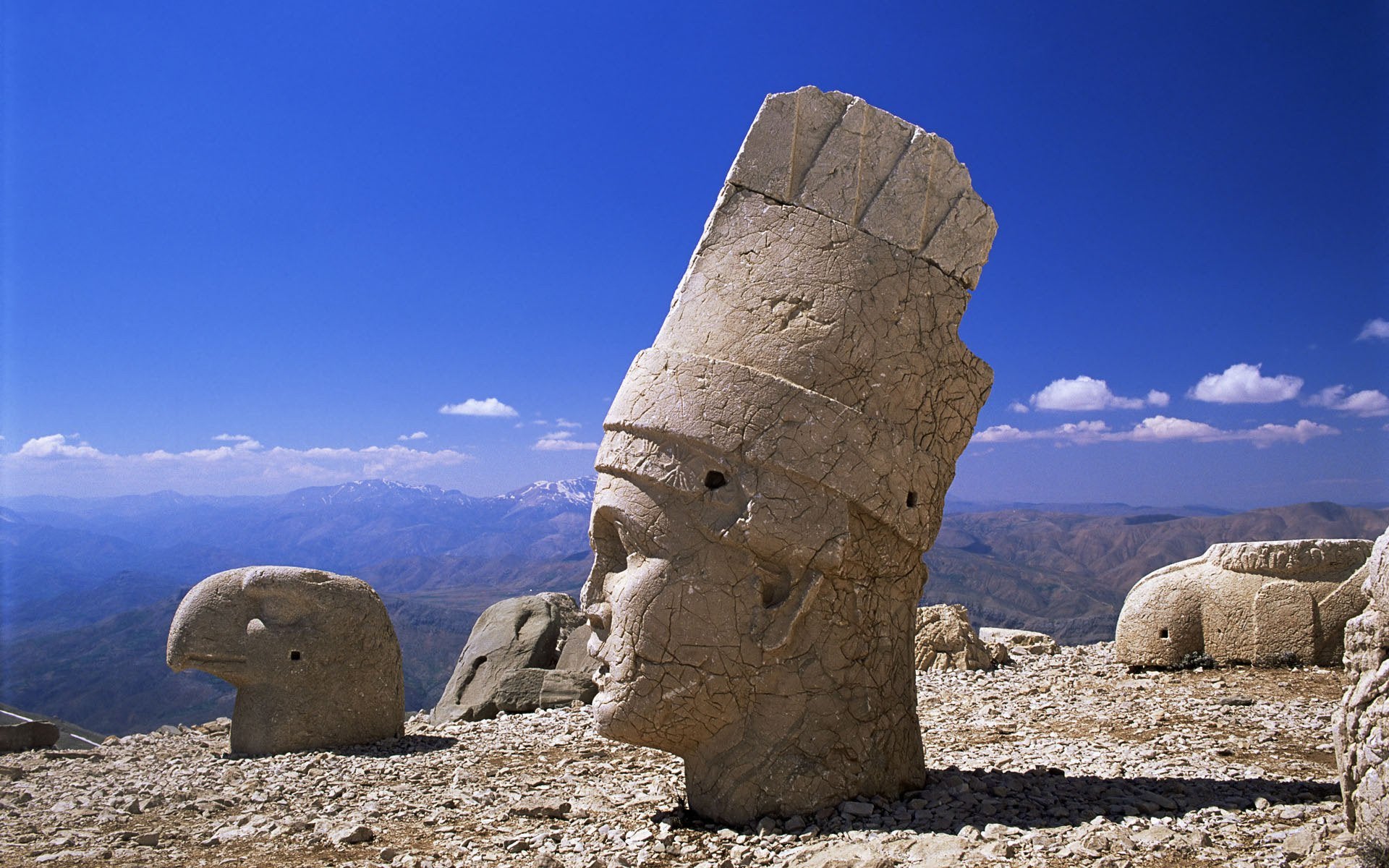
The colossal head has been identified as a solar god, Apollo-Mihr-Mithras-Helios-Hermes.
This inscription by a certain Numidius Decens was found in the Forum of Lambaesis, now Tazoult تازولت in Algeria.
Romula or Malva was an ancient city in Roman Dacia, later the village of Reşca, Dobrosloveni Commune, Olt County, Romania.
