Your search Terme di Caracalla gave 2080 results.

Mesopotamia preserves frontier evidence from the eastern limits of Roman Mithraic expansion.

This fragmentary inscription from Zuccabar, reused in the wall of the Sidi Abd-el-Kader mosque at Affreville, preserves a dedication to Sol Invictus.
,_found_in_Rome,_2nd_century_AD,_British_Museum_(15545876047).jpg)
The sculpture of Mithras slaying the bull was transported from Rome to London by Charles Standish in 1815.
This small inscription from Termini Himeraeae in Sicily was dedicated to Sol Invictus as protector of the emperor Antoninus Augustus.
Roman Syria preserves a major eastern corpus of Mithraic evidence within one of the empire’s most interconnected regions.
Lycia and Pamphylia preserve Mithraic evidence linked to southern Anatolian maritime and urban networks.
Macedonia preserves Mithraic evidence shaped by major Balkan routes and long-standing urban traditions.
Moesia preserves a strongly militarised body of Mithraic evidence along the Danubian frontier of the empire.
Cappadocia preserves evidence shaped by military movement, eastern frontier dynamics and Anatolian religious landscapes.
Bithynia and Pontus preserve important evidence for the diffusion of Mithraic cults across the Black Sea and northwestern Anatolia.
The Alpine regions preserve scattered Mithraic evidence associated with military circulation and strategic routes across the western empire.
Inscription from Hamadan where the ’great king’ Artaxerxes mentions Ahuramazda, Anahita, and Mithra as guardians.

Hector erected an altar to Mithras in Emerita Augusta by means of a ‘divine vision’.
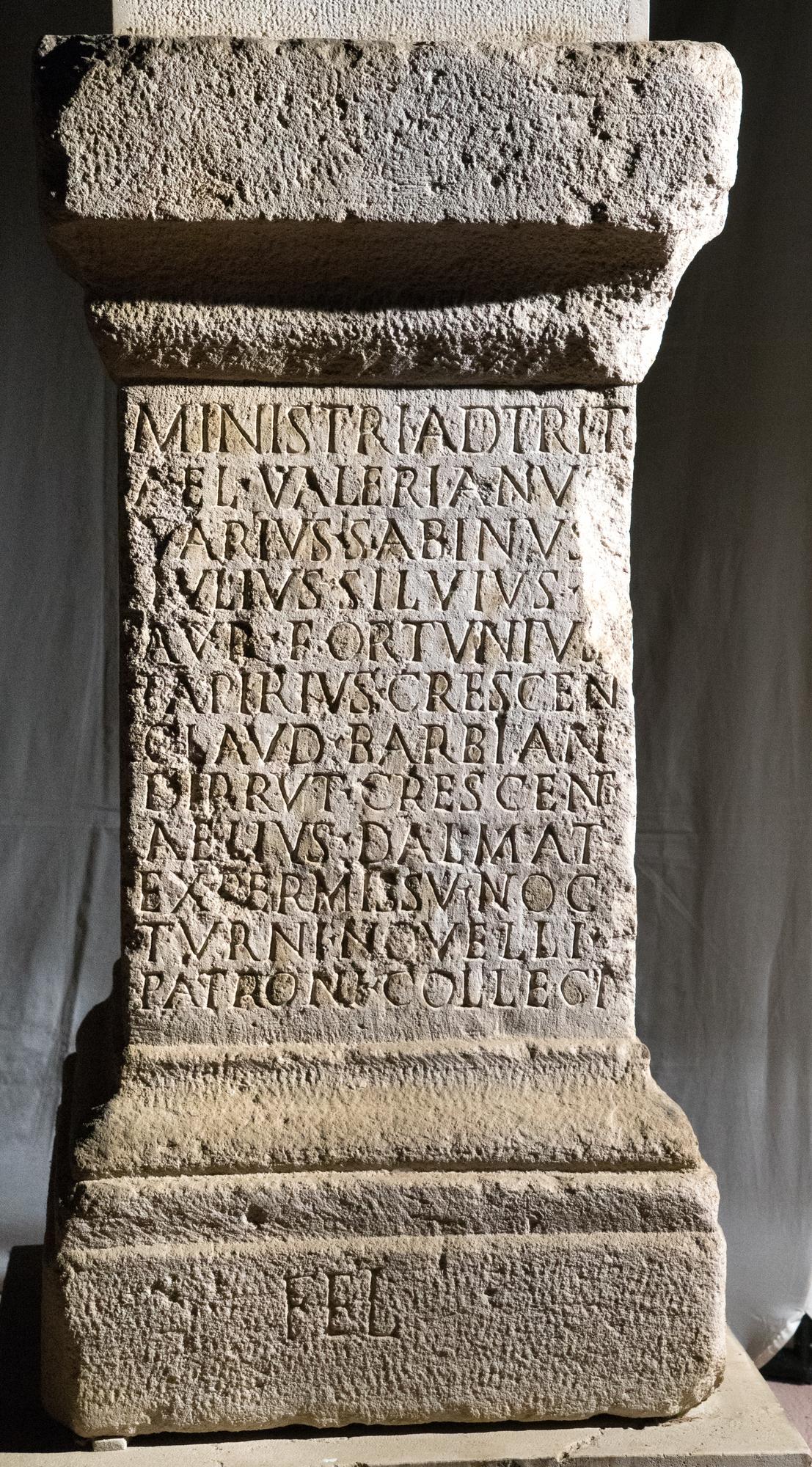
This inscribed limestone altar from Roman Salona preserves several lists of ministers associated with the Tritones collegium during the Tetrarchic period.
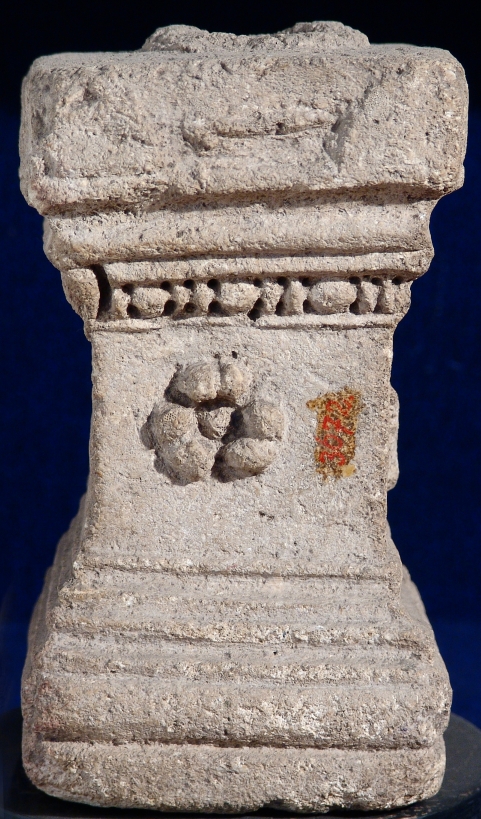
This limestone altar from Roman Dacia preserves a dedication to Mithras by a commander of the Ala II Pannoniorum.

These six marble fragments from the Second Mithraeum of Poetovio preserve parts of tauroctonies together with figures of Sol, Cautes, and Cautopates.

The remains of this Mithraeum were discovered in 1930 in the Cetatea district of Alba Iulia, ancient Apulum.
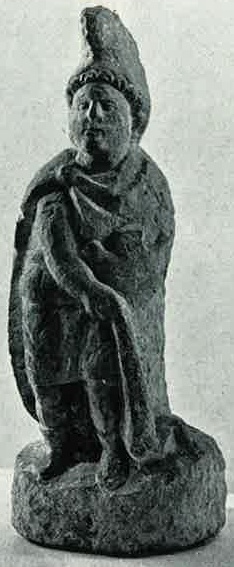
This statuette of Cautopates from Intercisa shows the torchbearer holding a burning torch and a pelta at his side.
This eulogy of Saint Eugene of Trapezos tells how, in the time of Diocletian, he and two other Christian fellows destroyed a statue of Mithras.
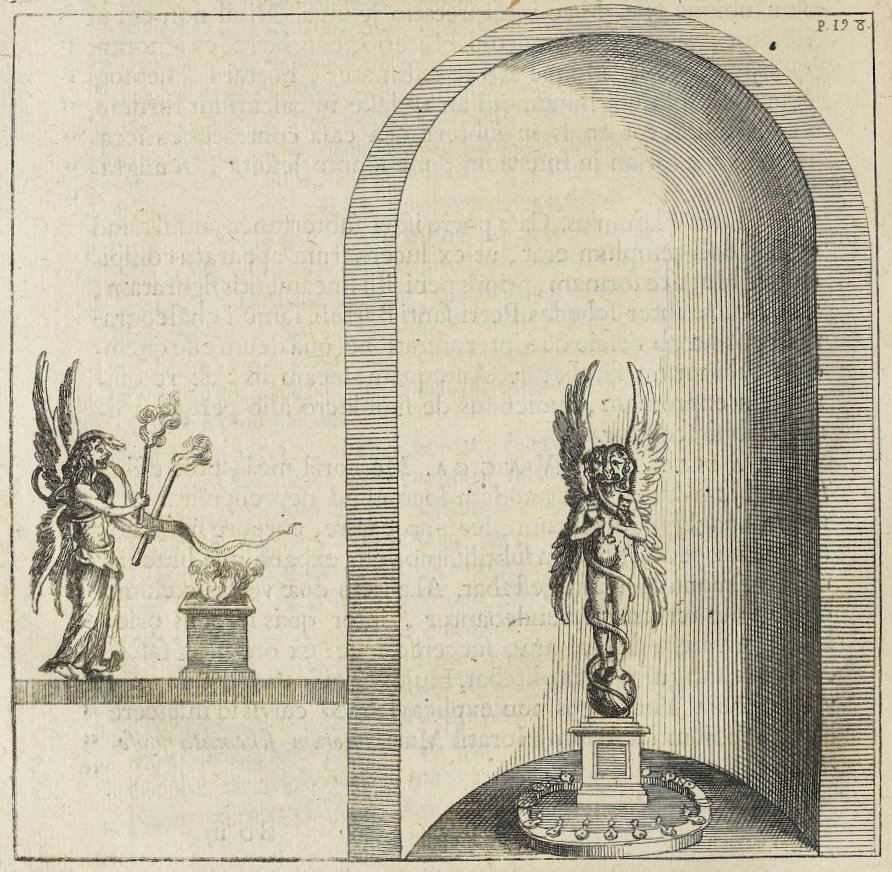
This monument has been identified from ’Memorie di varie antichità trovate in diversi luoghi della città di Roma’, a book by Flaminio Vacca of 1594.
