Your search Tulln an der Donau gave 577 results.

Des rituels mystérieux, une hiérarchie gradée au sein d’un culte énigmatique, une société considérée pendant longtemps comme secrète au sein de l’Empire Romain…
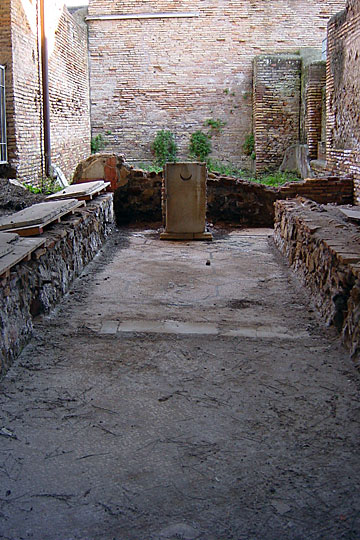
The Mithraeum of Lucretius Menander was installed in the early 3rd century in an alley to the east of a Hadrianic building named after the solar god temple.
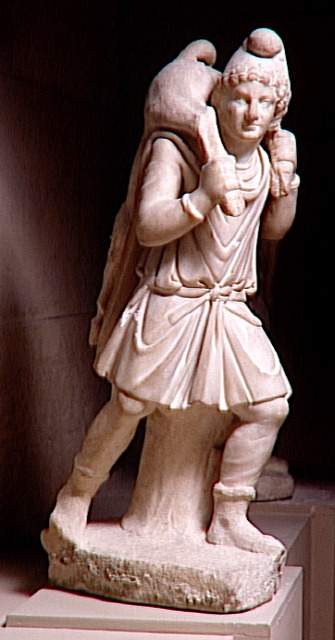
Sculpture depicting Mithras carrying a young bull on his shoulders.
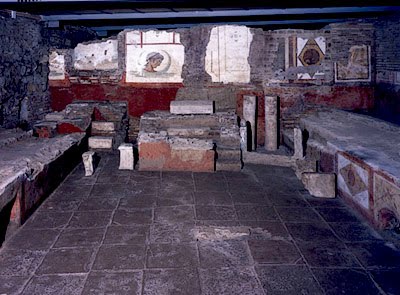
The Mitreo dei Castra Peregrinorum was discovered under the church of Santo Stefano Rotondo in Rome.
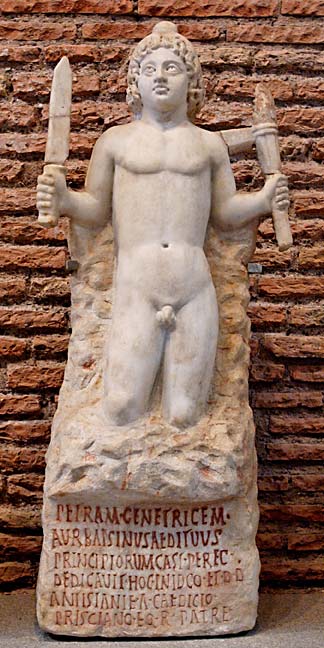
The sculpture of Mithras rock-birth from Santo Stefano Rotondo bears an inscription of Aurelius Bassinus, curator of the cult.
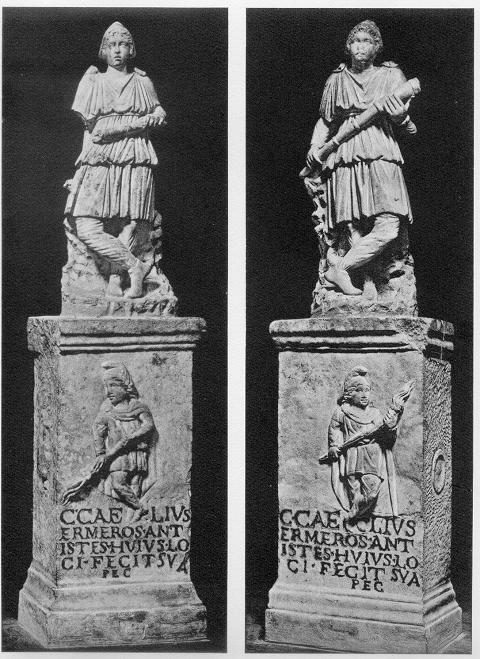
The sculptures of Cautes and Cautopates from the Mitreo del Palazzo Imperiale may have been reused from an older mithraeum in Ostia.
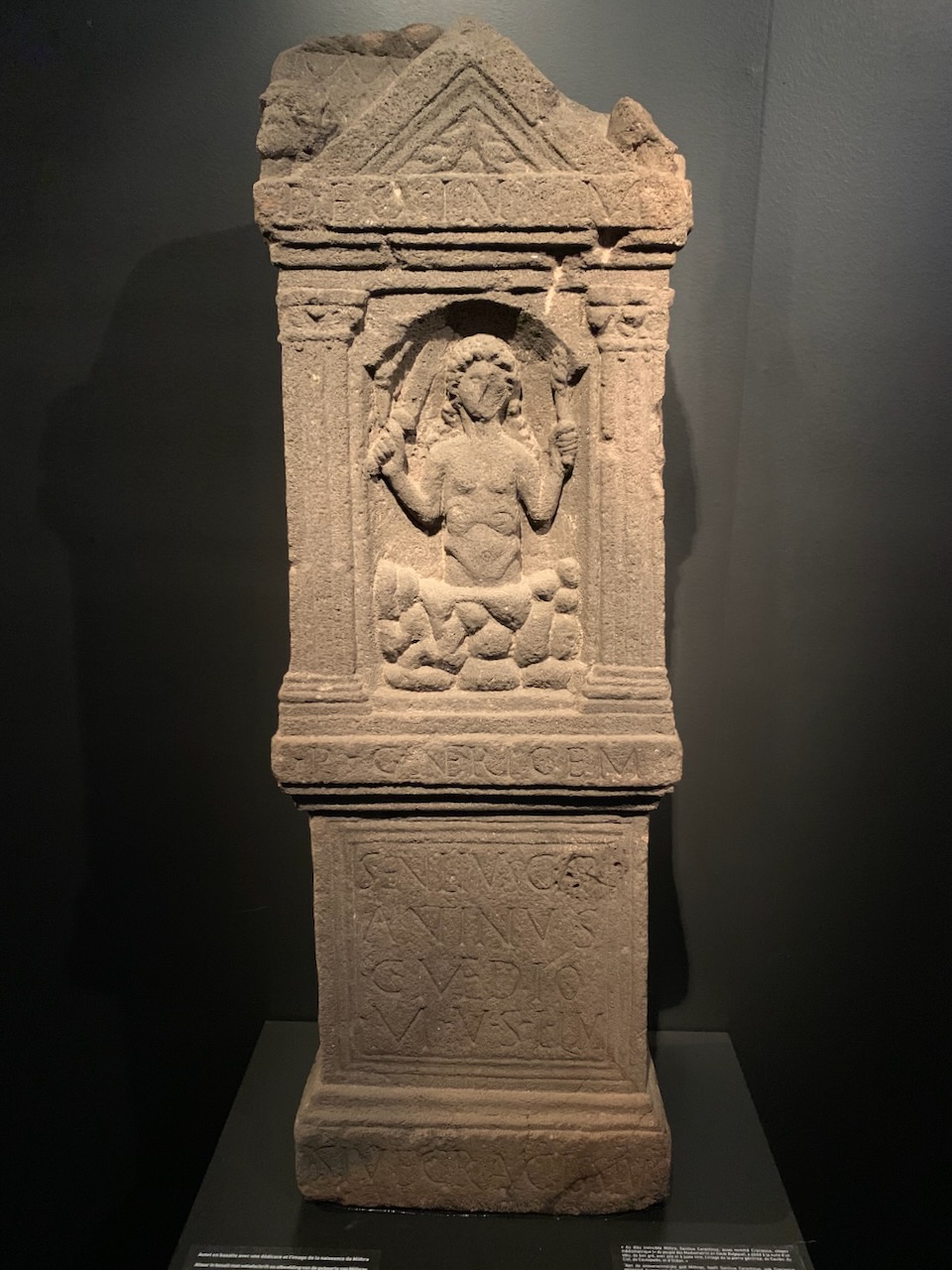
The Mithraic stele from Nida depicts the Mithras Petrogenesis and the gods Cautes, Cautopates, Heaven and Ocean.

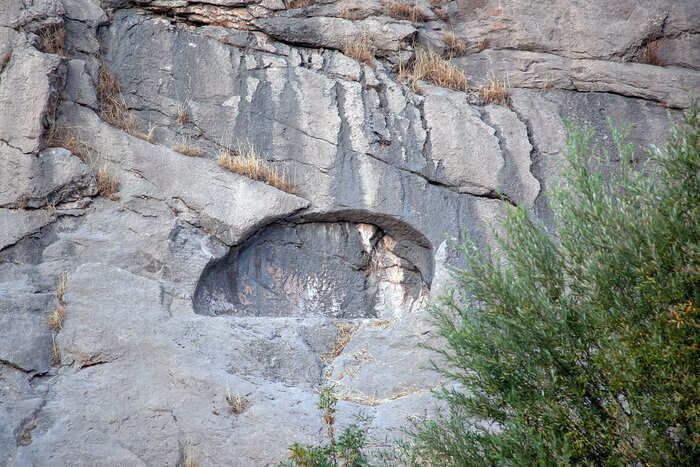
The Mithras temple of Prilep is in a small grotto under the castle of Markovi-Kuli.
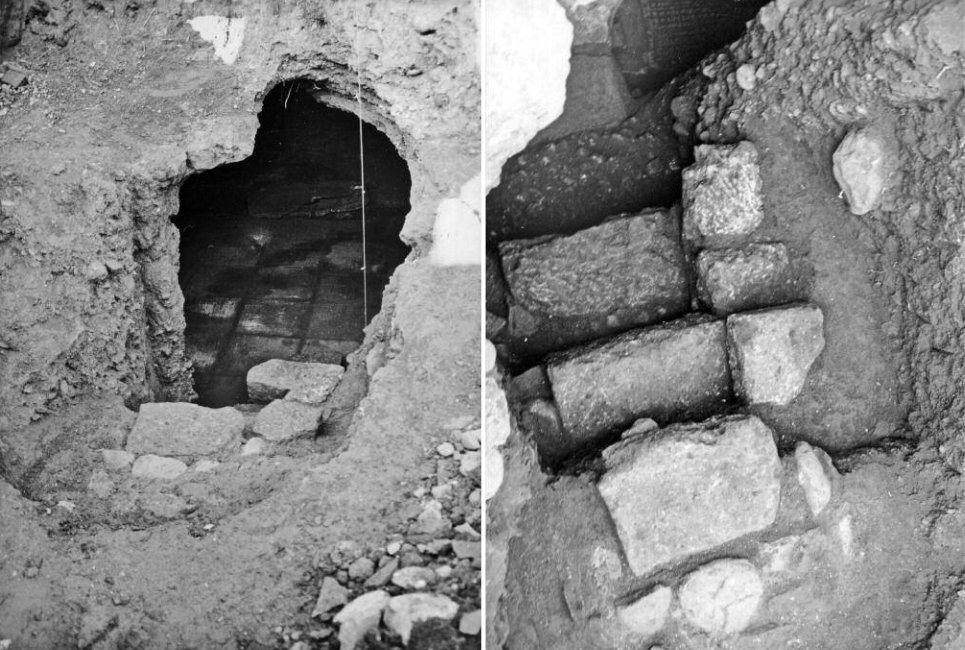
The underground cave which served as temple was cut into the conglomerate rock of the area, and a flight of eight steps of stone slabs led to it.
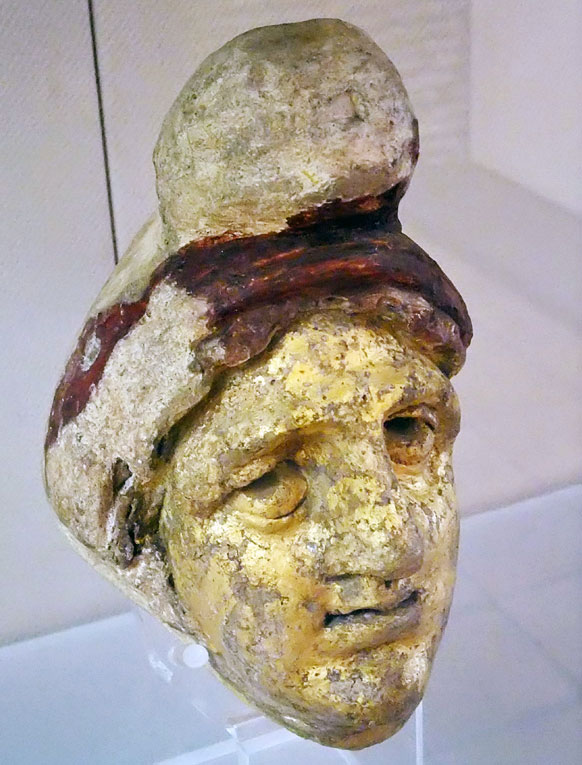
The head was part of a stucco relief of the Tauroctony found under the church of Santo Stefano Rotondo in Rome
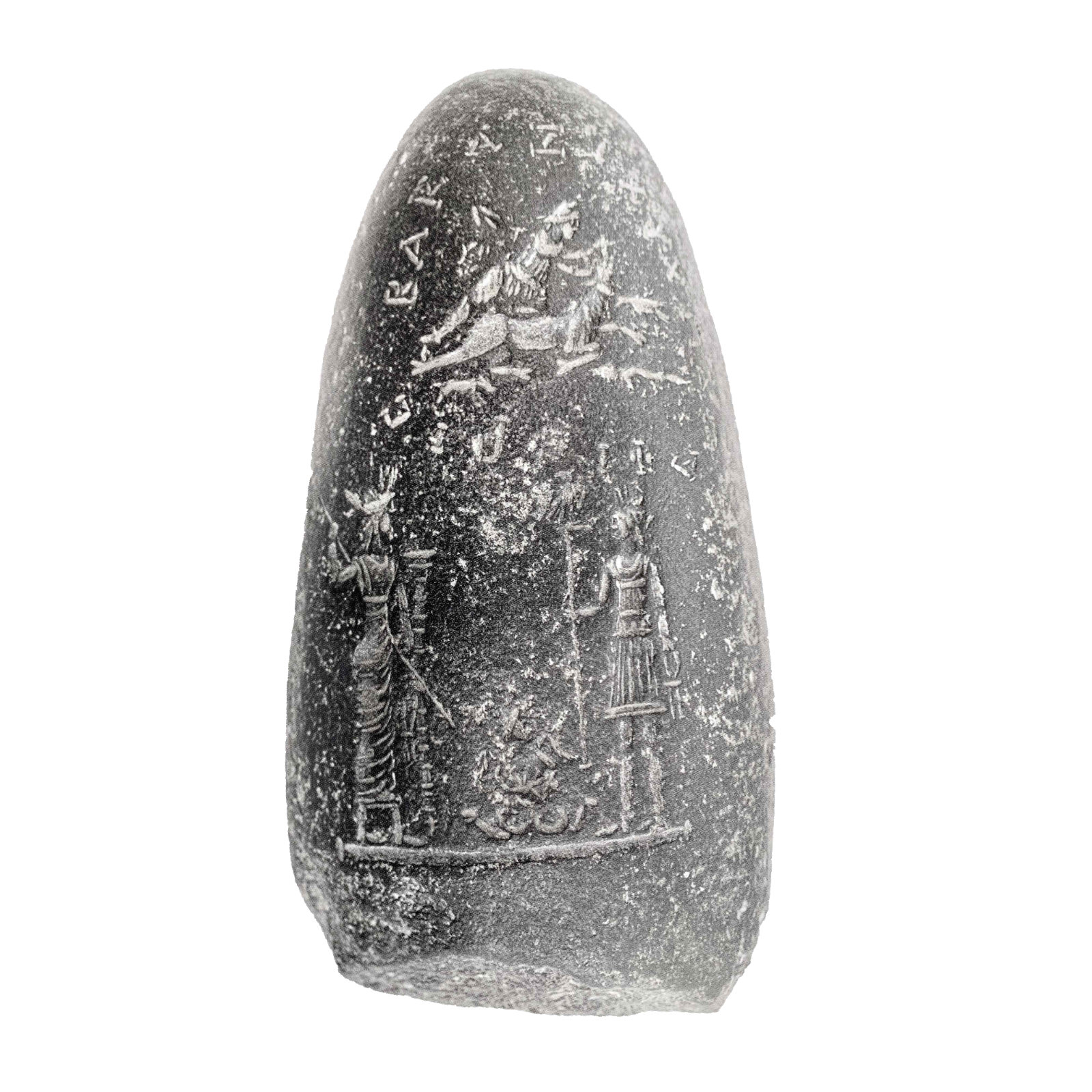
According to Christopher A. Faraone, the axe-head from Argos belong to a category of thunderstones reused as amulets.
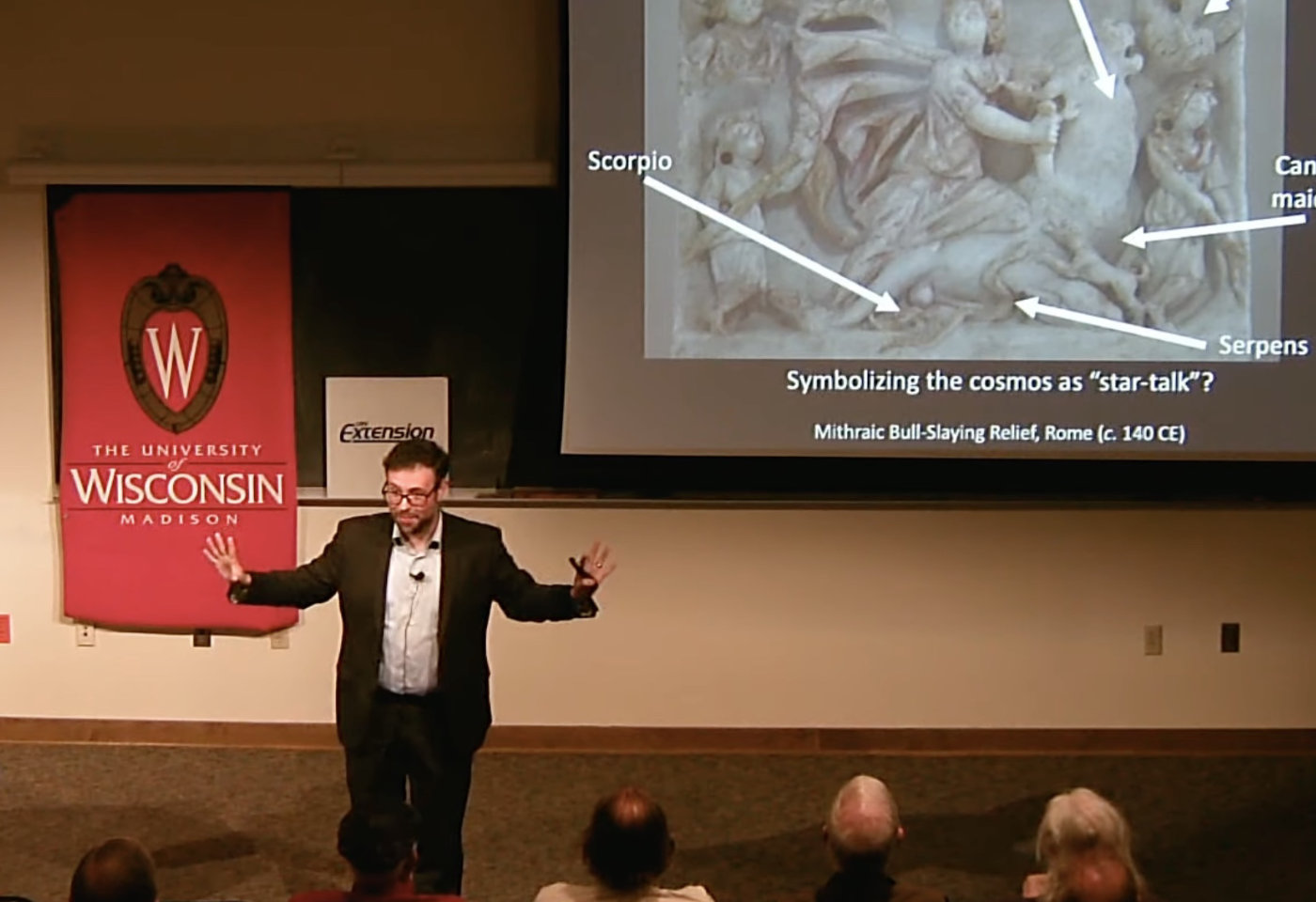
Our modern understanding of Mithraism, though, depends largely on a few short (and very problematic) literary mentions, mostly written by the cult’s Christian rivals.
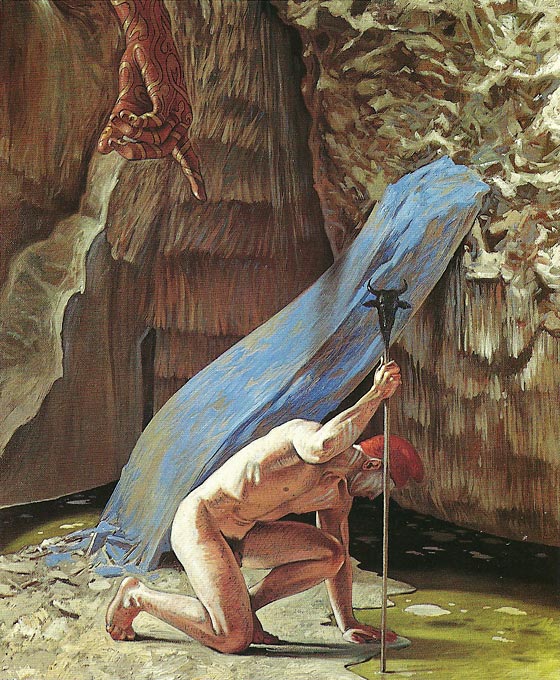
Those initiated into the Mithraic cult were called upon to climb up to seven symbolic rungs of the ladder ultimately leading to the rank of Pater.
The ruins of the Mithraeum of Savaria are kept under a new plaza.
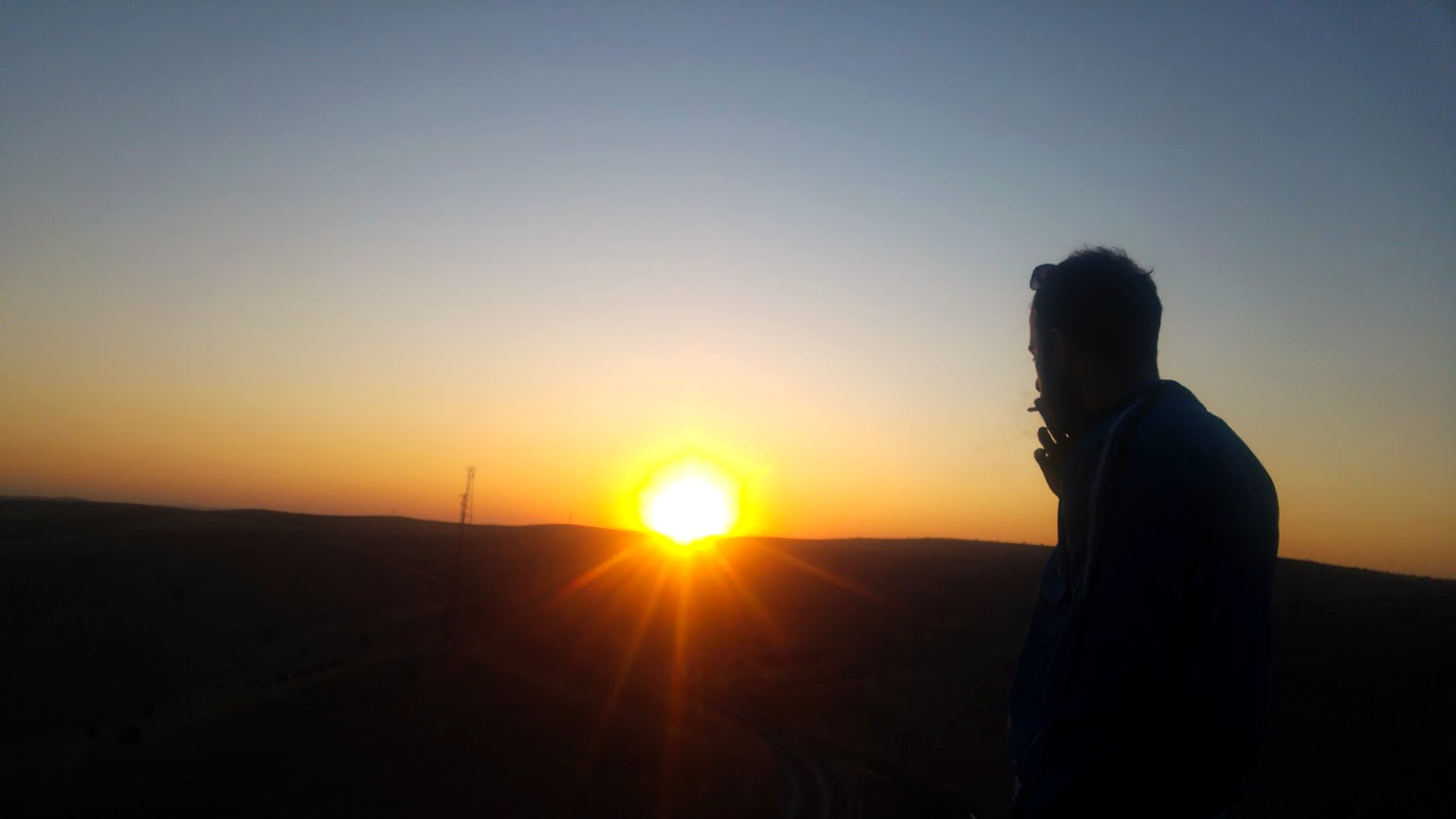
The Temple of Mithras, inside an ancient military settlement, is situated on the eastern border of the Roman Empire.
Some Iranian archaeologists suggest that the carving was created by a follower of Mithraism as it depicts a simple portrayal of a human with his right hand raised and an object in his hand. But, experts say it needs much more study in order to date the pe
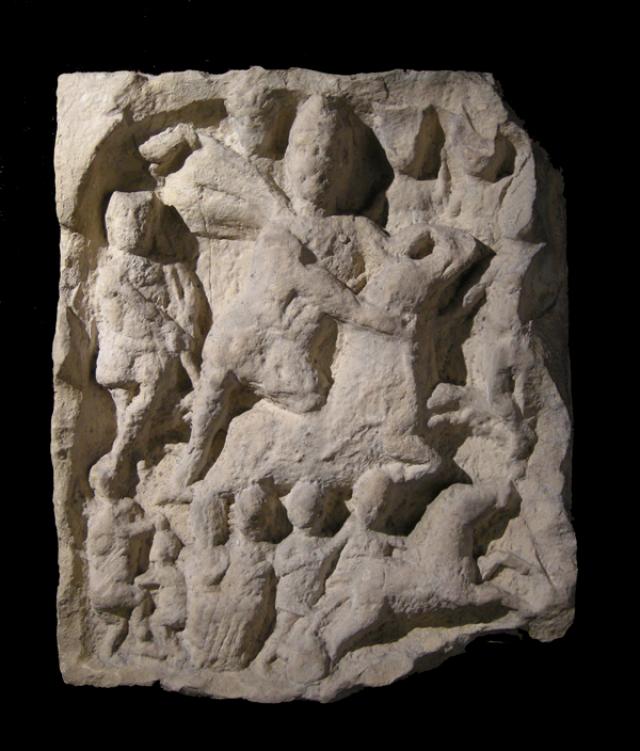
This stone in basso relief of Mithras killing the bull was found 10 foot underground in Micklegate York in 1747.
