Your search Villa Vicentina gave 148 results.
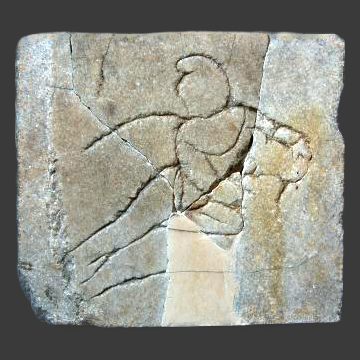
This unfinished Mithras tauroctonos without the usual surrounding animals was found in 1923 in Italica, near Seville, Spain.


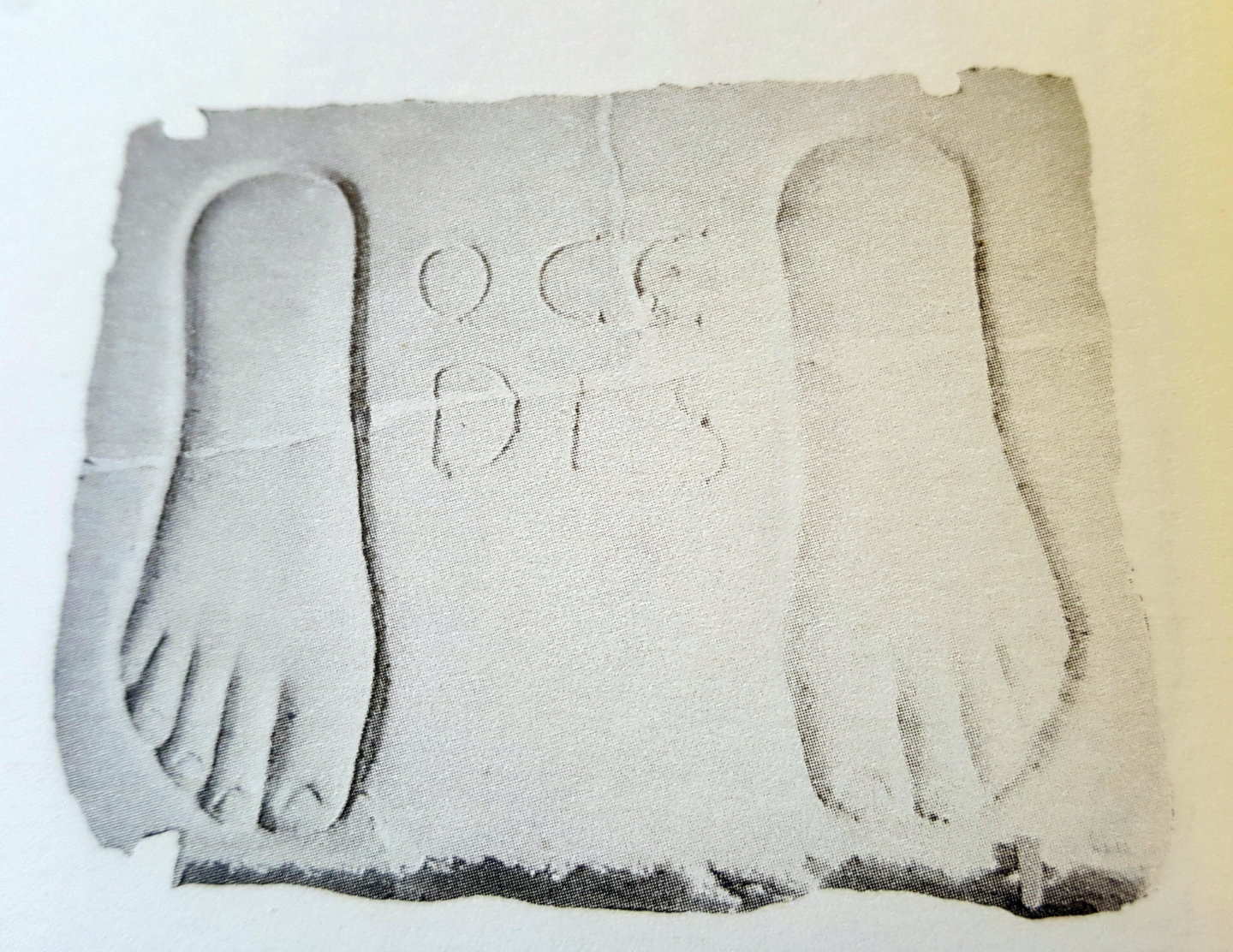
Recent interpretations link this marble inscription to the cult of the goddess Nemesis.

Landowner from Augustobriga, transferred to Tarraco by Antoninus Pius and owner of the villa of Els Munts and its Mithraeum.
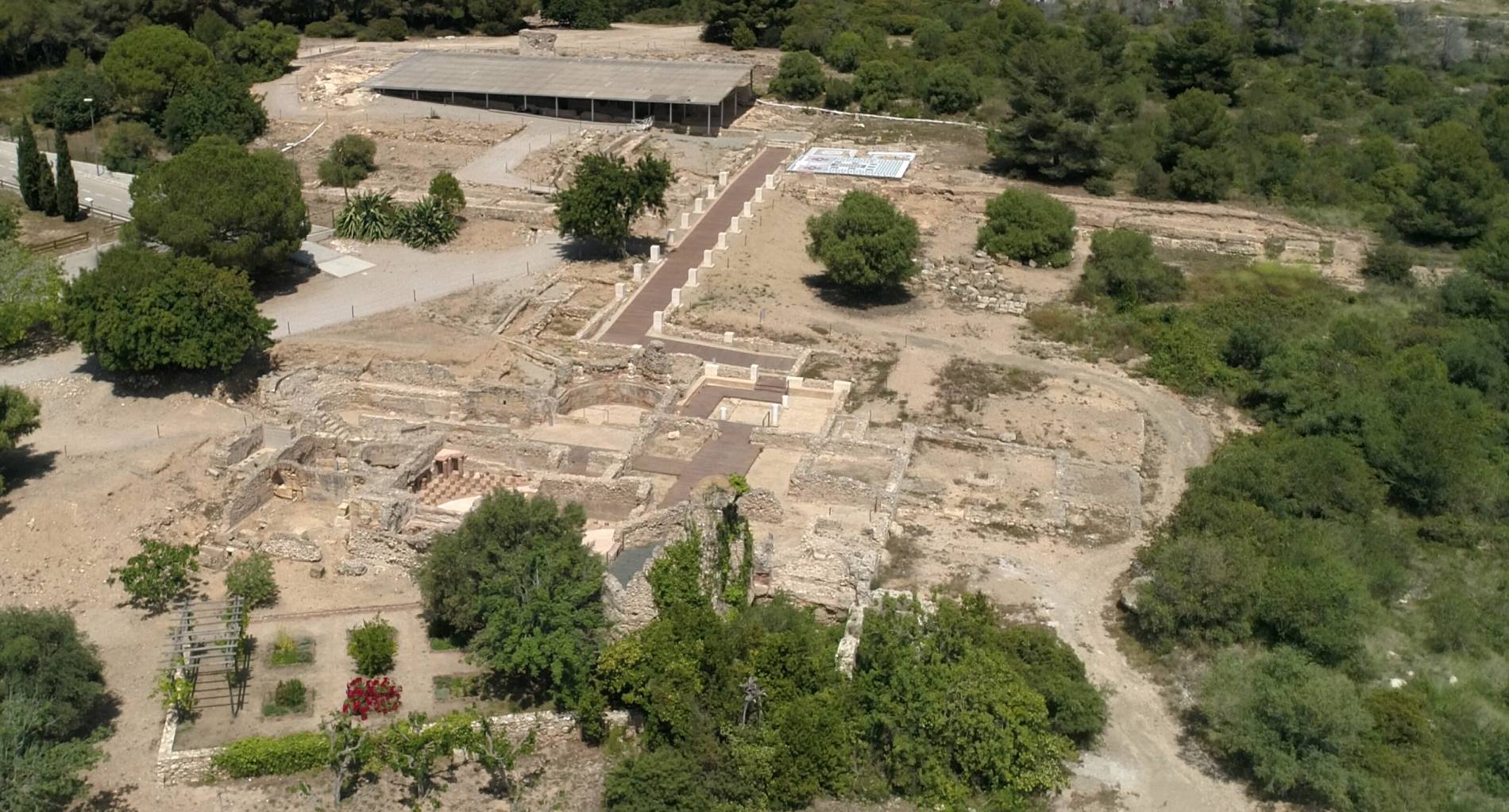
A possible Mithraic sanctuary attached to the luxurious Roman villa of Els Munts, near ancient Tarraco, whose interpretation remains disputed.
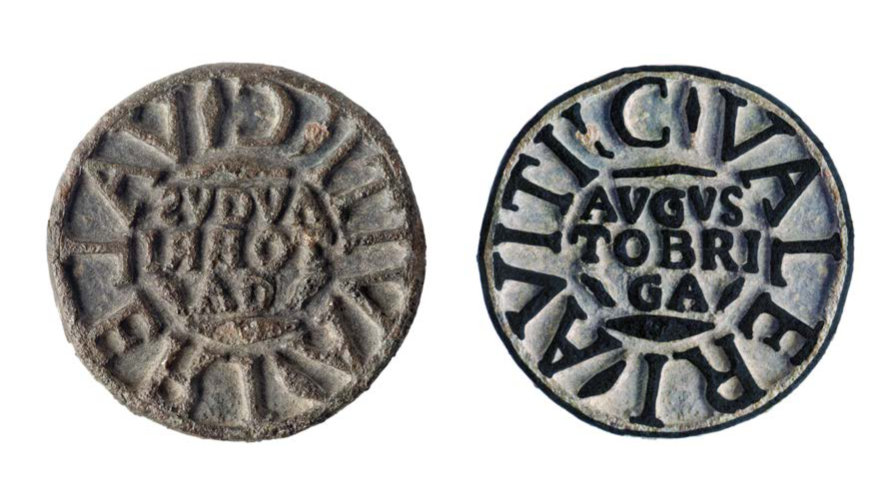
Bronze personal seal of a duovir of Tarraco and owner of the villa of Els Munts.

Fragment of a bull-killing relief showing Mithras, the torchbearer Cautes with upraised torch, and the bust of Luna, found at Labicum in the ruins of a Roman villa.
A rectangular marble tauroctony relief found in Etruria, once in the Villa Martin at Settignano near Florence, showing Mithras slaying the bull with Cautes and Cautopates in Eastern attire cross-legged on either side and the busts of Sol and Luna in the upper corners;…
A white marble tauroctony relief found near a Roman villa on the northern slope of Mount Ciminus near Soriano nel Cimino in Etruria, showing Mithras slaying the bull with dog, serpent and scorpion, the bull's tail ending in three ears of grain, the god's resting leg abnormally small…
Two tauroctony statues formerly at the Villa del Grande near the Porta Maggiore in Rome, both lacking the upper part of Mithras and the bull's head.
Marble base formerly in the Villa Negroni and then the Museo Borgia at Velletri, with bas-reliefs on three sides showing Sol in a quadriga, initiates in Oriental dress and other Mithraic scenes; the collection is now dispersed among museums in Naples and Rome…
Marble inscription from the Villa Giustiniani near Porta Flaminia, dedicated by M. Aurelius Euprepes, freedman of the three Emperors, to Sol Invictus Mithras through the priests Calpurnius and Ianuarius, dated to 194 A.D.
Two marble busts of youthful figures with Phrygian caps, probably representing the torchbearers Cautes and Cautopates, from the Villa Borghese collection, found at Formiae.
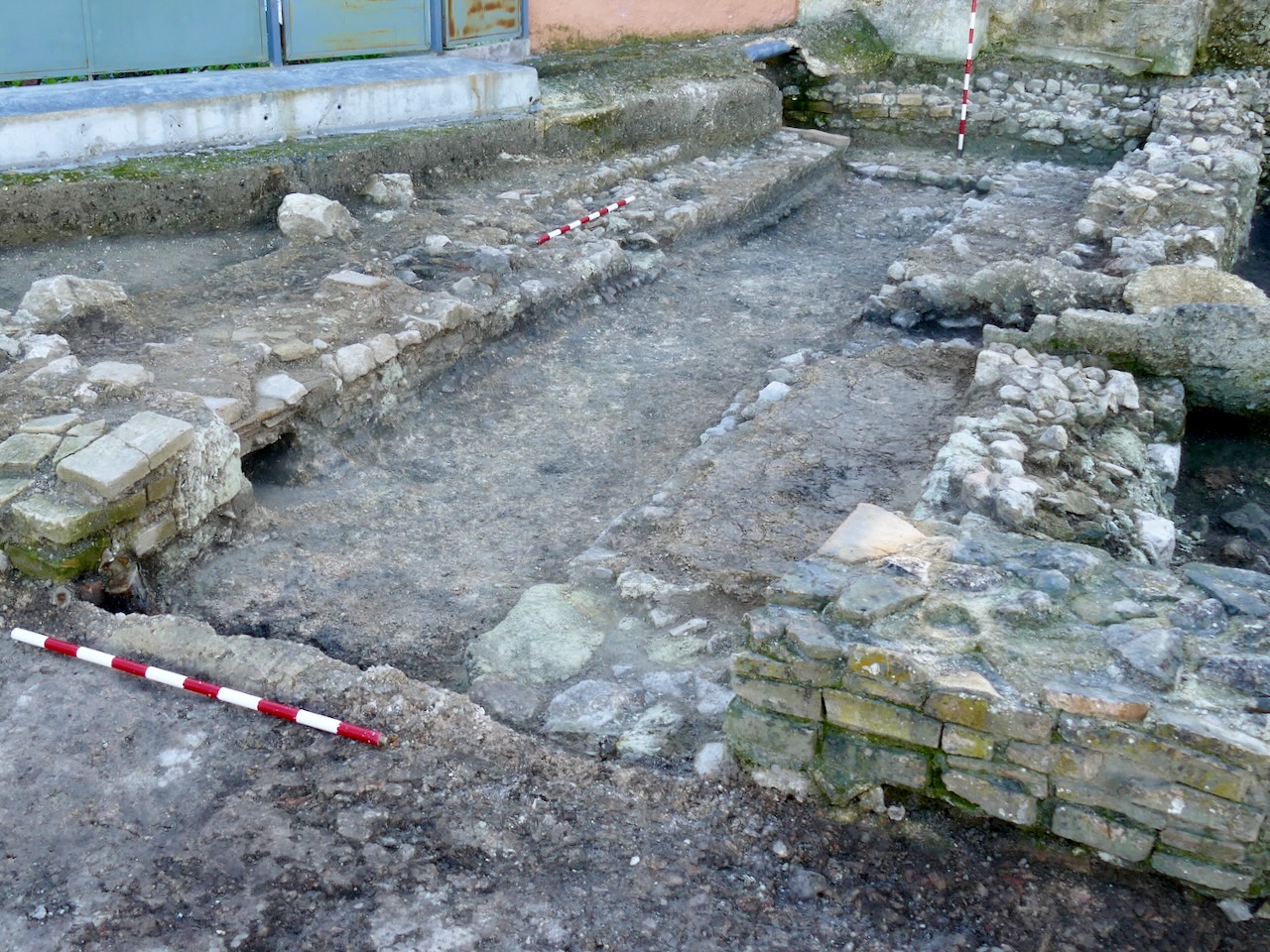
The Mithraeum of Cabra is located in the Villa del Mitra, which owes its name to the discovery in 1951 of a Mithras tauroctonus in the remains of the Roman villa.

The Dionysian themed frescos of Pompeii’s Villa of the Mysteries constitute the single most important theurgical narrative to have survived in the Western esoteric tradition.
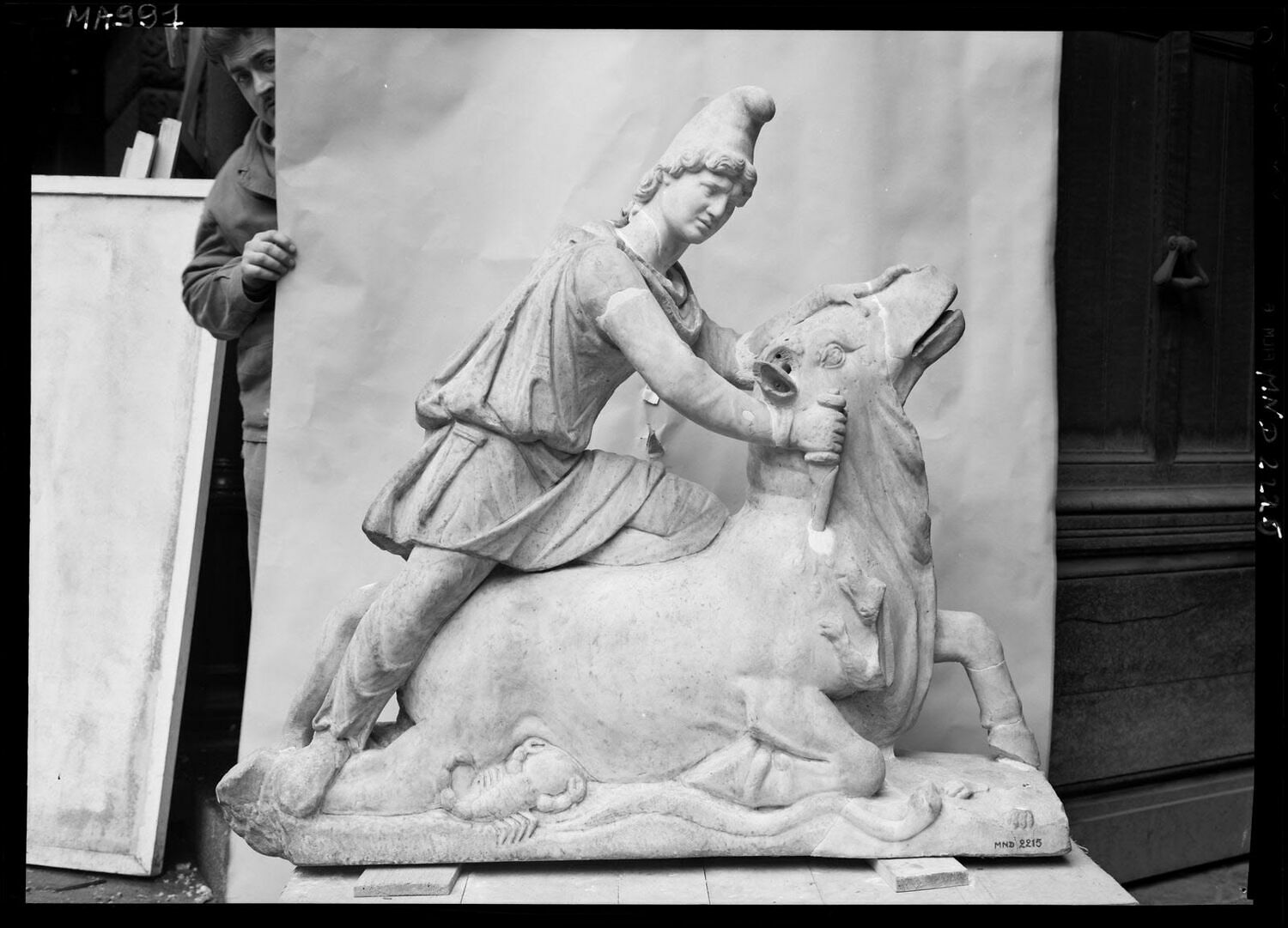
This sculpture of Mithras killing the bull, which belongs to the Louvre Museum, is currently on display in Varsovia.
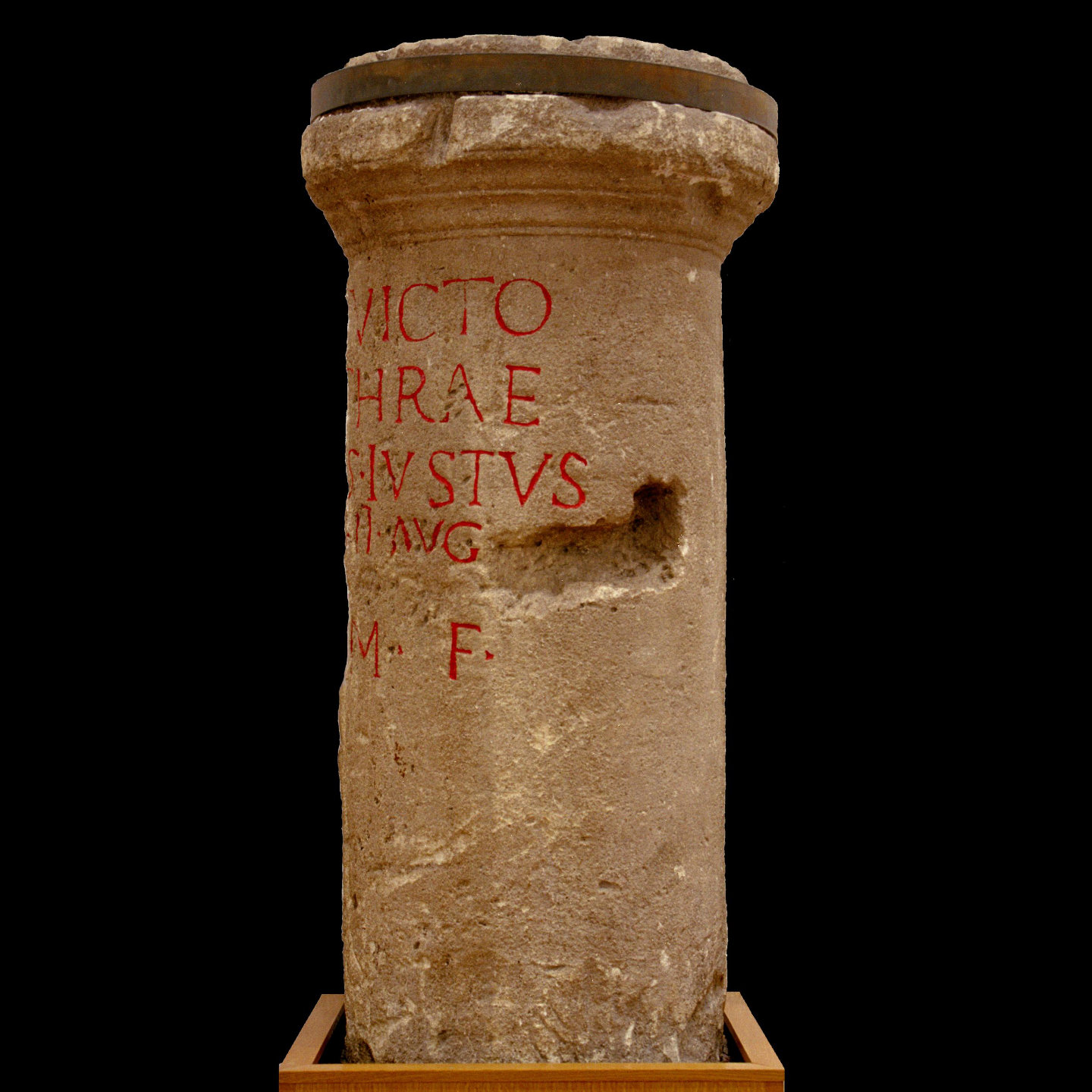
This oolite base, dedicated to the invincible Mithras, was found in the baths of the Villa de Caerleon, Walles.
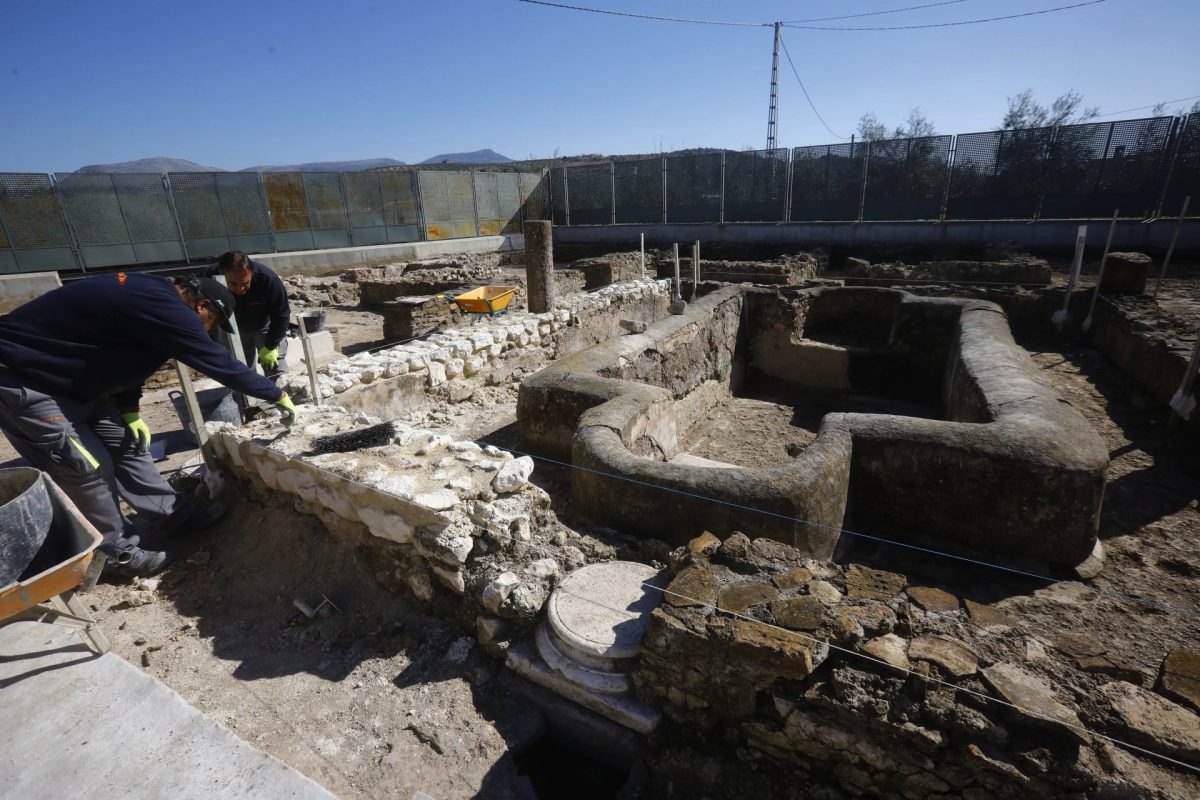
Las excavaciones llevadas a cabo en el yacimiento arqueológico romano de la villa de Mithra, en Cabra (Córdoba), han deparado el excepcional hallazgo de un mitreo, o zona destinada al culto al dios Mithra, cuya estatua fue descubierta hace unos 70 años…
