Your search Villa of Domitian at the Castel Gandolfo gave 3663 results.

In their groundbreaking new book, Mushrooms, Myths & Mithras, classics scholar Carl Ruck and friends reveal compelling evidence suggesting that psychedelic mushroom use was equally influential in early Europe, where it was central to initiation cerem

The Mithraeum at Capua is in many respects one of the most important sanctuaries of the Iranian god who in the first centuries of our era conquered the Roman world.

Actes du 2e Congrès International, Téhéran, du 1er au 8 septembre 1975. (Actes du Congrès, 4). Éditions Brill, collection. Acta Iranica.

Magazine Jardin des arts. Numéro spécial consacré aux colosses de Nemrut Dagi.

Les monuments mithriaques sont rares en Syrie. Les sculptures de Sidon, datées de 188, constituent l’essentiel de la documentation malgré des incertitudes sur leur origine exacte.

This magnificently illustrated publication renews the Mithraic dossier on the basis of concrete data, with caution and penetration. Marino's discovery is disconcerting and rekindles the controversy about the order in which bands should be read.
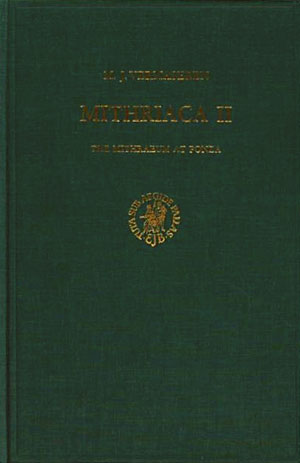
Second volume of Vermaseren's series Études préliminaires aux religions orientales dans l'Empire romain, Mithriaca, dedicated to a small Mithraic sanctuary on the island of Ponza in the Tyrrhenian Sea.

David Ulansey argues that Mithraic iconography was actually an astronomical code, and that the cult began as a religious response to a startling scientific discovery.

Robert Turcan highlights various examples of the philosophical interpretation, mainly Platonic, of the figure and cult of Mithras.

This graffito seems to be an account of offerings made by Mithras worshippers in the Cassegiato di Diana.
This inscription, which doesn’t mention Mithras, was found near the church of Santa Balbina on the Aventine in Rome.

Founder of the Arasacid dynasty, Tiridates I was crowned king of Armenia by Nero in 66.

Pater from Nersae, Italia, known by an inscription of his mithraic Apronianus.

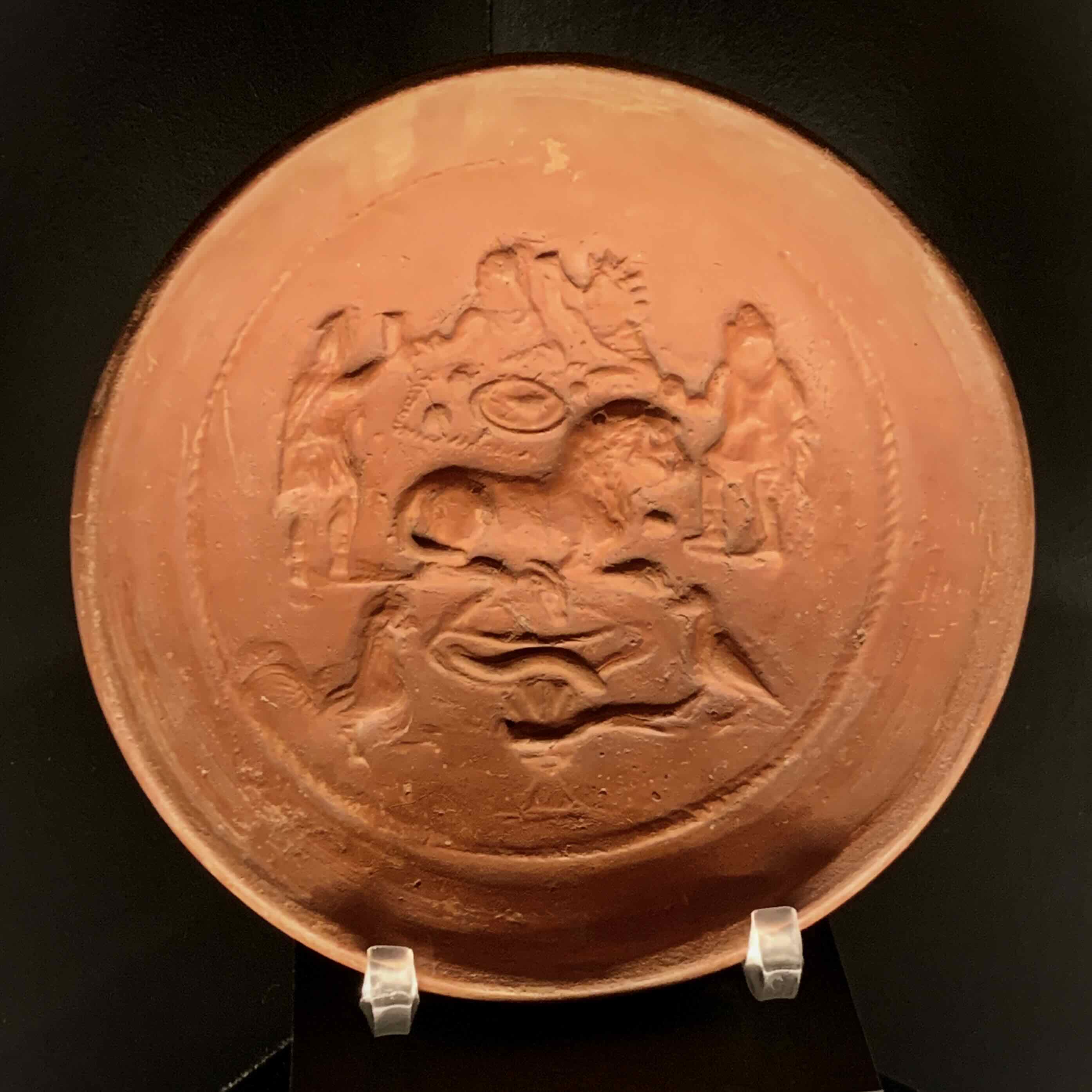
This terra sigillata was found in 1926 in a grave on the Roman cemetery of St. Matthias, Trier. An eyelet indicates that it could have been hung on a wall.
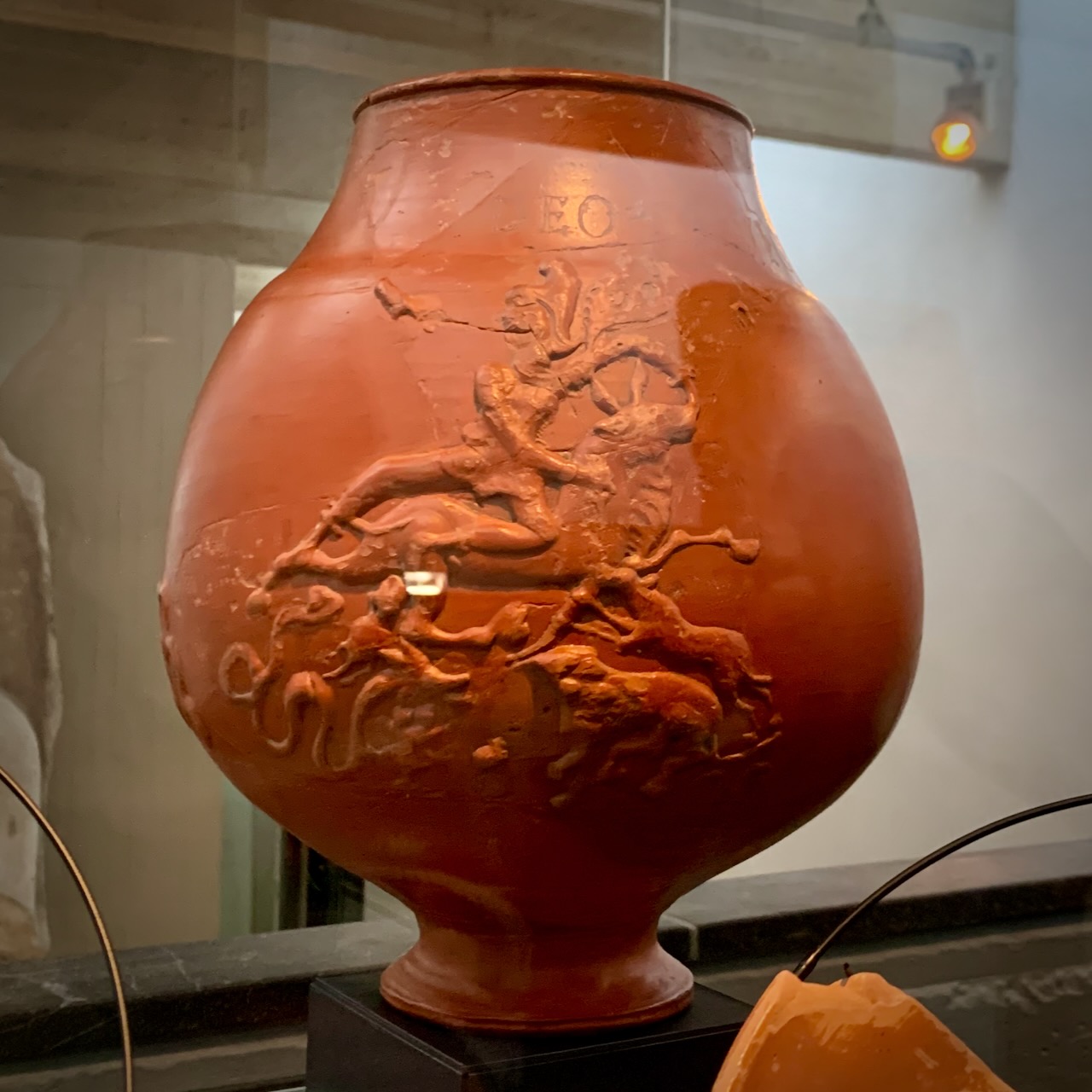
The Mühltal Mithraic crater was discovered among the artefacts of a mithraeum found in Pfaffenhoffen am Inn, Bavaria.

This remarkable marble statue of Mithras killing the bull from Apulum includes a unique dedication by its donor, featuring the rare term signum, seldom found in Mithraic contexts.

This fine Roman marble slab of the killing bull of Mithras belongs to a private owner, most recently from Los Angeles, USA.
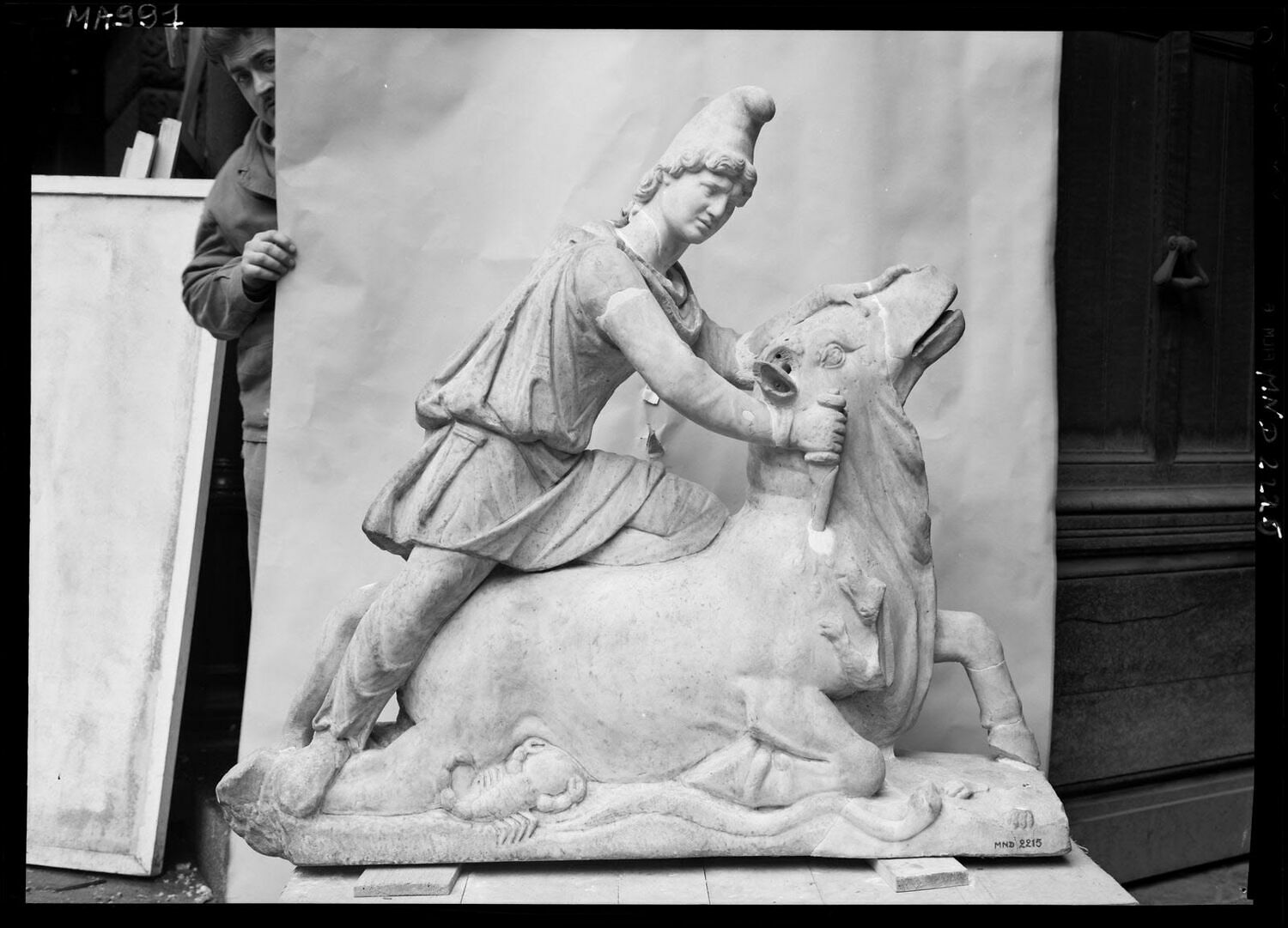
This sculpture of Mithras killing the bull, which belongs to the Louvre Museum, is currently on display in Varsovia.