
This tabula marmorea was consecrated by a certain slave Vitorinus in Tibur, nowadays Tivoli, near Rome.

This marble base found in Angera in 1868 bears the inscription of two people who reached the degree of Leo.
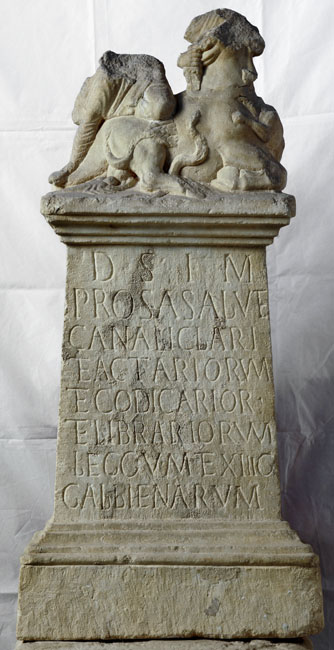
Remarkable fragmentary sculpture of Mithras slaying the bull on an inscribed altar found in Mithraeum III at Ptuj.
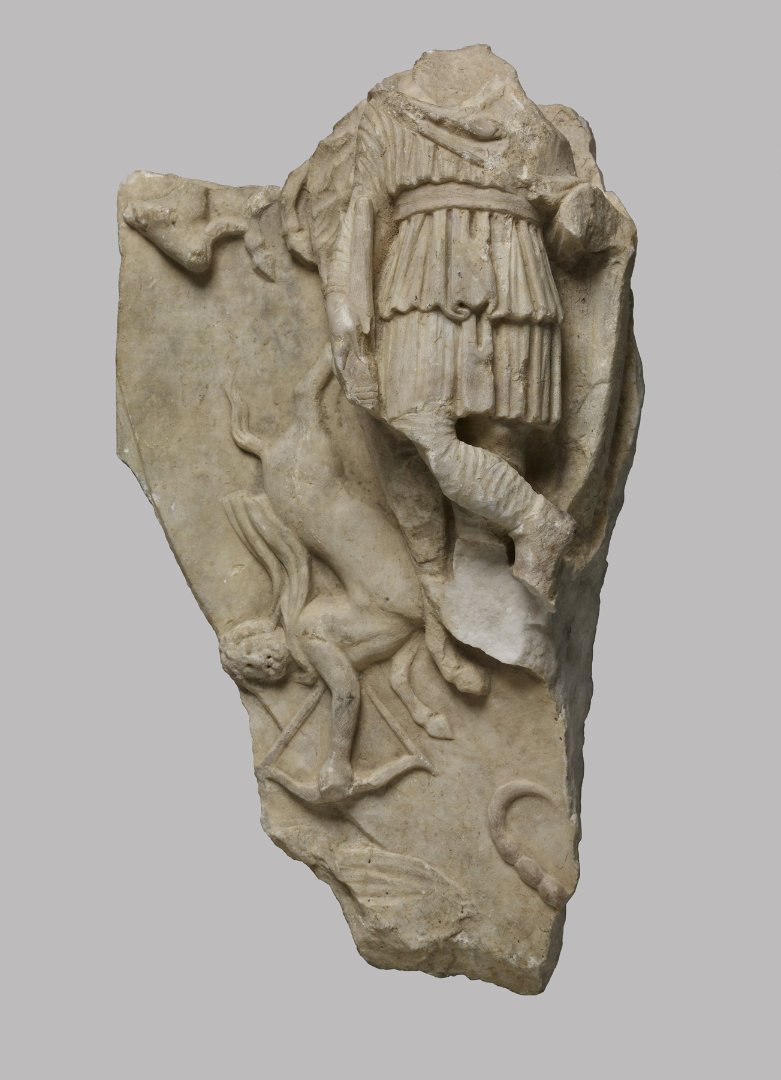
This fragmentary relief shows Cautopates bordered by three of the six zodiacal signs with which He is associated: Capricorn, Sagittarius and Scorpio.
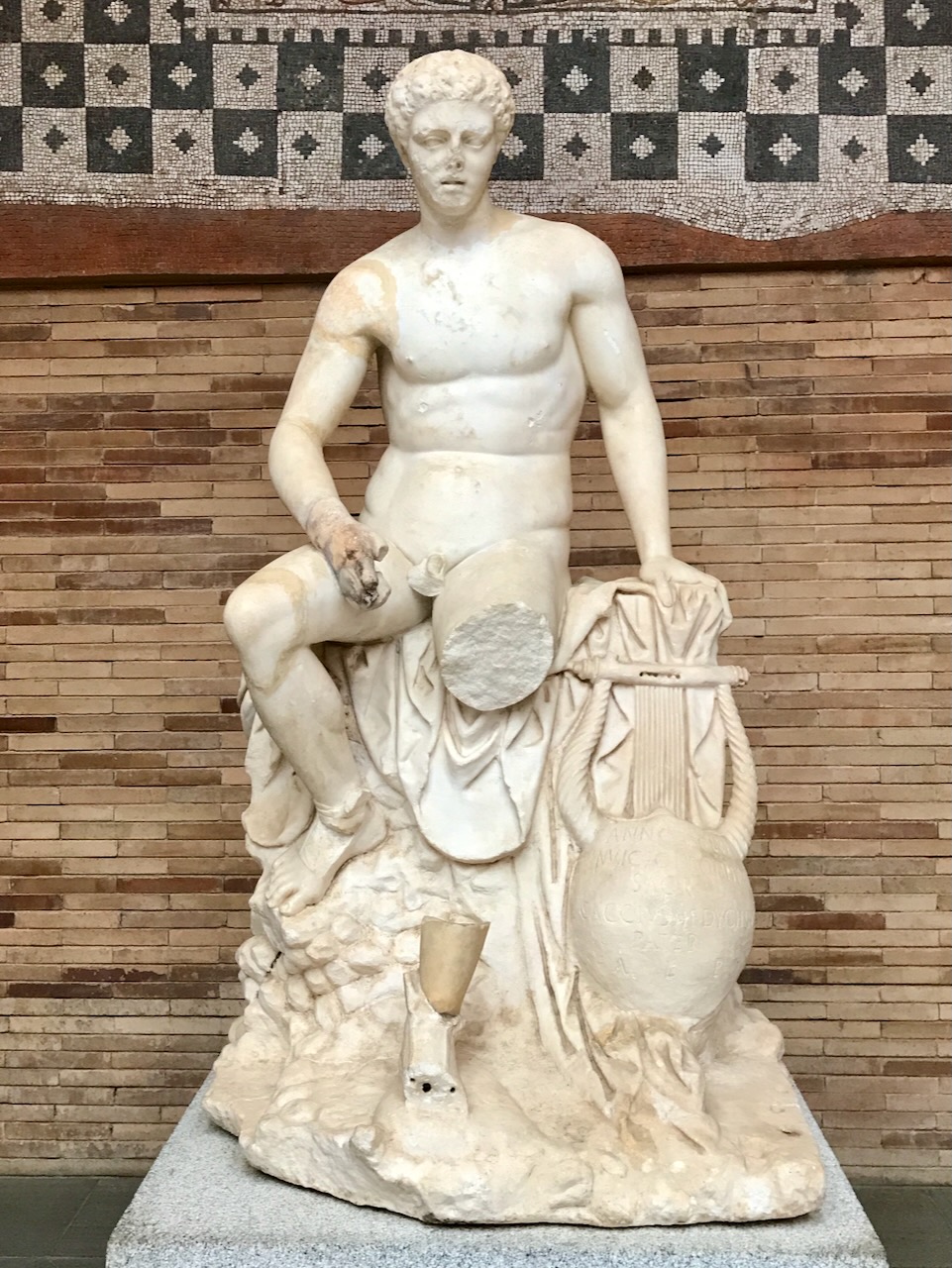
The statue of Mercury in Merida bears a dedication from the Roman Pater of a community in the city in 155.
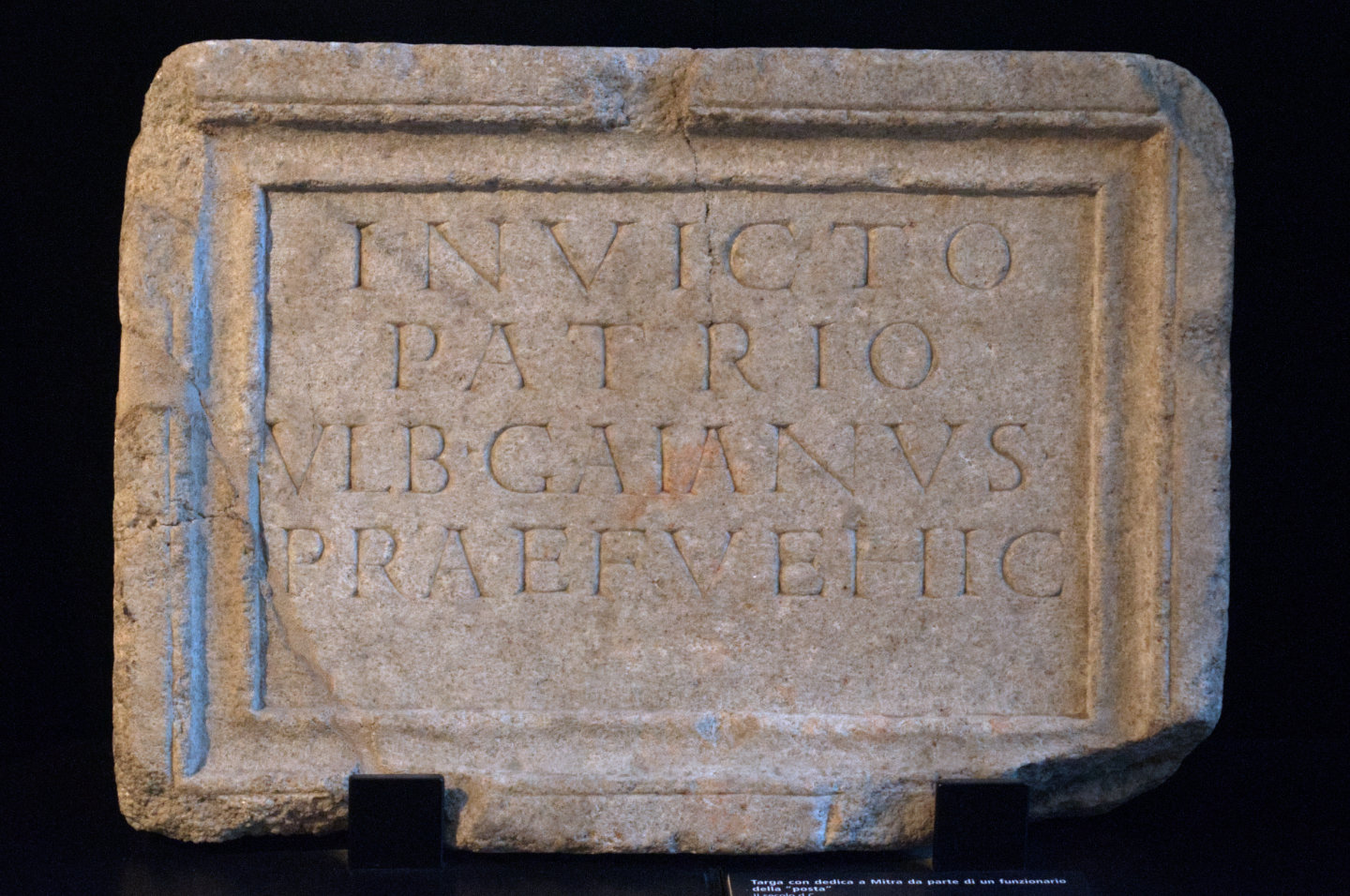
This monument dedicated to 'Invicto Patrio' was found in Milan in 1869.
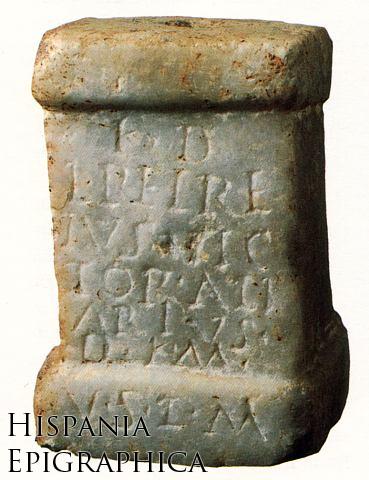
Small arula with mithraic inscription and dedication to Cautes from a garlic merchant.
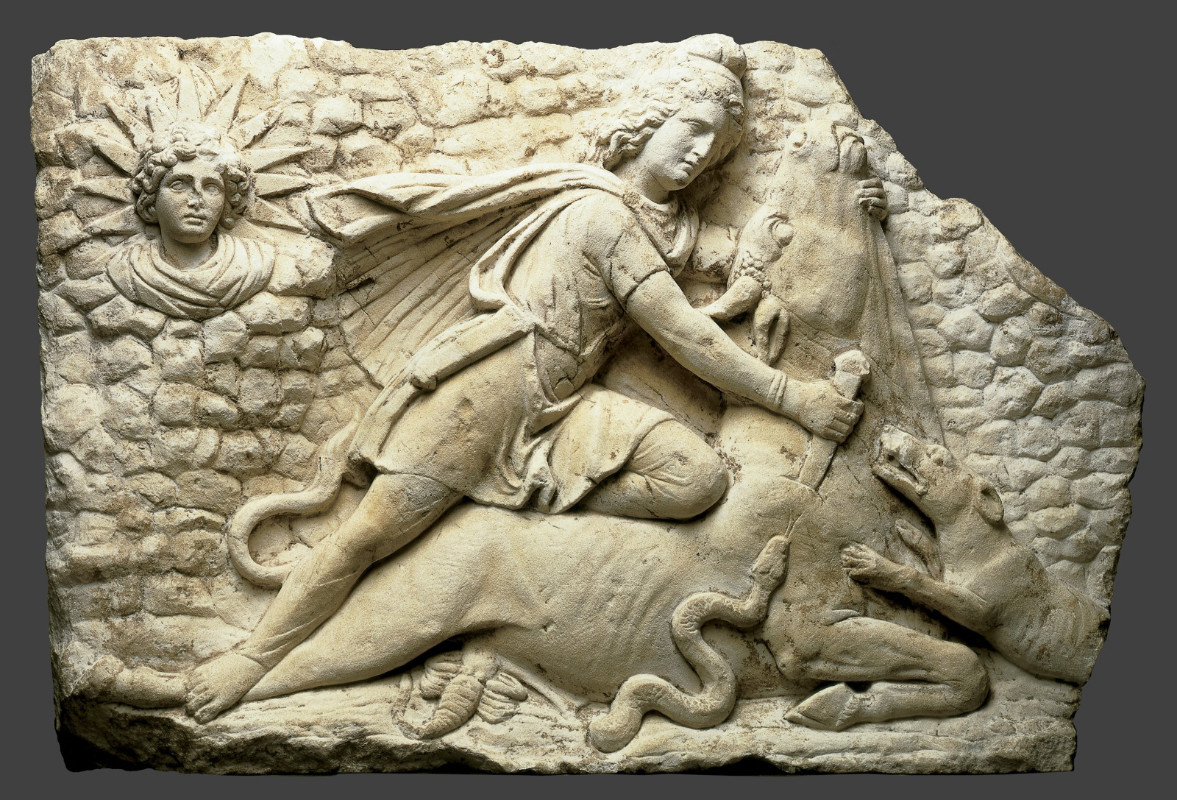
In the tauroctonic relief on display at the Cincinnati Art Museum, Mithras slaughters the bull over a rocky background.
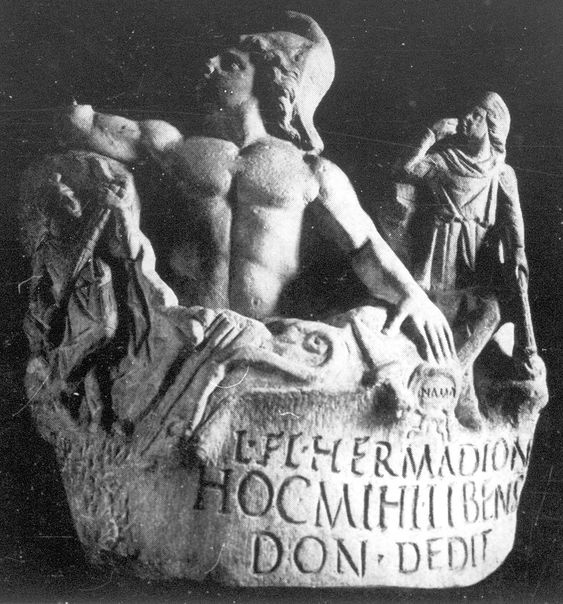
Mithras rock-born from Villa Giustiniani was holding a bunch of grapes in its raised right hand instead of a torch, probably due to a restoration.
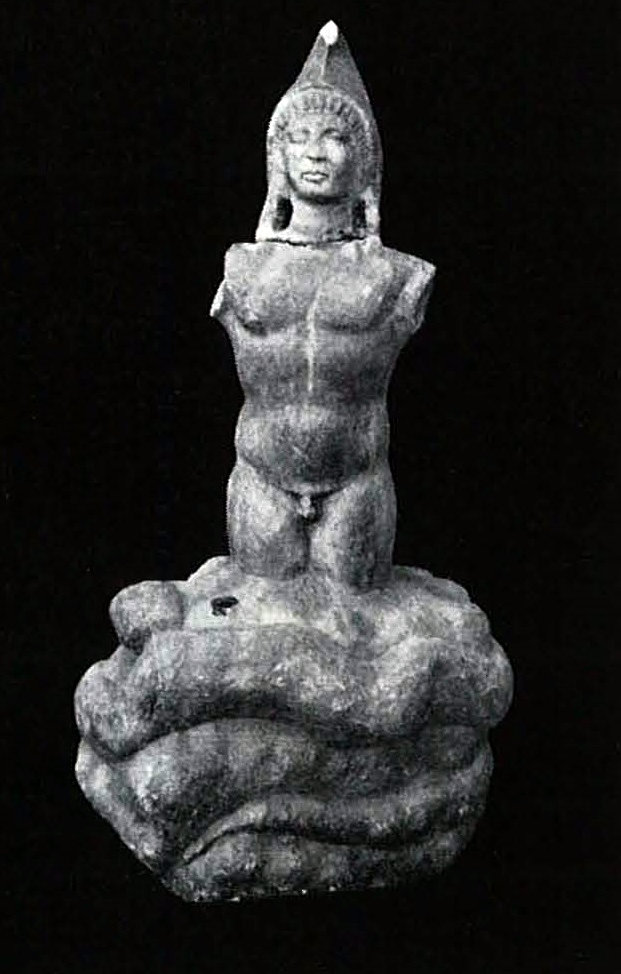
The rock of Mithra's birth in the Petrogenia of Sarmizegetusa is surrounded by a snake.
This altar, which has now disappeared, was dedicated by the slave Quintio for the health of a certain Coutius Lupus.
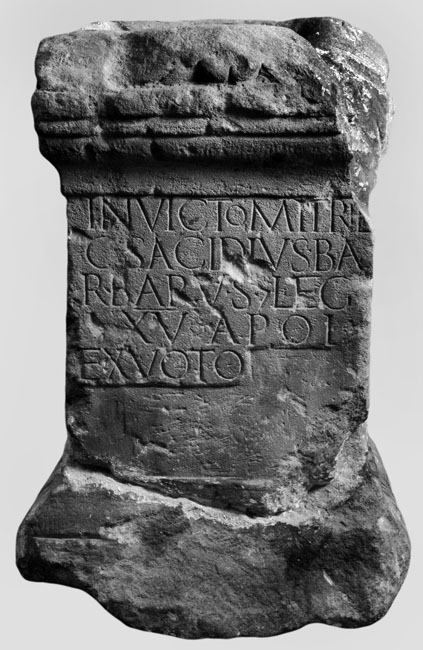
This altar bears the oldest known Latin inscription to the god Mithras, written Mitrhe.
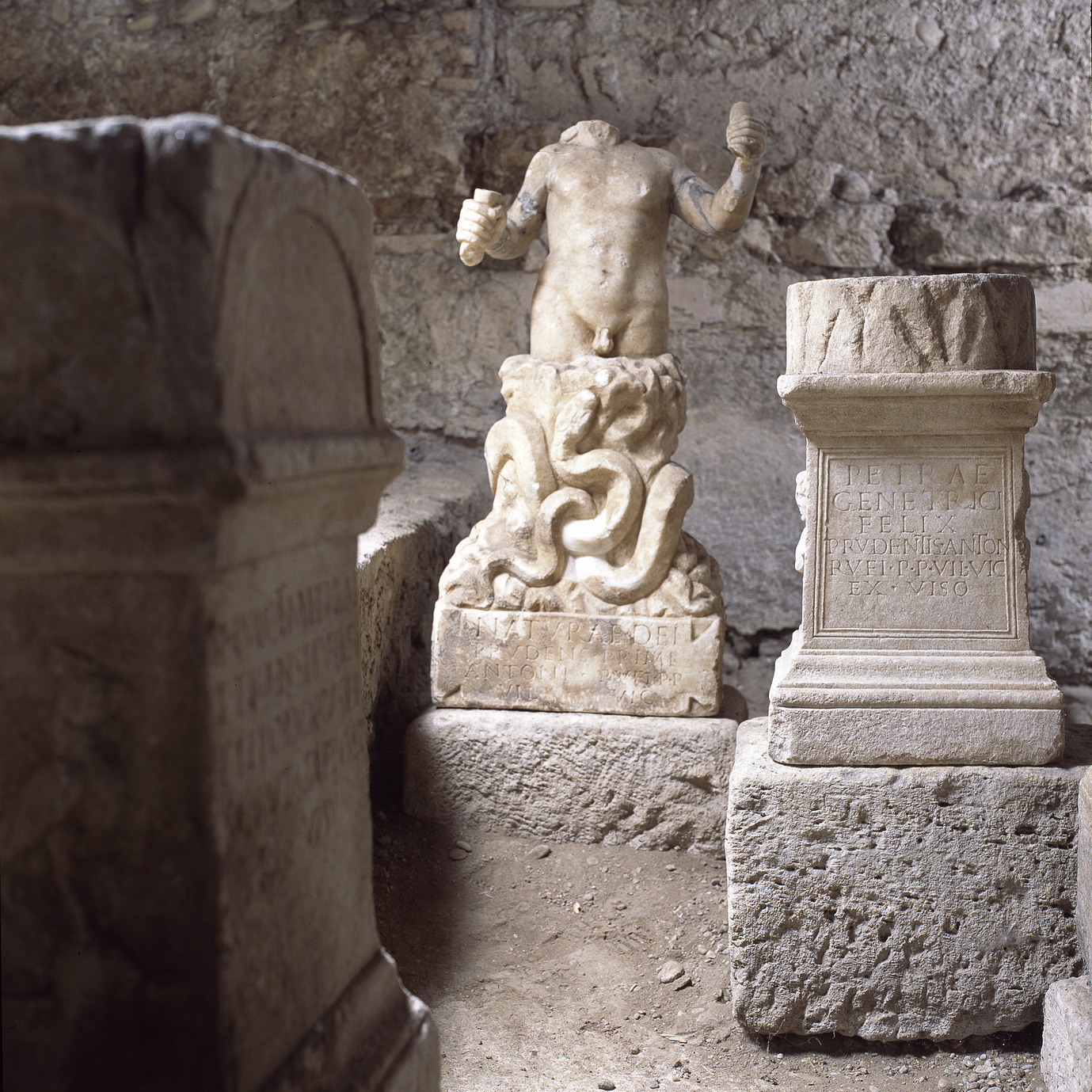
The sculpture includes a serpent climbing the rock from which Mithras is born.
This marble slab found near the Casa de Diana in Ostia bears two inscription with several names of brothers of a same community

The image of the god Arimanius to which this monument refers has not yet been found.
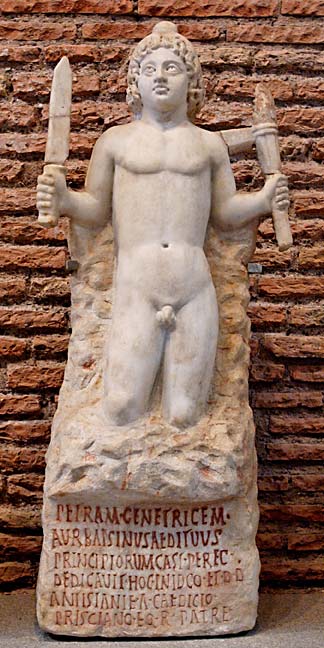
The sculpture of Mithras rock-birth from Santo Stefano Rotondo bears an inscription of Aurelius Bassinus, curator of the cult.
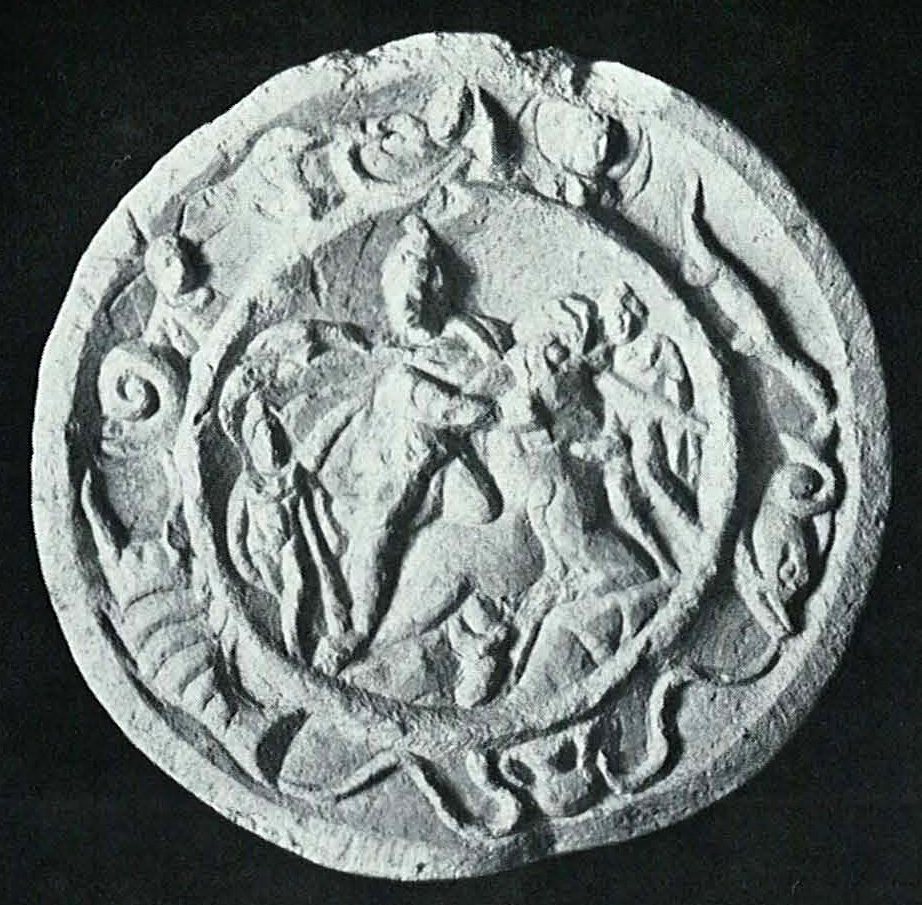
The round relief of Mithras killing the bull of Split is surrounded by a circle with Sun, Moon, Saturn and some unusual animals.
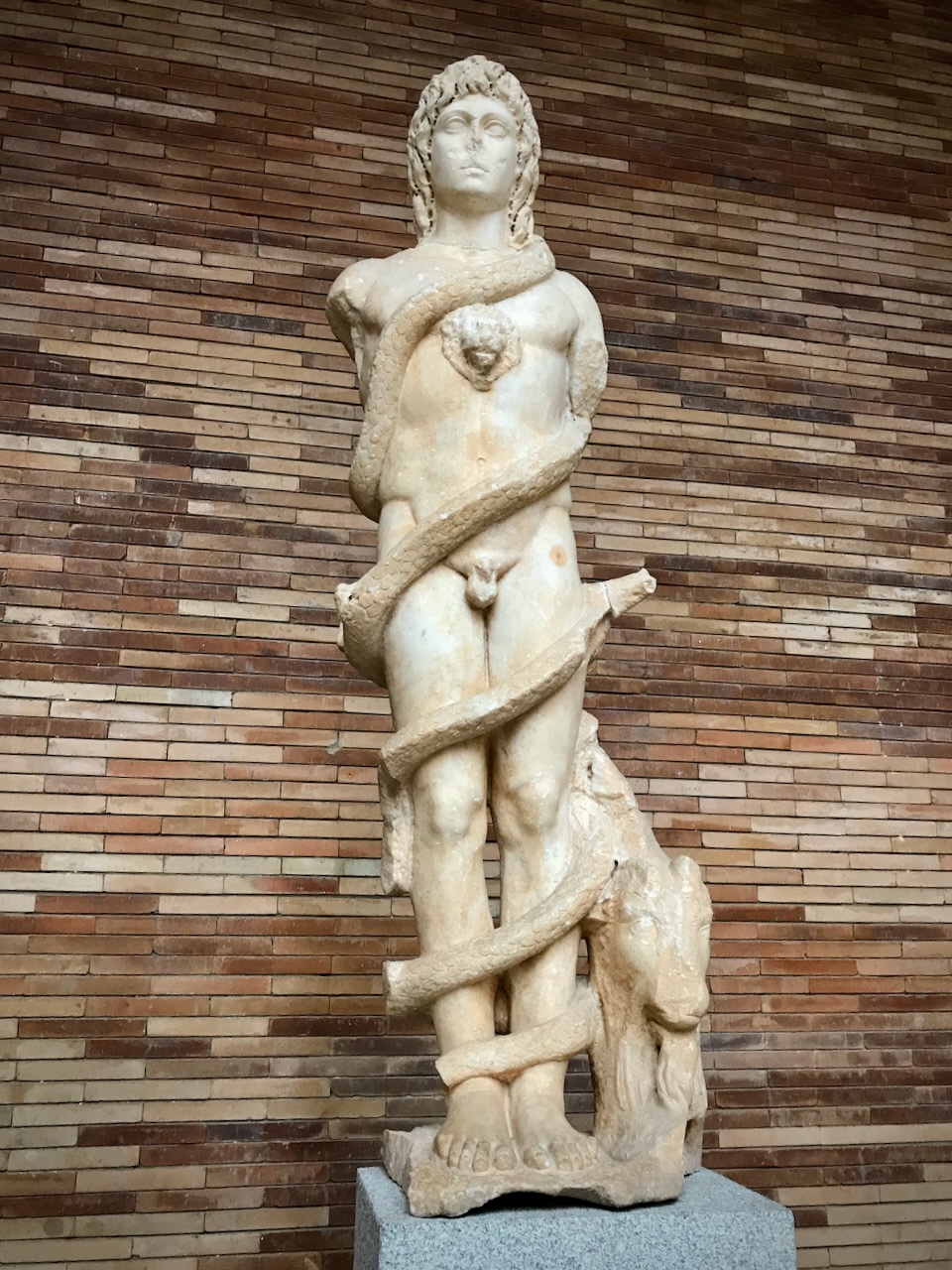
The Aion-Chronos of Mérida was found near the bullring of the current city, once capital of the Roman province Hispania Ulterior.
