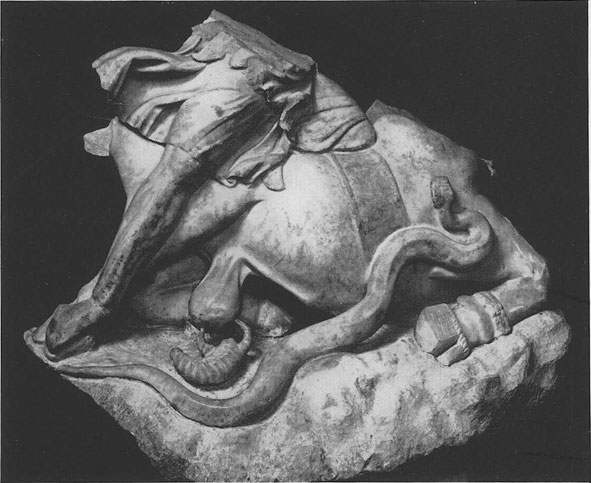
Partial marble statue of Mithras as a bullkiller found near Viale Latino, about 200 meters from Porta San Giovanni.
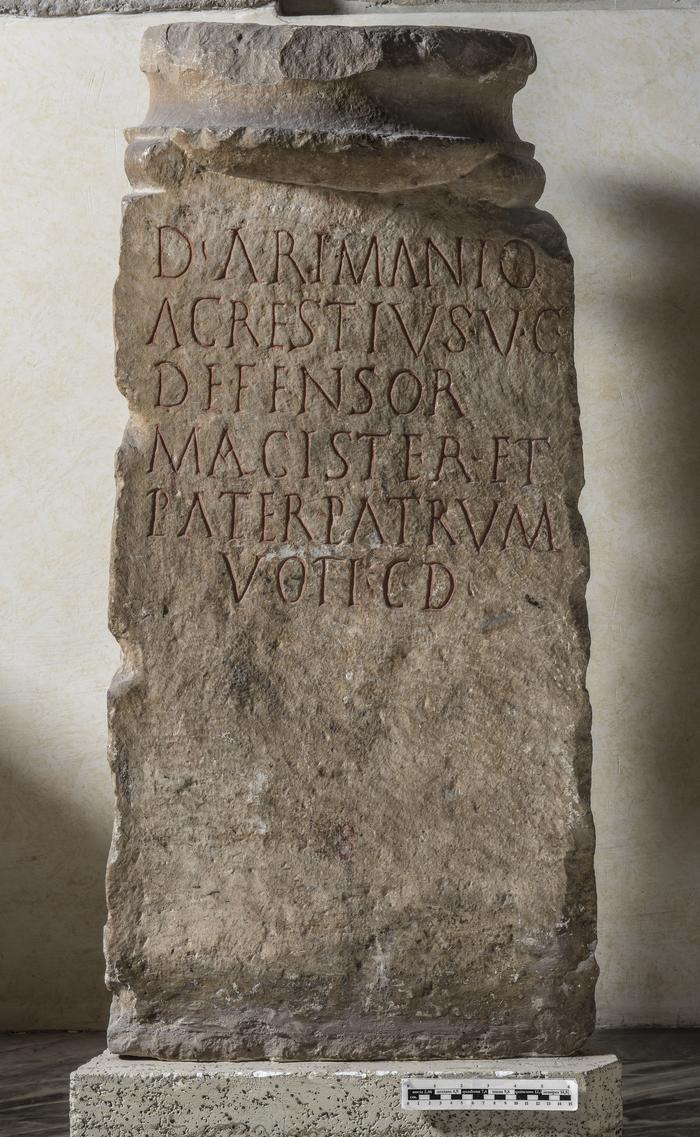
This altar mentioning the god Arimanius was found in 1655 at Porta San Giovanni, on the Esquilino.
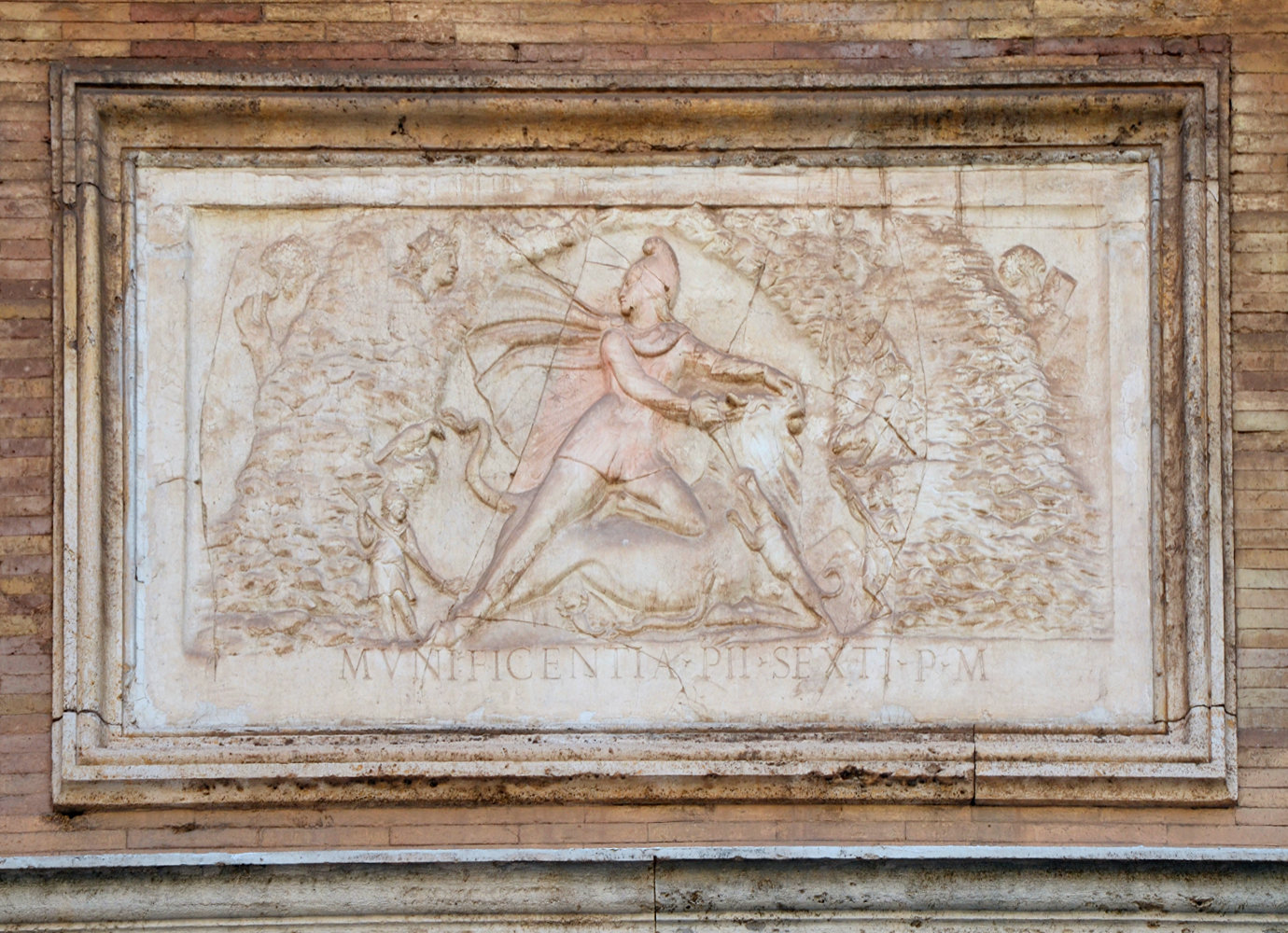
The Tauroctony relief of Mithras killing the bull walled in the Cortile of the Belvedered, Vatican City, was found by Fagan near Ostia.
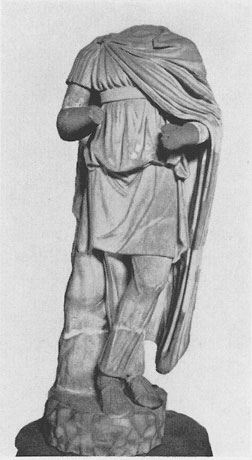
Penthelic marble statue of a standing torchbearer in Eastern attire, cross-legged, with head and torch arm broken off, probably 2nd century A.D., found at Antium (modern Anzio).
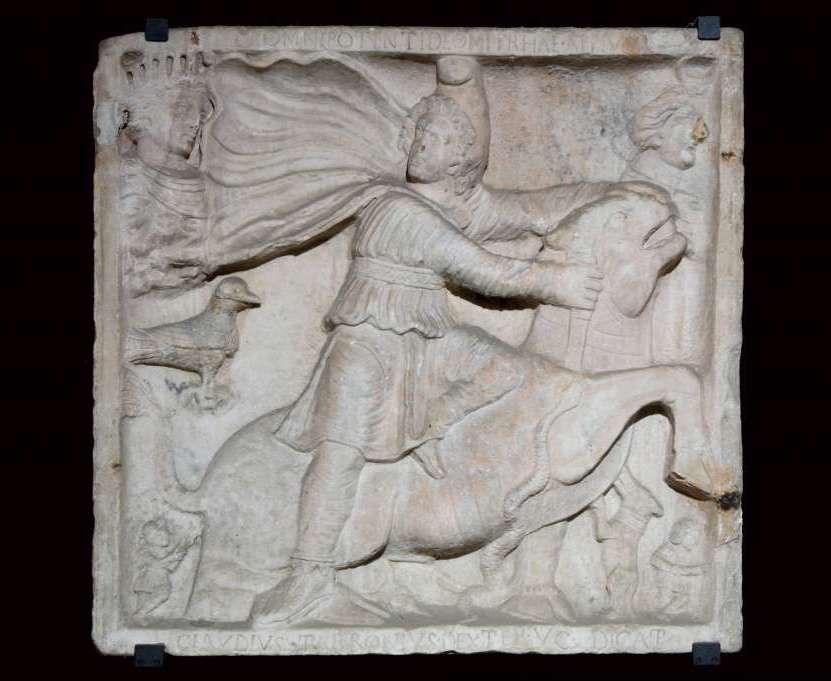
The marble relief of Mithras killing the bull in Naples bears an inscription that calls the solar god omnipotentis.
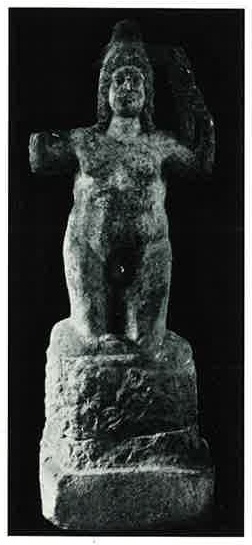
This white marble statue of the rock-birth from Cibinium in Roman Dacia is one of the largest known Mithraic sculptures from the Danubian provinces.

A marble cippus from Rome bearing two inscriptions: the upper dedicated to Deus Sol Invictus Mithras and Cautopates, the lower by Flavius and companions.
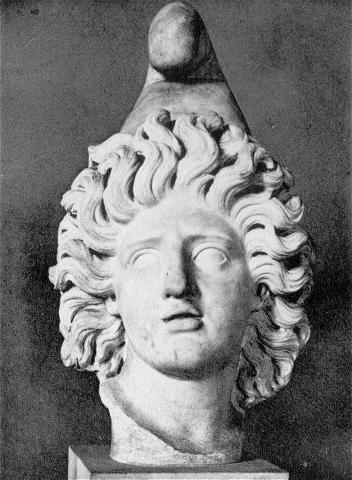
The head of Mithras had seven holes made for fastening rays.
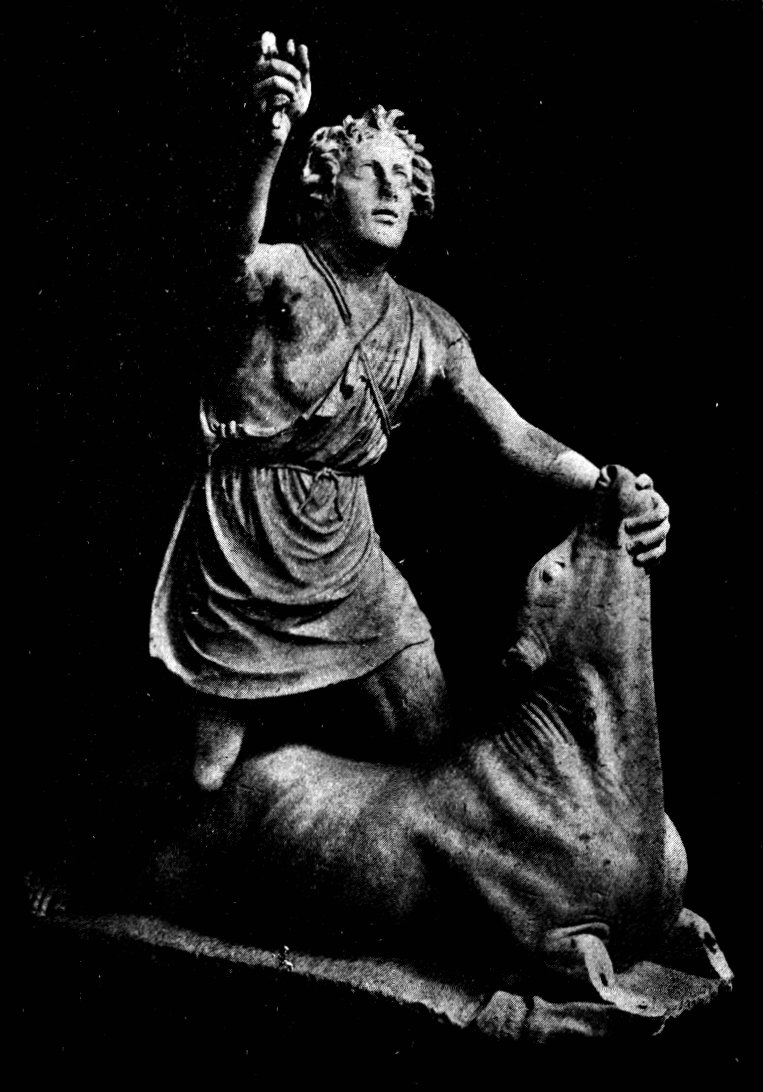
The person who commanded the sculpture may have been M. Umbilius Criton, documented in the Mitreo della Planta Pedis.
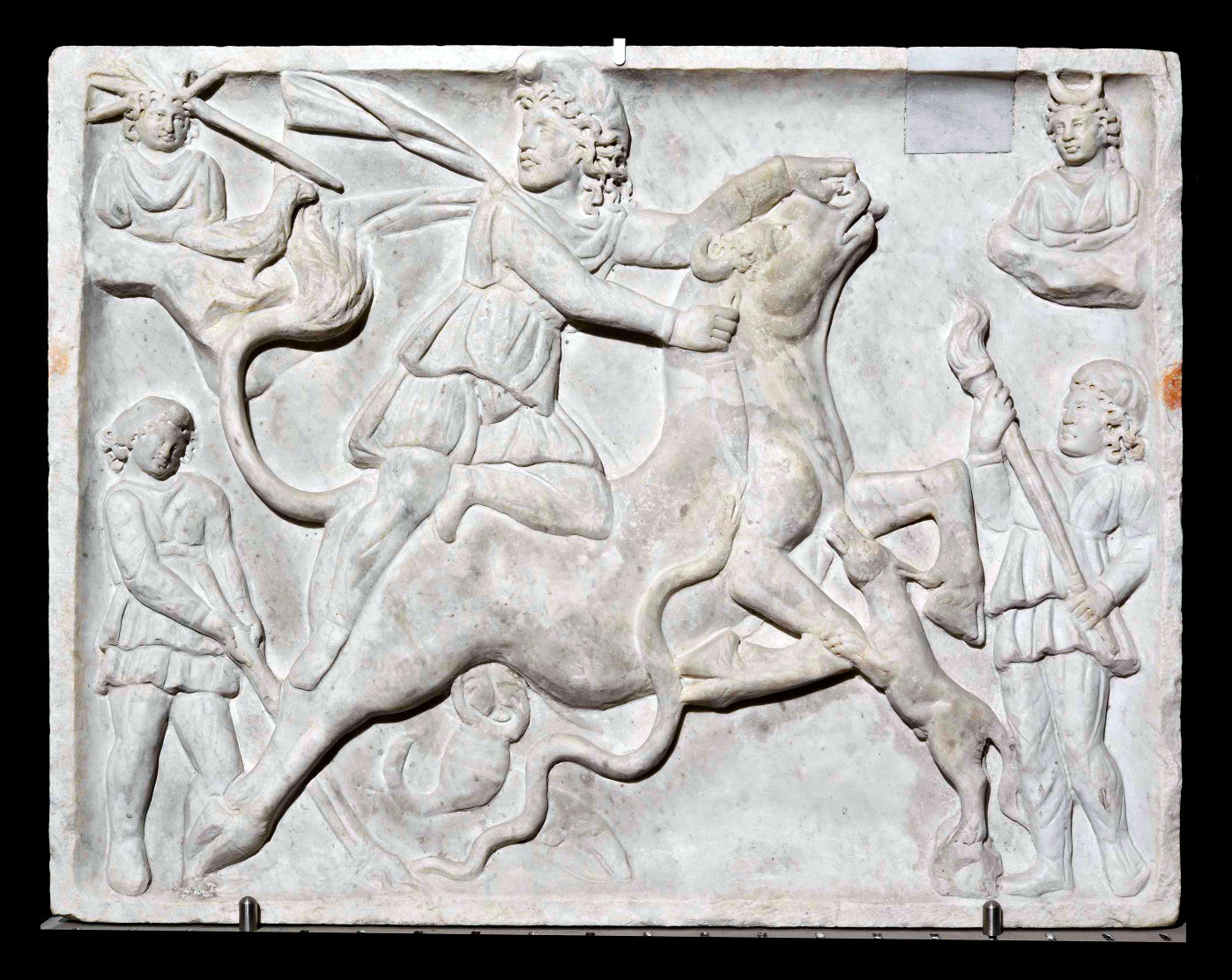
It is not certain that the marble relief of Mithras killing the bull was found on Capri, in the cave of Matromania, where a Mithraeum could have been established.
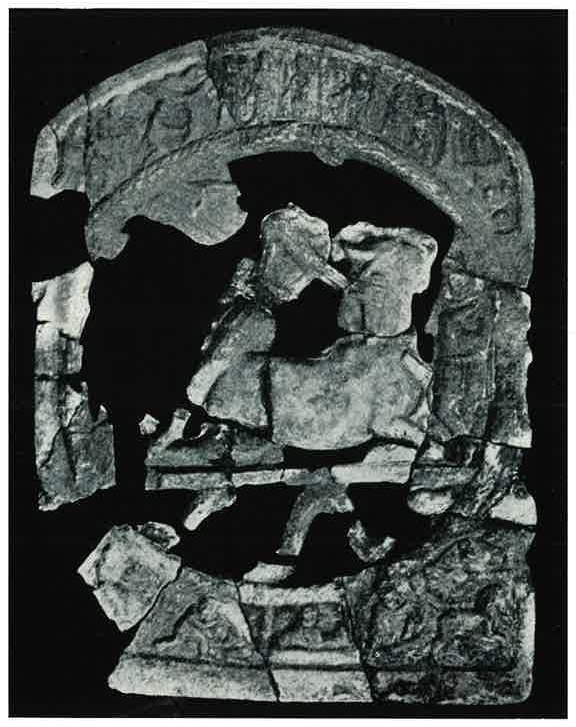
White marble tauroctony relief in several fragments from the Mithraeum at Biljanovac, Moesia Superior, depicting the standard bull-slaying with the full iconographic programme.
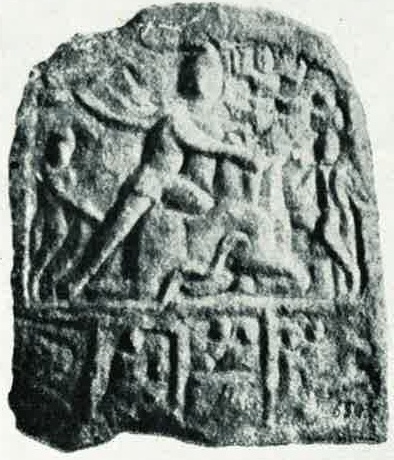
Small arched marble tauroctony relief from Philippovtsi near Sofia, Thracia, divided into two parts by a horizontal rim.
Two marble heads from Ostia, including a youthful figure wearing a Phrygian cap and another identified as Mithras-Helios.
Fragmentary tauroctony preserving Mithras, the torchbearers, Sol and Luna from the sanctuary at Aïtodor.
Corner fragment preserving the feet and lowered torch of the Mithraic torchbearer Cautopates.
Small surviving fragment depicting Mithras as bull-slayer together with the torchbearer Cautes.
Scene from a bull-slaying relief preserving the dagger of Mithras, the dog and the raised torch of Cautes.
Only the left section survives, showing Sol above the torchbearer Cautopates beside the cave border.
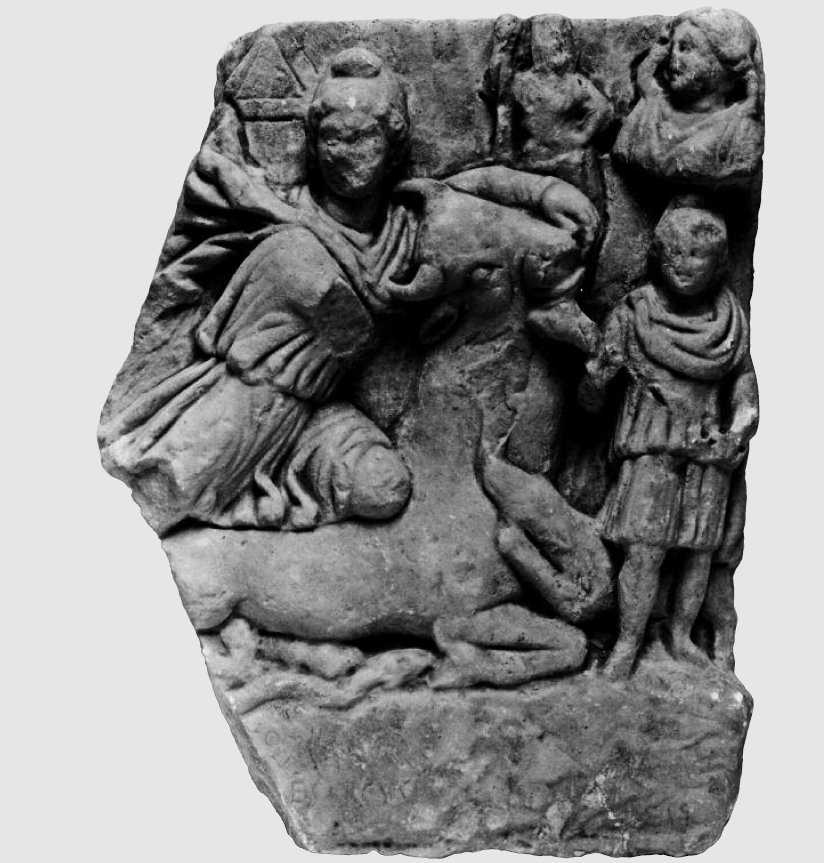
The Tauroctony of Patras was found years before the temple over which the relief of Mithras sacrificing the bull was supposed to preside.
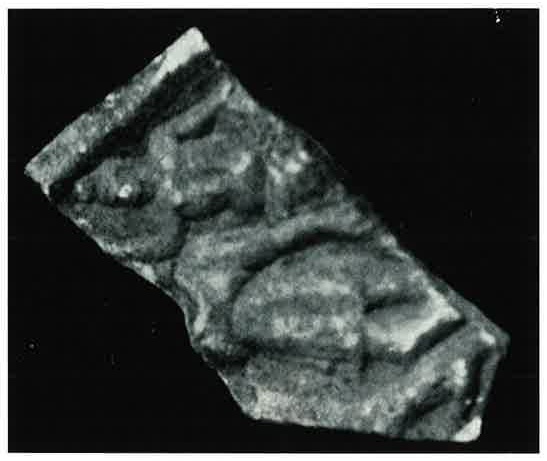
Tauroctony relief fragment with torchbearer and scene of Mithras’ rockbirth from Romula, Romania.
