Your selection in monuments gave 186 results.
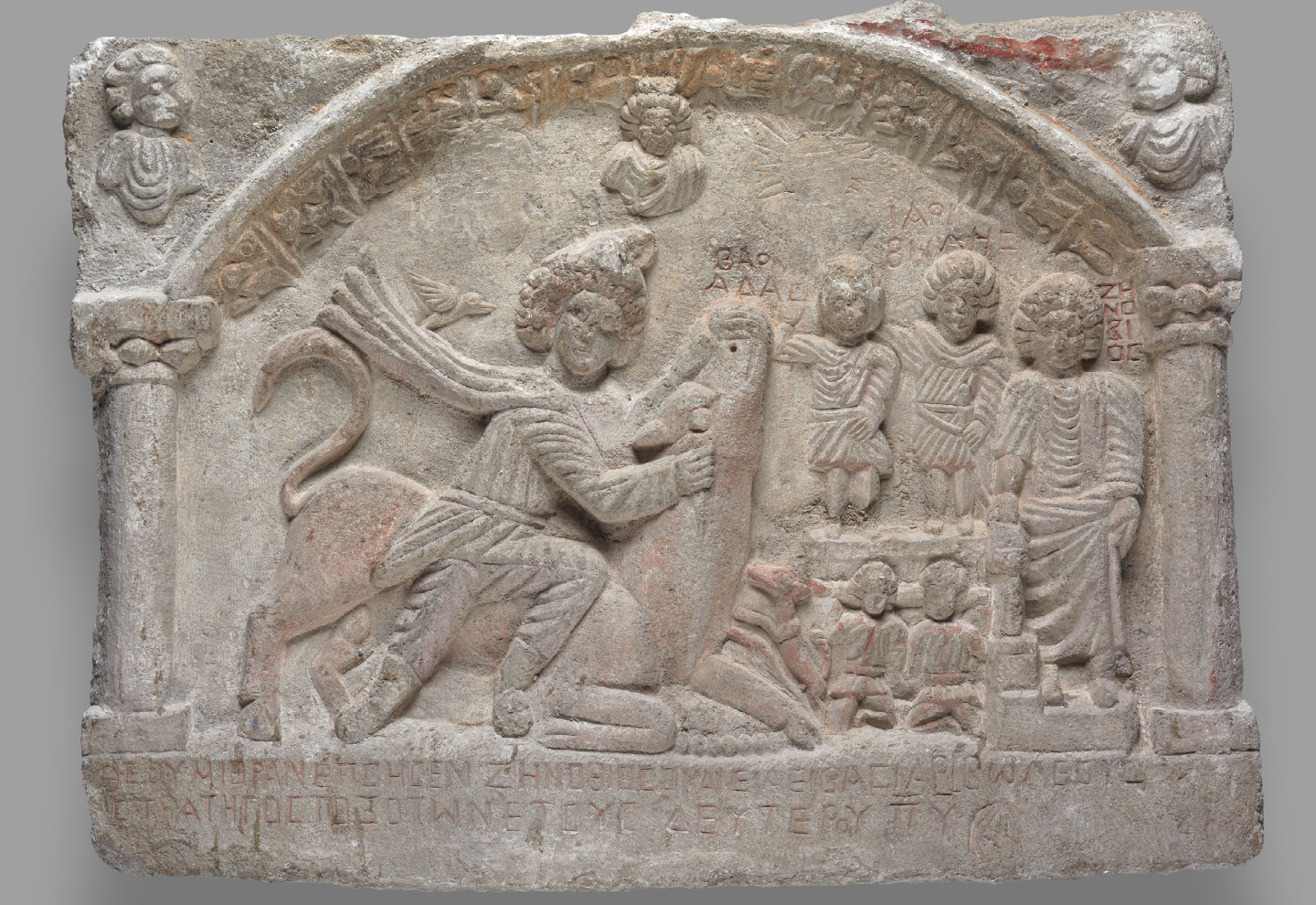
The main relief of Mithras killing the bull from the Mithraeum of Dura Europos includes three persons named Zenobius, Jariboles and Barnaadath.
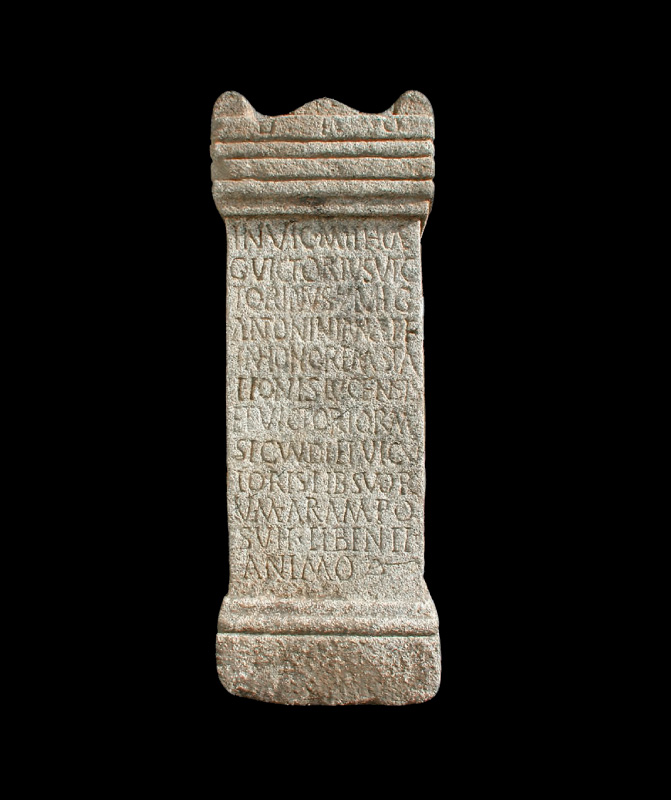
Victorius Victorious, centurion of the Legio VII, erected the altar in honour of the Lugo garrison and of the Victorius Secundus and Victor, his freedmen.

Limestone altar dedicated to Sol Invictus Mithras by the governor and military commander Marcus Valerius Maximianus.
Altar of Varia Severa from Mediolanum, modern Milan, one of the few women associated with a possible Mithraic dedication.
This lost monument from Malaga, Spain, to Dominus Invictus has been linked to the cult of Mithras, although there is not enough evidence.
An inscription from Asturica (modern Astorga) recording a dedication to Jupiter Optimus Maximus, Sol Invictus and Liber Pater by Q. Mamilius Capitolinus, juridical legate and later prefect of the Treasury of Saturn, for the welfare of himself and his family…
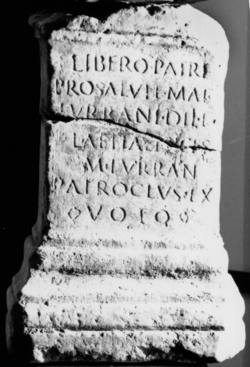
This altar was erected by Hermadio, who also signed other monuments in Dacia and even in Rome.
A votive altar dedicated to Deus Invictus Mithras by Paterna, among the few women explicitly associated with Mithraic worship.
Marble altar found near the entrance of the Mitreo delle Sette Porte at Ostia, dedicated by Sextus Fusinius Felix.
Altar from Vratnik near Senia, Dalmatia, dedicated to Soli invicto Mithrae by Faustus, slave of Tiberius Saturninus, for himself and his family.
Eight uninscribed sandstone altars from the rock sanctuary at Kreta, Moesia Inferior.
Sandstone altar with patera from the rock sanctuary at Kreta, Moesia Inferior, bearing a Greek inscription of uncertain reading, possibly a thanksgiving to Mithras.
Straton, son of Straton, consecrated an altar to Helios Mithras in Kreta, Moesia inferior.
Sandstone altar with patera from the rock sanctuary at Kreta, Moesia Inferior, bearing a Greek inscription dedicating an altar to Helios Mithras by Marcus Sikis Dossis.
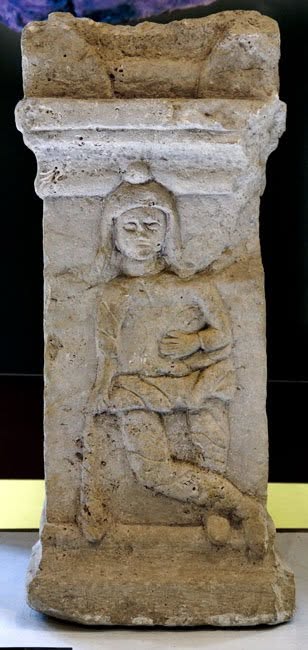
Votive altar depicting Cautopates from the Roman city of Durostorum, modern-day Silistra in Bulgaria.
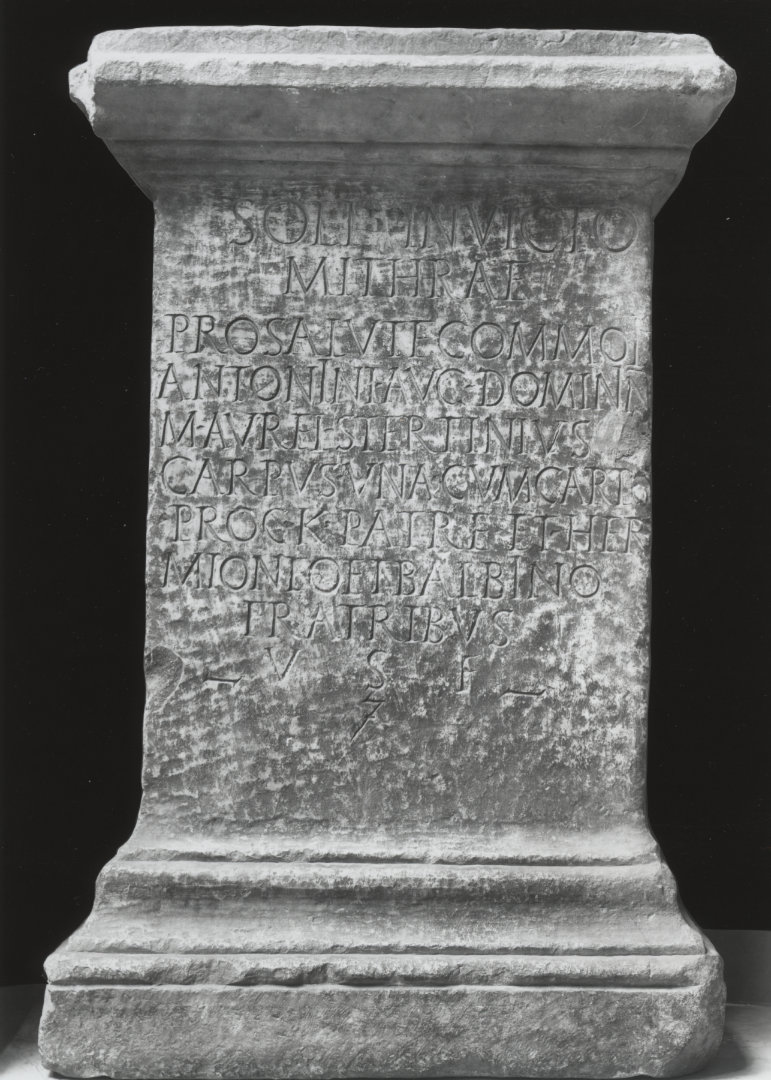
This altar bears an inscription to the health of the emperor Commodus by a certain Marcus Aurelius, his father and two other fellows.
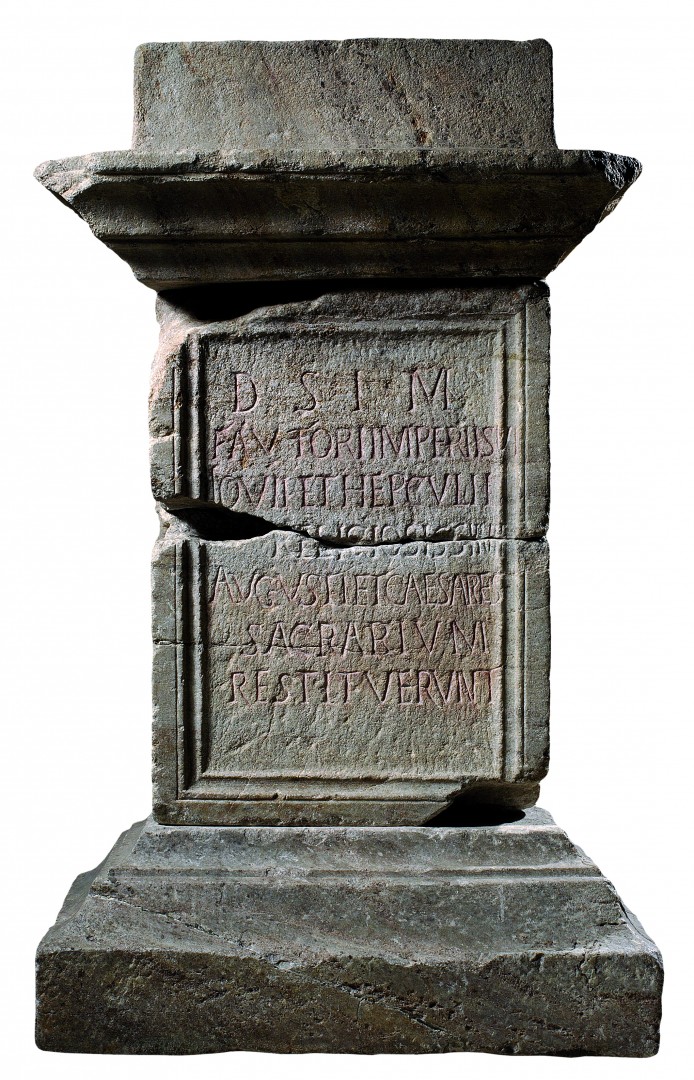
Altar with Cautes and Cautopates dedicated to Sol Invictus Mithras as protector of the Tetrarchy in 3rd-century Carnuntum.
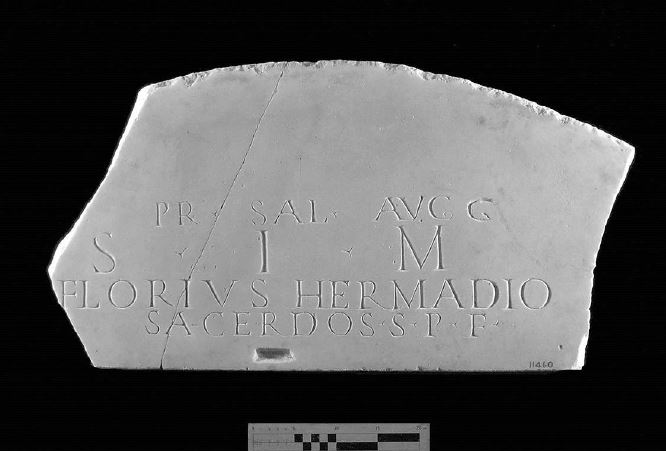
Marble revetment inscription from the cult niche of the Mitreo della Planta Pedis recording a dedication to Sol Invictus Mithras by the priest Florius Hermadio for the welfare of two emperors.
An altar found in the west corner of the sanctuary at Borcovicium (modern Housesteads) in 1898, recording a dedication to Jupiter Optimus Maximus, the god Cocidius and the genius of the place by soldiers of the Second Augustan Legion on garrison duty.
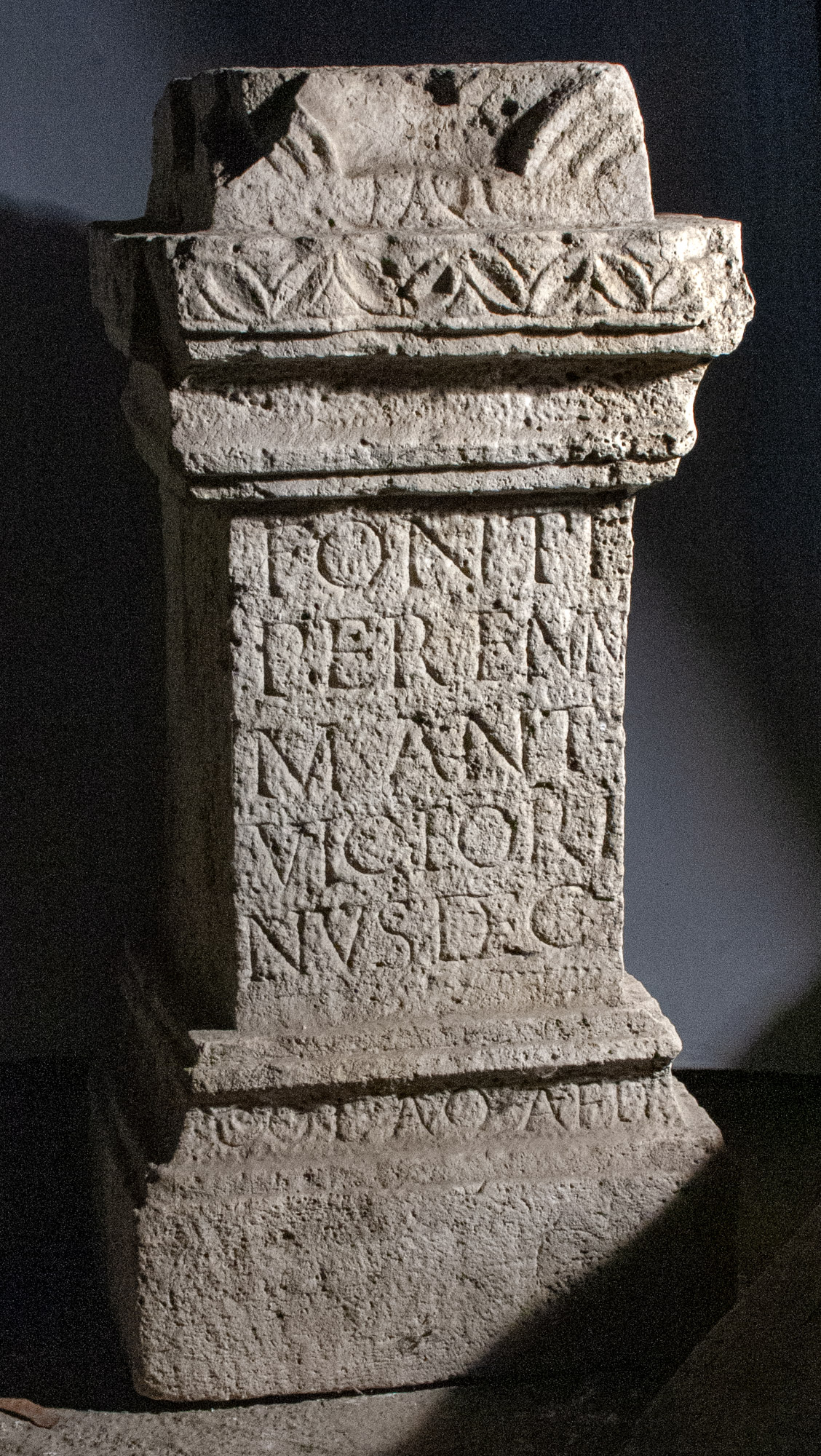
One of several dedications commissioned by the duumvir Marcus Antonius Victorinus in his Mithraeum of Aquincum, modern Budapest.
