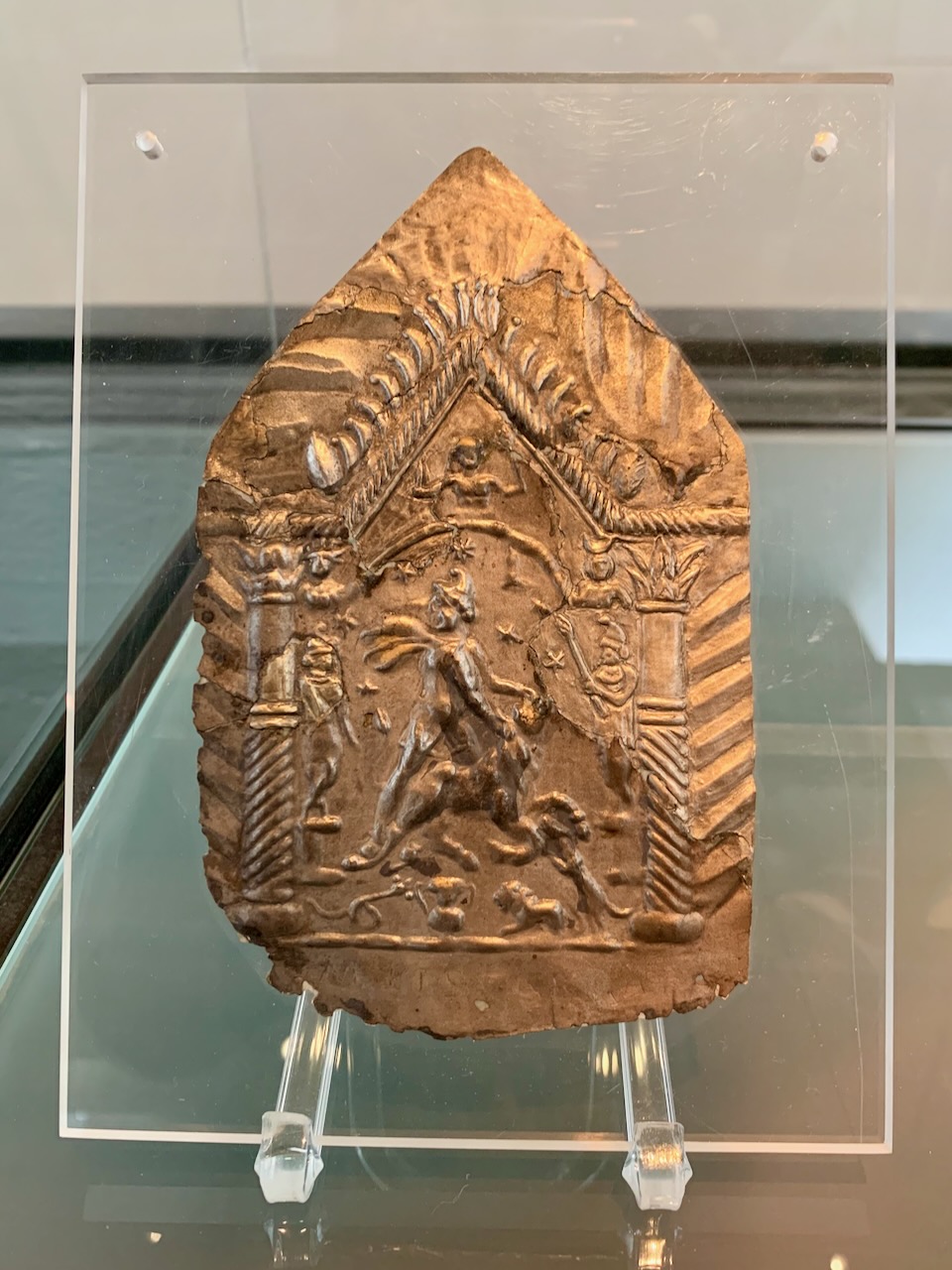
This plaque was found in Mithraeum I at Stockstadt broken into pieces inserted between the blocks of the socle of the cult relief, in the manner of a votive deposit.

The Mithraeum II in Stockstadt was in fact the first one known built in the vicus. It was destroyed by fire around 210.
Red sandstone altar from Stockstadt, featuring a square cavity in the front that contained a fragment of crystal and a small lamp.
Sandstone base from Vetera (Xanten), Germania Inferior, with a relief of Cautes in Oriental dress holding a long burning torch.
Sandstone relief depicting the god Aion, standing with wings, a staff and a key, accompanied by a lion and a serpent-entwined vessel.
Sandstone statue of Cautopates holding two downward-pointing torches, from the Ober-Florstadt Mithraeum.
Fragmentary sandstone relief from Rückingen showing a male figure walking right and holding a kantharos. Traces on the chest may indicate a torques or shoulder-cape.
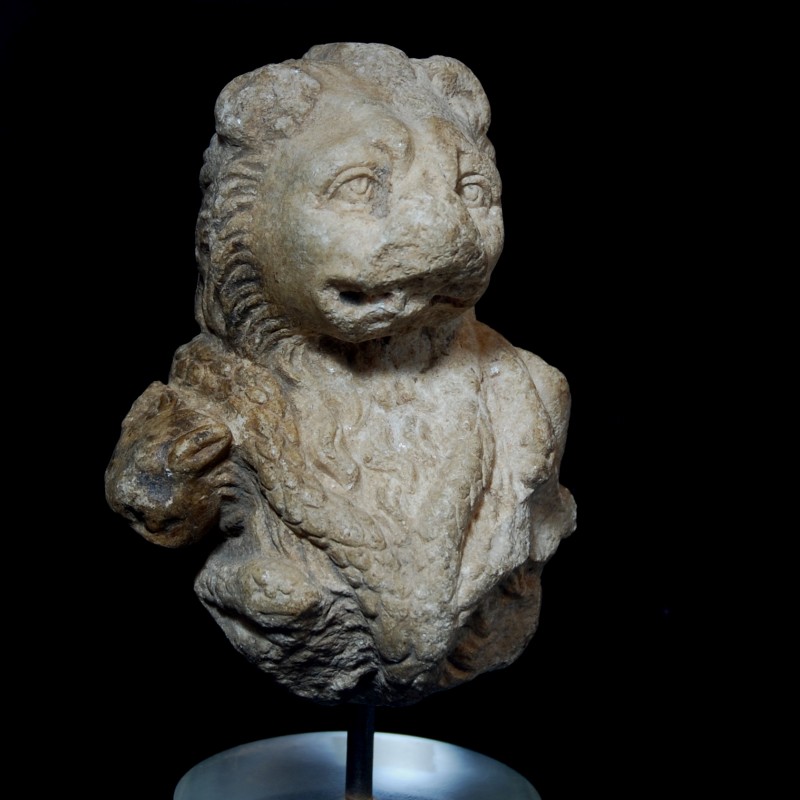
This bust of a lion-headed figure has been was part of a French private collection.
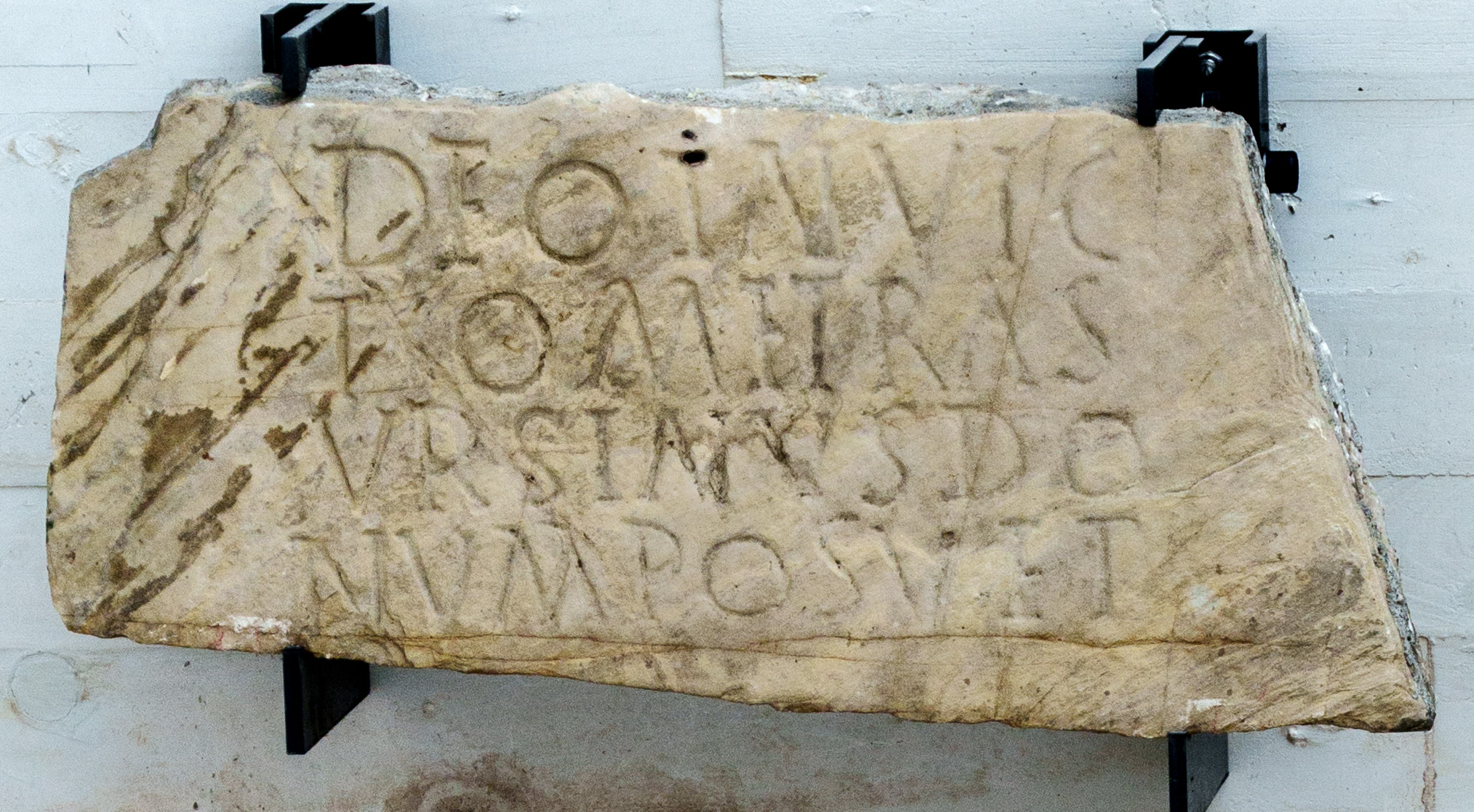
Marble plaque with inscription by a certain Ursinus found in Virunum in 1838.
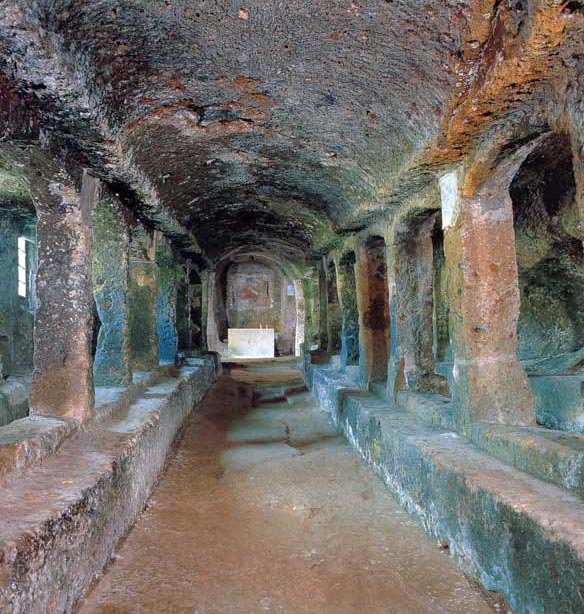
The Mithraeum of Sutri was built inside a rocky hill that also hosted the Roman theatre of the city.
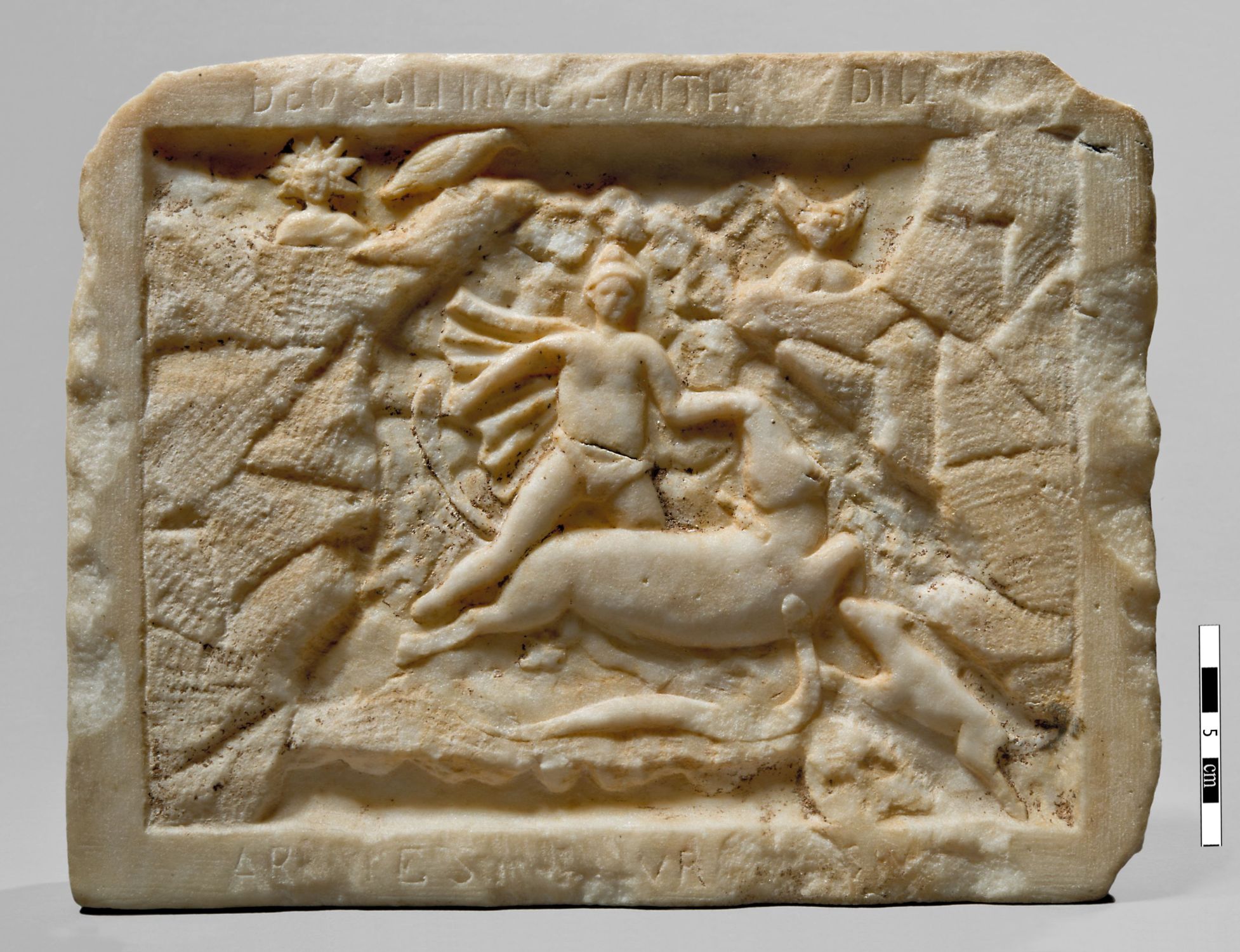
White marble relief depicting Mithras as bull-slayer in a grotto from the Froehner collection, now in the Cabinet des Médailles, Paris.
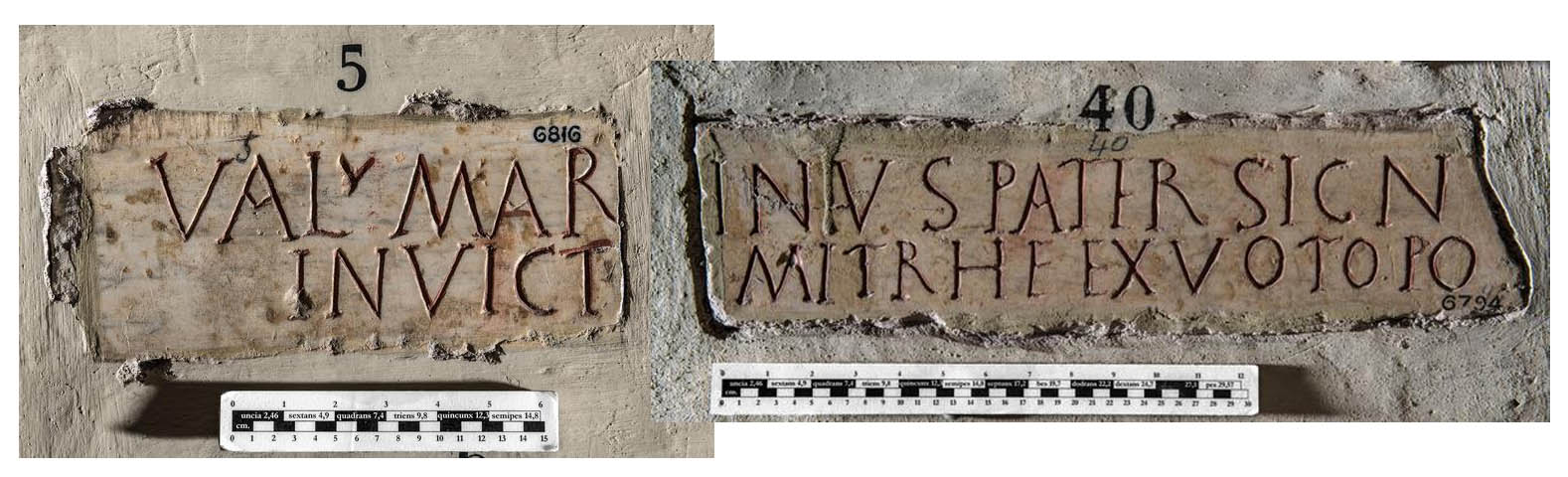
Marble inscription recording the dedication of a cult image to the unconquered Mithras by a certain pater Valerius Marinus from Rome.
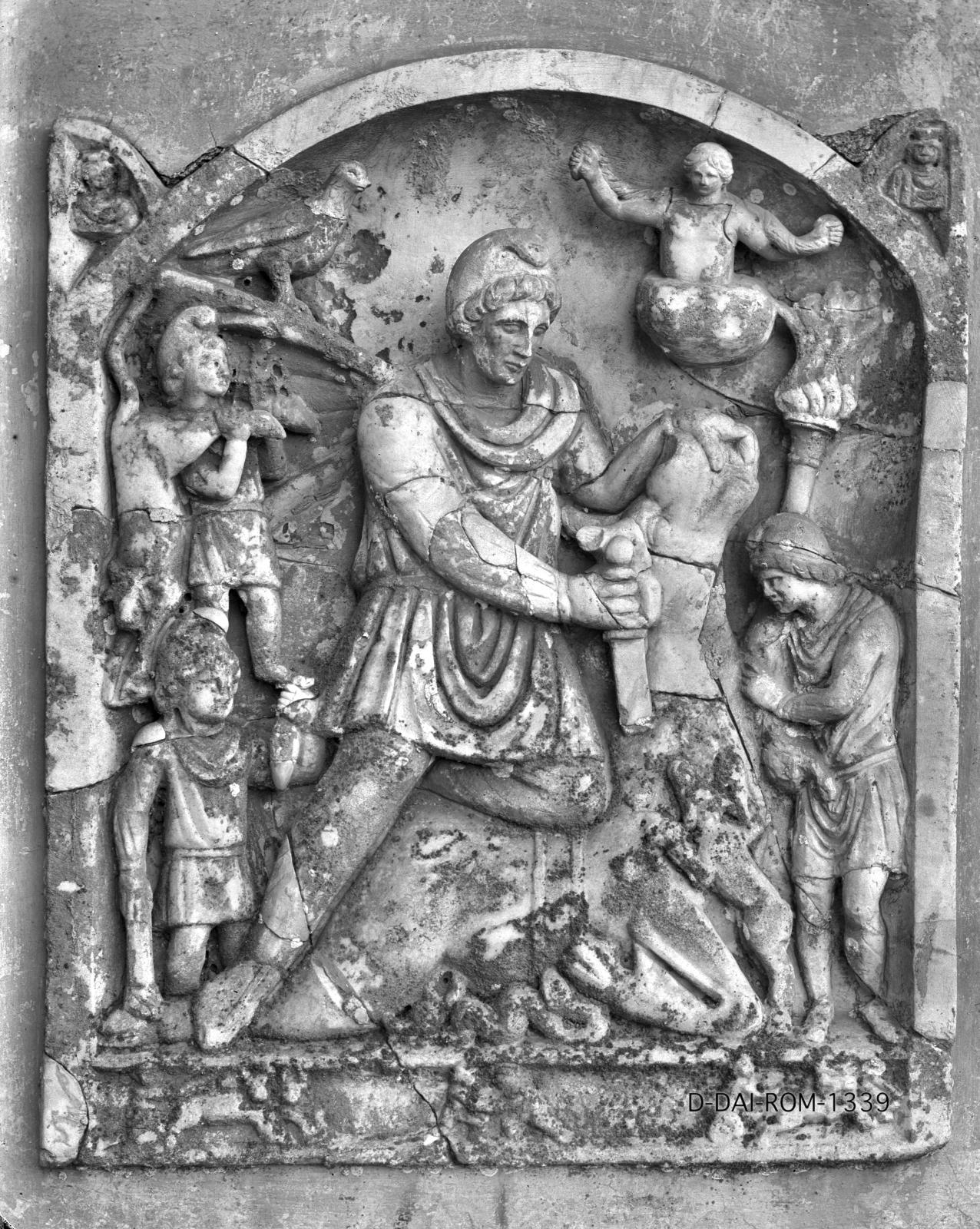
Currently in the Musei Vaticani, this Tauroctony includes Mithras’s birth restored as Venus anaduomene.
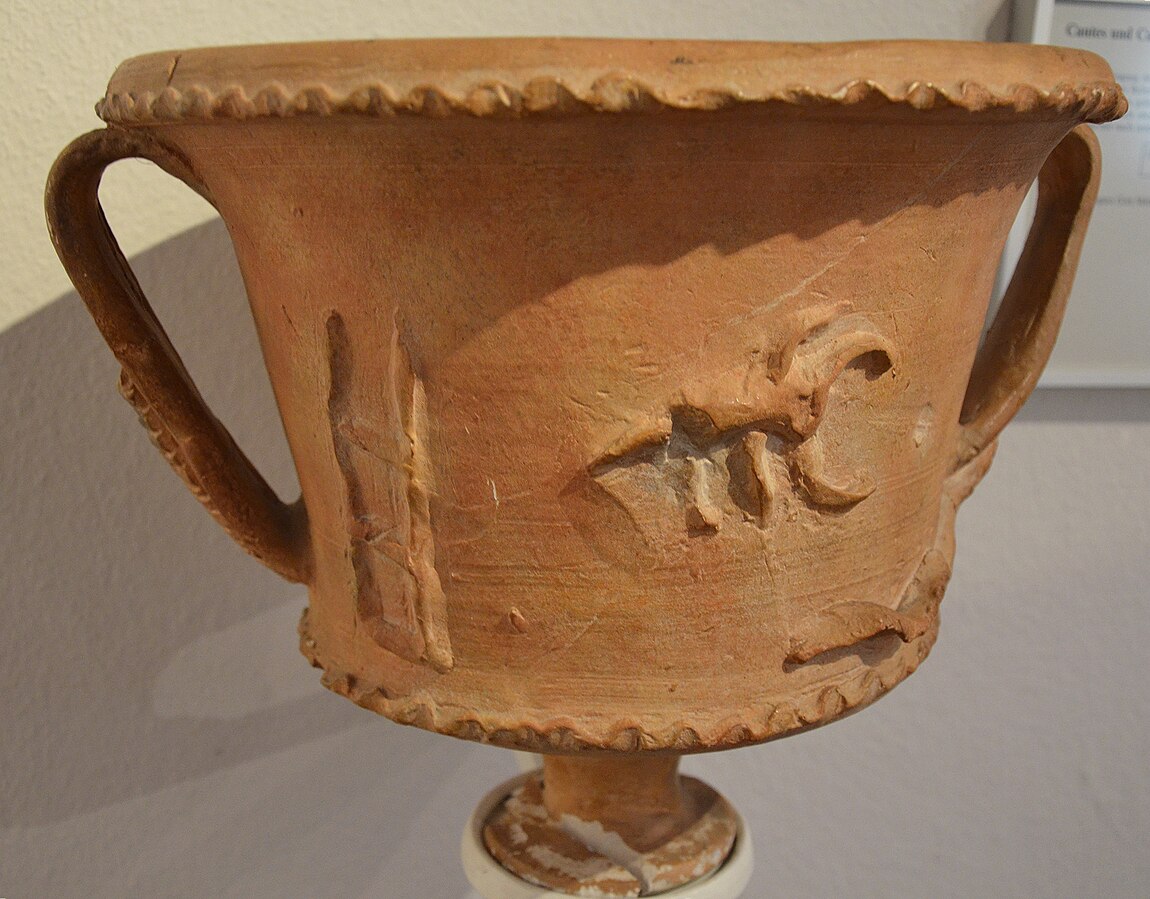
Terracotta krater from the southern part of the Friedberg Mithraeum, discovered in 1849. The vessel is decorated in relief with serpents, a scorpion and a ladder-like motif.
This Mithraic temple, also known as the Mithraeum of the Olympii, dates to the 3rd century and was rediscovered in 15th-century Rome, but it has not been preserved.
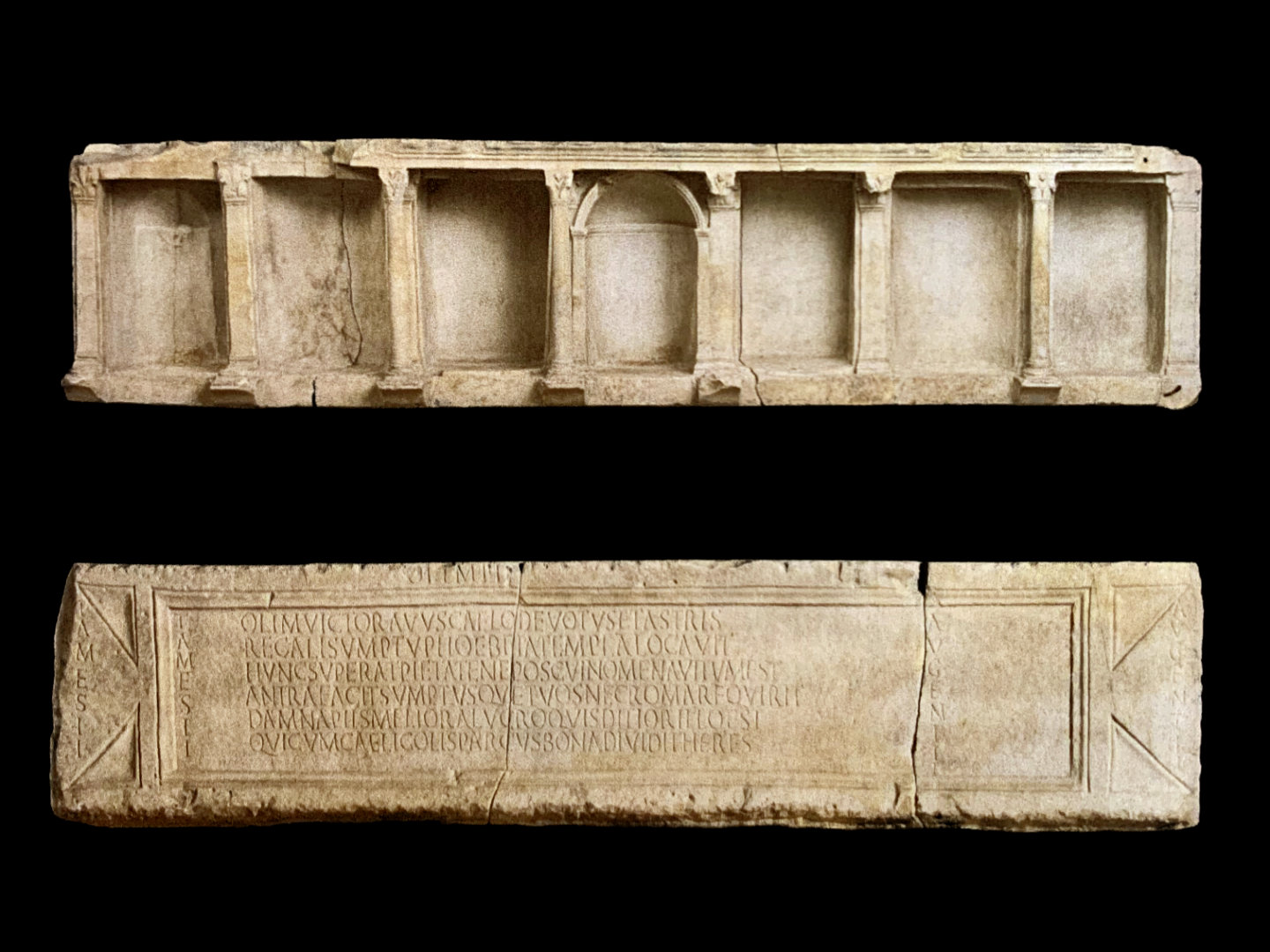
This monument is the only one still available from the disappeared Mithraeum in Piazza S. Silvestro in Capite.
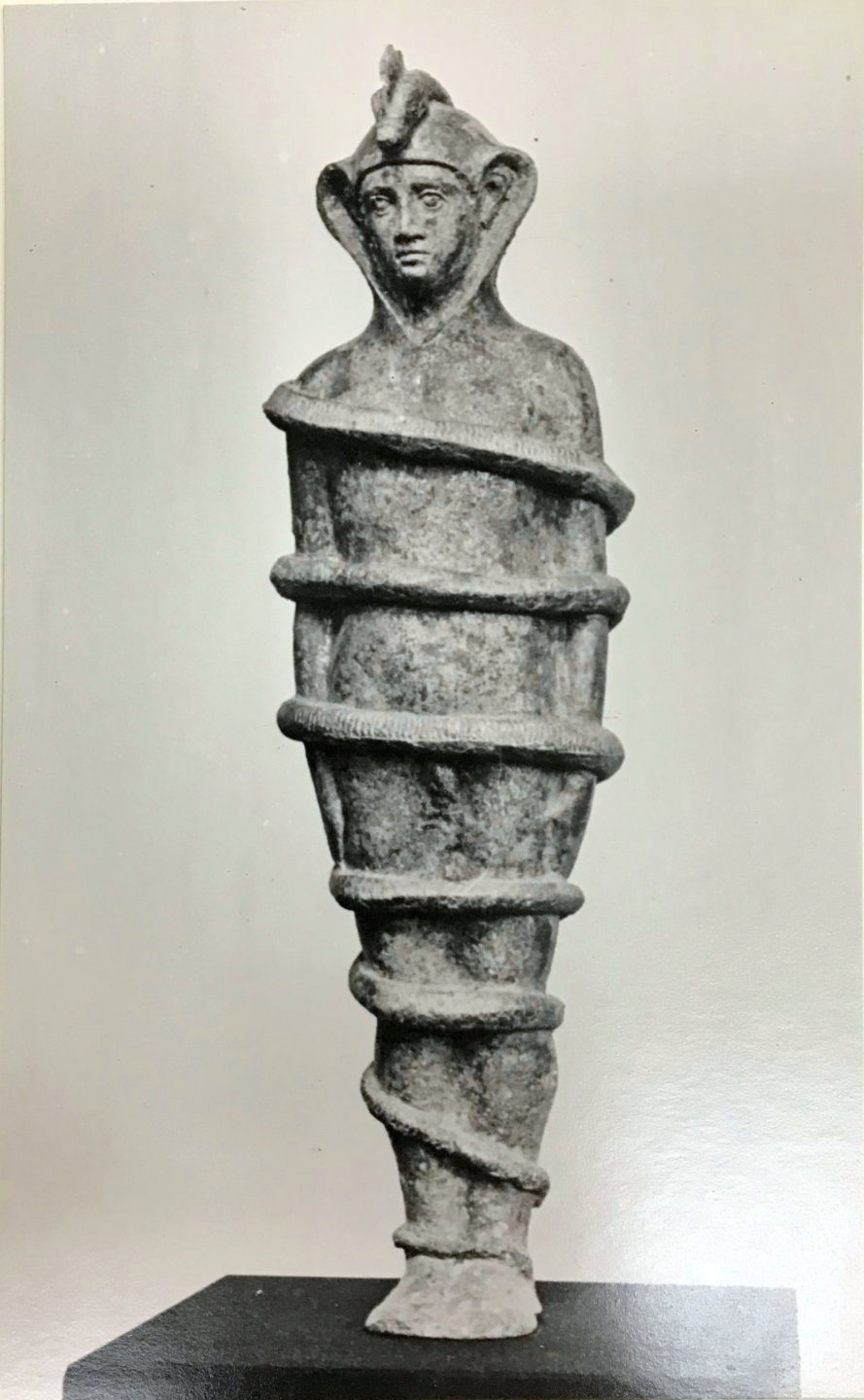
Roman relief from a sanctuary on the Janiculum Hill (Rome), showing a male figure bound by a serpent coiled seven times.
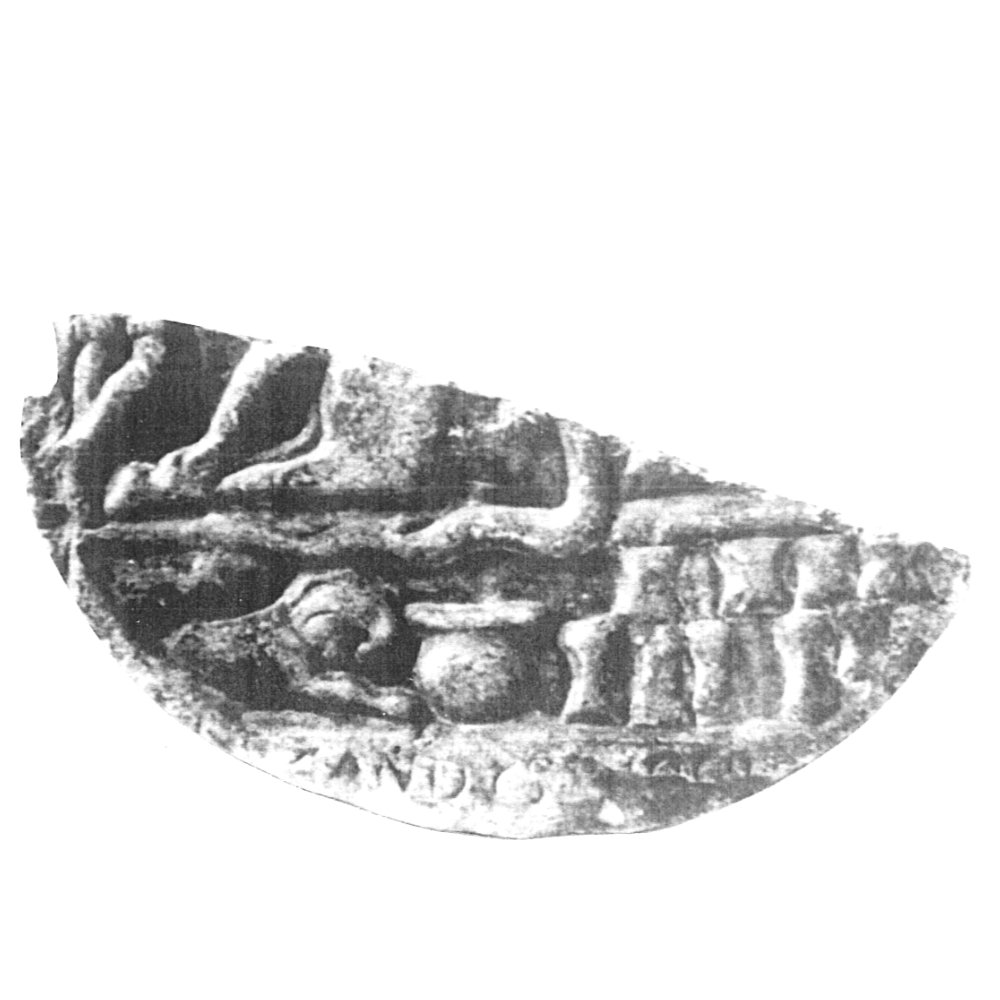
This tauroctony may have come from Hermopolis and its style suggests a Thraco-Danubian origin.
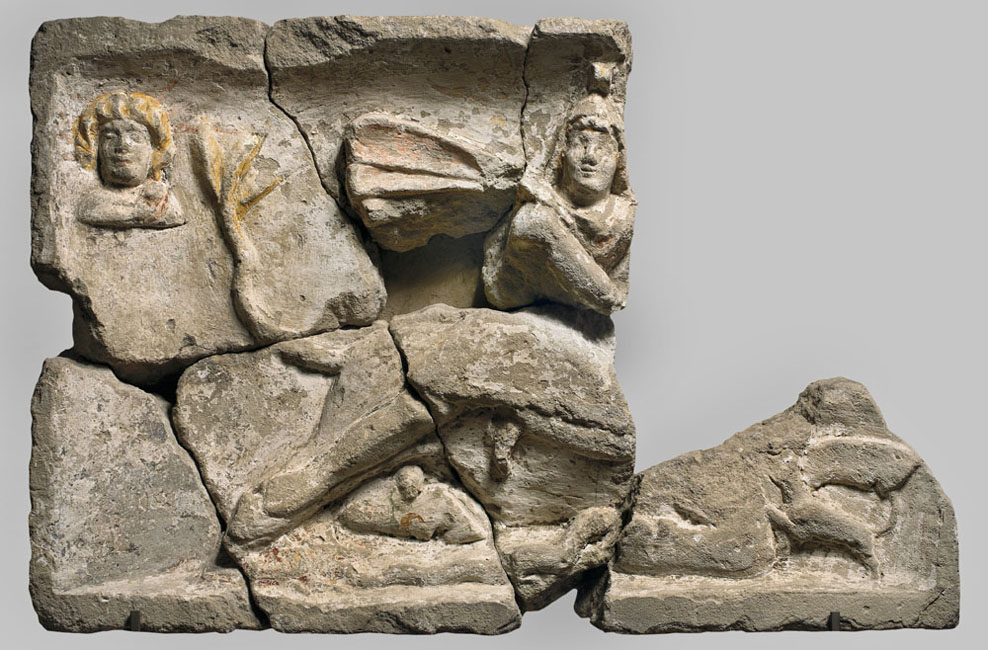
Sandstone relief of Mithras as bull-slayer, found at Petronell in 1932, with dog, serpent and scorpion, traces of polychromy preserved, now in the Museum Carnuntinum.
