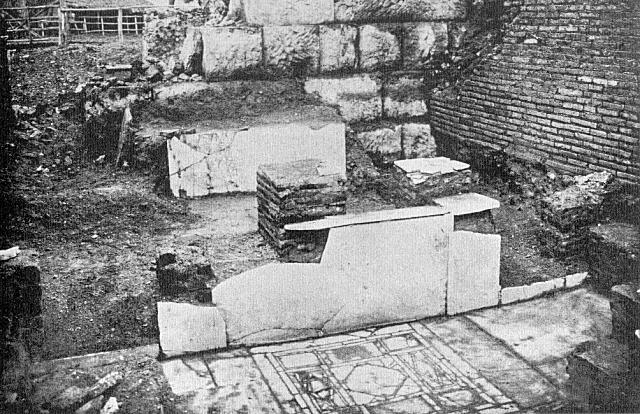
The Mithraeum of Aldobrandini was excavated in 1924 by G. Calza on the premises belonging to the Aldobrandini family.
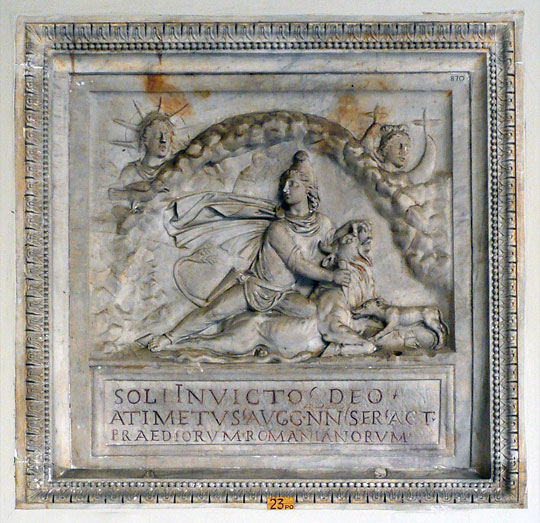
White marble relief depicting Mithras slaying the bull, dedicated by Atimetus.

This marble base found in Angera in 1868 bears the inscription of two people who reached the degree of Leo.
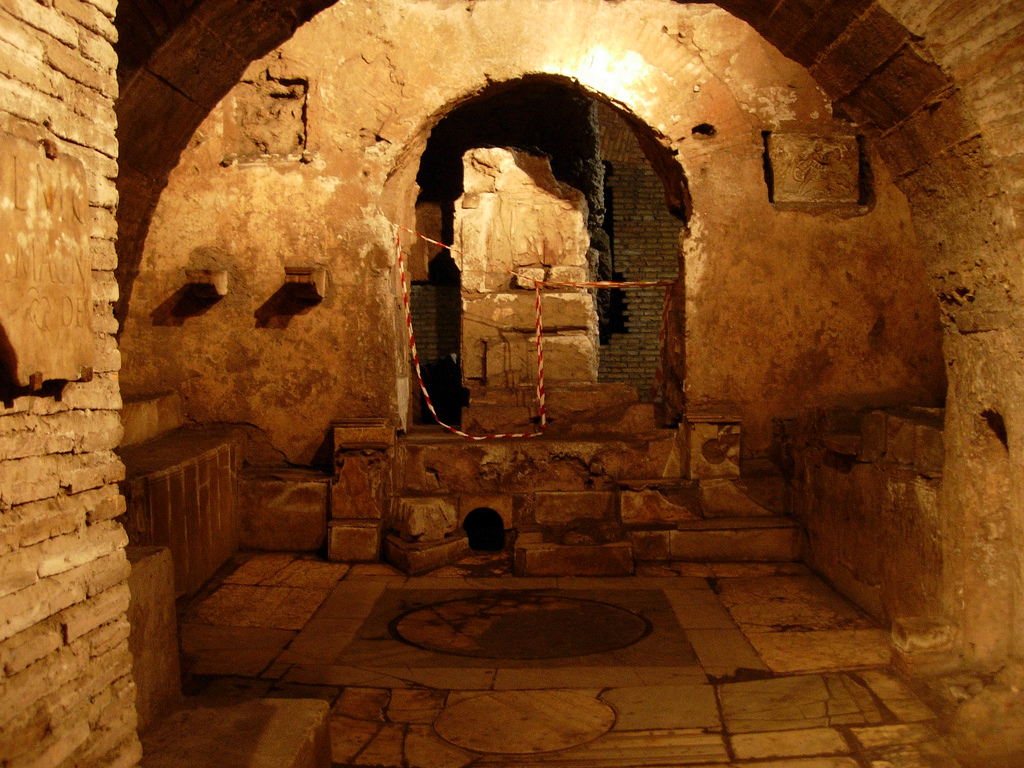
The Mithraeum of the Circus Maximus was discovered in 1931 during work carried out to create a storage area for the scenes and costumes of the Opera House within the Museums of Rome building.
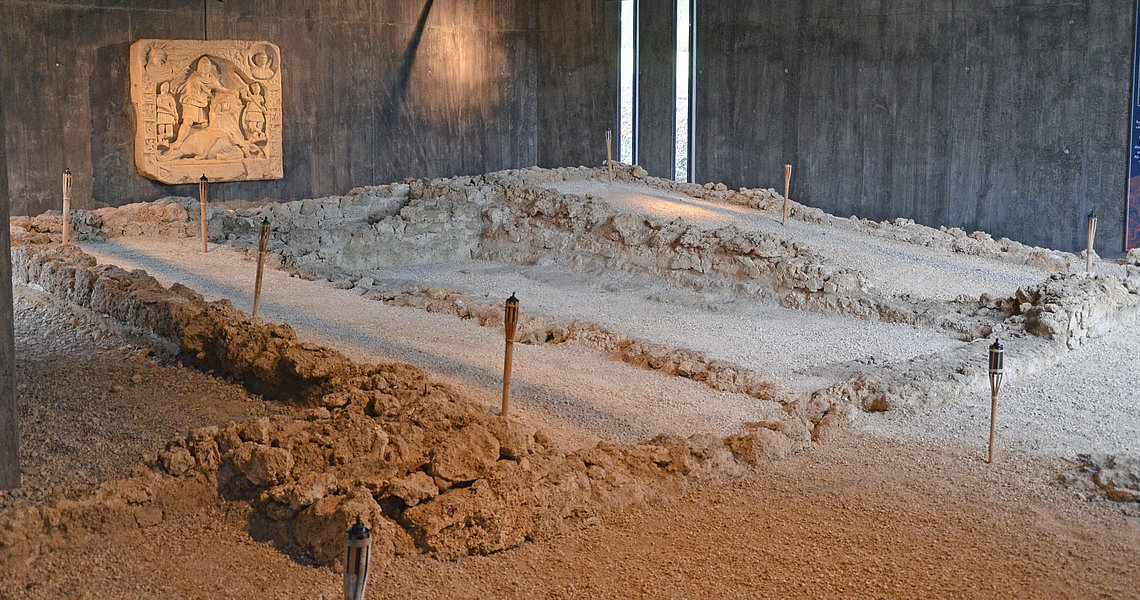
The Mithraeum of Koenigsbrunn is the only one preserved in the ancient Roman province of Rhaetia, current Bavaria.
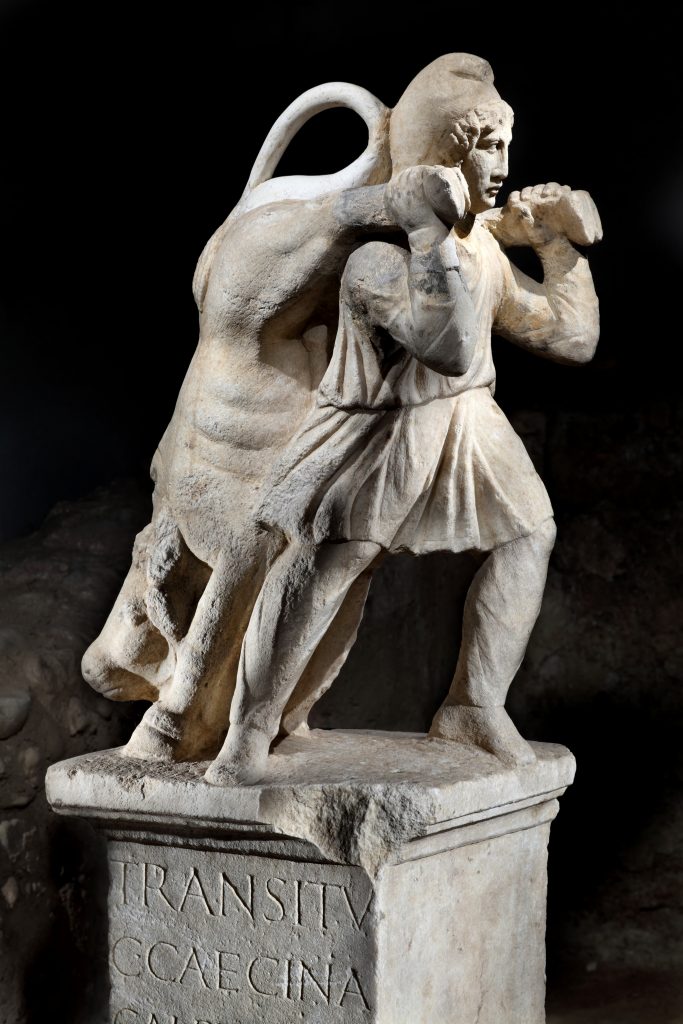
The sculpture of Mithras carrying the bull includes an inscription on its base.
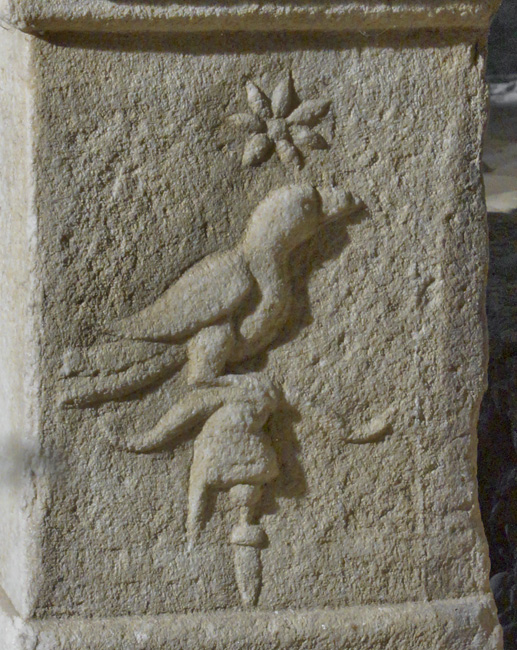
This altar from Ptuj, present-day Poetovio, is decorated with various Mithraic animals such as a tortoise, a cock and a crow and other objects.

Mithraeum II was found at Ptuj at a distance of 20 m south of the Mithraeum I in 1901.
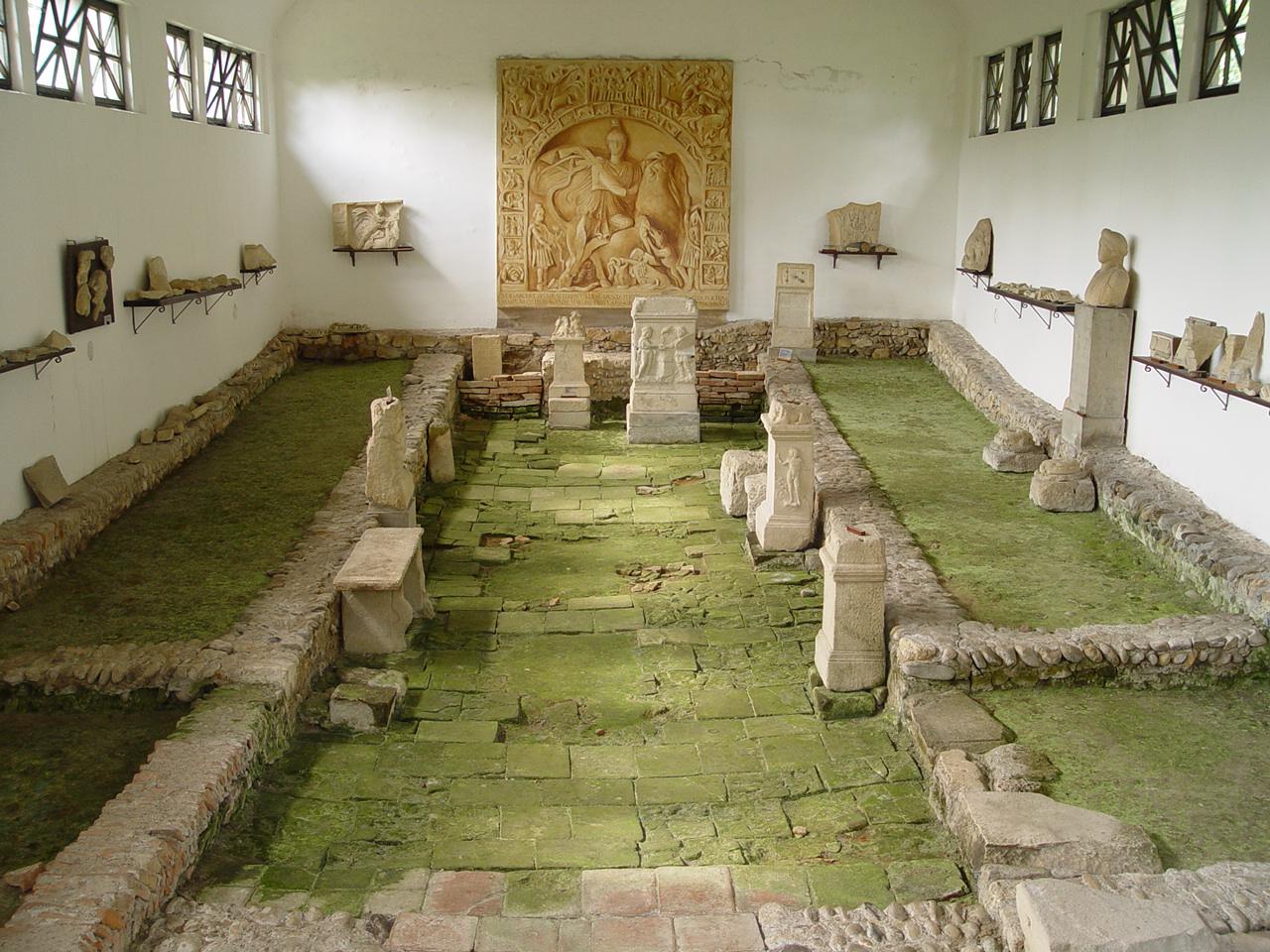
Mithraeum III in Ptuj was built in two periods: the original walls were made of pebbles, while the extension of a later period was made of brick.
Part of the finds from the fifth Mithraeum of Ptuj is kept in the Hotel Mitra in the modern city.
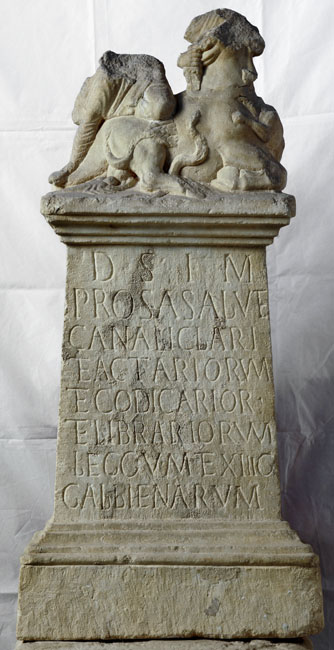
Remarkable fragmentary sculpture of Mithras slaying the bull on an inscribed altar found in Mithraeum III at Ptuj.
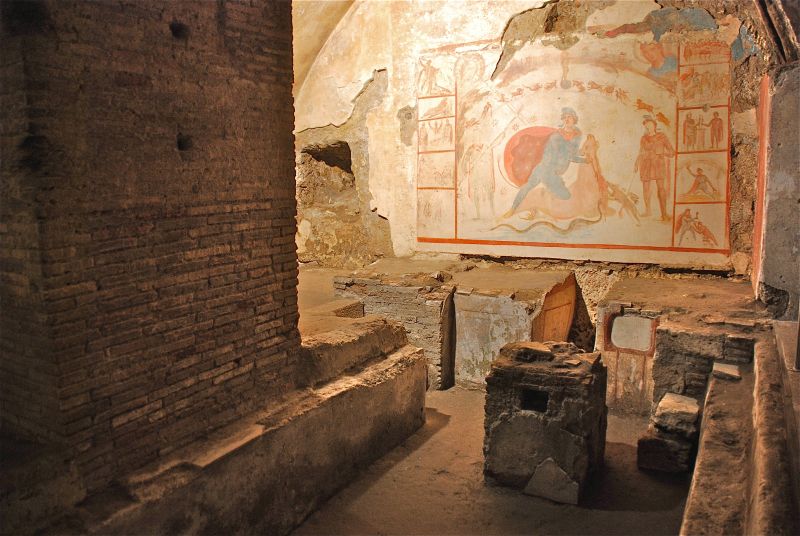
The Barberini Mithraeum was discovered in 1936 in the garden of the Palazzo Barberini, owned by Conte A. Savorgnan di Brazza.
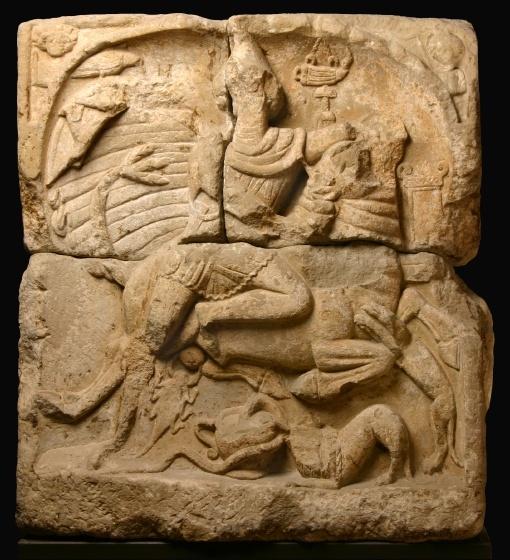
This relief of Mithras killing the bull, now on display in Stuttgart, includes a small altar with a sacrificial knife and an oil lamp.
During the excavations of 1804-1805, a series of monuments dedicated to Mithras and a temple were discovered at ancient Mons Seleucus.
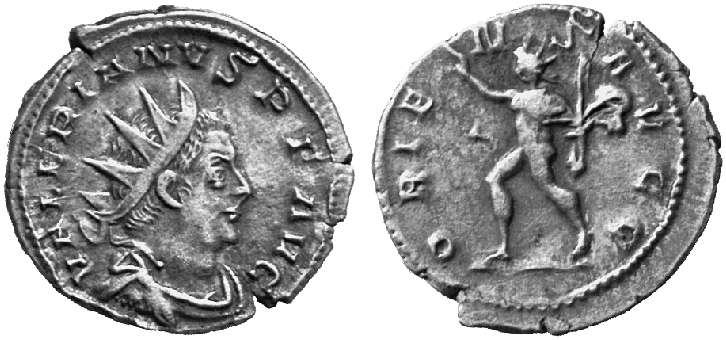
This coin was deposited in the upper level of the throne in the cult niche of the Mitreo della Planta Pedis.
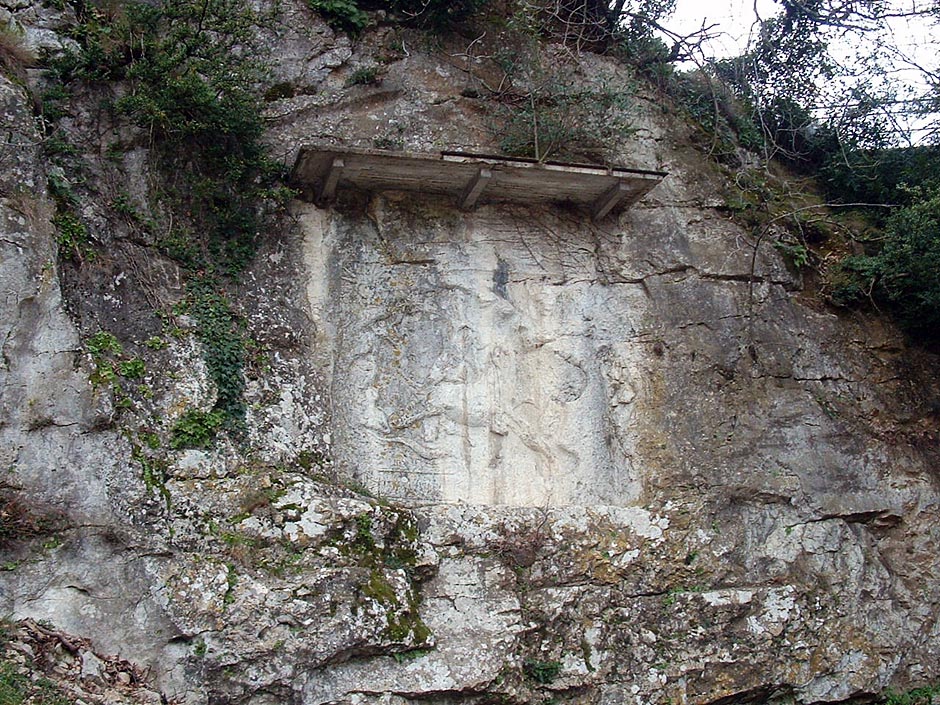
The Mithréum de Bourg-Saint-Andéol was built against a rock where the main Tauroctony was chiseled.
The inscription explains the transmission of the fourth Mithraic degree through the Paters of the Mitraeum of San Silvestro.
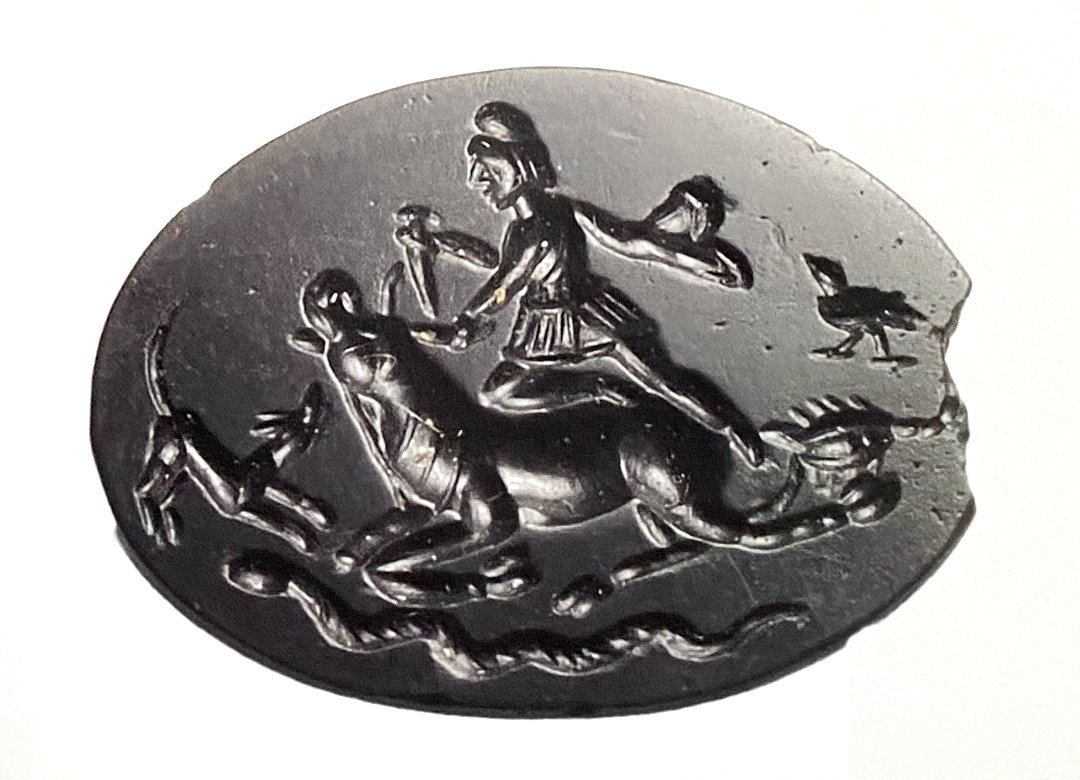
This intaglio with Mithras killing the bull on one side and Kabiros on the other was probably used as a magical amulet.
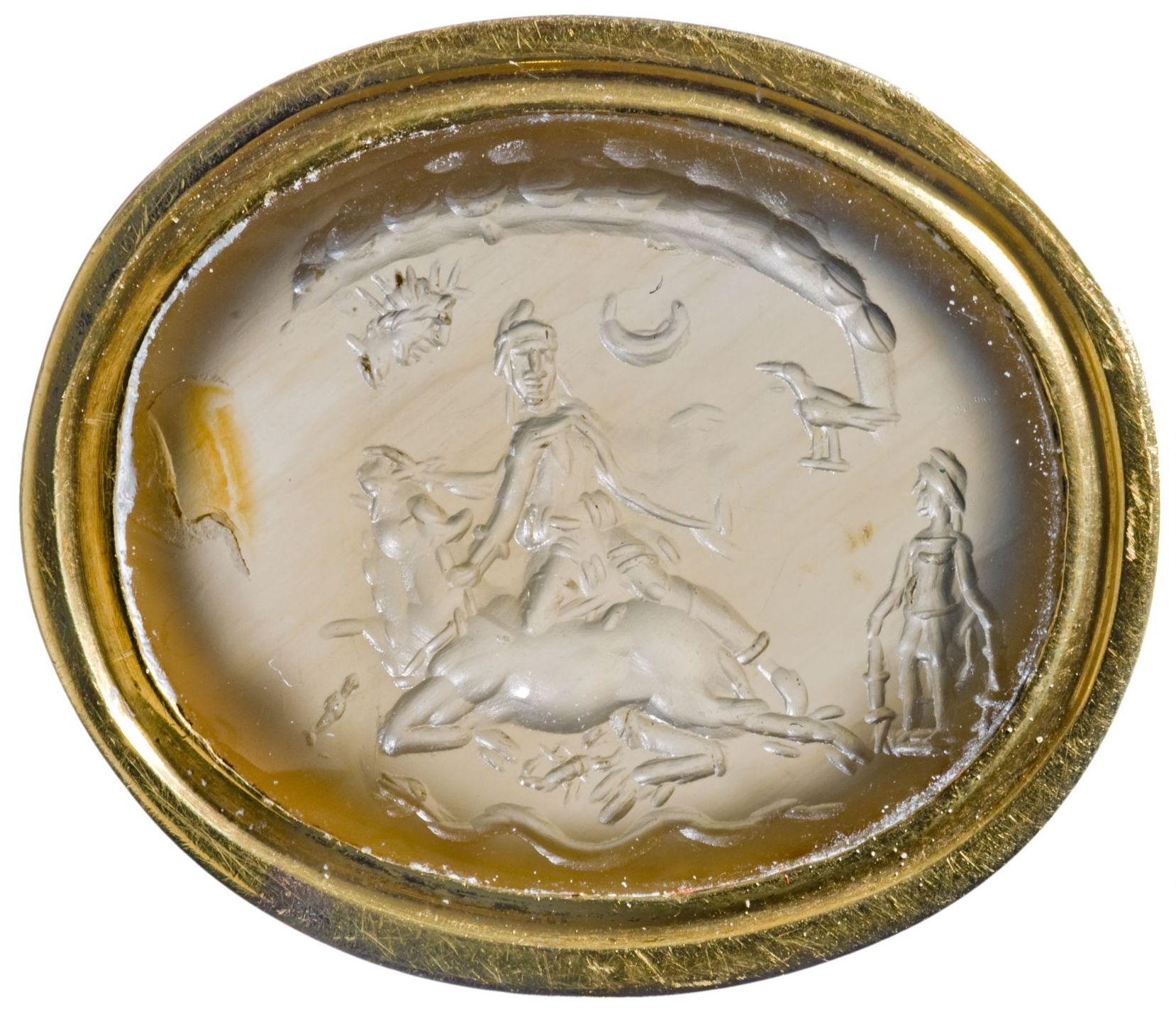
This intaglio depicting Mithras killing the bull is preserved at the Bibliothèque national de France.
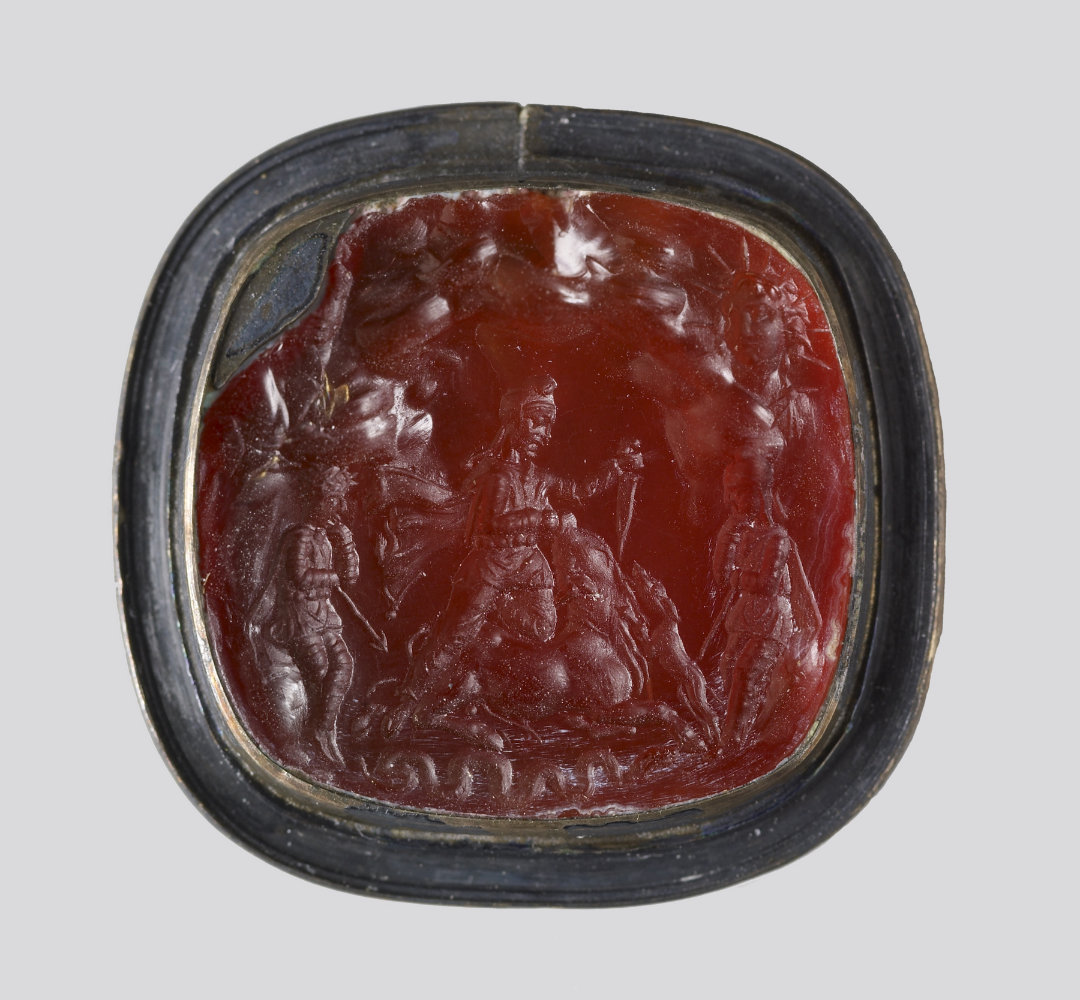
This ancient carnelian intaglio mounted in gold depicts Mithras slaying the bull surrounded by his companions Cautes and Cautopates.
