
The Mithraeum located in Piazza Dante in Rome was discovered in 1874 along with a series of monuments dedicated by a Pater named Primus.
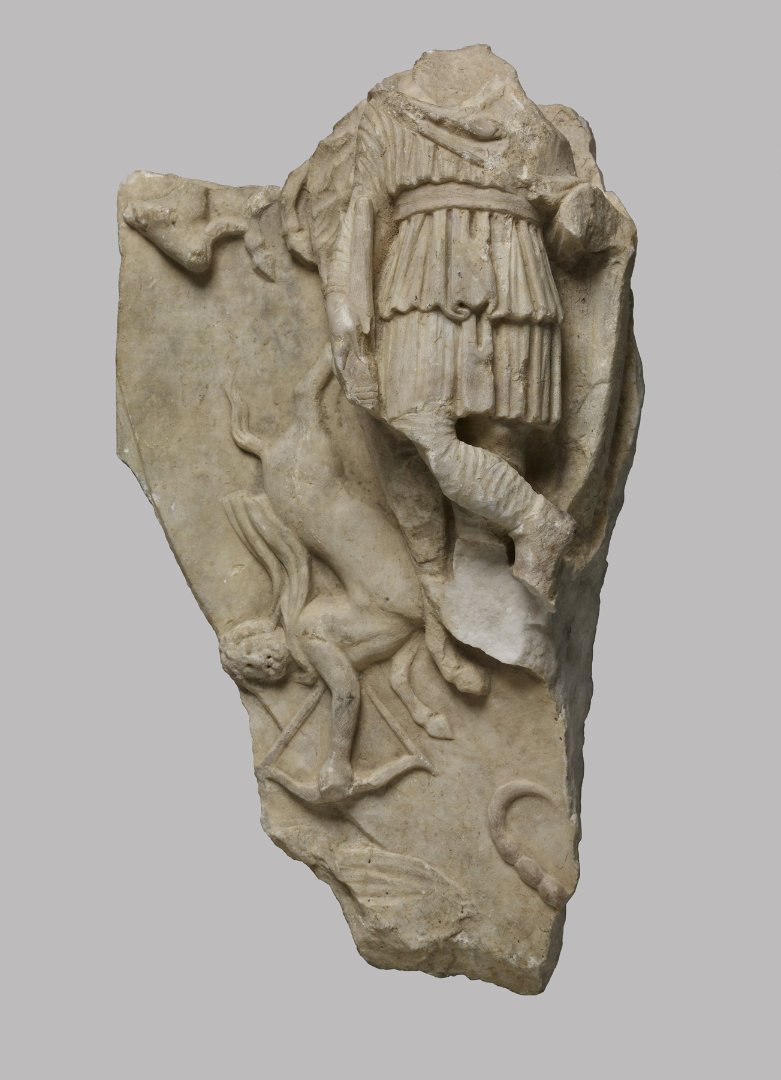
This fragmentary relief shows Cautopates bordered by three of the six zodiacal signs with which He is associated: Capricorn, Sagittarius and Scorpio.
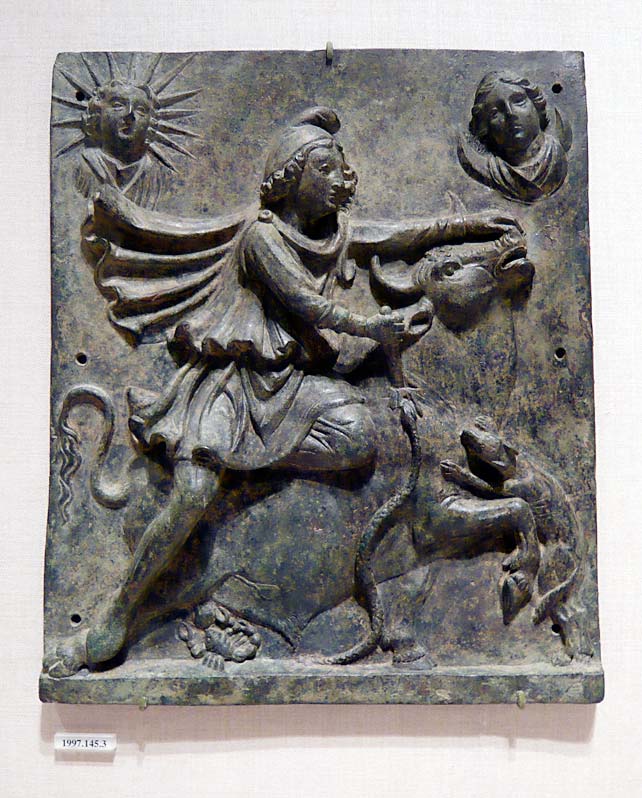
Mithras Tauroctony on bronze exposed at the Metropolitan Museum of New York.
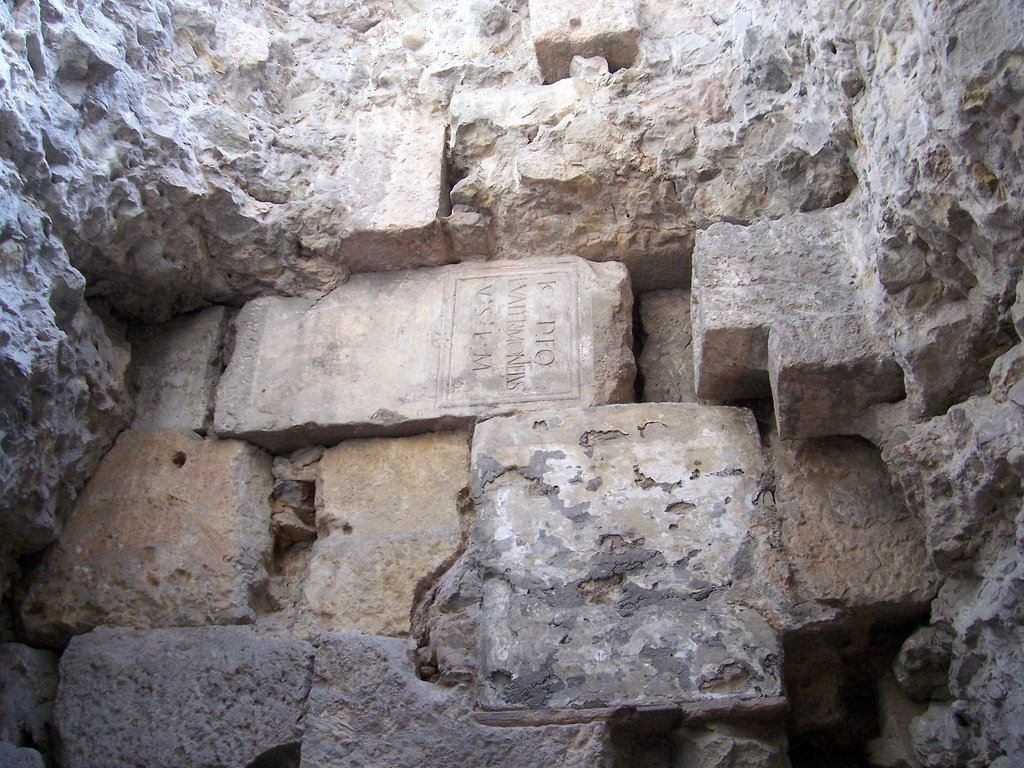
This altar was dedicated to Cautes by a certain Lucius in Baetulo (Badalona), near Barcino (Barcelona).
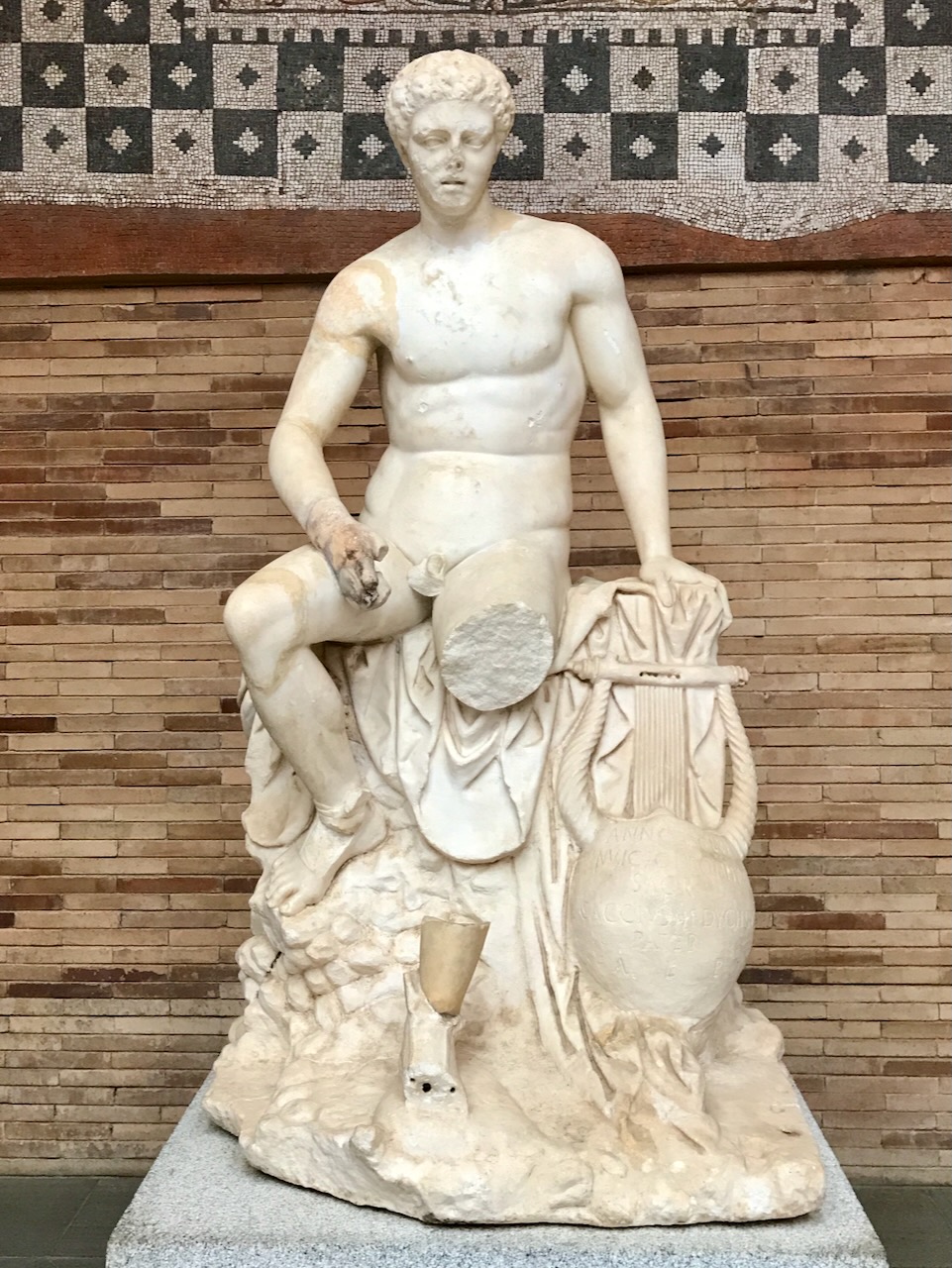
The statue of Mercury in Merida bears a dedication from the Roman Pater of a community in the city in 155.
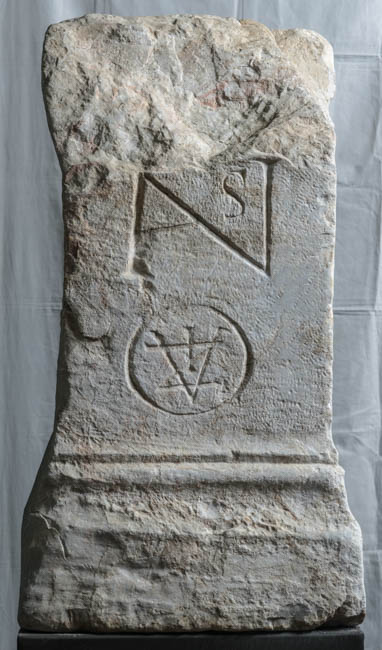
The limestone altar at Klechovtse in North Macedonia bears an inscription to the invincible Mithras.
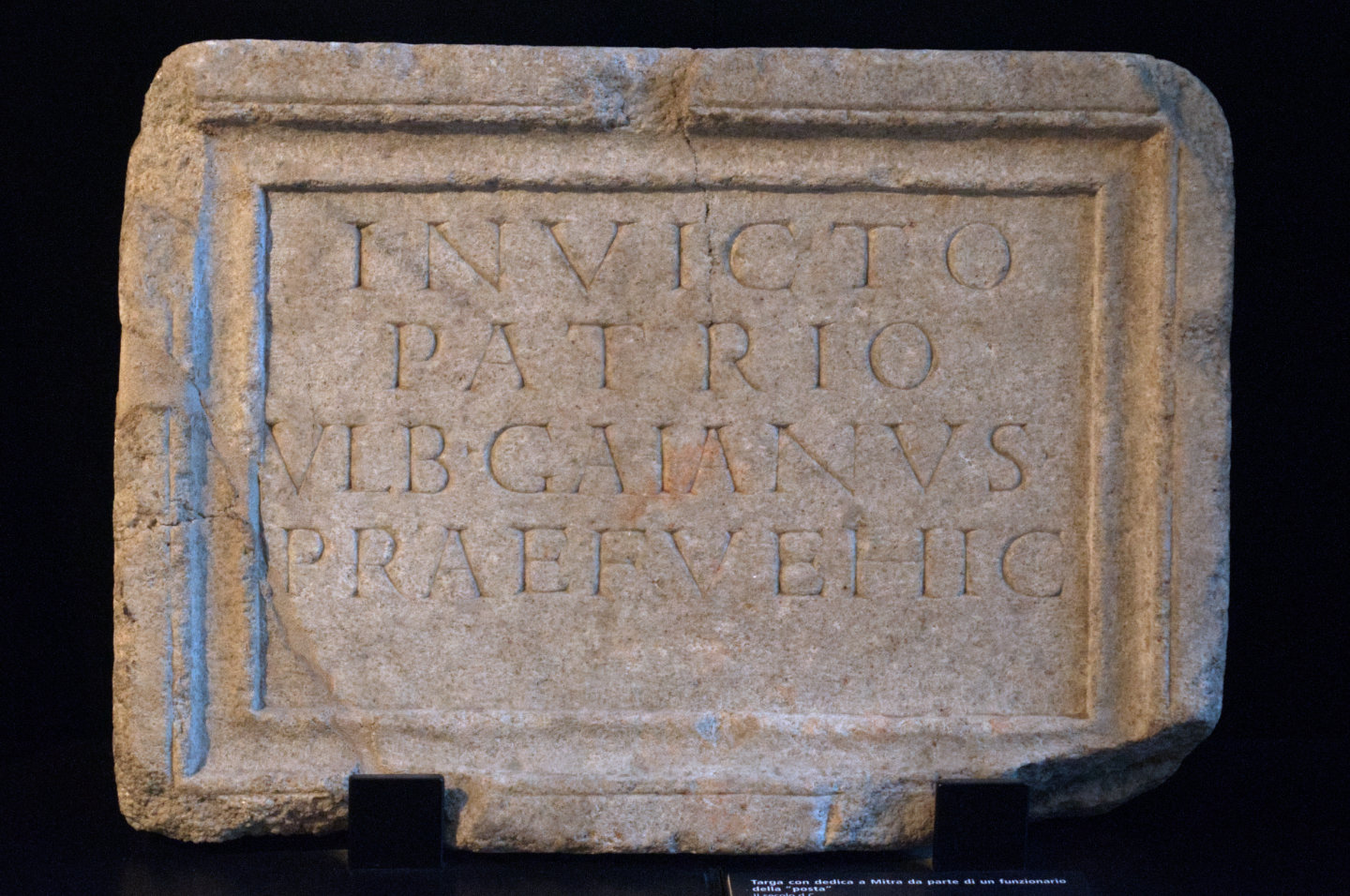
This monument dedicated to 'Invicto Patrio' was found in Milan in 1869.
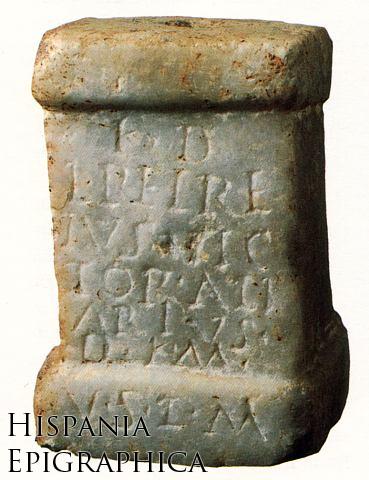
Small arula with mithraic inscription and dedication to Cautes from a garlic merchant.
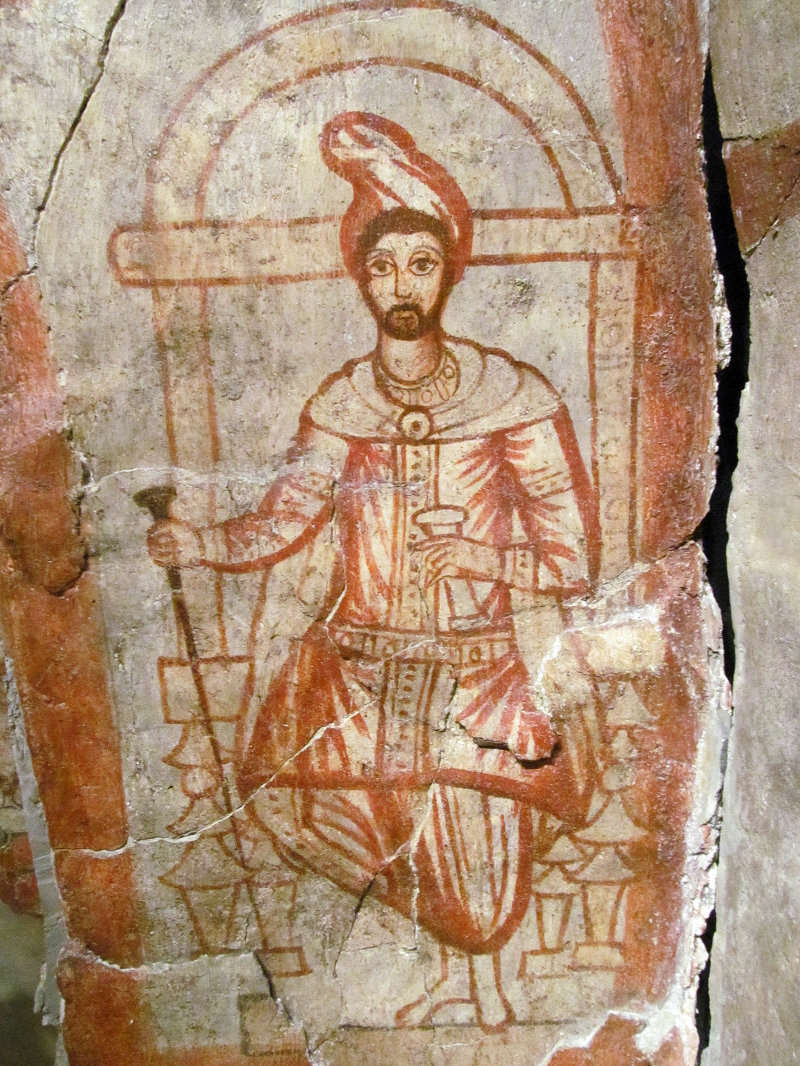
Some scholars have speculated that the scrolls both figures hold in their hands represent Eastern doctrines brought to the Western world.
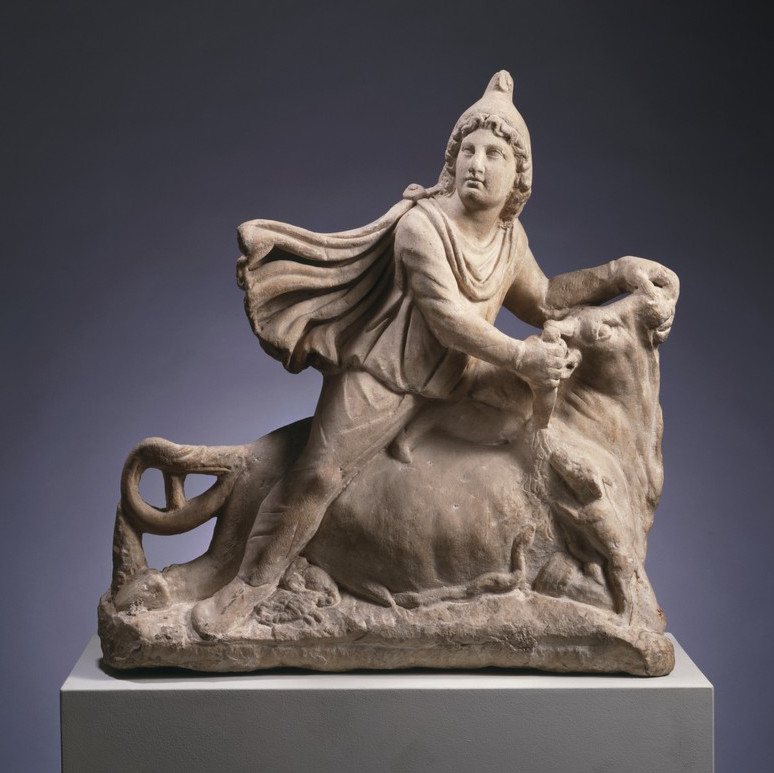
This sculpture of Mithras killing the bull may come from Rome, probably found in 1919.
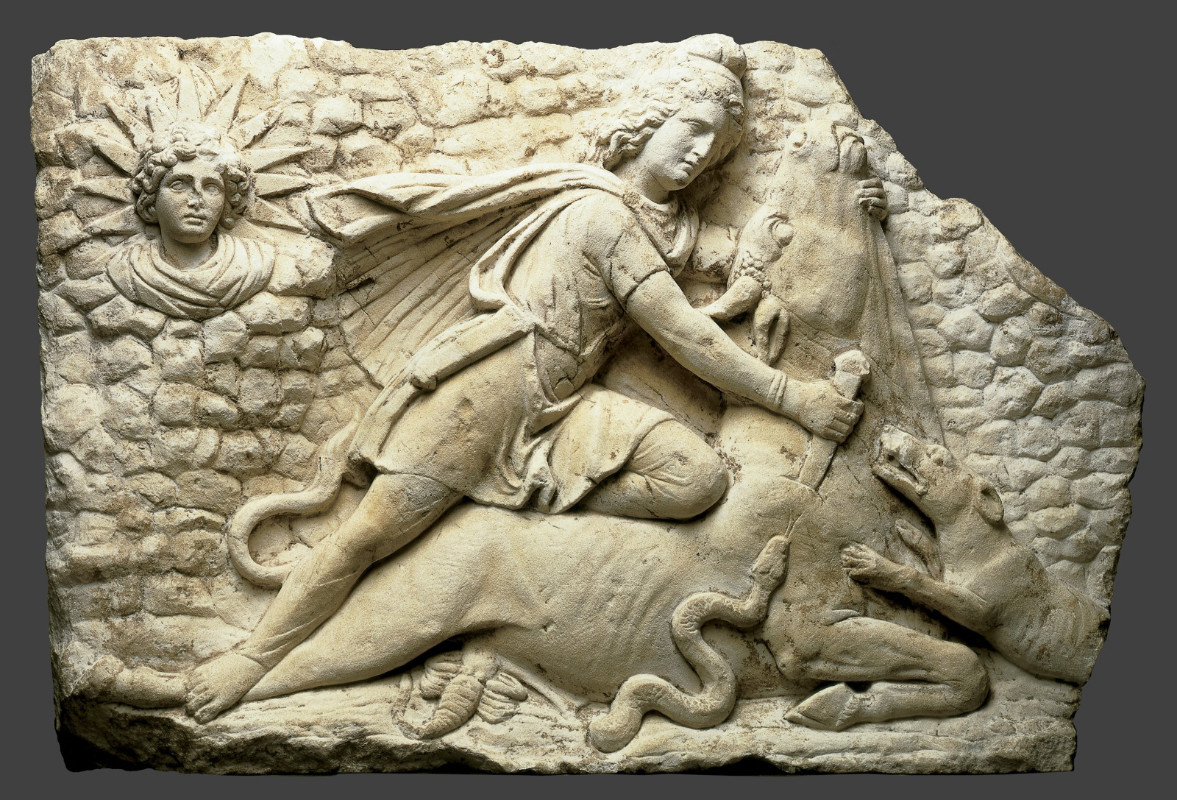
In the tauroctonic relief on display at the Cincinnati Art Museum, Mithras slaughters the bull over a rocky background.
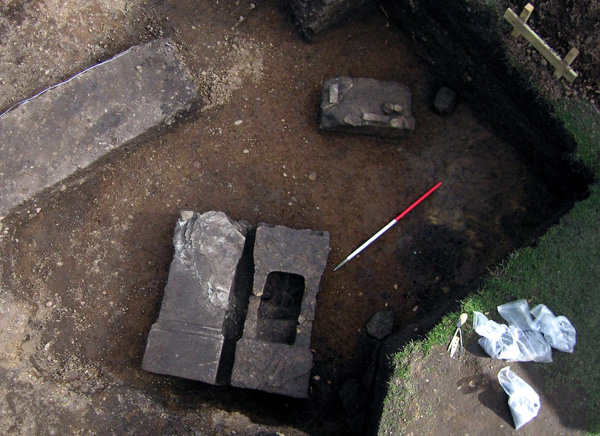
The Mithraeum of Inveresk, south of Musselburgh, East Lothian, is the first found in Scotland, and the earliest securely dated example from Britain.
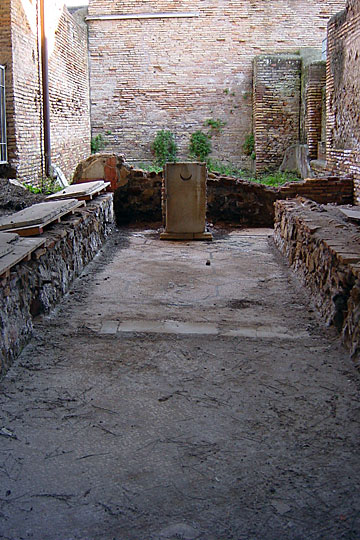
The Mithraeum of Lucretius Menander was installed in the early 3rd century in an alley to the east of a Hadrianic building named after the solar god temple.
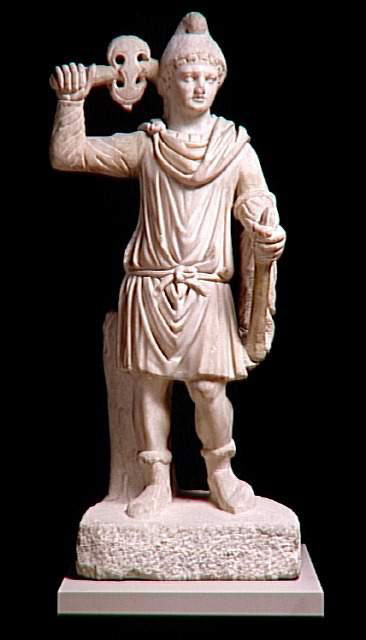
The Cautes of Sidon who wields an axe also wears a piece of cloth on his left arm.
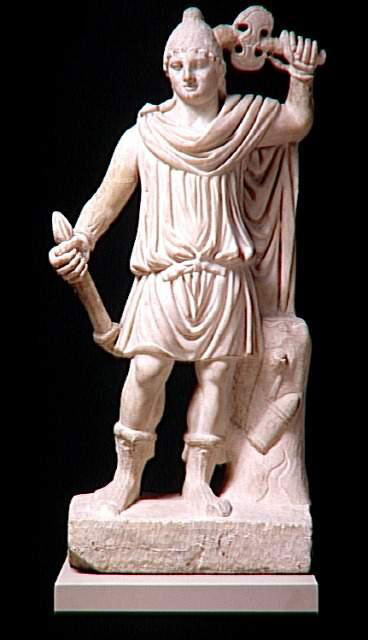
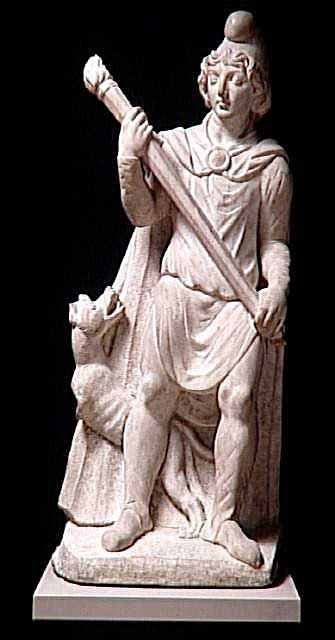
In this case, a quiver has been attached to the tree-stump behind the torchbearer.
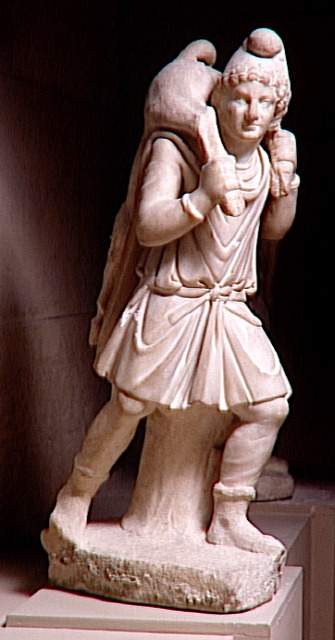
Sculpture depicting Mithras carrying a young bull on his shoulders.
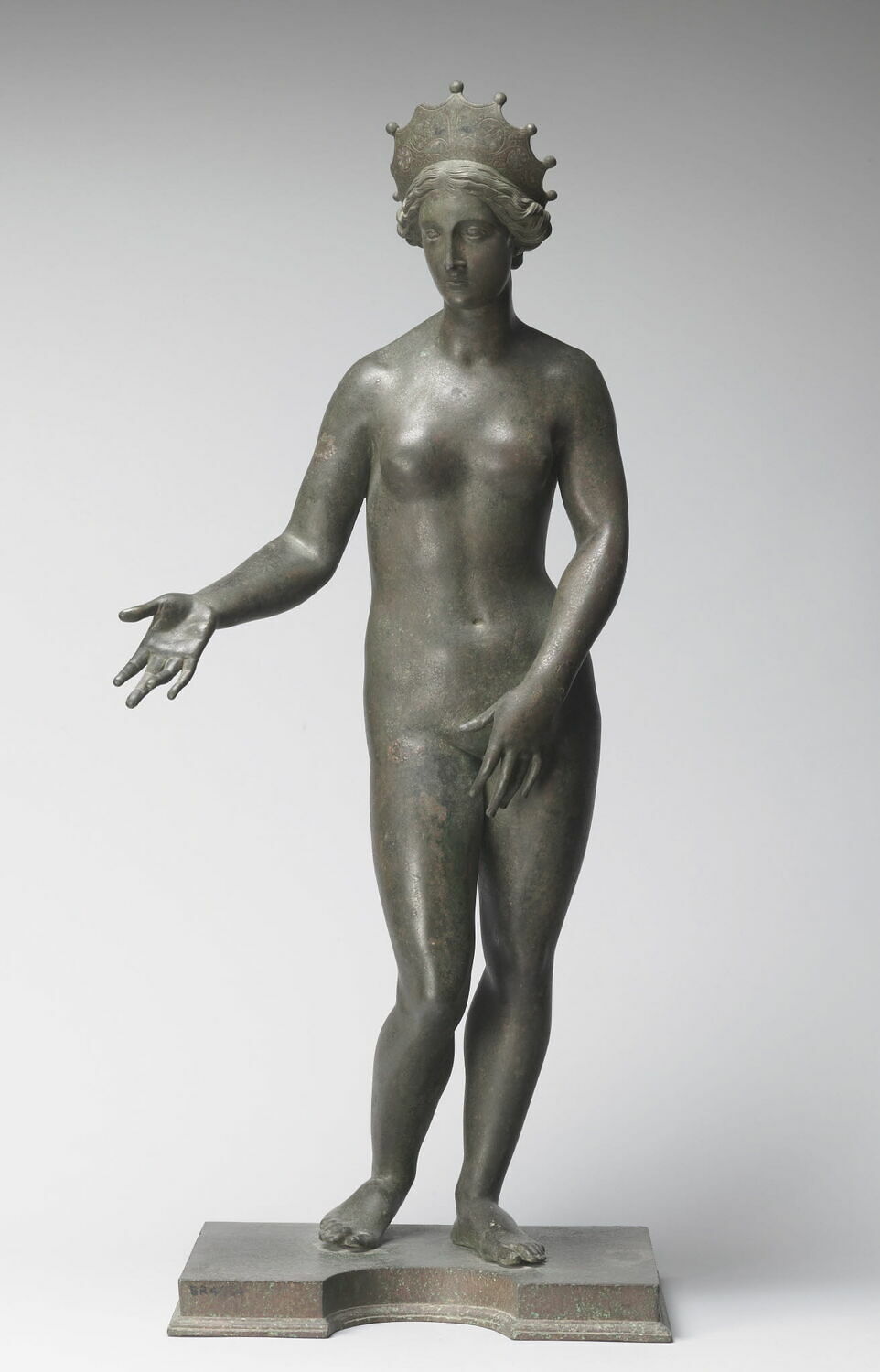
There are two Venus from the Mithraeum of Sidon, one in bronze and the other in Parian marble.
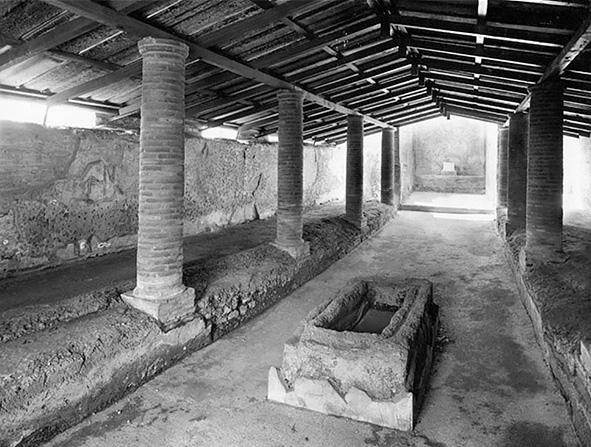
The Mithraeum in the Chapel of the Three Naves was not linked to the cult of Mithras until recently because of a mosaic showing a pig, in the belief that it was an animal unfit for consumption in a temple of Eastern origin.
A bronze plaque records the existence of a mithraeum at Virunum that collapsed and was rebuilt by members of the community.
