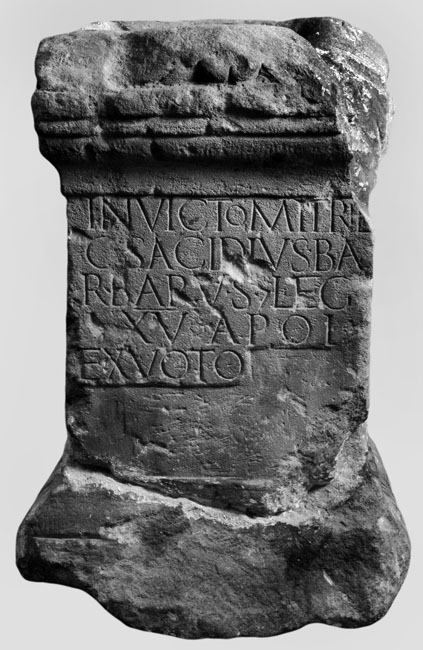
This altar bears the oldest known Latin inscription to the god Mithras, written Mitrhe.
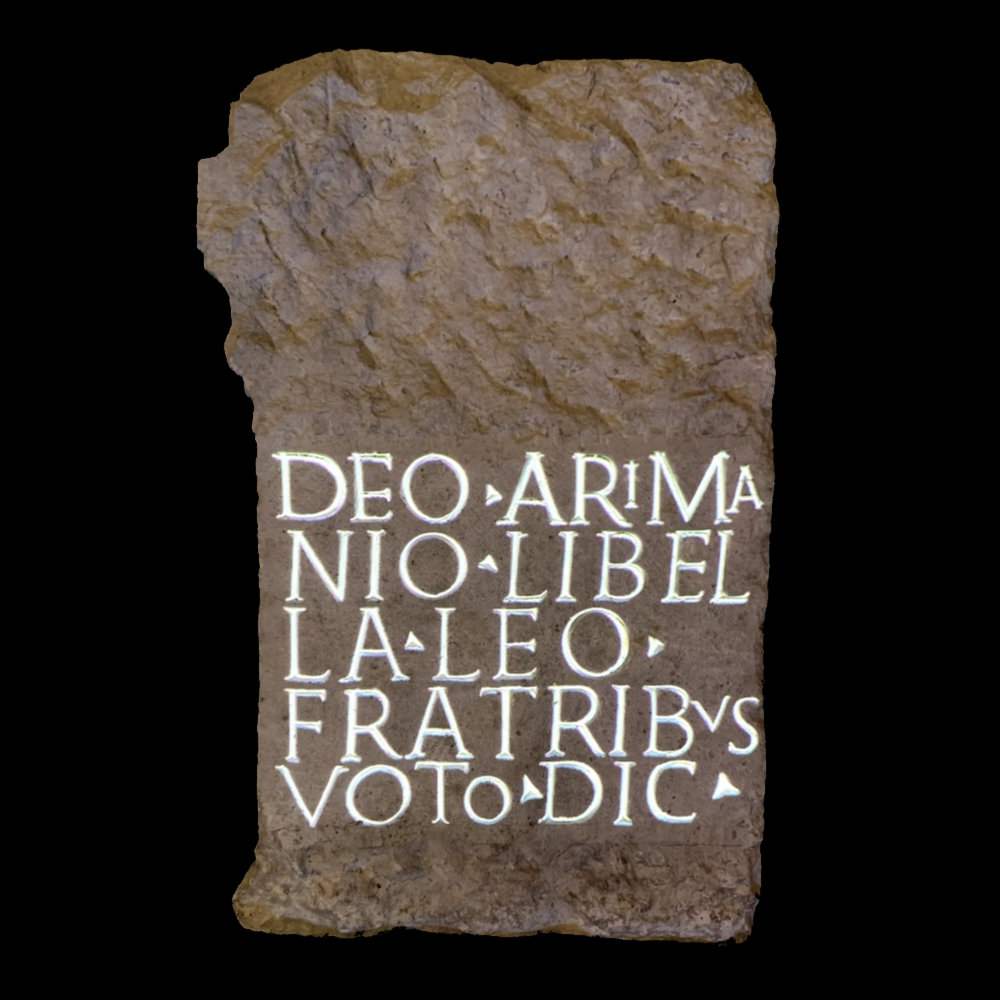
The dedicant of this altar to the god Arimanius was probably a slave who held the grade of Leo.

This altar to Mithras is dedicated by a certain Gaius Iulius Castinus, legate prefect of the emperors.
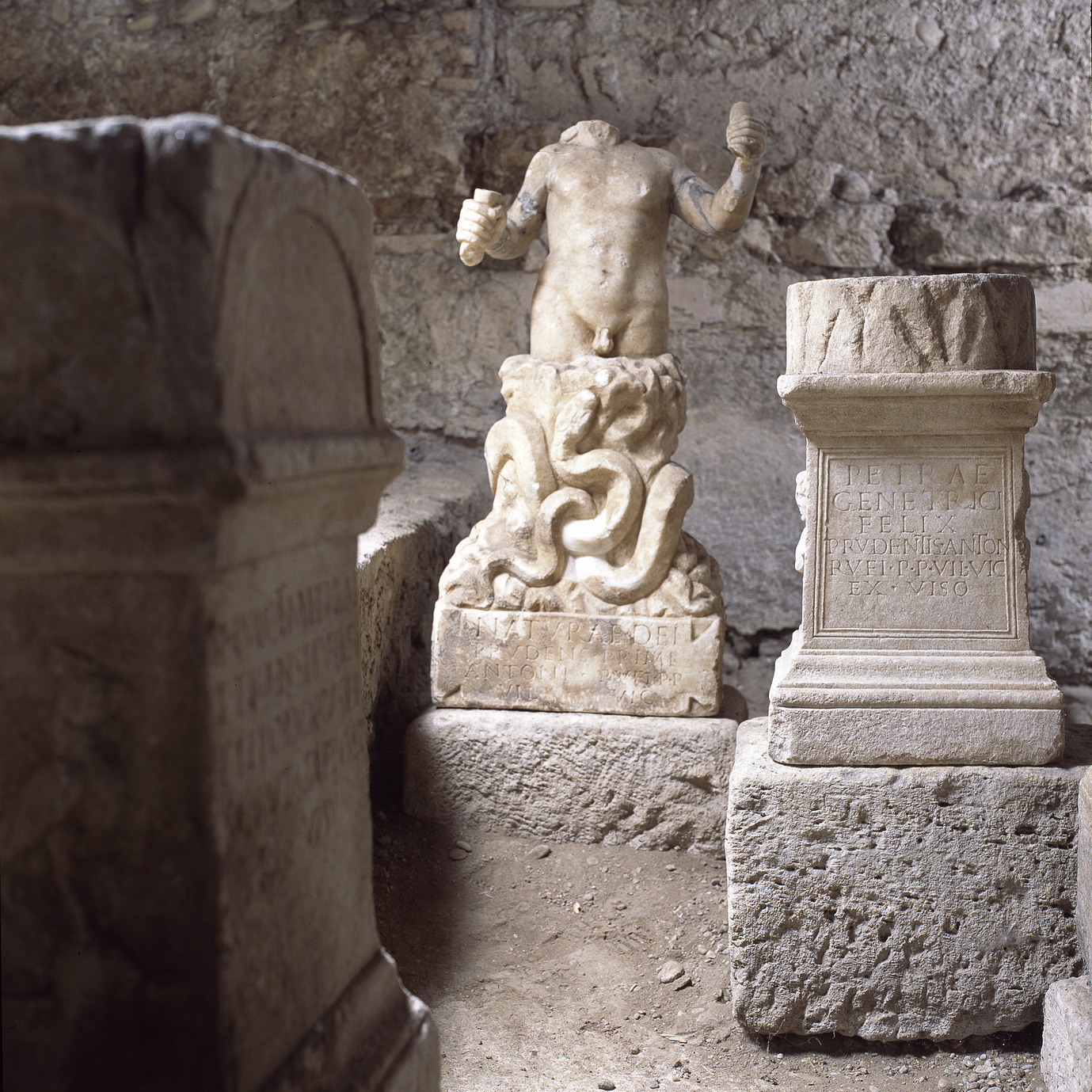
The sculpture includes a serpent climbing the rock from which Mithras is born.
On this slab, Gaius Iulius Propinquos indicates that he made a wall of the Mithraeum at his own expense.
This marble slab found near the Casa de Diana in Ostia bears two inscription with several names of brothers of a same community

The Kempraten Mithraeum was unexpectedly discovered during the 2015 excavations near the vicus.

The image of the god Arimanius to which this monument refers has not yet been found.
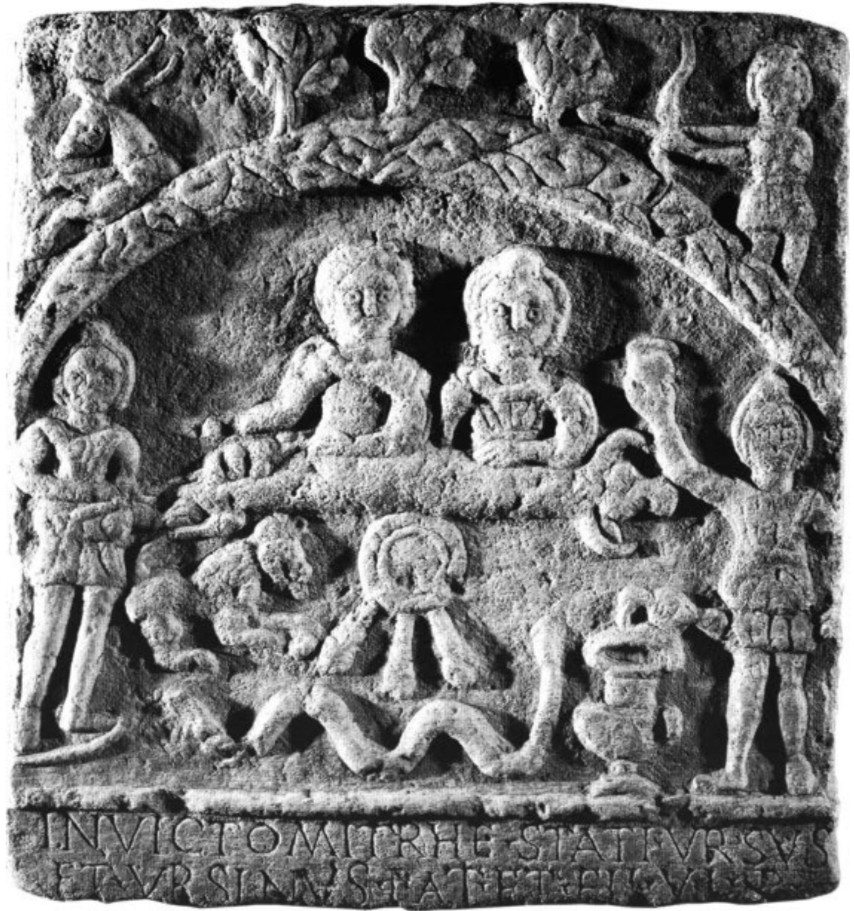
Mithras and Sol share a sacred meal accompanied by Cautes and Cautopates on a relief found in a cemetery from Croatia.
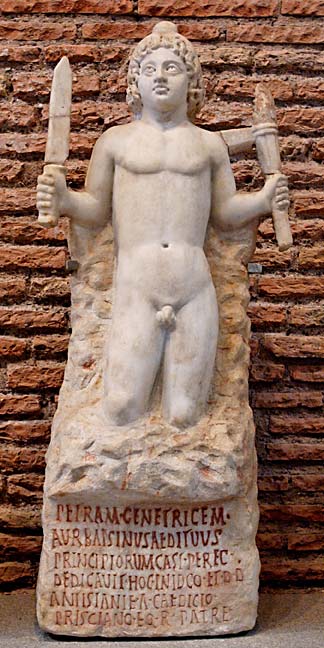
The sculpture of Mithras rock-birth from Santo Stefano Rotondo bears an inscription of Aurelius Bassinus, curator of the cult.
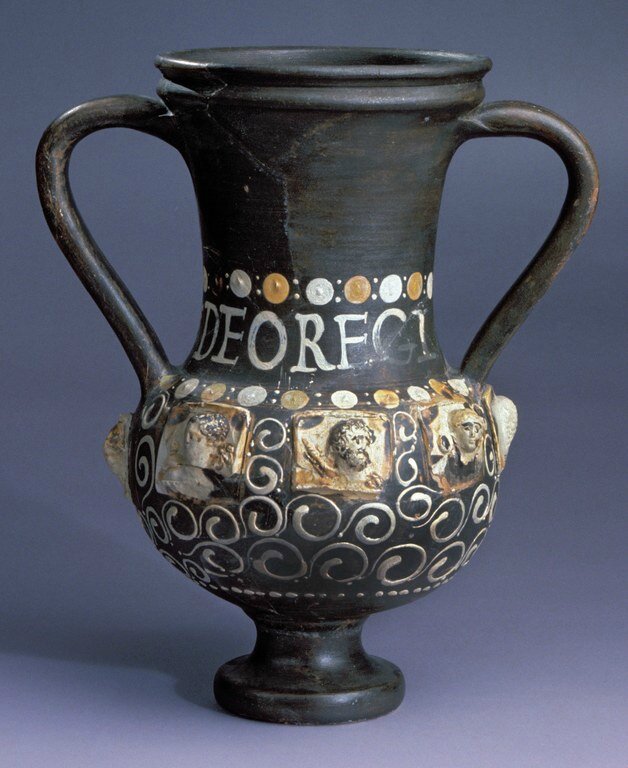
The vase bears an inscription to the god but also 'king' Mithras.
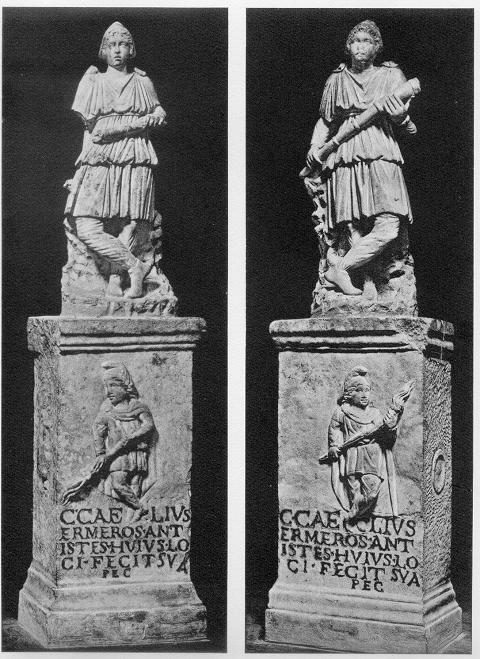
The sculptures of Cautes and Cautopates from the Mitreo del Palazzo Imperiale may have been reused from an older mithraeum in Ostia.
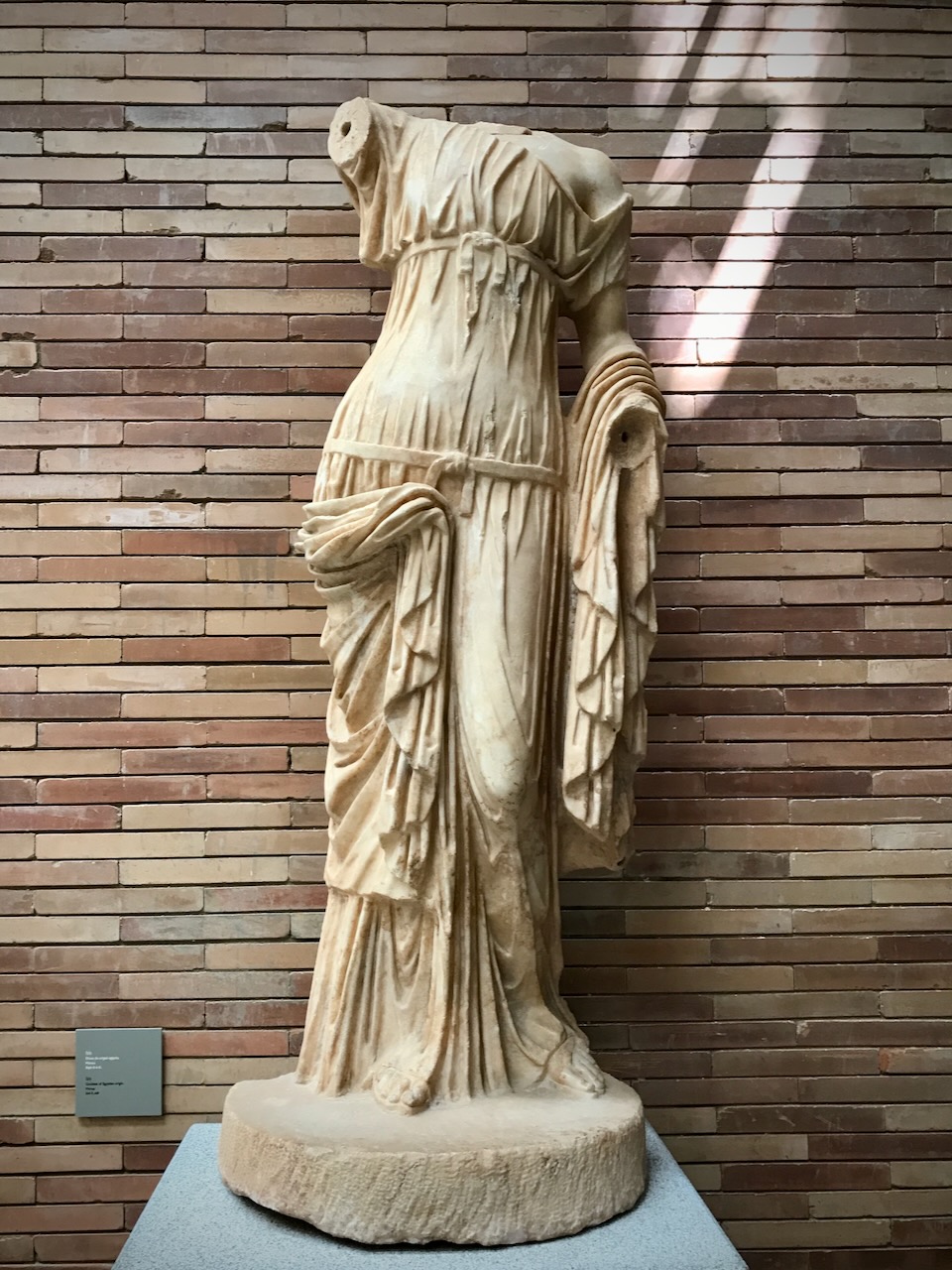
The Isis of Merida is covered by a long dress that reaches down to her feet.
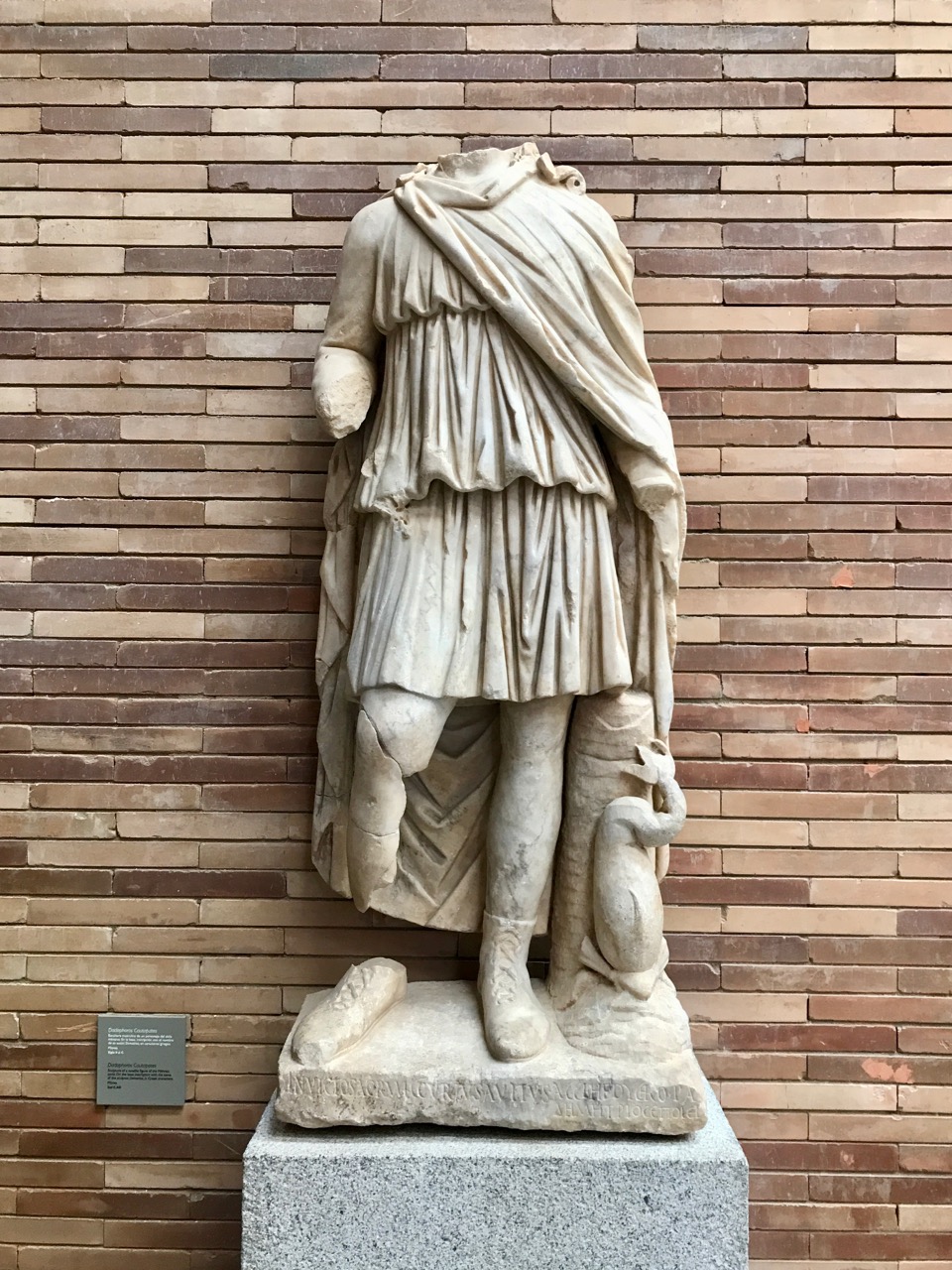
The sculpture of the solar god is signed by its author, Demetrios.
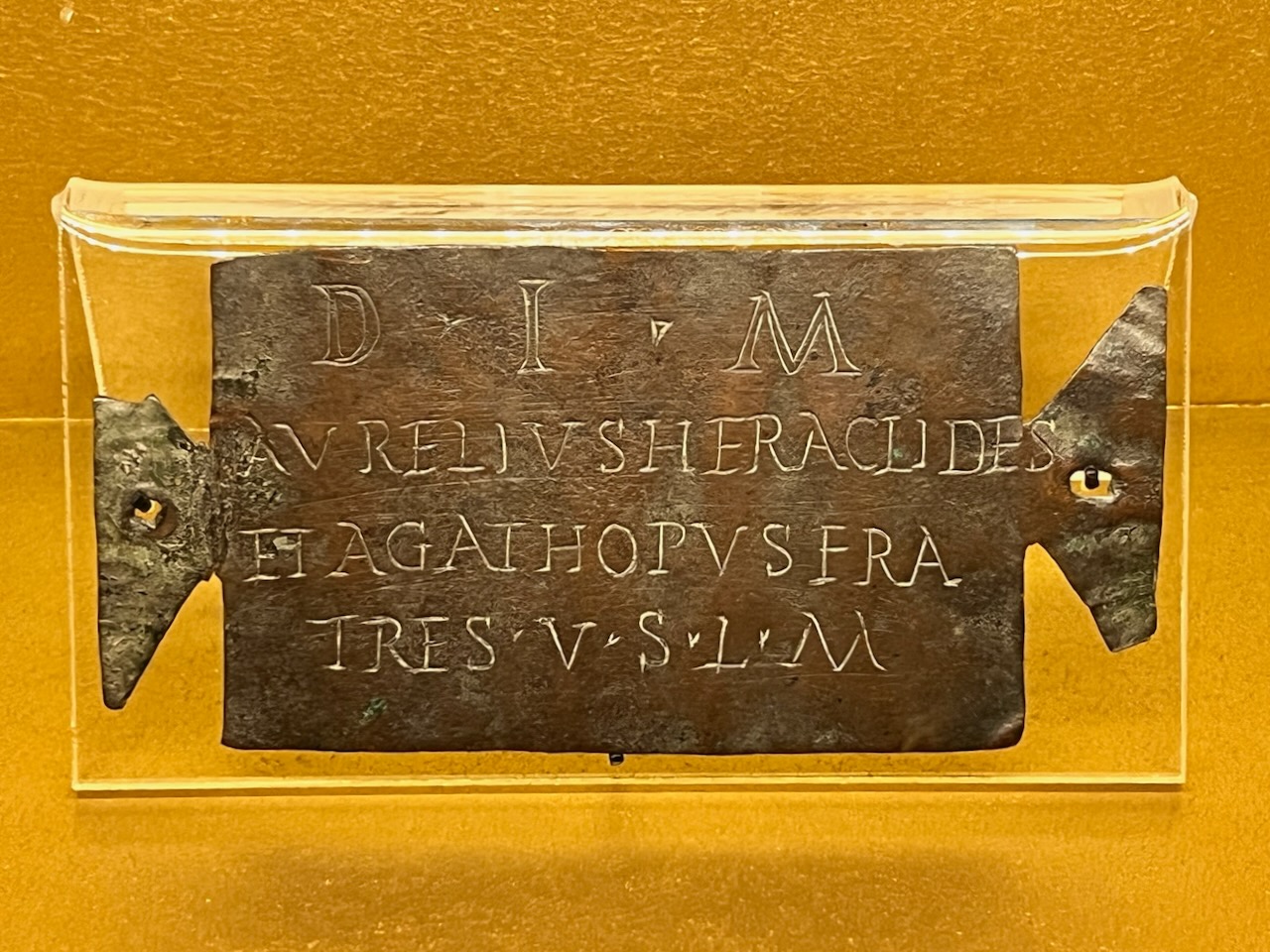
This small bronze tabula ansata was dedicated to Mithras by two brothers, probably not related by blood.
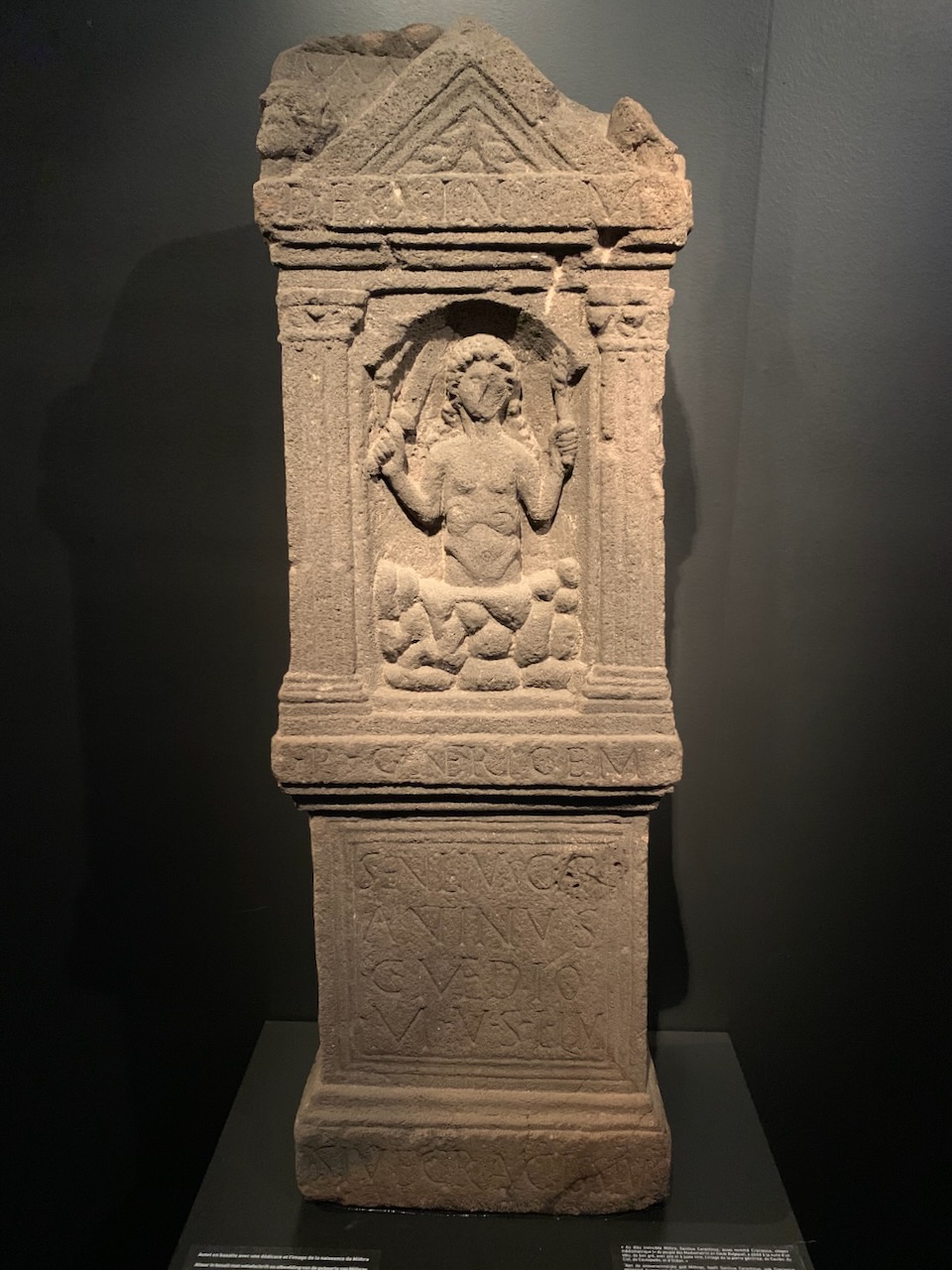
The Mithraic stele from Nida depicts the Mithras Petrogenesis and the gods Cautes, Cautopates, Heaven and Ocean.
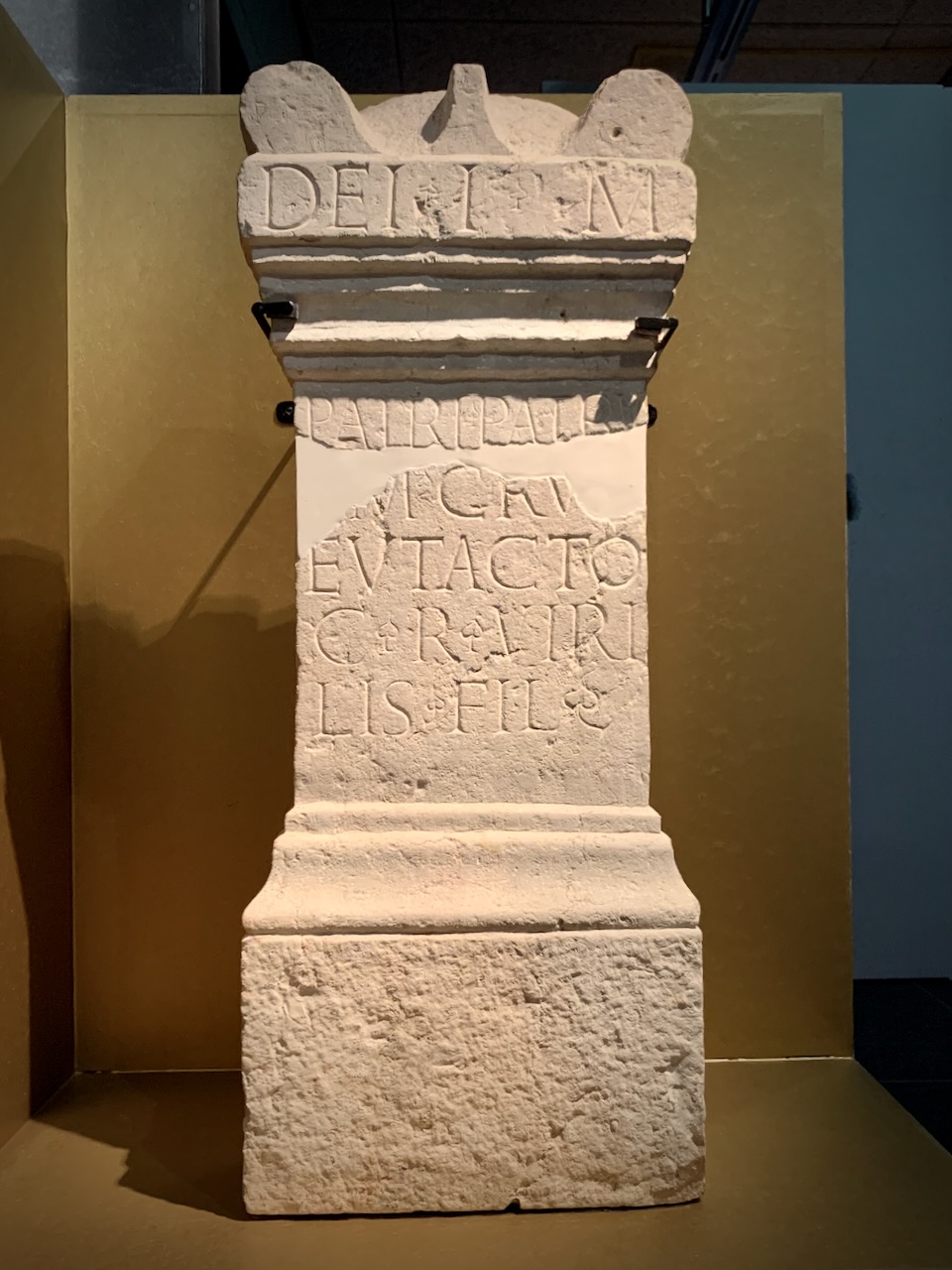
This altar was dedicated by a son to his father, one of the few Patres Patrum recorded in the western provinces.

The dedicator of this altar was a slave in the service of a high official, the prefect Gaius Antonius Rufus, known from other inscriptions.
