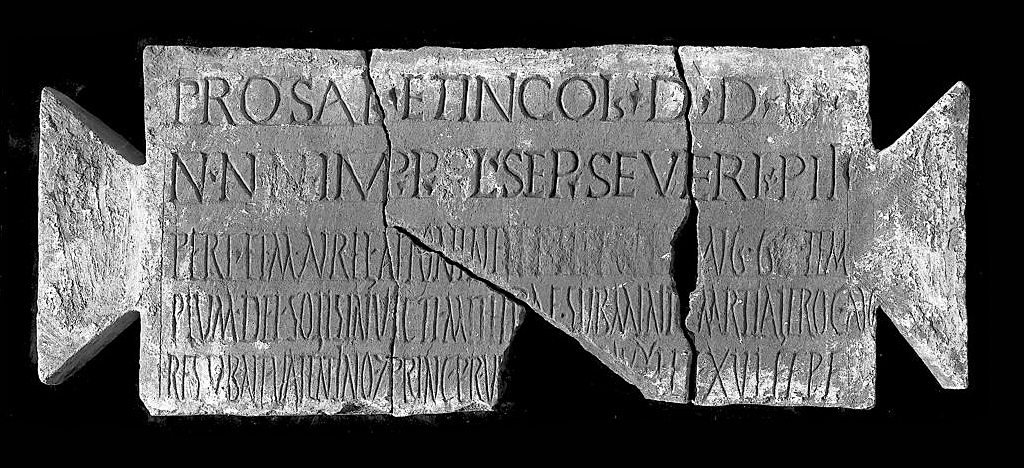
Antonius Valentinus, centurio, made this plaque for the salut des empereurs Septimus Severus and Marcus Aurelius.

This altar, now lost, mentions that the Pater Patrum passed on the attributes of the sacred Corax to his son.

Three mithraic monuments were found in 1931, suggesting that a mithraeum probably existed in the area.
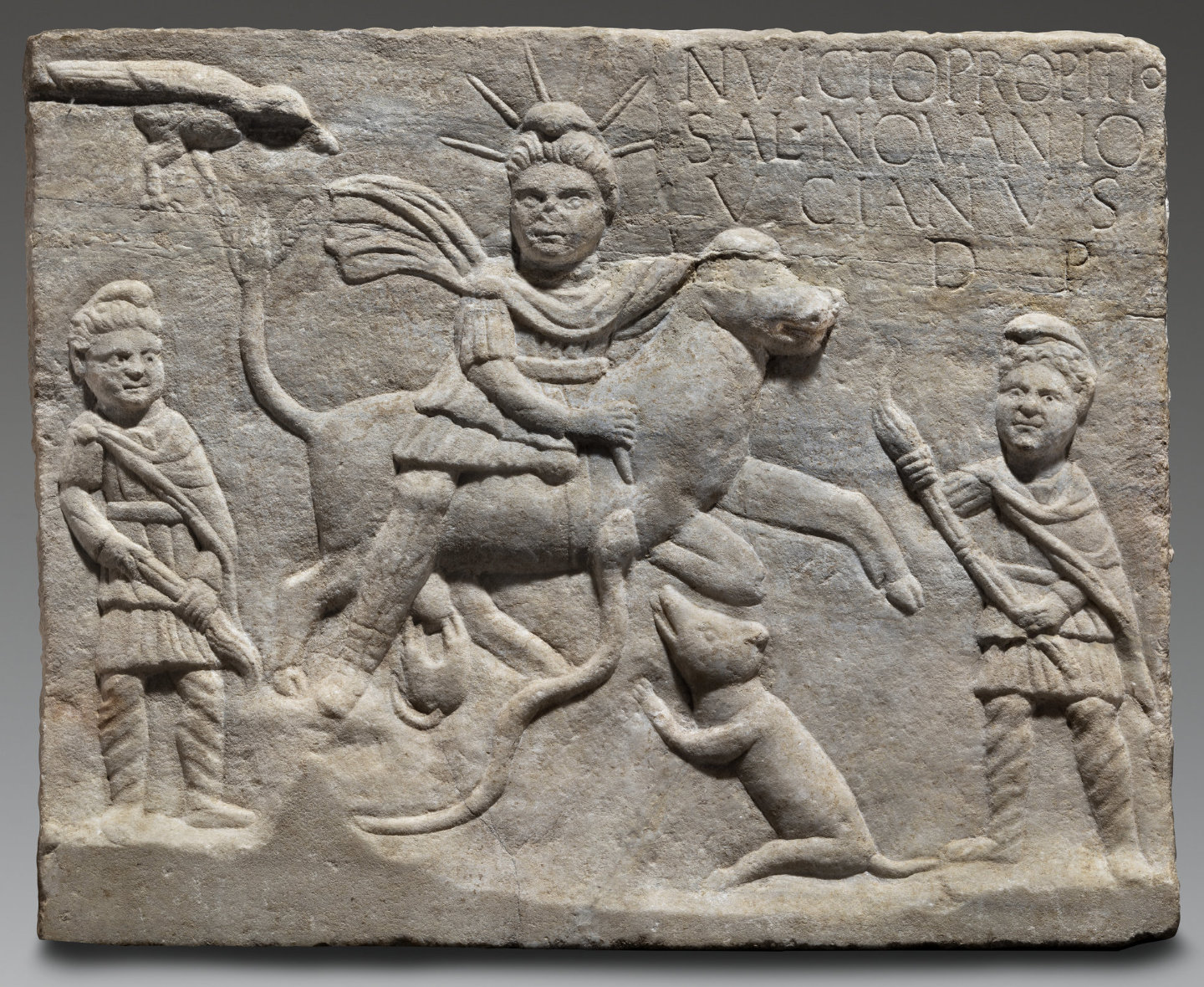
The Macerata Tauroctony shows Mithra slaying the bull with the usual Pyrigian cap and six rays around his head.
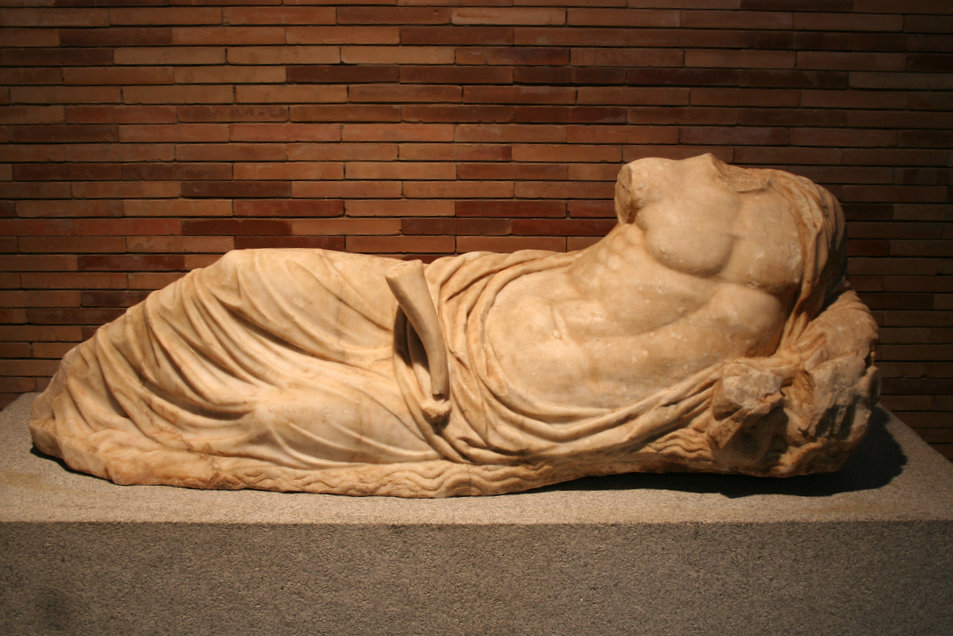
The sculpture of Oceanus in Merida bears an inscription by the Pater Patrorum Gaius Accius Hedychrus.
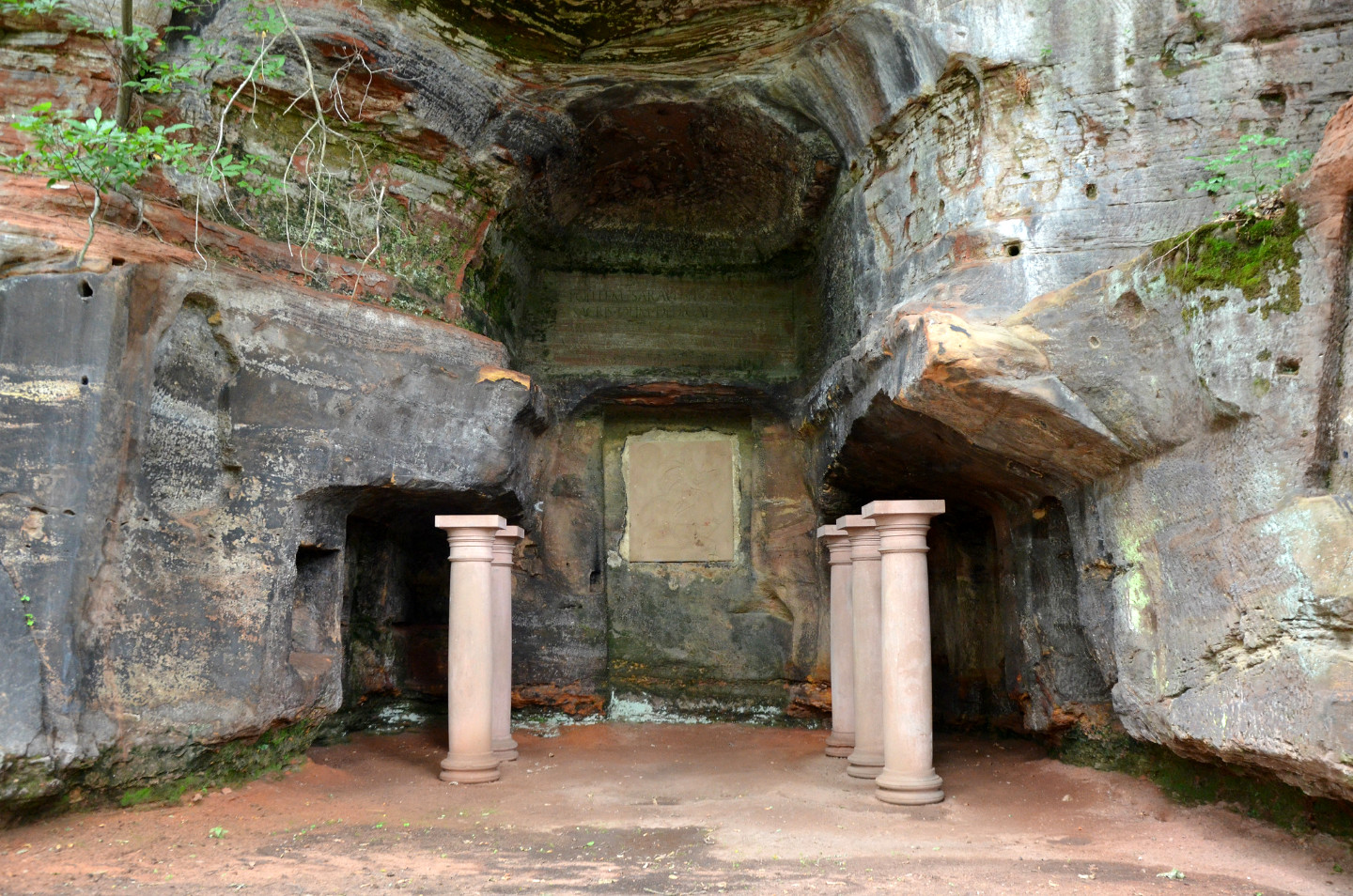
The Mithraeum in Halberg hill, near Saarbrücken, is one of the oldest historical places in the area.
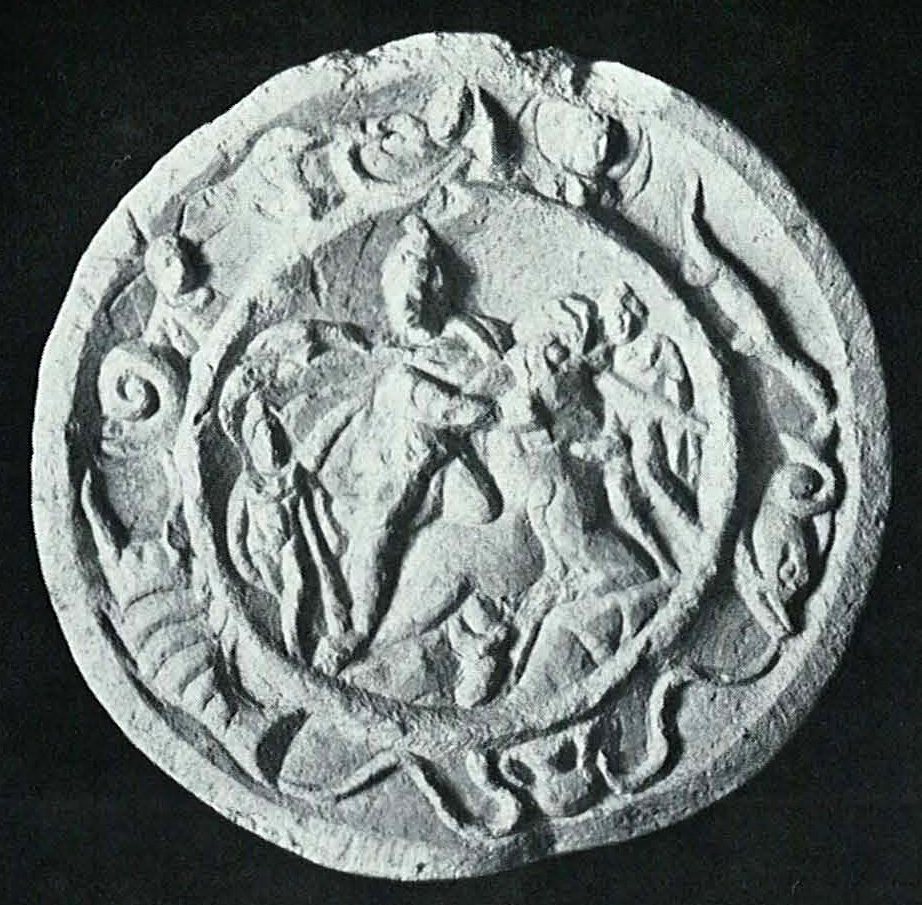
The round relief of Mithras killing the bull of Split is surrounded by a circle with Sun, Moon, Saturn and some unusual animals.
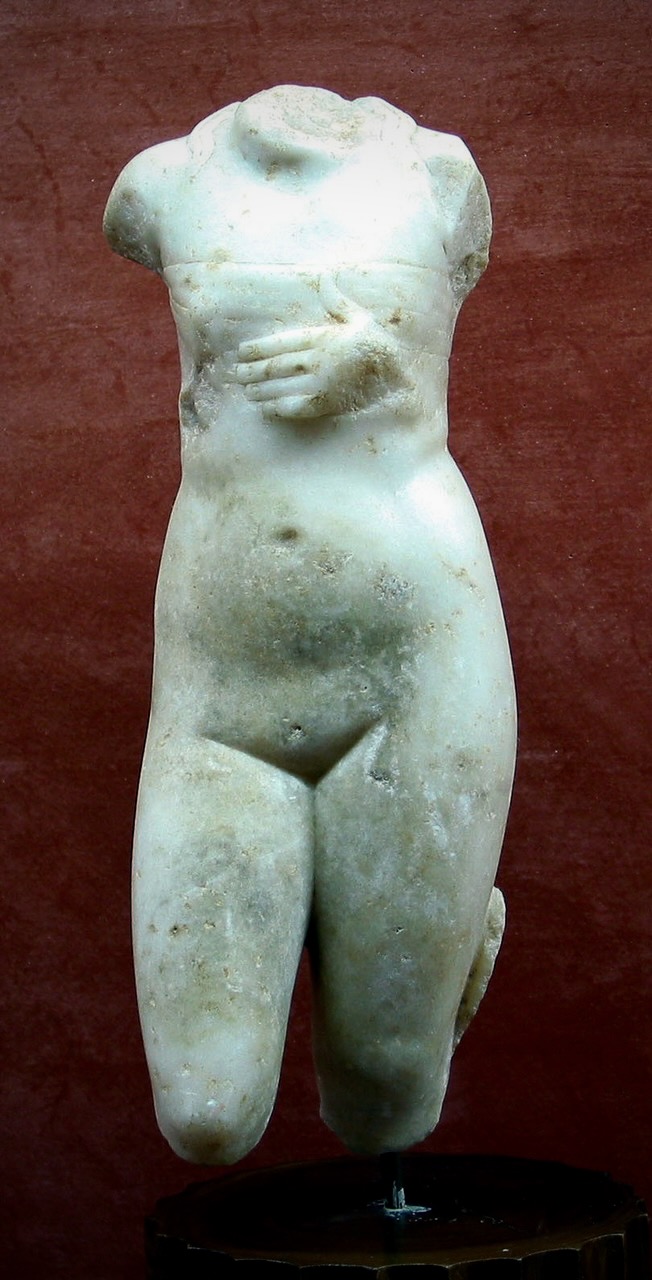
The lack of attributes and its decontextualisation prevent us from attributing a specific Mithraic attribution to this small Venus pudica from Mérida.
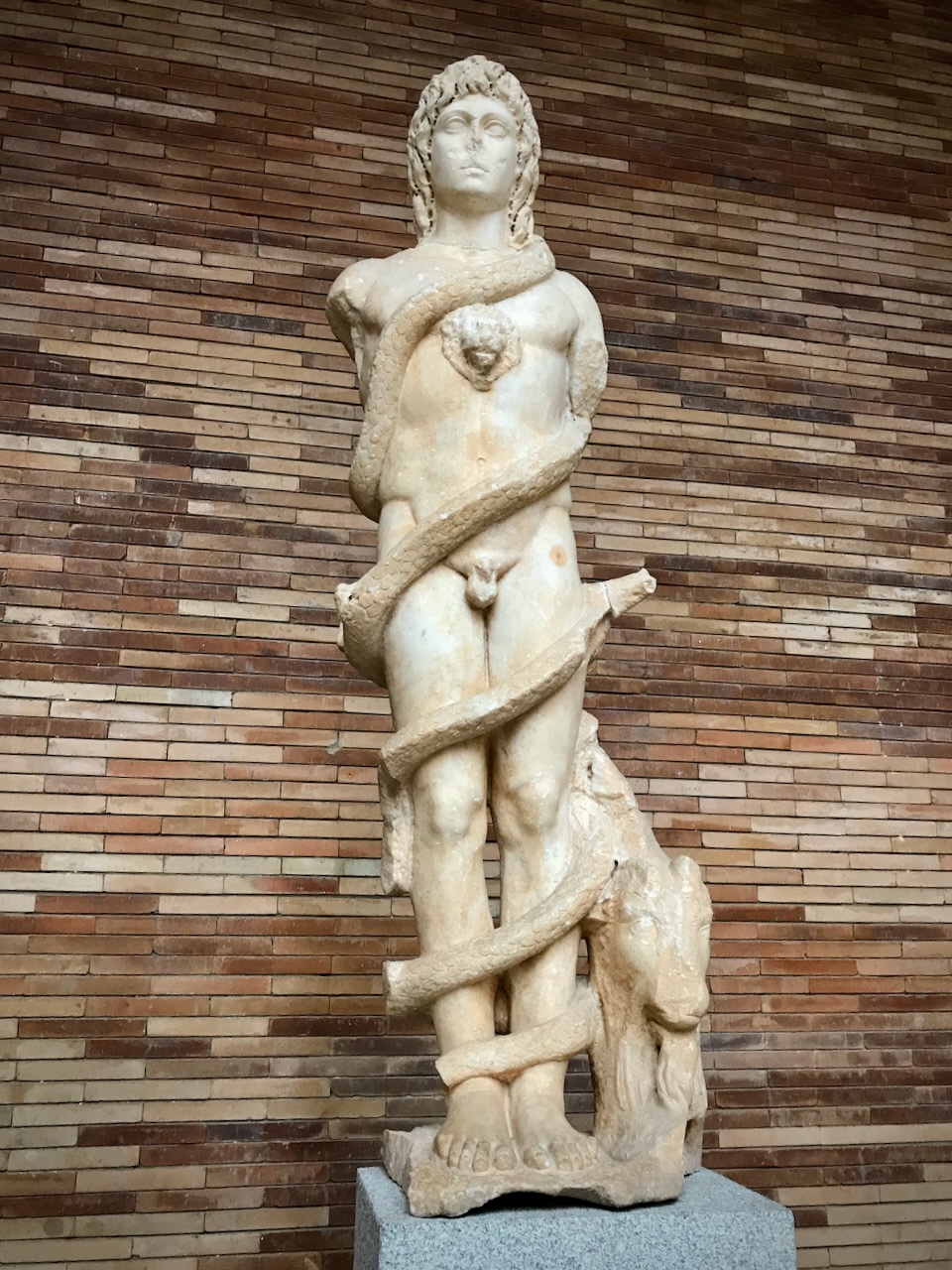
The Aion-Chronos of Mérida was found near the bullring of the current city, once capital of the Roman province Hispania Ulterior.
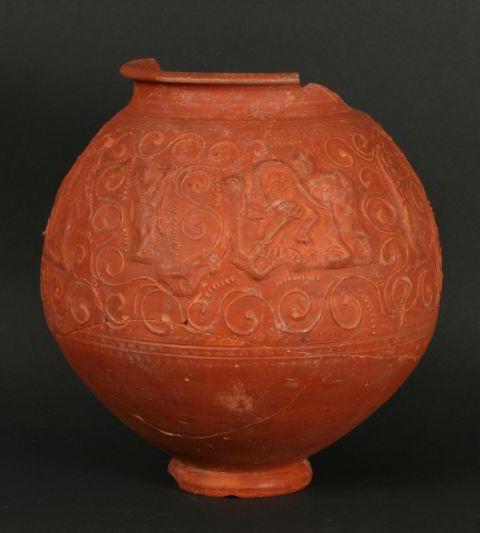
This terracotta vase features prolific decoration, including Mithras Tauroctonos, Fortuna, Cautes, a dog and Pan playing a syrinx.
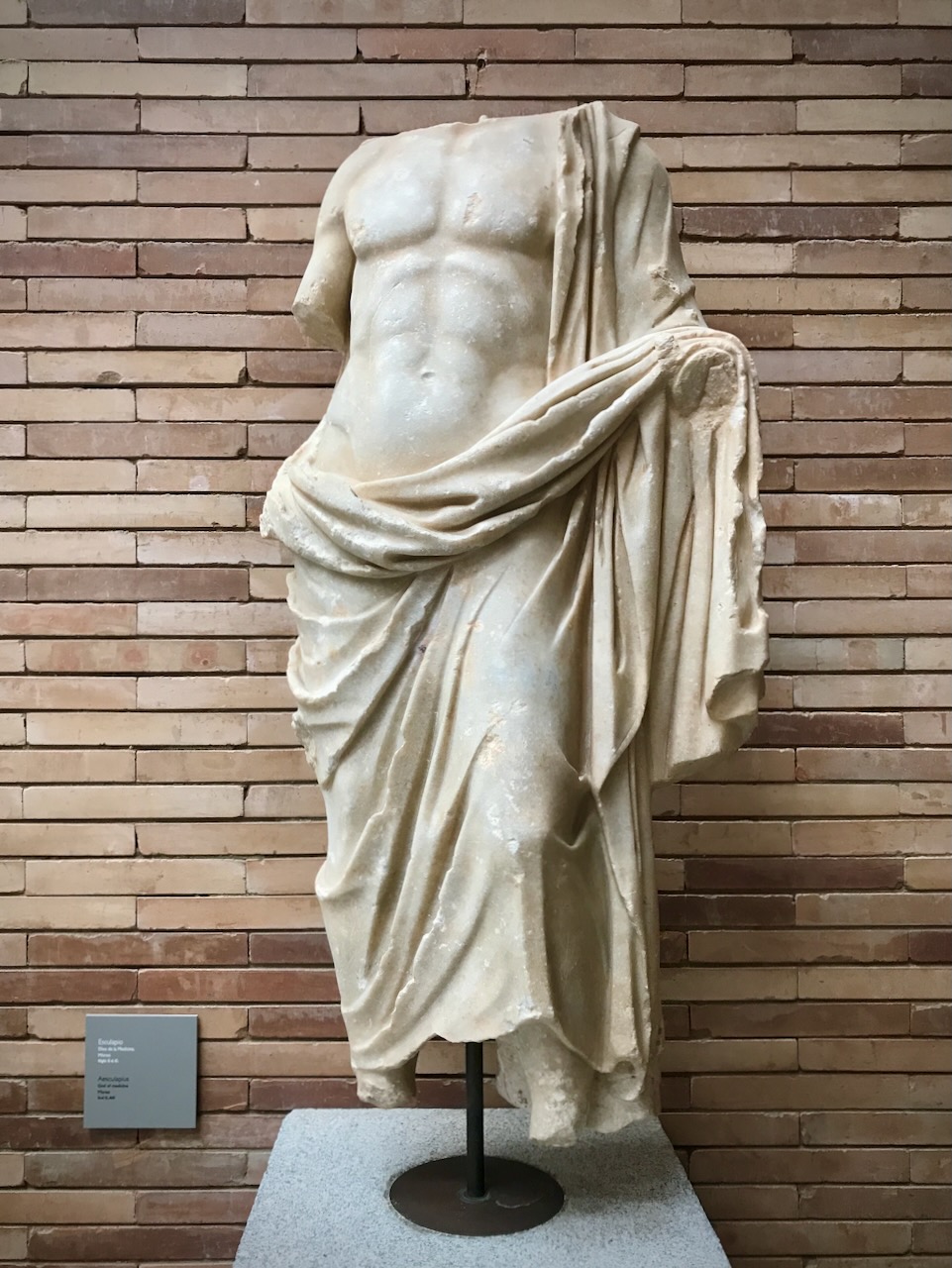
This standing sculptural figure from Mérida appears to carry the serpent staff, characteristic of the medicine god Aesculapius.
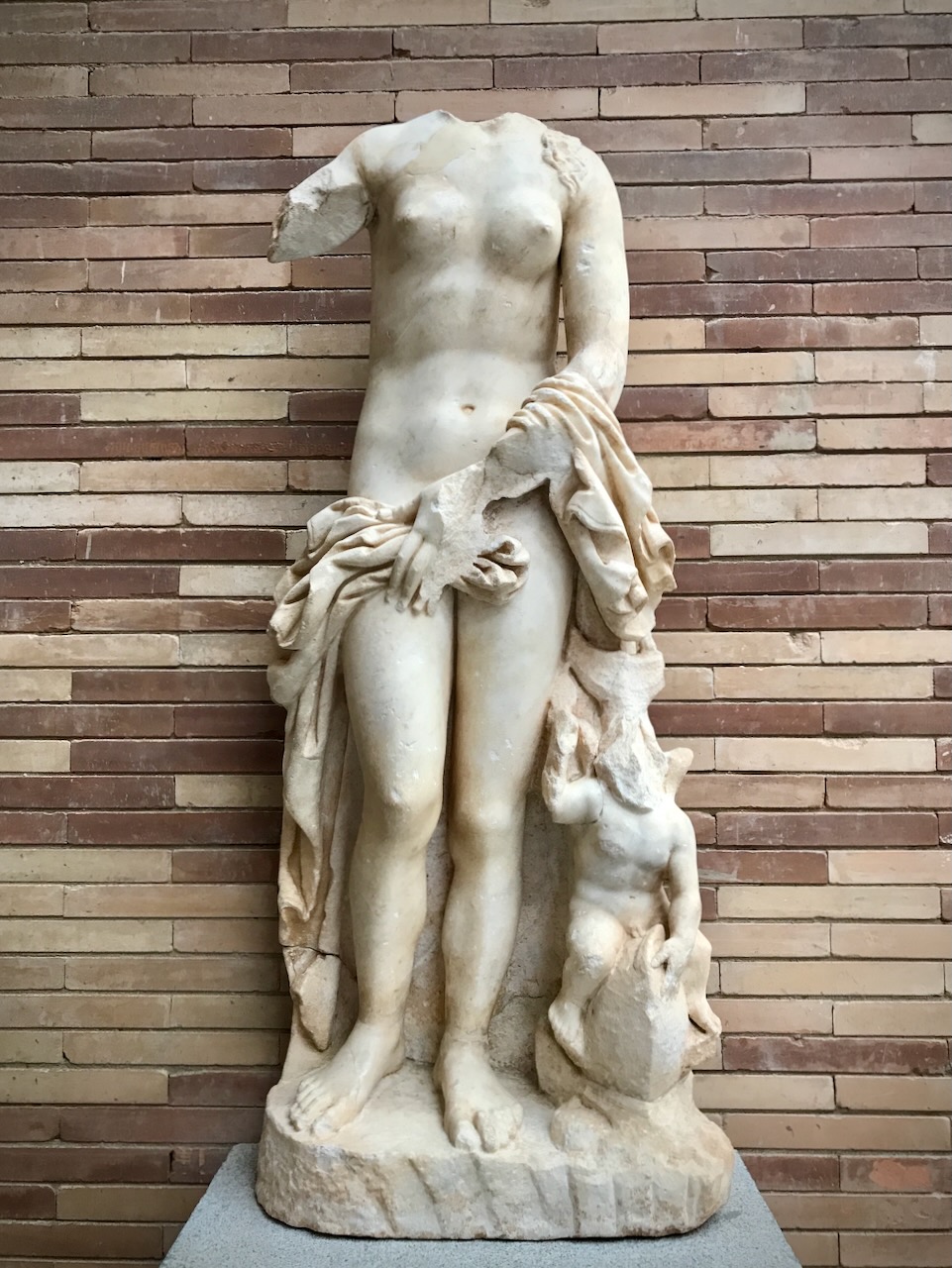
The Venus pudica of Merida stands next to the young Amor riding a dolplhin.
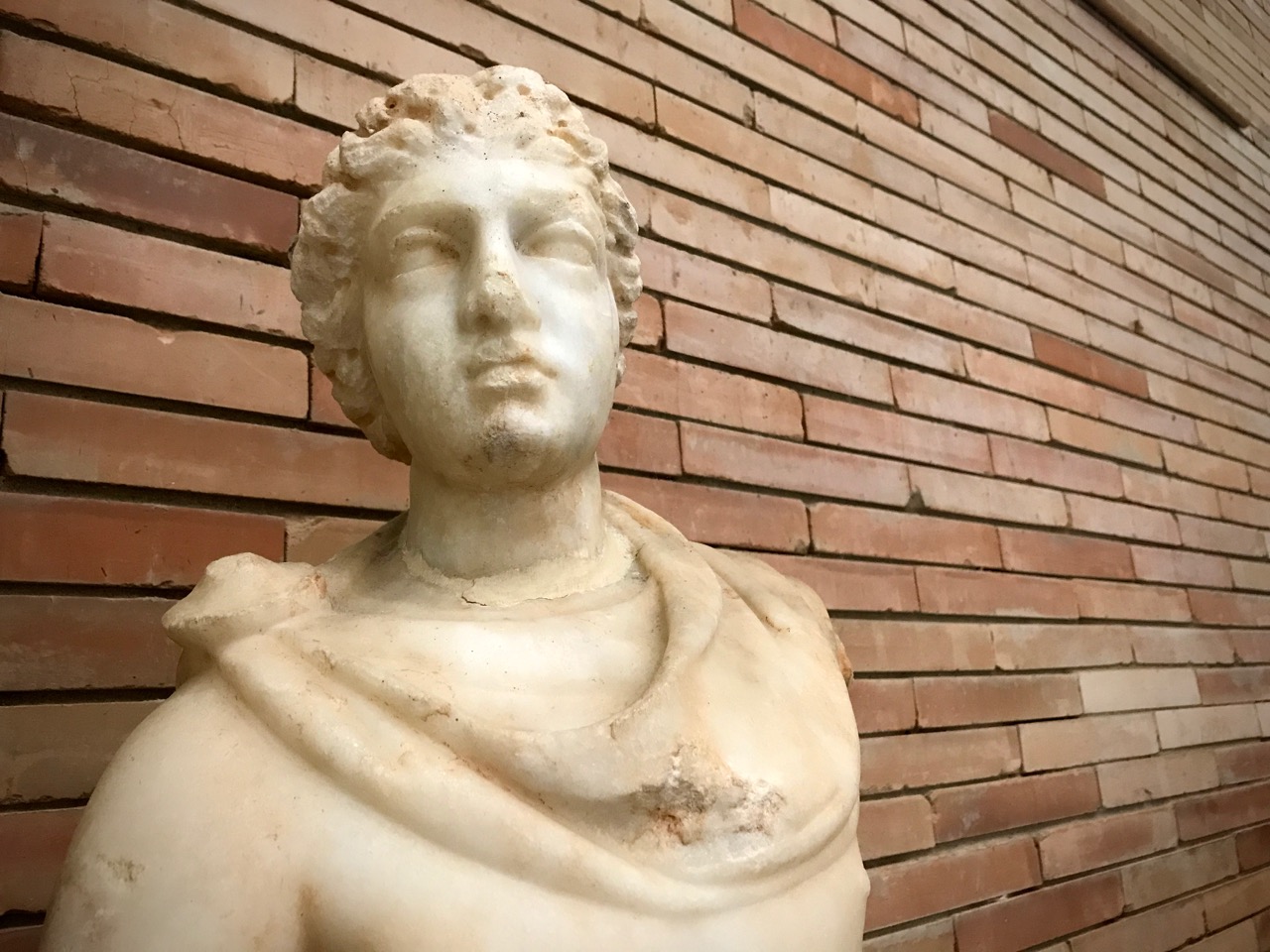
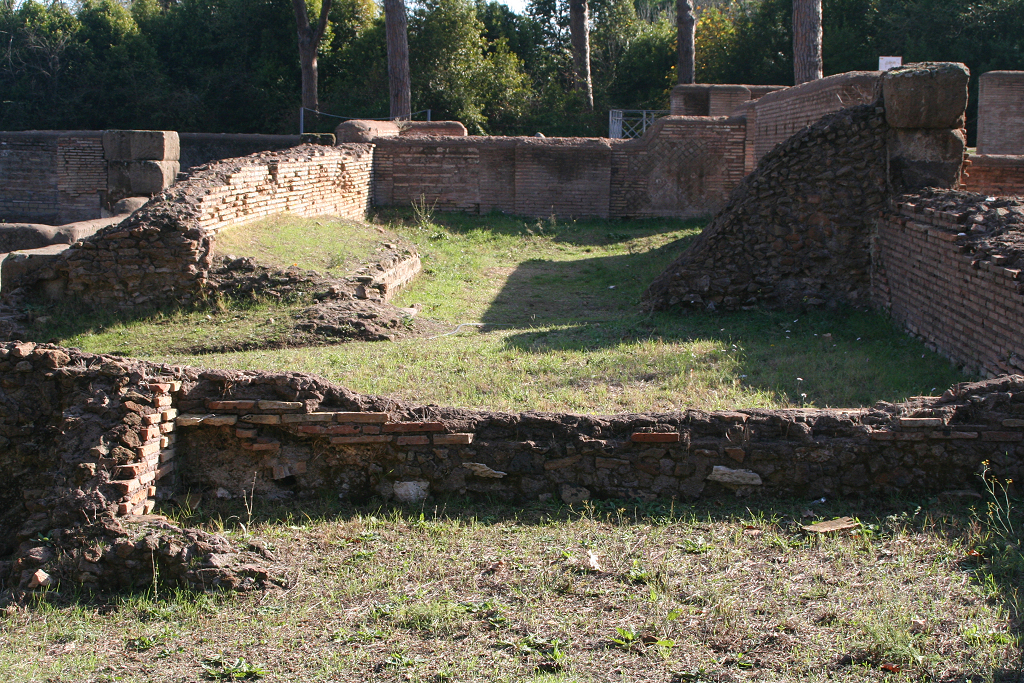
The Mithraeum near Porta Romana was connected to a Sacello, but the door was blocked.
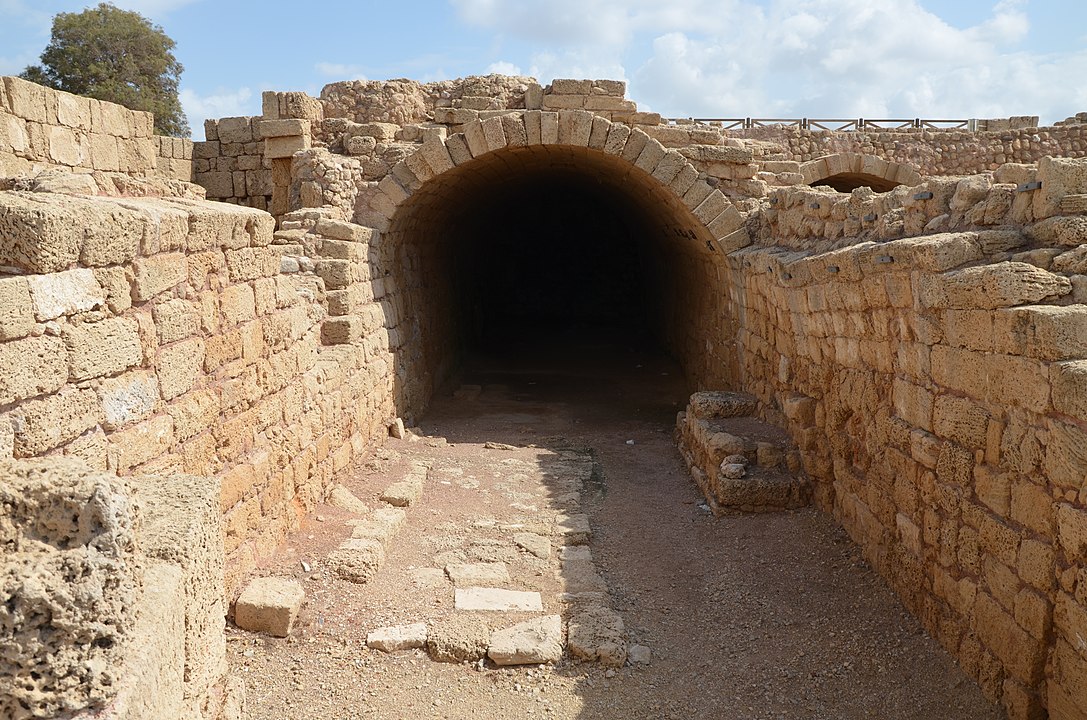
This shrine developed towards the end of 2nd century and remained active until beginning 4th.
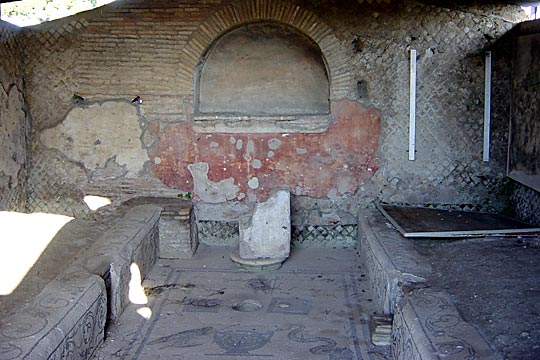
The name of the Mithraeum of the Seven Gates refers to the doors depicted in the mosaic that decorates the floor, symbolising the seven planets through which the souls of the initiates have to pass.
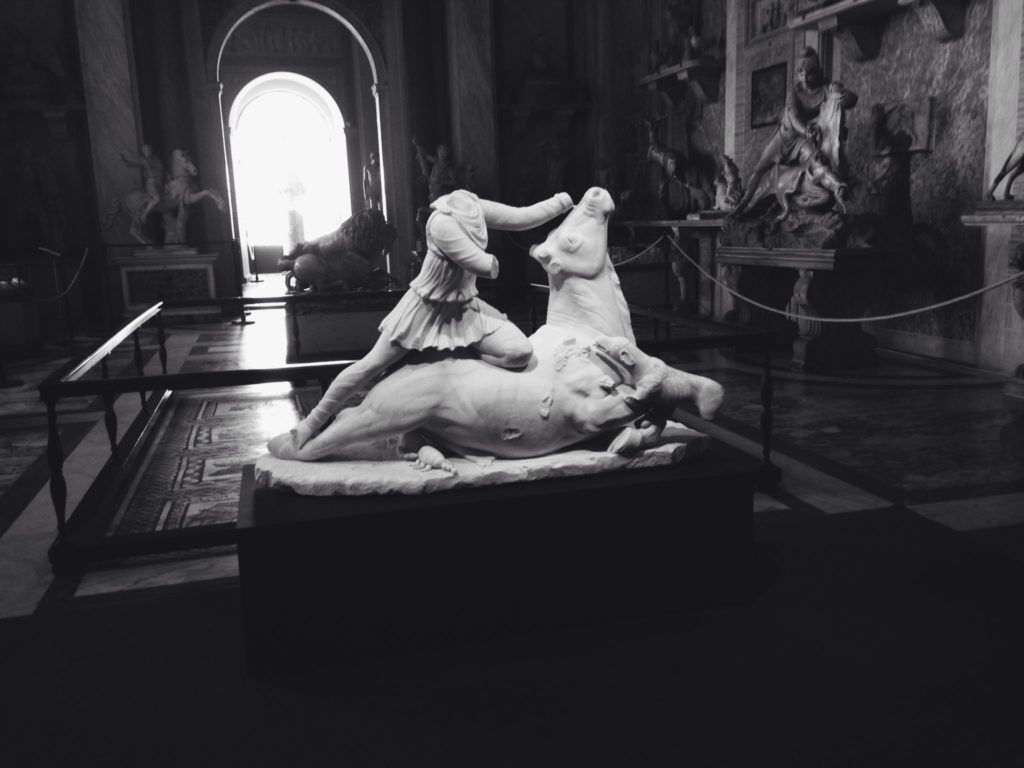
Votive sculpture of Mithras sacrificing the bull from the Mithraeum of Tarquinia.
The Mithras temple of Prilep is in a small grotto under the castle of Markovi-Kuli.
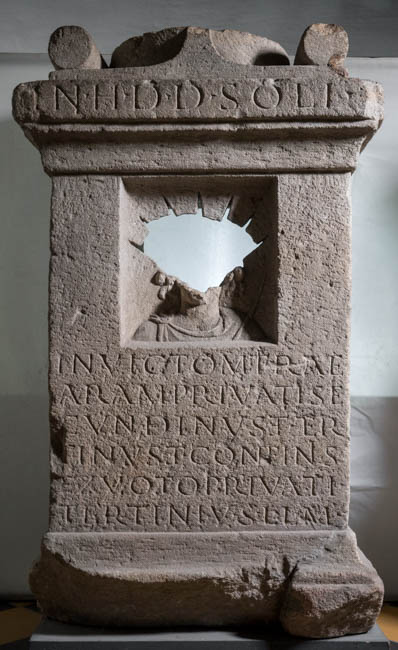
The altar of the Sun god belongs to the typology of the openwork altar to be illuminated from behind.
