Your selection in monuments gave 43 results.

A small woman's head crowned with flowers, found at the Mithraeum of Les Bolards (ancient Venetonimagus) in Lugdunensis.
Two small heads in Phrygian caps, possibly belonging to a tauroctony of Mithras, together with a fragment of a bull's foot and the mouth and neck of the dog, found at the Mithraeum of Les Bolards (ancient Venetonimagus) in Lugdunensis.
Fragmentary remains of a statuette of Cautopates in a short tunic, including a thigh, knee, and hand holding the end of a torch, found near the entrance of the Mithraeum at Les Bolards (ancient Venetonimagus) in Lugdunensis.
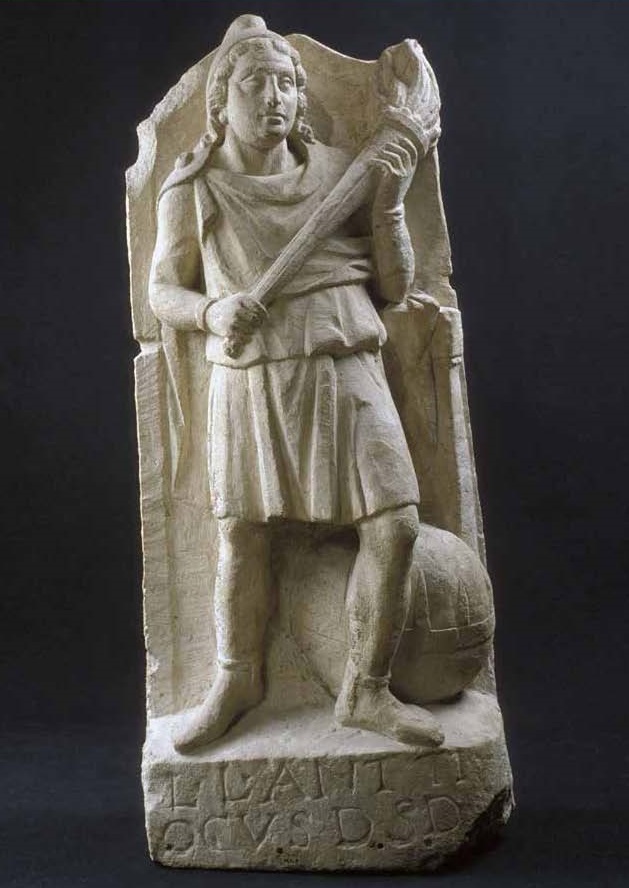
This monument representing Cautes with uncrossed legs was consecrated by a certain Anttiocus.
Pair of inscriptions from Lugdunum recorded in the Corpus Inscriptionum Latinarum.
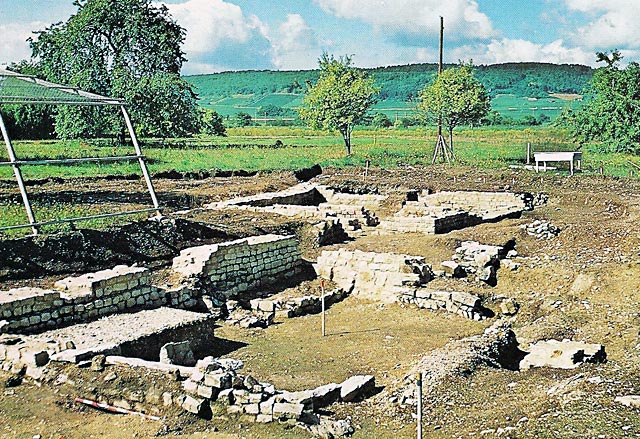
The Mithraeum des Bolards was integrated into a therapeutic cultural complex related to healing waters.
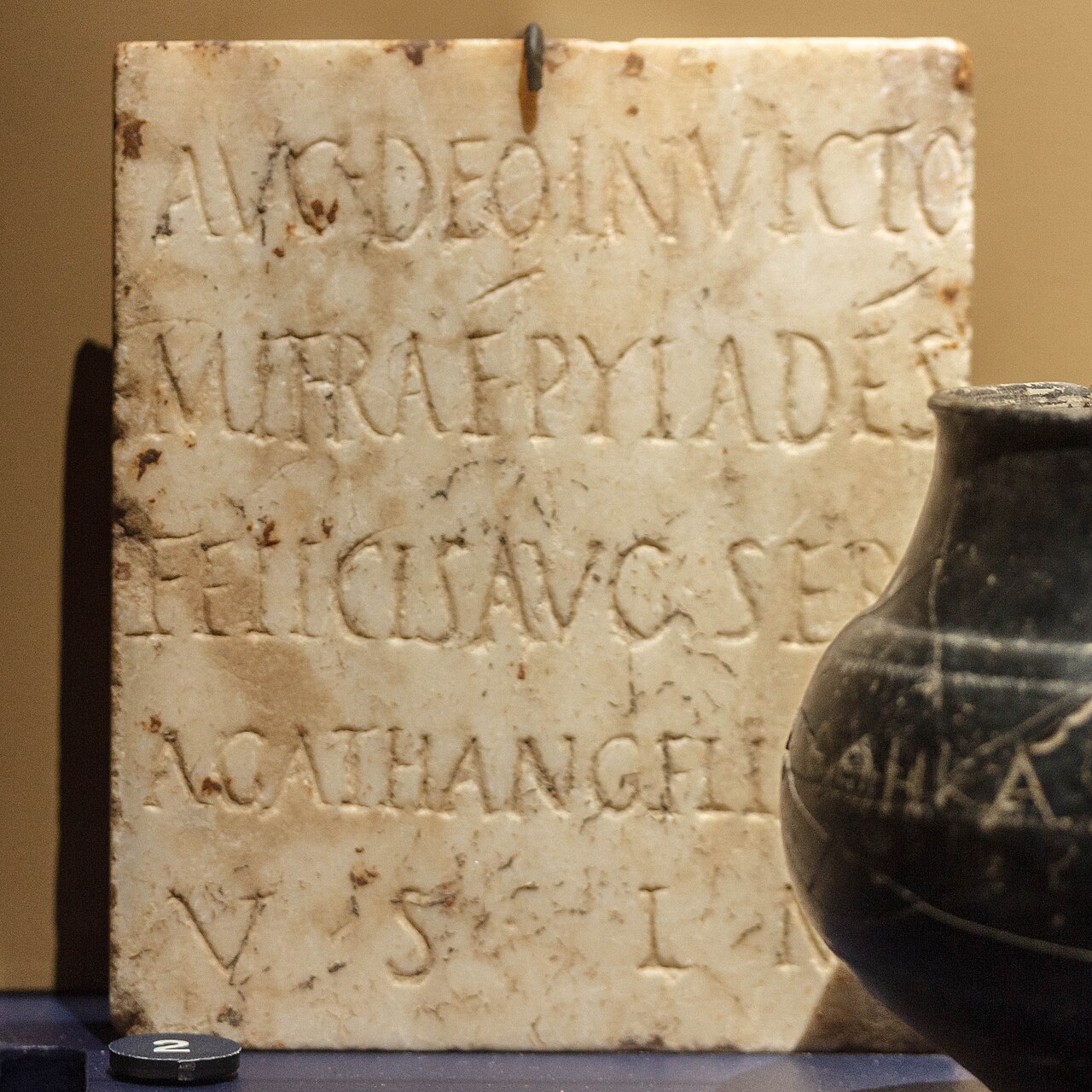
This marble plaque from Iuliomagus, Roman Angers, bears a rare dedication to Mithras by Pylades, a slave of an imperial slave connected to the Roman administration in Gaul.
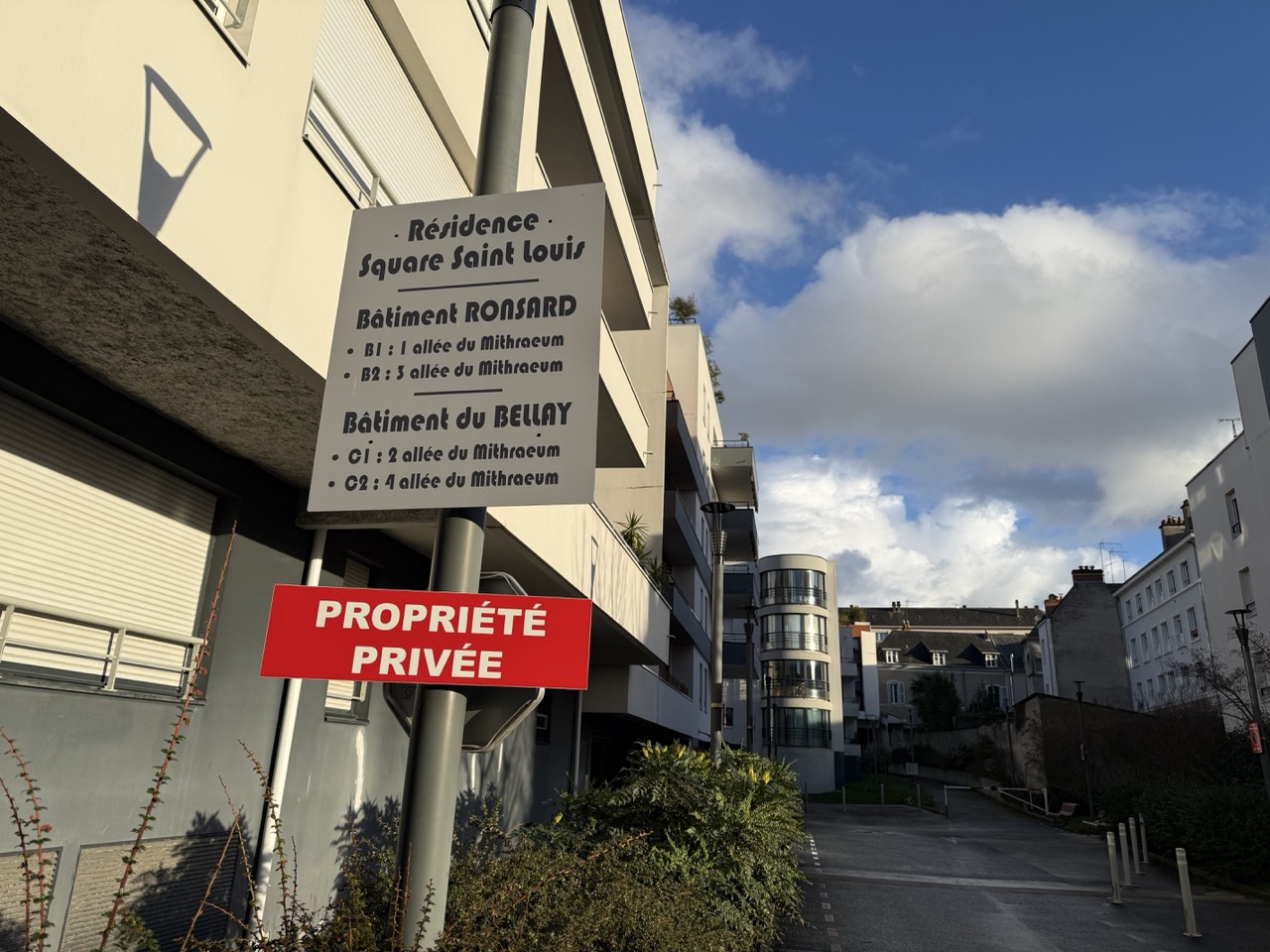
The Mithraeum of Angers, excavated during a preventive operation and subsequently dismantled in 2010, yielded numerous objects, including coins, oil lamps, and a ceramic vessel bearing a votive inscription to the invincible god Mithras.
This fragmentary tauroctony from Roman Gaul preserves a striking raven behind Mithras’ cloak and the bust of Sol in the upper corner.
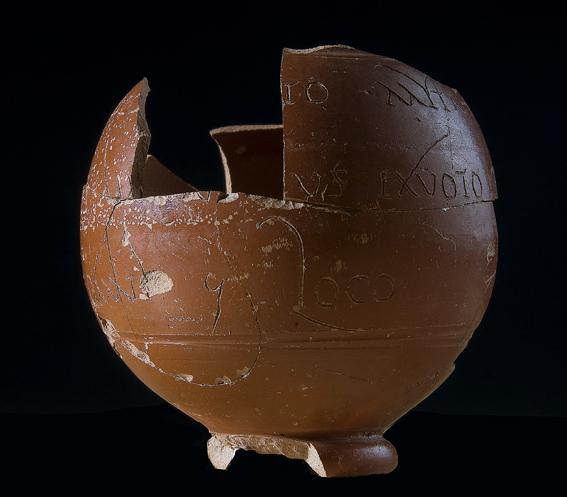
The spherical ceramic cup found at the Mithraeum in Angers bears an inscription to the unconquered god Mithras.
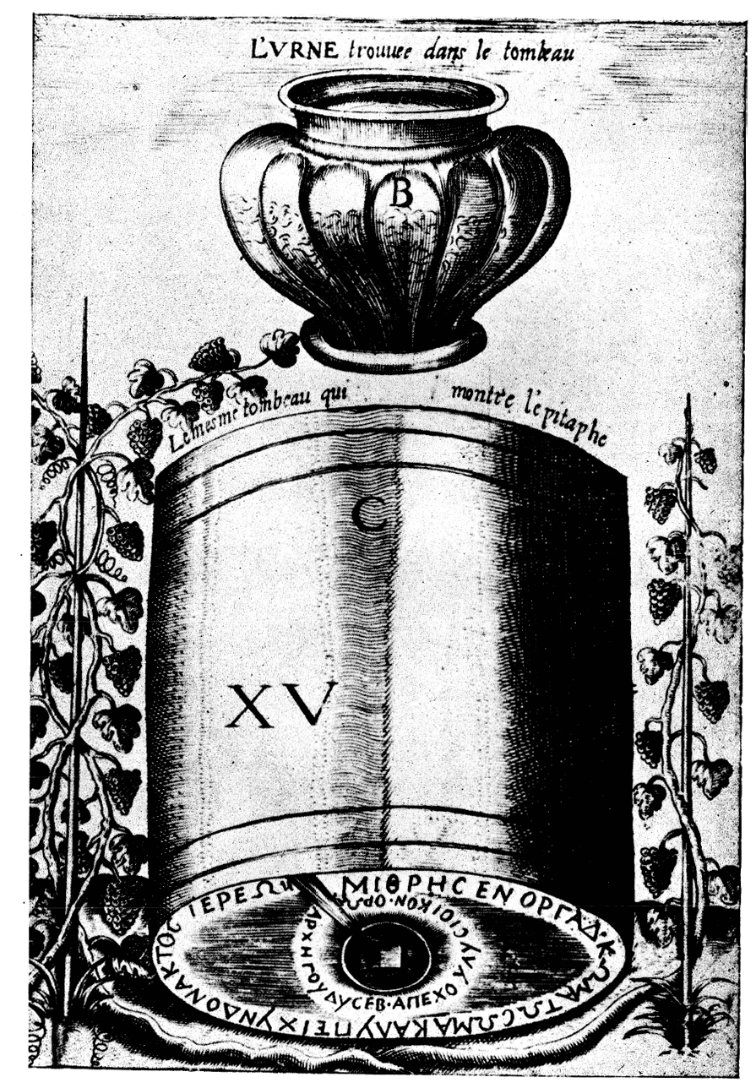
This funerary inscription, engraved on a stone urn discovered near Roman Dijon, mentions a certain Chyndonax, described as a priestly leader of Mithras.
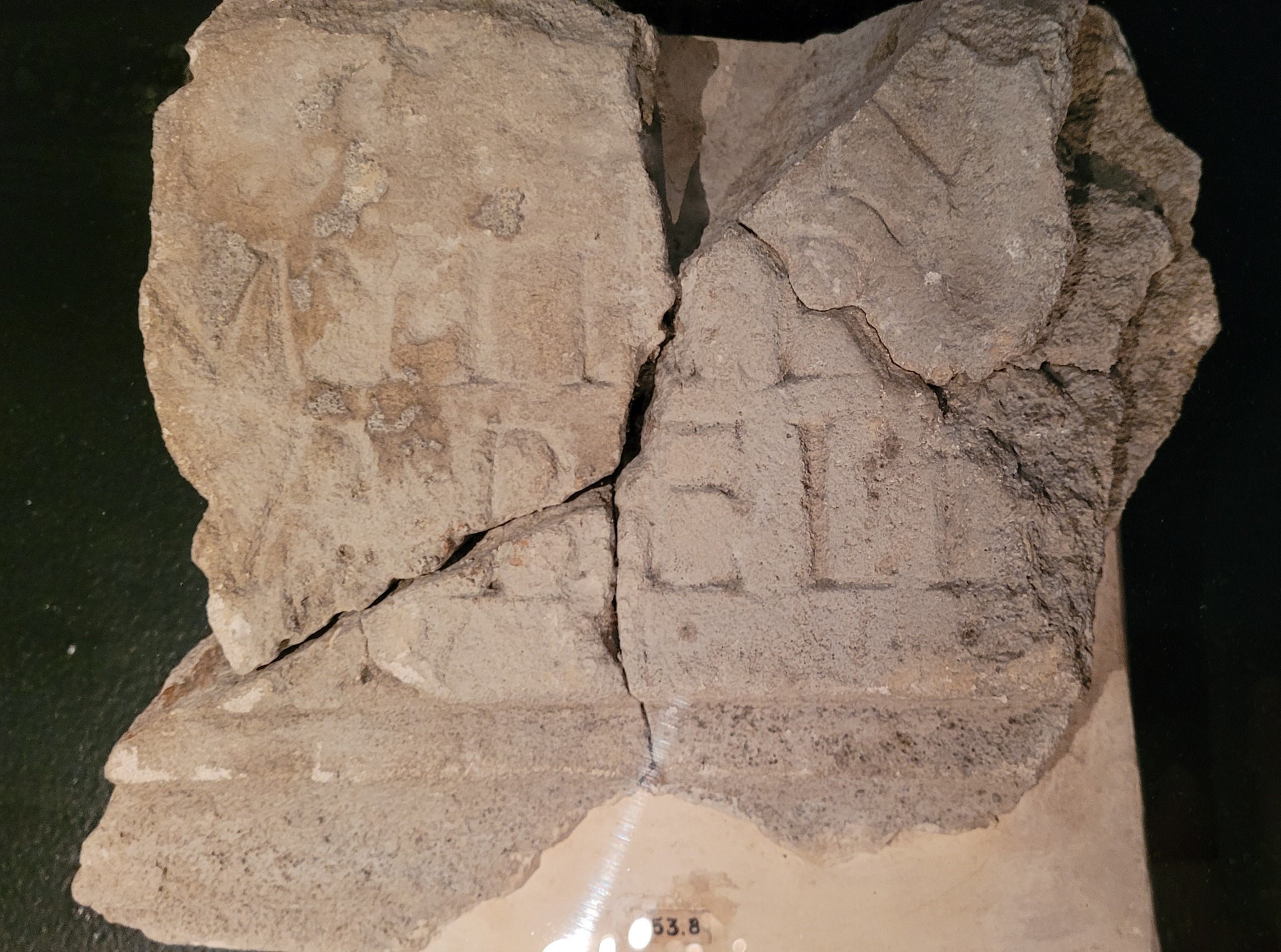
Fragment of limestone from Porêts, which was used in the 4th century.
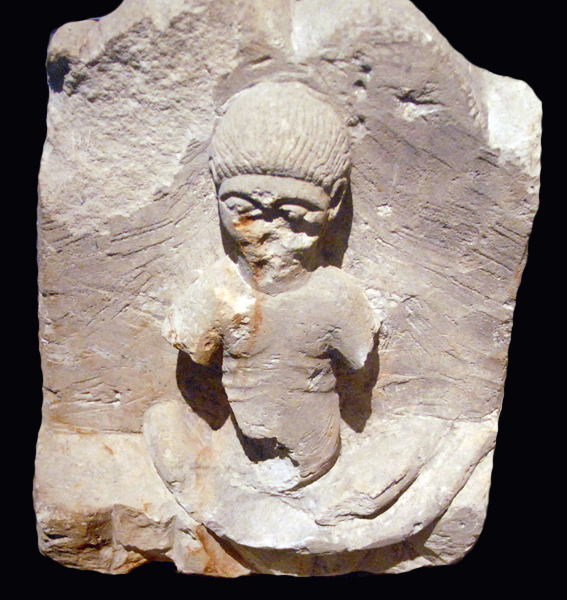
A serpent emerging from a umbilicus at the side of the stele coils over Mithras naked body.
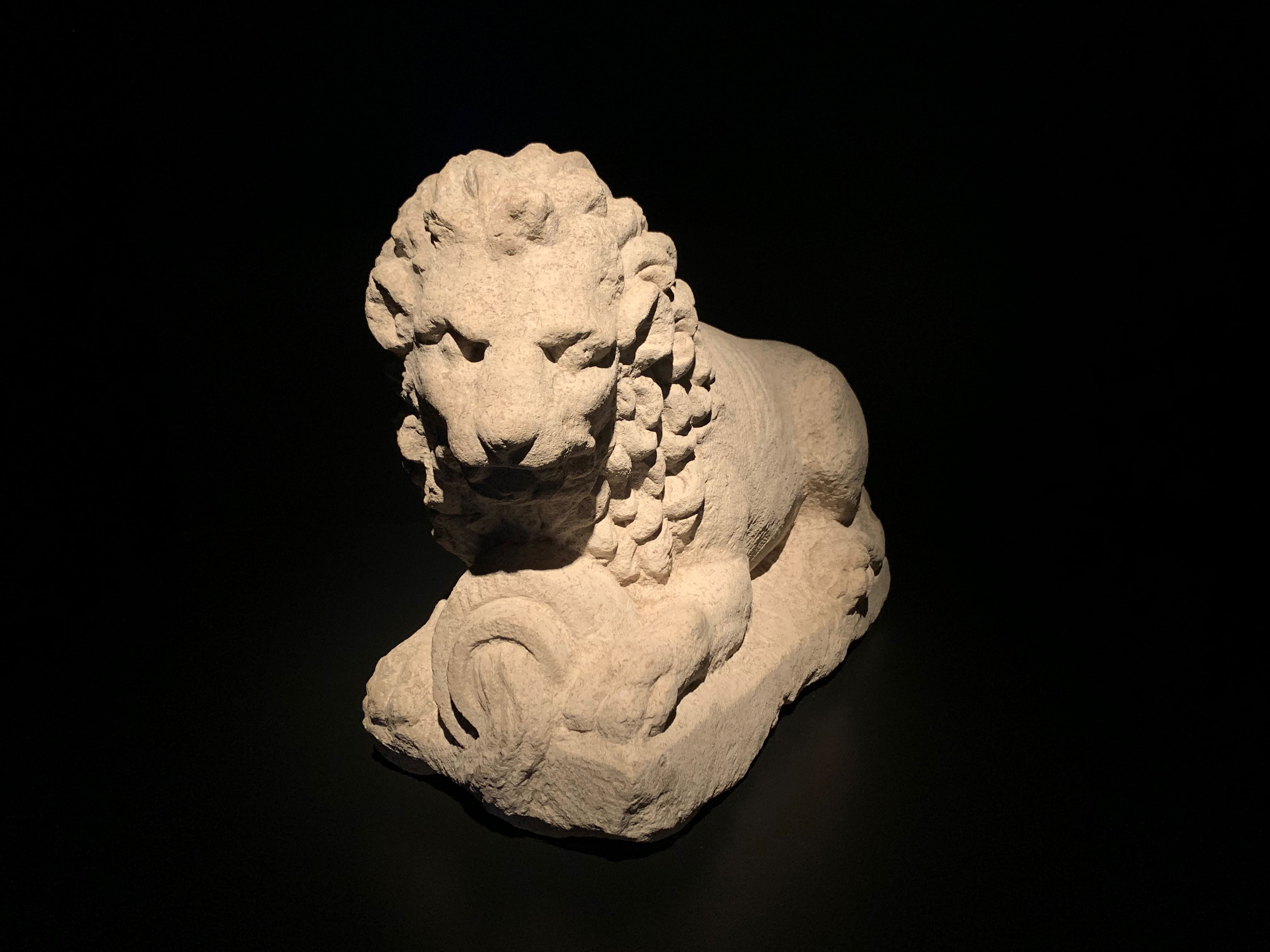
A limestone lion holding a flowing urn, discovered at the entrance of the Mithraeum of Les Bolards, reflects the ritual significance of water within the cult of Mithras.
A number of metal objects and weapons have been found in the Mithraeum of Les Bolards, close to Nuits-Saint-Georges in France.
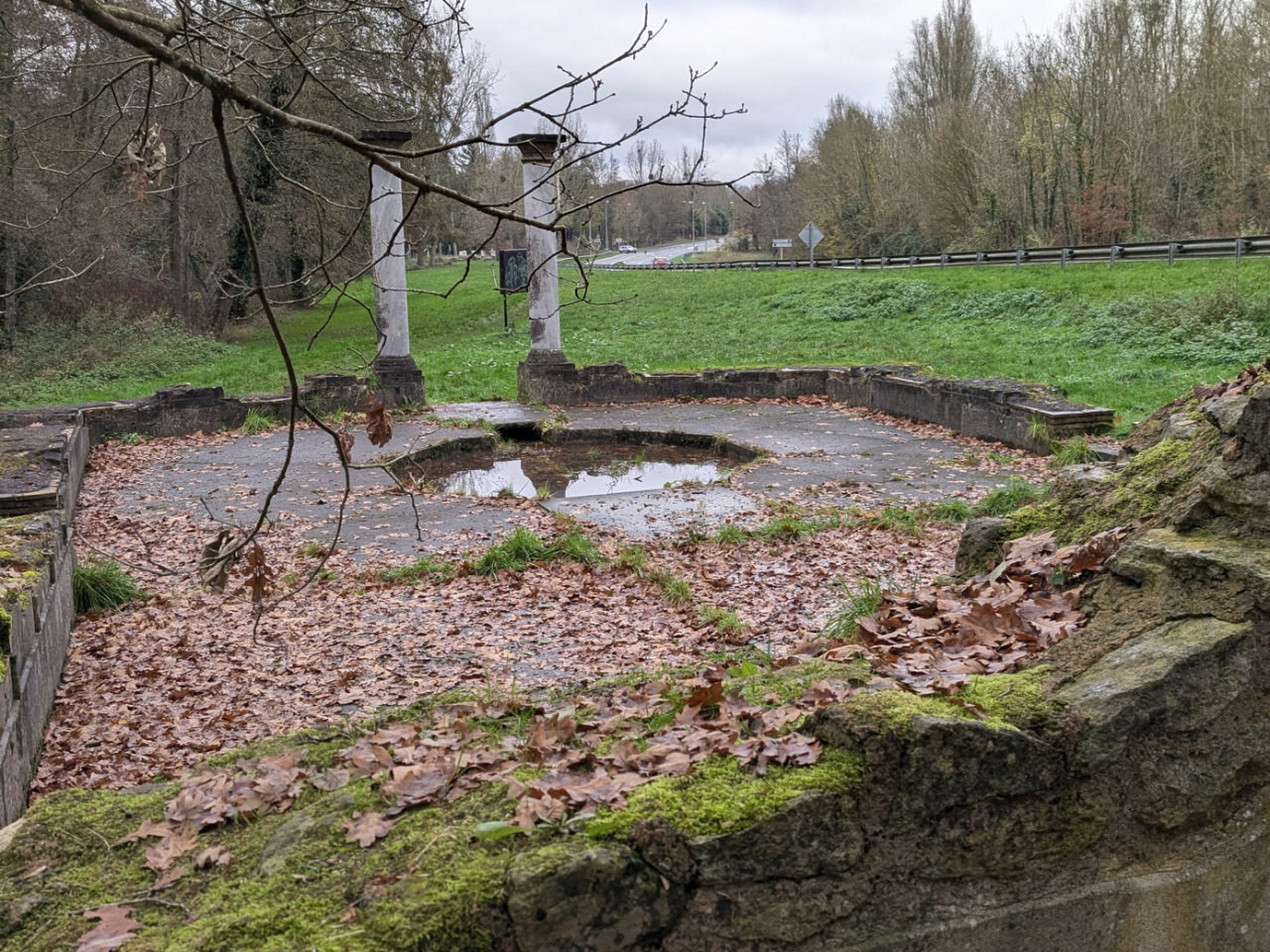
In the second half of the 4th century, a Mithraic temple was established within an earlier spring sanctuary at Septeuil, where the cult of the nymphs and Mithraic practices appear to have coexisted.
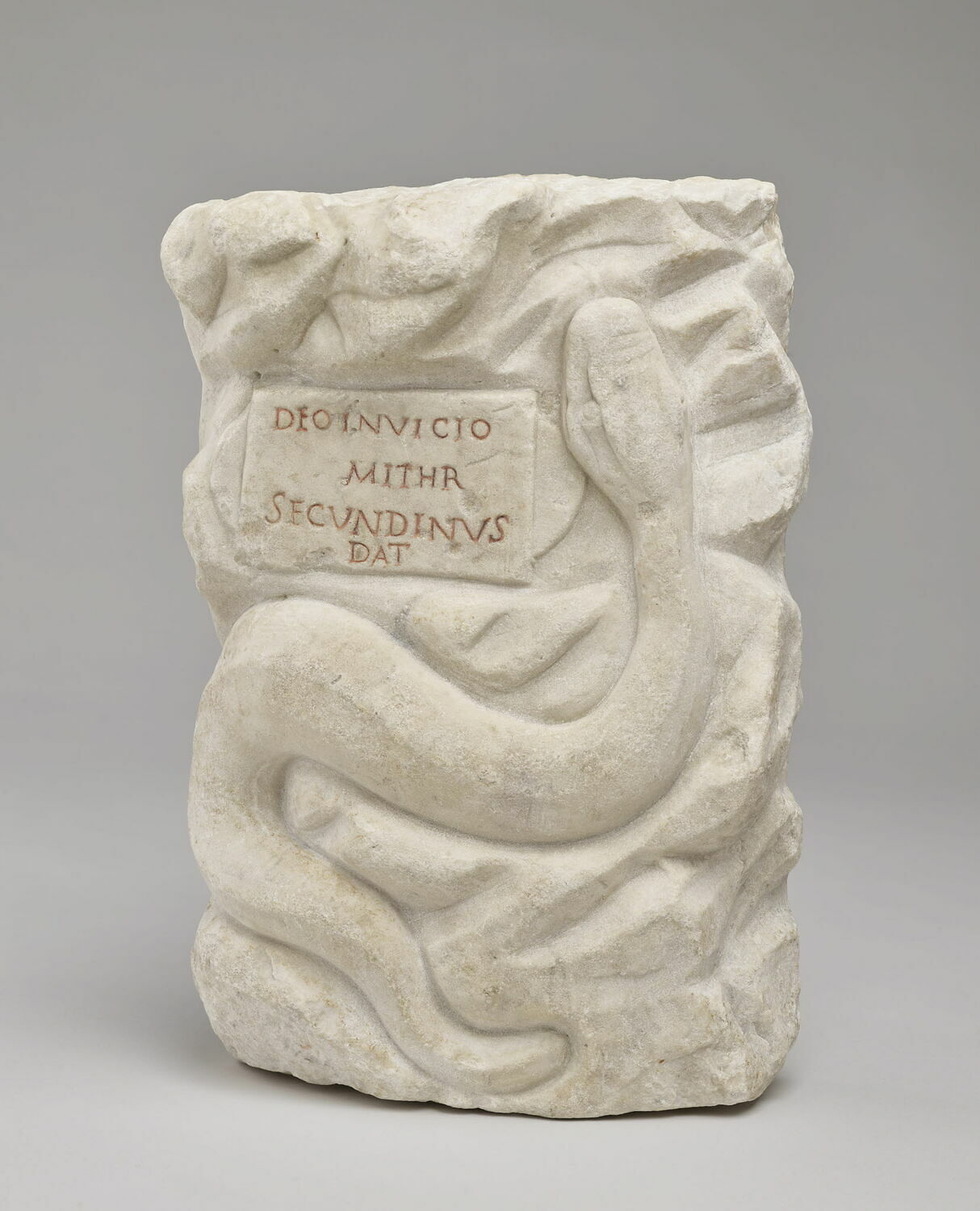
There is no consensus on the authenticity of this monument erected by a certain Secundinus in Lugdunum, Gallia.

A statue and a relief of Cautes have been found in an ancient Gallo-Roman site in the commune of Dyo.

Excavations in 1979 on the remains of the church of Notre-Dame d'Avigonet in Mandelieu, Alpes-Maritimes, brought to light a small mithraeum.
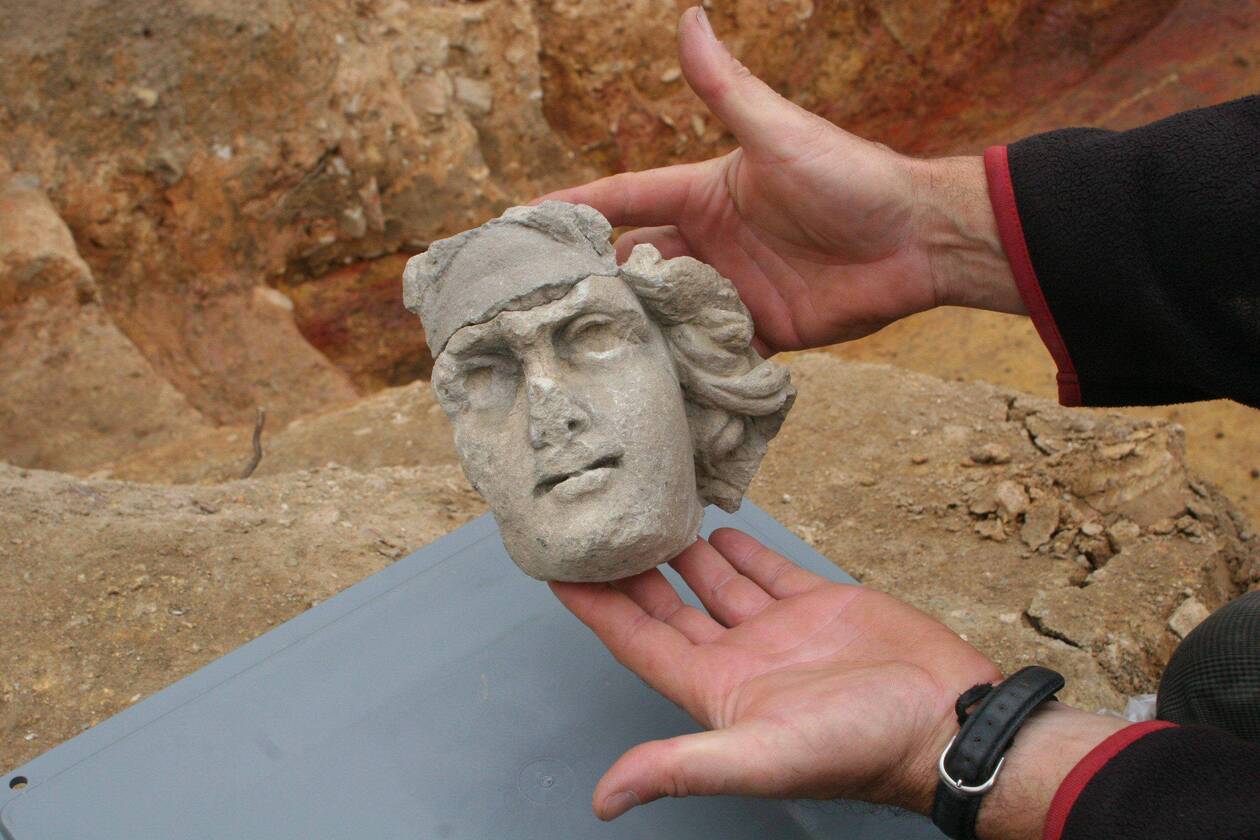
The head of Mithras of Angers has been found a four months after the main relief.
