Your selection in monuments gave 68 results.

Around the niche of the Dura Europos Mithraeum fragments of a series of small paintings set in a semicircular band of panels were found.
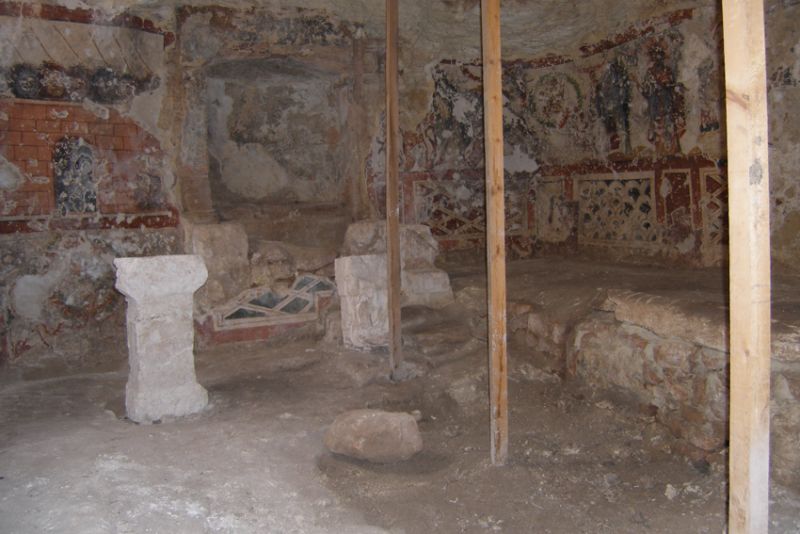
The Mithraeum of Hauarte or Hawarte, which preserves colourful frescoes, it’s the latest know and used.
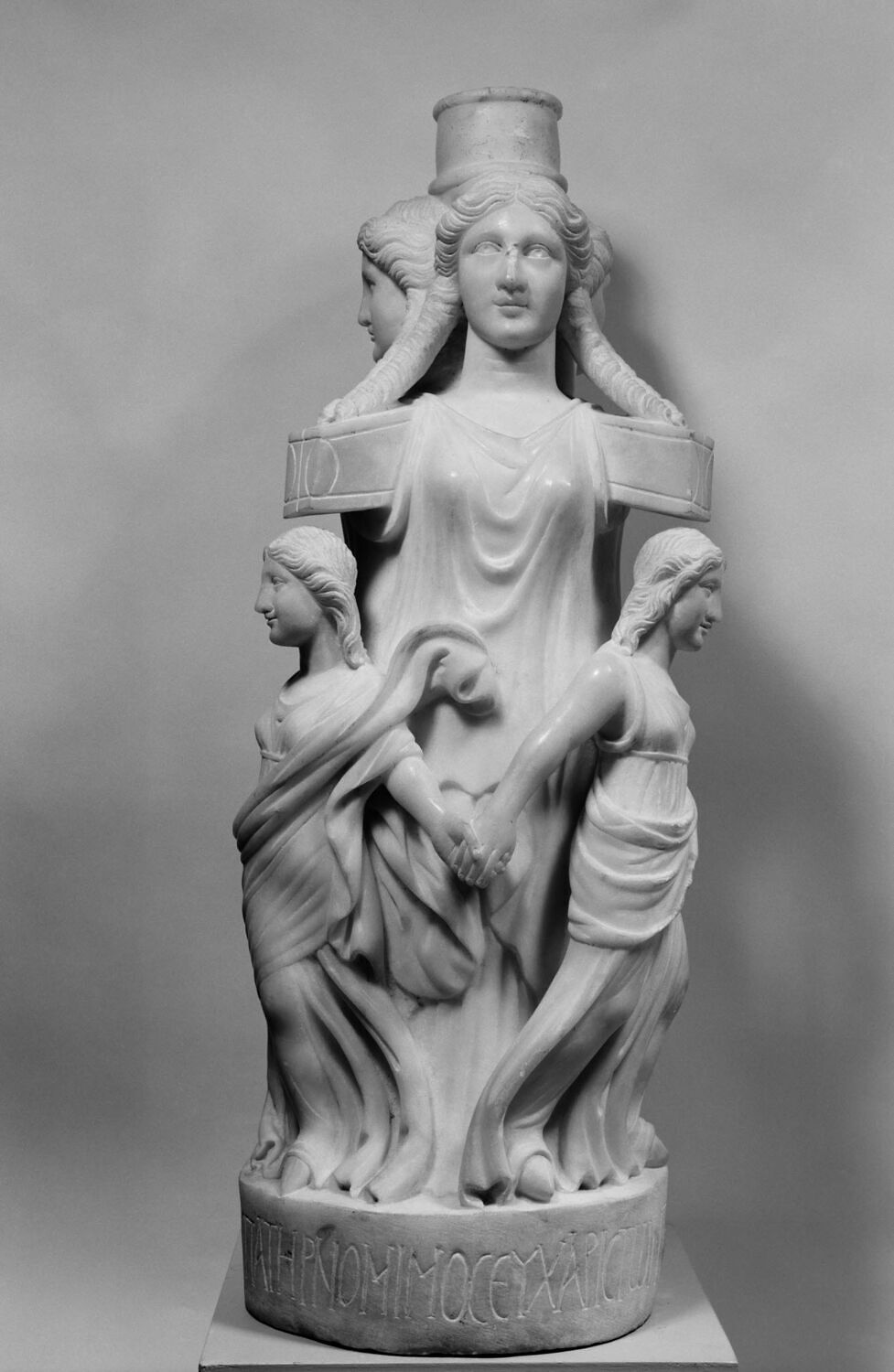
The Hekataion of Sidon, which depicts Hekate in her trimorphic form surrounded by three dancing girls, is the only example found to date in connection with the Mithraic cult.
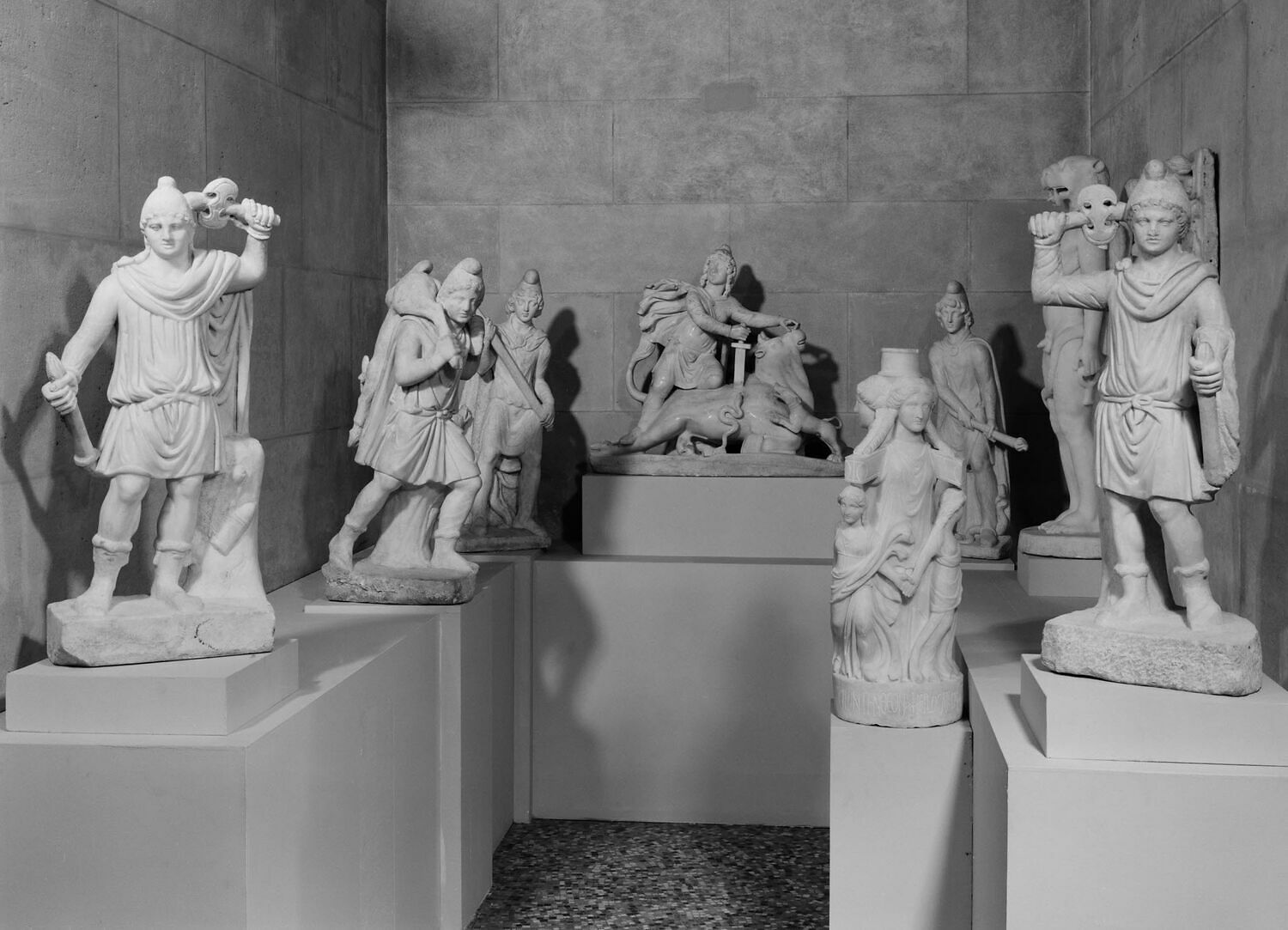
The Mithraeum of Sidon may have escaped destruction because the Mithras worshippers walled up the entrance to the underground sanctuary.

Greek graffiti scratched on wall plaster, recording a list of everyday expenses from Dura-Europos, Roman Syria.

New evidence for the cult of Mithras and the religious practices of Legio IV Scythica at the Roman frontier city of Zeugma on the Euphrates.
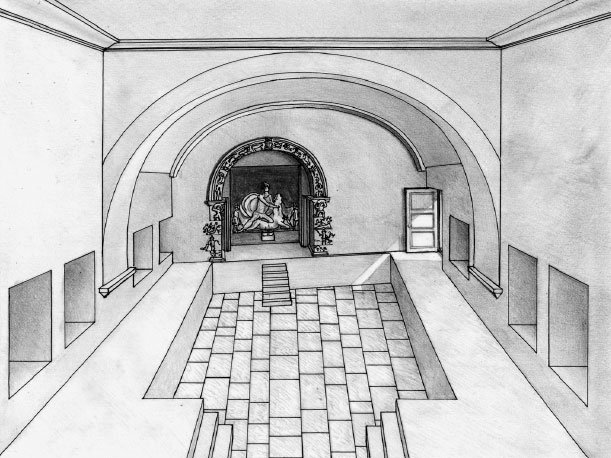
The Mithraeum of Saara, Syria, has been identified through the deciphering of the remains of the iconographic programme on its arch.
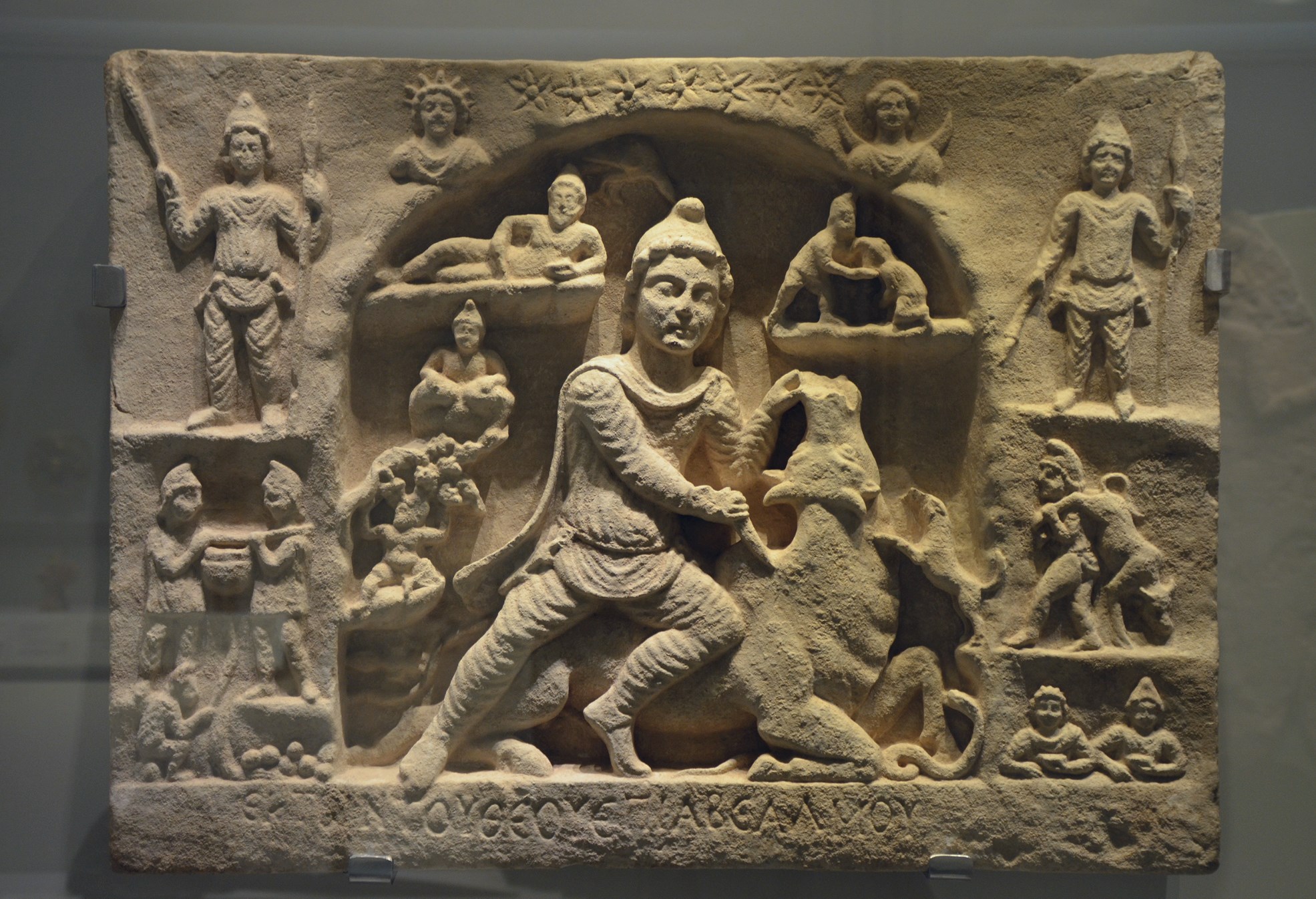

"The remaining figure on this monument, Herakles, was previously misidentified as Apollo on this remarkable black basalt tablet from Samsat, known in Roman times as Samosata.

.jpg)
The controversial Italian journalist Edmon Durighello discovered this marble statue of a young naked Aion in 1887.
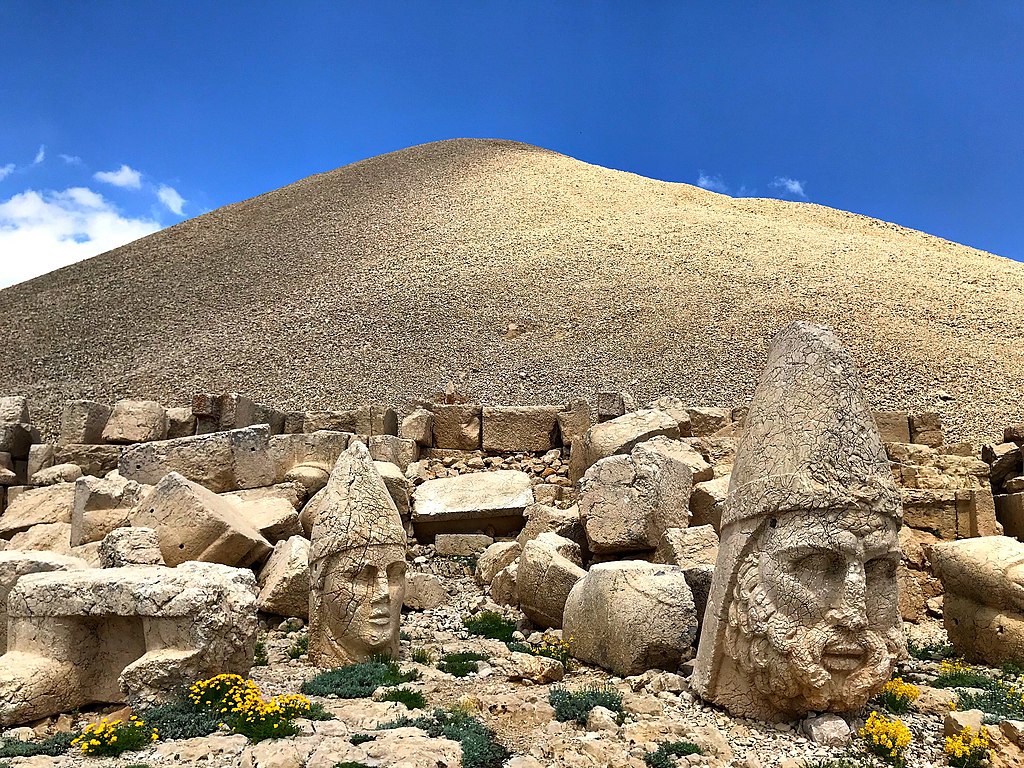
Mount Nemrut or Nemrud is one of the highest peaks in the eastern Taurus Mountains, southeastern Turkey. On its summit large statues stand around what is supposed to be a royal tomb from the 1st century BC.
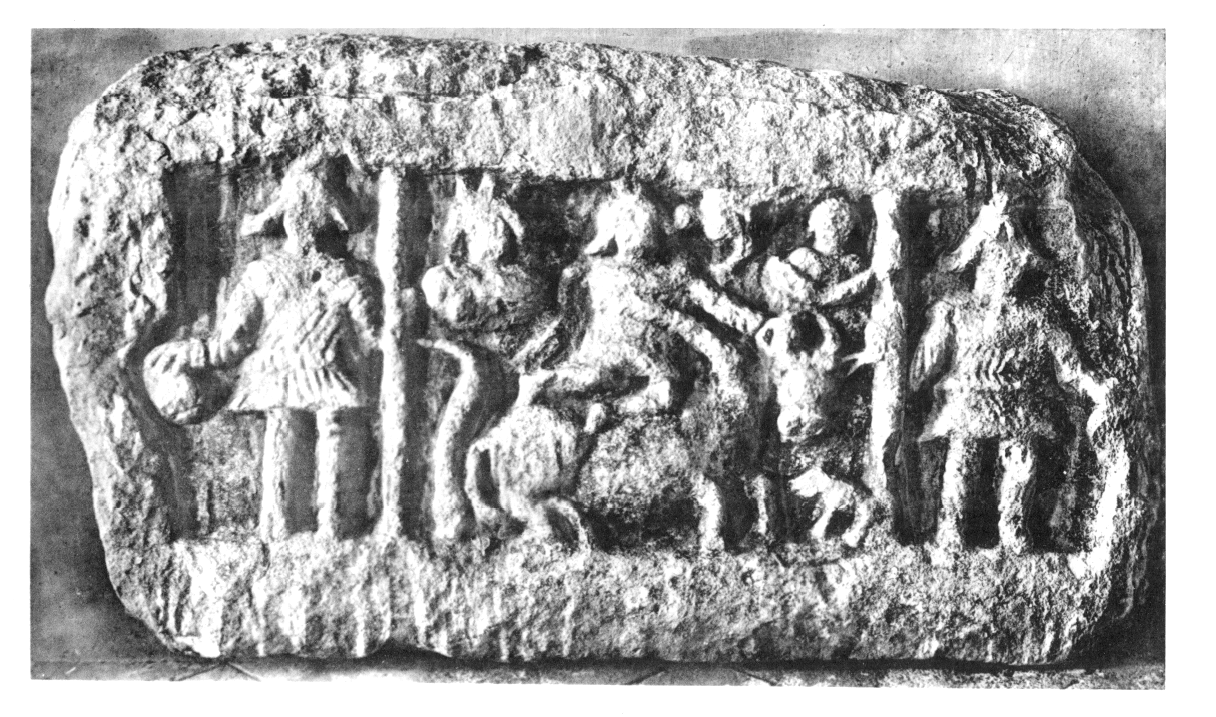
This relief of Mithras as bull slayer is surrounded by Cautes and Cautopates with their usual torch plus an oval object.
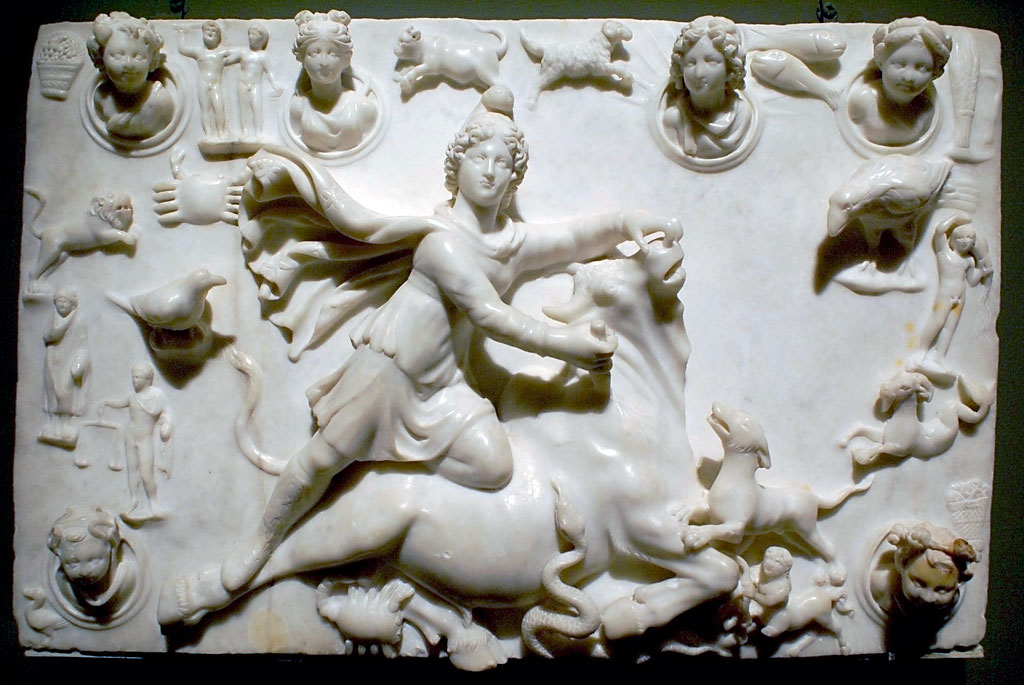
The tauroctony relief of Sidon depicts the signs of the zodiac and the four seasons, among other familiar features.
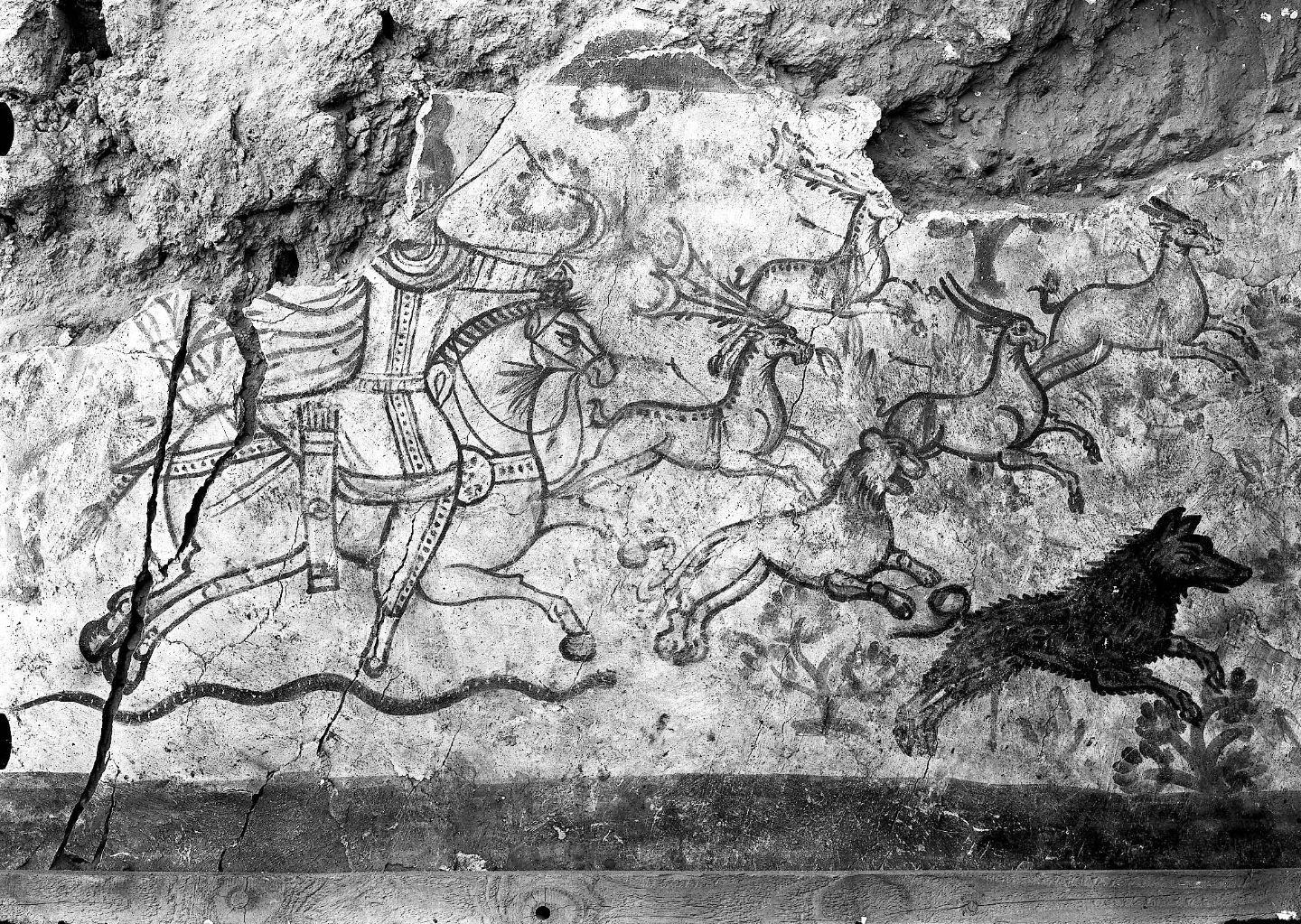
In this fresco from Dura Europos, Mithras is represented as a hunter accompanied by the lion and the serpent.
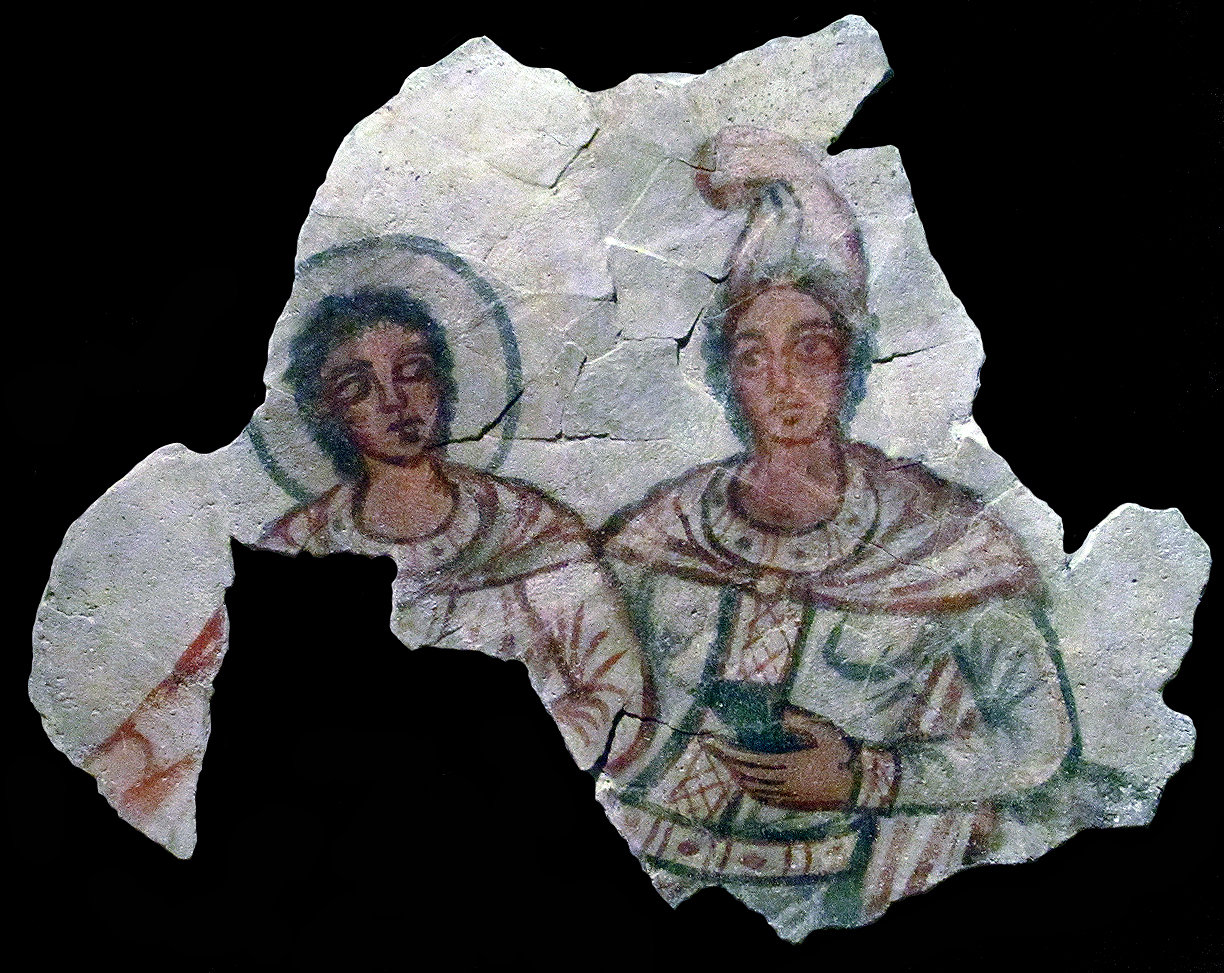
Sol watches Mithras as he gazes Mithras gazes up to heaven while sharing the sacred meal.
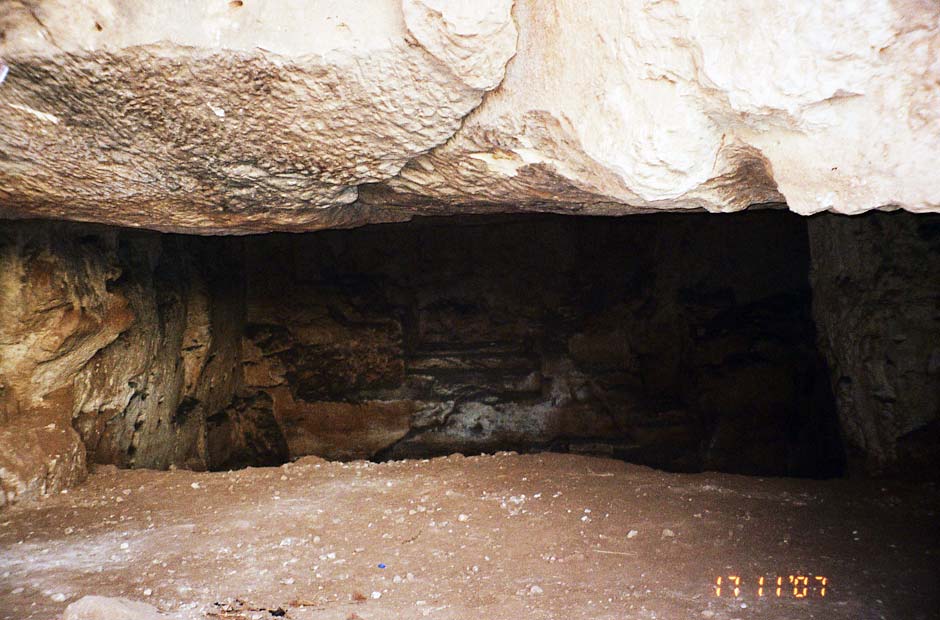
The Mithraea of Doliche, ancient Dülük, Turkey, are unique in that they represent two distinct shrines on the same site.
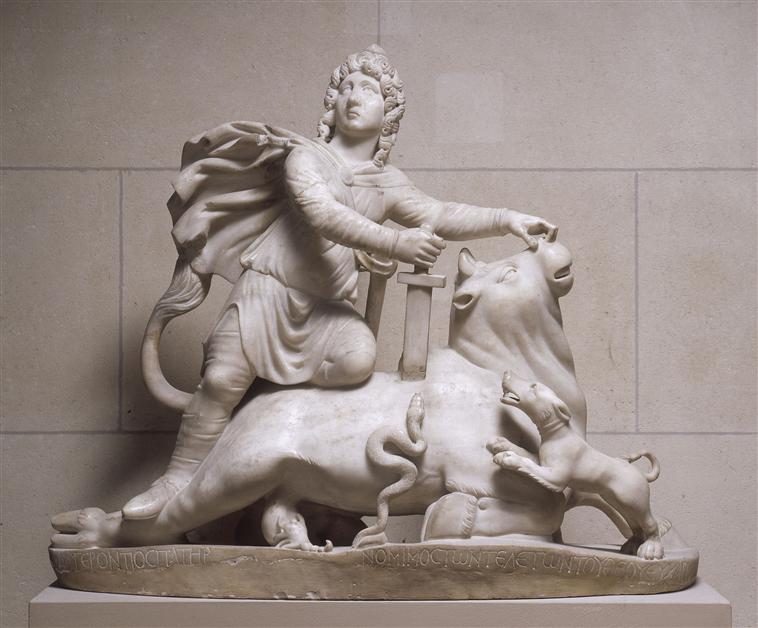
The Mithras killing the bull sculpture from Sidon, currently Lebanon.
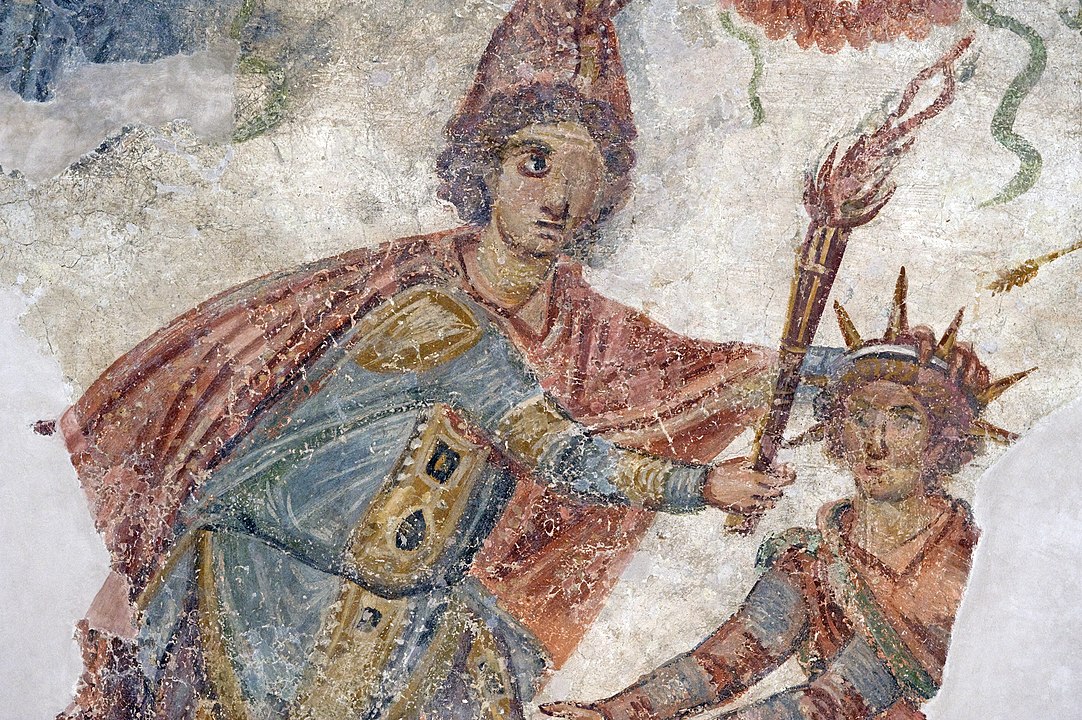
Fresco du Mithraeum de Hawarte, Syria, depicts Mithras' victory over the Sun.
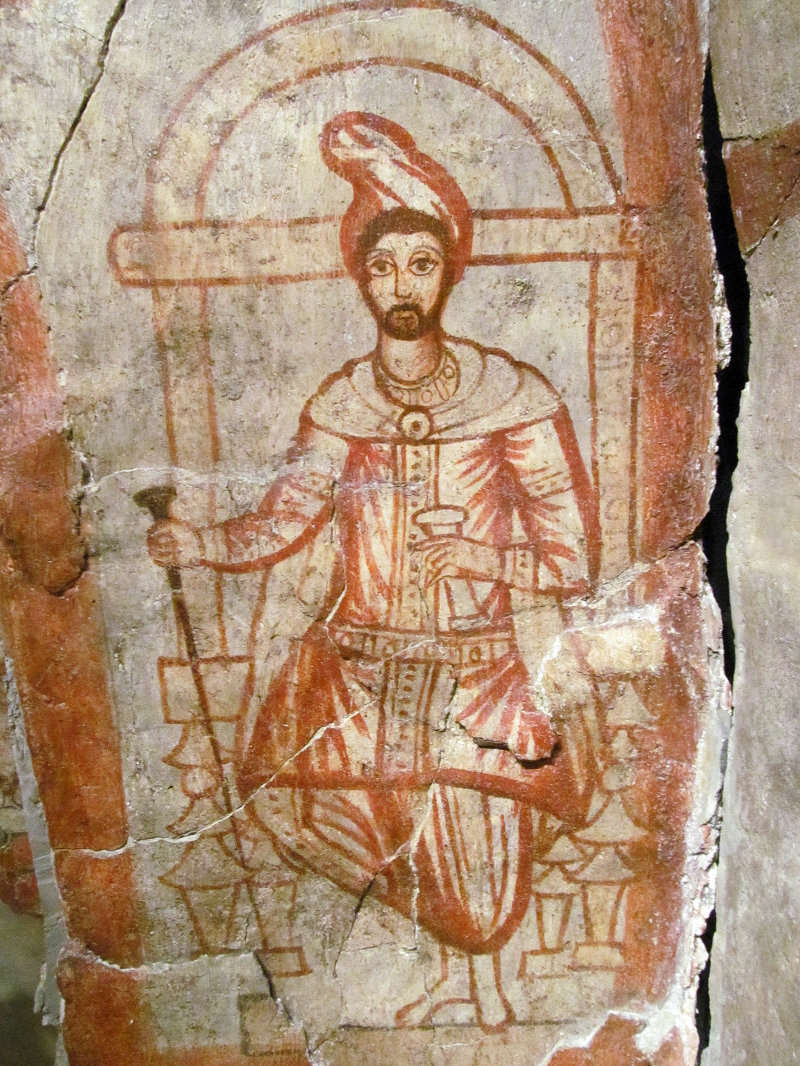
Some scholars have speculated that the scrolls both figures hold in their hands represent Eastern doctrines brought to the Western world.
