Your selection in monuments gave 291 results.
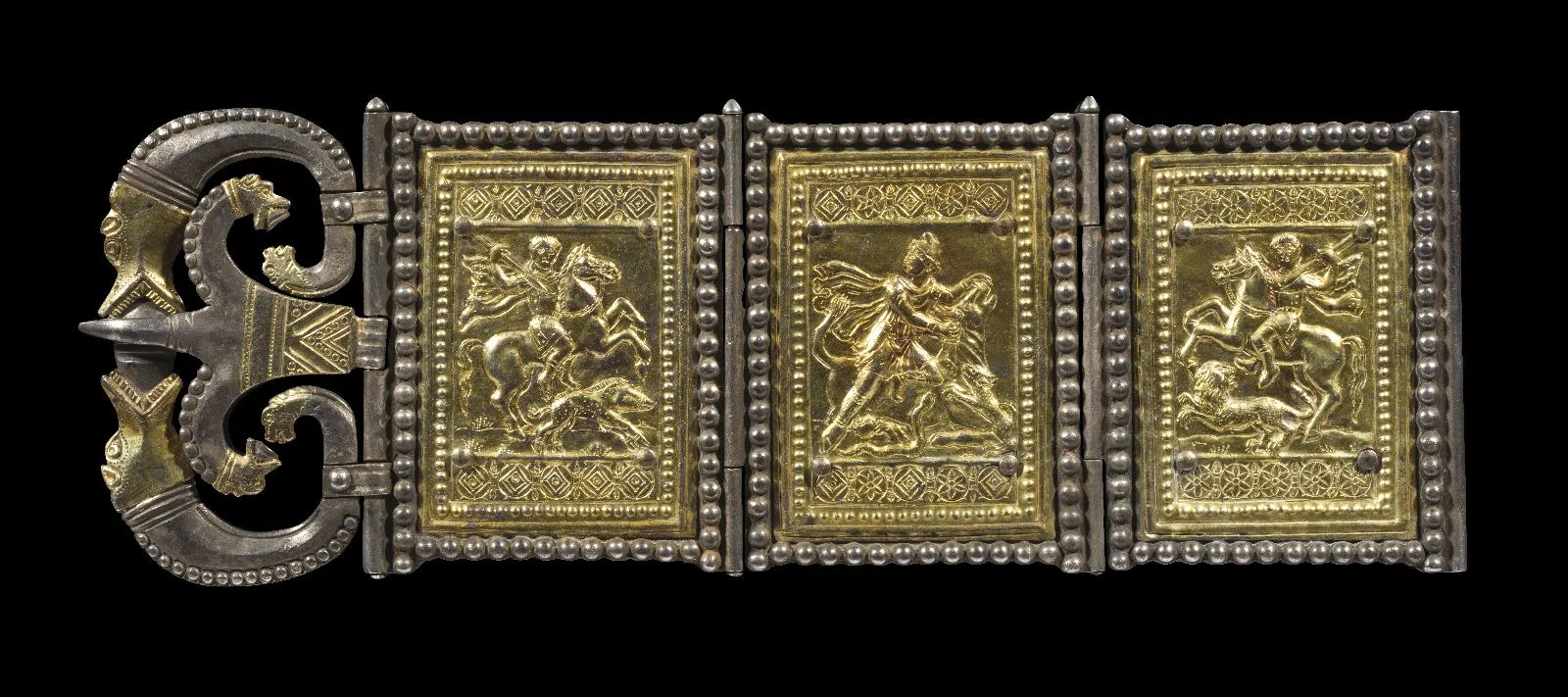
Silver belt fitting with Mithras tauroctony and aristocratic hunting horsemen, fourth century AD.
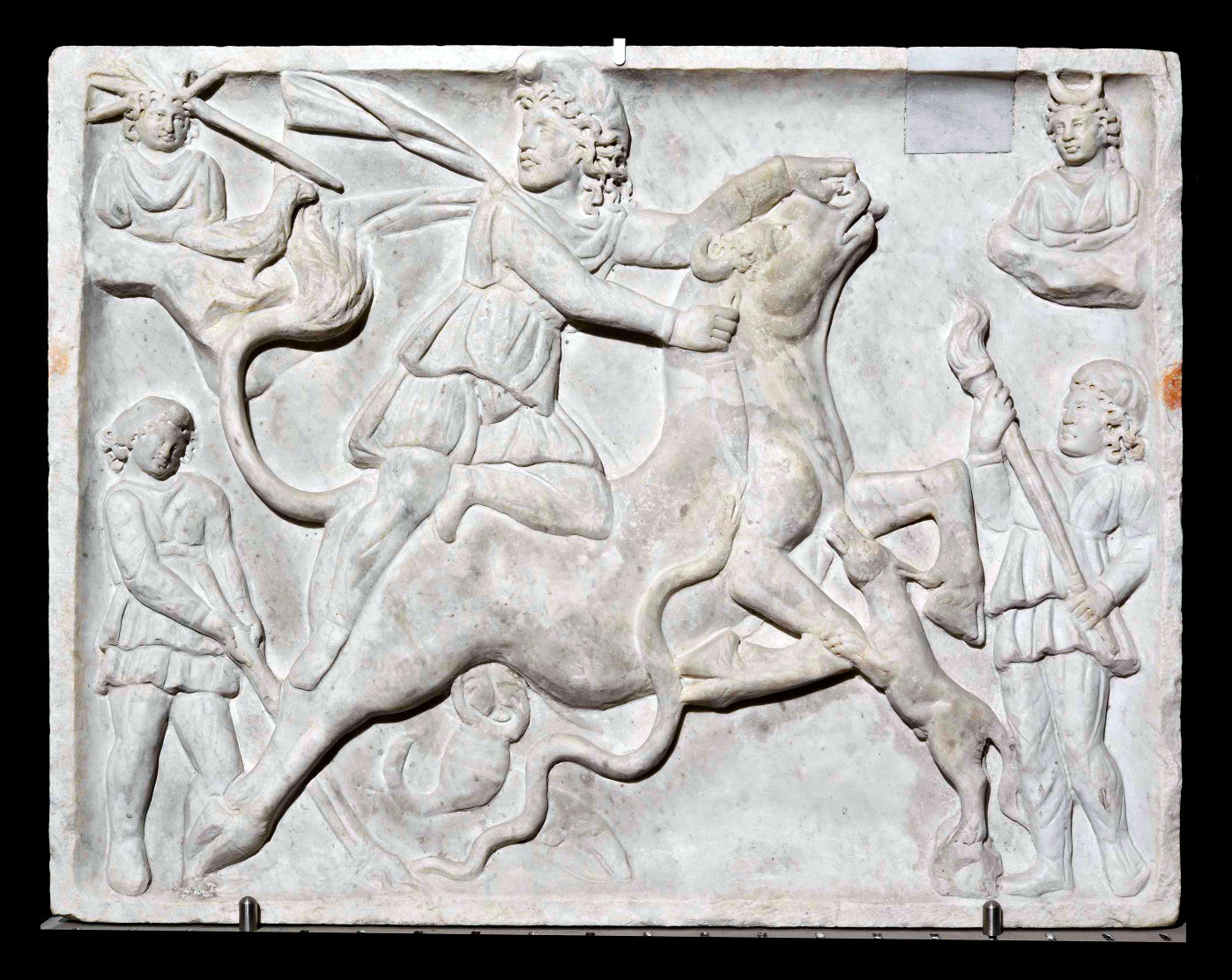
It is not certain that the marble relief of Mithras killing the bull was found on Capri, in the cave of Matromania, where a Mithraeum could have been established.
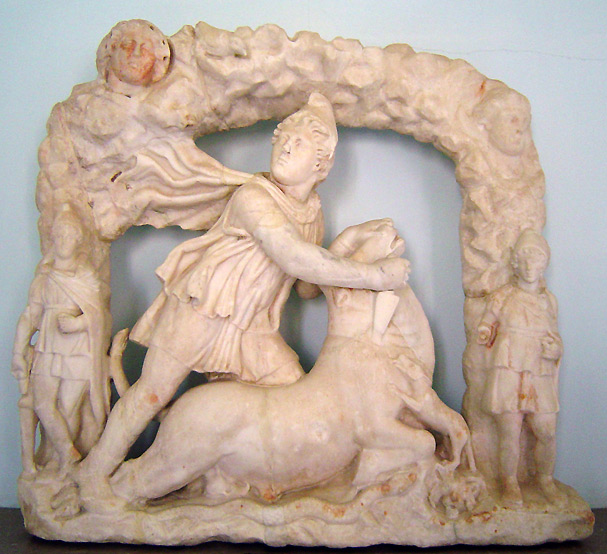
The assumed find-place of the Mithras Tauroctonus of Palermo is uncertain.
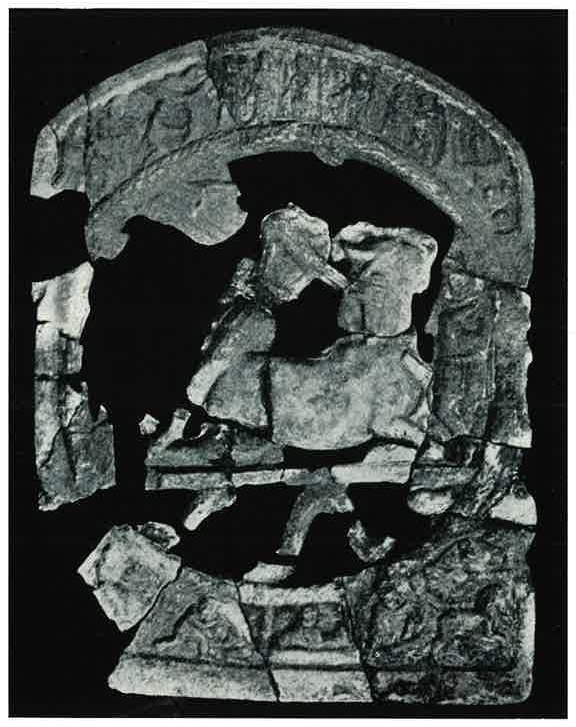
White marble tauroctony relief in several fragments from the Mithraeum at Biljanovac, Moesia Superior, depicting the standard bull-slaying with the full iconographic programme.
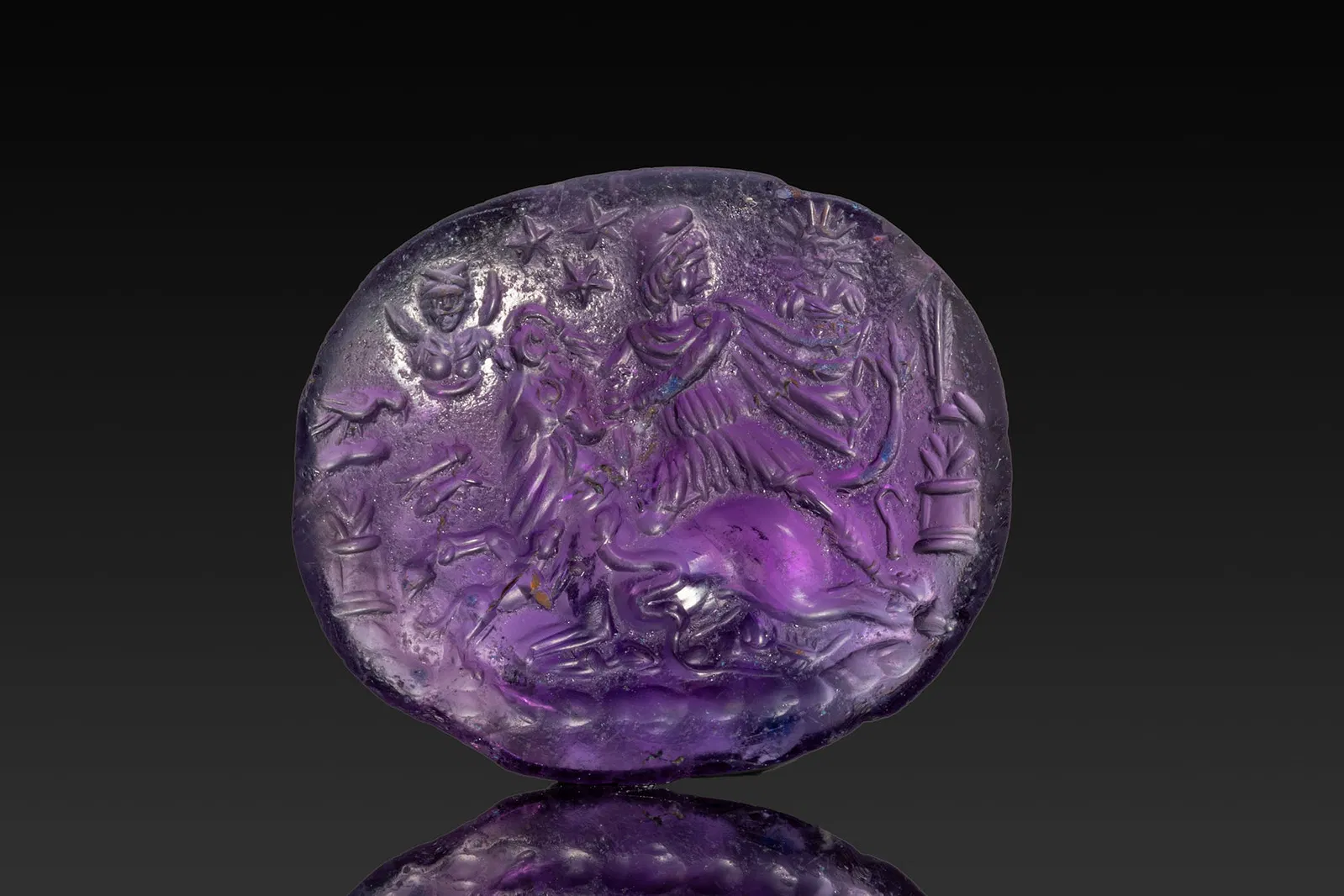
Amethyst intaglio engraved with Mithras slaying the bull, accompanied by Sol, Luna and other canonical Mithraic symbols.

Fragmentary tauroctony preserving Mithras, the torchbearers, Sol and Luna from the sanctuary at Aïtodor.
Corner fragment preserving the feet and lowered torch of the Mithraic torchbearer Cautopates.
Small surviving fragment depicting Mithras as bull-slayer together with the torchbearer Cautes.
Scene from a bull-slaying relief preserving the dagger of Mithras, the dog and the raised torch of Cautes.
Only the left section survives, showing Sol above the torchbearer Cautopates beside the cave border.
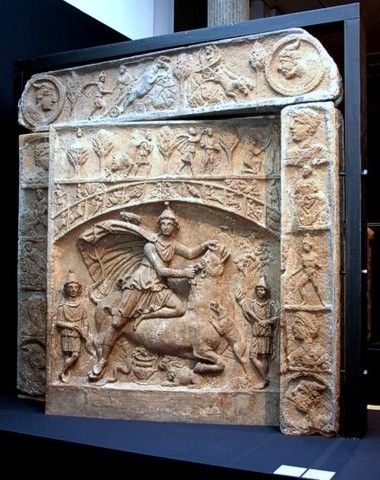
This relief is so well-known that it has been reproduced in nearly every handbook of archaeology and of history of religions.
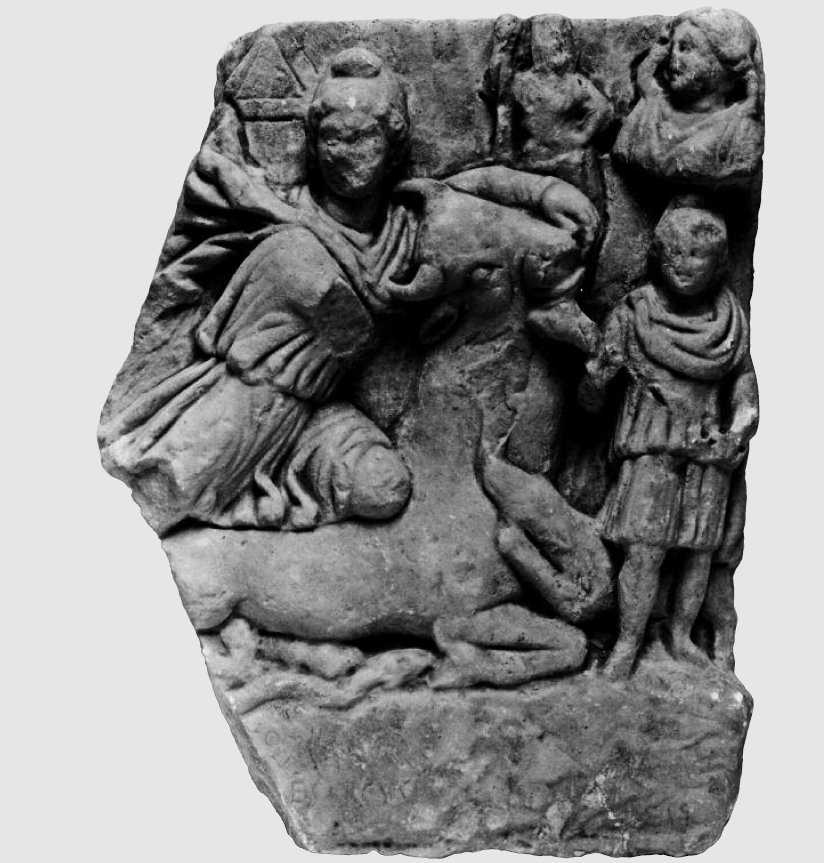
The Tauroctony of Patras was found years before the temple over which the relief of Mithras sacrificing the bull was supposed to preside.
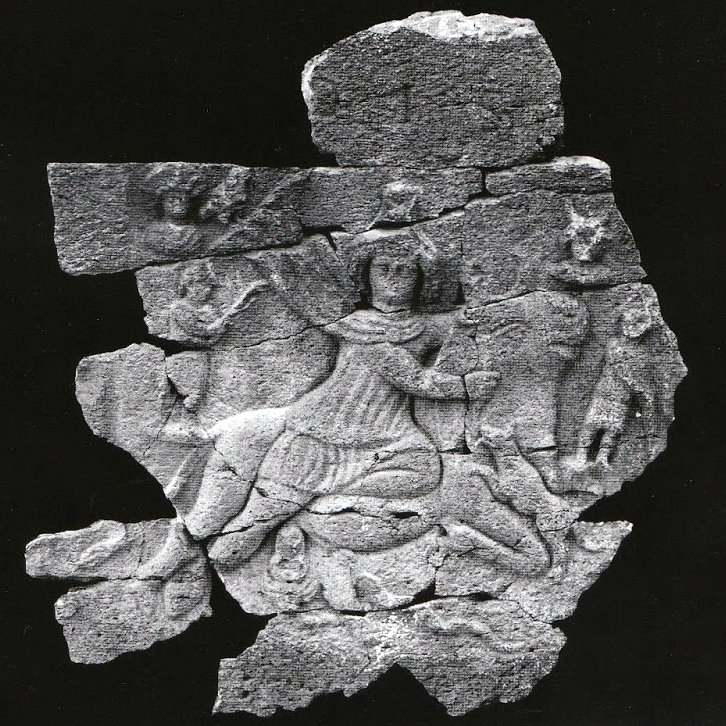
The second tauroctony of Jabal al-Druze seems to have be made by the same sculptor.
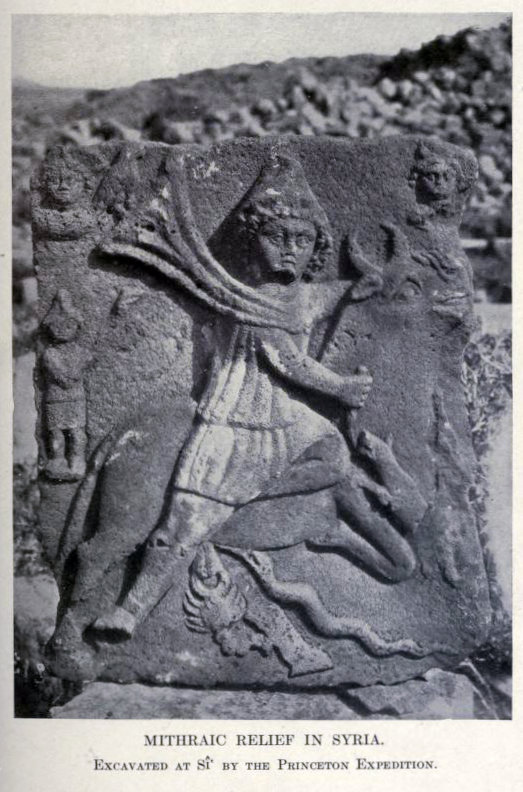
In the tauroctony of Jabal al-Druze in Syria, the snake appears to be licking the head of the bull's penis.

This votive silver plaque depicting Mithras was found at the site of Pessinus, Ballıhisar, in Turkey.
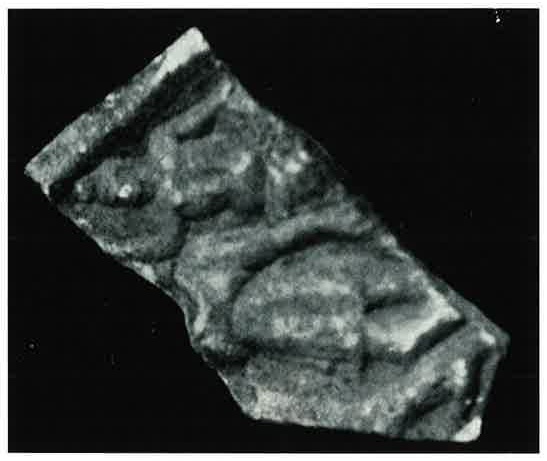
Tauroctony relief fragment with torchbearer and scene of Mithras’ rockbirth from Romula, Romania.
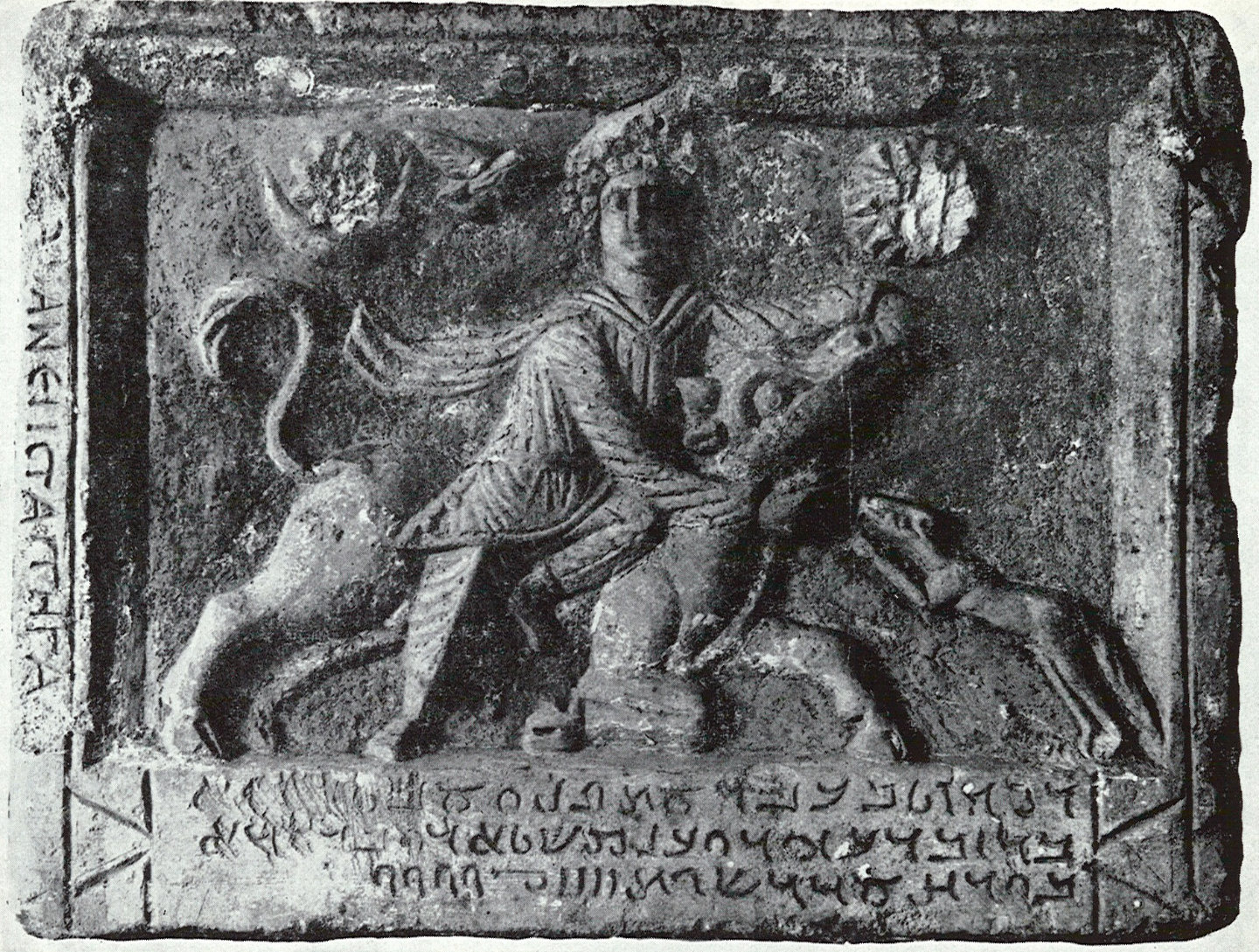
One of the reliefs of the Dura Europos tauroctonies includes several characters with their respective names.

In this relief of Mithras as bull slayer, recorded in 1562 in the collection of A. Magarozzi, Cautes and Cautopates have been replaced by trees still bearing the torches.
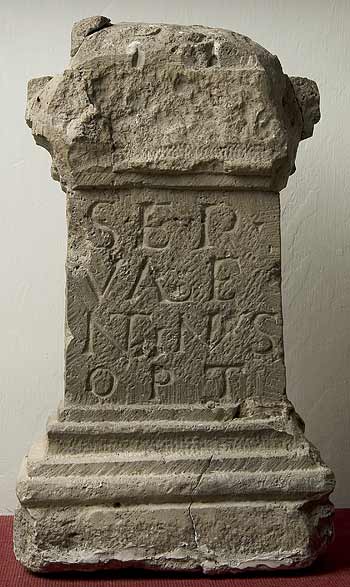
Limestone altar dedicated to Cautes by the Roman optio Septimius Valentinus, discovered in the Mithraeum of Sárkeszi in Pannonia Inferior.
This heavily damaged relief from Narbo preserves the figure of a cross-legged Mithraic torchbearer carved in low relief near the church of Saint-Sébastien in Narbonne.
