Your selection in monuments gave 428 results.
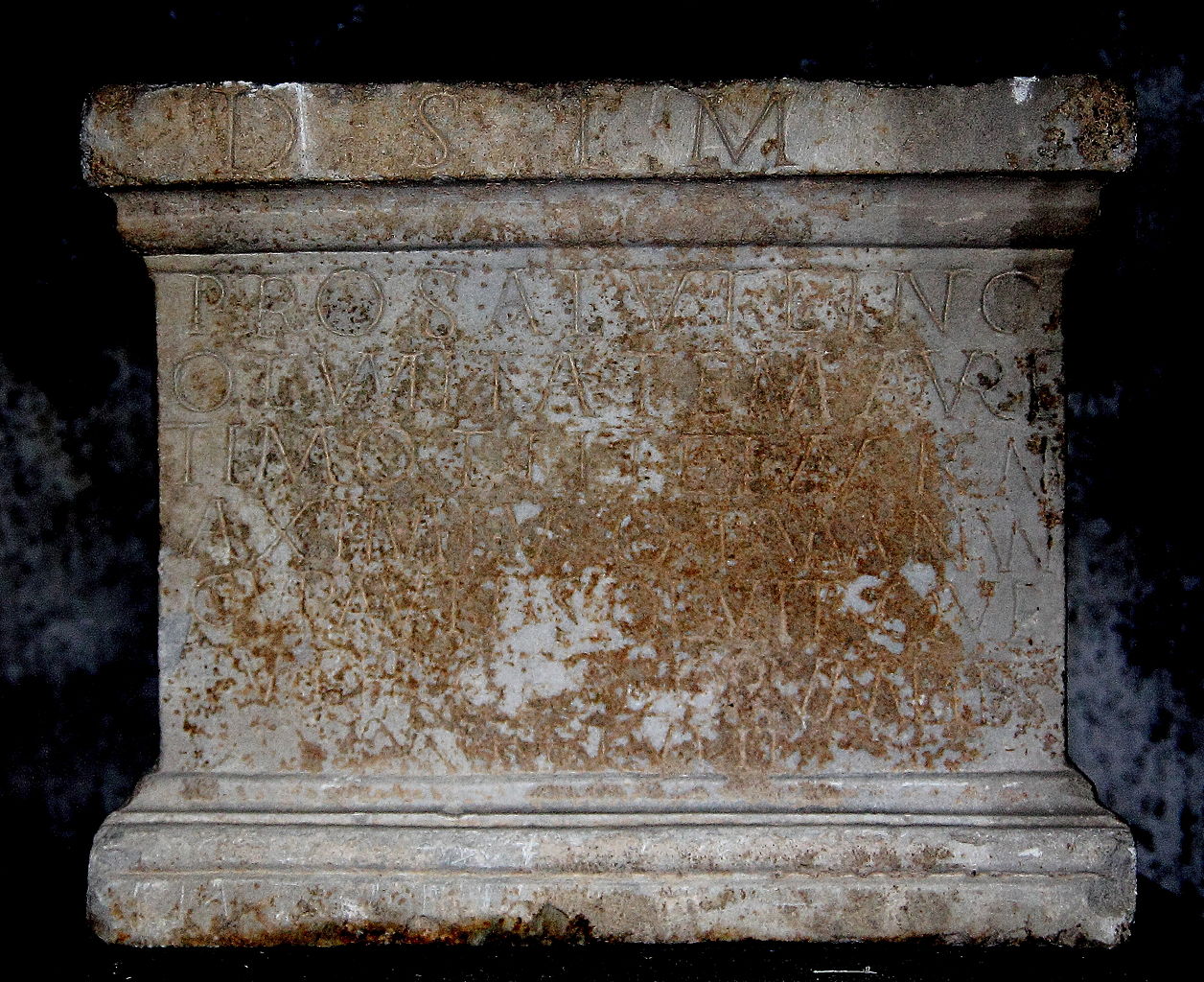
Mithraic stele, from Alba Iulia, Romania, with inscription.
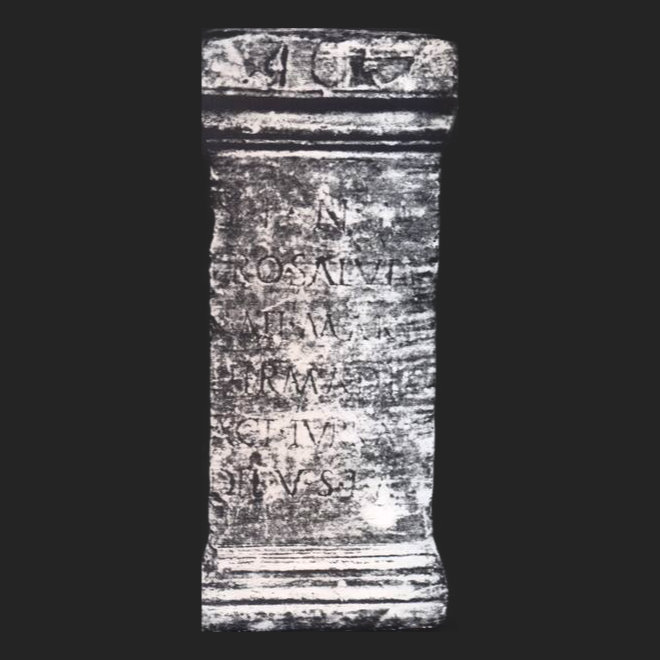
This altar was erected by Hermadio, who also signed other monuments in Dacia and even in Rome.
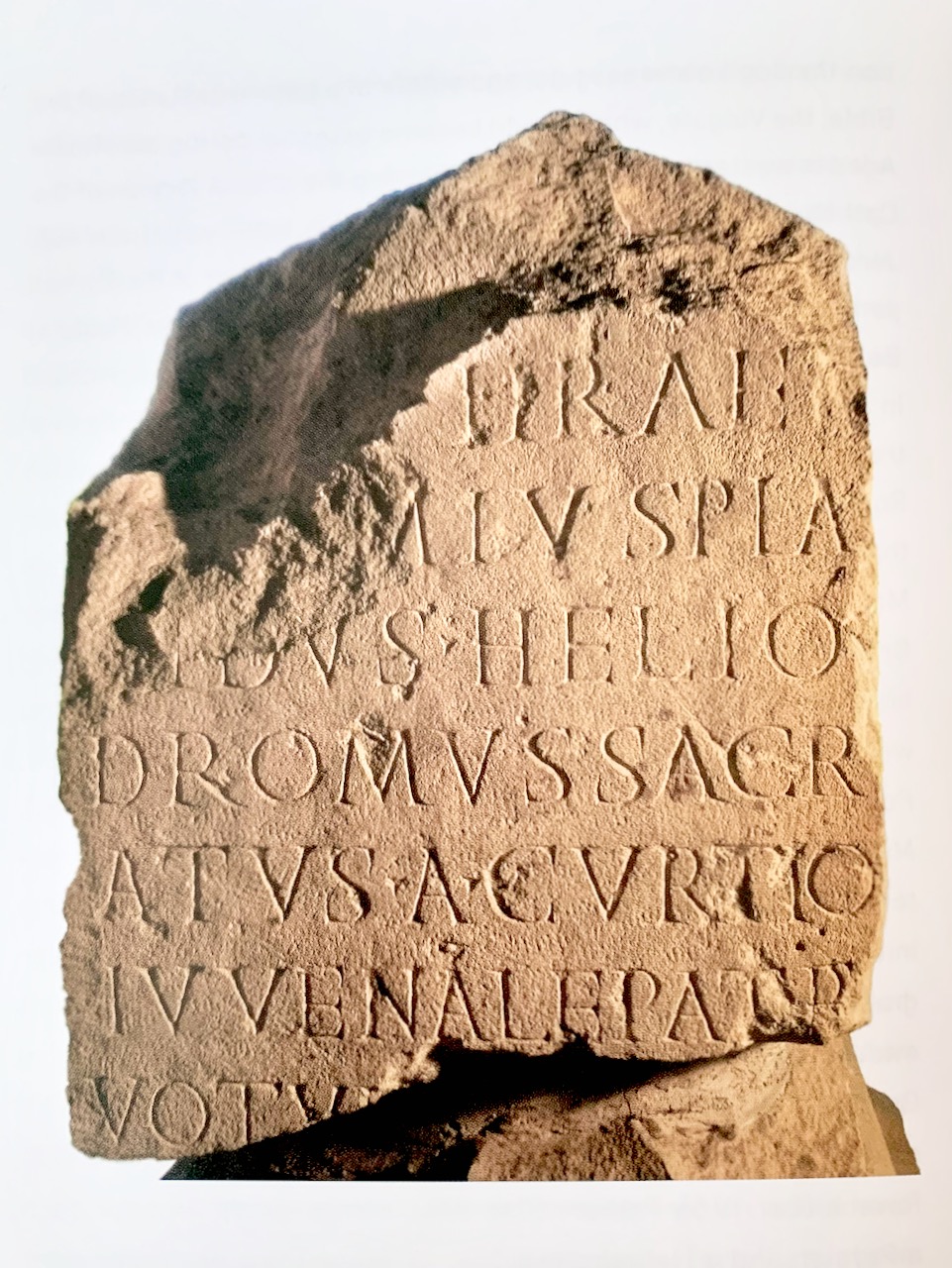
This inscription by a certain Memmius Placidus is the first ever found signed by a Heliodromus.

White marble relief, found near Aix "a la Torse dans un enclos ayant appartenu à la famille de Colonia".
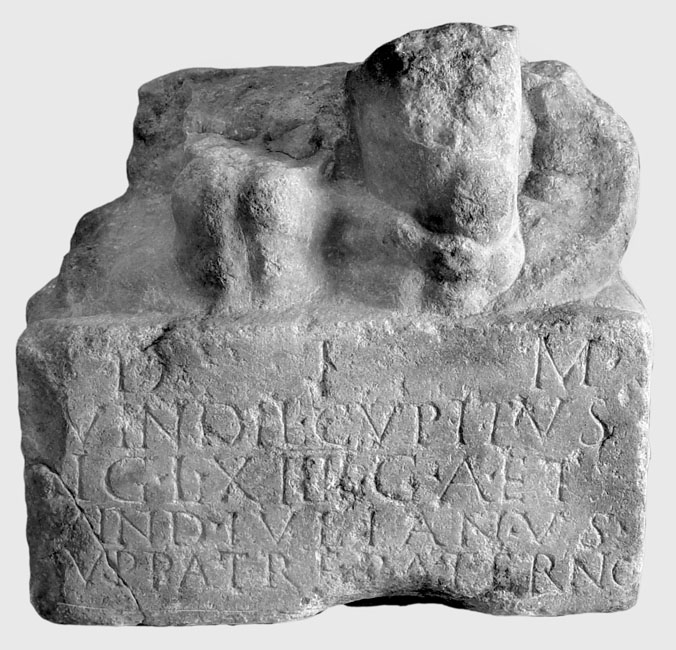
Only parts of the knees of Mithras, emerging from the rock, have been preserved from this monument of Petronell-Carnuntum, Austria.

Relief of Mithras killing the bull with an inscription from a certain Aurelius Macer who dedicates it to Sol Invictus Mithras.
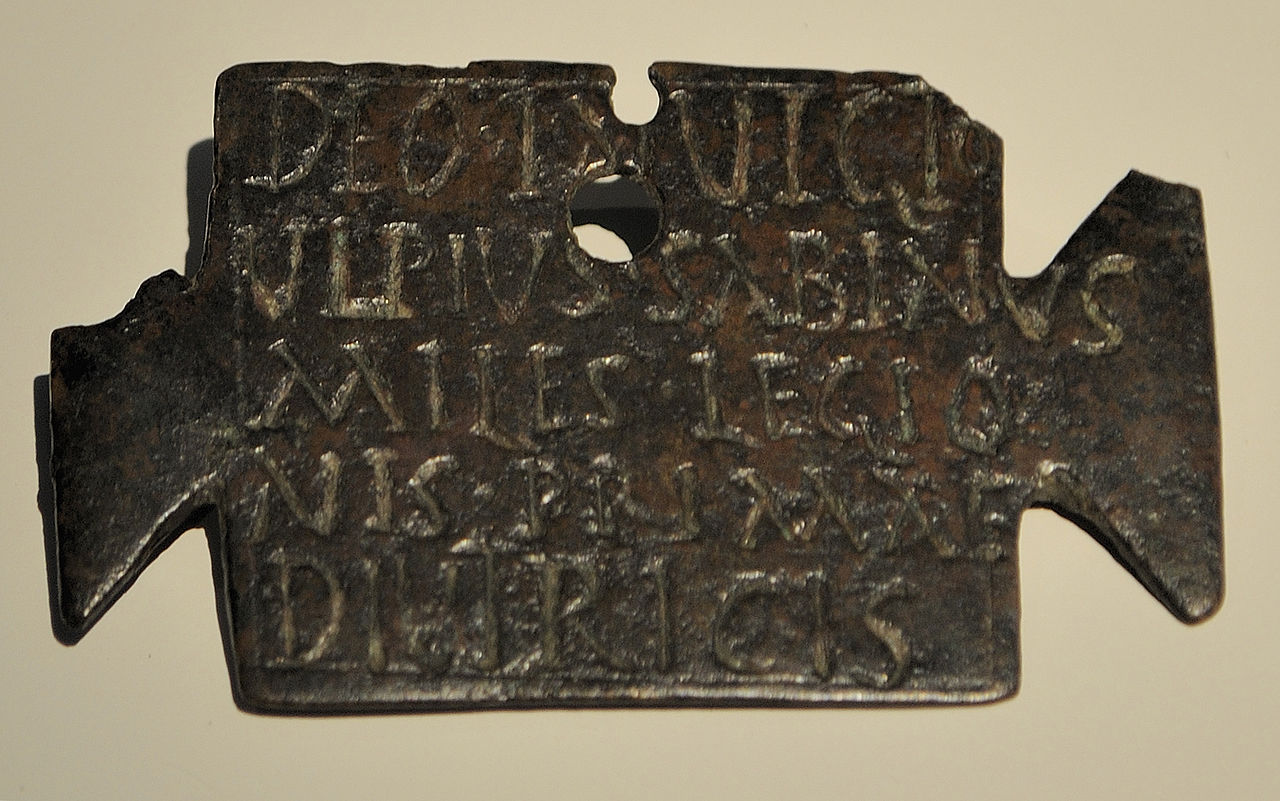

This altar was dedicated by a certain Marcus Aurelius Decimus to Sol Mithras and other gods in Diana, Numibia, present Argelia.

Slab found at Tazoult-Lambèse dedicated to the Unconquered god Sol Mithras by the governor of Numidia Marcus Aurelius Decimus.
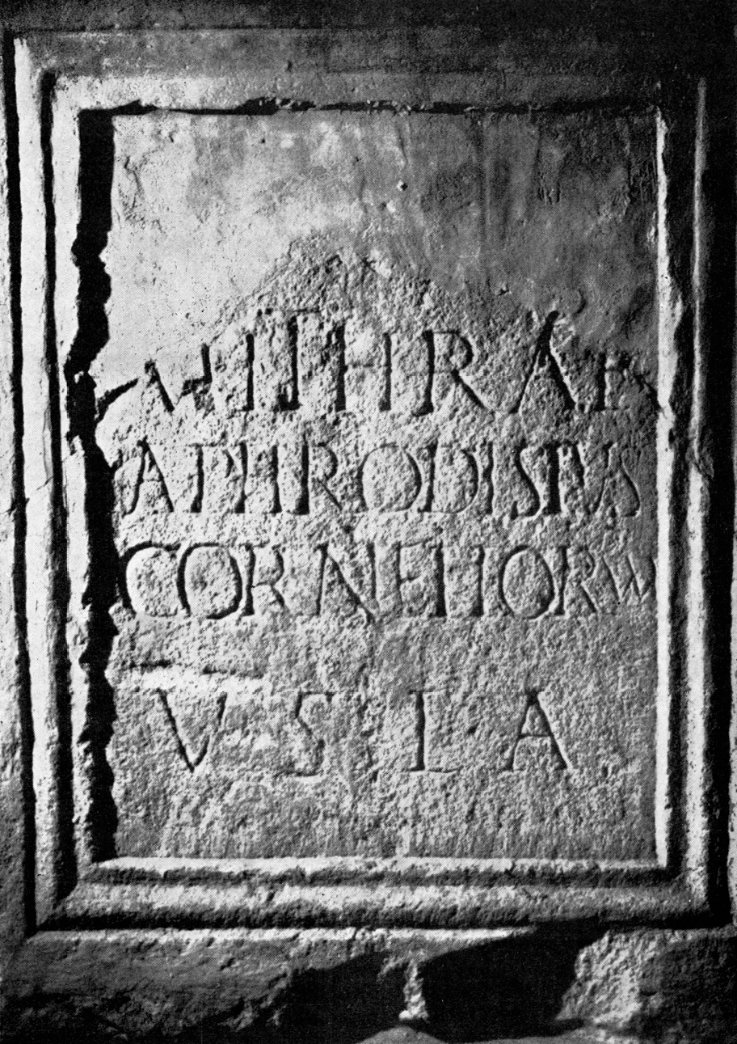
This inscription by a certain Aphrodisius was found under the old city hall of Algiers.

This altar for the completion of a temple to Sol Invictus by Flavius Lucilianus was found in Fossa, Italy.
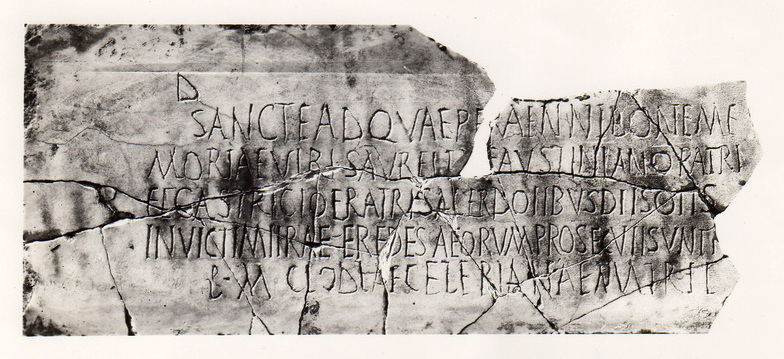
This inscription was commissioned by a family of priests of the invincible god Mithras.
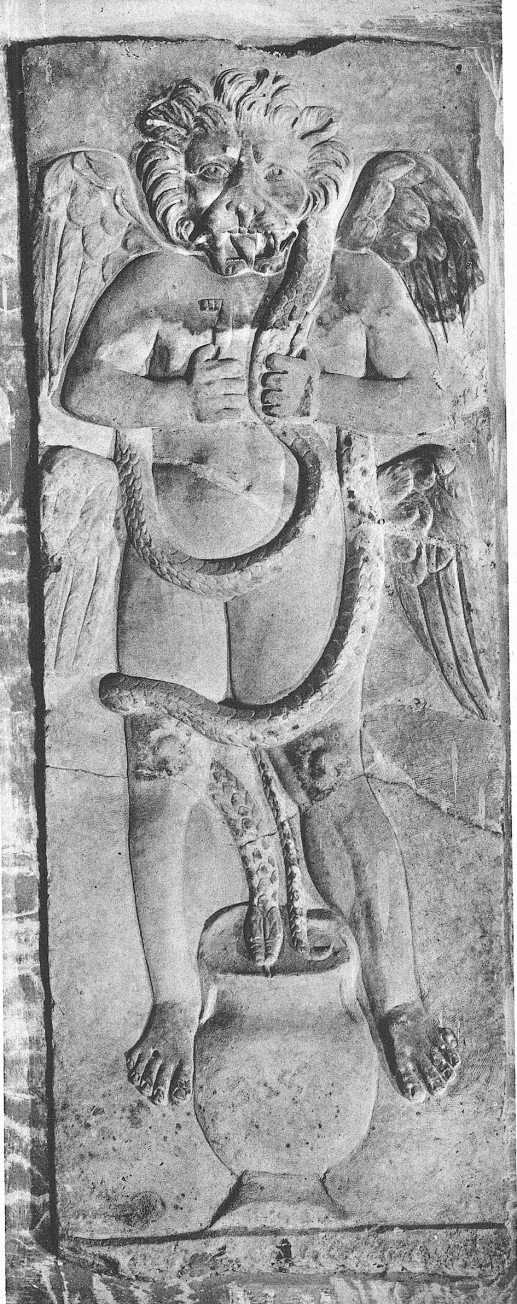
This white marble relief depicting a lion-headed figure from Ostia is now exposed at the Musei Vaticani.

This is one of the at least three inscriptions of Dioscorus, servant of Marcus to Mithras Invictus found in Alba Iulia, Romania.
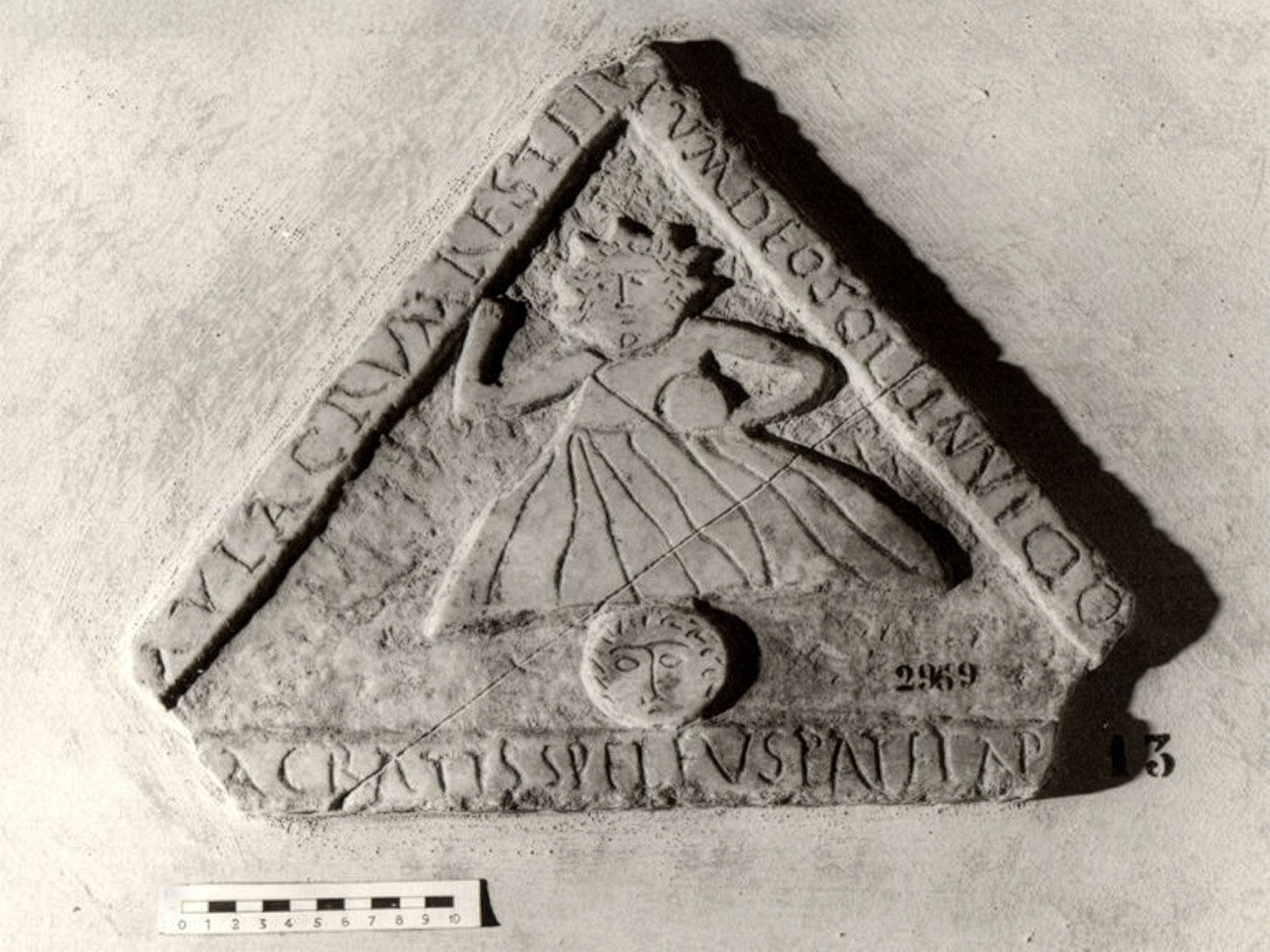
Small triangular slab bearing a Latin inscription referring to Sol Invictus and to a sacred cave, probably dating to the 4th century AD.
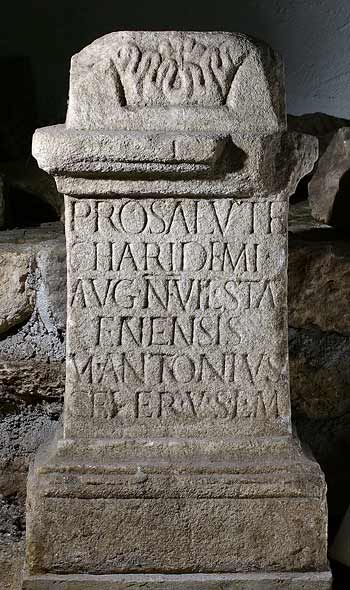
Marble votive altar with inscription to Mithras, featuring coiled, fan-like motifs above the text and associated with the statio Enensis.
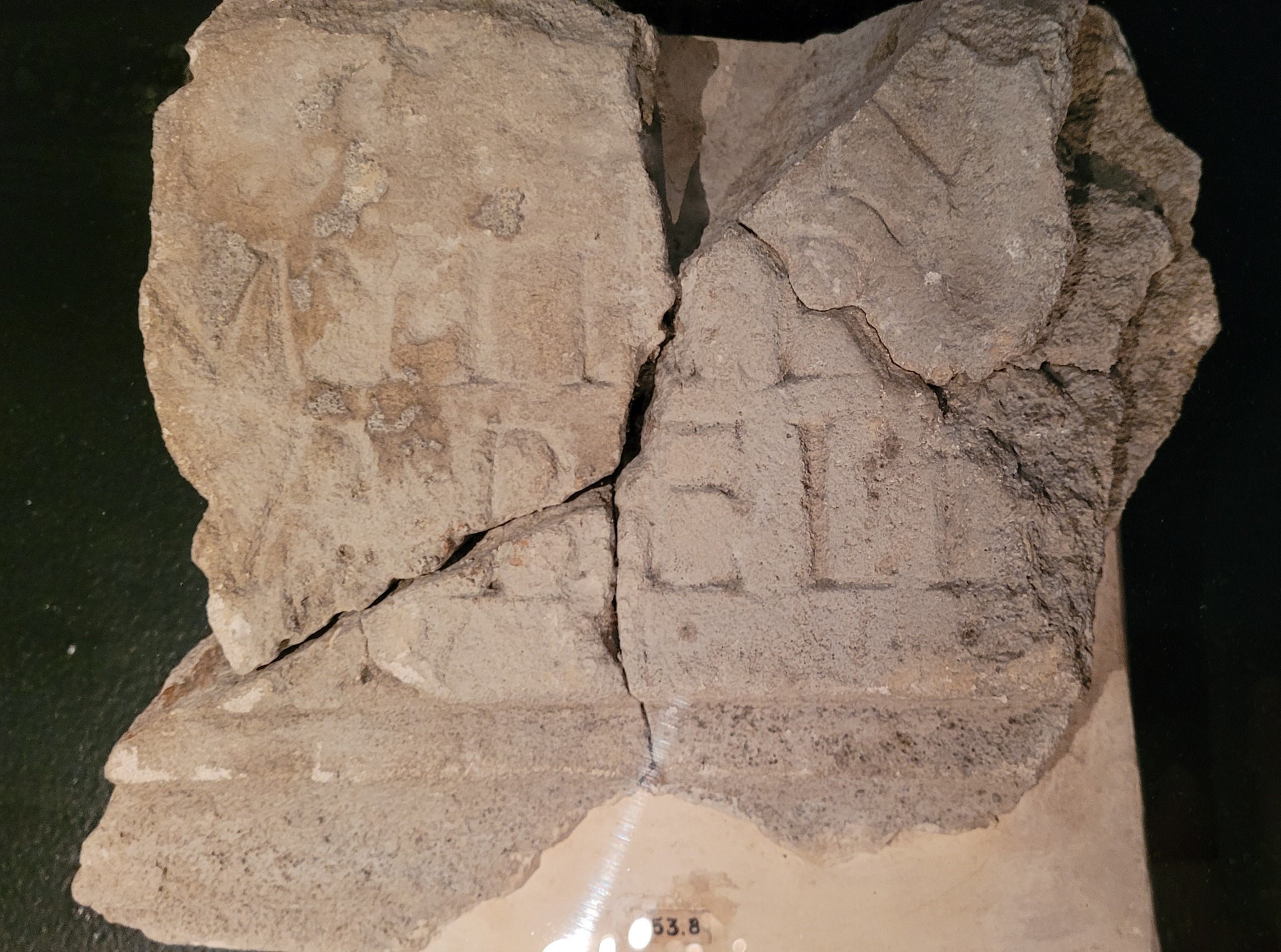
Fragment of limestone from Porêts, which was used in the 4th century.
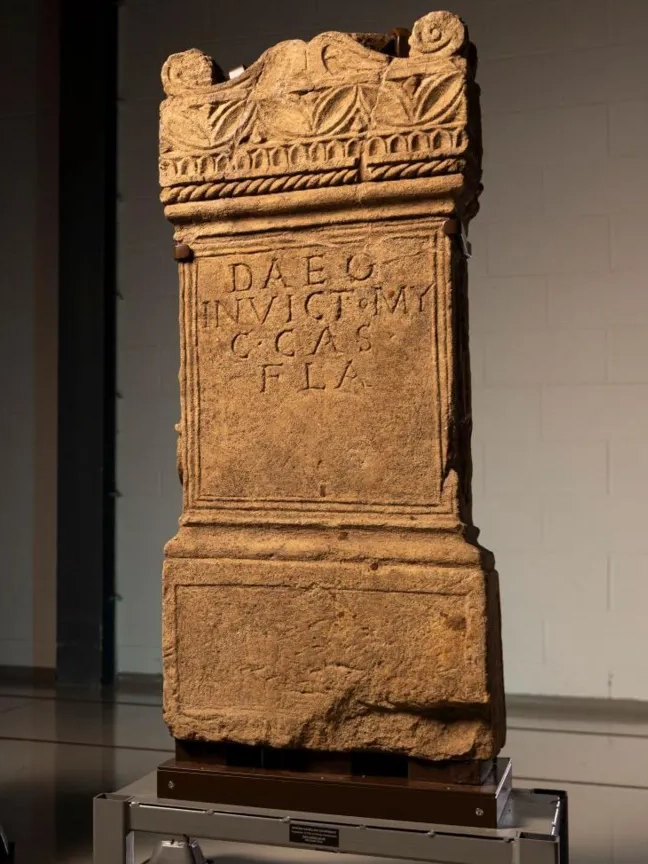
This second altar discovered to date near Inveresk includes several elements unusual in Mithraic worship.

This altar to Invictus Mythra (sic) was found in 1867 in ancient Maros Portum, now Sighișoara, Romania.
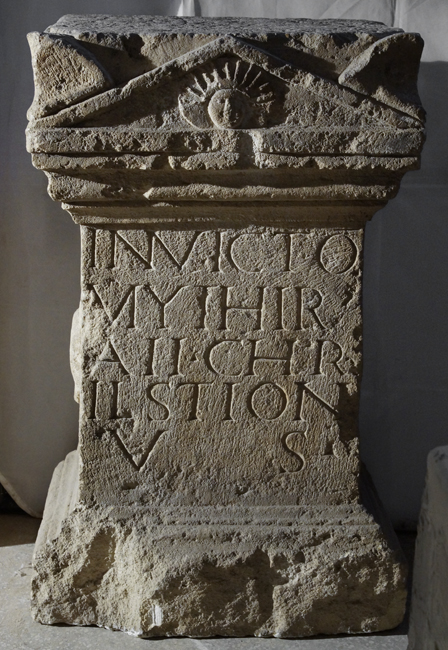
In 1852, Károly Pap, a naval captain, unearthed several Mithraic monuments in his garden at Marospartos, including this altar.
