Your selection in monuments gave 428 results.
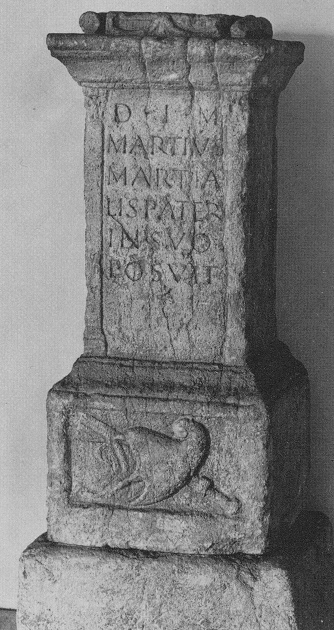
The altar with a Phrygian cap and a dagger from Trier was erected by a Pater called Martius Martialis.
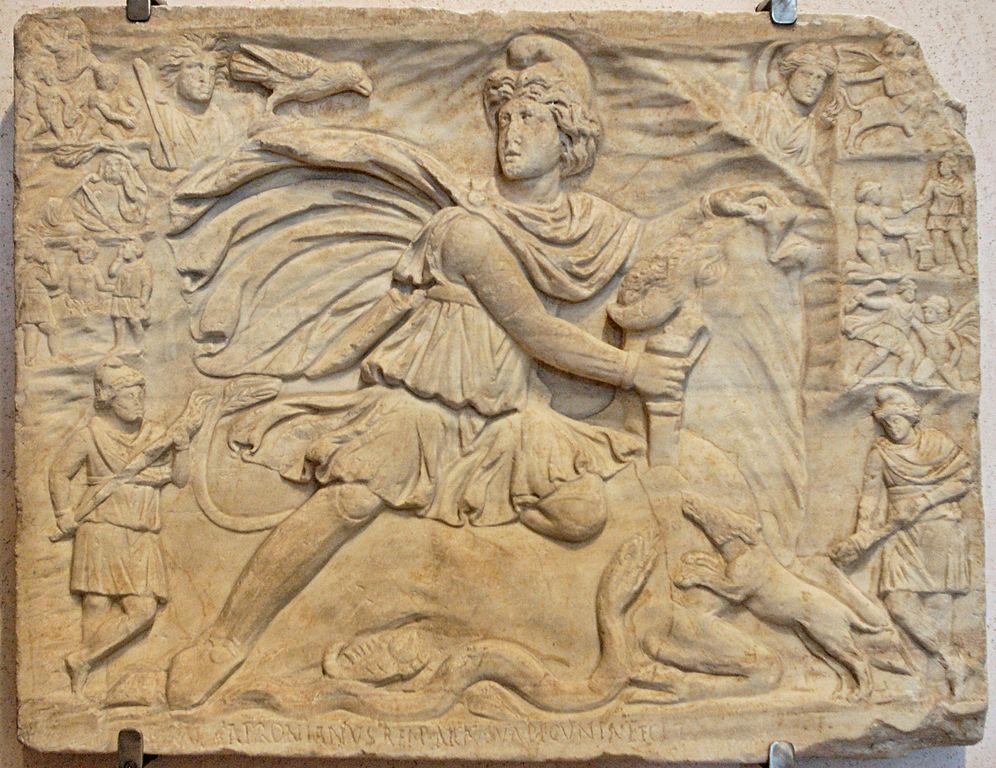
The relief of Mithras slaying the bull of Nersae includes several episodes from the exploits of the solar god.
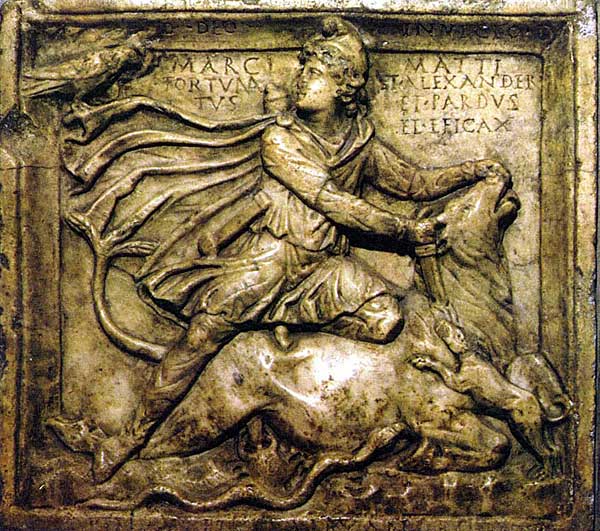
The relief marble of Mithras sacrifying the bull, exposed on the Hermitage Museum comes from Rome.
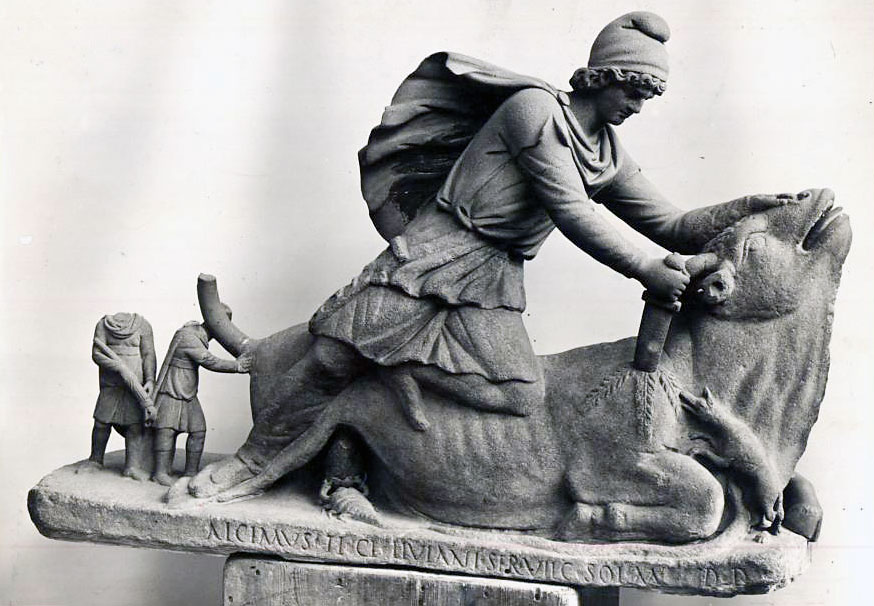
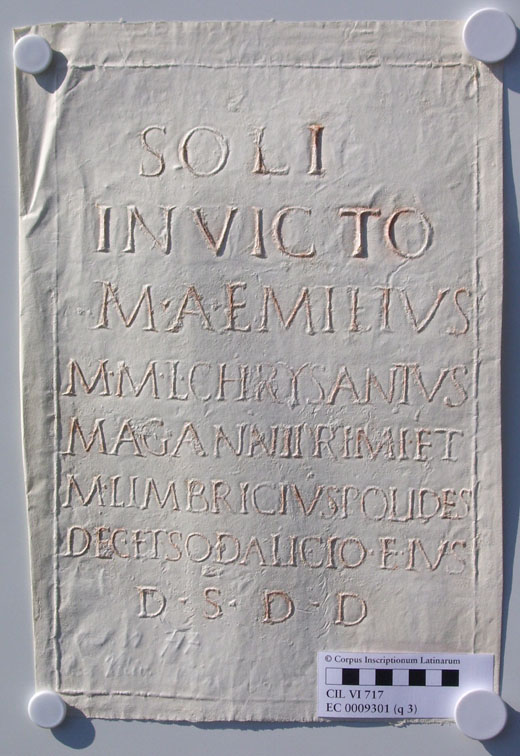
Aemilius Chrysanthus shares the expenses of this monument with a decurio named Limbricius Polides.
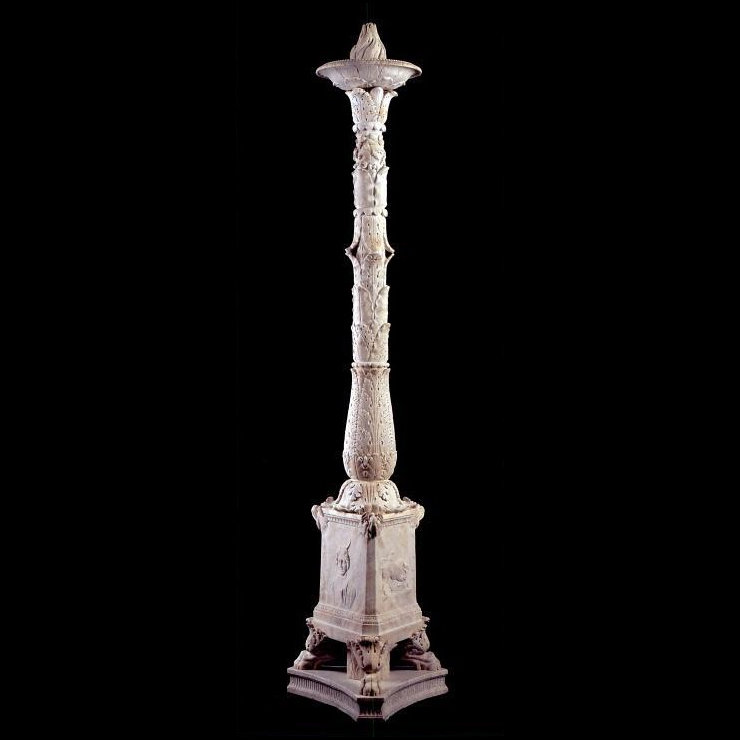
This magnificent candelabrum was found in Rome in 1803, in the Syrian Temple of Janicule.

Preliminary readings of the painted Mithraic texts later revised after additional research and restoration.
This small cippus to Zeus, Helios and Serapis includes Mithras as one of the main gods, although some authors argue that it could be the name of the donor.
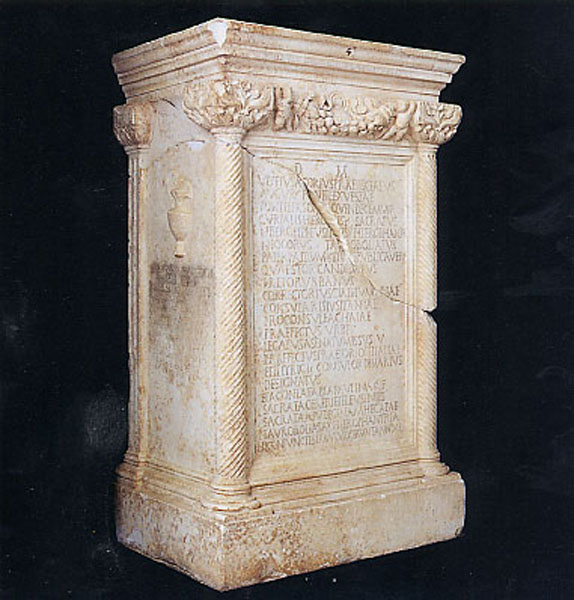
The marble altar mentions Vettius Agrorius Praetextatus as Pater Sacrorum and Patrum and his wife Aconia Fabia Paulina.

This remarkable Greek marble relief of Mithras killing the bull was discovered in 1705 and remained in private collections until it was bought by the Louvre.
Epigraphic testimony catalogued in the Année Épigraphique and Lugli’s Fontes for ancient Rome.
This monument was erected on the occasion of the elevation of a member to the Mithraic grade of Perses.
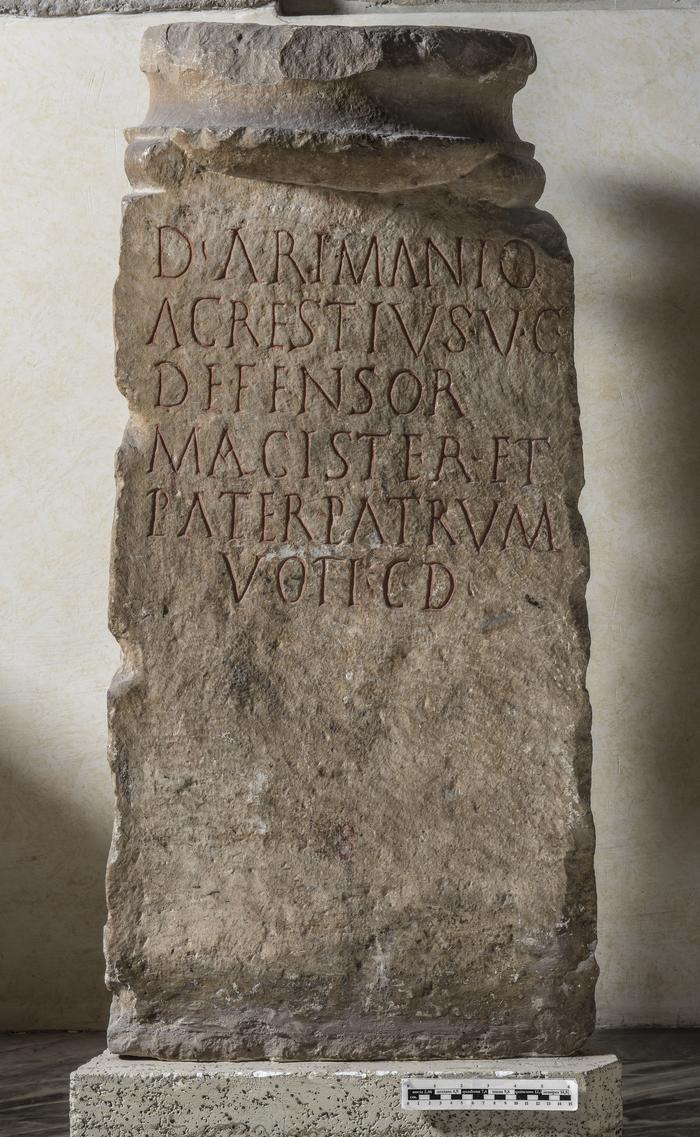
This altar mentioning the god Arimanius was found in 1655 at Porta San Giovanni, on the Esquilino.
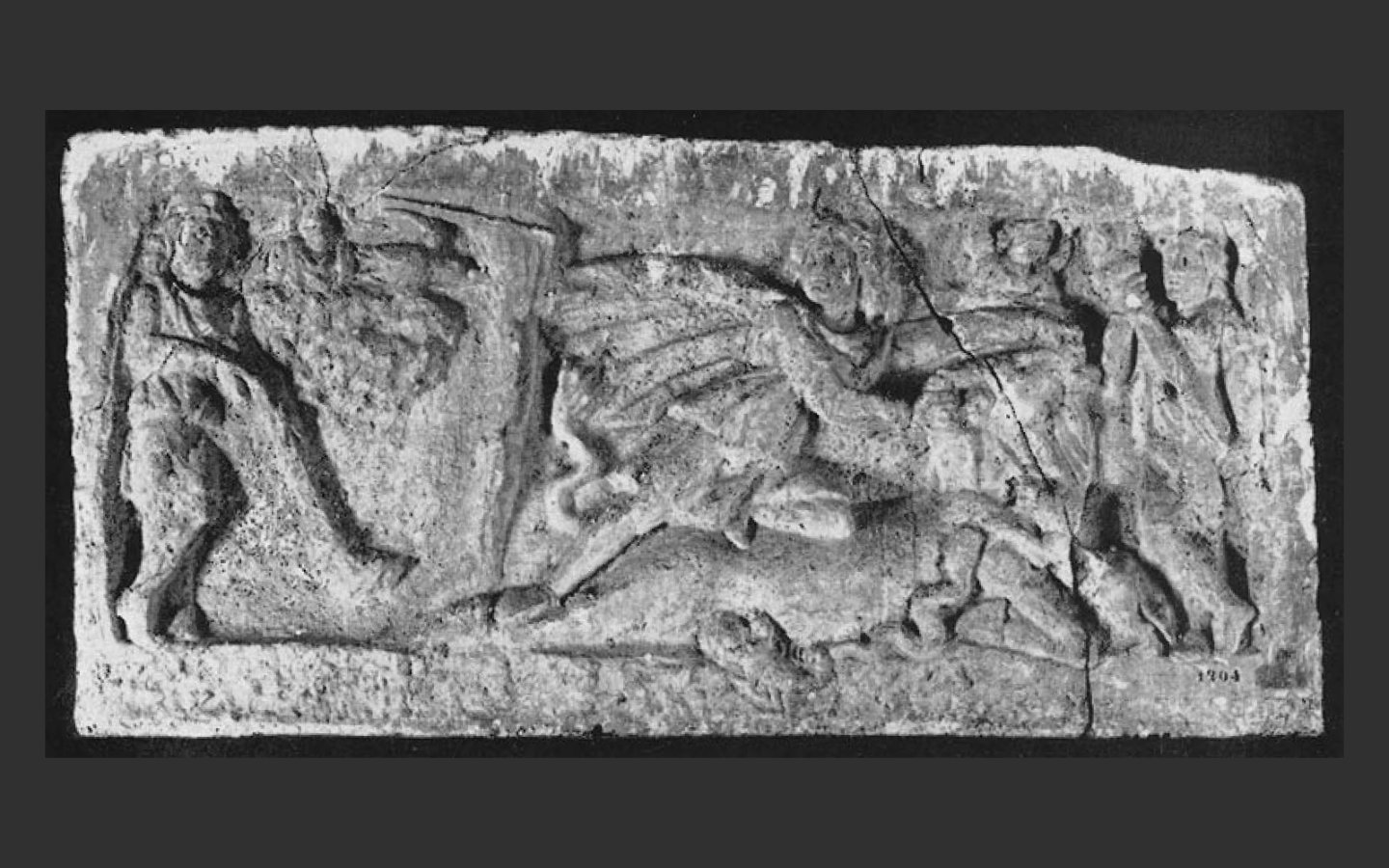
This relief of Mithras Tauroctonos from Rome bears the inscription of three brothers, two of them lions.
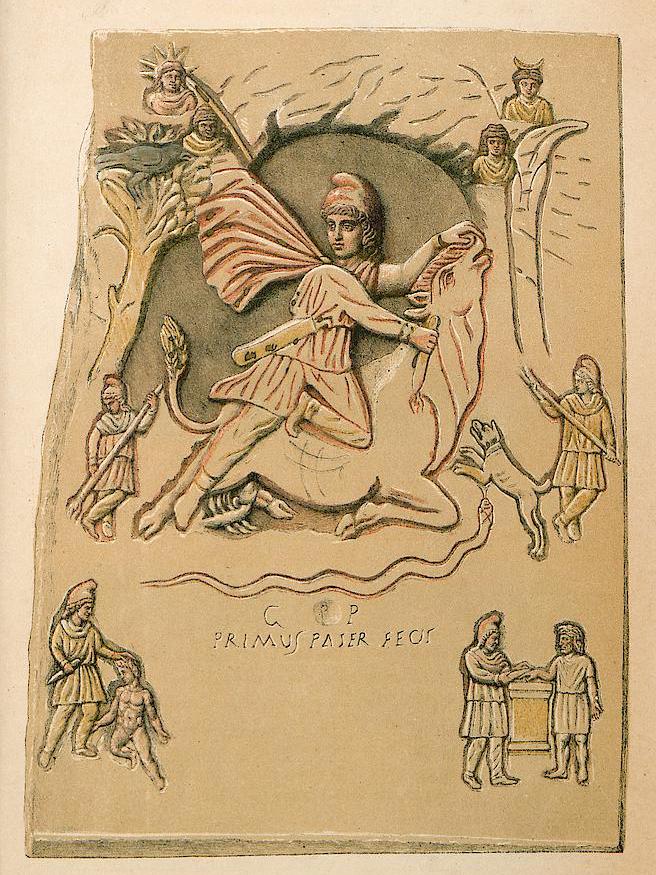
The relief of Mithras slaying the bull found on the Esquiline Hill includes two additional scenes with Mithras and two other figures.
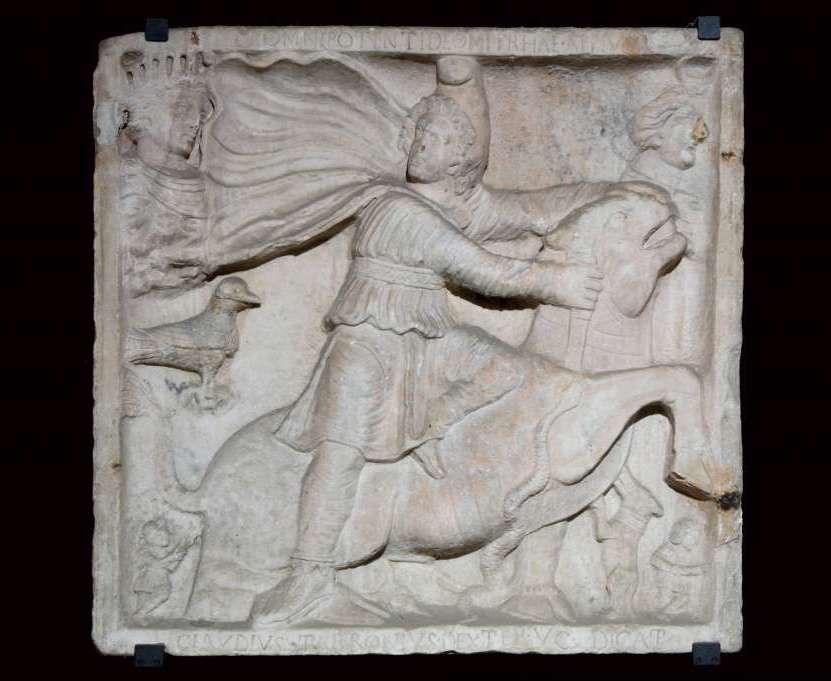
The marble relief of Mithras killing the bull in Naples bears an inscription that calls the solar god omnipotentis.
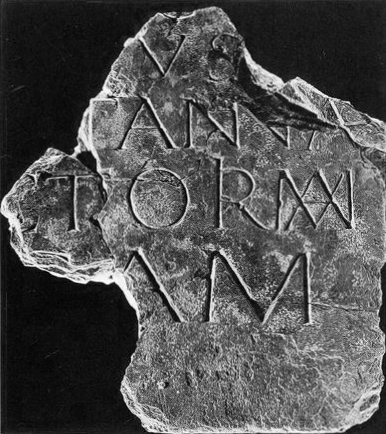
Archaeological material from the Mithraeum of Londinium discussed in Hill’s study of Roman London.
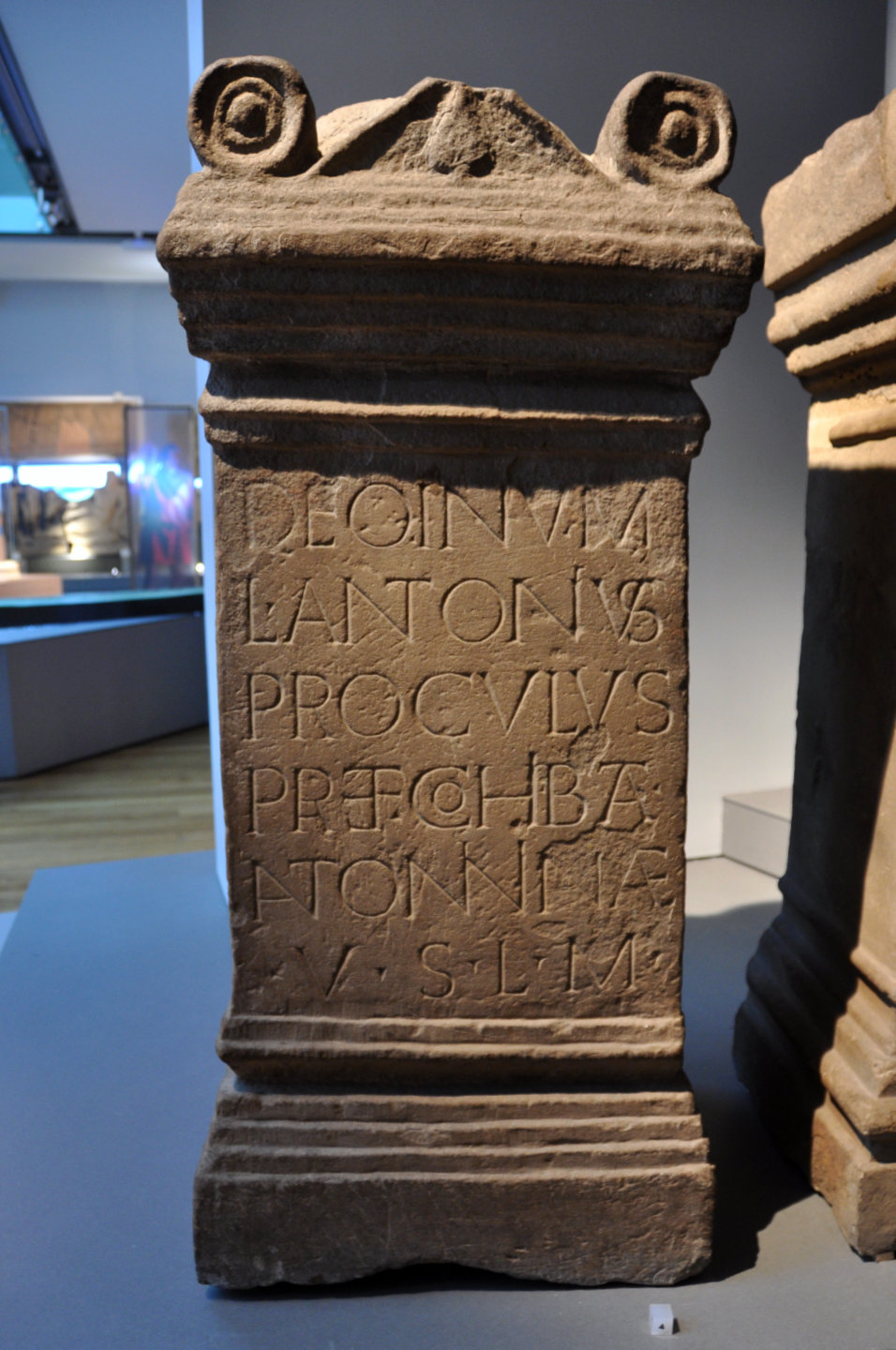
One of the three altars to Mithras found at the Mithraeum of Carrawburgh fort.
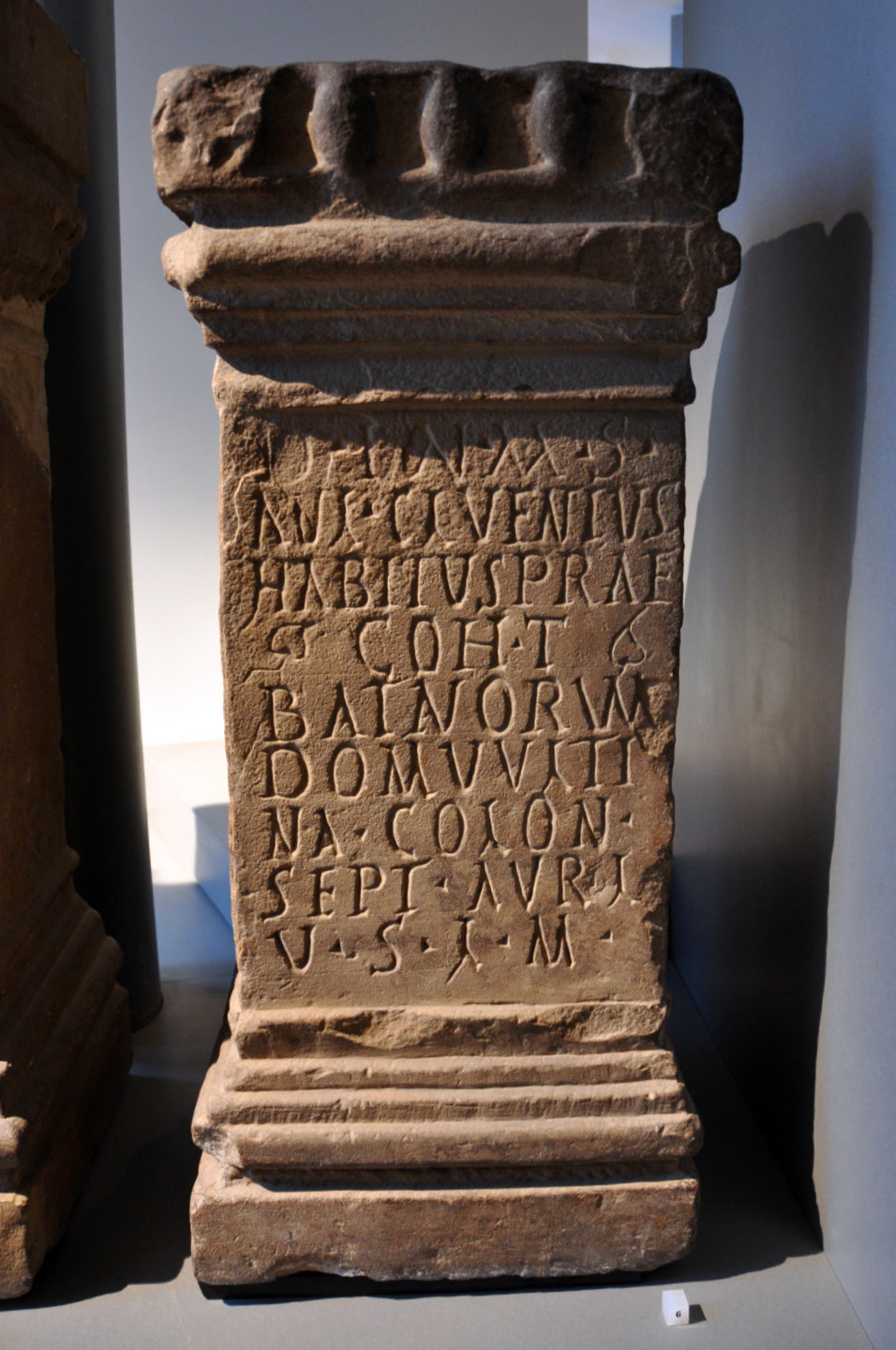
One of the three altars to Mithras found at the Mithraeum of Carrawburgh fort.
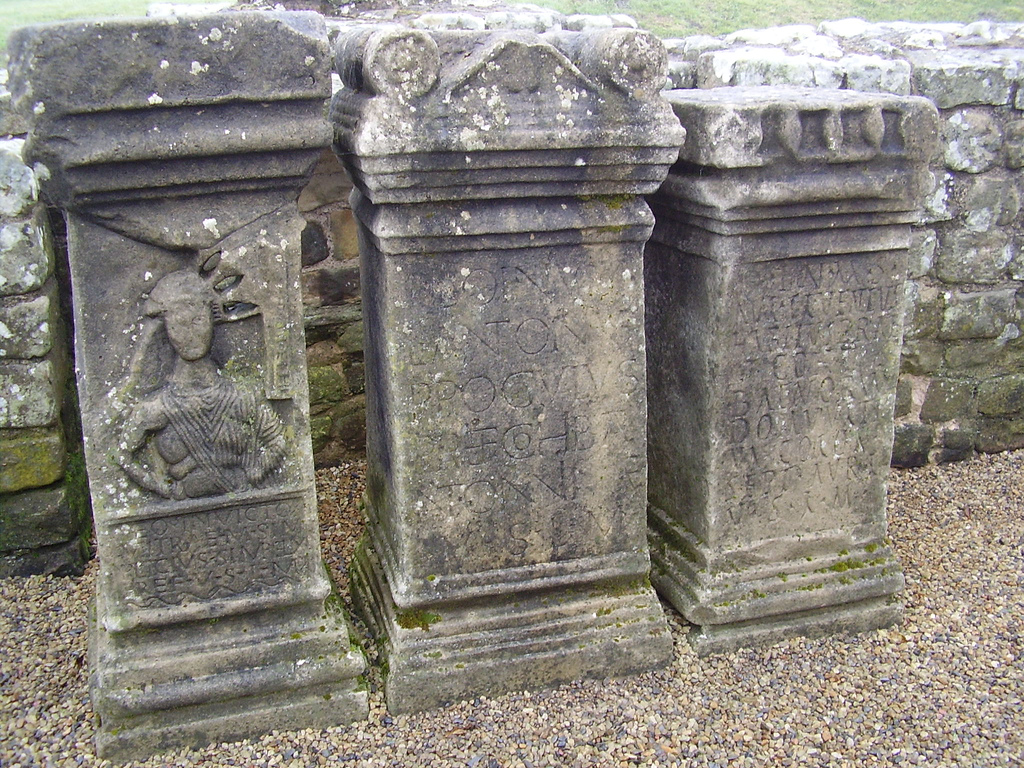
One of the altars from the Carrawburgh Mithraeum depicts the bust of Mithras or Sol.
