Your selection gave 851 results.

Second terracotta tablet found at Calvi depicting Mithras killing the bull, now at Berlin, Antiquarium.

Relief possibly depicting Mithras-Men holding a torch and a a bust of Luna on a crescent.

Fragment of a white statue depicting a naked god entwined by a serpent with its head on his chest, found in the River Tiber.
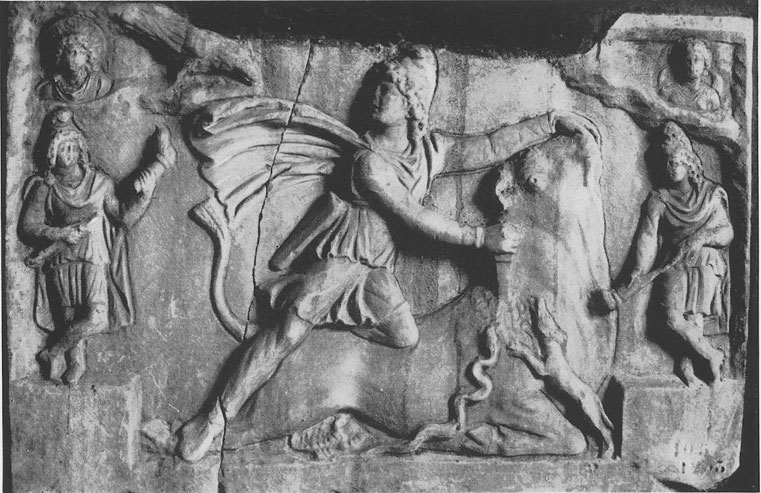
White marble relief depicting Mithras killing the bull, found broken in two parts in 1872 near Salita delle Tre Pile in Rome.

The existence of a mithraeum in the "tana del lupo", a natural cave in the castle of Angera, has been assumed since the 19th century, following the discovery of two mithraic inscriptions in the town.

This fragment of a sculpture depicting the birth of Mithras from a rock, intertwined with a chaotic mass of serpent coils, was discovered in Aquileia, Italy.

This unusual bronze bust of Sabazios features multiple symbolic elements, with Mithras depicted in his characteristic pose of slaying the bull, positioned just below Sabazios’ chest.

The Mithraeum of Visentium, near Capodimonte in Viterbo, was carved grotto-style into a tuff cliff overlooking the waters of Lake Bolsena, just a few dozen metres away.
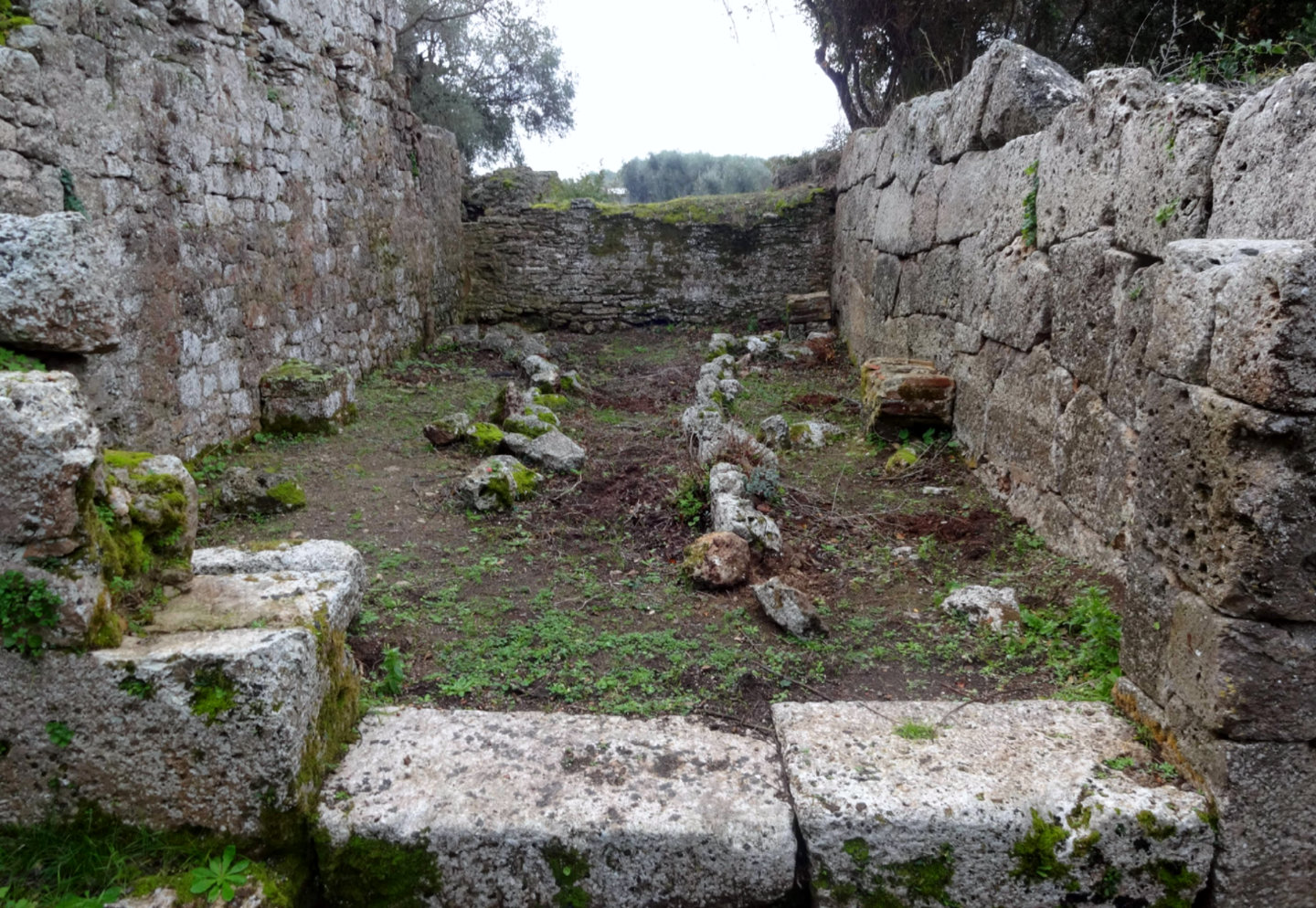
The Mithraeum was inserted into the basement of the basilica-theater by the 3rd century.

The relief of Palazzo Colonna, Rome, depicts a lion-headed figure holding a burning torch in his outstretched hands.

This is the first known inscription that includes Phanes alongside Mithras found in a Mithraic context.

The remains of the Mithraeum of Aosta, also known as the Mitreo di Augusta Praetoria, were discovered in 1953 in insula 59, in a commercial district of the ancient city.

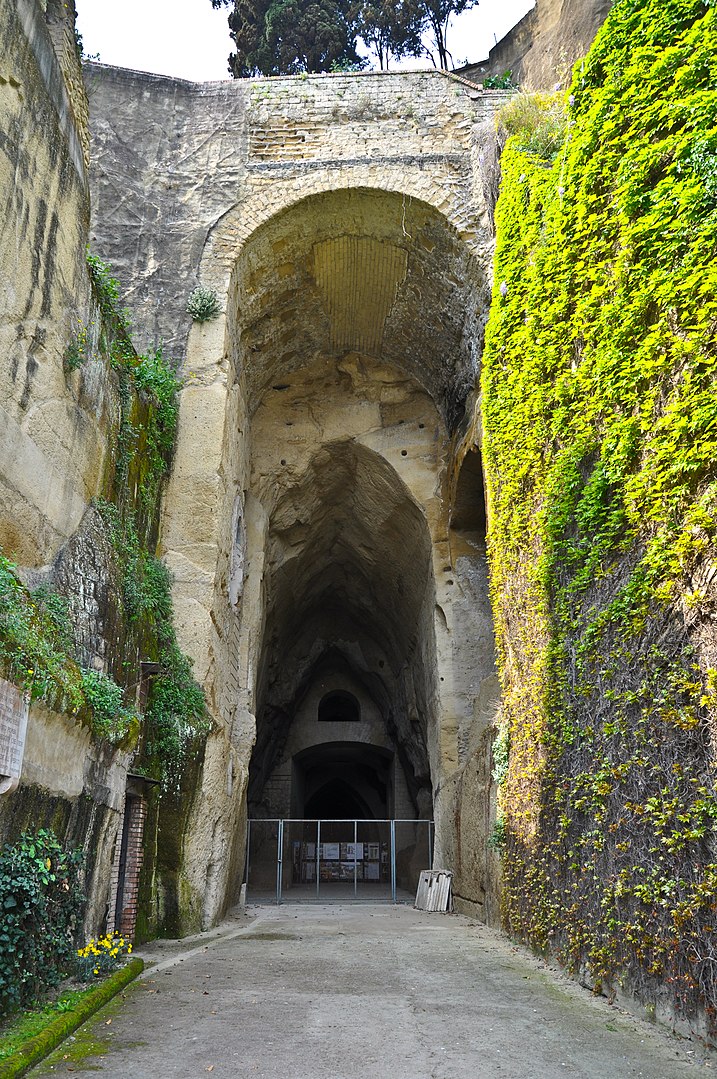
The Mitreo della crypta neapolitana was used a des legends about its use, from a cult place devoted to Priapus to celebrate Aphrodite.
This cylindrical marble altar was dedicated by the same Pater Proficentius as the slab, both monuments found in the Mithraeum beneath the Basilica of San Lorenzo.
This inscription found in the Mithraeum Aldobrandini informs us of certain restorations carried out in the temple during a second phase of development.
This marble monument was dedicated in Rome by the slave Fructus and his son Myro.
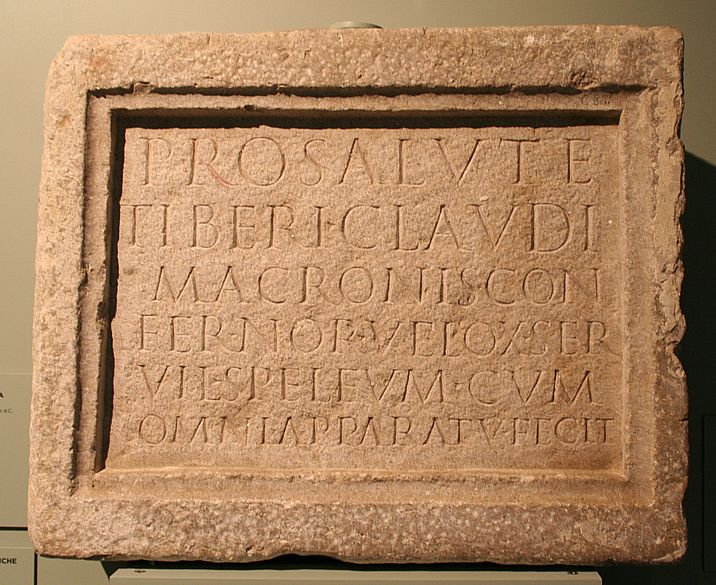
Marble slab with inscription by Velox for the salvation of the chief of the iron mines of Noricum.
The dedicator of this monument is also known for having made a tauroctonic relief in Nesce.
