Your selection gave 58 results.

Painted inscription naming a tribune Archelao, found on a column or wall of the Mithraeum of Dura-Europos, Syria.
Fragment of a figure dressed like Mithras in the banquet scene, found in the rubble of the Mithraeum of Dura-Europos, Syria.
Fragments of wall plaster decorated with green leaves and tree branches, adhering to the south wall of the Mithraeum of Dura-Europos, Syria.
Fragments of large-scale painted heads belonging to paintings of considerable size, from the Mithraeum of Dura-Europos, Syria, 3rd century A.D.
Painted zodiac signs covering earlier figures in Phrygian cap in the arched niche of the Later Mithraeum of Dura-Europos, Syria, 3rd century A.D.
Altar inscription from Sahin invoking the most high heavenly god and Mithras in the Alawite Mountains.
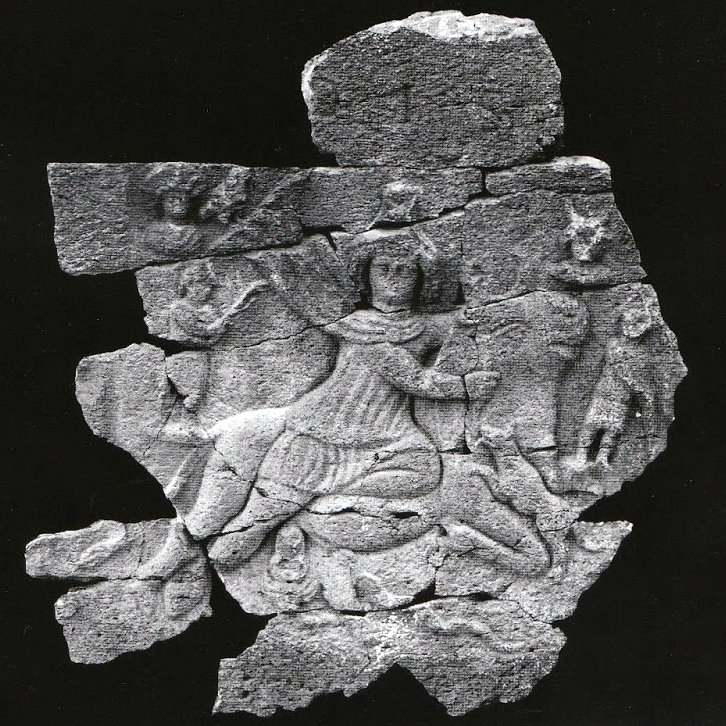
The second tauroctony of Jabal al-Druze seems to have be made by the same sculptor.
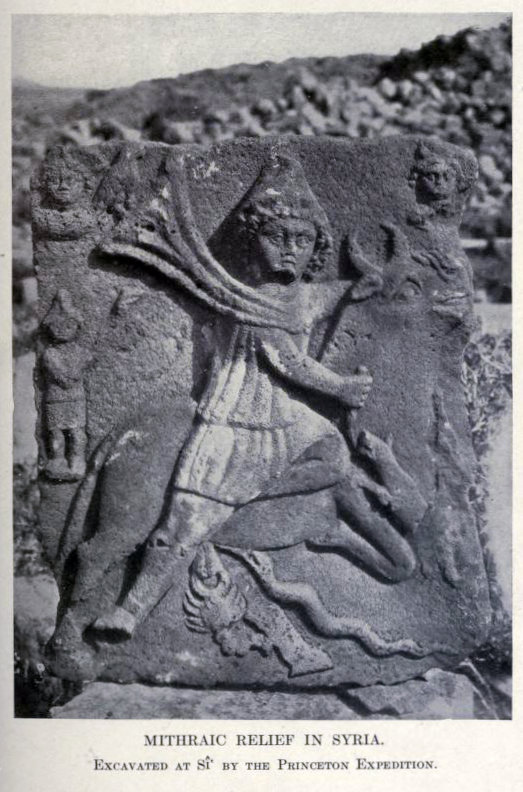
In the tauroctony of Jabal al-Druze in Syria, the snake appears to be licking the head of the bull's penis.
Painted Parthian inscription on a ceramic sherd possibly referring to Mithras as a bull-slayer.
Greek ritual graffito scratched on wall plaster in the Mithraeum of Dura-Europos, mentioning the “fiery exhalation” and the “sacred nitre” of the Magi.
Fragmentary Greek graffito from Dura-Europos recording the prices of everyday goods such as wine, meat, wood and lamp wicks.
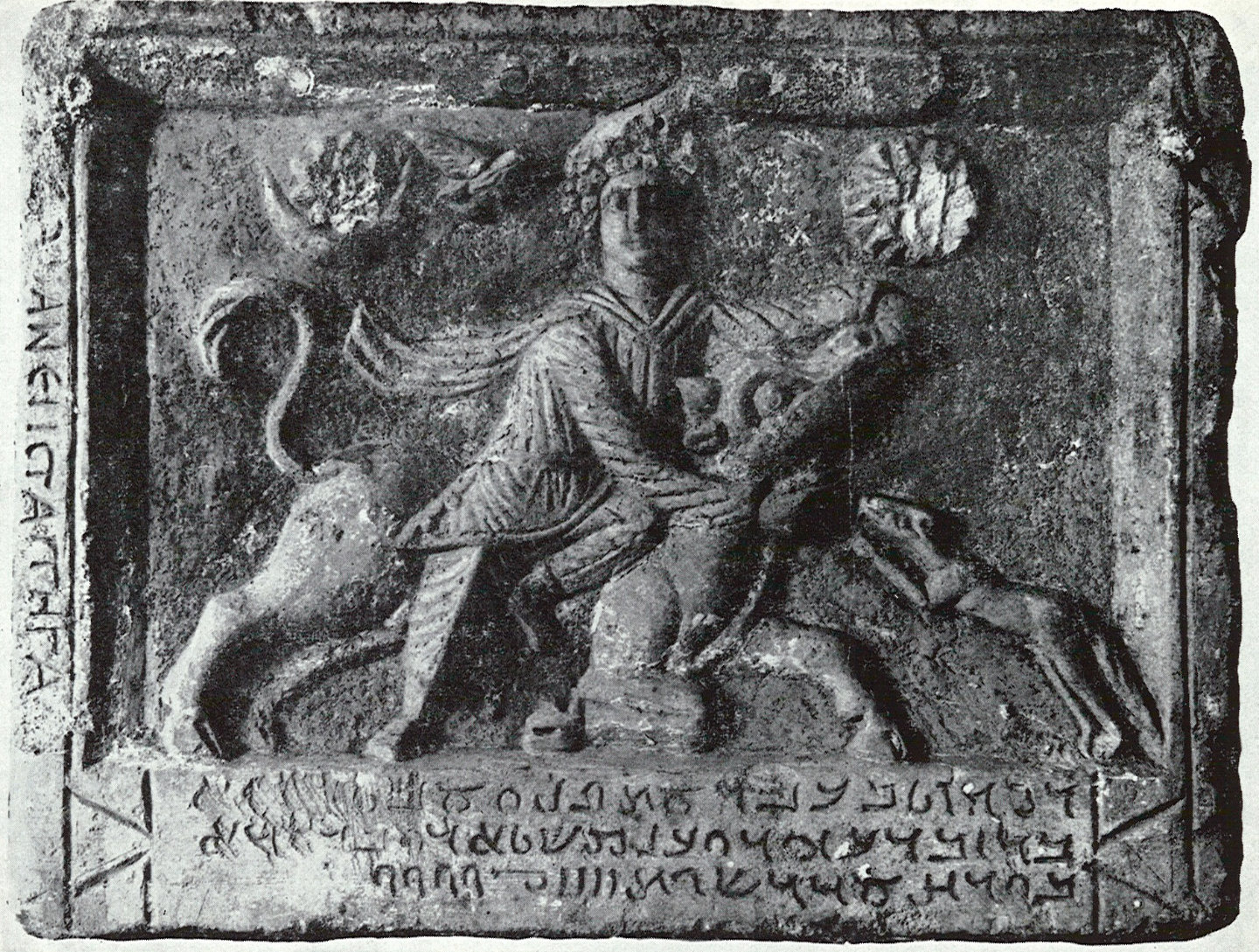
One of the reliefs of the Dura Europos tauroctonies includes several characters with their respective names.

Jabal al-Druze, officially Jabal al-Arab, is an elevated volcanic region in the As-Suwayda Governorate of southern Syria.
Al-Ankawi is a Syrian town located in the Ziyarah Subdistrict of the al-Suqaylabiyah District in Hama Governorate.
Dura-Europos was a Hellenistic, Parthian and Roman frontier city built on the Euphrates River. It was founded around 300 BC by Seleucus I Nicator. The Romans took Dura-Europos in 165 AD.
'Hail to Kamerios the Pater' can be read on one of the walls of the mithraeum at Dura Europos.
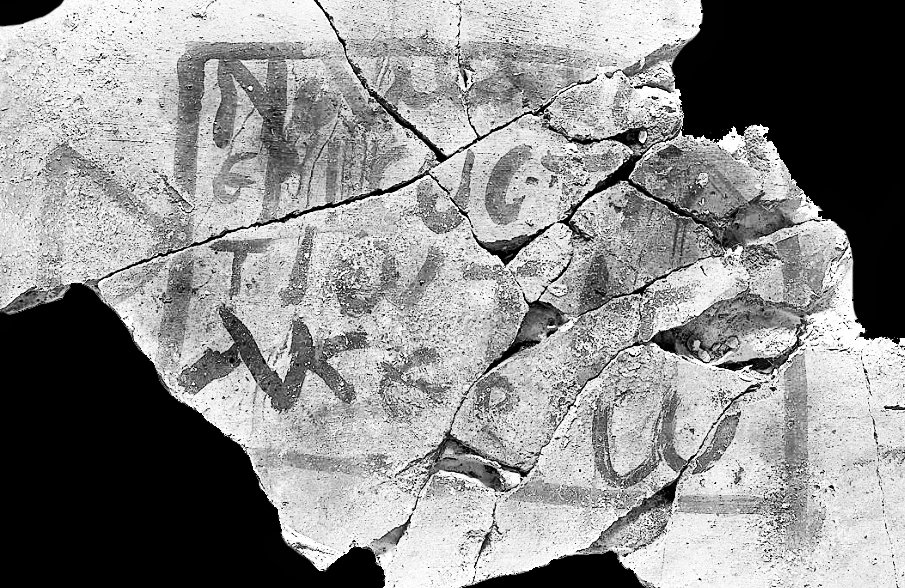
The text mentions a certain Kamerios, described as immaculate miles.
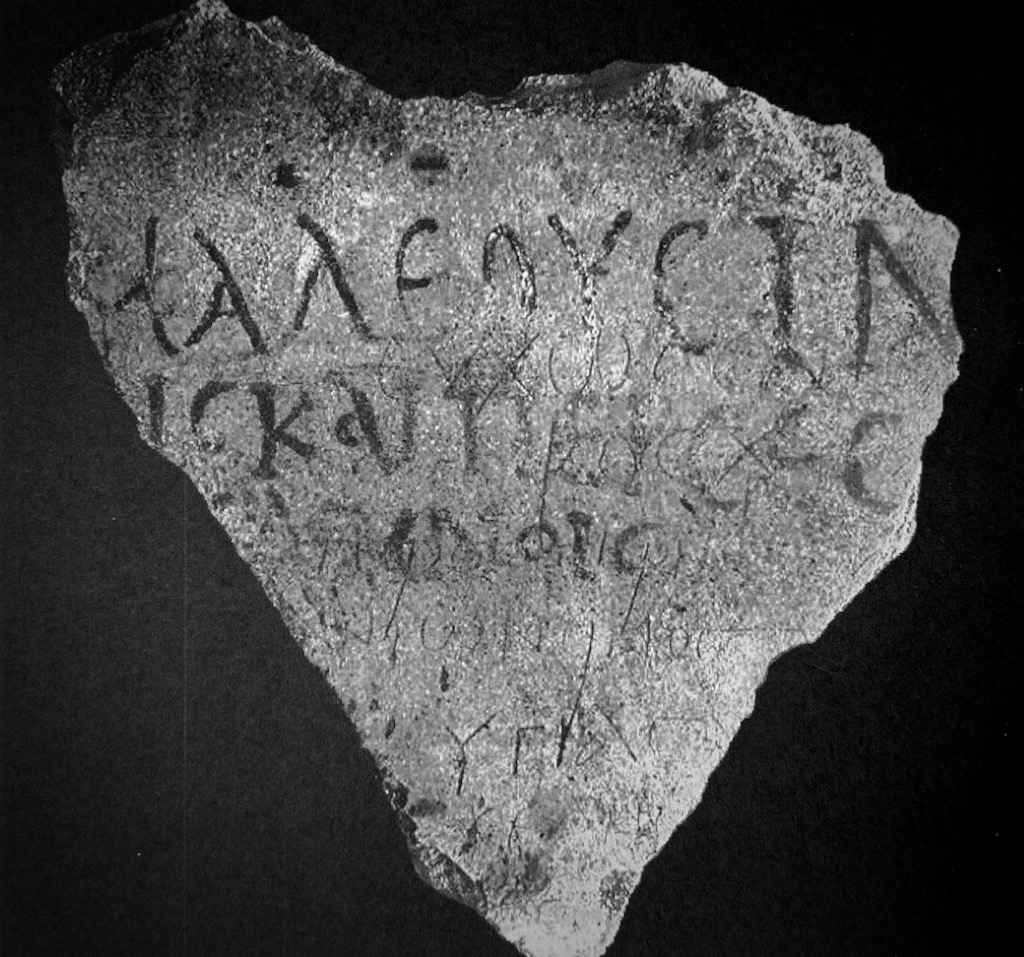
This short dipinto pays homage to the Lions and the Persians, the 4th and 5th Mithraic degrees.
This inscription by a certain Ioulianos, found at the entrance to the Dolichenum at Dura Europos, bears an inscription to Zeus Helios Mithras et Tourmasgade.
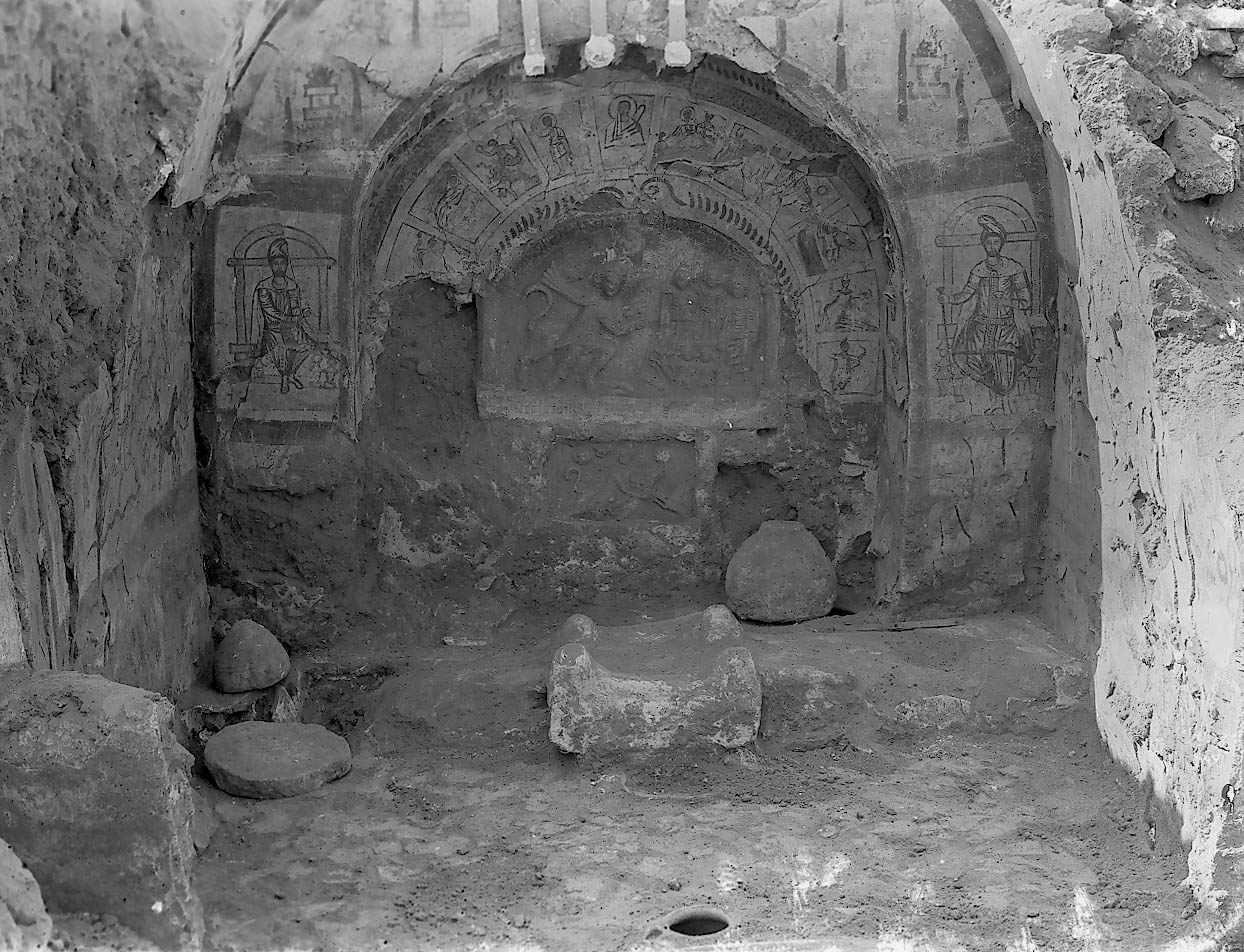
Three plaster altars within the main altar of the Mithraeum of Dura Europos, two of them with traces of fire and cinders.
