Your search Al. N. Oikonomides gave 3559 results.
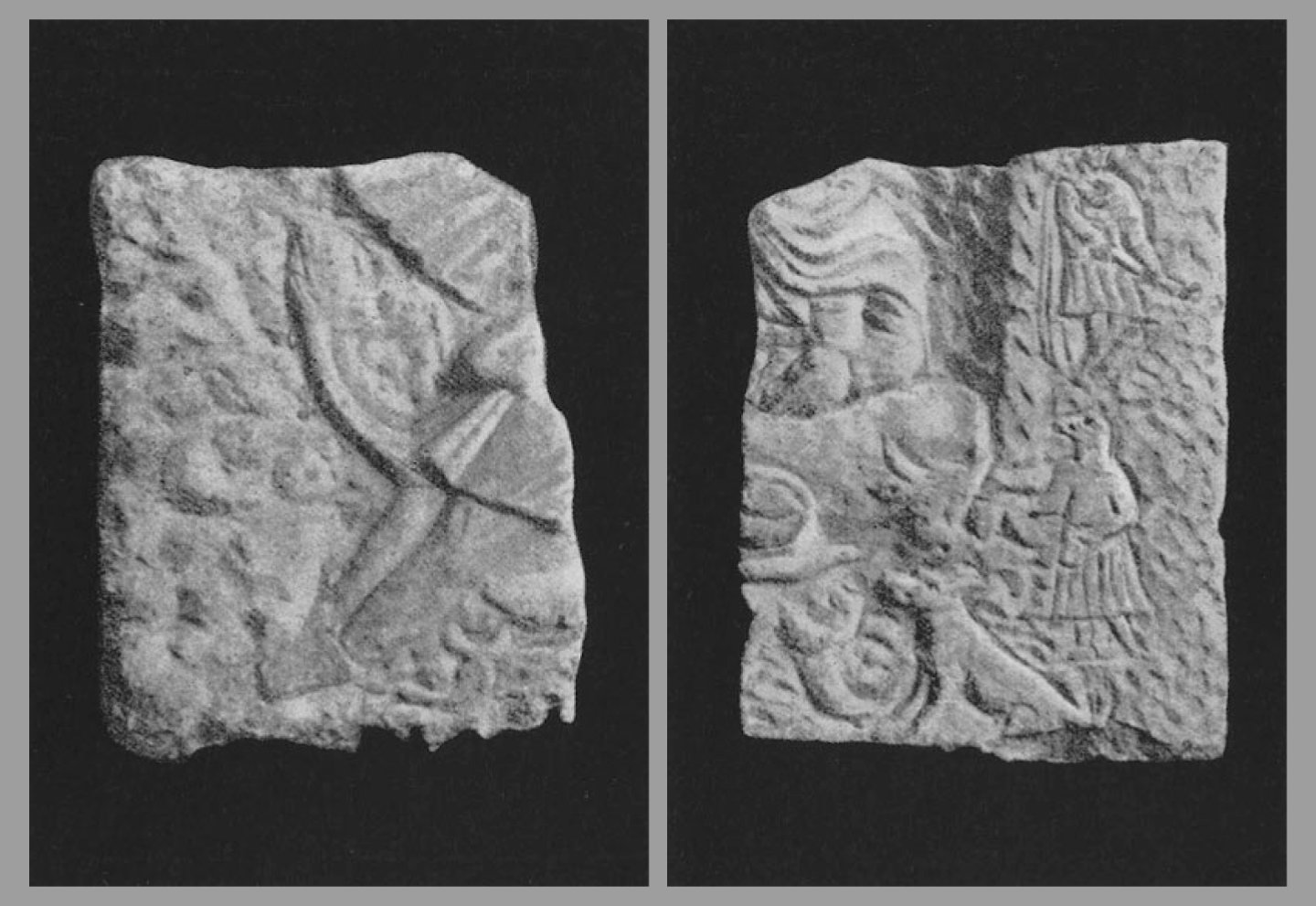
This fragment of a double relief shows a tauroctony on one side and the sacred meal, including a serving Corax, on the other.
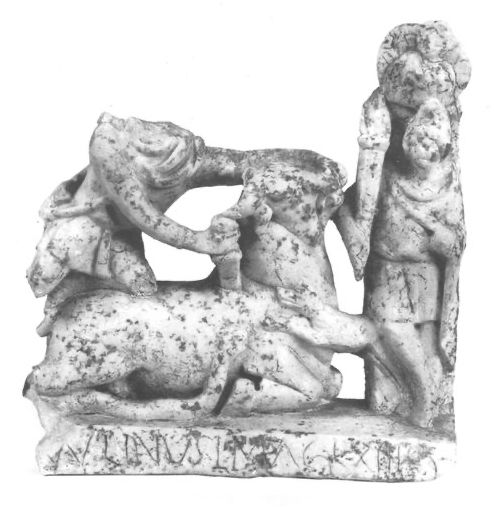
This relief of Mithras killing the bull was dedicated by the bearer of the imperial standard of Legio XIII Gemina, Marcus Ulpius Linus.
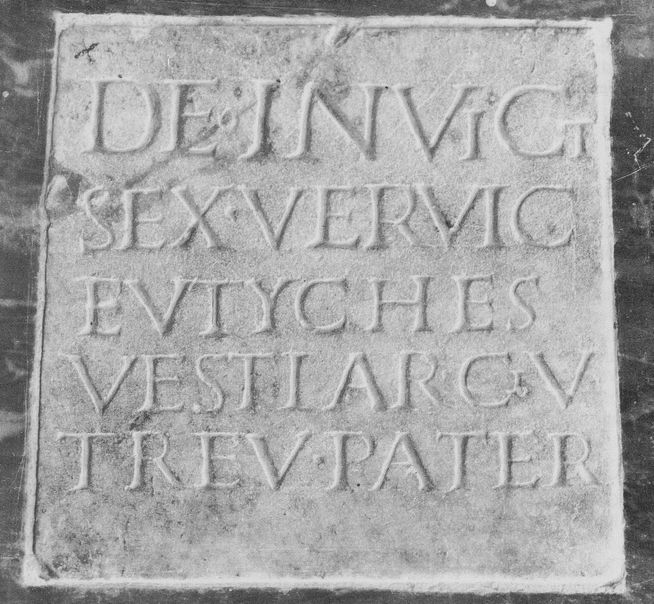
Several inscriptions dedicated to Mithras have been found in Eauze, including these two by a certain Pater Sextus Vervicius Eutyches, discovered in 1768.
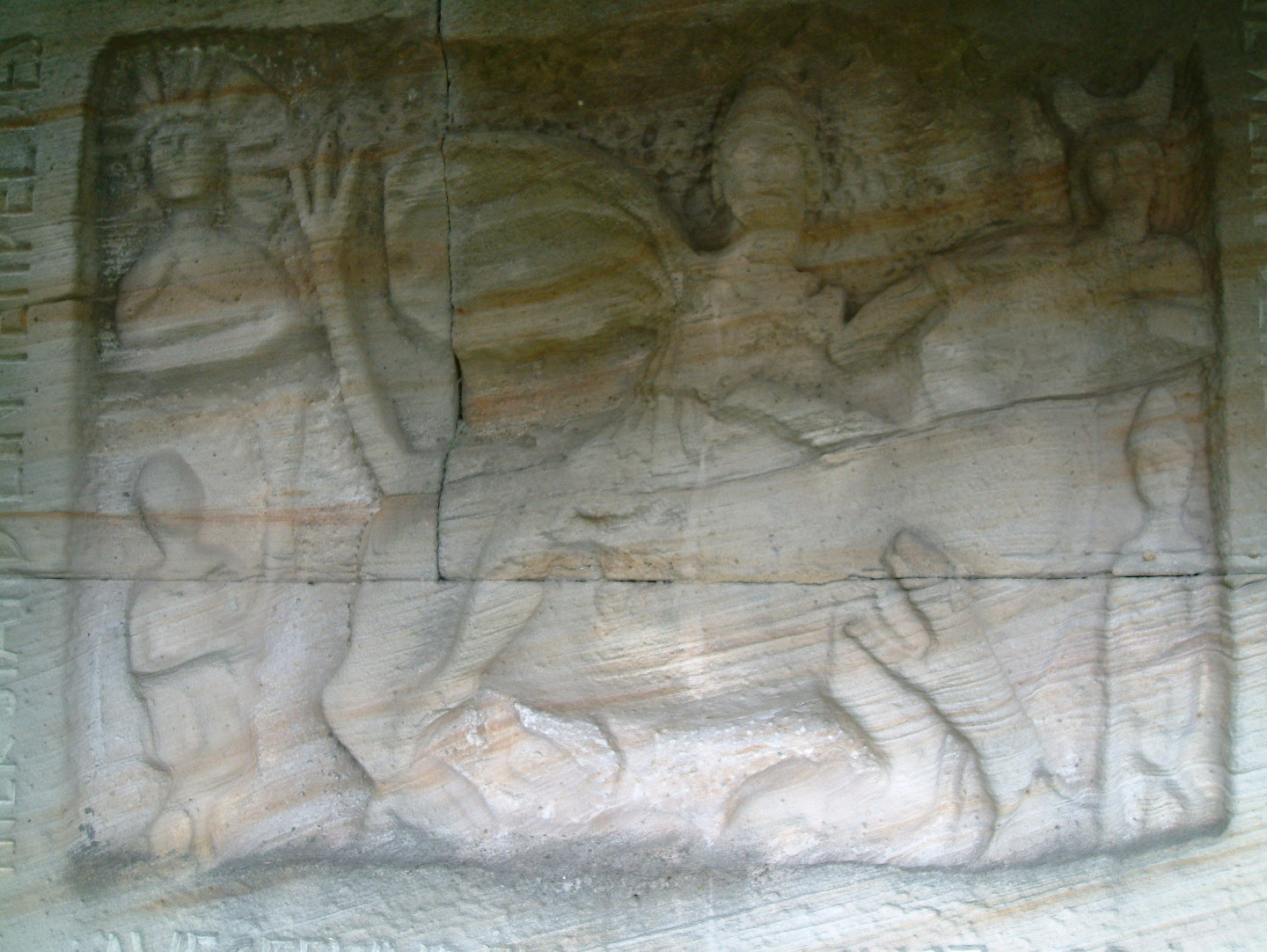
This relief of Mithras killing the bull found in Gimmeldingen, Germany, lacks the usual raven.
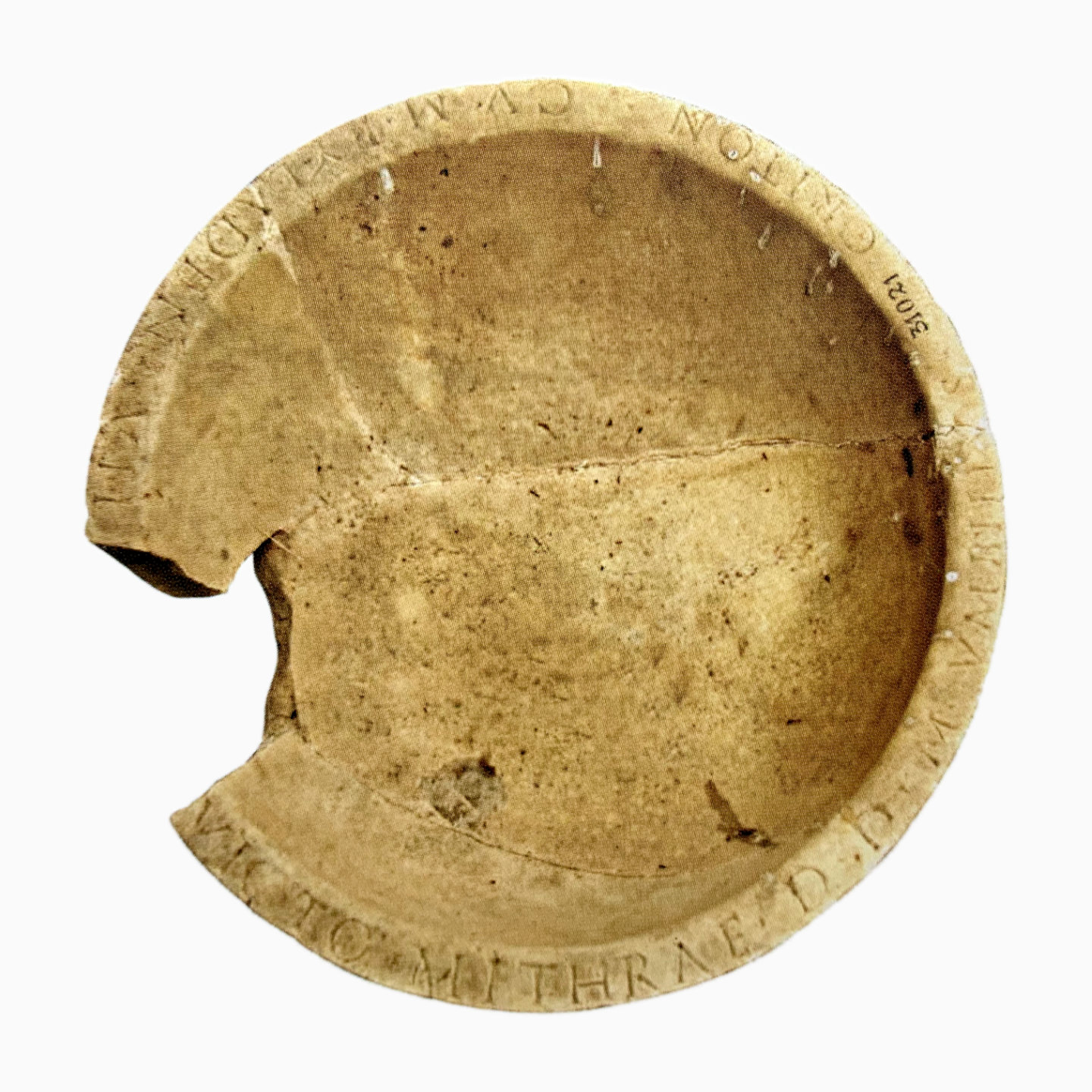
This marble basin found in the Mithraeum of the Footprint bears an inscription of a certain Umbilius Criton, associated with a monumental tauroctonic sculpture also found in Ostia.
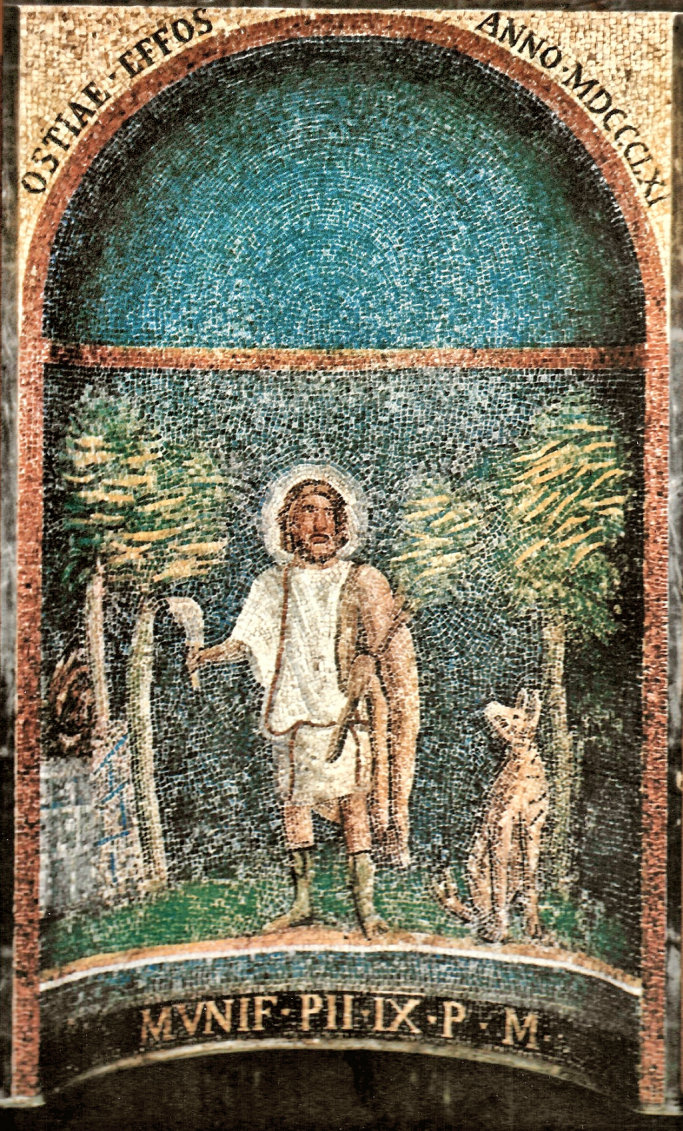
This unusual mosaic representation of the god Silvanus was found in the Mithreaum of the so-called Imperial Palace in Ostia.
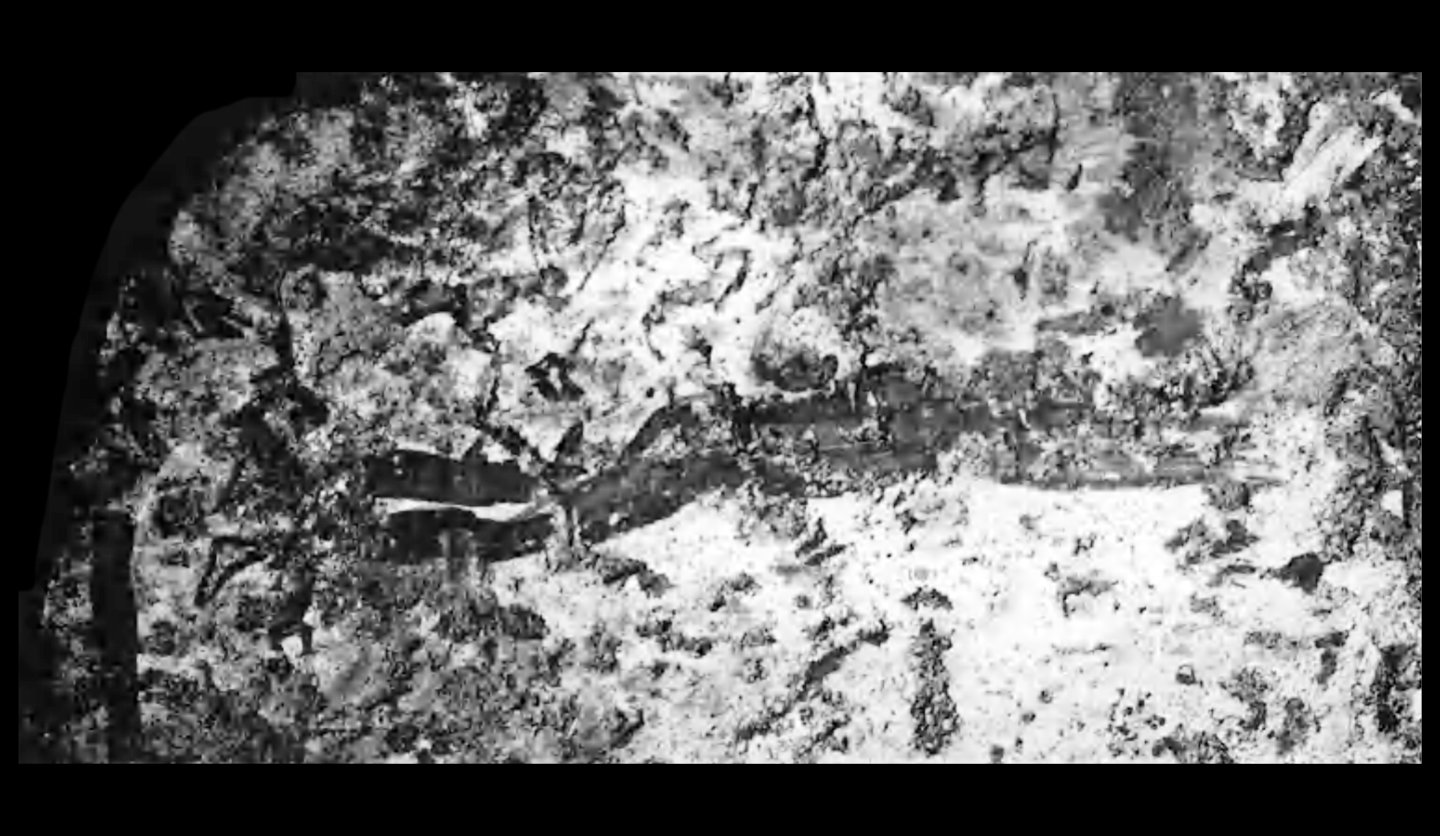
Representation of a person lying prostrate on the ground between two other walking figures on the Mitreo of Santa Capua Vetere.
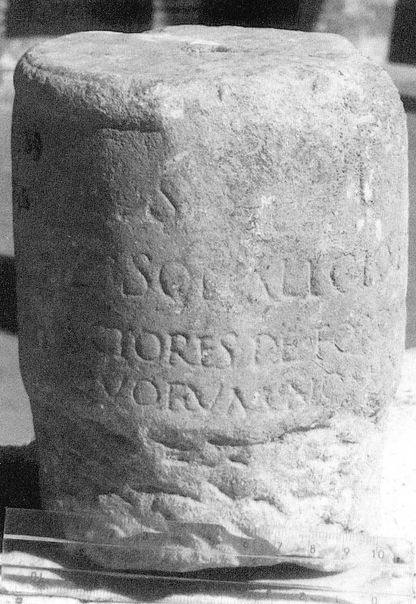
The inscription included the names of the brotherhood, which are now lost.
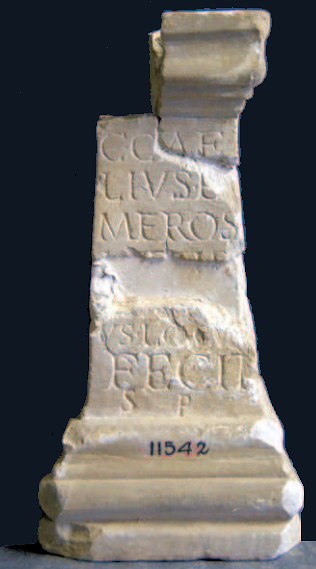
This small monument bears the inscriptions of a certain Caelius Ermeros, antistes at the Mithraeum of the Painted Walls.
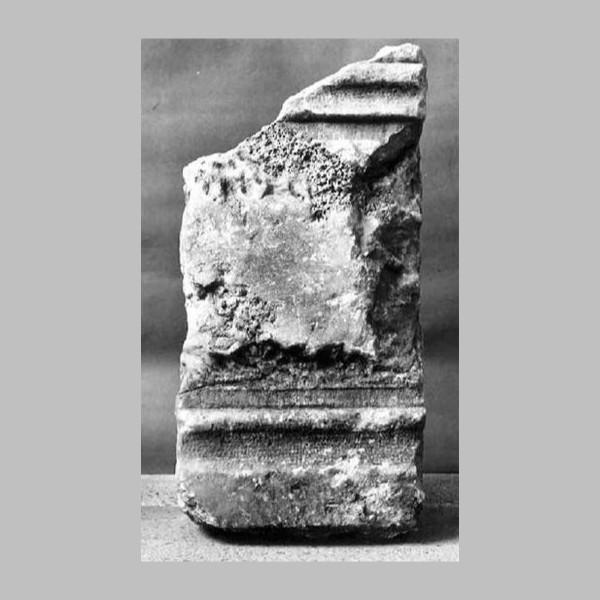
A certain Blastia or Blastianus made a dedication to Mithras and Silvanus on an altar in Emona, Italy.
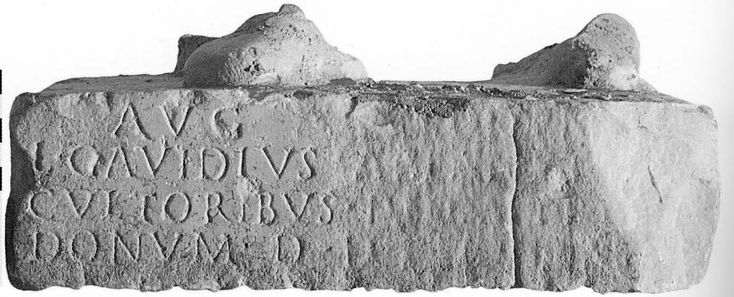
This inscription on white marble by Lucius Gavidius uses the term ther cultores to refer to his Mithraic community in Stabiae, Italy.
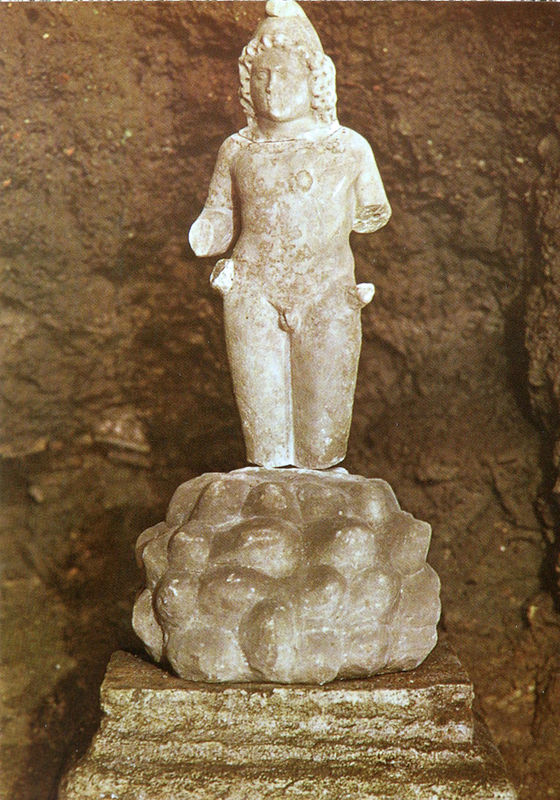
Mithras birth from the knees upwards emerging from a rock and wearing as usual a Phrygian cap.
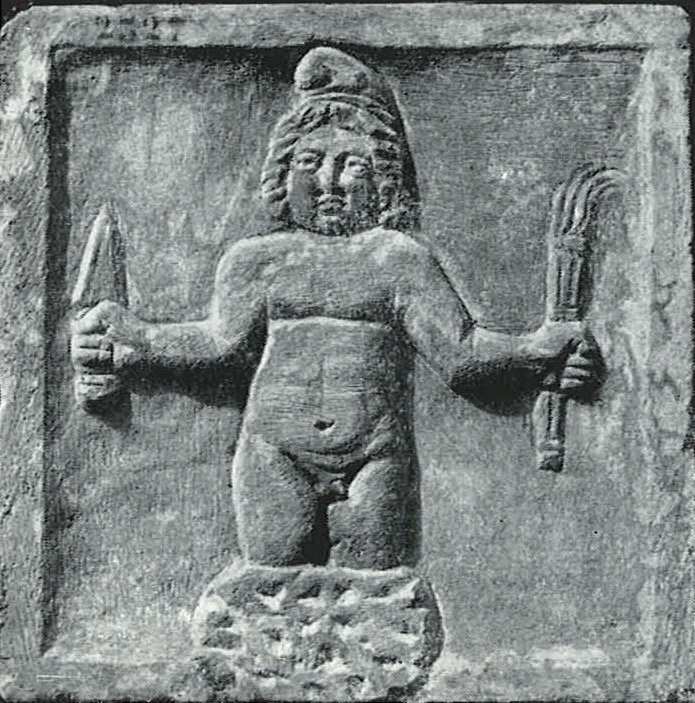
The relief of Mithras being born from the rock of the Esquiline shows the young god naked, as usual, with a torch and a dagger in his hands.
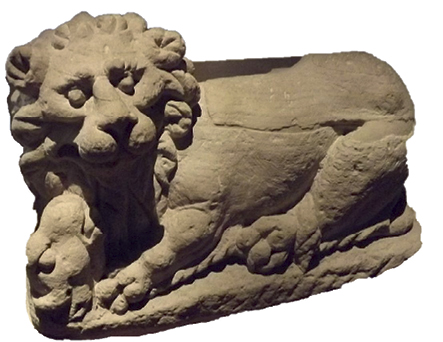
Exceptional sculpture of a lion devouring a bull’s head founded in 1894 in Carnuntum, Pannonia.
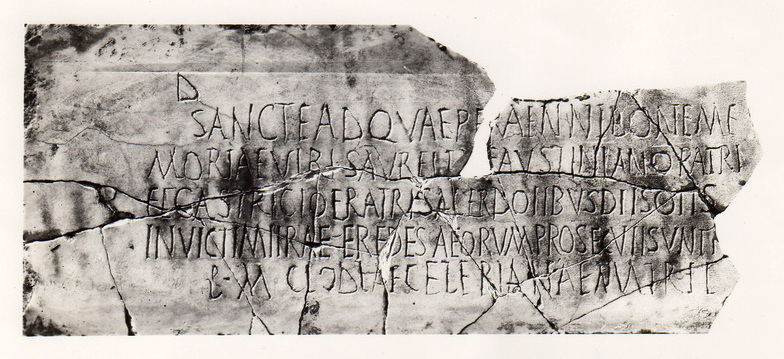
This inscription was commissioned by a family of priests of the invincible god Mithras.
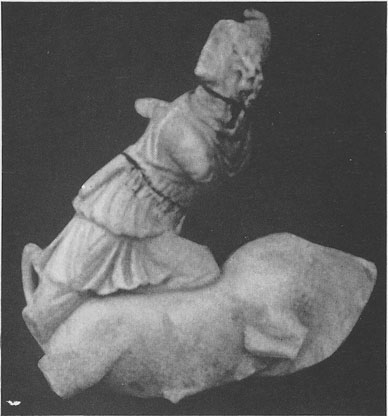
Fragment of a white marble statue of Mithras killing the bull from Rusicade, today Skikda, Algeria.

White marble statue of Mithras killing the sacred bull preserved in the Museo Nacional Romano.
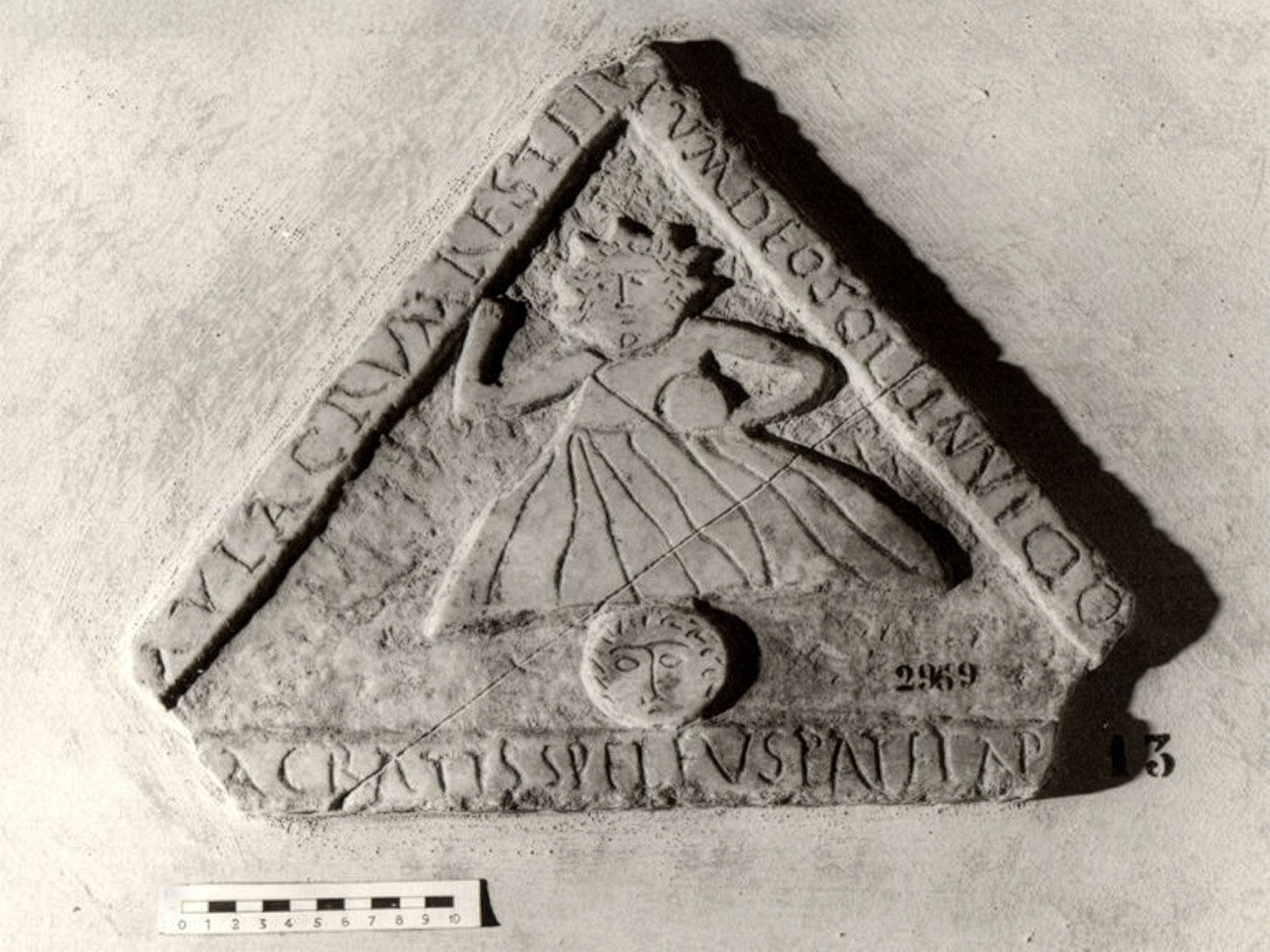
Small triangular slab bearing a Latin inscription referring to Sol Invictus and to a sacred cave, probably dating to the 4th century AD.

This altar to Invictus Mythra (sic) was found in 1867 in ancient Maros Portum, now Sighișoara, Romania.

The importance of the Mithraeum of Marino lies in its frescoes, the most significant of which is that of Mithras slaying the bull, surrounded by mythological scenes.
