Your search Al. N. Oikonomides gave 3559 results.

Scholar, politician and a court astrologer to the Roman emperors Claudius, Nero and Vespasian.

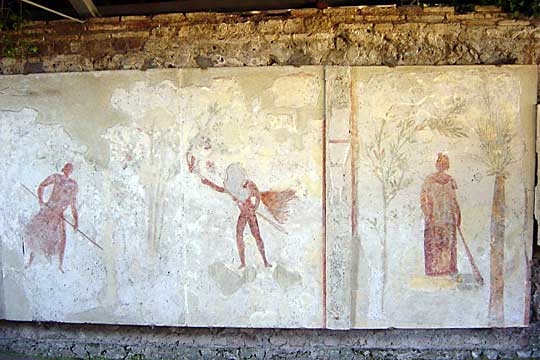
The frescoes depict several figures dressed in different garments associated with the Mithraic degrees.
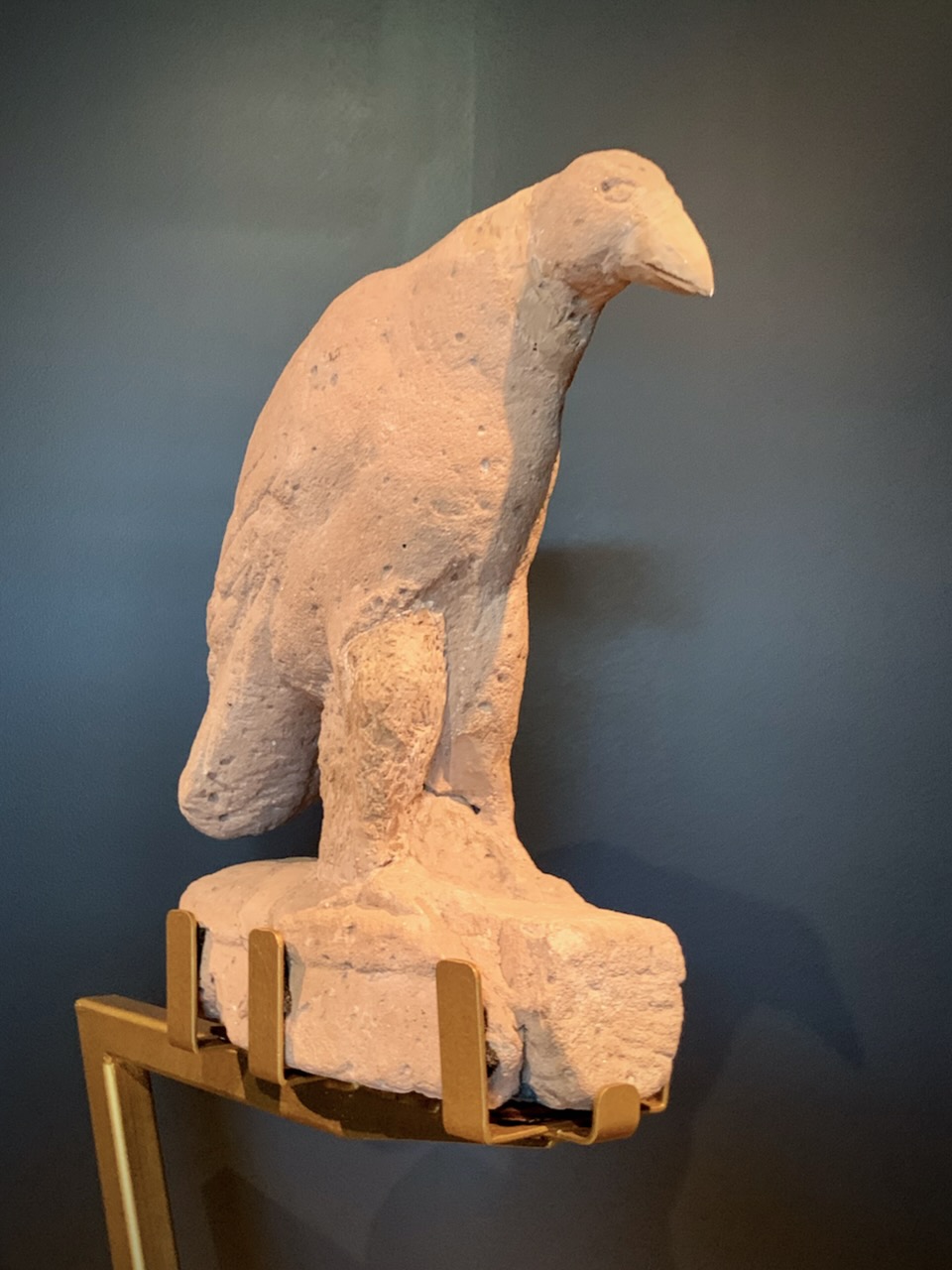
The Stockstadt Raven is one of only two standing-alone sculptures of this bird to be found in Mithraic statuary.
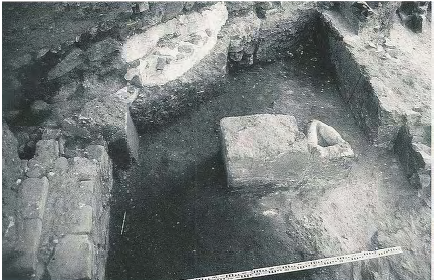
The Mithraeum at Espronceda Street, in Merida, was discovered in 2000. It is a semi-subterranean temple.
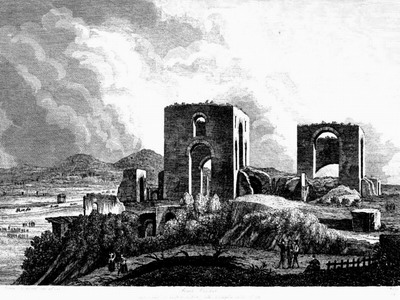
Mithras and other oriental gods were worshipped in the shrine of Zeus near the Villa of the Quintilians in Rome.

The existence of a mithraeum in the "tana del lupo", a natural cave in the castle of Angera, has been assumed since the 19th century, following the discovery of two mithraic inscriptions in the town.

This unusual bronze bust of Sabazios features multiple symbolic elements, with Mithras depicted in his characteristic pose of slaying the bull, positioned just below Sabazios’ chest.

One of the three known inscriptions of Dioscorus, servant of Marci, found in Alba Iulia, Romania.
This marble monument was dedicated in Rome by the slave Fructus and his son Myro.
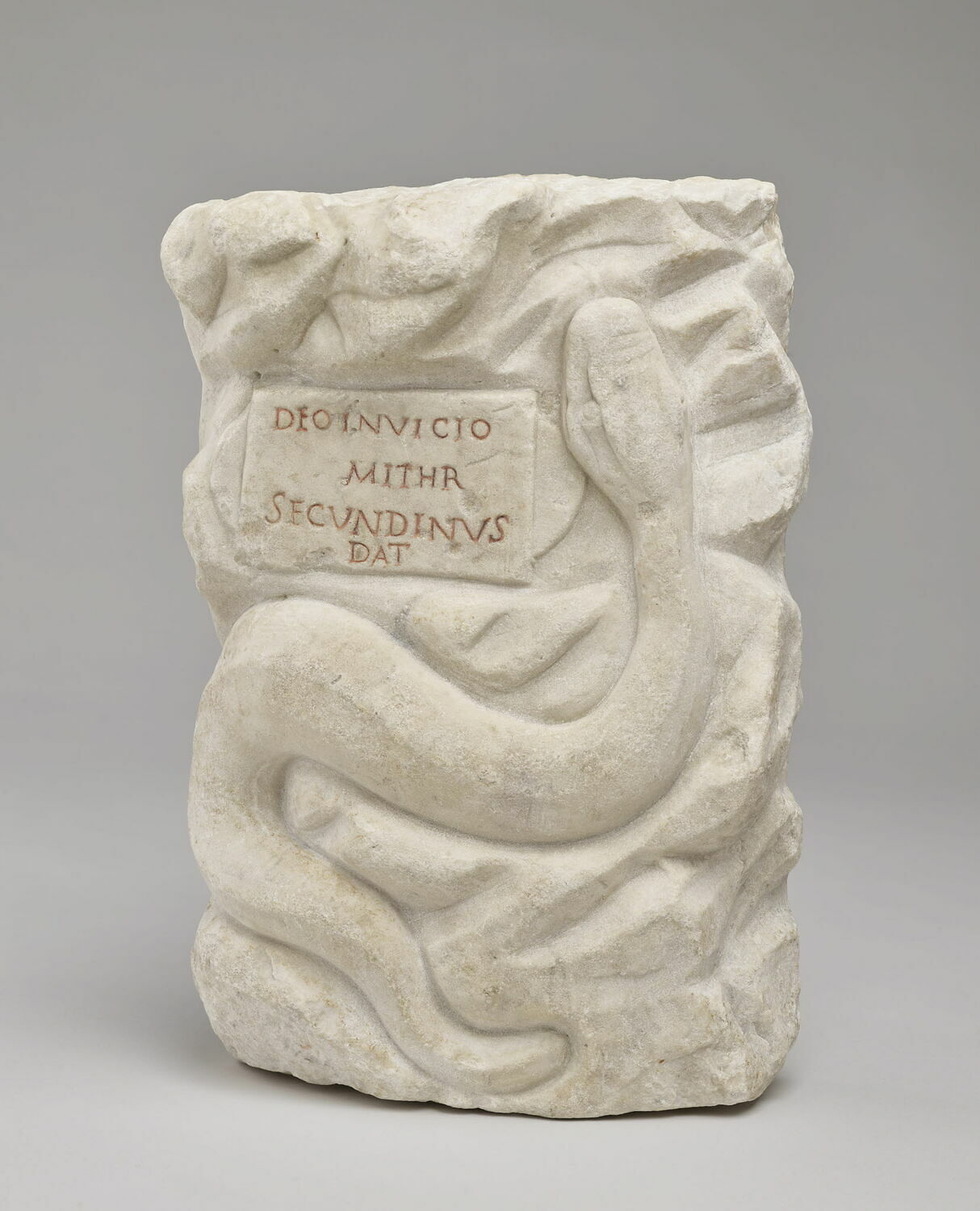
There is no consensus on the authenticity of this monument erected by a certain Secundinus in Lugdunum, Gallia.

This marble sculpture from Sicily, known as the Randazzo Vecchio or Rannazzu Vecchiu, contains some essential elements of the Mithraic Aion, the lion-headed god.
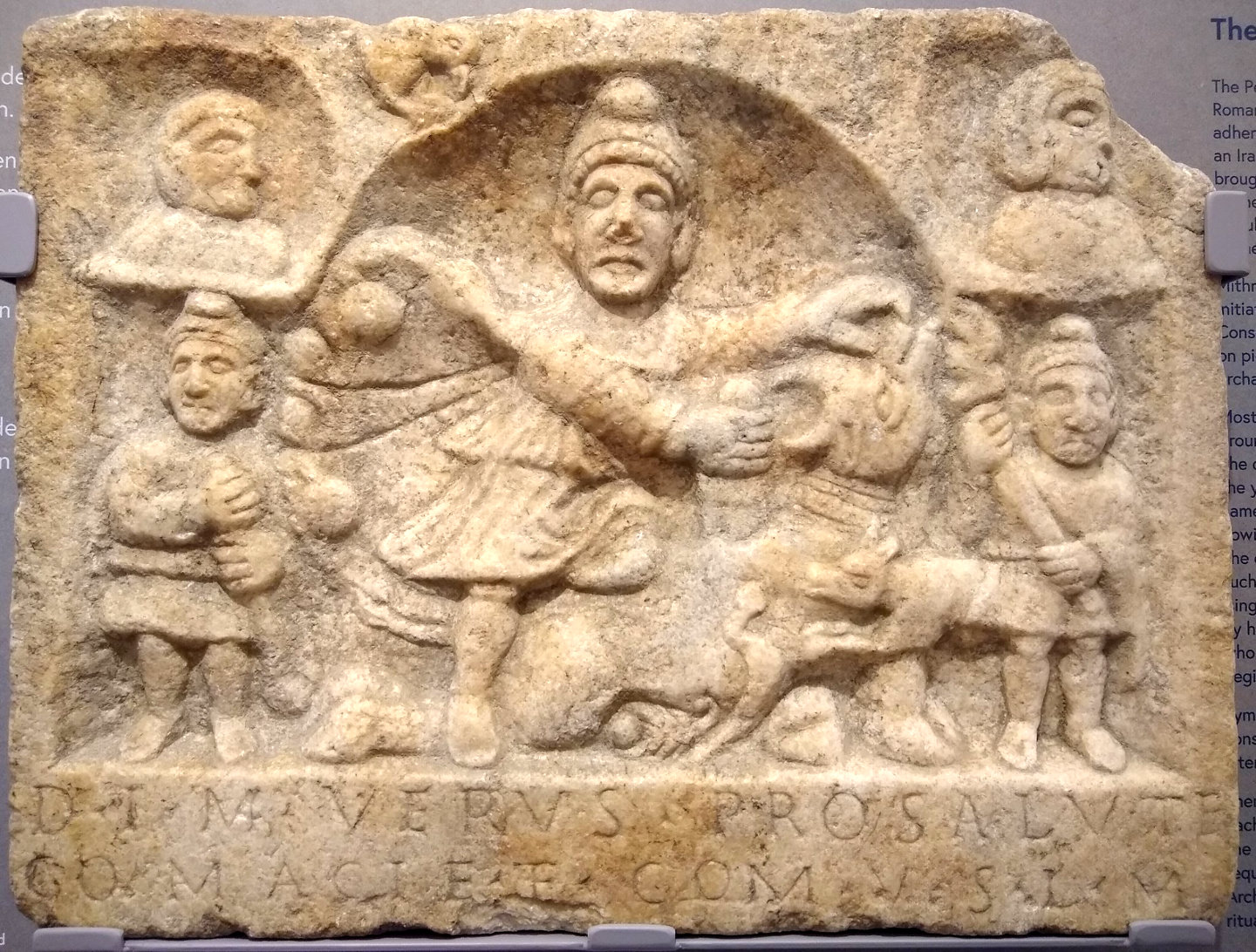
The votive image was donated by a certain Verus for a mithraeum which was probably located in the hinterland of the Limes.
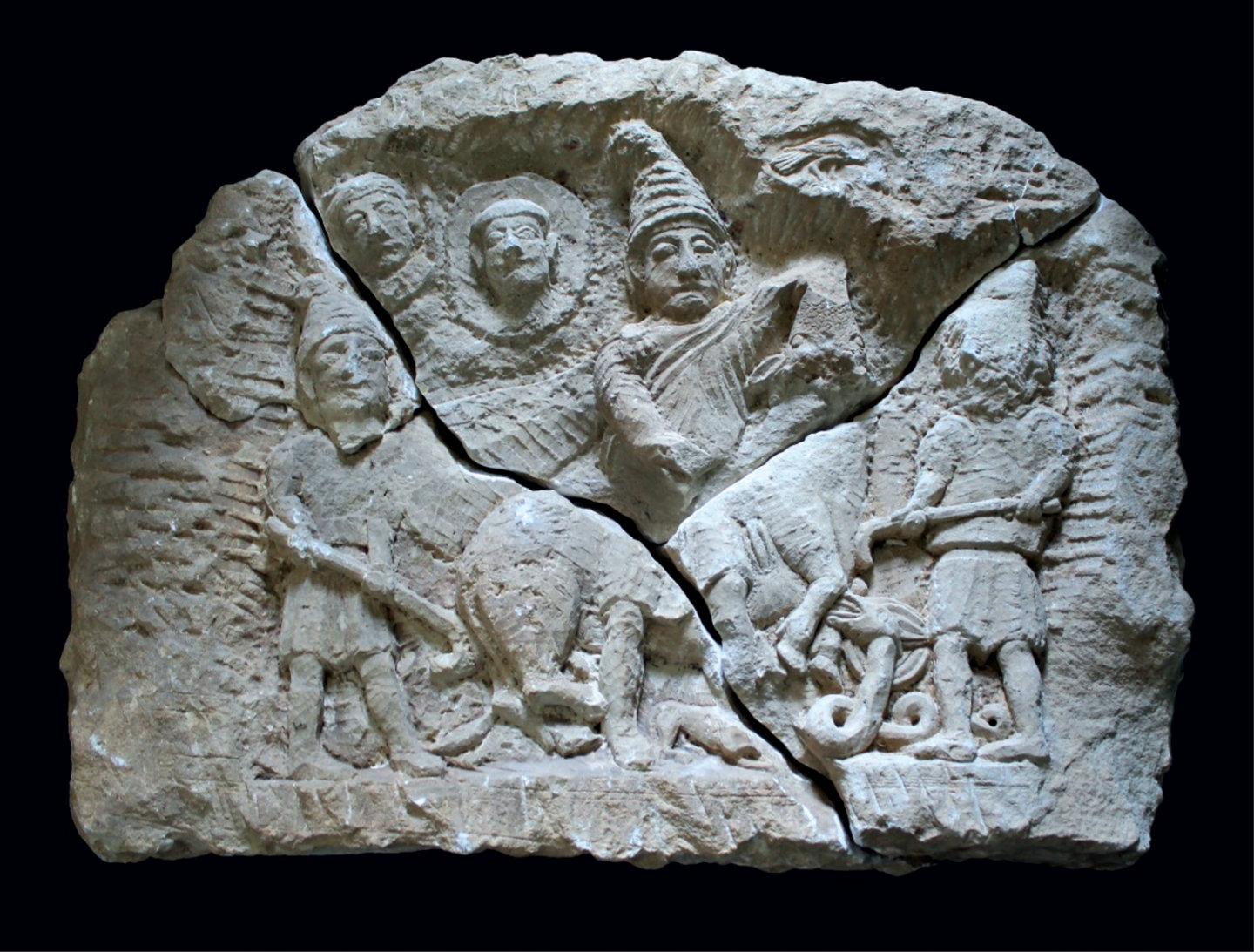
The relief of Mithras killing the bull, found near Zvornik in Bosnia and Herzegovina, features some variations on the usual scene.
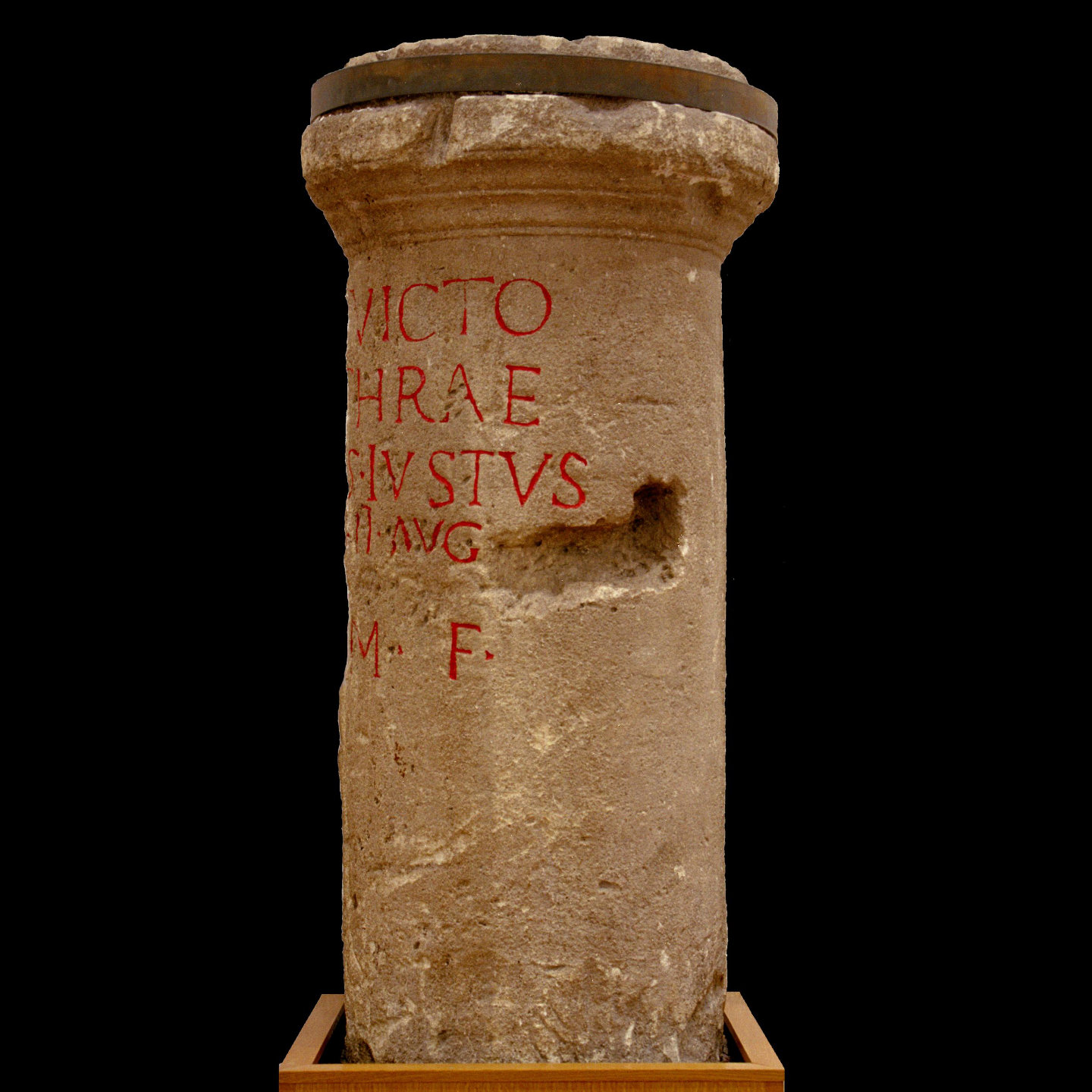
This oolite base, dedicated to the invincible Mithras, was found in the baths of the Villa de Caerleon, Walles.
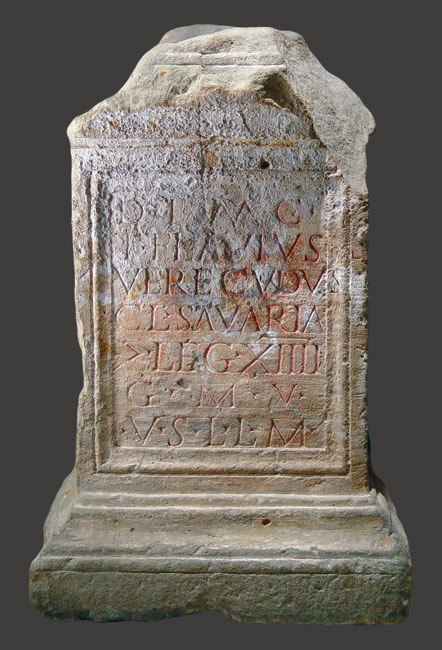
This monument to Mithras and Cautes (or Cautopates) was erected in Carnuntum by the centurion Flavius Verecundus of Savaria.
This elliptical terracotta fragment from Ostia depicts Mithras as a bullkiller.
Minto has claimed that the time god Aion was painted on the corner of the north wall of the Mitreo de Santa Capua Vetere.
A statue and a relief of Cautes have been found in an ancient Gallo-Roman site in the commune of Dyo.
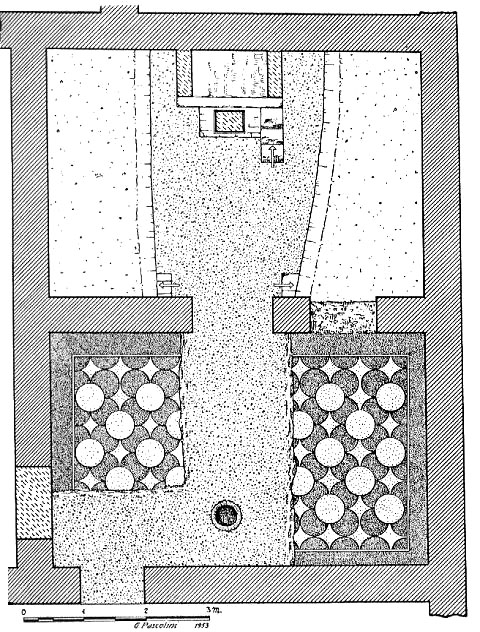
The Mithraeum of the House of Diana was installed in two Antonine halls, northeast corner of the House of Diana, in the late 2nd or early 3rd century.
