Your search Anne Le Cam gave 192 results.

Vienna was the capital of the Allobroges, a Gallic people, until it was conquered by the Romans in 47 BC. It became a Roman provincial capital, conveniently located on the Rhône, then a major communication route.
Colonia Claudia Ara Agrippinensium, usually just called Colonia, was the Roman settlement in the Rhineland that became the modern city of Cologne, now in Germany. It was the capital of Germania Inferior and the military headquarters of the region.
Carnuntum was a Roman legionary fortress and headquarters of the Pannonian fleet from 50 AD. After the 1st century, it was capital of the Pannonia Superior province. It also became a large city of 50,000 inhabitants.
Capua is currently a city and comune in the province of Caserta, in the region of Campania, southern Italy, situated 25 km north of Naples, on the northeastern edge of the Campanian plain.
Caetobriga, now Setúbal of Proto-Celtic *Caetobrix, became a Turdetani settlement which passed under Roman rule. In the time of Al-Andalus the city was known as Shaṭūbar.
Brigetio, which became Szőny, was an independent town until 1977, when it was incorporated into Komárom. The Roman legion Legio I Adiutrix was stationed here from 86 AD until the middle of the 5th century.
Along the upper Rhine frontier, Germania superior became one of the principal centres of Mithraic activity in northwestern Europe.
Mesopotamia formed part of the eastern frontier zone where Roman military expansion encountered long-established Mesopotamian traditions.
Along the lower sectors of the middle Danube, Pannonia inferior became a major centre of Mithraic activity in the frontier provinces.
Mesopotamia preserves frontier evidence from the eastern limits of Roman Mithraic expansion.

This small Greek dedication from the island of Aenaria invokes Helios Mithras under the epithet “unconquered”.
This marble dedication from Puteoli was offered to Sol Invictus and the genius of the colony by Claudius Aurelius Rufinus together with his wife and son.
This lost Mithraic relief, formerly kept near the church of the Santissima Annunziata in Naples, was probably a large tauroctony associated with the area of Puteoli or Pausilypon.
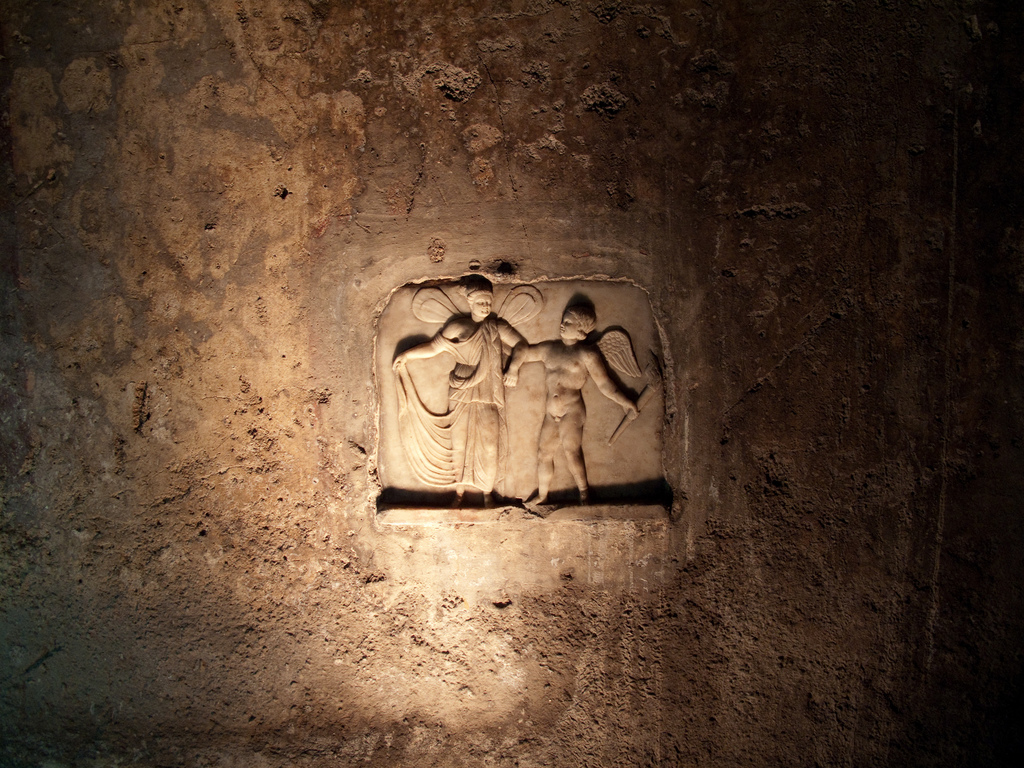
The Mithraeum of Santa Maria Capua Vetere includes a marble relief depicting a child Eros guiding Psyche through the dark.
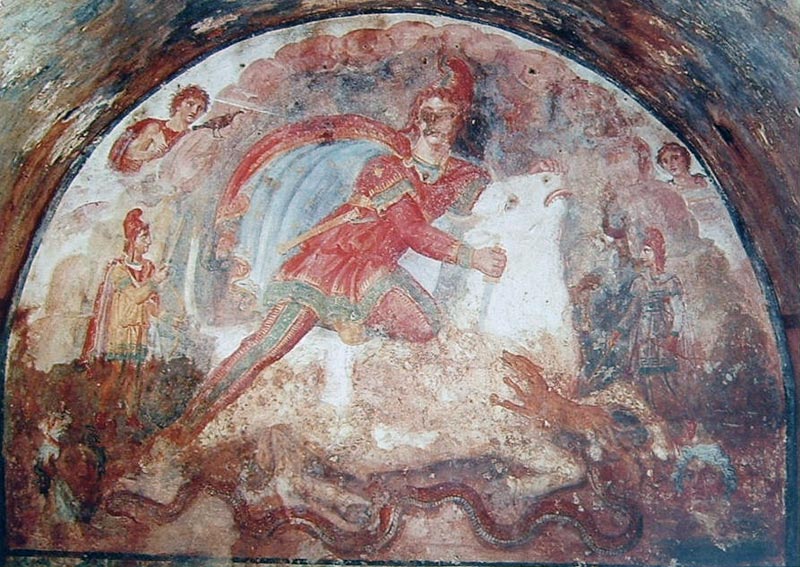
The main fresco of the Mithraeum of Santa Maria Capua Vetere portrays Mithras slaughtering a white bull.
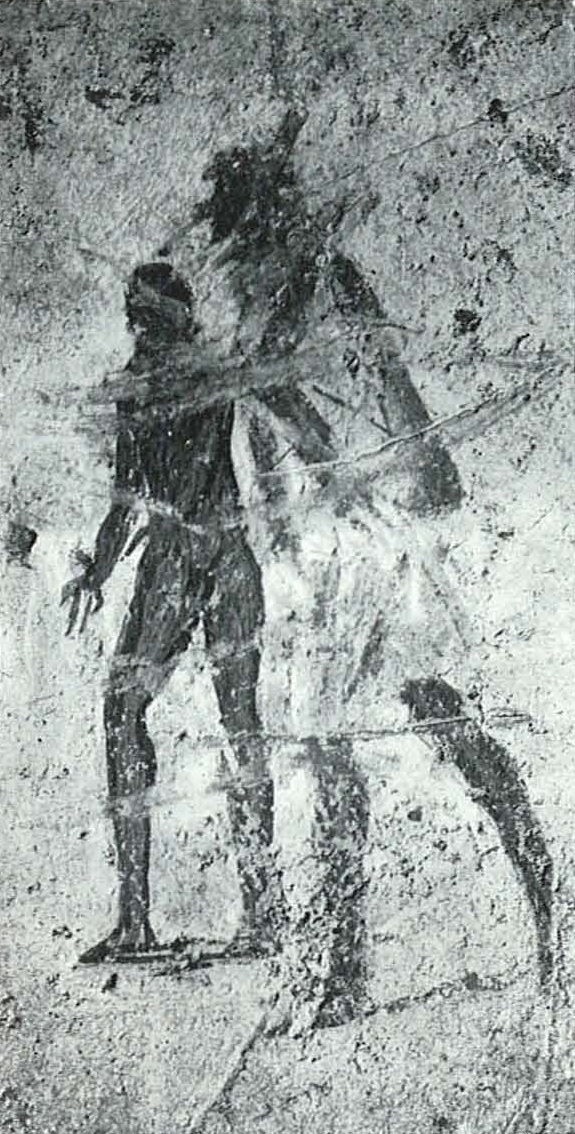
This is the first of several fresco scenes depicting the initiation of a new member in a mithraic community, in Capua Vetere.
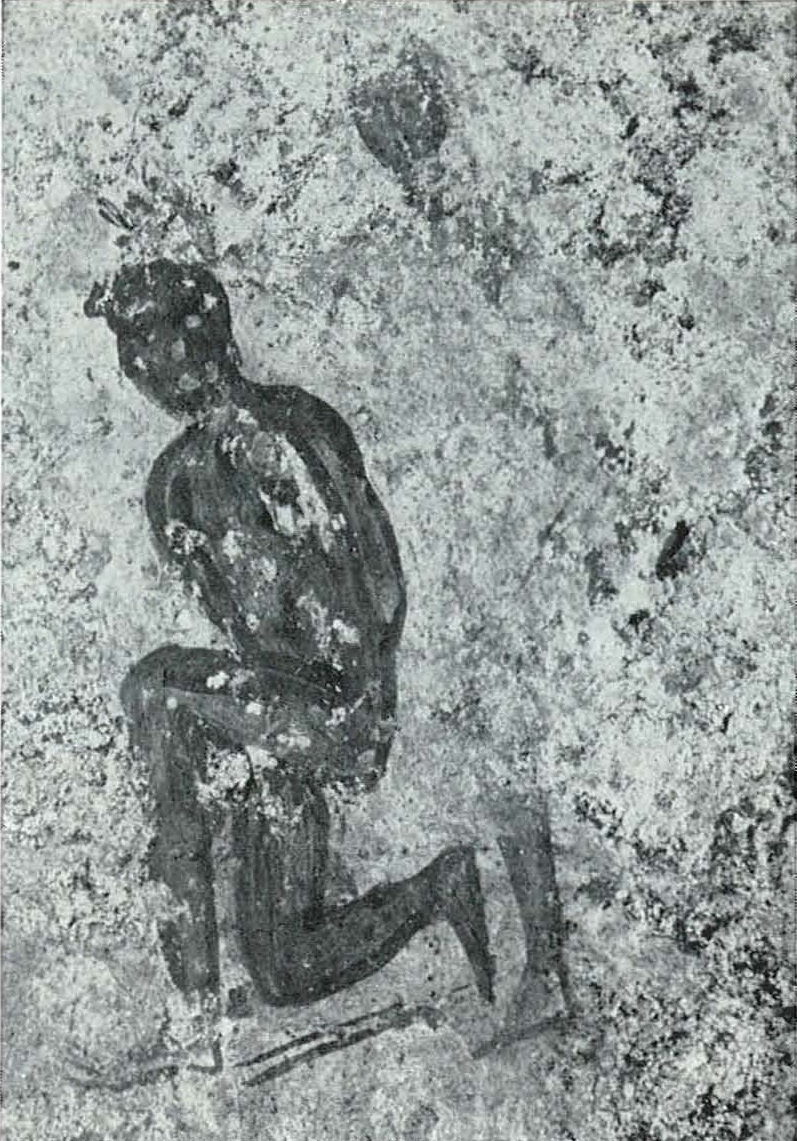
This scene from the frescoes of the Mitreo di Santa Maria Capua Vetere shows a kneeling, naked man surrounded by two other figures.
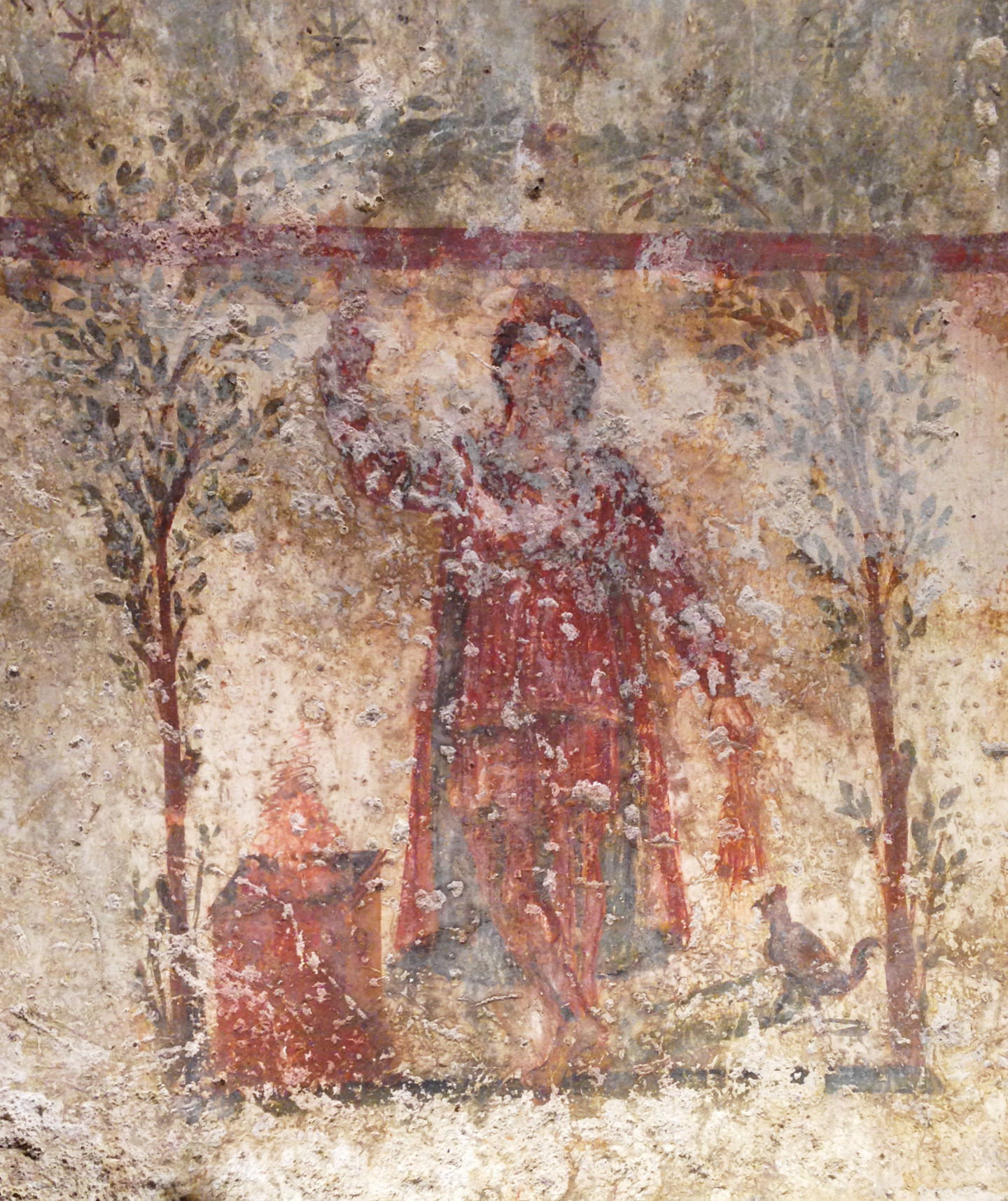
In the Mithraeum of S. Capua Veteres, Cautes stands between two laurel trees.
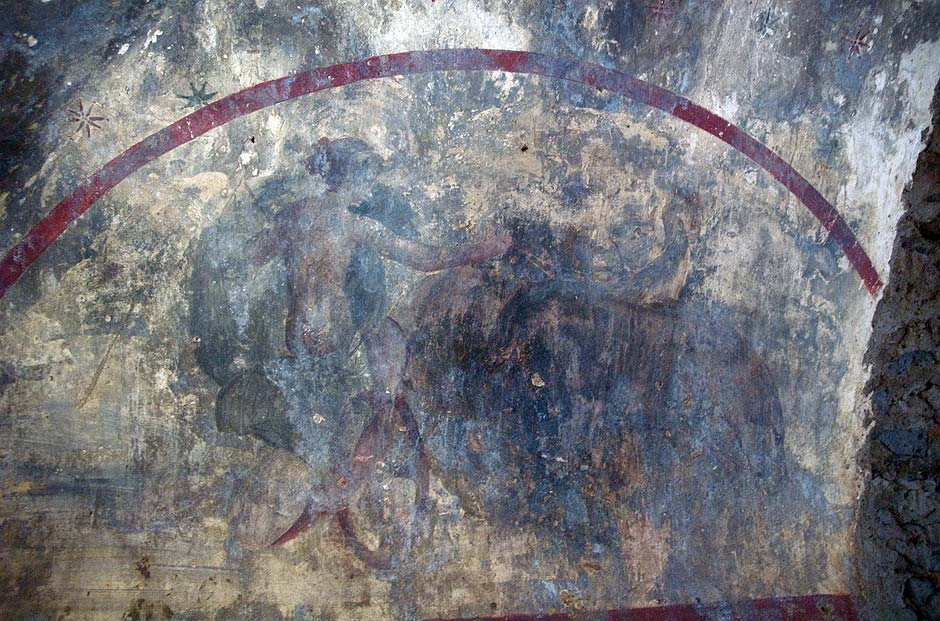
Luna riding a biga in the Mithraeum of Santa Capua Vetere.

Fresco depicting an initiation scene from the Mithraeum of Capua Vetere.
