Your search Antonio García y Bellido gave 39 results.
This slab dedicated to the invincible god, Serapis and Isis by Claudius Zenobius was found in 1967 in the walls of the city of Astorga, Spain.
García y Bellido proposed the existence of a mithraeum in a narrow, elongated room where the Troia mithraic relief was found.

This altar found in Benifaió, València, was erected by a slave called Lucanus.
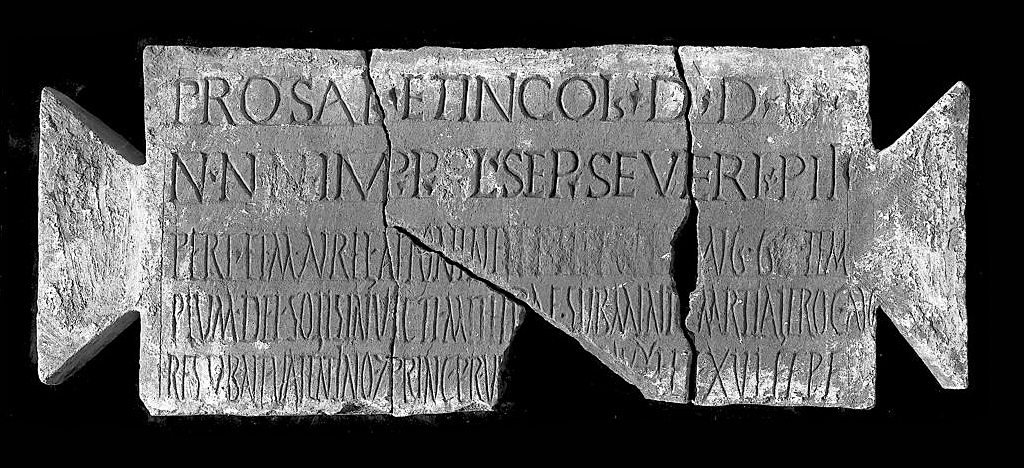
This altar is dedicated to the birth of Mithras by a frumentarius of the Legio VII Geminae.
The remains of the mithraic triptic of Tróia, Lusitania, were part of a bigger composition.
This unfinished Mithras tauroctonos without the usual surrounding animals was found in 1923 in Italica, near Seville, Spain.
This head of Serapis from Cerro de San Albín may be unrelated to Mithras worship.
The lion-headed figure, Aion, from Mérida, wears oriental knickers fastened at the waist by a cinch strap.
The Mithras of Cabra is the only full preserved Tauroctony sculpture found in Spain yet.
The statue of Mercury in Merida bears a dedication from the Roman Pater of a community in the city in 155.
This altar, which has now disappeared, was dedicated by the slave Quintio for the health of a certain Coutius Lupus.
The sculpture of the solar god is signed by its author, Demetrios.
The sculpture of Oceanus in Merida bears an inscription by the Pater Patrorum Gaius Accius Hedychrus.
The Aion-Chronos of Mérida was found near the bullring of the current city, once capital of the Roman province Hispania Ulterior.
This standing sculptural figure from Mérida appears to carry the serpent staff, characteristic of the medicine god Aesculapius.
The Venus pudica of Merida stands next to the young Amor riding a dolplhin.