Your search As Salhiyah gave 2397 results.

Fragments of a marble relief of Sol, which probably served as a fenster.
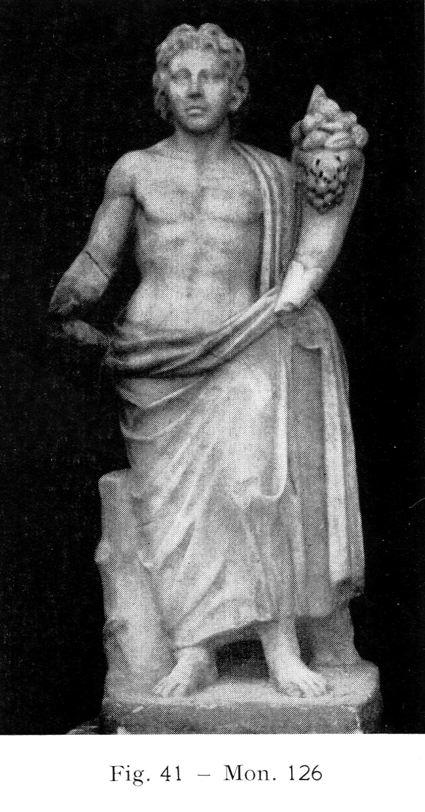
The statue of Skikda has seven holes in his hair for fastening rays.
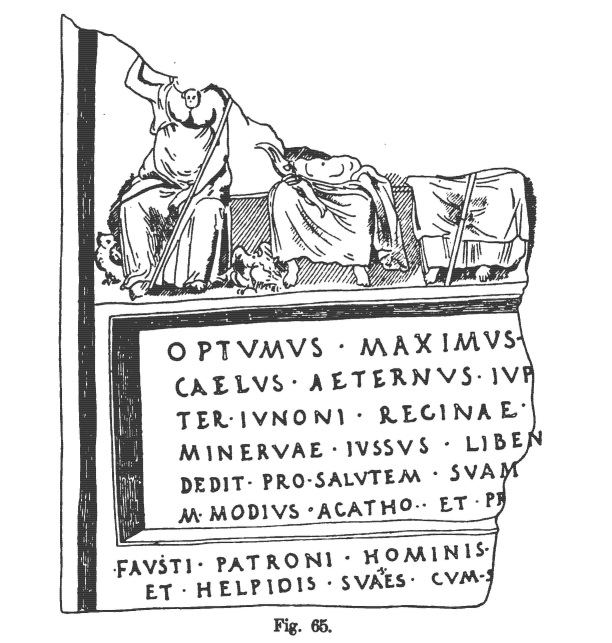
This marble relief bears an inscription by Marcus Modius Agatho, who dedicated several monuments to Mithras on the Caelian Hill in Rome.
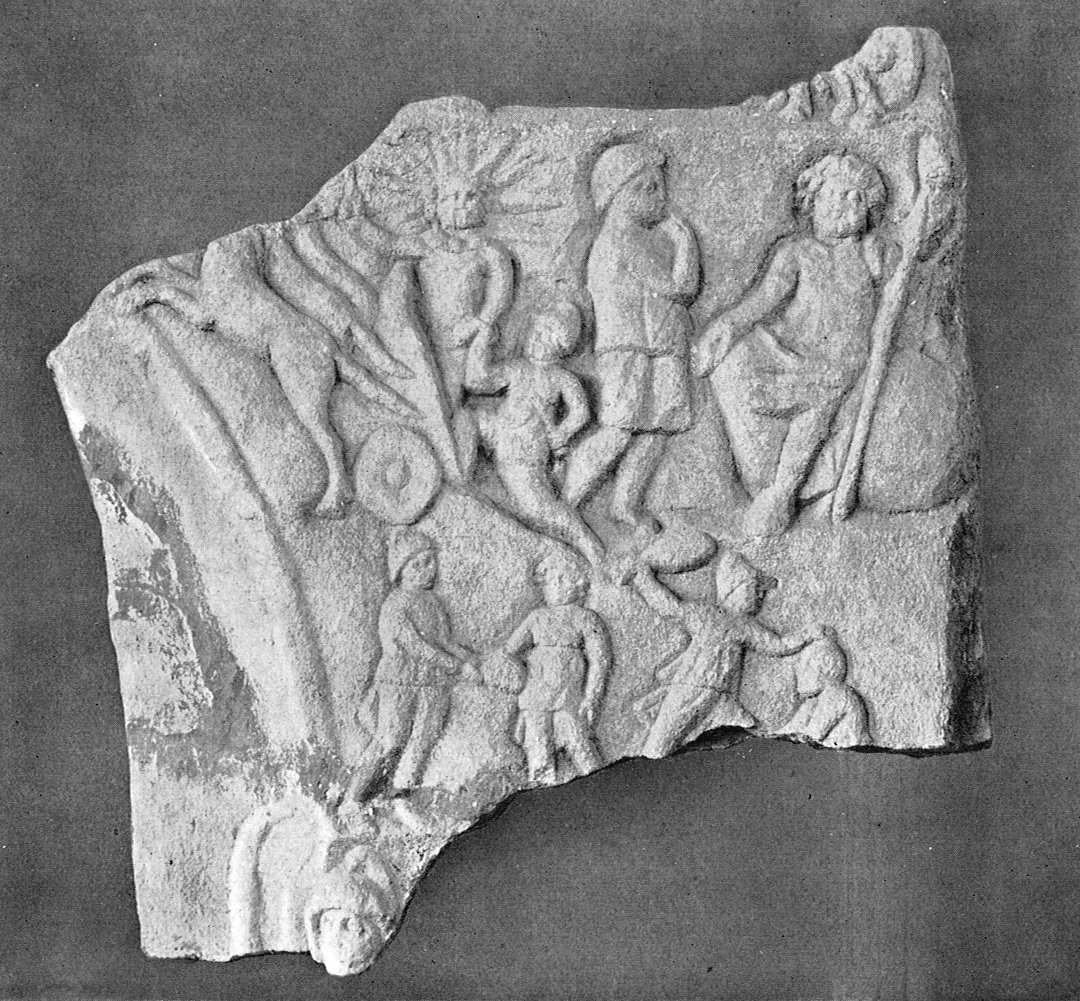
Several Mithraic scenes, including Mithras with Saturn, Mithras with Sol and Mithras' Ascension, are depicted on this fragment of a relief from Ptuj.
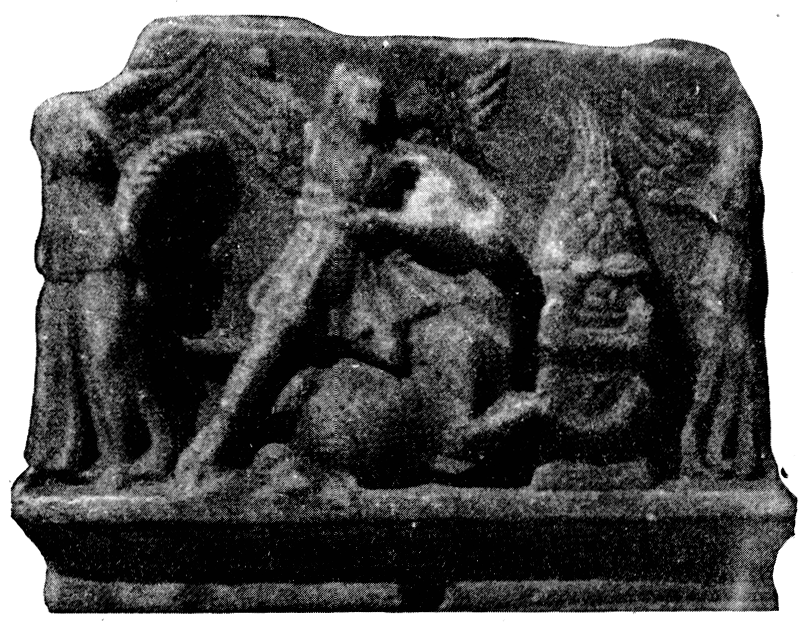
The Mithraic relief from Baris, in present-day Turkey, shows what appears to be a proto-version of the Tauroctony, with a winged Mithras surrounded by two Victories.
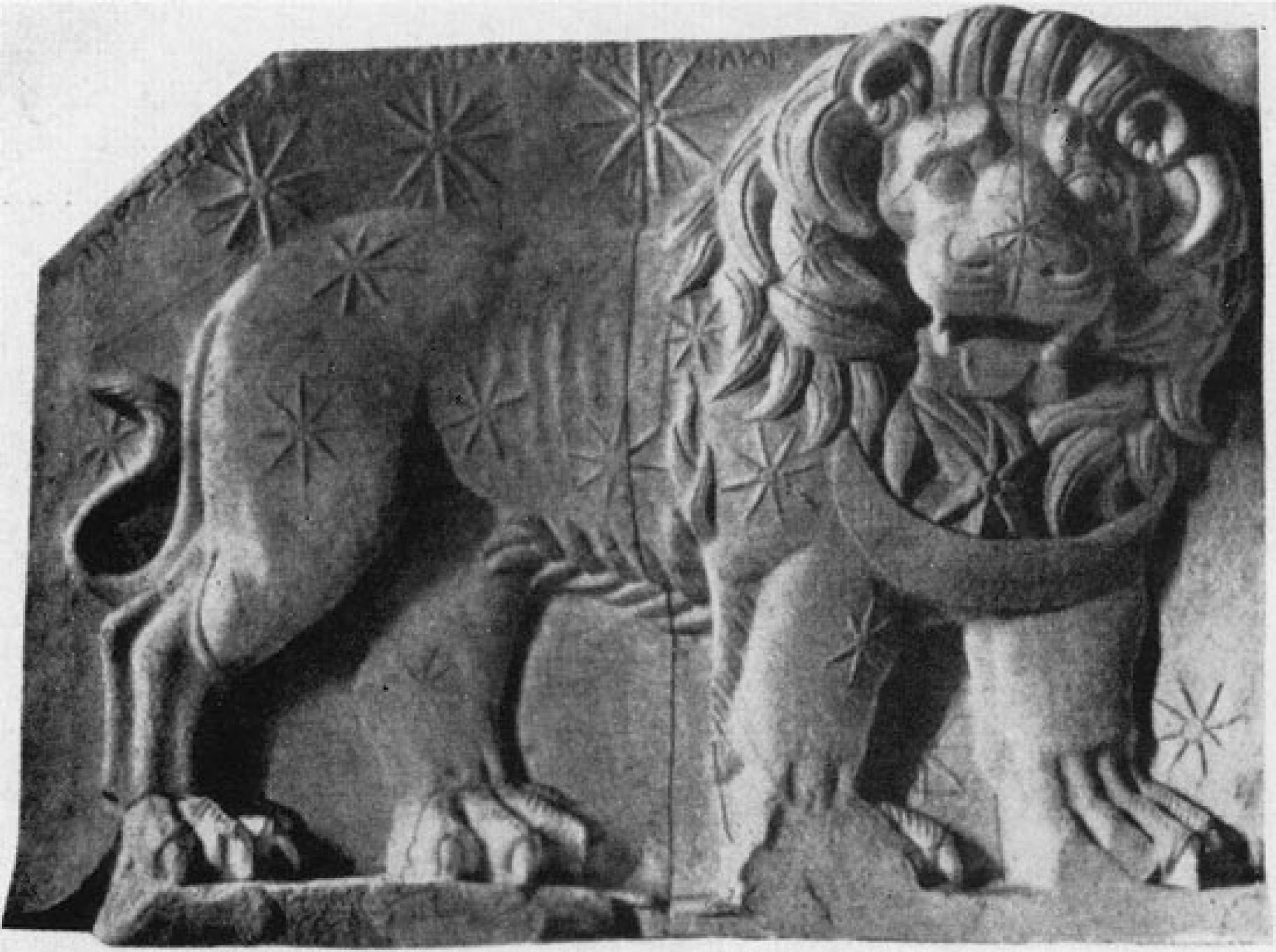
The lion relief from Nemrut Dag has the moon and several stars over his body.
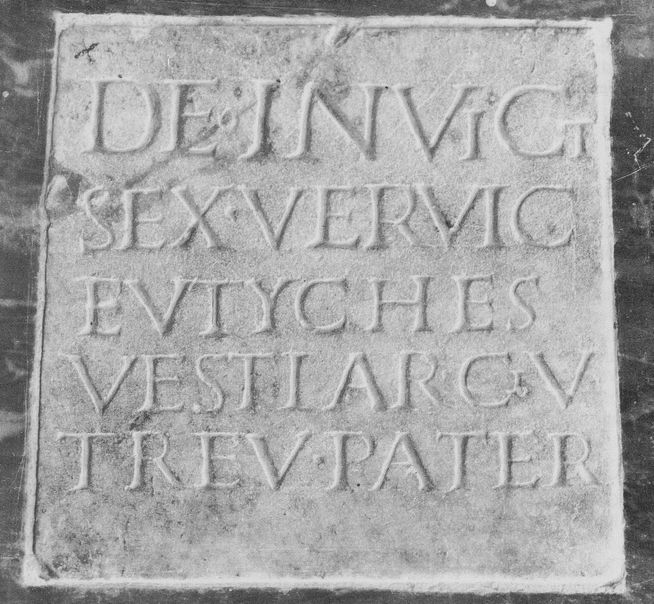
Several inscriptions dedicated to Mithras have been found in Eauze, including these two by a certain Pater Sextus Vervicius Eutyches, discovered in 1768.
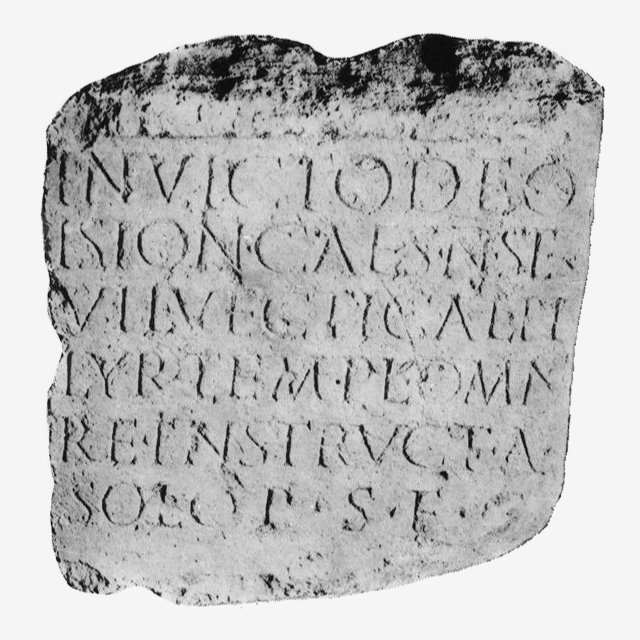
In this monument, the imperial slave Ision claims the completion of a new temple to Mithras in Moesia.
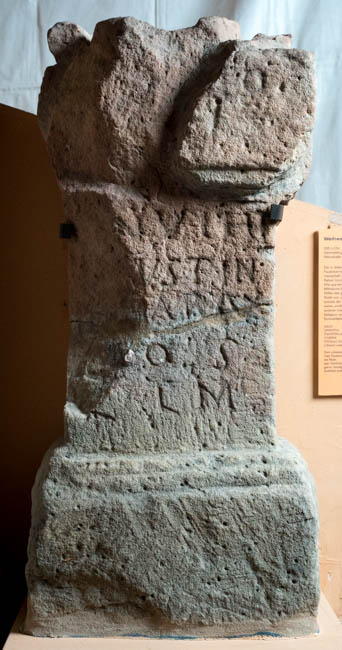
This sandstone altar was dedicated to the god Invictus by a certain Faustinus from Gimmeldingen.
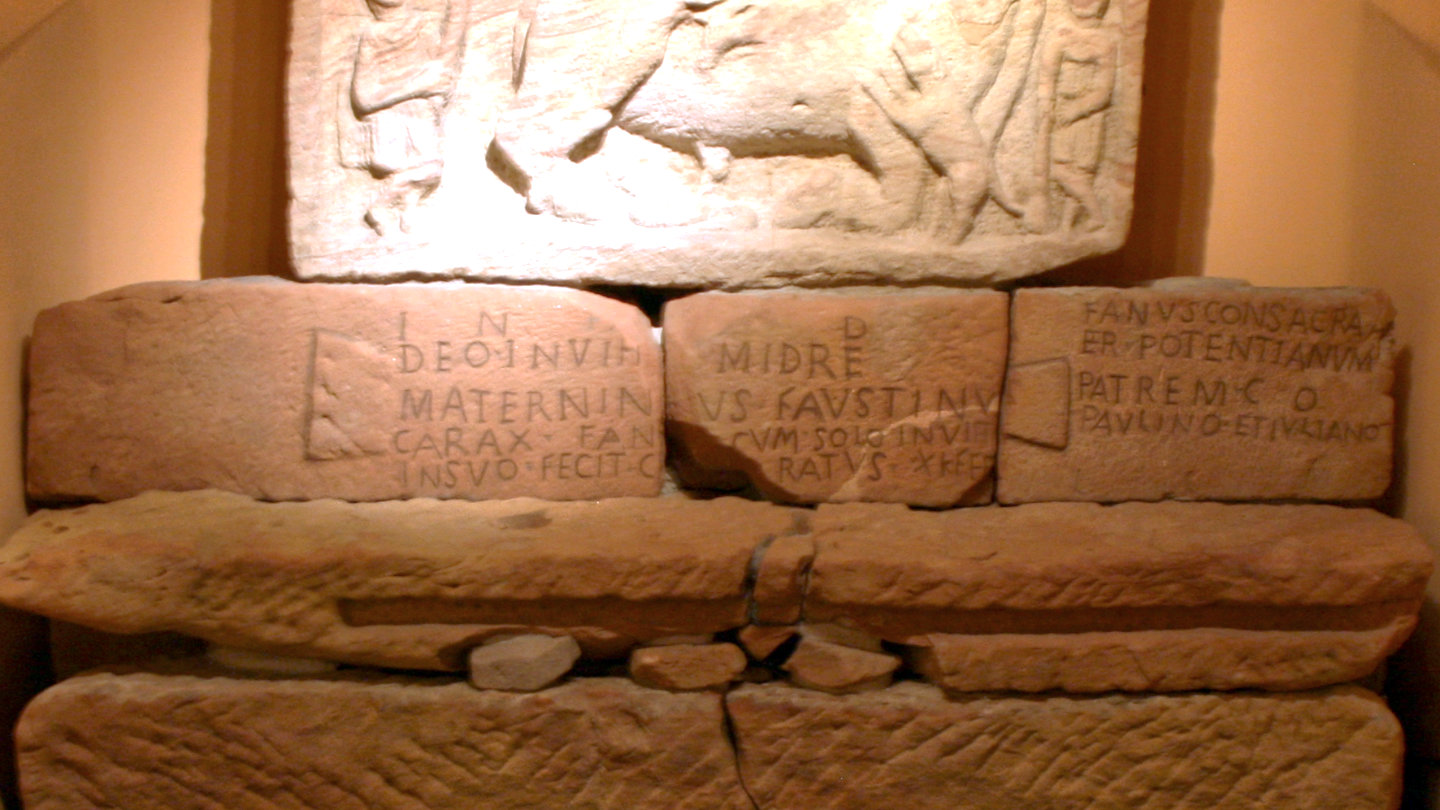
The inscription was located at the base of the main Tauroctony of the Gimmeldingen Mithraeum.
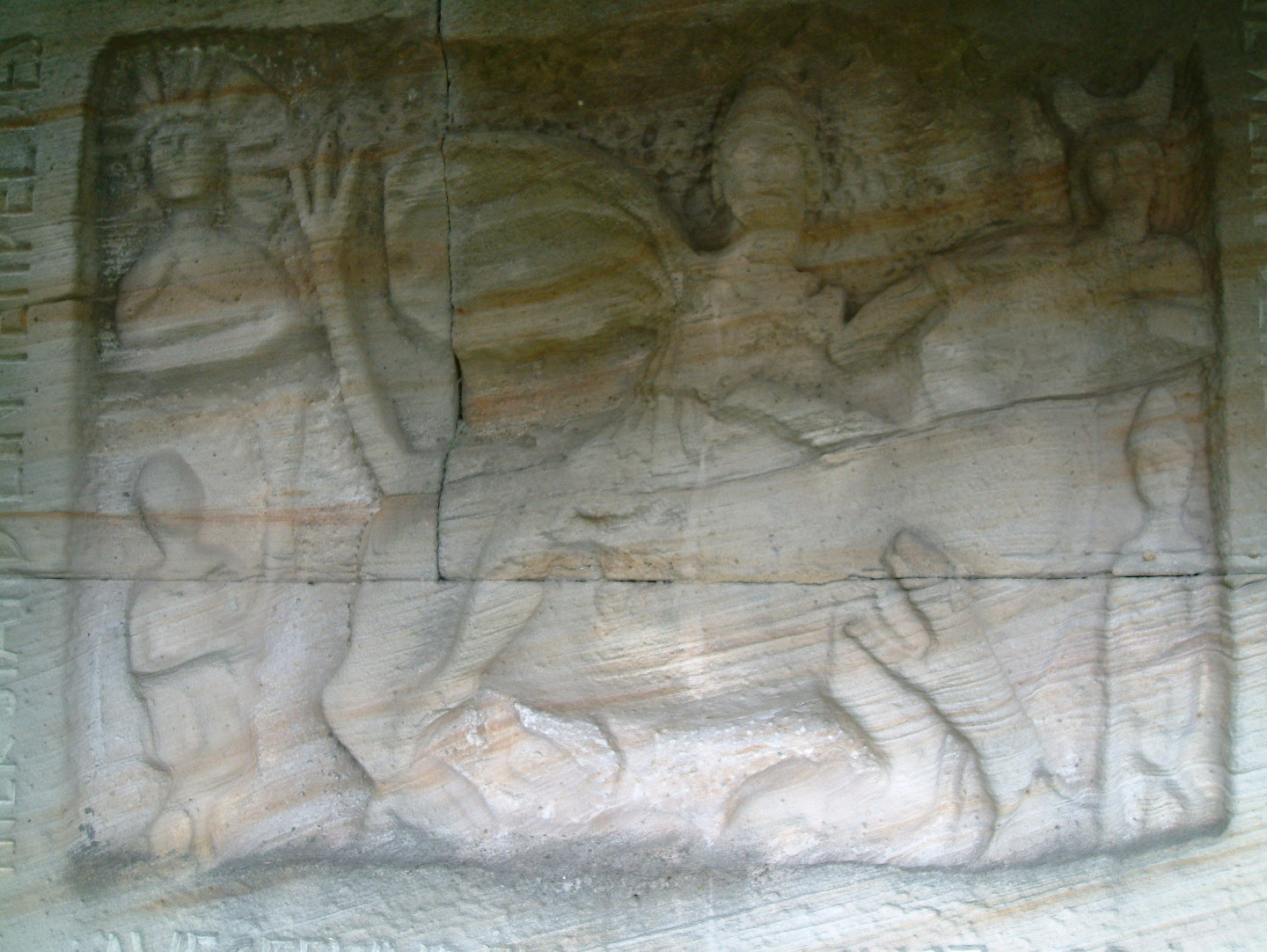
This relief of Mithras killing the bull found in Gimmeldingen, Germany, lacks the usual raven.
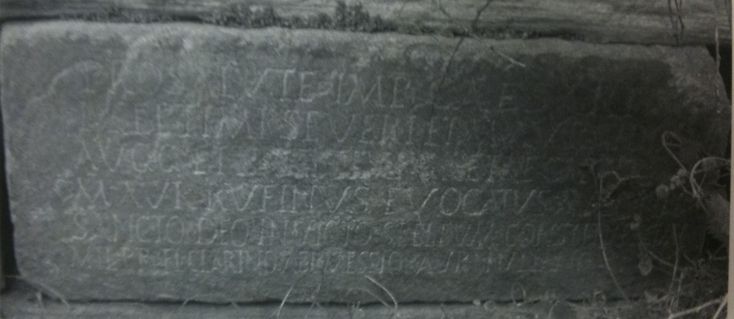
This inscription reveals the existence of a Mithraeum on the island of Andros, Greece, which has not yet been found.
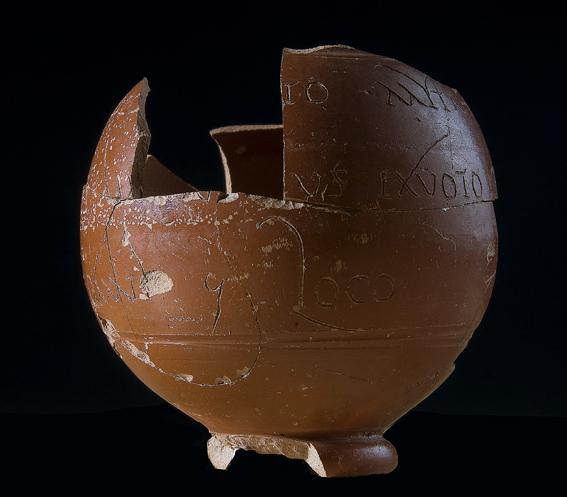
The spherical ceramic cup found at the Mithraeum in Angers bears an inscription to the unconquered god Mithras.

Roman stone low-relief depicting Mithras as a bull-slayer, with the upper part of his head missing.
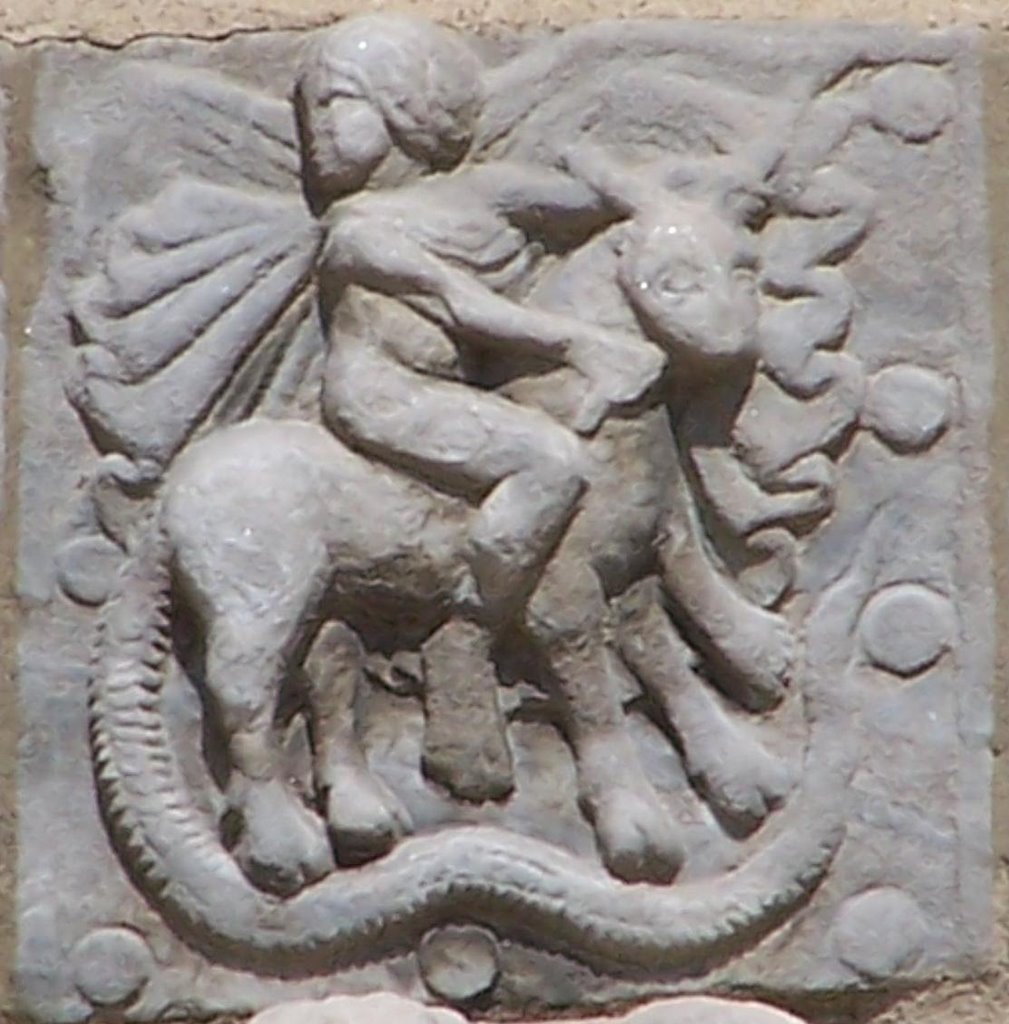
Mithras slaying the bull appears as the sign of Capricorn in a zodiacal sequence on the Pórtico del Cordero of the Abbey de Santo Domingo de Silos, Burgos, Spain.

These fragments of a monumental tauroctony found in the Cerro de San Albín must have decorated the Gran Mitreo de Mérida, which has not yet been found.
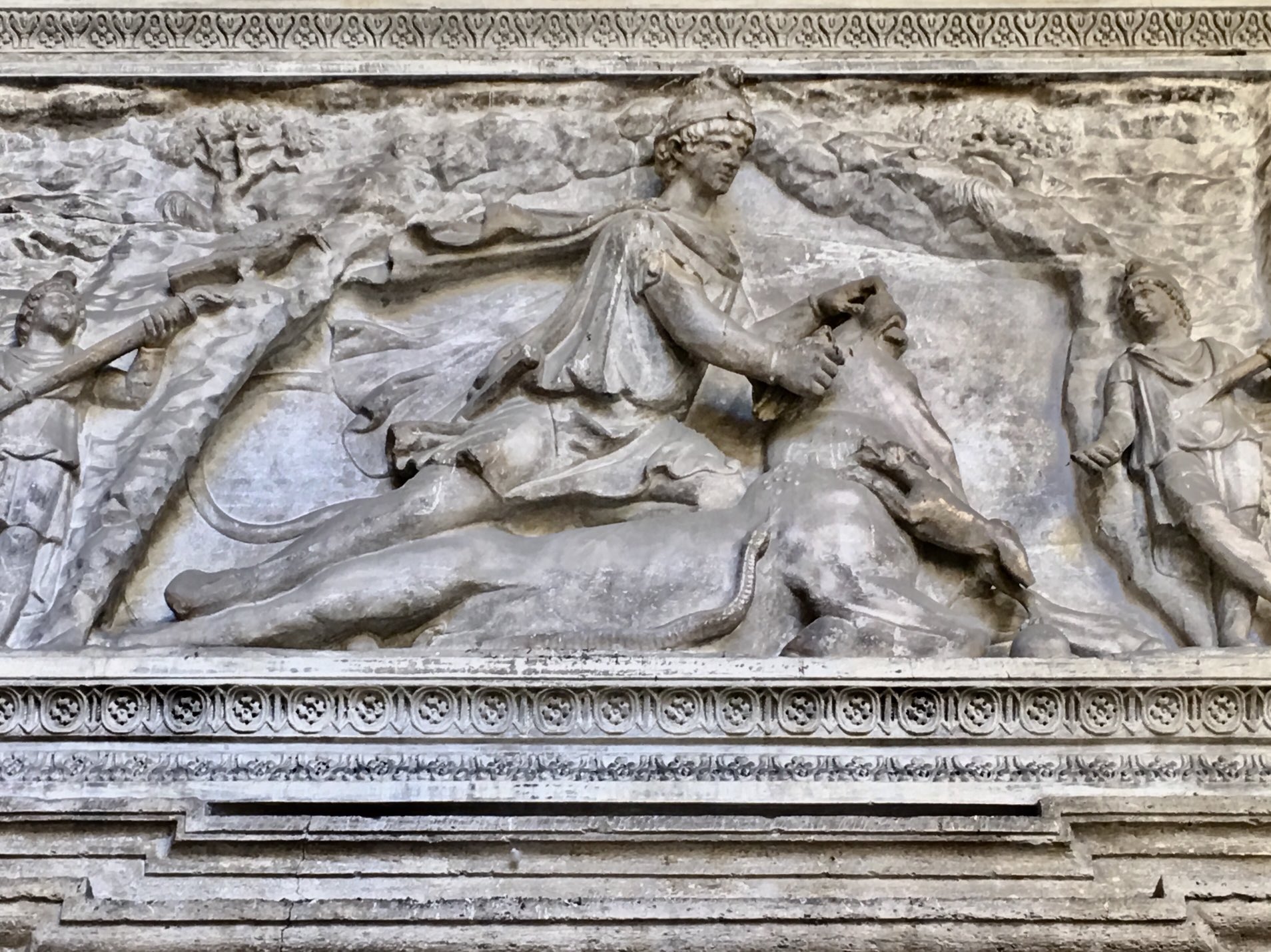
This relief of Mithras as a bullkiller, probably found in Rome, has been part of the Palazzo Mattei collection since at least the end of the 18th century.
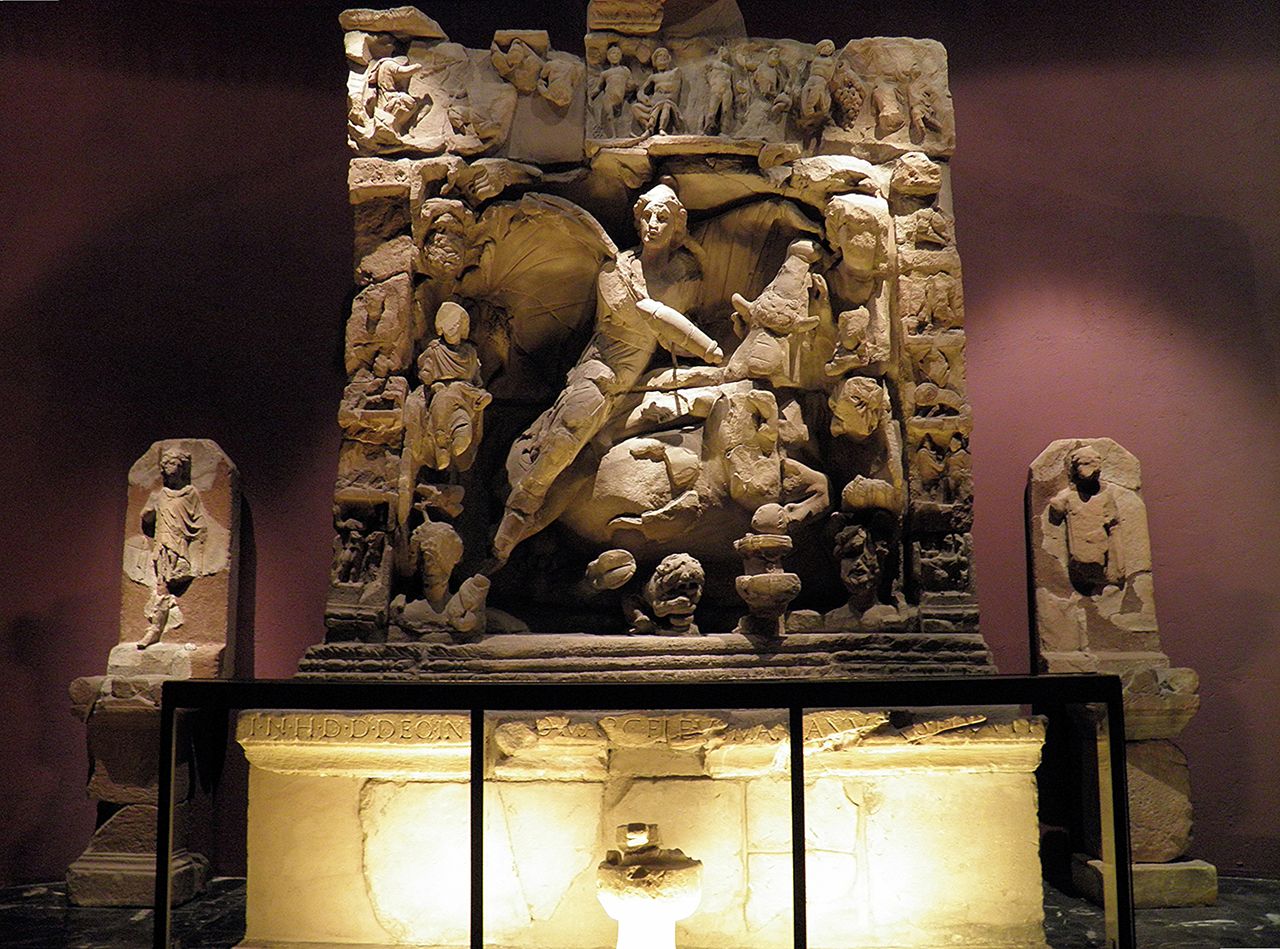
The base of these sandstone reliefs bears an inscription referring to a certain Marcellius Marianus.
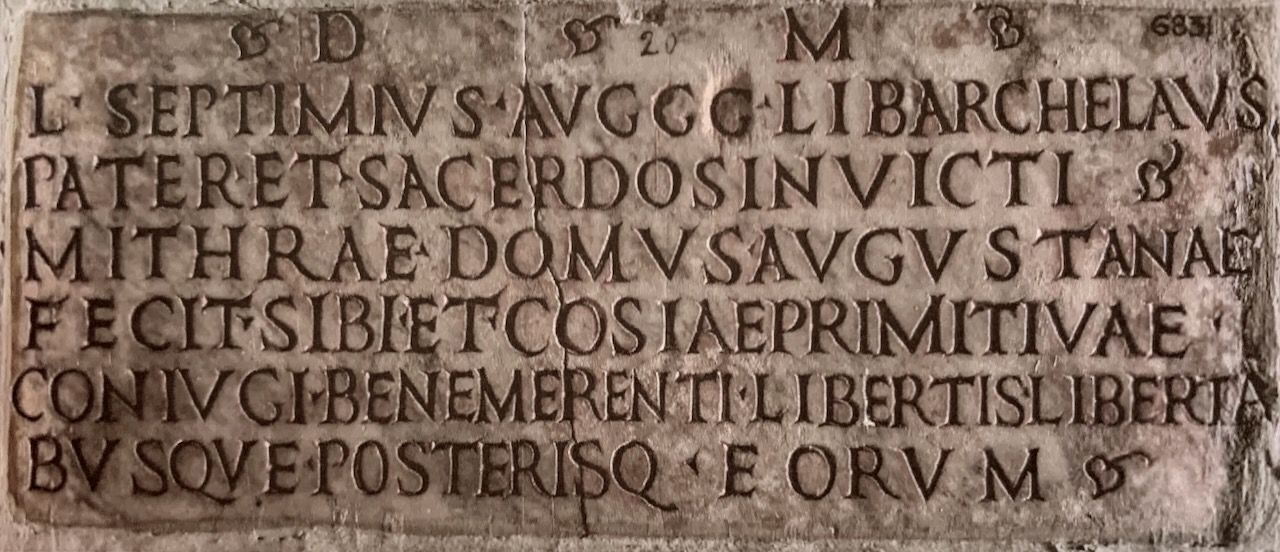
Marble funerary plaque erected by Lucius Septimius Archelaus, a Pater and priest of Mithras, for himself, his wife, and their freedmen and descendants.
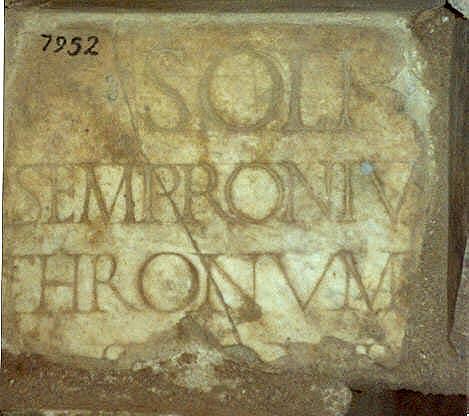
Slab marble indicates that Lucius Sempronius has donated a throne to the Mitreo delle Pareti Dipinte.
